
Yes, you can sometimes patch a run flat tire on a BMW, but it’s not always safe or recommended. These tires are built differently than standard tires, and improper repairs can compromise safety, performance, and your vehicle’s warranty. Always consult a certified BMW technician before attempting any repair.
In This Article
- 1 Key Takeaways
- 2 📑 Table of Contents
- 3 Understanding BMW Run Flat Tires: What Makes Them Different?
- 4 Can You Actually Patch a Run Flat Tire on a BMW?
- 5 When Is Patching a Run Flat Tire Safe—and When Is It Not?
- 6 The Risks of Patching a Run Flat Tire on a BMW
- 7 BMW’s Official Stance on Run Flat Tire Repairs
- 8 Alternatives to Patching: What Are Your Options?
- 9 Best Practices for Maintaining BMW Run Flat Tires
- 10 Conclusion: Patch or Replace? Making the Right Choice for Your BMW
- 11 Frequently Asked Questions
- 11.1 Can I patch a run flat tire myself?
- 11.2 How long can I drive on a punctured run flat tire?
- 11.3 Will a patched run flat tire affect my BMW’s handling?
- 11.4 Can I use a tire plug on a BMW run flat?
- 11.5 Do I need to replace all four tires if one is damaged?
- 11.6 Are run flat tires more expensive to maintain?
Key Takeaways
- Run flat tires are designed to be driven on temporarily after a puncture, but not permanently repaired in all cases. Their reinforced sidewalls and unique construction make them more complex than regular tires.
- Patching is only safe if the damage is in the tread area and meets strict size and depth criteria. Sidewall damage, large punctures, or bead area issues usually require full replacement.
- BMW recommends against repairing run flat tires in most situations. The manufacturer prioritizes safety and performance, especially given the car’s advanced suspension and handling systems.
- Improper repairs can void your tire warranty and affect your vehicle’s TPMS (Tire Pressure Monitoring System). Always use certified repair shops familiar with BMW standards.
- Even if a patch is possible, consider replacing the tire for long-term reliability. Run flats degrade over time, and a patched tire may not perform as expected during emergency maneuvers.
- Always inspect the wheel and suspension after a puncture. Driving on a flat can damage the rim and suspension components, leading to costly repairs.
- Prevention is key—regular maintenance and proper inflation reduce the risk of punctures. Use BMW-approved tire sealants only as a temporary fix, not a permanent solution.
📑 Table of Contents
- Understanding BMW Run Flat Tires: What Makes Them Different?
- Can You Actually Patch a Run Flat Tire on a BMW?
- When Is Patching a Run Flat Tire Safe—and When Is It Not?
- The Risks of Patching a Run Flat Tire on a BMW
- BMW’s Official Stance on Run Flat Tire Repairs
- Alternatives to Patching: What Are Your Options?
- Best Practices for Maintaining BMW Run Flat Tires
- Conclusion: Patch or Replace? Making the Right Choice for Your BMW
Understanding BMW Run Flat Tires: What Makes Them Different?
If you own a BMW, chances are you’re driving on run flat tires. These aren’t your average rubber donuts—they’re engineered for performance, safety, and peace of mind. But what exactly sets them apart? And why does that matter when you’re staring down a nail in the tread?
Run flat tires are designed to keep you moving even after losing air pressure. Thanks to reinforced sidewalls and advanced materials, they can typically be driven for 50 to 100 miles at reduced speeds (usually under 50 mph) after a puncture. This gives you time to reach a service center safely, without needing to change a tire on the side of a busy highway.
But here’s the catch: that same reinforcement that keeps you rolling also makes these tires more difficult—and sometimes unsafe—to repair. Unlike standard tires, run flats are built to handle stress in ways that standard patches may not account for. The internal structure is denser, the sidewalls are stiffer, and the overall design prioritizes durability over repairability.
BMW, known for precision engineering, equips most of its modern models—like the 3 Series, 5 Series, X3, and i4—with run flat tires as standard. This isn’t just a convenience feature; it’s part of the car’s integrated safety system. The vehicle’s electronics, including the Tire Pressure Monitoring System (TPMS), are calibrated to work with these specific tires. Any deviation—like an improper repair—can throw off readings or even disable safety alerts.
So while it might be tempting to slap a patch on that punctured run flat and call it a day, doing so without understanding the risks could compromise your safety and your car’s performance. Let’s dive deeper into when a patch is possible—and when it’s better to just replace the tire.
Can You Actually Patch a Run Flat Tire on a BMW?
Visual guide about Can You Patch a Run Flat Tire Bmw
Image source: tirecrunch.com
The short answer? Sometimes. But it’s not as simple as pulling into your local tire shop and asking for a quick fix.
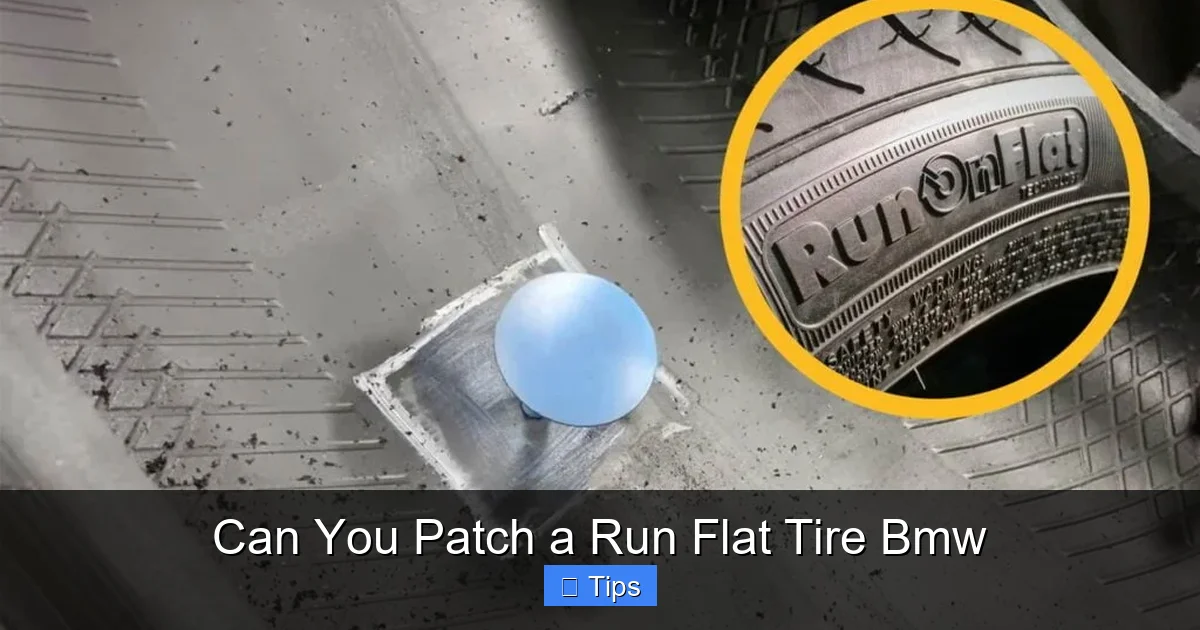
Patching a run flat tire on a BMW is technically possible under very specific conditions. However, BMW and most tire manufacturers strongly advise against it unless the damage is minor, located in the tread area, and meets strict repair guidelines.
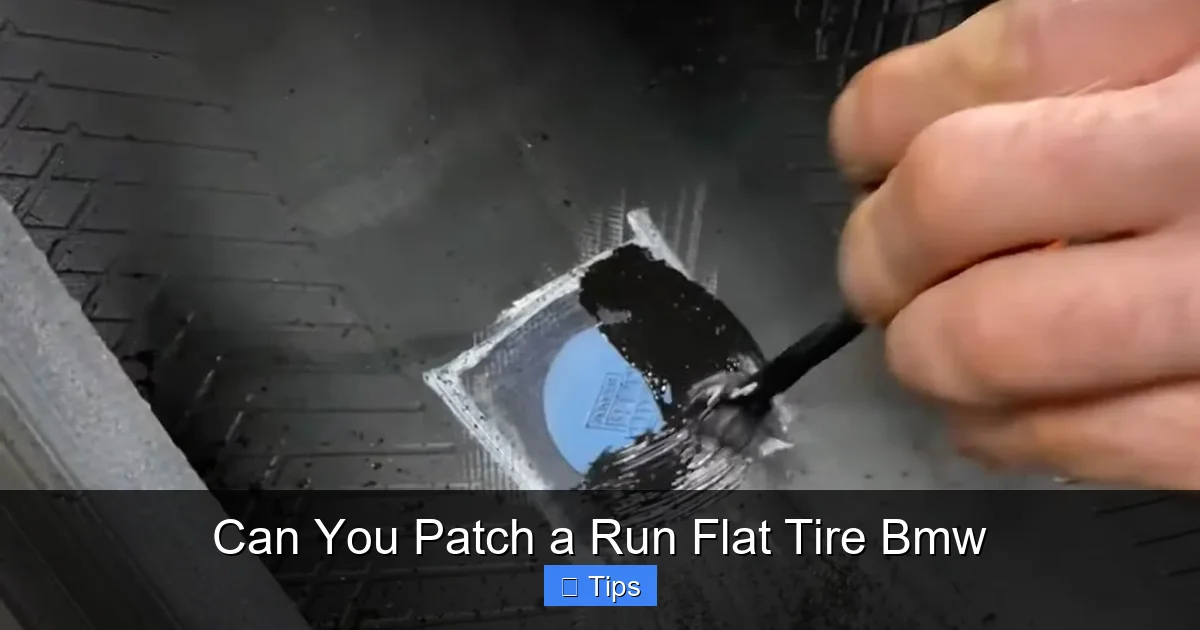
Let’s break it down. A proper patch—also known as a plug-patch combination—involves inserting a rubber plug into the puncture from the inside of the tire and sealing it with a patch. This dual-layer repair is more durable than a plug alone and is the industry standard for safe tire repairs.
But for run flat tires, even this method comes with caveats. The reinforced sidewalls and internal structure mean that the tire flexes differently under load. A standard patch may not bond properly or could fail under stress, especially during high-speed driving or sharp turns—common scenarios in a performance-oriented BMW.
According to the Tire Industry Association (TIA) and BMW’s own service guidelines, a run flat tire can only be repaired if:
– The puncture is in the central 70% of the tread area (not near the shoulder or sidewall).
– The hole is no larger than 1/4 inch (6mm) in diameter.
– There is no evidence of internal damage, such as cord separation or sidewall bulging.
– The tire hasn’t been driven on while flat or underinflated for an extended period.
Even then, BMW recommends replacement over repair in most cases. Why? Because the very act of driving on a run flat after a puncture can cause unseen damage. The tire’s internal layers may have shifted, the bead may have been compromised, or the wheel could have been bent—all of which aren’t visible during a quick inspection.
So while a patch might hold temporarily, it’s not a guaranteed long-term solution. And if something goes wrong on the highway, the consequences could be severe.
When Is Patching a Run Flat Tire Safe—and When Is It Not?
Visual guide about Can You Patch a Run Flat Tire Bmw
Image source: tirecrunch.com
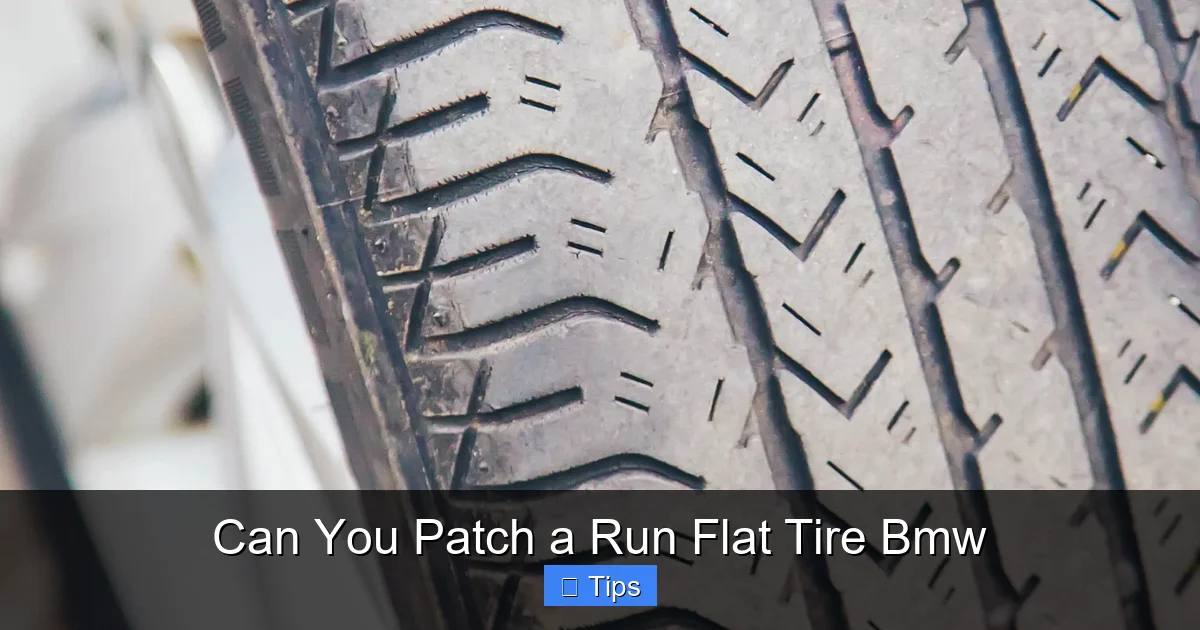
Not all punctures are created equal. Understanding where and how your BMW’s run flat tire was damaged is crucial to deciding whether a patch is a viable option.
Safe Scenarios for Patching
If you’ve picked up a small nail or screw in the center of the tread—say, a 3mm hole—and you noticed it immediately, there’s a chance a professional repair could work. This is especially true if:
– You didn’t drive far after the puncture (under 10 miles).
– The tire pressure didn’t drop below 20 psi.
– There’s no visible damage to the sidewall or wheel.
In this case, a certified technician can remove the tire, inspect the inner liner, and apply a proper plug-patch repair. Many reputable shops use vulcanizing adhesives that chemically bond the patch to the tire, creating a seal that’s nearly as strong as the original rubber.
Some high-end repair centers even offer run flat-specific patch kits designed for reinforced tires. These are more expensive but offer better adhesion and durability.
When Patching Is a No-Go
Now, let’s talk about when you should walk away from the patch idea entirely.
If the puncture is near the sidewall—even slightly—it’s a hard no. The sidewall flexes constantly while driving, and a patch in that area is almost guaranteed to fail. The same goes for damage near the tire bead, where the tire seals against the wheel. This area is under extreme pressure, and a weak repair could lead to a sudden blowout.
Other red flags include:
– The tire was driven on while flat or severely underinflated.
– There’s a bulge, crack, or separation in the sidewall.
– The puncture is larger than 1/4 inch.
– The tire has been previously repaired.
Even if the hole looks small, driving on a flat run flat can cause internal damage that’s invisible to the naked eye. The steel belts may have shifted, the inner liner could be torn, or the sidewall may have weakened. These issues don’t show up on a visual inspection but can lead to catastrophic failure down the road.
And don’t forget the wheel. If you’ve driven on a flat, the rim might be bent or cracked. A damaged wheel can’t hold a seal, making any tire repair pointless. Always have the wheel inspected by a professional before considering a patch.
The Risks of Patching a Run Flat Tire on a BMW
Visual guide about Can You Patch a Run Flat Tire Bmw
Image source: tirecrunch.com
Let’s be honest: the idea of saving $200–$400 by patching instead of replacing a tire is tempting. But with a BMW, the risks often outweigh the rewards.
Safety Concerns
Your BMW is engineered for precision handling, quick response, and high-speed stability. Run flat tires play a key role in that performance. When you patch a run flat, you’re introducing a variable the car’s systems weren’t designed to handle.
A poorly applied patch can lead to:
– **Tire blowouts at high speeds**: The patch may not withstand the heat and stress of highway driving, especially in hot weather or during aggressive cornering.
– **Imbalanced handling**: A repaired tire may not flex or respond the same way as the others, affecting your car’s balance and steering.
– **TPMS malfunctions**: The Tire Pressure Monitoring System relies on consistent tire behavior. A patched tire might give false readings or fail to alert you to future leaks.
In extreme cases, a failed repair could cause a sudden loss of control—especially during emergency braking or evasive maneuvers. For a vehicle that prides itself on safety and performance, that’s a risk not worth taking.
Warranty and Insurance Implications
Another often-overlooked risk is warranty coverage. Most BMW tire warranties explicitly state that improper repairs void the warranty. If you patch a run flat at an uncertified shop and later experience a failure, BMW or the tire manufacturer may refuse to cover the cost of a replacement.
The same goes for insurance. If an accident occurs due to a failed tire repair, your insurer might deny the claim if they determine the repair was done improperly or against manufacturer recommendations.
Long-Term Reliability
Even if a patch holds for a few months, it’s not a permanent fix. Run flat tires are already more prone to wear and degradation than standard tires due to their stiff construction. Adding a repair into the mix reduces their lifespan and reliability.
Over time, the patched area may develop leaks, cracks, or separation. And because run flats are often sold in sets (due to matching wear and performance), replacing just one tire can be difficult and expensive.
BMW’s Official Stance on Run Flat Tire Repairs
So what does BMW say about all this? The answer is clear: proceed with extreme caution.
According to BMW’s official service guidelines, run flat tires should generally not be repaired. The manufacturer states that “any tire that has been run underinflated or flat should be replaced, not repaired.” This is because the internal structure may have been compromised, even if no visible damage is present.
BMW also emphasizes that repairs should only be performed by authorized service centers using approved methods and materials. This ensures that the repair meets the brand’s strict safety and performance standards.
In practice, many BMW dealerships won’t even attempt to patch a run flat tire—even if it meets the basic criteria. Instead, they’ll recommend replacement to protect the customer and uphold the brand’s reputation for quality.
That said, some independent shops with BMW certification may offer repair services for minor tread punctures. But even then, they’ll typically require a full inspection, including a bead-to-bead examination of the tire’s interior.
If you’re unsure, always ask for a written assessment. A reputable technician will explain why a repair is or isn’t recommended and provide documentation for your records.
Alternatives to Patching: What Are Your Options?
If patching isn’t the right choice, what can you do? Fortunately, you have several options—some temporary, some permanent.
Temporary Fixes: Tire Sealants and Inflators
BMW often includes a tire sealant kit with new vehicles—especially those without a spare tire. These kits, like the BMW Mobility Kit, contain a sealant and compressor that can temporarily seal small punctures and reinflate the tire.
While convenient, these are not long-term solutions. The sealant is designed for emergencies only and may not work on larger holes or sidewall damage. Plus, once used, the tire usually needs to be replaced anyway.
Full Tire Replacement
In most cases, replacing the damaged run flat tire is the safest and most reliable option. While it’s more expensive upfront, it ensures your BMW performs as intended and maintains its warranty coverage.
When replacing, try to match the exact tire model, size, and speed rating. Mixing tire types can affect handling, braking, and stability. If you can’t replace all four tires, replace at least the pair on the same axle.
Switching to Non-Run Flat Tires
Some BMW owners choose to replace their run flats with standard tires and carry a spare or use a tire repair kit. This can improve ride comfort and reduce road noise, but it comes with trade-offs.
You’ll lose the ability to drive safely after a puncture, and your TPMS may need recalibration. Plus, you’ll need to store a spare tire, which takes up space and adds weight.
If you go this route, consult a BMW specialist to ensure compatibility with your vehicle’s systems.
Best Practices for Maintaining BMW Run Flat Tires
Prevention is always better than repair. Here’s how to keep your run flat tires in top shape and reduce the risk of punctures.
Regular Inspections
Check your tires monthly for signs of wear, cracks, or embedded objects. Look closely at the tread and sidewalls. Use a tire pressure gauge to ensure they’re inflated to the recommended PSI (found on the driver’s door jamb or in the owner’s manual).
Proper Inflation
Underinflation is one of the leading causes of tire failure. Run flat tires are especially sensitive to pressure changes. Use a quality digital gauge and check pressure when the tires are cold (before driving).
Avoid Road Hazards
Potholes, curbs, and debris can damage run flat tires more easily than standard tires due to their stiff sidewalls. Drive carefully, especially in urban areas or construction zones.
Rotate Tires Regularly
Even though run flats wear more evenly, rotating them every 5,000–7,500 miles helps extend their life and maintain balanced handling.
Use BMW-Certified Service Centers
When in doubt, go to a BMW dealership or certified independent shop. They have the tools, training, and parts to handle your vehicle correctly.
Conclusion: Patch or Replace? Making the Right Choice for Your BMW
So, can you patch a run flat tire on a BMW? Technically, yes—but only under very specific conditions and with professional guidance. In most cases, however, replacement is the smarter, safer choice.
Run flat tires are a marvel of engineering, designed to keep you safe when things go wrong. But that same design makes them less forgiving when it comes to repairs. A patch might seem like a quick fix, but it can compromise your safety, void your warranty, and lead to bigger problems down the road.
If you do face a puncture, don’t rush into a decision. Have the tire inspected by a certified technician. Ask questions. Get a second opinion if needed. And remember: your BMW is more than just a car—it’s a finely tuned machine that deserves the best care.
When it comes to run flat tires, err on the side of caution. Invest in quality, follow manufacturer guidelines, and prioritize long-term reliability over short-term savings. Your safety—and your driving experience—are worth it.
Frequently Asked Questions
Can I patch a run flat tire myself?
It’s not recommended. DIY patches often fail on run flat tires due to their reinforced construction. Always have repairs done by a certified professional familiar with BMW standards.
How long can I drive on a punctured run flat tire?
Most BMW run flats allow you to drive up to 50–100 miles at speeds under 50 mph. However, you should stop and inspect the tire as soon as possible to avoid further damage.
Will a patched run flat tire affect my BMW’s handling?
Yes, potentially. A repaired tire may not flex or respond the same as the others, leading to imbalanced handling, especially during high-speed maneuvers or emergency braking.
Can I use a tire plug on a BMW run flat?
Plugs alone are not recommended. A proper repair requires a plug-patch combination applied from the inside. Even then, it’s only safe for small tread punctures.
Do I need to replace all four tires if one is damaged?
Not always, but it’s ideal. If replacing just one, ensure it matches the others in brand, model, and wear. Mismatched tires can affect performance and safety.
Are run flat tires more expensive to maintain?
They can be. Run flats typically cost more to replace and are harder to repair. However, they eliminate the need for a spare tire and offer added safety in emergencies.

At CarLegit, we believe information should be clear, factual, and genuinely helpful. That’s why every guide, review, and update on our website is created with care, research, and a strong focus on user experience.