
You can put premium gas in most cars, but it’s not always necessary or beneficial. While premium fuel won’t harm engines designed for regular gas, it typically won’t improve performance or fuel economy either. Only use premium if your vehicle’s manufacturer specifically recommends or requires it.
In This Article
- 1 Key Takeaways
- 2 📑 Table of Contents
- 3 Can You Put Premium Gas in Any Car? The Truth Behind the Pump
- 4 What Is Premium Gas and How Does It Differ?
- 5 Can You Safely Use Premium Gas in a Regular Car?
- 6 When Does Your Car Actually Need Premium Gas?
- 7 The Cost of Premium Gas: Is It Worth It?
- 8 Debunking Common Myths About Premium Gas
- 9 How to Make the Right Fuel Choice for Your Car
- 10 Conclusion: Premium Gas Isn’t a One-Size-Fits-All Solution
- 11 Frequently Asked Questions
- 11.1 Can using premium gas damage my car if it’s designed for regular fuel?
- 11.2 Will my car get better gas mileage if I use premium fuel?
- 11.3 What happens if I put regular gas in a car that requires premium?
- 11.4 Is it okay to mix premium and regular gas?
- 11.5 Do all high-performance cars need premium gas?
- 11.6 Does premium gas have more cleaning additives than regular gas?
Key Takeaways
- Premium gas is safe for most cars: Putting premium fuel in a car designed for regular gas won’t damage the engine, but it usually offers no performance or efficiency gains.
- Check your owner’s manual: The best way to know if your car needs premium gas is to consult the manufacturer’s recommendations—look for “recommended” or “required” labels.
- High-compression engines benefit most: Vehicles with turbochargers, superchargers, or high-compression engines often require premium gas to prevent knocking and maintain optimal performance.
- Premium gas doesn’t clean better: Despite marketing claims, premium fuel doesn’t inherently have superior cleaning additives—many regular fuels include similar detergents.
- Cost vs. benefit matters: Premium gas can cost 20–50 cents more per gallon, so using it unnecessarily adds up without real-world advantages.
- Modern engines adapt well: Advanced engine management systems can adjust timing and fuel delivery to accommodate lower-octane fuel, even in cars that recommend premium.
- Myths vs. reality: Common beliefs—like “premium gas makes your car run better”—are often exaggerated; real benefits depend on your specific vehicle.
📑 Table of Contents
- Can You Put Premium Gas in Any Car? The Truth Behind the Pump
- What Is Premium Gas and How Does It Differ?
- Can You Safely Use Premium Gas in a Regular Car?
- When Does Your Car Actually Need Premium Gas?
- The Cost of Premium Gas: Is It Worth It?
- Debunking Common Myths About Premium Gas
- How to Make the Right Fuel Choice for Your Car
- Conclusion: Premium Gas Isn’t a One-Size-Fits-All Solution
Can You Put Premium Gas in Any Car? The Truth Behind the Pump
You’re at the gas station, staring at the fuel options. Regular, mid-grade, premium—each with a different price tag and octane rating. You’ve probably heard conflicting advice: “Premium gas makes your car run smoother,” or “Only use what the manufacturer says.” But what’s the real story? Can you put premium gas in any car without causing harm? And more importantly, should you?
The short answer is yes—you *can* put premium gas in most cars, even those designed for regular fuel. But that doesn’t mean you *should*. The decision hinges on your vehicle’s design, engine specifications, and the manufacturer’s recommendations. While premium gas won’t damage a standard engine, it often provides little to no benefit, making it an unnecessary expense for many drivers.
In this guide, we’ll break down everything you need to know about premium gasoline: what it is, how it works, when it’s beneficial, and when it’s just a waste of money. Whether you drive a compact sedan, a high-performance sports car, or a rugged SUV, understanding fuel requirements can help you make smarter, more cost-effective choices at the pump.
What Is Premium Gas and How Does It Differ?
Visual guide about Can You Put Premium Gas in Any Car
Image source: dealerinspire-image-library-prod.s3.us-east-1.amazonaws.com
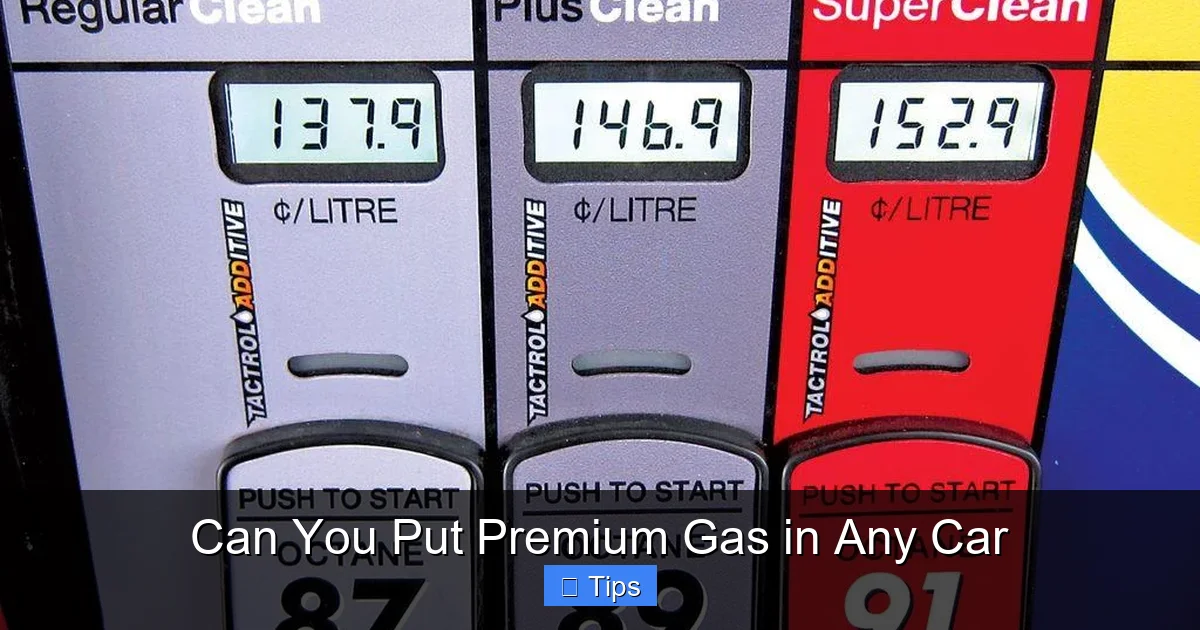
To understand whether premium gas is right for your car, it helps to know what it actually is. Premium gasoline is a higher-octane fuel, typically rated at 91 or 93 octane (depending on the region), compared to regular gas, which is usually 87 octane. But what does “octane” really mean?
Understanding Octane Ratings
Octane rating measures a fuel’s ability to resist “knocking” or “pinging” during combustion. Knocking occurs when the air-fuel mixture in the engine’s cylinders ignites too early—before the spark plug fires—due to heat and pressure. This premature ignition can cause a knocking sound and, over time, damage engine components.
Higher-octane fuels are more resistant to this premature combustion. That’s why high-performance and luxury vehicles—often equipped with high-compression engines or forced induction systems like turbochargers—require premium gas. These engines generate more heat and pressure, increasing the risk of knocking if lower-octane fuel is used.
Premium vs. Regular: Beyond the Octane Number
While octane is the main differentiator, premium gas isn’t just about resistance to knocking. Some premium fuels include additional detergent additives that help keep fuel injectors and intake valves cleaner. However, it’s important to note that many regular gasoline brands also meet or exceed the Top Tier detergent standards set by automakers. So, the cleaning advantage of premium gas isn’t as clear-cut as some marketing might suggest.
Another common misconception is that premium gas contains more energy or “power” than regular gas. In reality, all gasoline—regardless of octane—contains roughly the same amount of energy per gallon. The difference lies in how the fuel behaves under high pressure and temperature, not in how much power it can deliver.
Can You Safely Use Premium Gas in a Regular Car?
Visual guide about Can You Put Premium Gas in Any Car
Image source: carfromjapan.com
Now for the million-dollar question: Is it safe to put premium gas in a car that’s designed for regular fuel? The answer is a resounding yes—it won’t harm your engine.
Engine Compatibility and Safety
Modern engines are built with sophisticated engine control units (ECUs) that monitor and adjust performance in real time. If you fill up with premium gas in a car that normally uses regular, the ECU will detect the higher octane and may slightly adjust ignition timing to take advantage of the fuel’s knock resistance. However, because the engine isn’t designed to operate at higher compression ratios, these adjustments are minimal—and the performance gains are usually negligible.
In short, your car won’t run “better” on premium gas if it doesn’t need it. You might notice a smoother idle or slightly quieter operation, but these changes are often subtle and not worth the extra cost.
Real-World Examples
Let’s say you drive a 2020 Honda Civic with a 2.0L naturally aspirated engine. The owner’s manual specifies regular unleaded gasoline (87 octane). If you decide to fill up with 93-octane premium gas, your Civic will run just fine—but you won’t see a jump in horsepower, better fuel economy, or faster acceleration. The engine simply isn’t tuned to take advantage of the higher octane.
On the other hand, if you drive a 2023 BMW M3 with a twin-turbocharged inline-6 engine, the story is different. This car *requires* premium fuel (91 octane or higher) to prevent knocking and maintain peak performance. Using regular gas could lead to reduced power, increased engine wear, and potentially costly repairs.
When Premium Gas Might Help—Even in Regular Cars
There are a few edge cases where using premium gas in a regular car might offer minor benefits:
– **Hot weather or heavy loads:** In extreme heat or when towing, engine temperatures rise. Higher-octane fuel may reduce the risk of knocking in borderline situations.
– **Older or high-mileage engines:** Engines with carbon buildup or worn components may benefit from the cleaner-burning properties of some premium fuels, potentially reducing knock and improving smoothness.
– **Driving at high altitudes:** At higher elevations, air is thinner, which can affect combustion. Some drivers report smoother performance with premium gas in mountainous regions.
However, these benefits are situational and not guaranteed. For most drivers, sticking to the recommended fuel is the safest and most economical choice.
When Does Your Car Actually Need Premium Gas?
Visual guide about Can You Put Premium Gas in Any Car
Image source: appgecet.co.in
Not all cars are created equal when it comes to fuel requirements. Some vehicles are designed to run optimally—or even safely—only on premium gasoline. So how do you know if your car falls into this category?
Manufacturer Recommendations vs. Requirements
The key is to distinguish between “recommended” and “required” when it comes to premium gas.
– **Recommended:** The manufacturer suggests using premium gas for optimal performance and efficiency, but the car can still run on regular fuel without damage. In these cases, the engine management system will adjust to compensate, though you may notice a slight drop in power or fuel economy.
– **Required:** The vehicle *must* use premium gas to operate correctly. Using regular fuel can cause knocking, reduced performance, and potential engine damage over time.
Always check your owner’s manual or the fuel cap label for guidance. For example, many luxury brands like BMW, Mercedes-Benz, Audi, and Porsche require premium fuel. High-performance models from Ford (like the Mustang GT), Chevrolet (Camaro SS), and Dodge (Challenger SRT) also typically require 91-octane or higher.
High-Compression and Forced Induction Engines
Vehicles that benefit most from premium gas share common engineering traits:
– **High-compression engines:** These engines squeeze the air-fuel mixture more tightly before ignition, increasing efficiency and power. However, this also raises the risk of knocking, making higher-octane fuel essential.
– **Turbocharged or supercharged engines:** Forced induction systems force more air into the combustion chamber, increasing power output. This added pressure and heat demand fuel that can resist premature ignition.
For example, a turbocharged Subaru WRX or a supercharged Jaguar F-Type relies on premium gas to deliver their advertised horsepower and torque. Running them on regular fuel can trigger the ECU to pull timing (retard ignition), reducing power and potentially triggering a check engine light.
Real Performance Gains
In cars that require premium gas, using the correct fuel can make a noticeable difference. Drivers often report:
– Smoother acceleration
– Quieter engine operation
– Better throttle response
– Improved fuel economy (in some cases)
These benefits aren’t magic—they’re the result of the engine running as intended, without protective measures limiting performance.
The Cost of Premium Gas: Is It Worth It?
Premium gas typically costs 20 to 50 cents more per gallon than regular. Over time, that adds up. So even if your car can use premium gas, is it worth the extra expense?
Calculating the Real Cost
Let’s do the math. Suppose premium gas costs $4.50 per gallon, and regular is $4.00. If your car gets 25 miles per gallon and you drive 15,000 miles per year, you’ll use 600 gallons of fuel annually.
– Regular gas: 600 × $4.00 = $2,400
– Premium gas: 600 × $4.50 = $2,700
That’s a $300 difference per year—just for fuel. If your car doesn’t require premium, that’s $300 spent with little to no return.
When the Extra Cost Makes Sense
The extra cost is justified only when:
– Your car *requires* premium gas.
– You drive a performance or luxury vehicle where engine protection and optimal performance are priorities.
– You frequently drive in extreme conditions (heat, altitude, towing).
For the average driver with a standard sedan or SUV, premium gas is usually an unnecessary luxury.
Alternative Ways to Save
Instead of spending more on fuel, consider these cost-effective alternatives:
– Use a fuel rewards program or gas credit card.
– Choose a Top Tier regular gasoline with high detergent content.
– Maintain your vehicle regularly (clean air filters, proper tire pressure, timely oil changes) to maximize fuel efficiency.
Debunking Common Myths About Premium Gas
Over the years, several myths about premium gasoline have taken root. Let’s set the record straight.
Myth 1: Premium Gas Cleans Your Engine Better
While some premium fuels include extra detergents, many regular gasolines meet the same Top Tier standards. In fact, brands like Chevron, Shell, and Costco (Kirkland) offer regular gas with excellent cleaning properties. The key is choosing a reputable station, not necessarily a premium fuel.
Myth 2: Premium Gas Gives You Better Mileage
Unless your car is designed for high-octane fuel, you won’t see a meaningful improvement in fuel economy. The energy content is the same, and the engine can’t extract more efficiency from premium gas if it’s not tuned for it.
Myth 3: Mixing Premium and Regular Gas Is Harmful
It’s perfectly safe to mix fuel grades. If you accidentally put regular in a car that recommends premium (or vice versa), your car will adapt. Just avoid making it a habit if your vehicle requires high-octane fuel.
Myth 4: All Luxury Cars Need Premium Gas
Not necessarily. Some luxury vehicles, like certain Lexus or Acura models, are designed to run on regular gas. Always check the manual—don’t assume based on brand alone.
How to Make the Right Fuel Choice for Your Car
With so many factors at play, how do you decide what fuel to use? Follow these simple steps:
Step 1: Read the Owner’s Manual
This is the most reliable source of information. Look for phrases like “premium fuel recommended” or “premium fuel required.” If it says “recommended,” you have flexibility. If it says “required,” stick to premium.
Step 2: Check the Fuel Cap or Door
Many vehicles have a label near the fuel door indicating the recommended octane rating. This is a quick reference when you’re at the pump.
Step 3: Consider Your Driving Habits
If you drive aggressively, tow frequently, or live in a hot climate, premium gas might offer marginal benefits—even in a car that doesn’t require it. But for daily commuting, regular gas is usually sufficient.
Step 4: Monitor Performance
If you switch to premium gas and notice no improvement in smoothness, power, or mileage, you’re likely wasting money. Conversely, if your car runs rougher on regular gas (knocking, hesitation), premium may be worth the investment.
Conclusion: Premium Gas Isn’t a One-Size-Fits-All Solution
So, can you put premium gas in any car? Yes—but should you? That depends entirely on your vehicle.
For most drivers, regular gasoline is perfectly adequate. Premium fuel won’t harm your engine, but it also won’t deliver the performance or efficiency boosts that marketing often implies. The real value of premium gas lies in its ability to protect high-performance engines from knocking and allow them to operate at peak efficiency.
The best approach is to follow your manufacturer’s recommendations. If your car requires premium gas, use it—your engine will thank you. If it only recommends it, you have a choice, but the benefits are often minimal. And if it specifies regular gas, stick with it to save money without sacrificing performance.
At the end of the day, the pump should work for you—not the other way around. By understanding your car’s fuel needs, you can make informed decisions that keep your vehicle running smoothly, your wallet happy, and your drives enjoyable.
Frequently Asked Questions
No, using premium gas in a car designed for regular fuel will not damage the engine. Modern engines can safely run on higher-octane fuel, though you likely won’t see any performance or efficiency improvements.
Only if your vehicle is specifically designed for high-octane fuel. In most regular cars, premium gas does not improve fuel economy because the engine isn’t tuned to take advantage of the higher octane.
Your car may experience knocking, reduced power, or lower fuel efficiency. Over time, this can lead to engine damage. Modern engines may adjust timing to compensate, but it’s best to use the recommended fuel.
Yes, mixing fuel grades is safe and won’t harm your engine. The vehicle’s computer will adjust accordingly. However, avoid making it a habit if your car requires premium gas.
Most do, but not all. Some performance-oriented vehicles are engineered to run on regular fuel. Always check the owner’s manual to confirm your car’s fuel requirements.
Not necessarily. Many regular gasoline brands meet Top Tier detergent standards, which are recommended by automakers. The cleaning benefit of premium gas is often overstated.

At CarLegit, we believe information should be clear, factual, and genuinely helpful. That’s why every guide, review, and update on our website is created with care, research, and a strong focus on user experience.