
Sleeping in your car in California is possible, but it’s not always legal or safe. Laws vary by city and county, with some areas banning overnight parking outright. Knowing where and how to do it responsibly can help you avoid fines and stay comfortable.
In This Article
- 1 Key Takeaways
- 2 📑 Table of Contents
- 3 Can You Sleep in Your Car in California? The Real Answer
- 4 Understanding California’s Laws on Sleeping in Your Car
- 5 Where Is It Safe (and Legal) to Sleep in Your Car?
- 6 How to Sleep Comfortably and Safely in Your Car
- 7 Alternatives to Sleeping in Your Car
- 8 What to Do If You’re Approached by Law Enforcement
- 9 Final Thoughts: Is It Worth It?
- 10 Frequently Asked Questions
- 10.1 Is it illegal to sleep in your car in California?
- 10.2 Can I sleep in my car at a California rest area?
- 10.3 Does Walmart allow overnight parking in California?
- 10.4 What should I do if police ask me to leave?
- 10.5 Are there safe parking programs for people sleeping in cars?
- 10.6 How can I stay warm while sleeping in my car in California?
Key Takeaways
- Legality varies by location: While state law doesn’t outright ban sleeping in your car, many cities and counties have ordinances that prohibit overnight parking or loitering in vehicles.
- Overnight parking bans are common: Cities like Los Angeles, San Francisco, and San Diego have strict rules against sleeping in vehicles, especially in residential areas or near schools.
- Safe zones exist: Some Walmart lots, rest areas, and designated safe parking programs allow overnight stays—check local rules first.
- Vehicle habitability matters: Your car should be roadworthy, registered, and insured. Living out of a broken-down vehicle increases the risk of being towed or cited.
- Privacy and safety are key: Use window shades, park in well-lit areas, and avoid drawing attention to reduce the chance of confrontation or theft.
- Alternative options may be better: Consider low-cost hostels, campgrounds, or apps like Hipcamp or Boondockers Welcome for safer, legal overnight stays.
- Know your rights: If approached by law enforcement, stay calm, be honest, and ask for clarification on local laws—don’t argue.
📑 Table of Contents
- Can You Sleep in Your Car in California? The Real Answer
- Understanding California’s Laws on Sleeping in Your Car
- Where Is It Safe (and Legal) to Sleep in Your Car?
- How to Sleep Comfortably and Safely in Your Car
- Alternatives to Sleeping in Your Car
- What to Do If You’re Approached by Law Enforcement
- Final Thoughts: Is It Worth It?
Can You Sleep in Your Car in California? The Real Answer
So, you’re driving through California—maybe on a road trip, moving across the state, or just trying to save money on lodging—and you’re wondering: *Can I just sleep in my car tonight?* It’s a fair question, and one that more people are asking these days. With rising housing costs, increased travel, and the popularity of van life, sleeping in a vehicle has become a practical solution for many.
But here’s the truth: **sleeping in your car in California is a gray area**. It’s not explicitly illegal under state law, but local regulations can make it risky. Some cities welcome it (with conditions), while others treat it like a crime. The answer isn’t a simple “yes” or “no”—it depends on *where* you are, *what* you’re driving, and *how* you do it.
This guide will walk you through everything you need to know about sleeping in your car in California. From understanding the laws to finding safe spots and staying comfortable, we’ll cover it all. Whether you’re a digital nomad, a budget traveler, or someone facing temporary housing challenges, this information can help you make smart, legal, and safe choices.
Understanding California’s Laws on Sleeping in Your Car
Visual guide about Can You Sleep in Your Car in California
Image source: wanderingcalifornia.com
California doesn’t have a statewide law that outright bans sleeping in your car. That’s important to know. But that doesn’t mean you’re free to park anywhere and catch some Z’s. Instead, the rules are mostly set at the city and county level, and they can be surprisingly strict.
State Law vs. Local Ordinances
At the state level, California Vehicle Code doesn’t prohibit sleeping in a vehicle. However, it does regulate where and how you can park. For example, you can’t park on the shoulder of a highway for more than 24 hours, and you can’t block traffic or sidewalks. But when it comes to actually sleeping inside your car, the real restrictions come from local governments.
Cities like Los Angeles, San Francisco, and San Diego have passed ordinances that effectively ban sleeping in vehicles, especially in residential neighborhoods or near schools. These laws often target “vehicle dwelling” or “overnight occupancy,” and violations can lead to fines, towing, or even criminal charges in extreme cases.
Examples of Local Bans
Let’s look at a few real-world examples:
– **Los Angeles**: In 2019, LA passed an ordinance (LAMC 85.02) that prohibits sleeping in vehicles on public streets between 9 PM and 6 AM in certain zones, including near schools, parks, and residential areas. The law was designed to address homelessness but affects anyone sleeping in a car.
– **San Francisco**: The city has strict rules against overnight parking in residential zones. While there are some safe parking programs for homeless individuals, casual travelers or van lifers may still face citations if they’re not part of an approved program.
– **San Diego**: Similar to LA, San Diego has ordinances that restrict sleeping in vehicles in residential areas. The city also enforces “no overnight parking” signs in many neighborhoods.
Even in smaller towns, you might find local laws that prohibit loitering in vehicles or sleeping in public spaces. Always check city websites or call the local police non-emergency line to confirm the rules before settling in for the night.
Exceptions and Loopholes
Not all hope is lost. There are exceptions and workarounds:
– **Rest Areas**: California allows overnight parking at highway rest areas for up to 8 hours. However, you can’t camp or set up a tent—just sleep in your vehicle. Note that some rest areas close at night or have limited hours, so check Caltrans’ website for details.
– **Walmart and Retail Parking Lots**: Many Walmart locations allow overnight parking, but this is at the store manager’s discretion. Always ask permission first. Other big-box stores like Target or Costco may also allow it, but policies vary by location.
– **Safe Parking Programs**: Some cities, like Santa Barbara and Oakland, offer safe parking lots for people experiencing homelessness. These are usually run by nonprofits or city agencies and require registration. While not for tourists, they show that legal overnight options do exist.
Where Is It Safe (and Legal) to Sleep in Your Car?
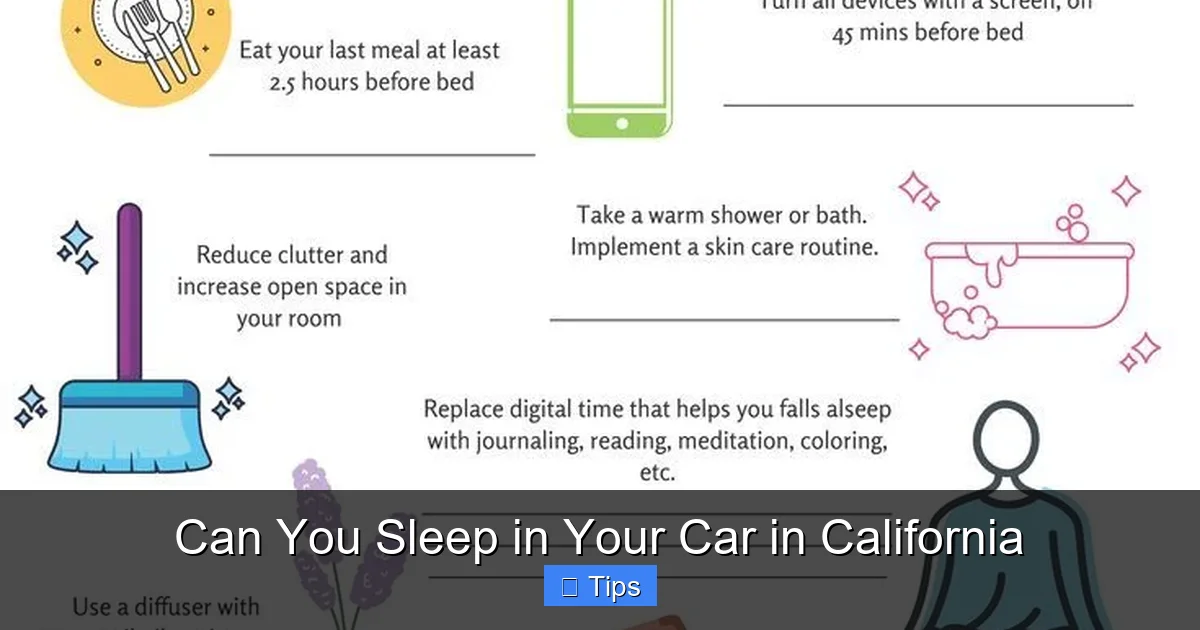
Visual guide about Can You Sleep in Your Car in California
Image source: i.pinimg.com
Now that you know the legal landscape, let’s talk about where you *can* safely and legally sleep in your car in California. The key is to find locations that are both permitted and secure.
Rest Areas and Highway Pullouts
California has over 80 rest areas along its major highways, and most allow overnight stays. These are some of the safest and most legal options for sleeping in your car.
– **Pros**: Well-lit, monitored by cameras, located near gas stations and restrooms.
– **Cons**: Limited to 8 hours, no camping gear allowed, some close at night.
Popular rest areas include the **Newhall Pass Rest Area** on I-5 near Santa Clarita and the **Harris Ranch Rest Area** on I-5 near Coalinga. Always check the Caltrans website or app for real-time status and hours.
Walmart and Retail Parking Lots
Walmart is famously lenient about overnight parking, and many locations across California allow it. But don’t just assume—always ask the manager.
– **Tips**: Park near the front or in a well-lit area. Don’t loiter during the day. Be respectful and leave early in the morning.
– **Alternatives**: Some Cracker Barrel restaurants, Cabela’s, and even certain gas stations (like Love’s or Pilot) allow overnight stays.
Campgrounds and RV Parks
If you’re in a van, RV, or camper, consider paying for a night at a campground. Prices start around $20–$40, and you’ll get access to showers, restrooms, and security.
– **Public Campgrounds**: National forests, state parks, and Bureau of Land Management (BLM) areas often allow dispersed camping or low-cost sites. For example, the **Angeles National Forest** has free dispersed camping zones (check fire restrictions).
– **Private RV Parks**: Places like **KOA** or **Sunset Ranch RV Park** offer nightly rates and amenities.
Safe Parking Programs and Nonprofits
Some cities have partnered with nonprofits to create safe parking lots for people living in vehicles. These are usually for residents experiencing homelessness, but they show that legal overnight options exist.
– **Examples**: The **Safe Parking Program** in Santa Barbara, **The Sanctuary** in Oakland, and **Weingart Center** in LA.
– **How to Access**: Usually requires registration and proof of residency. Not ideal for travelers, but worth knowing about if you’re in a tough spot.
Apps and Online Resources
Technology can help you find safe spots. Try these apps:
– **iOverlander**: Crowdsourced info on free camping, rest areas, and safe parking.
– **Parkopedia**: Shows parking availability and rules.
– **AllStays**: Lists campgrounds, RV parks, and overnight parking options.
– **Boondockers Welcome**: Connects travelers with hosts who offer free overnight parking on private property.
How to Sleep Comfortably and Safely in Your Car
Visual guide about Can You Sleep in Your Car in California
Image source: roadtripmotorhomes.co.uk
Even if you find a legal spot, sleeping in your car isn’t always comfortable—or safe. Here’s how to make the best of it.
Prepare Your Vehicle
Your car should be clean, organized, and ready for overnight use.
– **Clear the back seat**: Remove clutter so you can lie down flat or recline.
– **Use a mattress or sleeping pad**: A foldable camping mattress or inflatable pad can make a huge difference.
– **Window shades**: Reflective sunshades or blackout curtains help with privacy and temperature control.
– **Ventilation**: Crack a window slightly for airflow, but don’t leave it wide open in unsafe areas.
Stay Warm and Cool
California’s weather varies wildly—from chilly coastal nights to desert heat.
– **Cold nights**: Use a sleeping bag rated for low temperatures. Layer clothing and consider a portable heater (only use battery-powered or vented models—never run a car engine in a closed space due to carbon monoxide risk).
– **Hot nights**: Park in the shade, use reflective windshield covers, and consider a battery-powered fan. Avoid parking on asphalt, which radiates heat.
Ensure Personal Safety
Your safety is the top priority.
– **Park in well-lit, populated areas**: Avoid isolated spots, especially at night.
– **Lock your doors**: Always lock your car when sleeping.
– **Keep valuables out of sight**: Don’t leave phones, wallets, or bags visible.
– **Have an exit plan**: Know where the nearest gas station, hospital, or police station is.
Maintain Privacy and Discretion
Drawing attention can lead to trouble.
– **Avoid setting up camp**: Don’t pitch a tent or hang laundry.
– **Stay quiet**: Keep music, voices, and lights low.
– **Leave early**: Don’t linger in the morning. Most safe spots expect you to leave by 7 or 8 AM.
Alternatives to Sleeping in Your Car
Sometimes, sleeping in your car just isn’t the best option. Here are some alternatives that might work better.
Budget Hostels and Motels
California has many affordable hostels, especially in cities like San Francisco, Los Angeles, and San Diego.
– **Prices**: $30–$60 per night for a dorm bed.
– **Perks**: Showers, Wi-Fi, and social spaces.
– **Examples**: **HI USA hostels**, **Green Tortoise Hostel**, **PodShare**.
Campgrounds and Public Lands
For a more natural experience, try camping.
– **State Parks**: $30–$50 per night. Reservations required (book early!).
– **National Forests**: Free dispersed camping in many areas (no facilities).
– **BLM Land**: Often free and remote—great for van lifers.
Apps for Free or Low-Cost Stays
– **Hipcamp**: Rent private land for camping, often cheaper than parks.
– **Couchsurfing**: Stay with locals for free (great for meeting people).
– **Workaway or HelpX**: Trade work for accommodation.
What to Do If You’re Approached by Law Enforcement
Even if you’re doing everything right, you might still get questioned by police. Here’s how to handle it.
– **Stay calm and polite**: Don’t argue or run.
– **Be honest**: Say you’re traveling and just needed a place to sleep.
– **Ask for clarification**: “Can you tell me what the local rules are?”
– **Know your rights**: You have the right to remain silent and ask if you’re free to leave.
In most cases, if you’re not breaking any laws, officers will just give a warning. But if you’re in a restricted zone, you may be asked to move.
Final Thoughts: Is It Worth It?
Sleeping in your car in California can be a practical, money-saving option—but it’s not without risks. The laws are complicated, the weather can be harsh, and safety is never guaranteed.
If you’re doing it occasionally on a road trip, with proper planning, it can work. But if you’re relying on it long-term, consider safer, more sustainable alternatives.
The key is to be informed, respectful, and prepared. Know the rules, choose your spots wisely, and always prioritize your safety and comfort.
With the right approach, you can make car sleeping in California a viable—and even enjoyable—part of your journey.
Frequently Asked Questions
Is it illegal to sleep in your car in California?
No, it’s not illegal under state law, but many cities and counties have local ordinances that ban sleeping in vehicles, especially overnight or in residential areas. Always check local rules before parking.
Can I sleep in my car at a California rest area?
Yes, most California rest areas allow overnight parking for up to 8 hours. You can sleep in your vehicle, but camping, tents, and generators are not allowed.
Does Walmart allow overnight parking in California?
Many Walmart locations in California allow overnight parking, but it’s up to the store manager. Always ask for permission and park in a safe, visible spot.
What should I do if police ask me to leave?
Stay calm, be respectful, and ask for clarification on the local laws. If you’re violating an ordinance, move to a legal location. Don’t argue or resist.
Are there safe parking programs for people sleeping in cars?
Yes, some cities like Santa Barbara and Oakland offer safe parking lots for residents experiencing homelessness. These require registration and are not typically for tourists.
How can I stay warm while sleeping in my car in California?
Use a warm sleeping bag, layer clothing, and consider a battery-powered heater. Never run your car engine in a closed space due to carbon monoxide danger.

At CarLegit, we believe information should be clear, factual, and genuinely helpful. That’s why every guide, review, and update on our website is created with care, research, and a strong focus on user experience.