

Leasing and financing a car are two popular ways to drive a new vehicle, but they work very differently. Leasing is like renting with lower monthly payments and the option to upgrade often, while financing means you own the car after paying off the loan. Choosing the right path depends on your driving habits, budget, and whether you value ownership or flexibility.
In This Article
- 1 Key Takeaways
- 2 📑 Table of Contents
- 3 Introduction: Choosing Your Path to the Driver’s Seat
- 4 What Is Car Financing?
- 5 What Is Car Leasing?
- 6 Key Differences Between Leasing and Financing
- 7 Who Should Lease vs. Finance?
- 8 Hidden Costs and Fine Print
- 9 Tips for Making the Right Choice
- 10 Conclusion: Which Is Right for You?
- 11 Frequently Asked Questions
Key Takeaways
- Ownership: Financing leads to ownership after the loan is paid; leasing means you never own the car and must return it or buy it at the end.
- Monthly Payments: Leases typically have lower monthly payments than financing because you’re only paying for the car’s depreciation during the lease term.
- Mileage Limits: Leases come with mileage restrictions (usually 10,000–15,000 miles per year), while financed cars have no such limits.
- Maintenance and Repairs: Leased cars are often under warranty, so repairs are covered; financed cars may require out-of-pocket costs once the warranty expires.
- Customization: You can modify a financed car freely, but leased vehicles must be returned in original condition.
- Long-Term Cost: Financing is cheaper in the long run if you keep the car; leasing can cost more over time due to continuous payments.
- Flexibility: Leasing offers the chance to drive a new car every few years; financing builds equity and offers stability.
📑 Table of Contents
Introduction: Choosing Your Path to the Driver’s Seat
So you’re ready for a new car. Maybe your old ride is on its last legs, or you’re just craving something sleeker, faster, or more fuel-efficient. Whatever the reason, you’re standing at a crossroads: should you lease or finance your next vehicle?
It’s a decision that affects your wallet, your lifestyle, and even how you think about car ownership. And while both options get you behind the wheel, they’re fundamentally different in how they work, what they cost, and what they offer in the long run.
Let’s be honest—car shopping can feel overwhelming. Between interest rates, down payments, mileage caps, and residual values, it’s easy to get lost in the jargon. But here’s the good news: once you understand the core difference between leasing and financing a car, the choice becomes much clearer.
In this guide, we’ll break down everything you need to know—no fluff, no confusion. We’ll compare costs, ownership, flexibility, and long-term value. By the end, you’ll know which path fits your life, your budget, and your driving dreams.
What Is Car Financing?
Visual guide about Difference Between Leasing and Financing a Car
Image source: lh3.googleusercontent.com
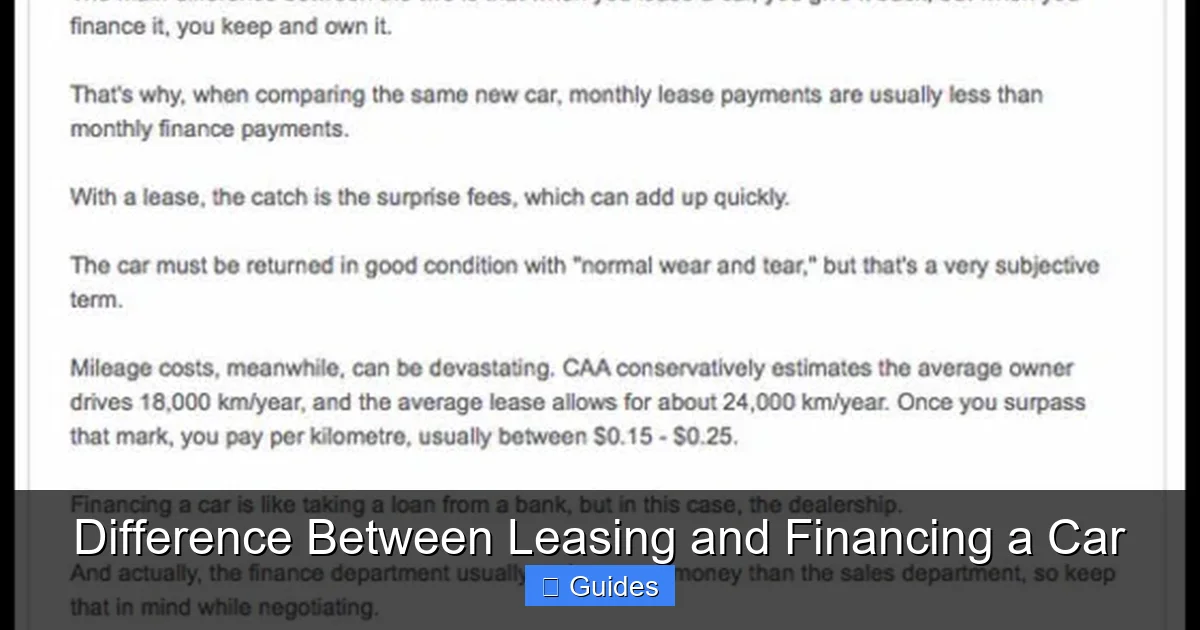
Financing a car means taking out a loan to buy it. You make monthly payments over a set period—usually 36 to 72 months—and once the loan is paid off, the car is yours. Think of it like a mortgage, but for your vehicle.
When you finance, you’re buying the car outright, even if you don’t pay for it all at once. The lender holds the title until the loan is fully repaid. After that, you own the car free and clear.
How Car Financing Works
Here’s how it typically goes: You choose a car, agree on a price, and apply for an auto loan—either through the dealership or a bank/credit union. Once approved, you make a down payment (usually 10–20% of the car’s value), and the lender covers the rest.
Then, you start making monthly payments that include both principal (the amount you borrowed) and interest. Over time, you build equity in the car—meaning it’s worth something to you, even if it’s not fully paid off.
For example, let’s say you buy a $30,000 car with a $6,000 down payment and a 5-year loan at 5% interest. Your monthly payment might be around $450. After five years, you’ve paid about $33,000 total—but now you own a car that’s still worth something, say $12,000, depending on mileage and condition.
Pros of Financing a Car
Financing has several advantages, especially if you plan to keep your car for a long time.
First, you own the car once the loan is paid off. That means no more payments, and you can drive it as long as it runs. You also have full control over modifications—want to add a spoiler, tint the windows, or upgrade the sound system? Go for it.
There are no mileage restrictions, so if you drive a lot for work or road trips, financing is a better fit. Plus, once the loan is done, you’re only paying for insurance, gas, and maintenance—no monthly car payment.
Another perk: you can sell the car anytime. If you need cash or want to upgrade, you can trade it in or sell it privately and keep the equity.
Cons of Financing a Car
Of course, financing isn’t perfect. The biggest downside? Higher monthly payments compared to leasing. Since you’re paying for the entire value of the car (minus the down payment), your payments are larger.
You’re also responsible for all maintenance and repairs once the warranty expires. That can add up—especially with older cars. And if you sell the car before the loan is paid off, you might owe more than it’s worth (known as being “upside down” on the loan).
Finally, cars depreciate fast. A new car can lose 20% of its value the moment you drive it off the lot. So even though you own it, its worth drops quickly.
What Is Car Leasing?

Visual guide about Difference Between Leasing and Financing a Car
Image source: autoloansolutions.ca
Leasing a car is like renting it for a long period—usually 24 to 36 months. You pay for the vehicle’s depreciation during the lease term, plus fees and interest, but you never own it. At the end, you return the car or buy it at a pre-set price.
Think of it as a long-term rental with rules. You get to drive a new car with the latest features, often with lower monthly payments, but you don’t build equity.
How Car Leasing Works
When you lease, the dealer estimates how much the car will depreciate over the lease term. That amount, plus interest and fees, becomes your monthly payment. You also pay a down payment (called a “cap cost reduction”), security deposit, and other fees upfront.
For example, a $35,000 car might depreciate by $15,000 over three years. Add in interest and fees, and your monthly payment could be $350—much lower than a finance payment on the same car.
At the end of the lease, you return the car, provided it’s in good condition and within the mileage limit. Or, you can buy it at the “residual value”—the price set at the start of the lease.
Pros of Leasing a Car
Leasing shines when it comes to affordability and flexibility. Monthly payments are typically 20–30% lower than financing, making it easier to drive a more expensive or luxury vehicle.
You also get to drive a new car every few years with the latest tech, safety features, and warranties. Most leases last as long as the manufacturer’s warranty, so major repairs are usually covered.
No need to worry about selling the car later—just return it and walk away (or lease a new one). It’s a great option if you like driving new models and don’t want the hassle of ownership.
Cons of Leasing a Car
But leasing has its downsides. You never own the car, so you’re always making payments. It’s like paying rent forever.
There are strict mileage limits—usually 10,000 to 15,000 miles per year. Go over, and you’ll pay extra (often $0.10 to $0.25 per mile). That’s a problem if you drive a lot.
You also can’t customize the car. Scratches, dents, or modifications can lead to fees when you return it. And if the car needs repairs outside the warranty, you’re on the hook.
Finally, leasing can cost more in the long run. While payments are lower, you’re always paying for a new car every few years. Over a decade, that could mean paying more than if you’d financed and kept one car.
Key Differences Between Leasing and Financing
Visual guide about Difference Between Leasing and Financing a Car
Image source: metapress.com
Now that we’ve covered the basics, let’s compare leasing and financing side by side. Understanding these differences will help you decide which option fits your life.
Ownership and Equity
This is the biggest difference. With financing, you own the car after the loan is paid. You build equity and can sell it or trade it in.
With leasing, you never own the car. You’re essentially paying to use it. No equity, no ownership—just temporary access.
Monthly Payments
Leasing usually has lower monthly payments because you’re only paying for depreciation, not the full value. Financing payments are higher since you’re paying off the entire car.
For example, a $40,000 car might cost $450/month to finance but only $300/month to lease. That $150 difference can be tempting—but remember, with leasing, you’ll be paying again in three years.
Mileage and Usage
Leases come with mileage caps. Drive too much, and you’ll pay extra. Financed cars have no limits—you can drive as much as you want.
If you commute long distances or love road trips, financing is the better choice. Leasing works best for city drivers with predictable mileage.
Maintenance and Repairs
Leased cars are often under warranty, so repairs are covered. Financed cars may need out-of-pocket repairs once the warranty ends.
But with financing, you can choose where to get service—dealership, independent shop, or even DIY. Lease agreements may require you to use certified repair centers.
Customization and Wear
Want to personalize your ride? Financing lets you modify the car—paint, wheels, interior upgrades. Leasing? Not so much. You must return the car in near-original condition.
Even normal wear and tear can lead to fees at lease end. Scratches, dents, or stained seats might cost you hundreds.
Long-Term Costs
Over time, financing is usually cheaper. Once the loan is paid, you own the car and only pay for upkeep. Leasing means continuous payments—every few years, you’re back in a new lease.
If you keep a financed car for 10 years, you’ll save thousands compared to leasing three different cars over the same period.
Who Should Lease vs. Finance?
So who benefits most from each option? It depends on your lifestyle, budget, and goals.
Best Candidates for Leasing
Leasing is ideal if you:
– Want lower monthly payments
– Prefer driving a new car every 2–3 years
– Don’t drive more than 12,000 miles per year
– Like having the latest tech and safety features
– Don’t want to deal with selling or trading in a car
– Work in a field where image matters (e.g., sales, consulting)
For example, a young professional who drives 10,000 miles a year and wants a luxury sedan with Apple CarPlay and adaptive cruise control might love leasing. They get a premium ride without the high payments of ownership.
Best Candidates for Financing
Financing makes sense if you:
– Plan to keep the car for 5+ years
– Drive a lot (over 15,000 miles/year)
– Want to build equity and eventually own the car
– Like customizing your vehicle
– Want to avoid mileage penalties
– Prefer lower long-term costs
A family with two kids who takes weekend trips and drives 18,000 miles a year should probably finance. They need reliability, space, and freedom—without worrying about mileage fees.
Hybrid Approach: Lease Then Buy
Some people lease first, then buy the car at the end. This works if you love the vehicle and want to keep it long-term.
You get the lower payments of leasing, then transition to ownership. Just make sure the residual value is fair—sometimes it’s better to finance from the start.
Hidden Costs and Fine Print
Both leasing and financing come with hidden fees and fine print. Knowing these can save you money and headaches.
Lease Fees to Watch For
– Acquisition fee: $500–$1,000, charged at the start
– Disposition fee: $300–$500, charged when you return the car
– Excess wear and tear charges: for dents, scratches, or stained interiors
– Mileage overage fees: $0.10–$0.25 per extra mile
– Early termination fees: if you end the lease early
Always read the lease agreement carefully. Some dealers offer “wear-and-tear waivers” for a small monthly fee—worth considering if you’re worried about damage.
Financing Fees to Watch For
– Origination fee: some lenders charge this to start the loan
– Prepayment penalty: rare, but some loans charge if you pay off early
– Documentation fee: $100–$500, charged by dealers
– Late payment fees: can add up quickly
Also, watch your interest rate. A higher rate can add thousands to your total cost. Shop around—banks, credit unions, and online lenders often offer better rates than dealerships.
Depreciation: The Silent Cost
Both leasing and financing are affected by depreciation—the drop in a car’s value over time.
With leasing, you’re paying for depreciation directly. With financing, you own a depreciating asset. But if you keep the car long enough, depreciation slows, and the car becomes “paid off” while still useful.
Buying a car that holds its value well (like a Toyota or Honda) can make financing even more attractive.
Tips for Making the Right Choice
Still unsure? Here are some practical tips to help you decide.
Ask Yourself These Questions
– How many miles do I drive per year?
– Do I want to own the car long-term?
– Can I afford higher monthly payments?
– Do I like driving new cars every few years?
– Am I okay with mileage limits and wear rules?
Write down your answers. If you drive a lot or want ownership, lean toward financing. If you want low payments and flexibility, leasing might be better.
Run the Numbers
Use online calculators to compare total costs over 5 or 10 years. Include:
– Monthly payments
– Down payment
– Interest or lease fees
– Maintenance and repairs
– Resale value (for financing)
– Lease-end fees (for leasing)
A $300/month lease might seem cheaper than a $450/month loan—but over 10 years, that’s $36,000 vs. $54,000. But with financing, you own a $10,000 car at the end. With leasing, you own nothing.
Test Drive Both Options
Talk to dealers about both lease and finance deals on the same car. Ask for quotes and compare them side by side.
Don’t be pressured into a decision. Take your time, read the fine print, and ask questions.
Consider Certified Pre-Owned
Another option? Certified pre-owned (CPO) cars. They’re used but inspected, warrantied, and often cheaper than new. You can finance a CPO car with lower payments and still own it.
It’s a great middle ground—lower cost than new, but full ownership.
Conclusion: Which Is Right for You?
So, what’s the difference between leasing and financing a car? It comes down to ownership, cost, and lifestyle.
Leasing offers lower payments, new cars, and hassle-free returns—but no equity and strict rules. Financing costs more upfront but leads to ownership, freedom, and long-term savings.
There’s no one-size-fits-all answer. The best choice depends on how you drive, how you spend, and what you value most.
If you want to drive a new car every few years and don’t mind never owning one, leasing could be perfect. But if you plan to keep your car for a decade, drive a lot, or want to customize it, financing is the smarter move.
Take your time. Do the math. Ask questions. And when you’re ready, choose the path that puts you in the driver’s seat—on your terms.
Frequently Asked Questions
Is it better to lease or finance a car?
It depends on your needs. Leasing is better if you want lower payments and a new car every few years. Financing is better if you plan to keep the car long-term and want to build equity.
Can you negotiate a car lease?
Yes, you can negotiate the capitalized cost, money factor, and other terms—just like with financing. Don’t assume lease terms are fixed.
What happens at the end of a car lease?
You can return the car, buy it at the residual value, or lease a new one. Returning it may involve fees for excess wear or mileage.
Do you build equity when leasing a car?
No, you don’t build equity when leasing. You’re paying to use the car, not own it. With financing, you build equity as you pay down the loan.
Can you pay off a car lease early?
Yes, but there may be early termination fees. Check your lease agreement—some allow early buyouts, but it’s not always cost-effective.
Is leasing a car a waste of money?
Not necessarily. Leasing can be smart if you value new cars, low payments, and warranty coverage. But it can cost more over time than financing and keeping one car.

At CarLegit, we believe information should be clear, factual, and genuinely helpful. That’s why every guide, review, and update on our website is created with care, research, and a strong focus on user experience.