
Deciding whether to keep collision insurance on an older car depends on its value, your financial situation, and risk tolerance. While it offers peace of mind after an accident, the cost may outweigh the benefit if your car isn’t worth much. Weigh the premiums against potential payouts to make a smart, personalized choice.
In This Article
- 1 Key Takeaways
- 2 📑 Table of Contents
- 3 Do I Need Collision Insurance on an Old Car?
- 4 What Is Collision Insurance and How Does It Work?
- 5 How to Determine If Your Old Car Is Worth Insuring for Collision
- 6 Financial Considerations: Can You Afford to Go Without Collision?
- 7 State Laws, Lender Requirements, and Other Factors
- 8 Alternatives to Collision Insurance for Older Cars
- 9 When to Reevaluate Your Decision
- 10 Real-Life Scenarios: When Collision Made Sense (or Didn’t)
- 11 Final Thoughts: Making the Right Choice for You
- 12 Frequently Asked Questions
- 12.1 Is collision insurance required by law for old cars?
- 12.2 How do I find out my car’s actual cash value?
- 12.3 Can I drop collision insurance mid-policy?
- 12.4 What happens if I get into an accident without collision insurance?
- 12.5 Is it cheaper to insure an old car?
- 12.6 Should I keep comprehensive coverage if I drop collision?
Key Takeaways
- Assess your car’s actual cash value: If repair costs exceed the car’s worth, collision coverage may not be worth the premium.
- Consider your financial cushion: If you can afford to replace or repair the car out of pocket, dropping collision could save money.
- Understand what collision insurance covers: It pays for damage from collisions with objects or other vehicles, regardless of fault.
- Review your driving habits and environment: High-traffic areas or frequent driving increase accident risk, making coverage more valuable.
- Check state requirements and lender rules: Some states or lenders may require collision coverage even on older vehicles.
- Explore alternatives like liability-only or uninsured motorist coverage: These can offer protection without the high cost of full coverage.
- Reevaluate annually: As your car ages and depreciates, revisit your insurance needs to avoid overpaying.
📑 Table of Contents
- Do I Need Collision Insurance on an Old Car?
- What Is Collision Insurance and How Does It Work?
- How to Determine If Your Old Car Is Worth Insuring for Collision
- Financial Considerations: Can You Afford to Go Without Collision?
- State Laws, Lender Requirements, and Other Factors
- Alternatives to Collision Insurance for Older Cars
- When to Reevaluate Your Decision
- Real-Life Scenarios: When Collision Made Sense (or Didn’t)
- Final Thoughts: Making the Right Choice for You
Do I Need Collision Insurance on an Old Car?
Let’s face it—owning an older car comes with its own set of joys and challenges. On one hand, you’ve likely paid off the loan, and maintenance costs might be predictable. On the other hand, the vehicle’s value has dropped significantly, and every dent or scratch feels like a bigger deal. One question that keeps popping up among owners of aging vehicles is: *Do I really need collision insurance on an old car?*
It’s a smart question—and one that deserves a thoughtful answer. Collision insurance isn’t mandatory in most states, unlike liability coverage, which is required almost everywhere. But just because it’s optional doesn’t mean it’s irrelevant. The decision to keep or drop collision coverage on an older car hinges on a mix of financial logic, personal risk tolerance, and practical considerations.
In this guide, we’ll walk you through everything you need to know to make an informed choice. We’ll break down what collision insurance actually covers, how to evaluate your car’s worth, and when it makes sense—or doesn’t—to keep paying for it. Whether you’re driving a 10-year-old sedan or a trusty 15-year-old SUV, this article will help you decide what’s best for your wallet and your peace of mind.
What Is Collision Insurance and How Does It Work?
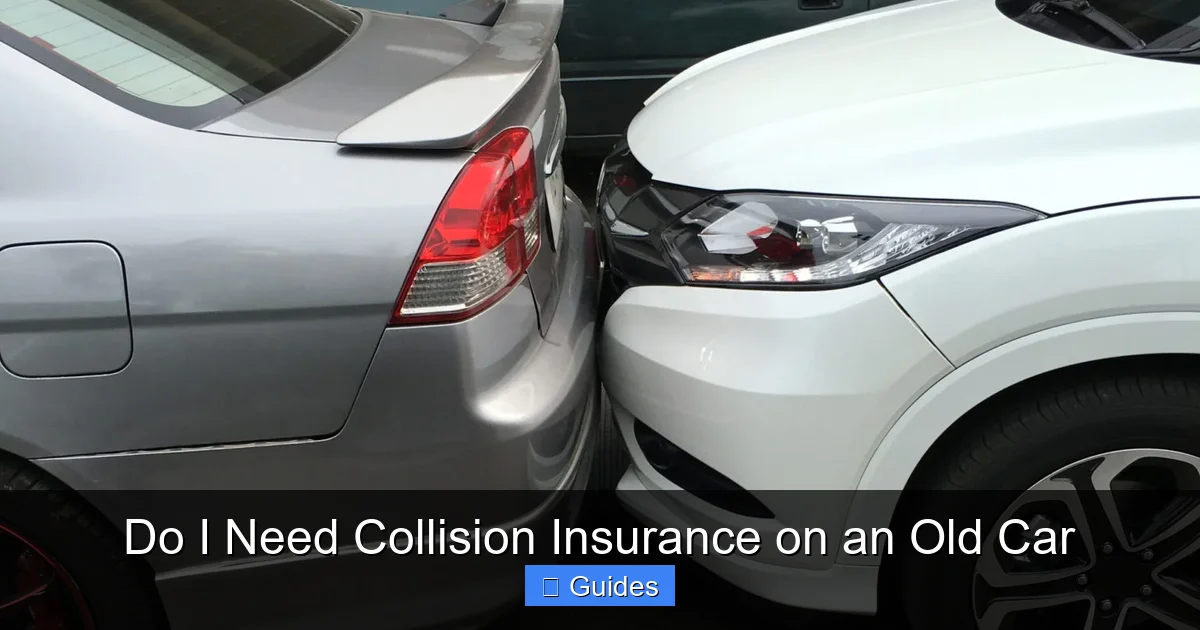
Visual guide about Do I Need Collision Insurance on an Old Car
Image source: schaeferautobody.com
Before deciding whether to keep collision insurance on your older car, it’s important to understand exactly what it does—and doesn’t—cover.
Collision insurance is a type of auto coverage that pays for damage to your vehicle resulting from a collision with another car or object, regardless of who is at fault. This includes hitting a tree, crashing into a guardrail, or rear-ending another driver. It also covers rollover accidents. Importantly, collision coverage only applies to your vehicle—it doesn’t pay for injuries to you or others, which is where liability or medical payments coverage comes in.
Here’s how it typically works: If you get into an accident and your car is damaged, you file a claim with your insurer. After paying your deductible—say, $500 or $1,000—the insurance company covers the rest of the repair costs, up to the actual cash value (ACV) of your car at the time of the accident. If the damage exceeds the car’s value, the insurer will declare it a total loss and pay you the ACV minus your deductible.
For example, imagine you drive a 2008 Honda Accord worth $3,000. You hit a parked car, and repairs are estimated at $4,200. Since that’s more than the car is worth, the insurer will total the vehicle and send you a check for $2,500 (assuming a $500 deductible). That money can go toward a replacement car or other expenses.
But here’s the catch: collision insurance comes at a cost. Premiums can range from $100 to $500 or more per year, depending on your deductible, driving record, location, and the car’s value. For an older vehicle, that annual cost might exceed what the insurance would actually pay out in a claim.
Collision vs. Comprehensive: What’s the Difference?
Many people confuse collision insurance with comprehensive coverage, but they protect against different types of incidents.
Collision covers damage from accidents involving another vehicle or object—like crashing into a wall or another car. Comprehensive, on the other hand, covers non-collision events such as theft, vandalism, fire, hail, flooding, or hitting an animal. For example, if a tree falls on your parked car during a storm, comprehensive would cover the damage. If you swerve to avoid the tree and hit a curb, that’s collision.
Both are often bundled together under the term “full coverage,” but they’re separate policies. When deciding whether to keep collision on an old car, you might also consider whether comprehensive is worth it. For a low-value vehicle, comprehensive can still make sense if you live in an area prone to theft or natural disasters.
How to Determine If Your Old Car Is Worth Insuring for Collision
Visual guide about Do I Need Collision Insurance on an Old Car
Image source: insurancy.com
The biggest factor in deciding whether to keep collision insurance is your car’s actual cash value (ACV). If the cost of the premium is close to or exceeds what the insurance would pay in a claim, it may not be worth it.
Here’s a simple way to evaluate:
1. **Check your car’s current market value.** Use tools like Kelley Blue Book (KBB), Edmunds, or NADA Guides. Enter your car’s make, model, year, mileage, and condition to get an estimated value. Be honest about its condition—rust, high mileage, and mechanical issues can significantly lower the value.
2. **Compare the annual premium to the car’s value.** A common rule of thumb is that if your annual collision premium is more than 10% of your car’s value, it’s probably not worth keeping. For example, if your 2007 Toyota Camry is worth $2,500 and your collision premium is $300 per year, that’s 12%—likely too high.
3. **Factor in your deductible.** A higher deductible lowers your premium but increases your out-of-pocket cost if you file a claim. If your deductible is $1,000 and your car is only worth $3,000, you’d only receive $2,000 after a total loss—less than the cost of a used replacement.
Let’s look at a real-world example:
*Sarah owns a 2006 Ford Focus with 180,000 miles. KBB values it at $1,800 in fair condition. Her collision premium is $280 per year with a $500 deductible. If she gets into an accident and the car is totaled, she’d receive $1,300. But she’s already paid $280 for the year—and will likely pay more in future years. Over three years, she’d spend $840 on premiums for a car that’s only worth $1,800. That’s a tough math problem.*
In Sarah’s case, dropping collision might make sense—especially if she has savings to cover a replacement.
When Collision Might Still Be Worth It
Even if your car is old, there are situations where keeping collision coverage makes sense:
– **You drive frequently or in high-risk areas.** If you commute daily in heavy traffic or live in a city with a high accident rate, the risk of a collision increases.
– **You can’t afford to replace the car out of pocket.** If $2,000 would seriously strain your budget, the peace of mind from collision coverage may be worth the cost.
– **The car has sentimental or practical value.** Maybe it’s a reliable work vehicle or a family heirloom. Even if it’s not worth much monetarily, you may want to protect it.
– **You have a low deductible.** If your deductible is $250 and your premium is reasonable, the out-of-pocket cost in a claim is minimal.
Financial Considerations: Can You Afford to Go Without Collision?
Visual guide about Do I Need Collision Insurance on an Old Car
Image source: insurancy.com
Dropping collision insurance isn’t just about the car’s value—it’s about your financial readiness to handle unexpected expenses.
Ask yourself: *If my car were totaled tomorrow, could I afford to replace it?* If the answer is yes, you might be a good candidate for dropping collision. But if a few thousand dollars would derail your budget, the insurance might still be a smart safety net.
Consider building an emergency fund specifically for car-related expenses. Even if you drop collision, having $2,000–$3,000 set aside can cover repairs or a down payment on a used car. This way, you’re self-insuring—taking on the risk yourself instead of paying an insurer.
Another factor is your overall financial health. If you’re debt-free, have stable income, and good savings, you’re in a stronger position to drop coverage. But if you’re living paycheck to paycheck, even a small accident could lead to financial stress.
The Hidden Costs of Going Without Collision
While dropping collision can save money, it’s not without risks. Without it, you’re responsible for all repair costs after an accident—even if you’re not at fault. While the other driver’s insurance should cover your damages if they’re liable, claims can take time, and there’s no guarantee of a quick payout.
In some cases, the at-fault driver may be uninsured or underinsured, leaving you with no recourse. That’s where uninsured/underinsured motorist coverage (UM/UIM) becomes crucial. It can help cover your vehicle damage and medical bills if the other party can’t pay.
Also, consider the emotional toll. Dealing with repairs, rentals, and paperwork after an accident is stressful. Collision insurance simplifies the process—your insurer handles the claim, arranges repairs, and may even provide a rental car.
State Laws, Lender Requirements, and Other Factors
Before making any changes to your policy, check your state’s insurance requirements and any contractual obligations.
In most states, liability insurance is mandatory, but collision is optional. However, if you’re still making payments on your car—even if it’s old—the lender may require full coverage, including collision and comprehensive, until the loan is paid off. This protects their financial interest in the vehicle.
Even if you own the car outright, some states have specific rules about dropping coverage. For example, if you’ve had collision in the past, switching to liability-only might require a written request or affect your no-claims bonus.
Also, consider your driving record. If you have a history of accidents or violations, insurers may charge higher premiums for collision—making it even less worthwhile for an older car.
Leased Vehicles and Collision Coverage
If you’re leasing an older car (yes, some people do!), the leasing company will almost certainly require collision and comprehensive coverage for the duration of the lease. This is non-negotiable—it’s part of the contract. Dropping coverage could result in penalties or even lease termination.
Alternatives to Collision Insurance for Older Cars
If you decide collision isn’t worth it, there are still ways to protect yourself and your finances.
Liability-Only Coverage
This is the bare minimum in most states. It covers damage and injuries you cause to others in an accident, but not your own vehicle. It’s the cheapest option and ideal if you’re comfortable self-insuring your car.
Uninsured/Underinsured Motorist Coverage (UM/UIM)
This pays for your injuries and sometimes your vehicle damage if the at-fault driver has no insurance or insufficient coverage. It’s relatively inexpensive and highly recommended, especially in states with high rates of uninsured drivers.
Medical Payments (MedPay) or Personal Injury Protection (PIP)
These cover medical expenses for you and your passengers, regardless of fault. PIP is more comprehensive and required in no-fault states.
Roadside Assistance and Rental Reimbursement
While not replacements for collision, these add-ons can help if your car breaks down or you need a tow. Rental reimbursement pays for a temporary car while yours is being repaired—useful even without collision.
Self-Insuring with a Dedicated Savings Fund
Instead of paying premiums, set aside the money you’d spend on collision into a high-yield savings account. Over time, this fund can cover repairs or a replacement. It’s a disciplined approach that works well for financially stable drivers.
When to Reevaluate Your Decision
Your decision about collision insurance shouldn’t be set in stone. As your car ages and your financial situation changes, revisit the question annually.
Ask yourself:
– Has my car’s value dropped significantly?
– Have my driving habits changed (e.g., less commuting, more rural driving)?
– Have I built up enough savings to cover a replacement?
– Have insurance rates increased?
If you answer “yes” to any of these, it might be time to drop collision. Conversely, if you’ve started driving more or had a recent accident, you might want to keep it.
How to Drop Collision Coverage
If you decide to drop collision, contact your insurance agent or log into your online account. Most insurers allow you to adjust coverage instantly. Be prepared to confirm that you own the car outright and understand the risks.
Keep in mind that dropping collision may affect your premium, but not always as much as expected—especially if you keep comprehensive and other coverages.
Real-Life Scenarios: When Collision Made Sense (or Didn’t)
Let’s look at a few real-world examples to illustrate the decision-making process.
*Example 1: The Practical Commuter*
Mark drives a 2009 Honda Civic to work every day in downtown Chicago. The car is worth $2,200, and his collision premium is $320 per year. He’s had two fender benders in the past three years. Even though the car is old, the high traffic risk and his reliance on the vehicle make collision worth it—for now.
*Example 2: The Weekend Driver*
Linda owns a 2005 Subaru Outback that she uses only for weekend trips and errands. It’s worth $1,500, and her collision premium is $250. She has $4,000 in savings and could easily replace the car if needed. She drops collision and saves $250 annually, putting the money into her emergency fund.
*Example 3: The Sentimental Keeper*
James inherited his grandfather’s 1998 Ford F-150. It’s not worth much—maybe $1,000—but it’s in great shape and has family history. He keeps collision with a $1,000 deductible to protect it from accidents, even though the premium is $200 per year. For him, the emotional value outweighs the cost.
These examples show that there’s no one-size-fits-all answer. Your decision should reflect your unique situation.
Final Thoughts: Making the Right Choice for You
Deciding whether to keep collision insurance on an old car isn’t just about numbers—it’s about balancing risk, cost, and peace of mind. While the financial math often favors dropping coverage on low-value vehicles, personal factors like driving habits, financial stability, and emotional attachment play a big role.
Start by evaluating your car’s actual cash value and comparing it to your annual premium. If the cost is more than 10% of the car’s worth, it’s likely time to reconsider. But don’t stop there. Think about your ability to handle unexpected expenses, your driving environment, and whether you have other protections in place, like uninsured motorist coverage.
Remember, insurance is about managing risk—not eliminating it. You don’t need to be fully covered on every possible scenario, but you do want to avoid financial disaster. For many owners of older cars, dropping collision and investing the savings into an emergency fund is a smart, proactive move.
Ultimately, the goal is to drive with confidence, knowing you’ve made a thoughtful, informed decision. Whether you keep collision or not, you’re in control of your coverage—and your financial future.
Frequently Asked Questions
Is collision insurance required by law for old cars?
No, collision insurance is not required by law in most states, even for older vehicles. Only liability coverage is typically mandatory. However, lenders or leasing companies may require it if you’re still making payments.
How do I find out my car’s actual cash value?
Use trusted resources like Kelley Blue Book (KBB), Edmunds, or NADA Guides. Enter your car’s details—make, model, year, mileage, and condition—to get an estimated market value.
Can I drop collision insurance mid-policy?
Yes, you can usually drop collision coverage at any time by contacting your insurer. Your premium will be adjusted, and you may receive a partial refund for the unused portion.
What happens if I get into an accident without collision insurance?
You’ll be responsible for all repair costs to your vehicle. If the other driver is at fault, their insurance should cover your damages, but the process can take time and isn’t guaranteed.
Is it cheaper to insure an old car?
Generally, yes—older cars have lower values, so collision and comprehensive premiums are usually lower. However, liability and other coverages may not change much, and some older models may cost more to insure due to safety or repair factors.
Should I keep comprehensive coverage if I drop collision?
It depends. Comprehensive covers non-collision events like theft, fire, and weather damage. If you live in a high-risk area or park on the street, it may still be worth keeping—even on an old car.

At CarLegit, we believe information should be clear, factual, and genuinely helpful. That’s why every guide, review, and update on our website is created with care, research, and a strong focus on user experience.