
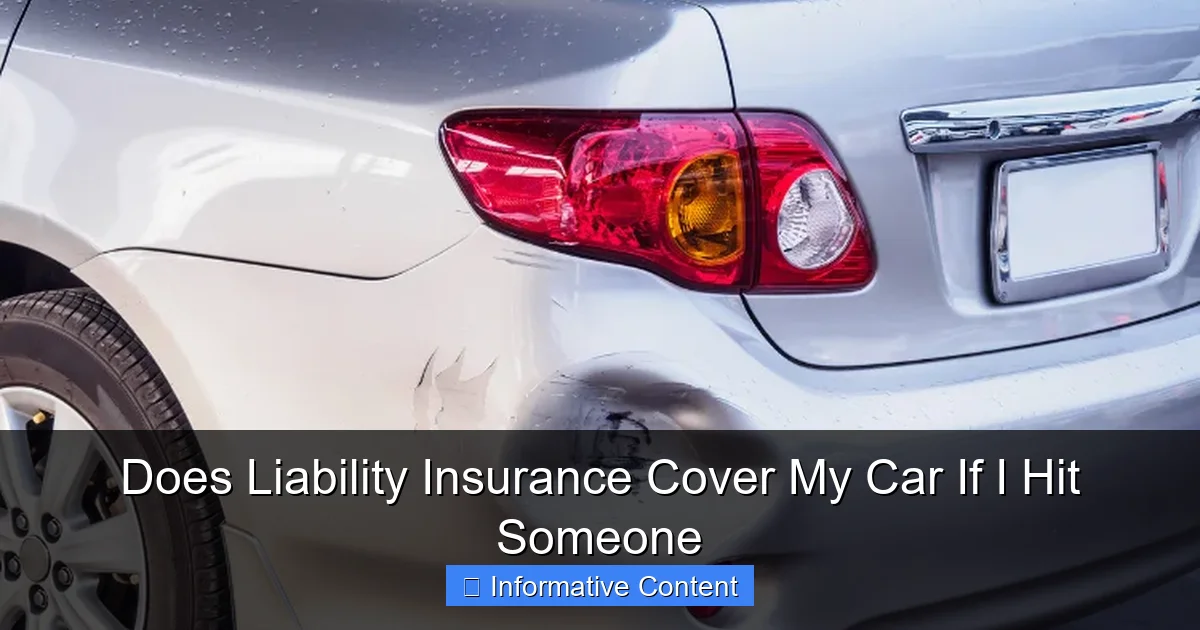
Featured image for Does Liability Insurance Cover My Car If I Hit Someone
Image source: aboutinsider.com
Liability insurance does not cover repairs to your own car after an at-fault accident. This coverage only pays for the other party’s bodily injuries and vehicle damage. To protect your own vehicle, you must purchase additional collision or comprehensive insurance.
In This Article
- 1 Does Liability Insurance Cover My Car If I Hit Someone
- 1.1 Key Takeaways
- 1.2 📑 Table of Contents
- 1.3 What is Liability Insurance and How Does It Work?
- 1.4 Does Liability Insurance Cover My Car If I Hit Someone?
- 1.5 What Does Liability Insurance Actually Cover in an Accident?
- 1.6 The Critical Gap: What Liability Insurance Doesn’t Cover
- 1.7 Real-Life Scenarios: Examples of Liability Coverage in Action
- 1.8 Tips for Choosing the Right Coverage and What to Do After an Accident
- 1.9 Conclusion: Moving Forward with Clarity and Confidence
- 1.10 Frequently Asked Questions
- 1.10.1 Does liability insurance cover my car if I hit someone?
- 1.10.2 What does liability insurance cover if I’m at fault in an accident?
- 1.10.3 If I hit someone with my car, does my insurance pay for their damages?
- 1.10.4 Does liability insurance cover my own car repairs after an accident?
- 1.10.5 What if I hit a pedestrian? Does liability insurance cover that?
- 1.10.6 How does liability insurance work if I cause an accident?
Does Liability Insurance Cover My Car If I Hit Someone
Picture this: you’re driving home after a long day, maybe a bit distracted by a stressful phone call. Suddenly, there’s a screech of tires and a jarring thud. Your heart sinks as you realize you’ve just rear-ended the car in front of you. In that moment of panic, after checking if everyone is okay, one burning question floods your mind: “Does my liability insurance cover my car if I hit someone?”
If this sounds familiar, you’re not alone. Millions of drivers face this uncertainty every year. I remember when my friend Sam had a similar fender-bender. He was convinced his insurance would handle everything, only to find out later that his repair bills were his own problem. That costly lesson is what prompted me to dig deep into the often-confusing world of auto insurance. Let’s walk through this together, in plain English, so you never have to guess what your policy really does.
This isn’t just about legal requirements; it’s about protecting your finances and peace of mind. By the end of this article, you’ll have a crystal-clear understanding of what happens to your car after an accident where you’re at fault, and exactly what role your liability insurance plays. So, take a deep breath, and let’s demystify your coverage.
Key Takeaways
- Liability insurance excludes your car: It covers others’ injuries and property, not your vehicle.
- Repair your car with collision coverage: This optional insurance pays for damage to your car.
- Liability covers the other party’s costs: Includes their medical bills and vehicle repairs.
- At-fault accidents trigger liability: Your insurance pays for damages you cause to others.
- Without collision, you pay personally: You’re responsible for your own car’s repair costs.
- Review your policy limits: Ensure you have adequate coverage for potential accidents.
📑 Table of Contents
- What is Liability Insurance and How Does It Work?
- Does Liability Insurance Cover My Car If I Hit Someone?
- What Does Liability Insurance Actually Cover in an Accident?
- The Critical Gap: What Liability Insurance Doesn’t Cover
- Real-Life Scenarios: Examples of Liability Coverage in Action
- Tips for Choosing the Right Coverage and What to Do After an Accident
- Conclusion: Moving Forward with Clarity and Confidence
What is Liability Insurance and How Does It Work?
Let’s start with the basics. Liability insurance is the core component of most auto policies and is legally required in almost every state. But what exactly is it? In the simplest terms, think of liability insurance as your “I messed up” coverage. It’s designed to protect other people and their property from your mistakes on the road.
The Two Parts of Liability Coverage
Liability insurance isn’t one single thing; it’s typically split into two main parts:
- Bodily Injury Liability: This covers costs related to injuries you cause to other people in an accident. That includes their medical bills, lost wages, and even legal fees if they sue you.
- Property Damage Liability: This covers the cost of damage you cause to someone else’s property. Usually, this means the other person’s car, but it could also be a fence, a building, or a lamp post.
When you hear numbers like 25/50/25 on a policy, that’s referring to liability limits. The first number is thousands of dollars for bodily injury per person, the second is the total per accident, and the third is for property damage. So, 25/50/25 means $25,000 per injured person, up to $50,000 total for all injuries in one accident, and $25,000 for property damage.
The Fundamental Principle: Protecting Others
Here’s the critical point to burn into your memory: liability insurance is all about protecting others, not you. Its sole job is to pay for the harm you cause to other parties when you are at fault in an accident. It does not look back at you or your vehicle. This is why so many drivers are shocked after an accident. They ask, “Does liability insurance cover my car if I hit someone?” and the answer stems from this outward-facing design.
Does Liability Insurance Cover My Car If I Hit Someone?
This is the million-dollar question, and the direct answer is: No, liability insurance does not cover your own car if you hit someone. Let that sink in for a moment. If you are at fault in a collision, your liability coverage will pay for the other driver’s car repairs and their medical expenses, but it will not pay a single dime to fix your own vehicle.
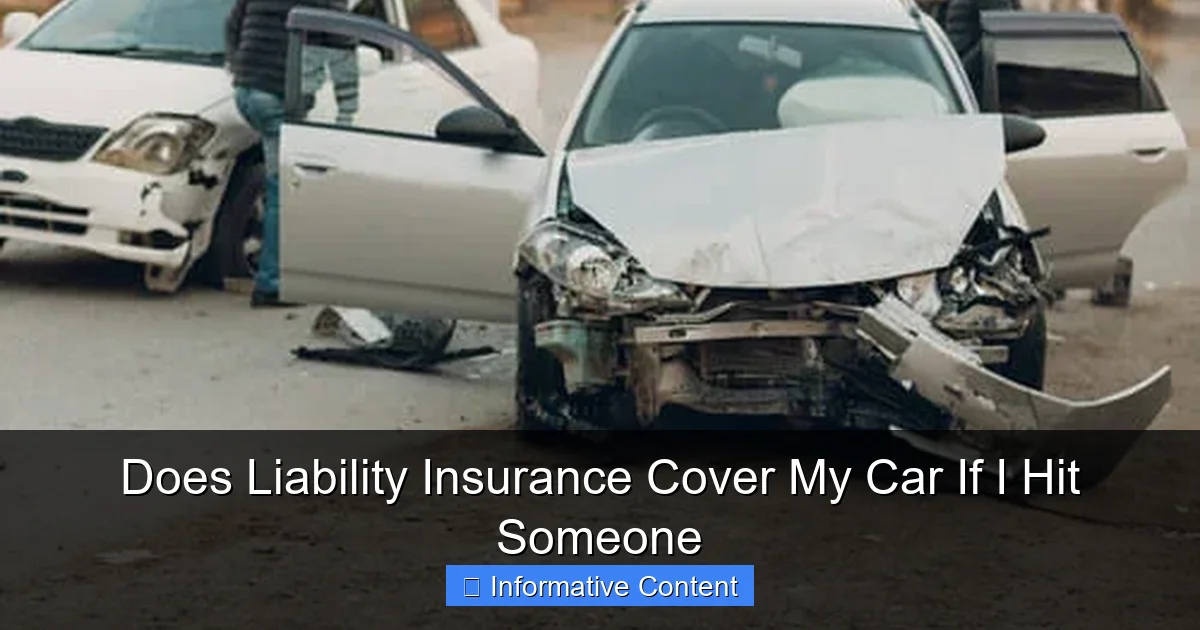
Visual guide about Does Liability Insurance Cover My Car If I Hit Someone
Image source: singhahluwalia.com
I know this can feel counterintuitive. You pay for insurance, so shouldn’t it cover your car too? But from the insurance company’s perspective, liability coverage is a promise to make others whole after your error, not a promise to repair your property. This is the most crucial takeaway when wondering, “Does liability insurance cover my car if I hit someone?”
Why This Confusion Happens
Many people lump all “car insurance” together. We see the ads with happy people getting their cars fixed, and we assume our policy does it all. The confusion is perfectly understandable. Furthermore, if the other driver hits you, their liability insurance would cover your car. But when the roles are reversed, your liability policy doesn’t switch to become your own repair fund.
So, if your liability insurance won’t cover your car after you hit someone, what will? That leads us to the other types of coverage you might need.
What Does Liability Insurance Actually Cover in an Accident?
Since liability insurance doesn’t cover your car, let’s be absolutely clear on what it does cover when you are at fault. This is where your policy kicks in to protect you from devastating financial lawsuits.
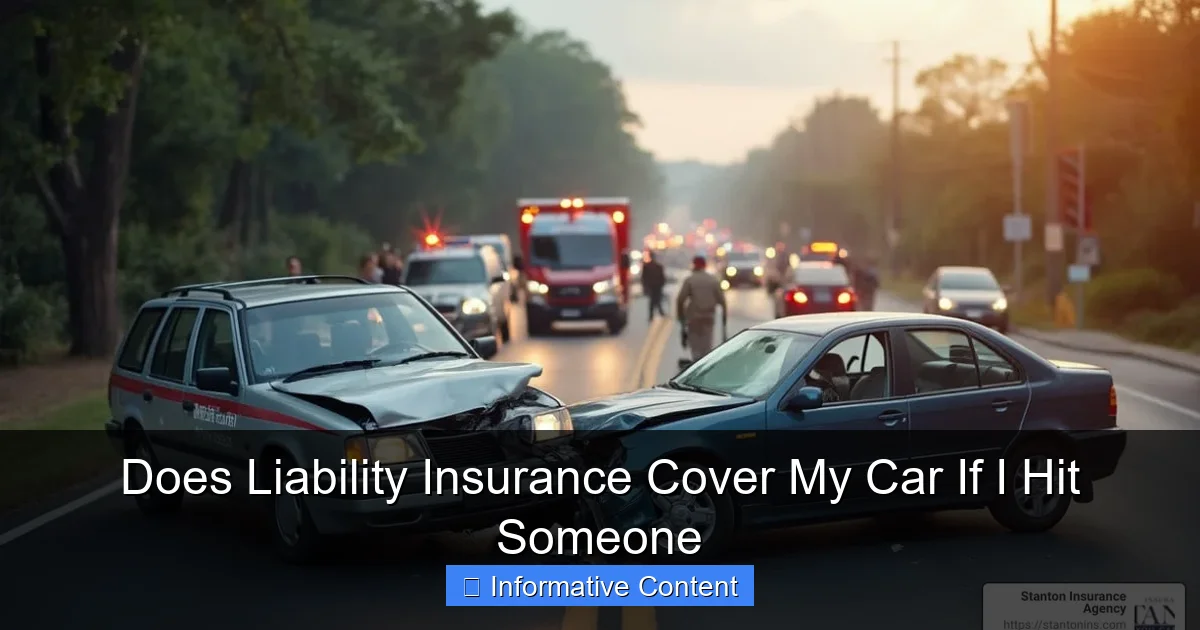
Visual guide about Does Liability Insurance Cover My Car If I Hit Someone
Image source: stantonins.com
Coverage for the Other Party’s Expenses
Your liability insurance is your financial shield. If you hit someone, it covers:
- The Other Driver’s Car Repair or Replacement: From a scratched bumper to a totaled vehicle, your property damage liability pays for it.
- Medical Bills for Injured Parties: Ambulance rides, hospital stays, surgery, and physical therapy for anyone hurt in the other vehicle.
- Lost Income and “Pain and Suffering”: If their injuries prevent them from working, or cause ongoing pain, your bodily injury liability can cover compensation for these losses.
- Legal Defense and Settlements: If you’re sued, your insurance company will provide lawyers and pay settlements or judgments up to your policy limits.
Imagine you slide on ice and hit a parked BMW. Your liability insurance would pay to fix the BMW. If the owner was nearby and got hurt from debris, it would pay their medical costs. This is the vital protection liability provides. It answers part of the question, “Does liability insurance cover my car if I hit someone?” by showing what it does cover instead.
The Importance of Adequate Limits
State minimums are often dangerously low. In our BMW example, what if the repair cost is $40,000 and your property damage limit is only $25,000? You would be personally responsible for the remaining $15,000. This is why experts recommend carrying much higher liability limits—often 100/300/100 or more—to truly protect your assets.
The Critical Gap: What Liability Insurance Doesn’t Cover
Understanding what’s not covered is just as important as knowing what is. When you ask, “Does liability insurance cover my car if I hit someone?” you’re pinpointing the biggest gap in a liability-only policy.
Visual guide about Does Liability Insurance Cover My Car If I Hit Someone
Image source: get.goautoinsurance.com
Your Own Vehicle Repairs
As we’ve established, damage to your own car is not covered under liability. To get your car fixed after an at-fault accident, you need either:
- Collision Coverage: This optional coverage pays to repair or replace your car after a collision with another vehicle or object, regardless of who is at fault.
- Uninsured/Underinsured Motorist Property Damage: In some states, this can cover your car if you’re hit by a driver with no insurance or not enough insurance, but it generally doesn’t apply when you are at fault.
Your Own Medical Bills
Liability insurance does not pay for your or your passengers’ injuries. For that, you would need:
- Personal Injury Protection (PIP) or Medical Payments (MedPay): These cover medical expenses for you and your passengers, no matter who caused the accident.
- Health Insurance: Your personal health plan may also cover accident-related injuries.
Other Exclusions
Liability insurance also typically doesn’t cover intentional damage, using your car for ridesharing without proper endorsement, or normal wear and tear. It’s purely for accidental damage to others.
Real-Life Scenarios: Examples of Liability Coverage in Action
Let’s make this concrete with some stories. These examples will show you exactly how the question “Does liability insurance cover my car if I hit someone?” plays out in real life.
Scenario 1: The At-Fault Rear-Ending
Situation: You’re following too closely and hit the car in front of you at a stoplight. Both cars have damage, and the other driver has whiplash.
What Liability Covers: Your property damage liability pays to fix the other car. Your bodily injury liability pays for the other driver’s doctor visits and missed work.
What Happens to Your Car: Your car’s repair is only covered if you have collision insurance. If you only have liability, you pay out-of-pocket.
Scenario 2: Hitting a Parked Car
Situation: You misjudge a parking spot and scrape a parked sedan.
What Liability Covers: Your property damage liability pays for the repairs to the sedan you hit.
What Happens to Your Car: The dent in your own fender is your responsibility unless you have collision coverage.
Scenario 3: A More Severe Accident
Situation: You run a red light and T-bone another vehicle, totaling it and sending the driver to the hospital.
What Liability Covers: Your insurance pays up to your limits for the totaled vehicle and the extensive medical bills. If costs exceed your limits, you could be sued for the difference.
What Happens to Your Car: Your totaled car is a financial loss for you, again, unless you have collision coverage.
These scenarios highlight why knowing the answer to “Does liability insurance cover my car if I hit someone?” is so vital for your financial planning.
Tips for Choosing the Right Coverage and What to Do After an Accident
Now that you understand the limits of liability insurance, here’s how to protect yourself fully and what steps to take if an accident happens.
Evaluating Your Insurance Needs
Don’t just buy the state minimums. Consider:
- Your Vehicle’s Value: If your car is worth more than a few thousand dollars, collision and comprehensive coverage are wise investments.
- Your Assets: If you own a home, have savings, or have a high income, high liability limits (e.g., 250/500/250) protect you from lawsuits that could wipe you out.
- The Big Picture: A full coverage policy (liability + collision + comprehensive) is often recommended for newer or financed cars.
Immediate Steps After You Hit Someone
- Safety First: Check for injuries and call 911 if needed. Move to a safe location if possible.
- Exchange Information: Get the other driver’s name, contact, insurance details, and license plate number.
- Document the Scene: Take photos of all vehicles, damage, license plates, and the overall scene.
- Notify Your Insurer: Report the accident to your insurance company promptly, even if you think it’s minor.
- Know Your Policy: Remember the key question: “Does liability insurance cover my car if I hit someone?” Understand that your repairs are not covered under liability, so be prepared to handle that separately.
A Quick Comparison Table: Liability vs. Full Coverage
This table summarizes the key differences to help you visualize your protection gaps.
| Coverage Type | What It Covers | Who It Protects | Typical When You Are At-Fault |
|---|---|---|---|
| Liability Insurance | Other party’s car damage and injuries. | The other driver and their property. | Pays for their costs. Does not cover your car. |
| Collision Coverage | Repairs to your own car after a collision. | You and your vehicle. | Covers your car’s repairs if you hit someone. |
| Full Coverage (Liability + Collision + Comprehensive) | Others’ costs + your car’s repairs from collisions and other events (theft, fire, hail). | Everyone involved and your own assets. | Provides the most complete financial protection. |
Conclusion: Moving Forward with Clarity and Confidence
So, we’ve journeyed through the ins and outs of auto insurance, and I hope the question “Does liability insurance cover my car if I hit someone?” now has a clear, definitive answer for you. No, it does not. Liability insurance is a crucial safety net for the people you might harm on the road, but it leaves your own vehicle unprotected in an at-fault accident.
The key is to not see this as a flaw, but as a design. It’s why insurance agents always talk about “layers” of protection. By pairing liability insurance with collision coverage, you build a complete shield that guards both others and yourself. Take a moment to review your policy. Call your agent and ask pointed questions about your limits and optional coverages. The few dollars more per month for collision coverage could save you thousands in heartache later.
Driving is a part of life, and accidents, unfortunately, happen to the best of us. But financial ruin from an accident doesn’t have to. Armed with this knowledge, you can drive with greater confidence, knowing exactly where you stand. Stay safe out there.
Frequently Asked Questions
Does liability insurance cover my car if I hit someone?
No, liability insurance does not cover your own car. It is designed to cover damages and injuries you cause to others in an accident. For your vehicle repairs, you would need collision coverage or similar optional insurance.
What does liability insurance cover if I’m at fault in an accident?
Liability insurance covers the other party’s property damage and bodily injuries. This includes their car repairs, medical bills, and legal expenses if you are sued. It does not provide any coverage for your own vehicle or injuries.
If I hit someone with my car, does my insurance pay for their damages?
Yes, if you have liability insurance, it will pay for the other person’s damages up to your policy limits. This typically covers their vehicle repairs and medical expenses. However, it will not cover any costs associated with your own car.
Does liability insurance cover my own car repairs after an accident?
No, liability insurance does not cover repairs to your own car after an accident. It only protects you from claims made by others you have harmed. To cover your vehicle, you need additional policies like collision insurance.
What if I hit a pedestrian? Does liability insurance cover that?
Yes, liability insurance generally covers injuries to pedestrians if you are at fault. It will pay for their medical treatment and related costs. Remember, it still does not cover damages to your own car in such incidents.
How does liability insurance work if I cause an accident?
Liability insurance works by covering costs for the other party when you are responsible for an accident. It pays for their property damage and bodily injury claims up to your policy limits. You are personally liable for any excess, and your own vehicle remains uncovered.

At CarLegit, we believe information should be clear, factual, and genuinely helpful. That’s why every guide, review, and update on our website is created with care, research, and a strong focus on user experience.