
Featured image for how long does it take to build a jeep wrangler
Image source: adventurejeep.com
The actual assembly line production of a Jeep Wrangler is a surprisingly swift process, often completed in under a day, typically taking around 18-22 hours from start to finish. However, the entire journey from initial order placement through component manufacturing, complex logistics, and rigorous quality control before reaching a dealership can span several weeks or even months.
The rumble of its engine, the iconic seven-slot grille, the unmistakable silhouette cutting through city streets or conquering rugged trails – the Jeep Wrangler is more than just a vehicle; it’s a legend, an adventure waiting to happen, and for many, a blank canvas for personal expression. From the moment one dreams of owning a Jeep Wrangler, a common question often arises: “Exactly how long does it take to build a Jeep Wrangler?” This seemingly simple query, however, unlocks a fascinating world of processes, timelines, and passionate dedication, revealing that “building a Jeep Wrangler” can mean vastly different things.
Are we talking about the hyper-efficient robotic ballet on Stellantis’s assembly line, transforming raw materials into a brand-new vehicle in a matter of hours? Or are we diving into the months-long anticipation of a custom factory order, meticulously configured to your precise specifications? Perhaps the question delves deeper into the realm of aftermarket customization – the weekend warrior embarking on a DIY lift kit installation, or the extensive, multi-month project undertaken by a professional shop to create the ultimate off-road beast or overland rig. And let’s not forget the painstaking, years-long labor of love involved in a full, frame-off restoration of a classic Jeep Wrangler, bringing it back to – or beyond – its original glory.
This comprehensive guide will unravel the multifaceted answer to that very question. We’ll journey from the factory floor to the custom garage, exploring the various “builds” a Jeep Wrangler can undergo, and meticulously detailing the timelines associated with each. Prepare to discover the intricate dance of modern manufacturing, the exhilarating wait for a personalized ride, the rewarding challenge of DIY modifications, and the epic commitment of a full restoration. By the end, you’ll have a precise understanding of what it takes, in terms of time and effort, to truly “build” a Jeep Wrangler.
In This Article
- 1 Key Takeaways
- 2 The Factory Floor: How Long Does Stellantis Take to Assemble a New Jeep Wrangler?
- 3 Custom Ordering to Dealership Delivery: The Lead Time for Your Dream Jeep Wrangler
- 4 The Thrill of the Build: DIY Modifications and Aftermarket Upgrades
- 5 Professional Customization Shops: Expediting Your Ultimate Jeep Wrangler Build
- 6 From Rust to Roar: The Epic Journey of a Full Jeep Wrangler Restoration
- 7 Factors Influencing Your Jeep Wrangler Build Timeline: A Comprehensive Breakdown
- 7.1 Part Availability and Supply Chain Dynamics
- 7.2 Skill Level and Tool Access (for DIY Builds)
- 7.3 Shop Backlogs and Scheduling (for Professional Builds)
- 7.4 Budget Constraints and Unexpected Issues
- 7.5 Vehicle Age and Condition (for Restoration/Older Mods)
- 7.6 Estimated Timelines for Different Jeep Wrangler Build Scenarios
- 8 Conclusion: The Timeless Journey of Building a Jeep Wrangler
- 9 Frequently Asked Questions
- 9.1 How long does it typically take the factory to assemble a Jeep Wrangler?
- 9.2 If I order a new Jeep Wrangler, what’s the typical wait time from order to delivery?
- 9.3 Does adding custom options or packages affect how long it takes to build my Jeep Wrangler?
- 9.4 How long does it take to build a Jeep Wrangler from a kit or perform significant custom modifications yourself?
- 9.5 What factors primarily influence how long it takes to build a Jeep Wrangler and deliver it?
- 9.6 Is it possible to expedite the build process for a new Jeep Wrangler?
Key Takeaways
- Factory Assembly: The actual assembly line build takes only hours.
- Order to Delivery: Expect 6-10 weeks for your custom Wrangler to arrive.
- Customization Adds: Personalized orders typically extend your waiting period.
- Supply Chain Impact: Component availability can significantly delay production.
- Shipping Time Varies: Delivery timelines depend heavily on your location.
- Stay Informed: Regularly check with your dealer for status updates.
The Factory Floor: How Long Does Stellantis Take to Assemble a New Jeep Wrangler?
When we talk about “building a Jeep Wrangler” in the purest manufacturing sense, we’re referring to the highly orchestrated process at Stellantis’s Toledo Assembly Complex in Ohio. This is where every new Jeep Wrangler – whether it’s a Sport, Sahara, Rubicon, or the powerful 392 – comes to life. The speed and precision are truly astounding, a testament to modern automotive engineering and logistics.
From Raw Materials to Rolling Chassis
The journey begins long before the actual assembly line. Steel coils arrive and are stamped into various body panels – doors, fenders, hoods, and the iconic grille. These panels then move to the body shop, a realm dominated by sophisticated robotics. Here, hundreds of robotic welders precisely join components, forming the unibody structure of the Jeep Wrangler. Simultaneously, the frame, or chassis, is being prepared, often a separate line where components like axles, suspension arms, and differential housings are attached. While these preparatory stages can take days or even weeks in terms of component manufacturing, the actual vehicle-specific assembly starts moving rapidly.
The Assembly Line: Precision and Pace
Once the basic body structure is complete and has passed through the paint shop – a multi-stage process involving cleaning, rustproofing, priming, painting, and clear-coating – it enters the General Assembly. This is where the magic happens at an incredible pace. Different sections of the assembly line work simultaneously on various components:
- Interior Installation: Wiring harnesses, dashboards, seats, carpets, and trim pieces are meticulously installed.
- Powertrain Marriage: The engine, transmission, and transfer case assembly (often pre-assembled off-line) are “married” to the chassis.
- Final Exterior Components: Doors, hood, tailgate, lighting units, and wheels are bolted on.
- Fluid Filling: The Jeep Wrangler receives its vital fluids – engine oil, transmission fluid, coolant, brake fluid.
The actual physical assembly time for a single Jeep Wrangler on the main line is incredibly efficient. From the moment the painted body shell meets the chassis, through the entire general assembly process, a new Jeep Wrangler rolls off the line approximately every 60-90 seconds. This means the sequential time for one specific vehicle to be fully assembled is typically in the range of 18 to 24 hours of total “line time,” spread across multiple shifts and departments. It’s a continuous flow, with multiple Wranglers in various stages of completion at any given moment.
Quality Control and Final Inspection
After assembly, each Jeep Wrangler undergoes rigorous quality control checks. This includes functional tests for all electrical systems, leak tests, wheel alignment, brake tests, and a thorough visual inspection for any cosmetic flaws. It also includes short test drives on a specialized track to ensure all systems are operating correctly. This final verification process adds a few more hours, ensuring that only vehicles meeting Stellantis’s high standards are cleared for shipment. So, while the direct “hands-on” assembly might be less than a day, the entire factory process from body stamping to final inspection and readiness for transport often spans 2-3 days for any individual vehicle.
Custom Ordering to Dealership Delivery: The Lead Time for Your Dream Jeep Wrangler
While the factory builds a Jeep Wrangler in under 24 hours, the experience for a customer custom-ordering their vehicle is a much longer journey, often filled with anticipation. This timeline is influenced by numerous external factors beyond the immediate assembly process.

Visual guide about how long does it take to build a jeep wrangler
Image source: automadesimply.com
Placing Your Order: Configuration and Commitment
The process begins at the dealership. You sit down with a salesperson, meticulously choose your desired trim level (Sport, Willys, Sahara, Rubicon, High Altitude, etc.), engine option (2.0L Turbo, 3.6L Pentastar, 4xe, 392), transmission, color, hardtop or soft top, and all the various packages and standalone options (e.g., cold weather group, safety group, LED lighting, MOPAR accessories). Once configured, the dealer submits your “firm order” to Stellantis.
Allocation, Production Scheduling, and VIN Assignment
This is where the waiting game truly begins. Your order enters a queue. Several factors dictate how quickly it moves:
- Dealer Allocation: Dealerships are given a certain number of production “slots” based on their sales volume and historical data. If your dealer has available slots, your order can be picked up faster.
- Part Availability: Global supply chain issues, particularly semiconductor chip shortages, have significantly impacted production schedules. Certain options or entire trims can be delayed if critical components are unavailable. The Jeep Wrangler 4xe, for instance, has seen varying lead times due to battery and hybrid component availability.
- Factory Backlog: The Toledo plant has a high demand for the Jeep Wrangler. If there’s a significant backlog of orders, even with available parts, your order might simply wait its turn.
Once your order is picked for production, it receives a VIN (Vehicle Identification Number), and you’ll often get “D1 status” – indicating that the order has been accepted and is scheduled for production. From this point, tracking becomes possible, though exact dates are still fluid.
The Waiting Game: Production, Transit, and Dealership Prep
After your Jeep Wrangler is built (the 18-24 hours mentioned above), it enters the transit phase. This can be one of the most variable stages:
- Factory Hold: Sometimes, vehicles might sit at the factory for a few days to a week awaiting a full truckload or train car going to a specific region.
- Transit by Rail/Truck: Depending on your dealership’s location relative to Toledo, transit can take anywhere from a few days to several weeks. Vehicles often travel by train to regional distribution hubs, then by truck to individual dealerships. Cross-country shipping takes longer than destinations closer to Ohio.
- Port Processing (for export): If your Jeep Wrangler is for an international market, it will be shipped to a port, adding significant time for ocean freight and customs.
- Dealership PDI: Once it arrives at the dealership, it undergoes a Pre-Delivery Inspection (PDI). This involves removing protective wrapping, installing any remaining accessories (like antennas or floor mats), checking all fluid levels, ensuring all features work, and detailing the vehicle for delivery. This typically takes a few hours to a full day.
Factoring in all these stages – order placement, scheduling, production, transit, and PDI – the typical lead time for a custom-ordered Jeep Wrangler can range anywhere from 6 weeks to 4 months, and in some cases, even longer (5-8+ months), especially during periods of high demand or significant supply chain disruptions. For popular models like the Wrangler 4xe or Rubicon 392, or if you select rare options, these timelines can often stretch.
The Thrill of the Build: DIY Modifications and Aftermarket Upgrades
For many Jeep Wrangler owners, the factory vehicle is just the starting point. The true spirit of the Wrangler lies in its modularity and the endless possibilities for customization. Undertaking DIY modifications is a rewarding, albeit time-consuming, endeavor that allows owners to personalize their vehicle – and learn a lot along the way.
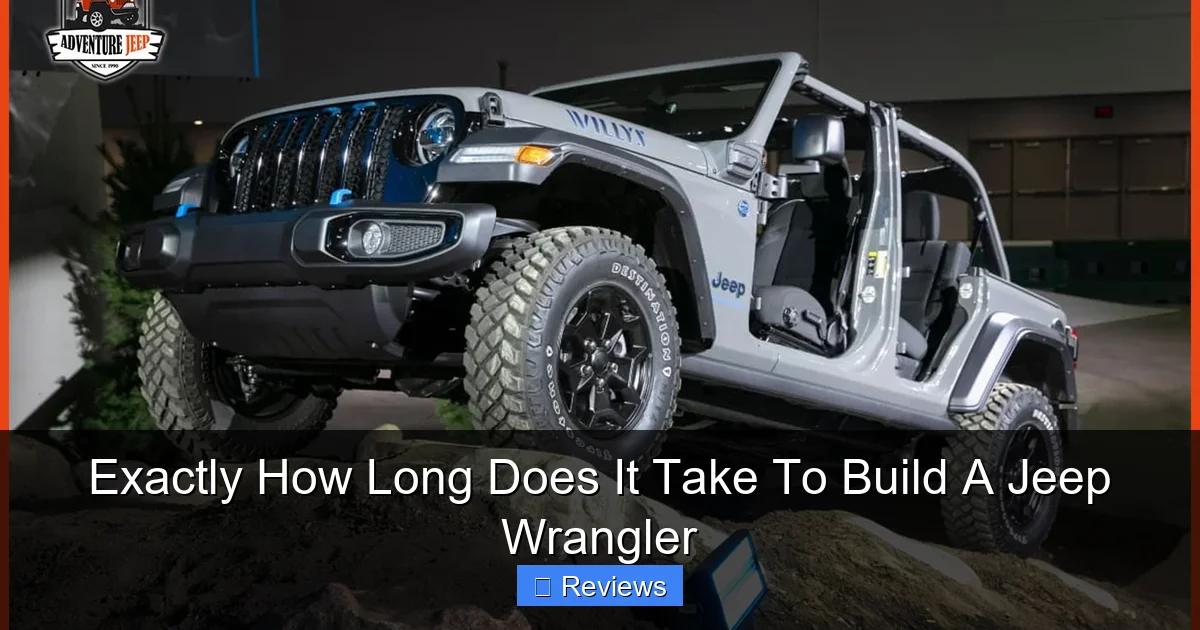
Visual guide about how long does it take to build a jeep wrangler
Image source: adventurejeep.com
Getting Started: Planning Your DIY Wrangler Build
Before turning a single wrench, the most crucial “time investment” is in research and planning. Understanding what modifications you need for your intended use (trail crawling, overlanding, daily driving), compatibility between parts (e.g., lift kit and tire size), required tools, and potential challenges can save immense time and frustration later. This planning phase could span from a few days to several weeks, gathering information from forums, YouTube tutorials, and product reviews.
Common Modifications and Their Time Commitments
The time it takes for DIY installations varies drastically depending on the complexity of the mod, your mechanical aptitude, and the tools you have available. Here are some estimates for popular upgrades:
- Lift Kits and Tires: Installing a basic 2-3 inch lift kit (springs and shocks) on a JK or JL Jeep Wrangler can take an experienced DIYer a solid weekend (12-16 hours), possibly spread over two days. For a novice, this could easily stretch to two full weekends or more, especially if encountering rusted bolts or needing to rent specialized tools. Upgrading to larger tires usually happens concurrently and adds minimal installation time once the wheels are off.
- Armor and Protection (Bumpers, Rock Sliders): Replacing front and rear bumpers with aftermarket steel units can range from 2-6 hours per bumper. This involves removing the old bumper, potentially some wiring for lights or sensors, and bolting on the new one. Rock sliders, depending on whether they’re frame-mounted or body-mounted, can take 2-4 hours. A full skid plate system might require 4-8 hours.
- Lighting and Electrical Upgrades: Simple LED headlight or fog light replacements might take only 30 minutes to an hour. Installing an auxiliary light bar on the windshield or bumper can take 2-4 hours, involving running wires, mounting switches, and potentially a new auxiliary fuse panel. A winch installation, including wiring, can take 4-8 hours.
- Interior Comfort and Tech: Simple upgrades like floor mats or seat covers are minutes. Installing a new head unit or sound system can range from 2-8 hours depending on complexity (e.g., adding an amplifier or subwoofer). Swapping out grab handles or minor trim pieces is generally quick.
Each of these estimated times assumes smooth sailing. Any unforeseen issue – a stripped bolt, a missing tool, a wiring diagram discrepancy – can easily double or triple the time for a particular task. Building out a comprehensive off-road Jeep Wrangler with multiple DIY mods could easily span several months of dedicated weekend work.
Tools, Skills, and Patience: Essential DIY Ingredients
Successful DIY builds require more than just time; they demand a decent set of tools (wrenches, sockets, torque wrench, jack stands, floor jack, basic electrical tools), a willingness to learn, and above all, patience. Rushing through a modification can lead to mistakes, damage, or safety hazards. The “build time” here isn’t just labor; it’s learning, troubleshooting, and enjoying the process of making your Jeep Wrangler uniquely yours.
Professional Customization Shops: Expediting Your Ultimate Jeep Wrangler Build
For those who lack the time, tools, specialized skills, or simply prefer professional expertise, customization shops offer a streamlined – but not instantaneous – route to building their ideal Jeep Wrangler. These shops specialize in aftermarket installations, custom fabrication, and comprehensive vehicle transformations.
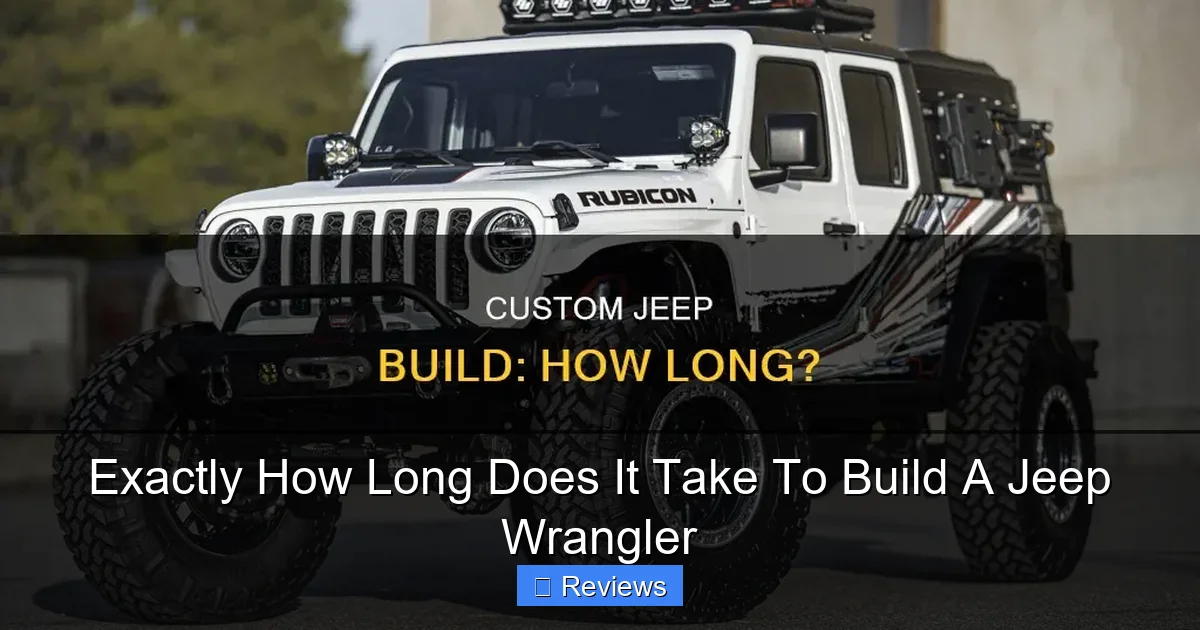
Visual guide about how long does it take to build a jeep wrangler
Image source: shunauto.com
The Advantages of Professional Expertise
Hiring a reputable shop brings several benefits:
- Expert Knowledge: Shops have experience with specific products, common issues, and best installation practices.
- Specialized Tools: They possess the full array of automotive tools, lifts, and diagnostic equipment.
- Efficiency: Trained technicians can often complete complex installations much faster and more accurately than a DIYer.
- Warranty and Support: Many shops offer warranties on their labor, and provide ongoing support.
- Complex Builds: For custom fabrication (e.g., custom roll cages, axle swaps, engine conversions), professional shops are essential.
The Consultation and Design Phase
The “build time” with a professional shop begins with a thorough consultation. You discuss your vision, budget, and intended use for your Jeep Wrangler. The shop then helps you select compatible parts, designs the overall build, and provides a detailed quote. This initial phase can take anywhere from a few days to a couple of weeks, depending on the complexity of the proposed build and how quickly parts are finalized.
Project Management and Workflow
Once the design is approved and a deposit is made, the shop will typically:
- Order Parts: This can be a significant variable. If parts are readily available, they might arrive in a few days. If specialized or backordered items are required, this waiting period can stretch for weeks or even months.
- Schedule the Build: Reputable shops often have a backlog of projects. Your Jeep Wrangler will be scheduled into their workflow. This waiting period could be anywhere from a few days to several weeks, or even a couple of months during peak seasons.
- Execution: Once your vehicle is in the shop and all parts have arrived, the actual installation begins.
Turnaround Times for Shop Builds
The time your Jeep Wrangler spends physically in the shop depends heavily on the scope of work:
- Mild Build (e.g., lift kit, tires, simple bumpers, lights): For a professional shop, such a build can typically be completed in 1 to 2 weeks. This allows for proper installation, alignment, and final checks.
- Moderate Build (e.g., full suspension, re-gear, extensive armor, winch, perhaps a fender swap): A more comprehensive build like this could take anywhere from 2 to 4 weeks. It involves more intricate work, specialized tools for gearing, and potentially more fabrication.
- Extensive or Custom Build (e.g., full overlanding setup, engine swap, custom cage, axle upgrades, bespoke fabrication): These are major transformations. An extensive build could easily take 4 to 8 weeks, or even longer (2-4 months) if custom parts need to be designed and fabricated, or if significant powertrain modifications are involved. Shops often have multiple projects running concurrently, so the actual time a tech spends on your vehicle is distributed.
In total, from initial consultation to driving your custom-built Jeep Wrangler home, the professional shop route can take anywhere from 2 weeks to 6 months or more, primarily influenced by part availability and the shop’s scheduling queue. For a comprehensive custom Jeep Wrangler build, allowing for 3-4 months is a reasonable expectation.
From Rust to Roar: The Epic Journey of a Full Jeep Wrangler Restoration
The most time-intensive and often the most rewarding “build” of a Jeep Wrangler is a full, frame-off restoration. This process is typically reserved for older models like the YJ (1987-1995) or TJ (1997-2006) Wranglers, bringing them back to factory condition or even upgrading them with modern components while maintaining their classic aesthetic. This is not a project for the faint of heart, or short on time and budget.
Defining a Full Restoration: Frame-Off vs. Body-On
A true “frame-off” restoration involves completely separating the body from the frame. This allows for every component to be individually inspected, repaired, refurbished, or replaced. A “body-on” restoration is less intensive, focusing on bodywork, paint, and mechanicals without complete disassembly, and thus takes less time.
Disassembly and Assessment: The Unveiling of Hidden Challenges
The first major step is complete disassembly. Every nut, bolt, panel, wire, and component is removed. This process alone can take weeks or even months, especially if dealing with heavily rusted or seized parts. During disassembly, a meticulous assessment is made of the condition of the frame, body, powertrain, and all other systems. This initial assessment is crucial for creating a comprehensive plan and budget, often revealing unexpected rust, damage, or wear that will significantly influence the total time and cost.
Bodywork, Paint, and Frame Refurbishment
This is often the longest phase. The frame will be media blasted (sandblasted), inspected for cracks or damage, repaired, reinforced if necessary, and then prepped and painted or powder-coated. The body panels – often riddled with dents, rust, and old repairs – undergo extensive bodywork: patching, welding, sanding, filling, and priming. This labor-intensive process, which includes multiple layers of high-quality paint, can easily consume 3 to 12 months, depending on the initial condition of the Jeep Wrangler and the desired finish quality.
Powertrain and Drivetrain Rebuilding
While bodywork is underway, the engine, transmission, transfer case, and axles are often sent to specialized shops for complete rebuilding or replacement. This ensures the mechanical heart of the restored Jeep Wrangler is as good as new, or better. Rebuilding an engine or transmission can take weeks to months, factoring in parts sourcing, machining, and assembly.
Reassembly and Fine-Tuning
Once all major components are restored or new, the reassembly begins. This is essentially building a new vehicle from scratch, but with individual, often older, parts. New wiring harnesses, brake lines, fuel lines, suspension components, and interior pieces are installed. Every bolt is torqued to spec, every system is tested. This phase, while exciting, is incredibly detailed and can take another 3 to 9 months. After the initial reassembly, there’s a period of “shakedown” – driving the Jeep Wrangler, identifying any lingering issues, and fine-tuning all systems.
For a full, high-quality, frame-off restoration of a Jeep Wrangler, the typical timeline ranges from 6 months to 2 years, or even longer (3+ years) for highly complex projects, especially if parts are scarce or custom fabrication is required. The “build time” here is less about rapid assembly and more about meticulous craftsmanship, patience, and a deep passion for the iconic vehicle.
Factors Influencing Your Jeep Wrangler Build Timeline: A Comprehensive Breakdown
Regardless of whether you’re ordering a new Jeep Wrangler or undertaking a custom build or restoration, numerous factors can significantly influence the overall timeline. Understanding these variables is key to setting realistic expectations.
Part Availability and Supply Chain Dynamics
This is arguably the most critical factor in today’s automotive landscape. Global supply chain disruptions – from microchip shortages affecting new vehicle production and electronic accessories, to raw material scarcity impacting aftermarket parts – can cause significant delays. Lead times for specific aftermarket components can range from a few days to several months, especially for specialized or high-demand items. For restorations, sourcing rare or N.O.S. (New Old Stock) parts for an older Jeep Wrangler can be a “treasure hunt” that adds months to the timeline.
Skill Level and Tool Access (for DIY Builds)
For the DIY enthusiast, personal skill level is a huge differentiator. A seasoned mechanic might install a lift kit in a day, while a novice could take several weekends. The availability of appropriate tools (e.g., proper torque wrenches, specialized presses, diagnostic scanners) also impacts efficiency. Rushing a job due to inadequate tools or skills often leads to mistakes that take even longer to fix.
Shop Backlogs and Scheduling (for Professional Builds)
Reputable customization and restoration shops are often in high demand. Their schedules can be booked out weeks or even months in advance. The waiting period to get your Jeep Wrangler into the shop can be a significant part of your overall build timeline. Furthermore, the shop’s efficiency – how many technicians they have, their internal project management, and their access to suppliers – all play a role.
Budget Constraints and Unexpected Issues
Money talks, and often dictates speed. A larger budget allows for quicker acquisition of parts (sometimes paying premiums for expedited shipping), quicker turnaround at professional shops, and less waiting for funds to become available for the next phase of a build. Unexpected issues – discovering more rust than anticipated, a component breaking during installation, or a misdiagnosed problem – can derail a timeline and increase costs, forcing delays while solutions are found and funded.
Vehicle Age and Condition (for Restoration/Older Mods)
The older and more neglected a Jeep Wrangler is, the longer and more complex its restoration or even significant modification will be. Rust is the archenemy of restoration, adding countless hours of cutting, welding, and fabrication. The availability and cost of parts for vintage models are also significant considerations. A well-maintained 10-year-old Wrangler will be far quicker to modify than a rusty 30-year-old project.
Estimated Timelines for Different Jeep Wrangler Build Scenarios
To summarize the varying “build” times, here’s a table outlining typical durations:
| Build Type/Stage | Description | Estimated Timeframe | Key Influencing Factors |
|---|---|---|---|
| Factory Assembly (Physical) | Actual time on the assembly line to build a new Jeep Wrangler. | ~18-24 hours (sequential) | Factory efficiency, robotics, labor availability |
| New Vehicle Order to Delivery | From placing a custom order to receiving the vehicle at the dealership. | 6-16 weeks (potentially longer) | Supply chain, chip shortages, factory allocation, transit time, model popularity |
| DIY Minor Mods (e.g., lights, simple interior) | Owner-installed small upgrades on a Jeep Wrangler. | 1-4 hours per mod | Skill level, tools, part complexity |
| DIY Major Mods (e.g., lift kit, bumpers, winch) | Owner-installed significant upgrades requiring more effort on a Jeep Wrangler. | 1-2 full days per major mod (or several weekends) | Skill level, specialized tools, unforeseen challenges, experience with Jeep Wrangler mechanics |
| Professional Mild Build (e.g., lift, tires, lights) | Shop-installed basic performance and aesthetic upgrades for a Jeep Wrangler. | 1-2 weeks | Shop backlog, parts availability, build complexity |
| Professional Extensive Build (e.g., full suspension, re-gear, armor, engine mods) | Shop-installed comprehensive off-road or overland package for a Jeep Wrangler. | 4-8 weeks | Shop backlog, custom fabrication, specialized parts, scope of work |
| Full Frame-Off Restoration (Older Wrangler) | Complete disassembly, repair, and reassembly of an older Jeep Wrangler model. | 6 months to 2+ years | Vehicle condition, parts sourcing, budget, skilled labor, scope of restoration, specific generation of Jeep Wrangler |
Conclusion: The Timeless Journey of Building a Jeep Wrangler
As we’ve explored, the question “Exactly how long does it take to build a Jeep Wrangler?” doesn’t have a single, simple answer. It’s a dynamic query with timelines ranging from mere hours on an automated assembly line to years of dedicated craftsmanship in a restoration garage. A new Jeep Wrangler rolls off the factory line with astonishing speed, a testament to modern manufacturing efficiency. However, the journey from custom order to delivery can stretch for months, a waiting period tempered by the excitement of anticipating a perfectly personalized machine.
For the legions of enthusiasts who view their Jeep Wrangler as a continually evolving project, “building” is an ongoing process. DIY modifications offer a rewarding path of self-sufficiency, turning weekends into wrenching sessions that can span weeks or months. Professional customization shops accelerate these transformations, offering expertise and efficiency for builds that can take weeks to several months. And for those with a deep historical appreciation, the full restoration of a classic Jeep Wrangler is an epic, multi-year undertaking, a true labor of love that resurrects a legend.
Ultimately, the “build time” for a Jeep Wrangler is as varied and unique as the vehicles themselves and the owners who cherish them. Whether you’re patiently awaiting a new factory order, meticulously crafting your off-road beast in your garage, or entrusting a team of experts to bring your vision to life, one thing remains constant: the journey of building a Jeep Wrangler is an integral part of its story. It’s a testament to ingenuity, passion, and the enduring spirit of adventure that this iconic vehicle represents, making every moment of the wait and every hour of effort truly worthwhile.
Frequently Asked Questions
How long does it typically take the factory to assemble a Jeep Wrangler?
The actual assembly line time for a Jeep Wrangler at the factory is relatively quick, often taking only a few days from start to finish. This timeframe refers to the physical construction of the vehicle from its components.
If I order a new Jeep Wrangler, what’s the typical wait time from order to delivery?
From placing your order to taking delivery of your new Jeep Wrangler, the process can typically range from 6 to 12 weeks, and sometimes longer. This duration includes manufacturing, quality checks, shipping, and dealership preparation.
Does adding custom options or packages affect how long it takes to build my Jeep Wrangler?
Yes, selecting highly sought-after or specialized custom options and packages can sometimes slightly extend the build time for your Jeep Wrangler. While standard configurations move through the line efficiently, unique features might require specific parts or additional steps.
How long does it take to build a Jeep Wrangler from a kit or perform significant custom modifications yourself?
Building a Jeep Wrangler from a kit, such as a replica or a heavily modified existing frame, can be a monumental task taking anywhere from several months to over a year of dedicated work. The duration heavily depends on your skill level, the complexity of the project, and the availability of parts.
What factors primarily influence how long it takes to build a Jeep Wrangler and deliver it?
Several key factors influence the overall timeline, including current demand for Jeep Wranglers, global supply chain availability for components, and specific factory allocations. Shipping distances and dealership processing times also play a significant role in the final delivery schedule.
Is it possible to expedite the build process for a new Jeep Wrangler?
Generally, it is not possible to significantly expedite the factory build process for a new Jeep Wrangler, as production schedules are tightly managed. While your dealership might be able to check for existing inventory that matches your desired specifications, custom factory orders follow a set production queue.

At CarLegit, we believe information should be clear, factual, and genuinely helpful. That’s why every guide, review, and update on our website is created with care, research, and a strong focus on user experience.