
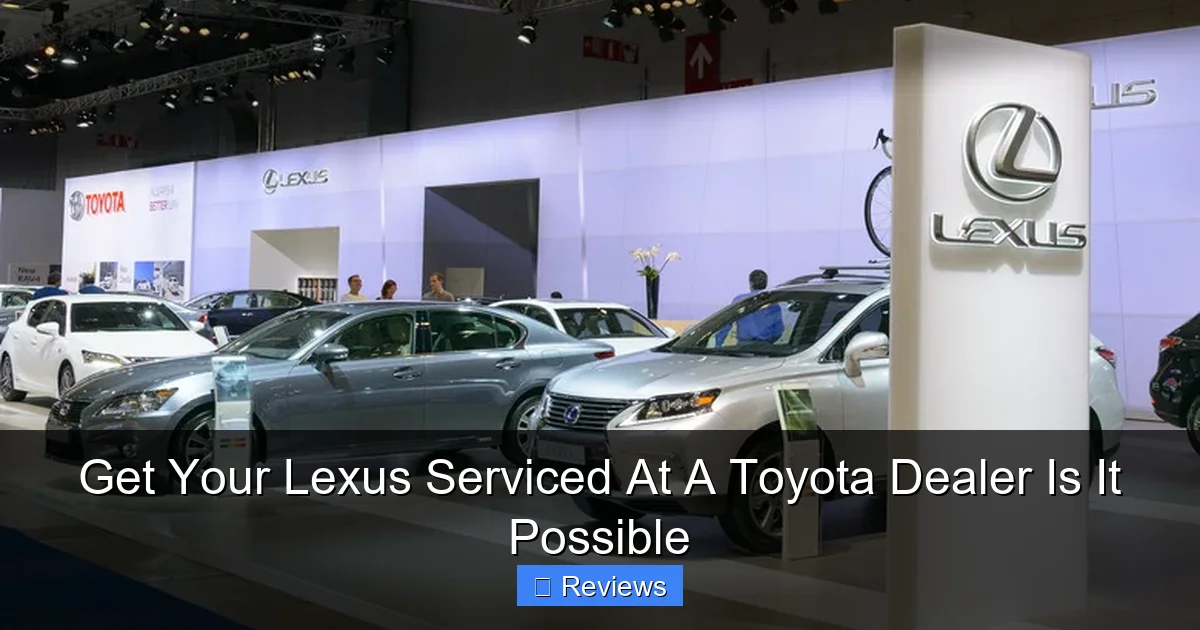
Featured image for can i get my lexus serviced at a toyota dealer
Image source: slashgear.com
Yes, you can often get your Lexus serviced at a Toyota dealership for many routine maintenance items! Given the shared parent company and underlying components, Toyota technicians are typically capable of handling common tasks like oil changes, tire rotations, and brake services, potentially offering a cost-effective alternative. However, for specialized Lexus diagnostics, luxury-specific repairs, or warranty work, a certified Lexus dealership is usually recommended for optimal expertise and genuine parts.
In This Article
- 1 Get Your Lexus Serviced At A Toyota Dealer Is It Possible
- 1.1 Key Takeaways
- 1.2 The Shared DNA: Why the Question Even Arises
- 1.3 What a Toyota Dealer Can (and Can’t) Do for Your Lexus
- 1.4 The Pros and Cons of Servicing Your Lexus at a Toyota Dealer
- 1.5 When to Definitely Choose a Lexus Dealer for Your Lexus
- 1.6 Practical Tips and Considerations for Making Your Decision
- 1.7 The Financial Aspect: Cost Comparison and Value
- 1.8 Conclusion
- 2 Get Your Lexus Serviced At A Toyota Dealer Is It Possible
- 2.1 The Shared DNA: Why the Question Even Arises
- 2.2 What a Toyota Dealership Can (and Can’t) Do for Your Luxury Vehicle
- 2.3 The Pros and Cons of Maintaining Your Luxury Car at a Toyota Dealership
- 2.4 When to Definitely Choose a Luxury Dealership for Your Car
- 2.5 Practical Tips and Considerations for Making Your Decision
- 2.6 The Financial Aspect: Cost Comparison and Value
- 2.7 Conclusion
- 2.8 Frequently Asked Questions
- 2.8.1 Is it possible to get my Lexus serviced at a Toyota dealership?
- 2.8.2 What are the benefits of getting my Lexus serviced at a Toyota dealer?
- 2.8.3 What types of services can a Toyota dealer perform on my Lexus?
- 2.8.4 Are there any disadvantages to getting my Lexus serviced at a Toyota dealer?
- 2.8.5 Will getting my Lexus serviced at a Toyota dealer affect my vehicle’s warranty?
- 2.8.6 Do Toyota dealerships use genuine Lexus parts?
Get Your Lexus Serviced At A Toyota Dealer Is It Possible
As a proud owner of a Lexus, you understand the blend of luxury, reliability, and refined performance that defines the brand. Lexus vehicles are engineered to exquisite standards, offering a premium driving experience that often comes with an expectation of equally premium service. When it comes to maintaining your prized possession, the immediate thought often turns to the authorized Lexus dealer. However, a common question frequently surfaces among owners, particularly as their vehicles age or when seeking more convenient and potentially cost-effective options: “Can I get my Lexus serviced at a Toyota dealer?”
This query isn’t as outlandish as it might initially sound to some. The automotive world is replete with brand relationships, and few are as foundational as the one between Toyota and Lexus. As Toyota’s luxury division, Lexus shares a significant amount of its underlying engineering, platforms, and componentry with its parent company. This intrinsic connection sparks a genuine curiosity about the feasibility and wisdom of entrusting your Lexus to a Toyota center. It’s a pragmatic consideration, driven by factors like geographical convenience, the perception of lower costs, and the shared mechanical lineage.
Navigating the best solution for your Lexus requires a thorough understanding of these shared origins, the capabilities of both Lexus and Toyota dealers, and the specific needs of your vehicle. This comprehensive guide aims to unpack this question in detail, providing you with all the necessary information to make an informed decision. We will delve into the technical commonalities, explore the types of services a Toyota can realistically perform, weigh the pros and cons, and offer practical advice to ensure your Lexus continues to perform at its best, regardless of where it’s serviced.
Key Takeaways
- Yes, it’s generally possible: Toyota dealers can service Lexus vehicles, especially for common tasks.
- Choose Lexus for expertise: For complex or warranty-related issues, Lexus dealers offer specialized knowledge.
- Basic services are fine: Oil changes, tire rotations, and brake jobs are usually manageable at Toyota.
- Confirm parts availability: Ensure the Toyota dealer uses genuine Lexus or compatible parts.
- Consider cost vs. specialization: Toyota might offer savings, but Lexus ensures brand-specific care.
- Check your warranty terms: Verify servicing at Toyota won’t void your Lexus vehicle’s warranty.
- Ask about diagnostic tools: Toyota equipment might lack full diagnostic capability for Lexus-specific systems.
The very premise of this discussion—servicing a luxury Lexus at a mainstream Toyota dealer—stems from a fundamental truth about their manufacturing relationship. Understanding this connection is crucial to grasping why such cross-brand is often not just possible but sometimes entirely logical.
The Toyota-Lexus Connection
Lexus was established by Toyota in 1989 as its dedicated luxury division. The goal was to compete directly with established European and American luxury brands, offering superior reliability, build quality, and customer experience. From its inception, Lexus vehicles were designed to leverage Toyota’s engineering prowess, albeit with higher-grade materials, more advanced features, and a greater emphasis on refinement and performance. This meant that many Lexus models were, and still are, built on platforms shared with Toyota vehicles, often using the same or highly similar engines, transmissions, and suspension components.
- For example, the popular Lexus ES sedan shares its platform and many mechanical components with the Toyota Camry and Avalon.
- The rugged Lexus GX SUV is essentially a more luxurious version of the Toyota 4Runner/Land Cruiser Prado.
- The flagship Lexus LX SUV is built on the same architecture as the legendary Toyota Land Cruiser.
- Even smaller components like oil filters, air filters, spark plugs, and various sensors are frequently identical across corresponding Toyota and Lexus models.
This deep mechanical kinship is the cornerstone of why a Toyota might be equipped to handle a Lexus. It’s not just about brand ownership; it’s about shared blueprints and manufacturing processes. The engineers and designers at Toyota are, in essence, the same minds behind Lexus, ensuring a consistent approach to reliability and maintainability.
Implications for Service and Parts
Given this extensive parts commonality, the implications for and parts are significant. A Toyota dealer’s technicians are inherently familiar with the core engineering principles, diagnostic systems, and repair procedures that apply to a broad range of Lexus vehicles. They are trained on the underlying Toyota platforms and engines, which form the backbone of many Lexus models. This familiarity means that for numerous tasks, the skill set required is largely interchangeable.
Moreover, the parts supply chain benefits from this relationship. Many “Lexus parts” are, in fact, “Toyota parts” with a Lexus label or part number. This means that a Toyota might have the exact part needed for your Lexus in stock, or can easily order it from the same central distribution network that supplies Lexus dealers. This can translate to quicker repairs and potentially lower costs for parts that are shared across the brands. However, it’s vital to distinguish between genuinely identical parts and parts that are similar but have specific Lexus refinements or higher specifications. This is where careful consideration is necessary, especially for more specialized components.
What a Toyota Dealer Can (and Can’t) Do for Your Lexus
While the shared heritage provides a strong foundation, it’s important to understand the practical limits of servicing a Lexus at a Toyota dealer. Not all are created equal, and some tasks are definitively better left to the specialists.
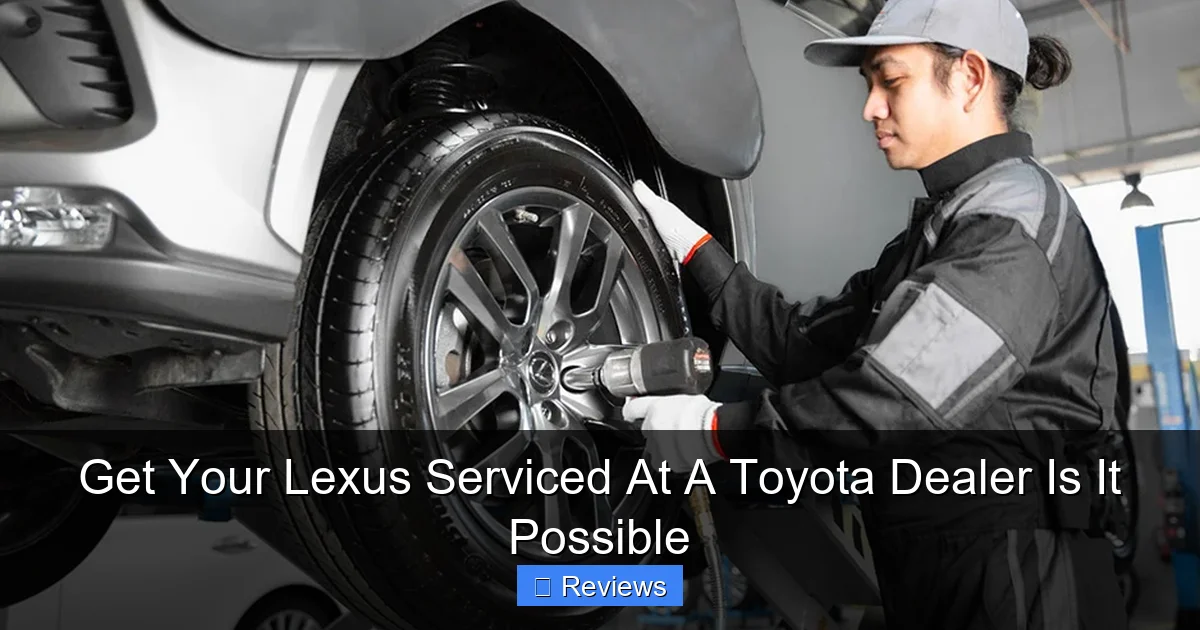
Visual guide about can i get my lexus serviced at a toyota dealer
Image source: visor.ph
Routine Maintenance: A Strong Possibility
For the vast majority of routine maintenance services, a reputable Toyota is a perfectly viable option for your Lexus. These are the fundamental tasks that keep any vehicle running smoothly and are often standardized across many makes and models, especially those within the same corporate family.
- Oil Changes: The most basic and frequent task. Engines often use the same oil specifications and filters, making this a straightforward for any competent Toyota technician. They understand the specific requirements for Toyota/Lexus engines.
- Tire Rotations and Balancing: These are universal automotive that depend on tire and wheel specifications, not brand. Toyota are fully equipped for this.
- Filter Replacements: Air filters (engine and cabin), fuel filters (where applicable), and oil filters are often identical or very similar between corresponding Toyota and Lexus models.
- Fluid Checks and Flushes: Brake fluid, power steering fluid, coolant, and transmission fluid checks and flushes are standard procedures. While some Lexus models might have slightly different fluid types (e.g., specific synthetic transmission fluids), a Toyota can certainly perform these tasks with the correct fluids.
- Battery Checks and Replacements: Batteries are fairly universal components, and a Toyota can easily test and replace your Lexus battery.
In these scenarios, the underlying mechanics are largely the same, and the training received by Toyota technicians is directly applicable. For an older Lexus, particularly out of warranty, opting for a Toyota for these routine can lead to significant savings without compromising quality.
Minor Repairs and Diagnostics: Often Manageable
Beyond routine maintenance, many minor repairs and diagnostic tasks can also be competently handled by a Toyota service center. This is where the shared platforms and engine families truly come into play.
- Brake Jobs: Replacement of pads, rotors, and calipers often uses parts that are identical or dimensionally similar. The procedures are largely universal.
- Suspension Components: Shocks, struts, control arms, and bushings are frequently shared or have direct Toyota equivalents, especially for models like the Lexus ES (Camry/Avalon platform) or GX (4Runner/Land Cruiser Prado platform).
- Basic Engine Diagnostics: For common “Check Engine” light issues related to oxygen sensors, mass airflow sensors, or misfires, the diagnostic tools (OBD-II scanners) and underlying engine codes are often the same. Toyota technicians are skilled at diagnosing and repairing these issues.
- Exhaust System Repairs: Muffler or pipe replacements are generally straightforward and share common design principles.
- Ignition System Components: Spark plugs, ignition coils, and other ignition-related parts are often shared.
Many Toyota have invested in advanced diagnostic equipment that is either identical to or compatible with Lexus systems. Their technicians are well-versed in the common problems and fixes associated with the shared platforms, making them a reliable choice for a range of non-specialized repairs.
The Limitations: Where Lexus Dealers Excel
Despite the extensive commonalities, there are definitive areas where a Lexus holds an undeniable advantage and should be the preferred choice. These typically involve Lexus-exclusive features, advanced diagnostics, and situations requiring factory-specific protocols.
- Specialized Lexus-Specific Diagnostic Tools and Software: While many core diagnostics are shared, Lexus vehicles, especially higher trims and newer models, incorporate unique systems (e.g., adaptive variable suspension, sophisticated infotainment systems, specialized safety features, multi-stage hybrid systems). Lexus have proprietary software and hardware specifically designed to diagnose and recalibrate these complex systems. A Toyota might not have access to these specialized tools or the specific training to use them.
- Advanced Luxury Features: Specific adjustments or repairs to features like air suspension, advanced climate control, unique upholstery, or complex navigation/audio systems might require Lexus-specific knowledge and parts that a Toyota won’t possess.
- Warranty Work: Any or repair covered under your Lexus factory warranty or extended warranty absolutely must be performed by an authorized Lexus to ensure coverage remains valid. Toyota cannot perform warranty repairs on a Lexus.
- Recalls for Lexus-Only Issues: While some recalls are shared across Toyota/Lexus (e.g., Takata airbags), others are specific to Lexus models due to their unique features or components. These must be addressed by a Lexus to ensure compliance and proper remediation.
- Body Shop Repairs: For collision repair, especially those involving unique Lexus body panels, paint colors, or advanced sensor placements, a Lexus-certified body shop or a Lexus recommended shop is highly advisable. They have access to precise specifications and genuine Lexus body parts.
- Factory Updates and Technical Bulletins: Lexus receive direct communication from the factory regarding software updates, known issues, and technical bulletins specific to Lexus models. This ensures your vehicle receives the latest patches and improvements.
For these specialized and repairs, the investment in Lexus-specific training, tools, and parts inventory at a Lexus is invaluable. Attempting these at a Toyota could lead to misdiagnoses, incorrect repairs, or the inability to complete the altogether.
The Pros and Cons of Servicing Your Lexus at a Toyota Dealer
Deciding where to your Lexus involves weighing several factors. While the convenience and potential savings of a Toyota are appealing, it’s crucial to consider the potential drawbacks.
Visual guide about can i get my lexus serviced at a toyota dealer
Image source: vehiclefreak.com
Advantages: Why Consider a Toyota Dealer?
- Cost Savings: This is often the primary motivator. Toyota typically have lower labor rates than Lexus due to differences in overhead, luxury amenities, and perceived specialization. For parts that are identical, Toyota-branded parts can sometimes be slightly less expensive than their Lexus-branded counterparts, even if they’re manufactured on the same line.
- Convenience and Accessibility: There are significantly more Toyota across most regions compared to Lexus dealerships. This means a Toyota might be closer to your home or workplace, offering easier scheduling and shorter wait times for appointments.
- Familiarity with Core Engineering: As established, Toyota technicians are deeply familiar with the engines, transmissions, and platforms that underpin many Lexus models. For routine maintenance and common repairs, their expertise is directly applicable and often extensive.
- Parts Availability: For common wear-and-tear items and shared components, a Toyota is more likely to have the necessary parts in stock, potentially reducing the wait time for repairs compared to a Lexus that might need to order a specific part.
- Reliable Quality for Basic Tasks: For non-specialized like oil changes, tire rotations, and brake jobs, the quality of at a reputable Toyota is generally on par with a Lexus Disadvantages: Potential Drawbacks
- Lack of Lexus Specialization: This is the most significant drawback. While technicians are trained on Toyota platforms, they may not receive specific training on Lexus-exclusive systems, advanced luxury features, or the subtle nuances that differentiate a Lexus from its Toyota counterpart. This can lead to misdiagnoses or less precise repairs for complex issues.
- Diagnostic Challenges for Specific Lexus Issues: If your Lexus develops a problem unique to its luxury features or advanced electronics, a Toyota might lack the proprietary diagnostic tools and software to accurately identify and resolve the issue. This could result in guesswork, longer diagnostic times, or the need to eventually take it to a Lexus anyway.
- Parts Sourcing for Unique Lexus Components: For parts that are truly unique to Lexus models (e.g., specific trim pieces, advanced suspension components, certain infotainment modules), a Toyota will need to order them from a Lexus parts distributor. This can increase repair time and potentially result in markups if they don’t have direct Lexus supplier accounts.
- Warranty Concerns (Indirect): While performing routine maintenance at a Toyota typically won’t void your Lexus warranty (Magnuson-Moss Warranty Act protects consumers’ right to choose their provider), if a repair is performed incorrectly at a Toyota and subsequently causes a failure, Lexus could deny a warranty claim related to that specific failure. This is rare for routine but a consideration for more complex repairs.
- Resale Value Perception: For newer Lexus models, especially during the warranty period, a complete history from an authorized Lexus is often viewed favorably by potential buyers, contributing to higher resale value. A history from a Toyota might not carry the same perceived premium, although this effect lessens for older, out-of-warranty vehicles.
- Reduced Luxury Experience: A Lexus offers a distinct luxury experience: plush waiting areas, complimentary loaner vehicles, premium coffee, and a focus on customer pampering. A Toyota waiting area, while perfectly adequate, won’t typically match the amenities and personalized attention found at a Lexus dealership.
When to Definitely Choose a Lexus Dealer for Your Lexus
There are specific scenarios where bypassing the Toyota and heading straight to a Lexus center is not just recommended but often imperative for the long-term health and value of your vehicle.

Visual guide about can i get my lexus serviced at a toyota dealer
Image source: i.ytimg.com
Warranty Period and Recalls
During your Lexus’s factory warranty period, it is almost always best to have all and repairs performed at an authorized Lexus dealer. This ensures that any issues are addressed using genuine Lexus parts and according to factory specifications, preserving your warranty coverage. Furthermore, any safety recalls or technical campaigns specific to your Lexus model should be handled exclusively by a Lexus who has direct access to the necessary parts, procedures, and factory bulletins. Attempting to get recall work done at a Toyota is usually not an option, as they are not authorized for Lexus-specific campaigns.
Complex Diagnostics and Major Repairs
When your Lexus experiences a significant issue that requires in-depth diagnostic work or a major repair, the specialized expertise of a Lexus becomes indispensable. This includes:
- Engine Rebuilds or Major Transmission Work: These are complex procedures that demand intimate knowledge of Lexus-specific engine and transmission variants, requiring specialized tools and highly trained technicians.
- Advanced Electrical System Faults: Modern Lexus vehicles are packed with sophisticated electronics. Diagnosing elusive electrical gremlins often requires specific Lexus diagnostic software and deep familiarity with their unique wiring and control modules.
- Hybrid System and Repair: While Toyota is a pioneer in hybrid technology, Lexus hybrid systems (e.g., in the RX 450h, GS 450h, LS 600h) often have unique power control units, battery configurations, and software calibrations. Lexus technicians receive dedicated training for these complex systems.
- Adaptive Suspension Systems: Many higher-end Lexus models feature adaptive variable suspension or air suspension. These sophisticated systems require specialized diagnostic and repair procedures unique to Lexus.
In these situations, the potential for misdiagnosis or incorrect repair at a non-specialized center far outweighs any perceived cost savings.
High-End Models and Performance Vehicles
Owners of high-performance Lexus models, such as the F-Sport variants (e.g., RC F, GS F, IS F) or luxury flagships like the LC and LS, should almost exclusively opt for Lexus service. These vehicles feature unique components, advanced performance tuning, and materials that demand expert handling:
- Specialized Brake Systems: High-performance Lexus models often feature Brembo brakes or other specialized braking systems that require specific maintenance and part replacement procedures.
- Performance Tuning and Calibration: Engine management systems and transmission calibrations in F-Sport models are distinct and may require Lexus-specific diagnostics and updates.
- Exotic Materials: Certain high-end Lexus models might incorporate carbon fiber, specialized alloys, or unique interior materials that require specific care and repair techniques.
The precision and specialized knowledge required for these vehicles ensure optimal performance and longevity, which only a dedicated Lexus can reliably provide.
Maintaining Resale Value (Especially for Newer Models)
For newer Lexus models, particularly those still under warranty or in their early years of ownership, a complete history from an authorized Lexus can significantly enhance its resale value. Prospective buyers of premium vehicles often place a high value on factory-authorized maintenance, viewing it as an assurance of proper care and authenticity. A clean, consistent record from a Lexus can command a higher price and attract buyers more quickly. While this impact diminishes as a vehicle ages and accumulates more mileage, it remains a strong consideration for owners looking to maximize their investment.
Practical Tips and Considerations for Making Your Decision
When considering where to your Lexus, an informed approach is always best. Here are some practical tips to guide your decision-making process.
Communication is Key
Before you even drive your Lexus to a Toyota service center, make a phone call. Be explicit about your vehicle:
- Specify Model and Year: Clearly state that you own a Lexus, including the specific model (e.g., Lexus RX 350) and its year.
- Describe the Desired or Repair: Be precise about what you need done (e.g., “I need an oil change and tire rotation for my 2018 Lexus ES 350,” or “My check engine light is on for my 2015 Lexus GX 460, and I need a diagnostic”).
- Ask About Their Experience: Inquire if they regularly Lexus vehicles and if their technicians have experience with your specific model or its underlying Toyota platform. Some Toyota are more accustomed to Lexus models than others.
- Confirm Part Availability: For specific repairs, ask if they typically stock or can easily order genuine Lexus parts, or if they plan to use identical Toyota-branded parts where appropriate.
Clear communication upfront can save you time and prevent misunderstandings.
Get a Detailed Quote
Always request a detailed written quote from both the Toyota and, if possible, a Lexus for comparison. This quote should itemize labor costs, parts costs, and any additional fees. Compare not just the total price but also:
- Labor Rates: Note the hourly labor rate. Toyota will almost always be lower.
- Parts Used: Ensure they specify if they are using genuine OEM Lexus parts, genuine OEM Toyota parts (for shared components), or aftermarket parts. Discuss any concerns you have about part quality.
- Included Services: Confirm what exactly is covered (e.g., “full synthetic oil change,” “multi-point inspection included”).
This comparison allows you to make an apples-to-apples decision based on cost and specific offerings.
Understand Your Vehicle’s Needs
The age and type of your Lexus needs play a significant role. A ten-year-old Lexus needing new brake pads is a very different scenario from a brand-new Lexus requiring a complex hybrid system diagnostic. For older, out-of-warranty vehicles, the risk associated with non-Lexus for routine tasks is minimal. For newer, more complex models, the argument for sticking with a Lexus is much stronger. Be realistic about what your car requires and what level of expertise is genuinely needed.
Check Technician Certifications
Don’t hesitate to ask about the qualifications of the technicians who will be working on your Lexus. Look for ASE (Automotive Excellence) certifications, particularly in areas like engine repair, brakes, and electrical systems. While Toyota technicians may not have specific Lexus certifications, their comprehensive training on Toyota platforms is highly relevant. A reputable Toyota will have well-trained and certified staff. Many even have technicians who previously worked at Lexus or have extensive experience with both brands.
The “Lexus vs. Toyota Part” Dilemma
As mentioned, many parts are identical. An oil filter for a Lexus ES 350 might literally be the same part as for a Toyota Camry V6, just packaged differently. In these cases, using the Toyota-branded part is perfectly fine and often slightly cheaper. However, for parts that are Lexus-specific, even if they share a conceptual design with a Toyota part (e.g., a suspension component with different damping characteristics), ensure the correct Lexus OEM part is used. Always prioritize genuine OEM (Original Equipment Manufacturer) parts, whether they carry the Toyota or Lexus branding, over generic aftermarket parts, especially for critical components, to maintain the quality and longevity of your vehicle. A good Toyota will be transparent about their parts sourcing.
The Financial Aspect: Cost Comparison and Value
The financial implications are often the driving force behind considering a Toyota for your Lexus. Understanding where the cost differences lie can help you quantify the potential savings and weigh them against other factors.
Breaking Down Labor Costs
Labor rates are arguably the most significant factor contributing to the price difference between Lexus and Toyota service. Lexus typically charge higher hourly rates for several reasons:
- Specialized Training: Lexus technicians undergo extensive, specialized training programs focused on Lexus-specific technologies and luxury systems.
- Premium Facilities: Lexus dealerships often feature more luxurious waiting areas, complimentary loaner vehicles, and other amenities that contribute to higher operational overheads.
- Brand Positioning: As a luxury brand, Lexus maintains a premium pricing structure across all its services, reflecting the perceived value and expertise.
Toyota tend to have more moderate labor rates, aligning with their mainstream brand positioning. For a like an oil change that takes roughly an hour, a $30-$50 difference in hourly labor rate can mean a noticeable savings on your bill. For longer repairs, this difference can multiply significantly.
Parts Pricing: OEM vs. Aftermarket
When it comes to parts, the situation is nuanced:
- Identical OEM Parts: For many shared components (e.g., oil filters, air filters, spark plugs, many brake components, certain sensors), the “Toyota” branded part is often identical to the “Lexus” branded part. In these cases, the Toyota-branded part might be marginally cheaper, even though it’s the exact same quality and manufacturer. A Toyota will typically use these Toyota-branded OEM parts.
- Lexus-Specific OEM Parts: For parts unique to Lexus, a Toyota will need to order the specific Lexus OEM part. The price for these parts might be similar to what a Lexus would charge, though a Toyota might apply a slight markup if they don’t have the same direct supplier relationship or volume discounts as a Lexus does.
- Aftermarket Options: Some independent repair shops (and occasionally for older vehicles) might offer aftermarket parts as a cheaper alternative. While some aftermarket parts are high quality, it’s generally recommended to stick with OEM for critical components, especially for a premium vehicle like a Lexus, to ensure proper fit, function, and longevity.
Always clarify whether OEM parts (Toyota or Lexus branded) will be used when getting a quote. The table below illustrates hypothetical cost comparisons for routine items:
Hypothetical Routine Maintenance Cost Comparison (Lexus ES 350 – Out of Warranty) Service Item Toyota Dealer Estimate (USD) Lexus Dealer Estimate (USD) Potential Savings Synthetic Oil Change (incl. filter) $80 – $100 $120 – $160 $40 – $60 Tire Rotation & Balance $40 – $60 $60 – $90 $20 – $30 Brake Pad Replacement (Front Axle) $250 – $350 $350 – $500 $100 – $150 Cabin Air Filter Replacement $50 – $70 $80 – $100 $30 – $30 Battery Replacement (parts & labor) $180 – $250 $250 – $350 $70 – $100 Note: These are hypothetical estimates and actual prices may vary significantly based on location, specific vehicle model, year, and dealer promotions. Always obtain a direct quote. Long-Term Value and Service History
While the immediate savings from your Lexus at a Toyota can be attractive, consider the long-term implications. For an older, high-mileage Lexus, consistent and affordable is paramount to keeping it on the road, and a Toyota can be an excellent partner in that. For newer vehicles, especially those still under warranty, the perceived value of a complete Lexus service history might outweigh the immediate cost savings. Ultimately, the “value” of a center extends beyond just the repair bill; it encompasses the peace of mind, the expertise provided, and the impact on your vehicle’s future. Always ensure that wherever you go, detailed records of all performed are kept, including dates, mileage, and specific work done. This history is valuable regardless of the provider.
Conclusion
So, can you get your Lexus at a Toyota dealer? The answer is a resounding “yes” for many common tasks and minor repairs, particularly for older or out-of-warranty vehicles. The shared DNA between Lexus and Toyota means that a significant portion of their mechanical components, diagnostic tools, and technician training overlaps, making Toyota a perfectly capable and often more affordable option for routine maintenance like oil changes, tire rotations, and brake jobs.
However, this possibility comes with crucial caveats. For complex diagnostics, major repairs involving Lexus-specific systems, any warranty-covered work, or safety recalls, the specialized knowledge, proprietary tools, and dedicated training of an authorized Lexus are irreplaceable. Newer Lexus models, especially high-end variants or performance vehicles, also benefit immensely from the precision and expertise unique to a Lexus service center, which can also help maintain higher resale value.
Ultimately, the decision rests on a balanced assessment of your vehicle’s specific needs, its age, your budget, and your comfort level. For owners seeking a reliable, cost-effective solution for everyday maintenance and minor repairs on an older Lexus, a reputable Toyota is a smart choice. Just remember to communicate clearly, compare quotes, and prioritize the use of genuine OEM parts. For anything that delves into the realm of specialized luxury features, complex electronics, or warranty requirements, stick with the experts at your Lexus to ensure your premium vehicle receives the premium care it deserves. By making an informed decision, you can ensure your Lexus continues to deliver its signature blend of performance and luxury for years to come, regardless of which door you drive through for its next appointment.
“`
Get Your Lexus Serviced At A Toyota Dealer Is It Possible
Get Your Lexus Serviced At A Toyota Dealer Is It Possible
As a proud owner of a luxury automobile, you understand the blend of sophistication, reliability, and refined performance that defines the marque. These vehicles are engineered to exquisite standards, offering a premium driving experience that often comes with an expectation of equally superior care. When it comes to maintaining your prized possession, the immediate thought often turns to the authorized dealership. However, a common question frequently surfaces among owners, particularly as their vehicles age or when seeking more convenient and potentially cost-effective options: “Can I get my Lexus maintained at a Toyota dealership?”
This query isn’t as outlandish as it might initially sound. The automotive world is replete with brand relationships, and few are as foundational as the one between Toyota and its luxury division. This intrinsic connection sparks a genuine curiosity about the feasibility and wisdom of entrusting your upscale vehicle to a mainstream service center. It’s a pragmatic consideration, driven by factors like geographical convenience, the perception of lower costs, and the shared mechanical lineage.
Navigating the best solution for your automobile requires a thorough understanding of these shared origins, the capabilities of both luxury and mainstream dealerships, and the specific needs of your vehicle. This comprehensive guide aims to unpack this question in detail, providing you with all the necessary information to make an informed decision. We will delve into the technical commonalities, explore the types of work a Toyota facility can realistically perform, weigh the pros and cons, and offer practical advice to ensure your luxury car continues to perform at its best, regardless of where it receives attention.
The very premise of this discussion—maintaining an upscale vehicle at a mainstream dealership—stems from a fundamental truth about their manufacturing relationship. Understanding this connection is crucial to grasping why such cross-brand attention is often not just possible but sometimes entirely logical.
The Toyota-Lexus Connection
Lexus was established by Toyota in 1989 as its dedicated luxury division. The goal was to compete directly with established European and American premium marques, offering superior reliability, build quality, and customer experience. From its inception, these vehicles were designed to leverage Toyota’s engineering prowess, albeit with higher-grade materials, more advanced features, and a greater emphasis on refinement and performance. This meant that many models were, and still are, built on platforms shared with Toyota vehicles, often using the same or highly similar engines, transmissions, and suspension components.
- For example, the popular ES sedan shares its platform and many mechanical components with the Toyota Camry and Avalon.
- The rugged GX SUV is essentially a more luxurious version of the Toyota 4Runner/Land Cruiser Prado.
- The flagship LX SUV is built on the same architecture as the legendary Toyota Land Cruiser.
- Even smaller components like oil filters, air filters, spark plugs, and various sensors are frequently identical across corresponding Toyota and luxury models.
This deep mechanical kinship is the cornerstone of why a Toyota service center might be equipped to handle your car. It’s not just about brand ownership; it’s about shared blueprints and manufacturing processes. The engineers and designers at Toyota are, in essence, the same minds behind their luxury division, ensuring a consistent approach to reliability and maintainability.
Implications for Maintenance and Parts
Given this extensive parts commonality, the implications for upkeep and component sourcing are significant. Technicians at a Toyota facility are inherently familiar with the core engineering principles, diagnostic systems, and repair procedures that apply to a broad range of these premium vehicles. They are trained on the underlying Toyota platforms and engines, which form the backbone of many upscale models. This familiarity means that for numerous tasks, the skill set required is largely interchangeable.
Moreover, the parts supply chain benefits from this relationship. Many “Lexus parts” are, in fact, “Toyota parts” with a luxury label or part number. This means that a Toyota dealership might have the exact component needed for your car in stock, or can easily order it from the same central distribution network that supplies premium marque outlets. This can translate to quicker repairs and potentially lower costs for components that are shared across the brands. However, it’s vital to distinguish between genuinely identical parts and those that are similar but have specific luxury refinements or higher specifications. This is where careful consideration is necessary, especially for more specialized components.
What a Toyota Dealership Can (and Can’t) Do for Your Luxury Vehicle
While the shared heritage provides a strong foundation, it’s important to understand the practical limits of maintaining your luxury car at a Toyota facility. Not all tasks are created equal, and some are definitively better left to the specialists.
Routine Maintenance: A Strong Possibility
For the vast majority of routine maintenance procedures, a reputable Toyota dealership is a perfectly viable option for your vehicle. These are the fundamental tasks that keep any automobile running smoothly and are often standardized across many makes and models, especially those within the same corporate family.
- Oil Changes: The most basic and frequent task. Engines often use the same oil specifications and filters, making this a straightforward procedure for any competent Toyota technician. They understand the specific requirements for Toyota/luxury engines.
- Tire Rotations and Balancing: These are universal automotive services that depend on tire and wheel specifications, not brand. Toyota facilities are fully equipped for this.
- Filter Replacements: Air filters (engine and cabin), fuel filters (where applicable), and oil filters are often identical or very similar between corresponding Toyota and premium models.
- Fluid Checks and Flushes: Brake fluid, power steering fluid, coolant, and transmission fluid checks and flushes are standard procedures. While some luxury models might have slightly different fluid types (e.g., specific synthetic transmission fluids), a Toyota service center can certainly perform these tasks with the correct fluids.
- Battery Checks and Replacements: Batteries are fairly universal components, and a Toyota facility can easily test and replace your car’s battery.
In these scenarios, the underlying mechanics are largely the same, and the training received by Toyota technicians is directly applicable. For an older luxury car, particularly out of warranty, opting for a Toyota facility for these routine tasks can lead to significant savings without compromising quality.
Minor Repairs and Diagnostics: Often Manageable
Beyond routine upkeep, many minor repairs and diagnostic tasks can also be competently handled by a Toyota service center. This is where the shared platforms and engine families truly come into play.
- Brake Jobs: Replacement of pads, rotors, and calipers often uses components that are identical or dimensionally similar. The procedures are largely universal.
- Suspension Components: Shocks, struts, control arms, and bushings are frequently shared or have direct Toyota equivalents, especially for models like the ES (Camry/Avalon platform) or GX (4Runner/Land Cruiser Prado platform).
- Basic Engine Diagnostics: For common “Check Engine” light issues related to oxygen sensors, mass airflow sensors, or misfires, the diagnostic tools (OBD-II scanners) and underlying engine codes are often the same. Toyota technicians are skilled at diagnosing and repairing these issues.
- Exhaust System Repairs: Muffler or pipe replacements are generally straightforward and share common design principles.
- Ignition System Components: Spark plugs, ignition coils, and other ignition-related parts are often shared.
Many Toyota facilities have invested in advanced diagnostic equipment that is either identical to or compatible with premium vehicle systems. Their technicians are well-versed in the common problems and fixes associated with the shared platforms, making them a reliable choice for a range of non-specialized repairs.
The Limitations: Where Premium Dealerships Excel
Despite the extensive commonalities, there are definitive areas where a premium brand dealership holds an undeniable advantage and should be the preferred choice. These typically involve brand-exclusive features, advanced diagnostics, and situations requiring factory-specific protocols.
- Specialized Brand-Specific Diagnostic Tools and Software: While many core diagnostics are shared, luxury vehicles, especially higher trims and newer models, incorporate unique systems (e.g., adaptive variable suspension, sophisticated infotainment systems, specialized safety features, multi-stage hybrid systems). Authorized dealerships have proprietary software and hardware specifically designed to diagnose and recalibrate these complex systems. A Toyota facility might not have access to these specialized tools or the specific training to use them.
- Advanced Luxury Features: Specific adjustments or repairs to features like air suspension, advanced climate control, unique upholstery, or complex navigation/audio systems might require brand-specific knowledge and parts that a Toyota shop won’t possess.
- Warranty Work: Any attention or repair covered under your factory warranty or extended warranty absolutely must be performed by an authorized dealership to ensure coverage remains valid. Toyota facilities cannot perform warranty repairs on a luxury brand vehicle.
- Recalls for Brand-Only Issues: While some recalls are shared across Toyota/Lexus (e.g., Takata airbags), others are specific to premium models due to their unique features or components. These must be addressed by an authorized center to ensure compliance and proper remediation.
- Body Shop Repairs: For collision repair, especially those involving unique body panels, paint colors, or advanced sensor placements, a certified body shop or a recommended facility is highly advisable. They have access to precise specifications and genuine body parts.
- Factory Updates and Technical Bulletins: Authorized dealerships receive direct communication from the factory regarding software updates, known issues, and technical bulletins specific to their models. This ensures your vehicle receives the latest patches and improvements.
For these specialized services and repairs, the investment in brand-specific training, tools, and parts inventory at an authorized dealership is invaluable. Attempting these at a Toyota facility could lead to misdiagnoses, incorrect repairs, or the inability to complete the task altogether.
The Pros and Cons of Maintaining Your Luxury Car at a Toyota Dealership
Deciding where to have your vehicle attended to involves weighing several factors. While the convenience and potential savings of a Toyota facility are appealing, it’s crucial to consider the potential drawbacks.
Advantages: Why Consider a Toyota Dealership?
- Cost Savings: This is often the primary motivator. Toyota dealerships typically have lower labor rates than luxury brand outlets due to differences in overhead, amenities, and perceived specialization. For components that are identical, Toyota-branded parts can sometimes be slightly less expensive than their premium-branded counterparts, even if they’re manufactured on the same line.
- Convenience and Accessibility: There are significantly more Toyota dealerships across most regions compared to premium brand outlets. This means a Toyota facility might be closer to your home or workplace, offering easier scheduling and shorter wait times for appointments.
- Familiarity with Core Engineering: As established, Toyota technicians are deeply familiar with the engines, transmissions, and platforms that underpin many luxury models. For routine upkeep and common repairs, their expertise is directly applicable and often extensive.
- Parts Availability: For common wear-and-tear items and shared components, a Toyota facility is more likely to have the necessary parts in stock, potentially reducing the wait time for repairs compared to a premium brand outlet that might need to order a specific component.
- Reliable Quality for Basic Tasks: For non-specialized attention like oil changes, tire rotations, and brake jobs, the quality of care at a reputable Toyota dealership is generally on par with an authorized premium brand facility, as the procedures are standardized.
Disadvantages: Potential Drawbacks
- Lack of Brand Specialization: This is the most significant drawback. While technicians are trained on Toyota platforms, they may not receive specific training on luxury-exclusive systems, advanced features, or the subtle nuances that differentiate a premium car from its Toyota counterpart. This can lead to misdiagnoses or less precise repairs for complex issues.
- Diagnostic Challenges for Specific Issues: If your vehicle develops a problem unique to its luxury features or advanced electronics, a Toyota facility might lack the proprietary diagnostic tools and software to accurately identify and resolve the issue. This could result in guesswork, longer diagnostic times, or the need to eventually take it to an authorized center anyway.
- Parts Sourcing for Unique Components: For components that are truly unique to premium models (e.g., specific trim pieces, advanced suspension components, certain infotainment modules), a Toyota facility will need to order them from a premium brand parts distributor. This can increase repair time and potentially result in markups if they don’t have direct supplier accounts.
- Warranty Concerns (Indirect): While performing routine upkeep at a Toyota facility typically won’t void your factory warranty (Magnuson-Moss Warranty Act protects consumers’ right to choose their provider), if a repair is performed incorrectly at a Toyota center and subsequently causes a failure, the manufacturer could deny a warranty claim related to that specific failure. This is rare for routine care but a consideration for more complex repairs.
- Resale Value Perception: For newer luxury models, especially during the warranty period, a complete maintenance history from an authorized dealership is often viewed favorably by potential buyers, contributing to higher resale value. A history from a Toyota facility might not carry the same perceived premium, although this effect lessens for older, out-of-warranty vehicles.
- Reduced Luxury Experience: An authorized premium brand dealership offers a distinct luxury experience: plush waiting areas, complimentary loaner vehicles, premium coffee, and a focus on customer pampering. A Toyota facility’s waiting area, while perfectly adequate, won’t typically match the amenities and personalized attention found at a luxury brand outlet.
When to Definitely Choose a Luxury Dealership for Your Car
There are specific scenarios where bypassing the Toyota facility and heading straight to an authorized service center is not just recommended but often imperative for the long-term health and value of your vehicle.
Warranty Period and Recalls
During your vehicle’s factory warranty period, it is almost always best to have all upkeep and repairs performed at an authorized dealership. This ensures that any issues are addressed using genuine components and according to factory specifications, preserving your warranty coverage. Furthermore, any safety recalls or technical campaigns specific to your model should be handled exclusively by an authorized center who has direct access to the necessary parts, procedures, and factory bulletins. Attempting to get recall work done at a Toyota facility is usually not an option, as they are not authorized for brand-specific campaigns.
Complex Diagnostics and Major Repairs
When your vehicle experiences a significant issue that requires in-depth diagnostic work or a major repair, the specialized expertise of an authorized dealership becomes indispensable. This includes:
- Engine Rebuilds or Major Transmission Work: These are complex procedures that demand intimate knowledge of brand-specific engine and transmission variants, requiring specialized tools and highly trained technicians.
- Advanced Electrical System Faults: Modern luxury vehicles are packed with sophisticated electronics. Diagnosing elusive electrical gremlins often requires specific diagnostic software and deep familiarity with their unique wiring and control modules.
- Hybrid System Care and Repair: While Toyota is a pioneer in hybrid technology, premium brand hybrid systems (e.g., in the RX 450h, GS 450h, LS 600h) often have unique power control units, battery configurations, and software calibrations. Technicians at authorized centers receive dedicated training for these complex systems.
- Adaptive Suspension Systems: Many higher-end models feature adaptive variable suspension or air suspension. These sophisticated systems require specialized diagnostic and repair procedures unique to the luxury brand.
In these situations, the potential for misdiagnosis or incorrect repair at a non-specialized service center far outweighs any perceived cost savings.
High-End Models and Performance Vehicles
Owners of high-performance models, such as the F-Sport variants (e.g., RC F, GS F, IS F) or luxury flagships like the LC and LS, should almost exclusively opt for authorized dealership care. These vehicles feature unique components, advanced performance tuning, and materials that demand expert handling:
- Specialized Brake Systems: High-performance models often feature Brembo brakes or other specialized braking systems that require specific maintenance and component replacement procedures.
- Performance Tuning and Calibration: Engine management systems and transmission calibrations in F-Sport models are distinct and may require brand-specific diagnostics and updates.
- Exotic Materials: Certain high-end models might incorporate carbon fiber, specialized alloys, or unique interior materials that require specific care and repair techniques.
The precision and specialized knowledge required for these vehicles ensure optimal performance and longevity, which only a dedicated authorized dealership can reliably provide.
Maintaining Resale Value (Especially for Newer Models)
For newer luxury models, particularly those still under warranty or in their early years of ownership, a complete maintenance history from an authorized dealership can significantly enhance its resale value. Prospective buyers of premium vehicles often place a high value on factory-authorized maintenance, viewing it as an assurance of proper care and authenticity. A clean, consistent record from such a center can command a higher price and attract buyers more quickly. While this impact diminishes as a vehicle ages and accumulates more mileage, it remains a strong consideration for owners looking to maximize their investment.
Practical Tips and Considerations for Making Your Decision
When considering where to have your luxury automobile attended to, an informed approach is always best. Here are some practical tips to guide your decision-making process.
Communication is Key
Before you even drive your vehicle to a Toyota service center, make a phone call. Be explicit about your car:
- Specify Model and Year: Clearly state that you own a Lexus, including the specific model (e.g., Lexus RX 350) and its year.
- Describe the Desired Service or Repair: Be precise about what you need done (e.g., “I need an oil change and tire rotation for my 2018 ES 350,” or “My check engine light is on for my 2015 GX 460, and I need a diagnostic”).
- Ask About Their Experience: Inquire if they regularly work on premium vehicles and if their technicians have experience with your specific model or its underlying Toyota platform. Some Toyota facilities are more accustomed to providing care for these models than others.
- Confirm Part Availability: For specific repairs, ask if they typically stock or can easily order genuine premium brand components, or if they plan to use identical Toyota-branded parts where appropriate.
Clear communication upfront can save you time and prevent misunderstandings.
Get a Detailed Quote
Always request a detailed written quote from both the Toyota facility and, if possible, an authorized premium brand dealership for comparison. This quote should itemize labor costs, parts costs, and any additional fees. Compare not just the total price but also:
- Labor Rates: Note the hourly labor rate. Toyota facilities will almost always be lower.
- Parts Used: Ensure they specify if they are using genuine OEM premium brand parts, genuine OEM Toyota parts (for shared components), or aftermarket parts. Discuss any concerns you have about part quality.
- Included Services: Confirm what exactly is covered (e.g., “full synthetic oil change,” “multi-point inspection included”).
This comparison allows you to make an apples-to-apples decision based on cost and specific offerings.
Understand Your Vehicle’s Needs
The age and type of care your car needs play a significant role. A ten-year-old vehicle needing new brake pads is a very different scenario from a brand-new one requiring a complex hybrid system diagnostic. For older, out-of-warranty cars, the risk associated with non-premium brand care for routine tasks is minimal. For newer, more complex models, the argument for sticking with an authorized center is much stronger. Be realistic about what your car requires and what level of expertise is genuinely needed.
Check Technician Certifications
Don’t hesitate to ask about the qualifications of the technicians who will be working on your vehicle. Look for ASE (Automotive Service Excellence) certifications, particularly in areas like engine repair, brakes, and electrical systems. While Toyota technicians may not have specific premium brand certifications, their comprehensive training on Toyota platforms is highly relevant. A reputable Toyota facility will have well-trained and certified staff. Many even have technicians who previously worked at luxury dealerships or have extensive experience with both brands.
The “Luxury vs. Toyota Part” Dilemma
As mentioned, many components are identical. An oil filter for an ES 350 might literally be the same part as for a Toyota Camry V6, just packaged differently. In these cases, using the Toyota-branded part is perfectly fine and often slightly cheaper. However, for parts that are brand-specific, even if they share a conceptual design with a Toyota part (e.g., a suspension component with different damping characteristics), ensure the correct OEM part is used. Always prioritize genuine OEM (Original Equipment Manufacturer) components, whether they carry the Toyota or the premium brand’s branding, over generic aftermarket parts, especially for critical items, to maintain the quality and longevity of your vehicle. A good Toyota facility will be transparent about their parts sourcing.
The Financial Aspect: Cost Comparison and Value
The financial implications are often the driving force behind considering a Toyota facility for your premium automobile. Understanding where the cost differences lie can help you quantify the potential savings and weigh them against other factors.
Breaking Down Labor Costs
Labor rates are arguably the most significant factor contributing to the price difference between authorized luxury centers and Toyota facilities. Authorized dealerships typically charge higher hourly rates for several reasons:
- Specialized Training: Technicians at these centers undergo extensive, specialized training programs focused on brand-specific technologies and luxury systems.
- Premium Facilities: Authorized dealerships often feature more luxurious waiting areas, complimentary loaner vehicles, and other amenities that contribute to higher operational overheads.
- Brand Positioning: As a luxury brand, it maintains a premium pricing structure across all its offerings, reflecting the perceived value and expertise.
Toyota dealerships tend to have more moderate labor rates, aligning with their mainstream brand positioning. For a procedure like an oil change that takes roughly an hour, a $30-$50 difference in hourly labor rate can mean a noticeable savings on your bill. For longer repairs, this difference can multiply significantly.
Parts Pricing: OEM vs. Aftermarket
When it comes to parts, the situation is nuanced:
- Identical OEM Parts: For many shared components (e.g., oil filters, air filters, spark plugs, many brake components, certain sensors), the “Toyota” branded part is often identical to the “Lexus” branded part. In these cases, the Toyota-branded part might be marginally cheaper, even though it’s the exact same quality and manufacturer. A Toyota facility will typically use these Toyota-branded OEM components.
- Brand-Specific OEM Parts: For parts unique to premium models, a Toyota facility will need to order the specific OEM part. The price for these components might be similar to what an authorized center would charge, though a Toyota shop might apply a slight markup if they don’t have the same direct supplier relationship or volume discounts as a luxury dealership does.
- Aftermarket Options: Some independent repair shops (and occasionally dealerships for older vehicles) might offer aftermarket components as a cheaper alternative. While some aftermarket parts are high quality, it’s generally recommended to stick with OEM for critical items, especially for a premium vehicle, to ensure proper fit, function, and longevity.
Always clarify whether OEM parts (Toyota or premium brand) will be used when getting a quote. The table below illustrates hypothetical cost comparisons for routine items:
Hypothetical Routine Maintenance Cost Comparison (Lexus ES 350 – Out of Warranty) Service Item Toyota Dealership Estimate (USD) Authorized Luxury Dealership Estimate (USD) Potential Savings Synthetic Oil Change (incl. filter) $80 – $100 $120 – $160 $40 – $60 Tire Rotation & Balance $40 – $60 $60 – $90 $20 – $30 Brake Pad Replacement (Front Axle) $250 – $350 $350 – $500 $100 – $150 Cabin Air Filter Replacement $50 – $70 $80 – $100 $30 – $30 Battery Replacement (parts & labor) $180 – $250 $250 – $350 $70 – $100 Note: These are hypothetical estimates and actual prices may vary significantly based on location, specific vehicle model, year, and dealer promotions. Always obtain a direct quote. Long-Term Value and Maintenance History
While the immediate savings from having your luxury car maintained at a Toyota facility can be attractive, consider the long-term implications. For an older, high-mileage vehicle, consistent and affordable care is paramount to keeping it on the road, and a Toyota facility can be an excellent partner in that. For newer vehicles, especially those still under warranty, the perceived value of a complete authorized center history might outweigh the immediate cost savings. Ultimately, the “value” of a maintenance center extends beyond just the repair bill; it encompasses the peace of mind, the expertise provided, and the impact on your vehicle’s future. Always ensure that wherever you go, detailed records of all work performed are kept, including dates, mileage, and specific procedures done. This history is valuable regardless of the provider.
Conclusion
So, can you get your luxury vehicle maintained at a Toyota dealership? The answer is a resounding “yes” for many common tasks and minor repairs, particularly for older or out-of-warranty cars. The shared DNA between premium and mainstream brands means that a significant portion of their mechanical components, diagnostic tools, and technician training overlaps, making Toyota facilities a perfectly capable and often more affordable option for routine upkeep like oil changes, tire rotations, and brake jobs.
However, this possibility comes with crucial caveats. For complex diagnostics, major repairs involving brand-specific systems, any warranty-covered work, or safety recalls, the specialized knowledge, proprietary tools, and dedicated training of an authorized luxury dealership are irreplaceable. Newer premium models, especially high-end variants or performance vehicles, also benefit immensely from the precision and expertise unique to an authorized service center, which can also help maintain higher resale value.
Ultimately, the decision rests on a balanced assessment of your vehicle’s specific needs, its age, your budget, and your comfort level. For owners seeking a reliable, cost-effective solution for everyday upkeep and minor repairs on an older luxury vehicle, a reputable Toyota dealership is a smart choice. Just remember to communicate clearly, compare quotes, and prioritize the use of genuine OEM parts. For anything that delves into the realm of specialized luxury features, complex electronics, or warranty requirements, stick with the experts at your authorized dealership to ensure your premium vehicle receives the premium care it deserves. By making an informed decision, you can ensure your luxury car continues to deliver its signature blend of performance and sophistication for years to come, regardless of which facility you choose for its next appointment.
Frequently Asked Questions
Is it possible to get my Lexus serviced at a Toyota dealership?
Yes, in most cases, you absolutely can get your Lexus serviced at a Toyota dealership. Since Lexus is Toyota’s luxury division, many of their vehicles share platforms, engines, and components, meaning Toyota technicians often have the necessary expertise and tools for routine maintenance.
What are the benefits of getting my Lexus serviced at a Toyota dealer?
A primary benefit of getting your Lexus serviced at a Toyota dealer is often cost savings due to potentially lower labor rates compared to a dedicated Lexus service center. Additionally, it can offer greater convenience, especially if a Toyota dealership is closer to your home or office.
What types of services can a Toyota dealer perform on my Lexus?
Toyota dealerships are generally well-equipped for common services like oil changes, tire rotations, brake inspections and replacements, fluid flushes, and filter changes. For routine maintenance, their technicians are highly capable due to the shared engineering between the brands.
Are there any disadvantages to getting my Lexus serviced at a Toyota dealer?
While suitable for many services, a potential disadvantage is that Toyota dealers may not have all the specialized diagnostic equipment or genuine Lexus-specific parts readily on hand for more complex luxury features or intricate repairs. For advanced electrical issues or unique Lexus systems, a dedicated Lexus service center is often better equipped.
Will getting my Lexus serviced at a Toyota dealer affect my vehicle’s warranty?
No, getting your Lexus serviced at a Toyota dealer for routine maintenance will not void your factory warranty, as long as they use appropriate parts and follow the manufacturer’s recommended service schedule. However, for any warranty-specific repairs, you will typically need to visit an an authorized Lexus dealership to ensure coverage.
Do Toyota dealerships use genuine Lexus parts?
Toyota dealerships will often use genuine Toyota parts, which are frequently identical to Lexus parts due to shared platforms and manufacturing processes. For certain Lexus-branded components or highly specific luxury parts, they may need to order them, which could potentially extend service time.

At CarLegit, we believe information should be clear, factual, and genuinely helpful. That’s why every guide, review, and update on our website is created with care, research, and a strong focus on user experience.