
The Jeep Wrangler gas tank size varies by model year and trim, typically ranging from 17 to 22.5 gallons. This capacity supports impressive off-road range and daily driving, making it a reliable choice for adventurers and commuters alike.
In This Article
- 1 Key Takeaways
- 2 📑 Table of Contents
- 3 How Big Is a Jeep Wrangler Gas Tank? A Complete Guide
- 4 Standard Gas Tank Sizes by Wrangler Generation
- 5 How Engine Type Affects Fuel Capacity and Range
- 6 Real-World Range: What to Expect on a Full Tank
- 7 Aftermarket Upgrades: Can You Increase Tank Size?
- 8 Why Gas Tank Size Matters for Off-Roading and Overlanding
- 9 How to Check Your Wrangler’s Exact Gas Tank Size
- 10 Conclusion: Bigger Isn’t Always Better—But It Helps
- 11 Frequently Asked Questions
- 11.1 What is the gas tank size of a 2023 Jeep Wrangler Unlimited?
- 11.2 Can I increase the gas tank size on my Jeep Wrangler?
- 11.3 How many miles can a Jeep Wrangler go on a full tank?
- 11.4 Does the two-door Wrangler have a smaller gas tank than the four-door?
- 11.5 What affects Jeep Wrangler fuel economy?
- 11.6 Is the EcoDiesel Wrangler worth it for long trips?
Key Takeaways
- Gas tank sizes vary by model: Most Wranglers have tanks between 17 and 22.5 gallons, depending on the year and configuration.
- JL and JK models dominate the market: The JK (2007–2018) and JL (2018–present) generations offer the most common tank sizes, with the JL often featuring larger capacities.
- Fuel type affects range: Gasoline engines generally offer better mileage than diesel, but diesel Wranglers (like the EcoDiesel) provide longer range per tank.
- Off-road driving reduces efficiency: Rough terrain, heavy loads, and low tire pressure can significantly decrease fuel economy, impacting how far you can go on a full tank.
- Aftermarket upgrades available: Larger auxiliary fuel tanks can extend range for overlanding or remote adventures.
- Real-world range exceeds expectations: With proper maintenance and driving habits, many Wrangler owners report 300–450 miles per tank.
- Know your model’s specs: Always check your owner’s manual or VIN decoder for exact fuel capacity and fuel system details.
📑 Table of Contents
- How Big Is a Jeep Wrangler Gas Tank? A Complete Guide
- Standard Gas Tank Sizes by Wrangler Generation
- How Engine Type Affects Fuel Capacity and Range
- Real-World Range: What to Expect on a Full Tank
- Aftermarket Upgrades: Can You Increase Tank Size?
- Why Gas Tank Size Matters for Off-Roading and Overlanding
- How to Check Your Wrangler’s Exact Gas Tank Size
- Conclusion: Bigger Isn’t Always Better—But It Helps
How Big Is a Jeep Wrangler Gas Tank? A Complete Guide
If you’re thinking about buying a Jeep Wrangler—or you already own one—you’ve probably asked yourself: *How big is a Jeep Wrangler gas tank?* It’s a simple question, but the answer isn’t always straightforward. The size of the gas tank in a Jeep Wrangler depends on the model year, trim level, engine type, and even whether it’s a two-door or four-door version. Whether you’re planning a cross-country road trip, tackling rugged trails, or just commuting to work, knowing your Wrangler’s fuel capacity is essential for planning, budgeting, and peace of mind.
The Jeep Wrangler has been an icon of off-road capability and rugged design for decades. From the early CJ models to the modern JL generation, it’s built to go where other vehicles fear to tread. But even the toughest trail machine needs fuel to keep moving. That’s why understanding the gas tank size—and how it impacts your driving range—is so important. A larger tank means fewer stops for gas, especially when you’re deep in the wilderness with no gas stations in sight. On the flip side, a smaller tank might be lighter and more efficient for city driving, but it could leave you stranded if you’re not careful.
In this guide, we’ll break down everything you need to know about the Jeep Wrangler gas tank. We’ll cover the standard capacities across different generations, explain how engine type and driving conditions affect fuel economy, and share practical tips to maximize your range. Whether you’re a weekend warrior, an overlanding enthusiast, or just curious about your Jeep’s specs, this article will give you the full picture.
Standard Gas Tank Sizes by Wrangler Generation
Visual guide about How Big Is a Jeep Wrangler Gas Tank
Image source: adventurejeep.com
The Jeep Wrangler has evolved significantly over the years, and so has its fuel system. While the overall design philosophy remains rooted in durability and off-road performance, changes in body style, engine options, and emissions standards have influenced gas tank size. Let’s take a look at the most common Wrangler generations and their typical fuel capacities.
JK Generation (2007–2018)
The JK generation marked a major shift for the Wrangler, introducing a more refined interior, improved safety features, and better on-road comfort—without sacrificing off-road prowess. This era also brought two key body styles: the two-door Wrangler and the four-door Wrangler Unlimited.
For the two-door JK models, the standard gas tank size is **17 gallons**. This applies to most trims, including the Sport, Sahara, and Rubicon. The 17-gallon tank was designed to balance weight, space, and range, making it suitable for both daily driving and moderate off-roading.
The four-door JK Unlimited, on the other hand, typically comes with a **larger 20.5-gallon gas tank**. This extra capacity makes sense—more passengers, more gear, and longer trips mean you’ll need more fuel. The Unlimited’s extended wheelbase and increased cargo space also allow for a bigger tank without compromising ground clearance or approach angles.
It’s worth noting that some special editions or later-year JK models may have slight variations, but 17 and 20.5 gallons remain the standard for two-door and four-door versions, respectively.
JL Generation (2018–Present)
The current JL generation represents the latest evolution of the Wrangler, with updated styling, modern tech, and a wider range of powertrains—including hybrid and diesel options. With these improvements came changes in fuel system design.
The two-door JL Wrangler retains a **17.5-gallon gas tank**, a slight increase from the JK’s 17 gallons. This small bump helps improve range without adding significant weight or altering the vehicle’s compact footprint.
The four-door JL Wrangler Unlimited, however, steps up to a **22.5-gallon gas tank**—the largest ever offered in a factory Wrangler. This is a big deal for overlanders and long-distance travelers. With over 22 gallons of fuel, the JL Unlimited can easily surpass 400 miles of range on the highway, even with a less efficient engine.
This increase in capacity reflects Jeep’s understanding of its customers’ needs. More people are using Wranglers for extended adventures, and a larger tank means fewer fuel stops in remote areas. Plus, the JL’s improved aerodynamics and engine efficiency help stretch every gallon further.
Earlier Generations (TJ, YJ, CJ)
If you’re driving an older Wrangler—say, a TJ (1997–2006), YJ (1987–1995), or even a CJ (1976–1986)—the gas tank sizes were generally smaller. Most of these models came with tanks ranging from **15 to 18 gallons**, depending on the year and configuration.
For example, the TJ Wrangler typically had a 18-gallon tank, while the YJ often used a 15-gallon unit. These older tanks were simpler in design, with fewer emissions controls and less sophisticated fuel systems. While they got the job done, they didn’t offer the same range or efficiency as modern Wranglers.
One thing to keep in mind with older models is that rust and corrosion can affect the fuel tank over time. If you own a classic Wrangler, it’s a good idea to inspect the tank regularly and consider a replacement if you notice leaks or damage.
How Engine Type Affects Fuel Capacity and Range
Visual guide about How Big Is a Jeep Wrangler Gas Tank
Image source: cdn11.bigcommerce.com
When people ask, “How big is a Jeep Wrangler gas tank?” they’re often really asking about how far they can go on a tank of gas. And that depends not just on tank size, but on the engine under the hood.
Jeep has offered a variety of engines in the Wrangler over the years, from the humble 2.5L four-cylinder to the powerful 6.4L V8 in the limited-edition Rubicon 392. Each engine has different fuel consumption rates, which directly impacts your real-world range.
Gasoline Engines: The Standard Choice
Most Wranglers on the road today are powered by gasoline engines. The current JL generation offers several options, including:
– **2.0L Turbocharged Four-Cylinder:** This engine delivers a balance of power and efficiency, with EPA estimates around 23 mpg combined. With a 17.5-gallon tank (two-door) or 22.5-gallon tank (Unlimited), that translates to roughly 400–500 miles of range.
– **3.6L Pentastar V6:** The workhorse of the Wrangler lineup, this engine offers strong low-end torque and reliability. It averages about 20 mpg combined, giving you around 350–450 miles per tank, depending on driving conditions.
– **6.4L HEMI V8 (Rubicon 392):** This beast of an engine delivers 470 horsepower but drinks fuel like a race car. With an EPA estimate of just 13 mpg combined, even the 22.5-gallon tank only gives you about 290 miles of range. But hey, if you’re buying a V8 Wrangler, you’re probably not worried about fuel economy.
Gasoline engines are popular because they’re widely available, easy to maintain, and compatible with standard fuel stations. However, their efficiency can vary greatly based on how you drive.
Diesel Engines: Long-Range Champions
For those who prioritize range over speed, the **3.0L EcoDiesel V6** is a game-changer. Available in the JL Unlimited from 2020 onward, this engine delivers impressive fuel economy—up to 29 mpg on the highway.
With a 22.5-gallon tank, the EcoDiesel Wrangler can achieve **over 600 miles of range** on a single fill-up. That’s enough to drive from Los Angeles to Denver without stopping for gas. It’s perfect for overlanders, remote workers, or anyone who wants to minimize fuel stops.
Diesel engines also produce more torque at low RPMs, which is ideal for off-roading and towing. The downside? Diesel fuel isn’t as readily available in some rural areas, and the engine itself is more expensive to maintain.
Hybrid and Electric Options
Jeep has also introduced hybrid technology with the **4xe plug-in hybrid** version of the JL Wrangler. This model combines a 2.0L turbo engine with electric motors, offering up to 49 MPGe (miles per gallon equivalent) in electric mode.
The 4xe has a **17.2-gallon gas tank**, slightly smaller than the standard JL, but it also has a 17-kWh battery that provides about 21 miles of all-electric range. For short commutes, you might never use gas at all. For longer trips, the gas engine kicks in, giving you a combined range of over 350 miles.
While not fully electric, the 4xe represents Jeep’s move toward greener off-roading. It’s a great option if you want to reduce emissions without sacrificing capability.
Real-World Range: What to Expect on a Full Tank
Visual guide about How Big Is a Jeep Wrangler Gas Tank
Image source: dubai4wd.com
So, how far can you really go in a Jeep Wrangler on a full tank? The answer depends on several factors, including driving style, terrain, load, and weather. But we can estimate based on EPA ratings and real-world feedback from owners.
Let’s break it down by model and engine:
– **JL Unlimited with 3.6L V6 (22.5-gallon tank):** At 20 mpg combined, you can expect around **450 miles** of range. On the highway, with light loads and steady speeds, some owners report getting closer to 500 miles.
– **JL Two-Door with 2.0L Turbo (17.5-gallon tank):** With 23 mpg combined, that’s about **400 miles** per tank. In ideal conditions, you might stretch it to 450.
– **JL Unlimited EcoDiesel (22.5-gallon tank):** At 29 mpg highway, you’re looking at **over 650 miles** of range. That’s enough to cross several states without refueling.
– **Rubicon 392 with 6.4L V8 (22.5-gallon tank):** At 13 mpg combined, range drops to around **290 miles**. But again, this isn’t a car for efficiency—it’s for performance.
Keep in mind that off-roading can cut your mileage in half. Crawling over rocks, climbing hills, and driving through mud all increase fuel consumption. If you’re planning a multi-day overlanding trip, it’s smart to carry extra fuel in jerry cans or install an auxiliary tank.
Tips to Maximize Your Wrangler’s Range
Want to get the most out of every gallon? Here are some practical tips:
– **Keep tires properly inflated:** Underinflated tires increase rolling resistance and reduce fuel economy. Check pressure monthly, especially before long trips.
– **Reduce weight:** Remove unnecessary gear from your Jeep. Every extra pound burns more fuel.
– **Use cruise control on highways:** Maintaining a steady speed improves efficiency, especially on flat terrain.
– **Avoid aggressive driving:** Rapid acceleration and hard braking waste fuel. Drive smoothly and anticipate traffic.
– **Service your engine regularly:** Clean air filters, fresh spark plugs, and proper oil changes keep your engine running efficiently.
– **Plan your route:** Use apps like Fuelly or GasBuddy to find the cheapest gas along your route, especially in remote areas.
Aftermarket Upgrades: Can You Increase Tank Size?
If the factory gas tank isn’t big enough for your adventures, you might be wondering: *Can I put a bigger gas tank in my Jeep Wrangler?* The short answer is yes—but it’s not always simple.
Auxiliary Fuel Tanks
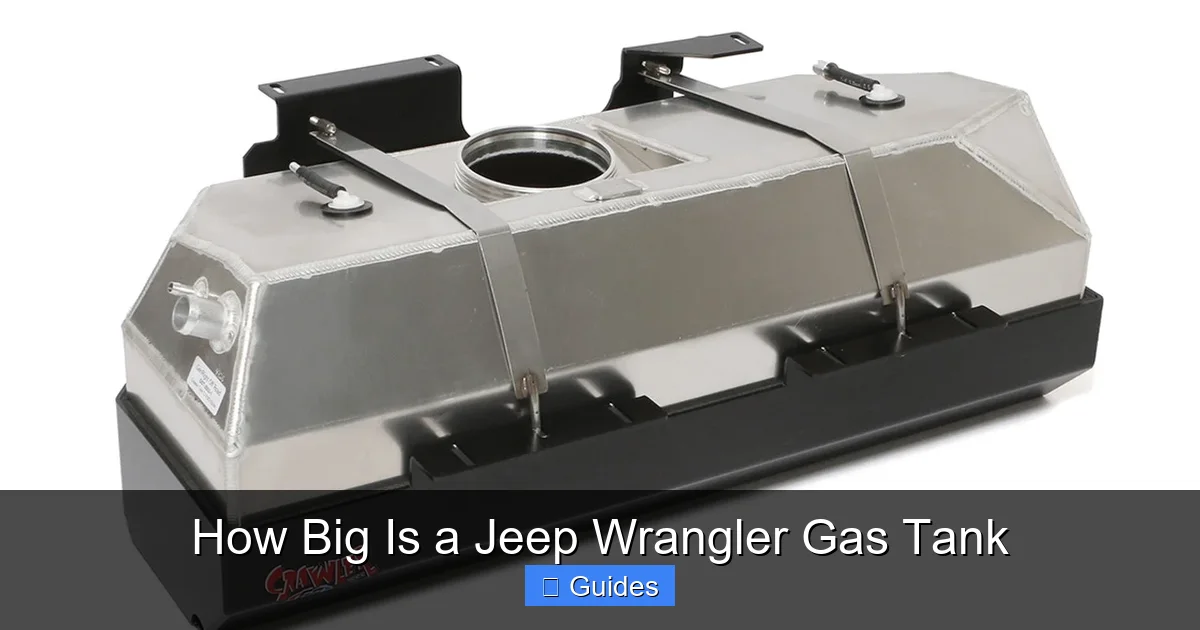
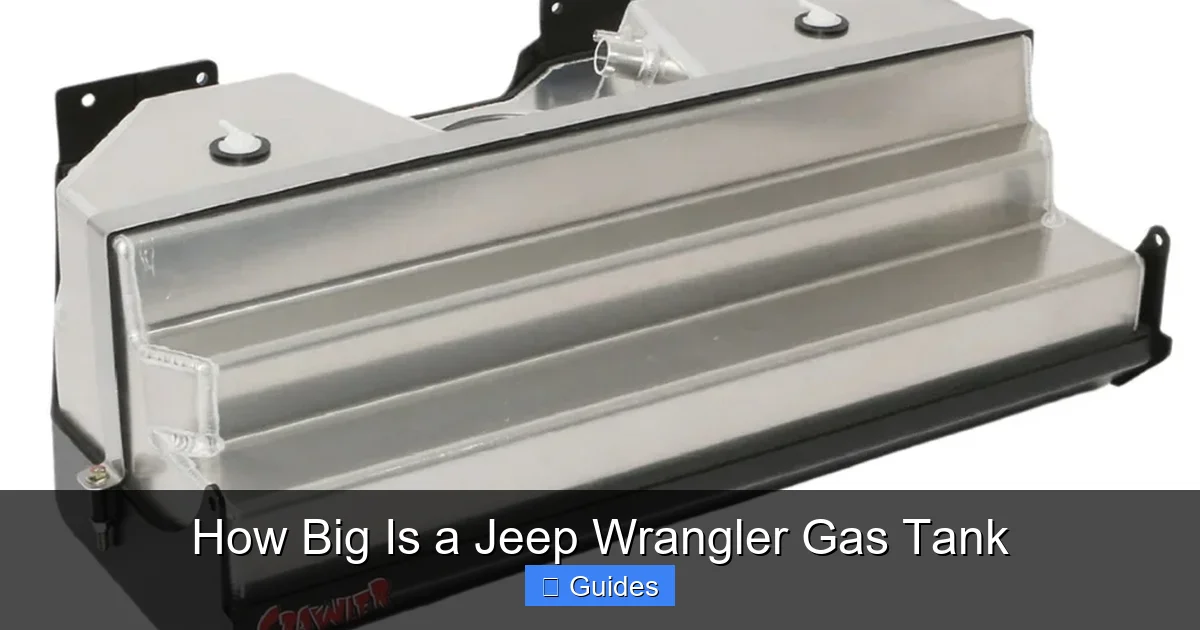
One popular option is installing an **auxiliary fuel tank**. These are secondary tanks mounted in the cargo area or under the vehicle, connected to the main fuel system via a transfer pump. They can add 10 to 20 gallons of extra capacity, effectively doubling your range.
Brands like Rigid Industries, Tuffy, and ARB offer bolt-on auxiliary tanks designed specifically for Wranglers. Installation usually requires some mechanical skill, but many kits are DIY-friendly.
Keep in mind that adding weight to your Jeep can affect handling and suspension performance. Make sure your shocks and springs can handle the extra load.
Replacement Fuel Tanks
Some companies sell **larger replacement tanks** that fit in the same space as the factory unit. For example, a 25-gallon tank might replace the stock 22.5-gallon unit in a JL Unlimited. These are less common and often more expensive, but they don’t take up cargo space.
Always check local regulations before modifying your fuel system. In some areas, aftermarket fuel tanks must meet strict safety and emissions standards.
Fuel Management Systems
If you install an auxiliary tank, consider adding a **fuel management system**. These devices let you monitor fuel levels in both tanks and automatically switch between them. Some even have low-fuel warnings and remote gauges.
While not essential, a good fuel management system adds peace of mind on long trips.
Why Gas Tank Size Matters for Off-Roading and Overlanding
For many Wrangler owners, the vehicle is more than just a car—it’s a tool for exploration. Whether you’re tackling the Rubicon Trail or camping in the desert, fuel range can make or break your adventure.
Remote Areas Mean Fewer Gas Stations
In places like Moab, Utah, or the Alaskan backcountry, gas stations can be hundreds of miles apart. A larger gas tank gives you the freedom to explore without constantly worrying about where your next fill-up will be.
Imagine driving through Death Valley with a nearly empty tank. There’s only one gas station for over 100 miles. If you run out, you’re stuck. But with a full 22.5-gallon tank and efficient driving, you can easily make it to the next stop—and still have fuel to spare.
Emergency Preparedness
A full gas tank isn’t just about convenience—it’s about safety. In an emergency, your Jeep might be your only way out. Whether you’re stranded due to weather, mechanical failure, or getting lost, having extra fuel could be a lifesaver.
Many overlanders carry extra fuel in approved containers, but a larger onboard tank reduces the need for jerry cans, which take up space and add weight.
Peace of Mind
Let’s be honest: there’s something reassuring about knowing you can go the distance. Whether you’re on a weekend trip or a months-long expedition, a big gas tank lets you focus on the journey, not the fuel gauge.
How to Check Your Wrangler’s Exact Gas Tank Size
Not sure how big your Jeep Wrangler gas tank is? Here’s how to find out:
– **Check the owner’s manual:** This is the most reliable source. Look for “Fuel Tank Capacity” in the specifications section.
– **Use your VIN:** Enter your Vehicle Identification Number on Jeep’s official website or a VIN decoder tool. It will show your exact model, engine, and fuel system details.
– **Look at the fuel door:** Some Wranglers have the tank size printed near the fuel cap, though this isn’t always accurate.
– **Ask a dealer or mechanic:** If you’re still unsure, a Jeep dealership can look up your vehicle’s specs using your VIN.
Knowing your exact tank size helps you plan trips, calculate fuel costs, and understand your vehicle’s capabilities.
Conclusion: Bigger Isn’t Always Better—But It Helps
So, how big is a Jeep Wrangler gas tank? The answer ranges from about 17 gallons in a two-door JK to 22.5 gallons in a four-door JL Unlimited. That’s a significant difference—and it can mean the difference between a stress-free adventure and a stranded nightmare.
While a larger tank offers more range and peace of mind, it’s not the only factor that matters. Engine efficiency, driving habits, and terrain all play a role in how far you can go. The key is understanding your Jeep’s capabilities and planning accordingly.
Whether you’re commuting to work, exploring national parks, or living off the grid, your Wrangler’s gas tank is a vital part of the equation. Choose the right model for your needs, maintain it well, and respect the limits of your fuel system.
And if you’re serious about long-range travel, consider aftermarket upgrades or a diesel engine. With the right setup, your Wrangler can take you almost anywhere—on just one tank of gas.
Frequently Asked Questions
What is the gas tank size of a 2023 Jeep Wrangler Unlimited?
The 2023 Jeep Wrangler Unlimited has a 22.5-gallon gas tank, the largest ever offered in a factory Wrangler. This provides excellent range for long trips and off-road adventures.
Can I increase the gas tank size on my Jeep Wrangler?
Yes, you can install an auxiliary fuel tank or a larger replacement tank, but it requires mechanical work and may affect your vehicle’s warranty or handling. Always consult a professional.
How many miles can a Jeep Wrangler go on a full tank?
Depending on the model and engine, a Wrangler can travel 300 to over 600 miles on a full tank. Diesel and hybrid models offer the best range.
Does the two-door Wrangler have a smaller gas tank than the four-door?
Yes, the two-door Wrangler typically has a 17 to 17.5-gallon tank, while the four-door Unlimited has a 20.5 to 22.5-gallon tank, offering significantly more range.
What affects Jeep Wrangler fuel economy?
Factors include engine type, driving conditions, tire pressure, vehicle load, and driving style. Off-roading and aggressive driving can reduce mileage by up to 50%.
Is the EcoDiesel Wrangler worth it for long trips?
Absolutely. The EcoDiesel offers superior fuel economy and range—over 600 miles per tank—making it ideal for overlanding and remote travel.

At CarLegit, we believe information should be clear, factual, and genuinely helpful. That’s why every guide, review, and update on our website is created with care, research, and a strong focus on user experience.