
Buying a car at auction can save you thousands—but only if you know what you’re doing. From choosing the right auction type to inspecting vehicles and managing your budget, this guide walks you through every step to help you drive away with a great deal.
So, you’ve heard that buying a car at auction can be a smart way to score a great deal—maybe even a nearly new vehicle for half the price. And you’re right. Auctions can be treasure troves for savvy buyers. But here’s the catch: without the right knowledge, you could end up with a lemon, a broken bank account, or both.
The truth is, car auctions aren’t just for dealers or mechanics. Every day, regular people walk in (or log on) and walk out with reliable, affordable vehicles. Whether you’re looking for a daily driver, a project car, or a second vehicle for the family, auctions offer a unique opportunity to bypass dealership markups and negotiate directly with the market. But success doesn’t come from luck—it comes from preparation, patience, and knowing exactly what you’re getting into.
In this guide, we’ll walk you through everything you need to know to buy a car at auction with confidence. From understanding the different types of auctions to mastering the bidding process and handling post-purchase steps, we’ve got you covered. By the end, you’ll feel ready to bid smart, avoid common pitfalls, and drive away with a vehicle that fits your needs and your budget.
In This Article
- 1 Key Takeaways
- 2 📑 Table of Contents
- 3 Understand the Different Types of Car Auctions
- 4 Do Your Homework Before the Auction
- 5 Inspect the Vehicle Before Bidding
- 6 Register and Prepare for the Auction
- 7 Bid Smart and Avoid Common Mistakes
- 8 Handle Post-Auction Logistics
- 9 Start Small and Learn the Ropes
- 10 Frequently Asked Questions
Key Takeaways
- Research auction types: Understand the differences between government, police, dealer, and public auctions to find the best fit for your needs.
- Set a strict budget: Include buyer’s premiums, taxes, and potential repairs to avoid overspending after the hammer drops.
- Inspect vehicles thoroughly: Use pre-auction inspections, vehicle history reports, and expert help to assess condition and avoid hidden problems.
- Register in advance: Most auctions require pre-registration, proof of ID, and sometimes a deposit—don’t wait until the last minute.
- Bid strategically: Stay calm, know your max bid, and avoid getting caught in bidding wars that drive up prices.
- Plan for post-auction logistics: Arrange transportation, insurance, and title transfer immediately after winning to avoid delays or extra fees.
- Start small: First-time buyers should begin with lower-risk vehicles like clean-title sedans before tackling salvage or high-mileage cars.
📑 Table of Contents
Understand the Different Types of Car Auctions
Not all car auctions are created equal. The type of auction you choose can dramatically affect the kind of vehicles available, their condition, pricing, and even who’s allowed to bid. Let’s break down the most common types so you can pick the one that aligns with your goals.
Government and Police Auctions
These auctions are run by federal, state, or local government agencies, including police departments. Vehicles often come from seized assets, impounded cars, or retired fleet vehicles. The big advantage? Prices can be extremely low—sometimes just a few hundred dollars for a usable car.
For example, a police department might auction off a used patrol car that’s been well-maintained but is being replaced by a newer model. These vehicles often have high mileage but are mechanically sound. The catch? They may lack modern features, and cosmetic damage is common. Still, for budget-conscious buyers, these auctions are goldmines.
Dealer-Only Auctions
These are private events where only licensed car dealers can participate. You won’t find regular consumers here. However, if you’re a dealer or have a dealer friend, you might gain access. These auctions typically feature late-model, low-mileage vehicles—often trade-ins or repossessions from dealerships.
The benefit? High-quality inventory. The downside? You’re competing against professionals who know the market inside and out. If you’re not a dealer, you’ll need to find a way in—some auctions allow “buyer’s agents” or partnerships with licensed dealers.
Public Auctions (In-Person and Online)
These are open to the general public and are the most accessible for individual buyers. Companies like Manheim, Copart, and IAAI (Insurance Auto Auctions) run large-scale public auctions both physically and online.
Public auctions offer a wide range of vehicles—from clean-title sedans to salvage cars, motorcycles, and even RVs. Online platforms have made it easier than ever to participate from home, with live bidding, detailed photos, and vehicle history reports. This is where most first-time auction buyers start.
Salvage and Rebuilt Title Auctions
If you’re open to fixing up a car, salvage auctions can be incredibly rewarding. These vehicles have been declared total losses by insurance companies—usually due to accidents, floods, or fire damage—but may still be repairable.
For instance, a car with a damaged front end might sell for $2,000 but cost $1,500 to repair, giving you a $500 vehicle for $3,500 total. That’s a steal compared to a $15,000 market value. But be warned: not all salvage cars are worth fixing. Some have hidden frame damage or electrical issues that make them unsafe or too costly to repair.
Do Your Homework Before the Auction
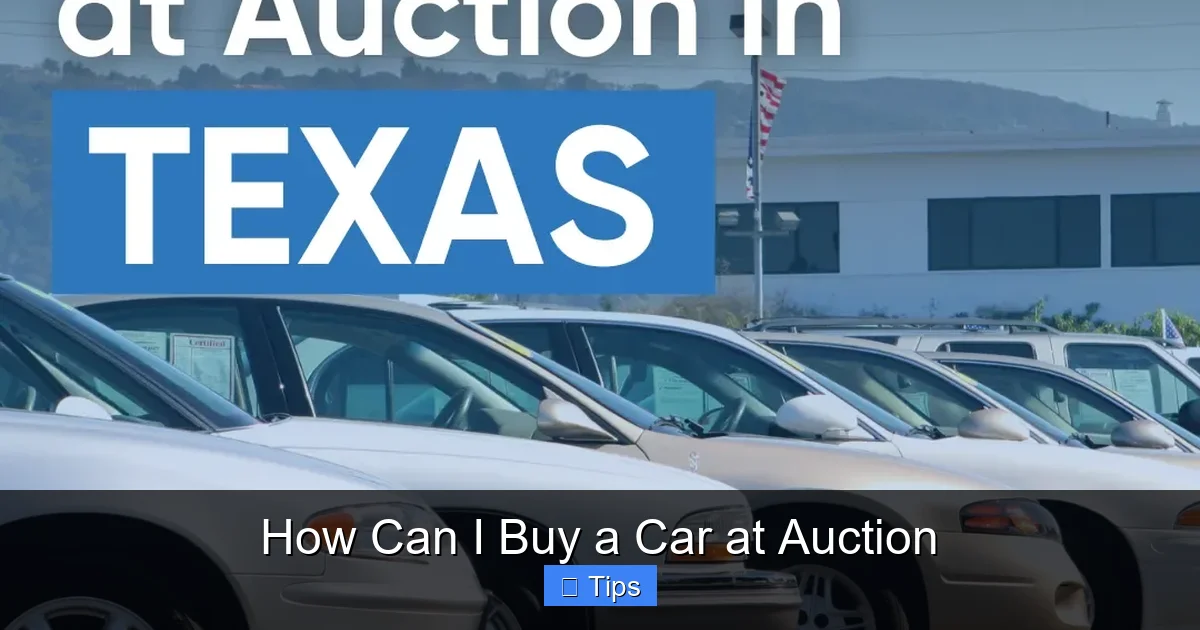
Visual guide about How Can I Buy a Car at Auction
Image source: dp4o795wajnwf.cloudfront.net
Walking into an auction unprepared is like walking into a storm without an umbrella—you’re going to get soaked. The best buyers don’t just show up; they research, plan, and prioritize. Here’s how to do it right.
Set a Clear Budget—and Stick to It
It’s easy to get caught up in the excitement of bidding and overspend. That’s why you need a firm budget *before* you even look at cars.
Start with the maximum amount you’re willing to pay for the vehicle itself. Then, add in extra costs:
– Buyer’s premium (typically 5–15% of the final bid)
– Sales tax (varies by state)
– Title and registration fees
– Transportation (if the car isn’t driveable)
– Potential repairs or inspections
For example, if you bid $5,000 on a car with a 10% buyer’s premium, you’ll pay $5,500 before taxes and fees. If repairs could cost $1,000, your total out-the-door cost might be $7,000+. Make sure that number fits your budget.
Research Vehicle Values
Use tools like Kelley Blue Book (KBB), Edmunds, or NADA Guides to check the market value of the cars you’re interested in. Compare similar models, years, and conditions. This helps you spot overpriced bids and know when you’re getting a real deal.
For instance, if a 2018 Honda Civic with 60,000 miles typically sells for $14,000 at a dealership, and you see one at auction with a clean title and similar mileage, you know $8,000 is a strong bid—but $12,000 might be too high.
Get Vehicle History Reports
Always pull a vehicle history report using the VIN (Vehicle Identification Number). Services like Carfax or AutoCheck can reveal:
– Accident history
– Flood or fire damage
– Odometer rollback
– Number of previous owners
– Title status (clean, salvage, rebuilt, etc.)
A clean report doesn’t guarantee a perfect car, but it reduces risk. If a vehicle has a salvage title or multiple accidents, factor that into your bid—or walk away.
Attend a Few Auctions as an Observer
Before you bid, go to a couple of auctions just to watch. See how the process works, how fast bidding moves, and what kinds of cars sell for what prices. This helps you understand the rhythm and avoid rookie mistakes.
Inspect the Vehicle Before Bidding

Visual guide about How Can I Buy a Car at Auction
Image source: vulcan.abetter.bid
You wouldn’t buy a house without walking through it, right? The same goes for cars. Even if you can’t test drive (most auctions don’t allow it), you can still inspect the vehicle thoroughly.
Use Pre-Auction Inspection Windows
Most auctions offer a preview period—usually a day or two before bidding starts—when you can inspect vehicles in person. Use this time wisely.
Bring a flashlight, a tire pressure gauge, and a notepad. Look for:
– Rust or corrosion (especially under the car and around wheel wells)
– Paint mismatches or overspray (signs of bodywork)
– Dents, scratches, or cracked glass
– Interior wear (torn seats, stained carpets, broken controls)
– Engine bay leaks, worn belts, or loose hoses
– Tire condition and tread depth
If the car starts, listen for unusual noises—knocking, whining, or rough idling. Smell for oil, coolant, or burning odors.
Check for Flood Damage
Flood-damaged cars are a major risk at auctions. Look for:
– Musty or mildew smells
– Water stains on carpets or upholstery
– Rust in unusual places (under seats, in trunk)
– Mud or silt in air vents or under the dashboard
– Corroded electrical connectors
If you suspect flood damage, walk away. Electrical systems can fail months later, leading to expensive repairs.
Consider Hiring a Mechanic
If you’re not confident in your own inspection skills, hire a mobile mechanic to check the car for you. Many mechanics offer pre-purchase inspection services for $100–$200. It’s a small price to pay for peace of mind.
For example, a mechanic might spot a failing transmission or worn suspension that you’d miss—saving you thousands in repairs.
Register and Prepare for the Auction

Visual guide about How Can I Buy a Car at Auction
Image source: bitrebels.com
Once you’ve done your research and found a few cars you like, it’s time to get ready to bid. But you can’t just show up and start raising your hand. Most auctions require registration.
Complete Pre-Registration
Visit the auction’s website and register in advance. You’ll typically need:
– A valid government-issued ID (driver’s license or passport)
– Proof of insurance (some auctions require it)
– A refundable deposit (usually $500–$1,000, depending on the auction)
– Completed registration forms
Online auctions may require you to upload documents and verify your identity. Do this at least 24–48 hours before the auction to avoid delays.
Understand the Bidding Process
Auctions move fast. Here’s what to expect:
– Vehicles are called one by one, with basic details (year, make, model, VIN, condition) announced.
– Bidding starts at a low price and increases in increments (e.g., $100 or $500).
– You raise your hand, use a bidding paddle, or click “bid” online.
– The auctioneer declares the winner when bidding stops.
Some auctions use “absolute” bidding (no reserve price—the highest bid wins, even if it’s low), while others have reserves (the seller sets a minimum price). Absolute auctions are better for buyers.
Know the Fees and Payment Terms
After winning, you’ll need to pay quickly—usually within 24–48 hours. Most auctions accept cash, cashier’s checks, or wire transfers. Credit cards are rarely accepted for the full amount.
Be ready to pay:
– The final bid amount
– Buyer’s premium (added on top)
– Taxes and fees
For example, if you win a car for $6,000 with a 10% buyer’s premium, you’ll owe $6,600 plus taxes. Have the funds ready.
Bid Smart and Avoid Common Mistakes
Bidding at an auction can be thrilling—but it’s also where many buyers go wrong. Emotions run high, competition heats up, and it’s easy to overpay. Here’s how to stay in control.
Set a Maximum Bid and Stick to It
Before the auction, decide the absolute most you’re willing to pay for each car. Write it down. When bidding reaches that number, stop.
It’s easy to get caught in a “win at all costs” mindset, especially if you’ve been outbid a few times. But remember: there will always be another car. Overpaying on one vehicle means you have less money for the next.
Avoid Bidding Wars
If someone else is aggressively bidding on the same car, don’t take it personally. Let them win. Chances are, they’re overpaying.
Instead, focus on your list of target vehicles. If one gets too expensive, move to the next. Patience pays off.
Bid on Multiple Cars
Don’t put all your hopes on one vehicle. Identify 3–5 cars that meet your criteria and bid on all of them. This increases your chances of winning *something* without overspending.
For example, if you’re looking for a reliable commuter car, have backups: a Toyota Corolla, a Honda Civic, and a Mazda3. If the Corolla goes too high, you can still get the Civic.
Watch for “As-Is” Sales
Nearly all auction cars are sold “as-is,” meaning no warranties and no returns. If it breaks down the next day, you’re on your own. That’s why inspection and research are so important.
Handle Post-Auction Logistics
Winning the bid is just the beginning. Now you need to get the car home, insured, and legally registered.
Arrange Transportation
If the car isn’t driveable, you’ll need to tow it. Some auctions offer towing services, or you can hire a local tow truck. Factor this cost into your budget.
If the car runs, drive it home—but make sure it’s insured first.
Get Insurance Immediately
You can’t legally drive the car without insurance. Call your provider or shop around for a new policy. Some insurers offer same-day coverage.
Transfer the Title and Register the Vehicle
The auction will provide a bill of sale and possibly a title (depending on the state). Take these to your local DMV to register the car and get new plates.
Be prepared to pay registration fees and possibly a vehicle inspection (required in some states).
Plan for Repairs
Even if the car looked good, it might need work. Schedule a full inspection with a trusted mechanic. Address any safety or reliability issues first.
Start Small and Learn the Ropes
If you’re new to auctions, don’t go for a luxury SUV or a high-mileage truck on your first try. Start with a simple, low-risk vehicle—like a clean-title compact car with moderate mileage.
This gives you experience without a huge financial risk. As you learn, you can gradually bid on more complex or damaged vehicles.
Remember: every expert was once a beginner. The key is to stay informed, stay calm, and keep learning.
Buying a car at auction isn’t just about saving money—it’s about taking control of your purchase, avoiding dealer markups, and finding hidden gems. With the right preparation, you can turn the auction into your personal car-buying superstore.
So do your homework, inspect carefully, bid wisely, and drive away with confidence. Your next great car might be just one bid away.
Frequently Asked Questions
Can I buy a car at auction if I’m not a dealer?
Yes! Many auctions are open to the public, including online platforms like Copart and IAAI. You just need to register, provide ID, and sometimes pay a deposit.
Are auction cars reliable?
It depends. Clean-title, low-mileage vehicles from government or dealer auctions can be very reliable. Salvage cars may need repairs, so inspect carefully and budget for fixes.
How much should I budget for fees?
Plan for a buyer’s premium (5–15%), taxes, title fees, and possible towing or repairs. These can add 10–25% to your final bid price.
Can I test drive a car before bidding?
Most auctions don’t allow test drives. However, you can inspect the car during preview days and check if it starts.
Since most sales are “as-is,” you’re responsible for any issues. That’s why thorough inspection and vehicle history reports are essential.
How do I find upcoming car auctions?
Search online for “car auctions near me” or visit sites like Manheim, Copart, or government auction portals. Many list schedules and vehicle previews in advance.

At CarLegit, we believe information should be clear, factual, and genuinely helpful. That’s why every guide, review, and update on our website is created with care, research, and a strong focus on user experience.