
Most Tesla models can safely drive through water up to 12–14 inches deep, thanks to sealed components and high-mounted electronics. However, deeper water risks damaging critical systems, voiding warranties, and creating safety hazards. Always assess conditions carefully and avoid driving through floodwaters when possible.
[FEATURED_IMAGE_PLACEHORD]
In This Article
- 1 Key Takeaways
- 2 📑 Table of Contents
- 3 How Deep of Water Can a Tesla Drive Through?
- 4 Understanding Tesla’s Water Resistance Design
- 5 Safe Water Wading Depth for Tesla Models
- 6 Risks of Driving Through Deep Water
- 7 Real-World Examples and Owner Experiences
- 8 What to Do If Your Tesla Goes Through Deep Water
- 9 Prevention Is the Best Policy
- 10 Conclusion
- 11 Frequently Asked Questions
Key Takeaways
- Safe wading depth is 12–14 inches: Tesla vehicles are designed to handle shallow flooding, but exceeding this depth increases the risk of electrical and mechanical damage.
- Electronics are sealed but not waterproof: While high-voltage components are protected, prolonged submersion or deep water can compromise seals and cause failures.
- Hydroplaning is a major risk: Even at low speeds, water can reduce tire traction, making steering and braking less effective.
- Driving through floodwater voids warranty: Tesla explicitly warns against driving through standing or moving water, and damage from such incidents is not covered.
- Assess depth and current before crossing: Look for reference points like curbs or other vehicles, and never enter water with strong currents or unknown depth.
- Use caution in heavy rain or storms: Urban flooding can rise quickly, and hidden hazards like manholes or debris make driving dangerous.
- Post-flood inspection is essential: If your Tesla has been through water, have it inspected by a certified technician before driving again.
📑 Table of Contents
How Deep of Water Can a Tesla Drive Through?
Imagine you’re driving your sleek Tesla Model 3 on a rainy evening, and suddenly you come across a flooded road. The water looks shallow—maybe just a few inches deep—but you’re not sure if it’s safe to cross. Can your Tesla handle it? Or should you turn around?
This is a common concern for Tesla owners, especially during heavy storms or seasonal flooding. Unlike traditional gas-powered cars, Teslas are electric vehicles (EVs) with unique engineering. They don’t have air intakes, exhaust systems, or engine bays in the same way, which changes how they react to water. But that doesn’t mean they’re invincible.
In this guide, we’ll explore exactly how deep of water a Tesla can drive through, what risks are involved, and how to stay safe when facing flooded roads. Whether you drive a Model S, Model 3, Model X, Model Y, or even a Cybertruck, understanding your vehicle’s limits can prevent costly repairs and keep you safe.
Let’s dive in—safely, of course.
Understanding Tesla’s Water Resistance Design
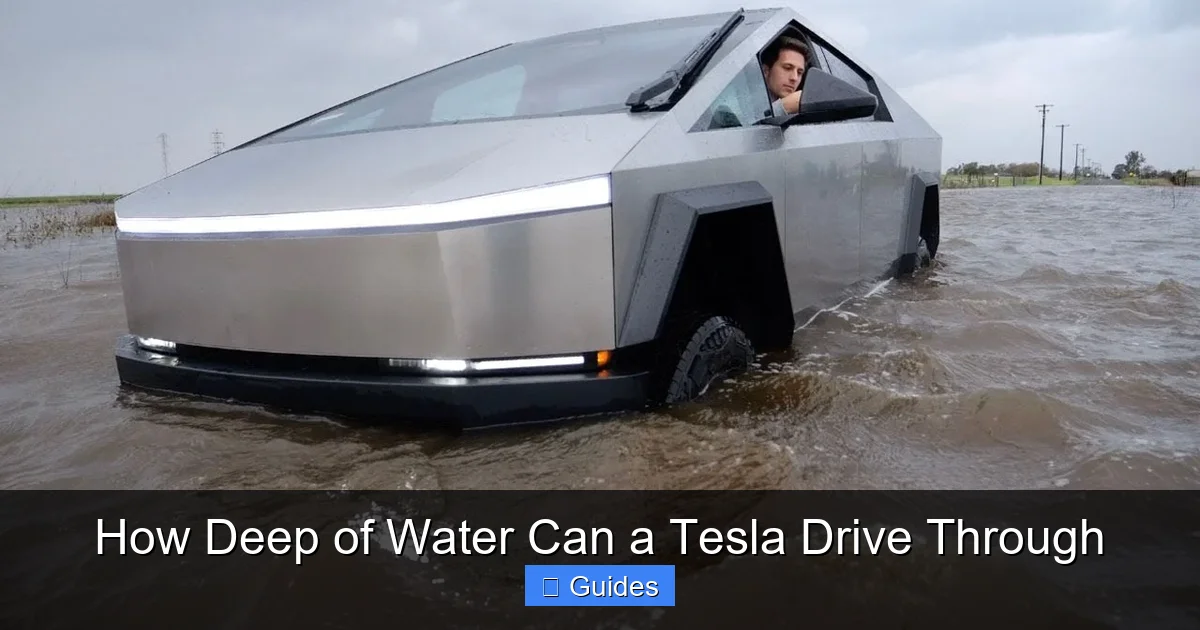
Visual guide about How Deep of Water Can a Tesla Drive Through
Image source: i.ytimg.com
Tesla vehicles are built with water resistance in mind, but they are not designed to be amphibious. The company has taken several engineering steps to protect critical components from moisture, especially in wet or rainy conditions. However, this doesn’t mean your Tesla can handle deep flooding like a boat.
One of the biggest advantages of electric vehicles is the absence of an internal combustion engine. Gas-powered cars can be severely damaged if water enters the air intake—even a few inches of water can cause hydrolock, where the engine seizes. Teslas don’t have this problem because there’s no air intake for combustion. That’s a major plus.
But that doesn’t make them waterproof. Instead, Tesla focuses on sealing high-voltage components and placing them high in the vehicle. The battery pack, for example, is located on the floor of the car and is encased in a rigid, sealed aluminum housing. This helps protect it from splashes and shallow water exposure.
Key Water-Resistant Components
Several parts of a Tesla are designed to resist water intrusion:
– Battery Pack: The lithium-ion battery is sealed and mounted low in the chassis. While it’s not meant to be submerged, it can handle brief exposure to shallow water.
– Electric Motors: Located in the front and/or rear axles, these are sealed units. Tesla uses IP67-rated motors (on most models), meaning they can withstand immersion in up to 1 meter (about 39 inches) of water for 30 minutes—but only under controlled conditions.
– High-Voltage Cables and Connectors: These are insulated and sealed to prevent short circuits.
– Underbody Protection: The undercarriage is covered with panels that help shield wiring and components from debris and moisture.
Despite these protections, Tesla does not advertise its vehicles as waterproof or suitable for off-road water crossings. The company’s official stance is cautious: avoid driving through standing or moving water whenever possible.
IP Ratings and What They Mean
You may have heard of IP ratings—like IP67 or IP68—which describe how well a device resists dust and water. These ratings are common for smartphones and electronics, but they also apply to some EV components.
For example, an IP67 rating means the component is dust-tight and can survive immersion in up to 1 meter of water for 30 minutes. Tesla’s motors and some electronics meet or exceed this standard. However, the entire vehicle does not have a single IP rating. Instead, different parts have varying levels of protection.
This is important because while the motor might survive deep water, other systems—like sensors, cameras, or the 12-volt auxiliary battery—may not. These lower-voltage systems are more vulnerable and can fail if water gets inside.
So, even if the high-voltage system is protected, water damage to sensors or control modules can still disable your Tesla.
Safe Water Wading Depth for Tesla Models
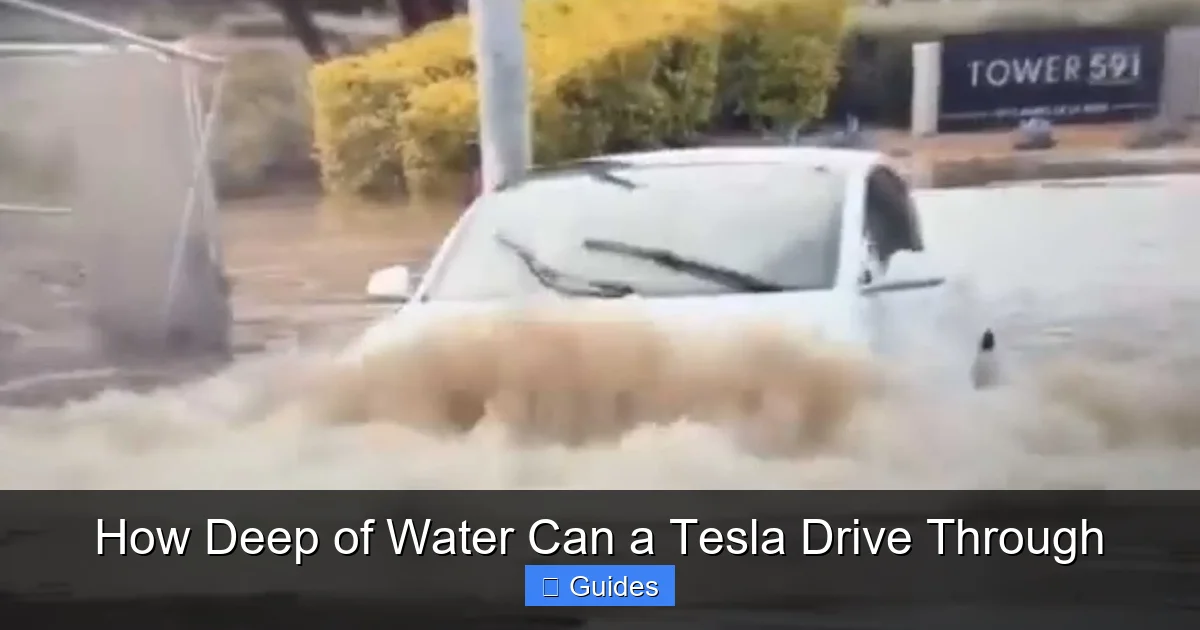
Visual guide about How Deep of Water Can a Tesla Drive Through
Image source: cdn.motor1.com
So, how deep is safe? Based on Tesla’s design, owner experiences, and engineering data, most experts agree that Teslas can safely drive through water up to 12 to 14 inches deep—under ideal conditions.
This depth is roughly the height of a standard curb or the top of a car’s tire sidewall. At this level, the water is unlikely to reach critical components like the battery, motors, or electronics.
But “safe” doesn’t mean “risk-free.” Even at 12 inches, there are dangers. Let’s break it down by model and scenario.
Model-by-Model Wading Capability
While all Tesla models share similar engineering principles, their ground clearance and component placement vary slightly.
– Model S and Model 3: These sedans have lower ground clearance—around 5.5 to 6 inches when unloaded. With passengers or cargo, this can drop further. They’re best suited for water no deeper than 10–12 inches.
– Model X and Model Y: These SUVs have higher ground clearance—about 6.5 to 7.5 inches. The Model Y, in particular, is often compared to compact crossovers and can handle slightly deeper water, up to 12–14 inches.
– Cybertruck: With its rugged design and higher stance, the Cybertruck may handle deeper water—possibly up to 15 inches—but Tesla hasn’t released official wading depth specs. Still, caution is advised.
Keep in mind that these numbers are estimates. Real-world conditions like water speed, debris, and road surface can change the risk level.
Factors That Affect Safe Depth
Even if the water looks shallow, several factors can make crossing dangerous:
– Water Current: Moving water is harder to judge. A fast current can push your car off course or hide deeper sections.
– Hidden Hazards: Floodwaters can cover potholes, manhole covers, or debris. Hitting these at speed can damage the undercarriage.
– Wave Action: If other vehicles are driving through the water, they can create waves that push water higher than expected.
– Vehicle Load: A fully loaded Tesla sits lower, reducing ground clearance and increasing the risk of water contact.
Always assess the situation carefully. If you’re unsure, it’s better to turn around.
Risks of Driving Through Deep Water
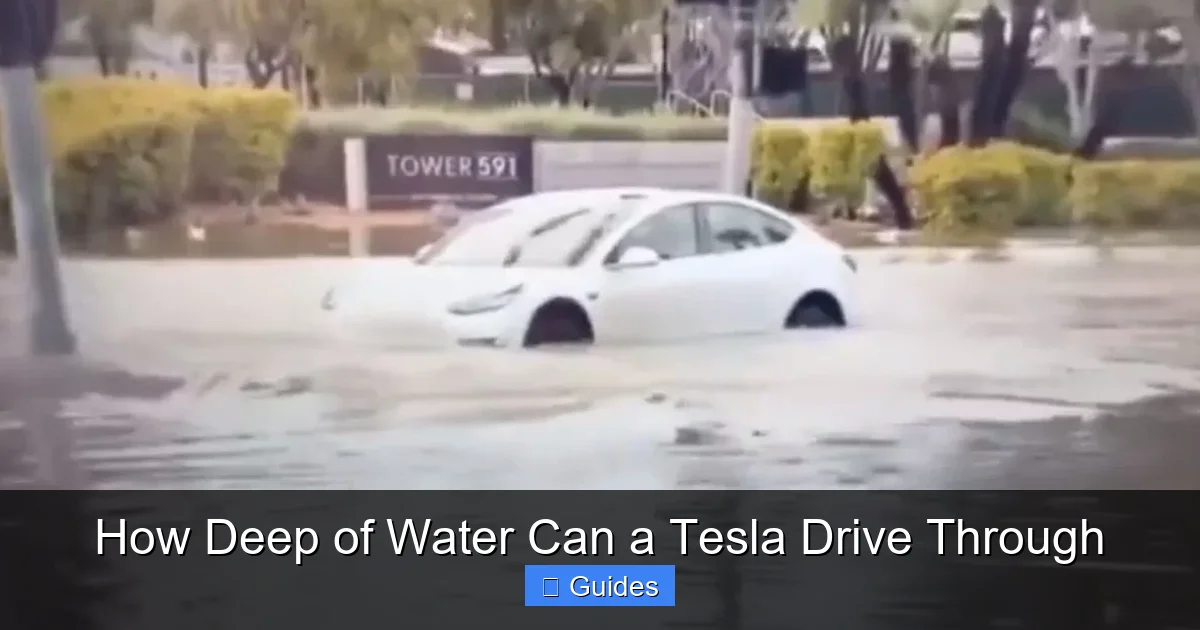
Visual guide about How Deep of Water Can a Tesla Drive Through
Image source: jordanthrilla.com
Driving through water deeper than recommended can lead to serious problems—some immediate, others delayed. Let’s look at the most common risks.
Electrical System Damage
Even though Tesla’s high-voltage system is sealed, prolonged exposure to water can compromise seals and gaskets. Saltwater is especially corrosive and can degrade insulation over time.
If water enters the battery pack or motor, it can cause short circuits, reduced performance, or complete failure. In extreme cases, it could even lead to a thermal event—though this is rare.
More commonly, water can damage the 12-volt auxiliary battery, which powers lights, sensors, and the infotainment system. This battery is not as well protected and is often located in the front trunk (frunk) or under the rear seats. If it gets wet, your car may not start or could lose critical functions.
Sensor and Camera Malfunctions
Teslas rely heavily on cameras, ultrasonic sensors, and radar for Autopilot and safety features. These are mounted around the vehicle—on the bumpers, mirrors, and windshield.
Water, mud, or salt residue can block or distort these sensors. Even after the water recedes, residue can remain, causing false alerts or disabling Autopilot.
In some cases, water can seep into sensor housings and cause permanent damage. Replacing these components is expensive and often not covered by warranty if water damage is suspected.
Hydroplaning and Loss of Control
Hydroplaning happens when a layer of water builds up between the tires and the road, causing the car to lose traction. This can occur at speeds as low as 35 mph on just 1/10 inch of water.
In a Tesla, hydroplaning is especially dangerous because the car is heavy (due to the battery) and has instant torque. If you hit standing water at speed, the car may skid or spin, even with traction control.
Once hydroplaning starts, it’s hard to regain control. Steering and braking become less effective, increasing the risk of an accident.
Voided Warranty and Repair Costs
Here’s a critical point: Tesla’s warranty does not cover damage from driving through water. The owner’s manual explicitly warns against driving through standing or moving water.
If your Tesla is damaged after crossing a flooded road, Tesla Service may deny warranty claims. You could be stuck with repair bills ranging from hundreds to thousands of dollars.
For example, replacing a flooded 12-volt battery might cost $200–$400. But if water damages the main battery or motor, repairs can exceed $10,000.
Insurance may help—but only if you have comprehensive coverage. And even then, claims can be denied if the damage is deemed due to driver negligence.
Real-World Examples and Owner Experiences
Many Tesla owners have shared stories about driving through flooded roads—some successful, others not.
One owner in Florida reported driving their Model Y through 10 inches of water during a tropical storm. The car made it across safely, but they noticed reduced regenerative braking and a warning about the 12-volt battery. They took it to a service center, where technicians dried out the frunk and replaced the battery under warranty—though they warned it might not have been covered if damage was severe.
Another owner in Texas attempted to cross a flooded highway during heavy rain. The water was deeper than expected—closer to 18 inches—and the car stalled. Water had entered the frunk and damaged the 12-volt system. The car wouldn’t start, and it had to be towed. Tesla denied the warranty claim, citing water damage.
These stories highlight a key lesson: just because a Tesla can handle shallow water doesn’t mean it should. The risks often outweigh the benefits.
Tips from Experienced Owners
Based on community forums and expert advice, here are some practical tips:
– Walk it first: If possible, get out and check the depth. Use a stick or your foot to test the water.
– Follow another vehicle: If a larger vehicle (like an SUV) just crossed safely, it’s a good sign—but don’t assume your Tesla will fare the same.
– Go slow and steady: Drive at a crawl (2–5 mph) to minimize wave action and maintain control.
– Don’t stop in the water: If you must cross, keep moving. Stopping can allow water to seep into components.
– Check for current: Avoid crossing if the water is moving fast. Currents can be deceptive and dangerous.
What to Do If Your Tesla Goes Through Deep Water
If you accidentally drive through deep water, don’t panic—but act quickly.
Immediate Steps
1. Turn off the car: If it’s safe to do so, power down the vehicle to prevent electrical damage.
2. Do not restart: Starting the car could cause further damage if water is present.
3. Exit safely: If you’re in moving water or rising floodwaters, get out and move to higher ground.
4. Call for help: Contact Tesla Roadside Assistance or a tow service. Do not attempt to drive the car.
Post-Flood Inspection
Even if your Tesla seems fine, have it inspected by a certified Tesla technician. They can:
– Check for water intrusion in the battery, motors, and electronics.
– Test sensors and cameras for damage.
– Inspect the 12-volt system and wiring.
– Dry out any moisture and clean debris.
Early detection can prevent long-term issues like corrosion or electrical faults.
Document Everything
Take photos of the water depth, road conditions, and any damage. This can help with insurance claims or warranty disputes.
If you believe the damage should be covered, gather evidence and contact Tesla Support. Be polite but persistent.
Prevention Is the Best Policy
The best way to protect your Tesla from water damage is to avoid driving through flooded roads altogether.
Plan Your Route
Use navigation apps like Google Maps or Waze to check for flood warnings or road closures. Many apps now include real-time flood data.
If you live in a flood-prone area, consider alternate routes during rainy seasons.
Monitor Weather Conditions
Pay attention to weather forecasts, especially during hurricane season or heavy storms. If flooding is expected, avoid unnecessary travel.
Know Your Car’s Limits
Understand your Tesla’s ground clearance and design. Remember: it’s not a boat. It’s an advanced electric vehicle—not a submarine.
When in doubt, turn around. No destination is worth risking your safety or your car.
Conclusion
So, how deep of water can a Tesla drive through? The short answer: up to 12–14 inches under ideal conditions. But that doesn’t mean you should.
Tesla vehicles are engineered with water resistance in mind, but they are not designed for deep flooding. The risks—electrical damage, sensor failure, hydroplaning, and voided warranties—are real and costly.
Always assess the depth, current, and road conditions before crossing. When in doubt, find another route. Your Tesla—and your safety—are worth the extra time.
Remember: just because you *can* drive through water doesn’t mean you *should*. Stay smart, stay safe, and keep your Tesla running smoothly for years to come.
Frequently Asked Questions
Can a Tesla drive through 6 inches of water?
Yes, a Tesla can safely drive through 6 inches of water. This depth is well below the recommended limit and poses minimal risk to the vehicle’s components.
What happens if water gets into the Tesla battery?
If water enters the battery pack, it can cause short circuits, corrosion, or thermal events. While the battery is sealed, deep or prolonged exposure increases the risk of damage.
Will Tesla warranty cover water damage?
No, Tesla’s warranty does not cover damage from driving through water. The owner’s manual explicitly warns against it, and claims are typically denied.
Can I use Autopilot in flooded conditions?
No, Autopilot should not be used in flooded or hazardous conditions. Sensors may malfunction, and the system is not designed for off-road or extreme weather use.
How do I know if my Tesla has water damage?
Signs include warning lights, reduced performance, strange noises, or failure to start. A certified Tesla technician can perform a diagnostic inspection.
Is it safe to drive a Tesla in heavy rain?
Yes, Teslas are safe in heavy rain as long as roads are not flooded. The sealed design protects against splashes and wet conditions under normal driving.

At CarLegit, we believe information should be clear, factual, and genuinely helpful. That’s why every guide, review, and update on our website is created with care, research, and a strong focus on user experience.