

Featured image for how do i get my jeep out of theft mode
Image source: koala.sh
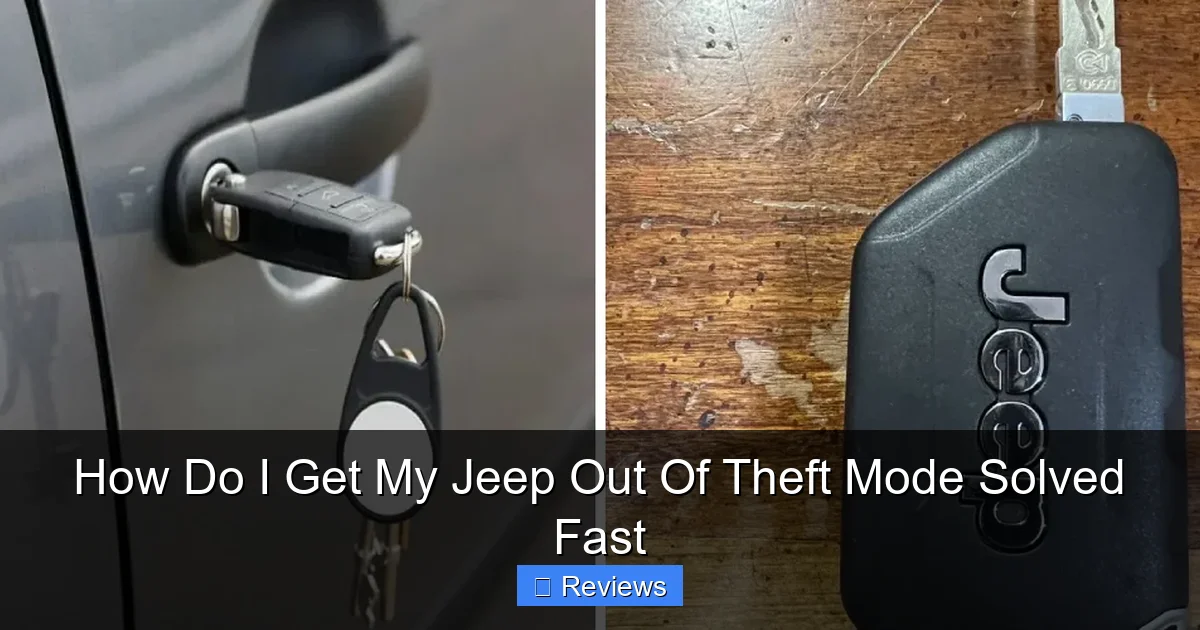
Quickly resolving a Jeep stuck in theft mode typically involves straightforward DIY methods like a battery disconnect or executing a specific ignition key sequence to reset the immobilizer. Should these immediate fixes not work, accessing your Jeep’s diagnostics with a scan tool or professional key reprogramming may be required to get you back on the road swiftly.
Picture this: You’re ready to embark on another adventure in your beloved Jeep, whether it’s a quick run to the store or an epic off-road excursion. You hop in, turn the key, or press the start button, and… nothing. Or worse, the engine cranks valiantly but refuses to fire, all while that ominous security light blinks frantically on your dashboard. This isn’t just a minor inconvenience; your Jeep is likely stuck in theft mode, a sophisticated anti-theft system designed to protect your vehicle, but one that can unexpectedly leave you stranded.
The frustration can be immense. One moment, your Jeep is your reliable companion; the next, it’s an immobile, uncooperative hunk of metal, seemingly impervious to your attempts to coax it back to life. You might wonder, “How do I get my Jeep out of theft mode?” This isn’t a rare occurrence, and understanding the mechanisms behind this security feature is the first step towards resolving the issue. Whether it’s a minor glitch or a more complex electronic hiccup, there are definitive steps you can take to disarm the system and get your Jeep moving again.
This comprehensive guide aims to be your ultimate resource for diagnosing and resolving the dreaded Jeep theft mode. We’ll delve into the intricacies of your Jeep’s anti-theft system, review common triggers, and walk you through a series of practical, actionable solutions—from simple DIY fixes to knowing when to call in the professionals. Our goal is to empower you with the knowledge to troubleshoot effectively and get your Jeep out of theft mode, and back on the road, solved fast.
In This Article
- 1 Key Takeaways
- 2 Understanding Your Jeep’s Anti-Theft System and Why It Activates
- 3 Immediate & Common Solutions to Get Your Jeep Out Of Theft Mode
- 4 Advanced Troubleshooting When Simple Fixes Fail
- 5 Professional Assistance: When to Call the Experts
- 6 Preventing Future Theft Mode Activations
- 7 Quick Troubleshooting Guide for Jeep Theft Mode
- 8 Conclusion
- 9 Frequently Asked Questions
- 9.1 What does “theft mode” mean for my Jeep and how do I know it’s active?
- 9.2 What typically causes a Jeep to enter into theft mode?
- 9.3 What are the initial steps to get my Jeep out of theft mode quickly?
- 9.4 Can I reset the security system myself to disable my Jeep’s theft mode?
- 9.5 My Jeep is still in theft mode; what should I do if common fixes don’t work?
- 9.6 Will disconnecting the battery help get my Jeep out of theft mode?
Key Takeaways
- Verify Battery Health: A weak battery often triggers theft mode.
- Use Correct Key Fob: Ensure it’s the original or properly programmed key.
- Try Key Cycle Reset: Turn ignition ON/OFF three times, then start.
- Perform Hard Reset: Disconnect battery for 15 minutes to clear system.
- Inspect Aftermarket Alarms: They can mimic factory theft mode issues.
- Consult Owner’s Manual: Specific models may have unique reset procedures.
- Seek Professional Help: If all fails, a dealer or locksmith is next step.
Understanding Your Jeep’s Anti-Theft System and Why It Activates
Before we dive into the solutions, it’s crucial to understand what “theft mode” actually is and why your Jeep might be activating it. Your Jeep’s security system is a sophisticated network designed to prevent unauthorized use, but sometimes, it can be a bit overzealous, triggering even when there’s no threat.
The Basics of Jeep’s Sentry Key Immobilizer System (SKIS)
Modern Jeeps, like many other vehicles, rely heavily on an electronic immobilizer system. Chrysler vehicles, including Jeeps, typically utilize the Sentry Key Immobilizer System (SKIS). This system isn’t just a simple alarm; it’s designed to prevent the engine from starting unless a correctly programmed key is used.
- Transponder Keys: At the heart of SKIS are your keys, which aren’t just mechanical devices. They contain a tiny transponder chip that emits a unique radio frequency signal.
- Wireless Control Module (WCM) / Wireless Ignition Node (WIN): When you insert your key into the ignition (or have it in proximity for push-button start), the WCM (or WIN module in newer models) reads the transponder’s signal. This module is the brain of the immobilizer system.
- Powertrain Control Module (PCM): The WCM/WIN then communicates with the PCM, which controls the engine’s functions. If the WCM/WIN verifies the key’s authenticity, it sends an “OK to Start” signal to the PCM, allowing the engine to fire. If the key is not recognized, or if there’s a communication error, the PCM will prevent the engine from starting, effectively putting your Jeep into theft mode.
This complex handshake ensures that only authorized keys can start your Jeep, making it a powerful deterrent against theft. However, any disruption in this communication chain can inadvertently trigger the system.
Common Triggers for Theft Mode Activation
Several factors can cause your Jeep to enter theft mode, some of which are surprisingly common and unrelated to actual theft attempts. Recognizing these triggers is key to understanding how to get your Jeep out of theft mode.
- Incorrect or Unrecognized Key: This is the most straightforward cause. If you use a key that hasn’t been properly programmed to your Jeep, or a damaged transponder chip, the SKIS will identify it as unauthorized and activate theft mode. This includes generic keys cut at hardware stores without proper transponder programming.
- Low Key Fob Battery: While a dead fob battery usually prevents remote locking/unlocking, a weak battery can sometimes lead to intermittent transponder signal strength, causing the WCM/WIN to fail to recognize the key, thus engaging the Jeep’s anti-theft system.
- Weak or Disconnected Vehicle Battery: Low voltage in your main car battery can wreak havoc on electronic systems. The WCM/WIN and PCM require stable power to operate correctly. A dying battery or loose/corroded terminals can lead to communication errors or module malfunctions, inadvertently triggering Jeep theft mode. A sudden battery disconnect and reconnect can also sometimes confuse the system.
- Electrical Glitches or Faults: Any fault in the wiring to the WCM/WIN, PCM, or ignition switch can disrupt the communication, leading to theft mode. This could be due to corrosion, a loose connection, or even a damaged module itself.
- Attempted Theft or Tampering: While less common for the average owner troubleshooting their vehicle, actual theft attempts, hotwiring, or tampering with the ignition system will certainly trigger the anti-theft system, making it very difficult to get the Jeep out of theft mode.
- Recent Module Replacement: If a WCM, PCM, or even the ignition switch has been replaced without proper reprogramming and synchronization with your existing keys, your Jeep will not recognize the new component and stay in theft mode.
Symptoms of a Jeep in Theft Mode
When your Jeep is in theft mode, it will exhibit a distinct set of symptoms that clearly indicate the anti-theft system is active. Understanding these signs is crucial for confirming your diagnosis.
- Flashing Security Light: This is the most common and definitive indicator. You’ll typically see a red light, often depicting a key or a padlock, rapidly flashing on your dashboard. This light is commonly referred to as the “Vehicle Security Light” or “Immobilizer Light.”
- Engine Cranks But Won’t Start: This is another classic symptom. You turn the key, the starter engages, the engine spins, but it just won’t “catch” or ignite. The PCM is preventing fuel delivery and/or spark.
- No Crank At All: In some severe cases, or depending on the specific Jeep model and the nature of the fault, the immobilizer might completely cut power to the starter, resulting in absolutely no engine cranking when you turn the key. All you might hear is a click.
- Alarm Activation (Horn/Lights): If the system detects a more severe unauthorized entry or tampering, the full alarm might engage, causing the horn to blare and the lights to flash, alongside the engine immobilizer.
Identifying these symptoms helps you confirm that you are indeed dealing with a Jeep theft mode issue and not another underlying mechanical problem. Now that you understand the “why,” let’s explore “how do I get my Jeep out of theft mode?”
Immediate & Common Solutions to Get Your Jeep Out Of Theft Mode
When your Jeep refuses to start due to theft mode, panic can easily set in. However, many common triggers can be resolved with relatively simple, immediate solutions. These DIY methods are often the first line of defense to get your Jeep out of theft mode.
Visual guide about how do i get my jeep out of theft mode
Image source: jeepfixes.com
The “Key Cycle” Reset Method
This is often the most recommended and effective initial troubleshooting step for a Jeep stuck in theft mode. It essentially attempts to force the WCM/WIN and PCM to resynchronize with a known good key.
- Why it Works: This method attempts to reset the immobilizer system by allowing it to “re-learn” or re-verify the legitimate key. It can resolve temporary communication glitches.
-
Detailed Steps:
- Ensure you are using a known, properly programmed key for your Jeep. If you have a spare key that you know works, use that first.
- Insert the key into the ignition (or place it in the designated area for push-button start).
- Turn the key to the “ON” position (without starting the engine). For push-button models, press the START button without pressing the brake pedal, just enough to activate the dashboard lights.
- Observe the security light (usually a red key or padlock symbol). It should be flashing rapidly.
- Leave the key in the “ON” position for 10-15 minutes. During this time, the security light might continue to flash rapidly, or it might change its flash pattern, or even turn off completely. The goal is to wait until the light either turns off or begins to flash very slowly (approximately once every 2-3 seconds). This indicates the system is attempting to reset or recognize the key.
- Once the light behavior changes or it turns off, turn the key to the “OFF” position and remove it.
- Wait for about 10-20 seconds.
- Re-insert the key and attempt to start your Jeep normally.
- Practical Example: “My 2017 Jeep Grand Cherokee went into theft mode after I accidentally used an old, unprogrammed key. I put in my correct key, turned it to ON, and watched the security light flash. After about 12 minutes, it stopped flashing and stayed solid. I turned the key off, waited 15 seconds, and then it started right up!”
- Important Note: This method requires patience. Do not rush the process. If it doesn’t work on the first try, you can attempt it once or twice more.
Battery Disconnect/Reconnect Method
Sometimes, a complete power cycle can clear electronic glitches that trigger Jeep theft mode. This method performs a hard reset on all vehicle electronics, including the immobilizer system.
- Why it Works: Disconnecting the battery drains residual power from the vehicle’s electronic control units (ECUs), effectively rebooting them. This can clear temporary error codes or system “confusion.”
- Safety First: Always wear gloves and eye protection when working with car batteries. Be mindful of potential sparks and ensure the vehicle is in Park with the parking brake engaged.
-
Detailed Steps:
- Pop the hood and locate your Jeep’s main vehicle battery.
- Using a wrench, loosen the nut on the negative (-) terminal (usually marked with a minus sign and has a black cable).
- Carefully remove the negative cable from the battery post. Ensure it does not touch any metal parts of the vehicle. You can secure it away from the battery with a zip tie or cloth.
- If the problem persists, you may also disconnect the positive (+) terminal. Always disconnect negative first, then positive. When reconnecting, connect positive first, then negative.
- Wait for a minimum of 15-30 minutes. Some experts recommend even longer, up to an hour, to ensure all capacitors and modules have fully discharged. During this time, you might press the brake pedal a few times to help drain any remaining power from the system.
- Reconnect the negative cable to the battery terminal, ensuring it’s tight and secure.
- Attempt to start your Jeep.
-
Pros and Cons:
- Pros: Can resolve many electronic glitches, including those causing Jeep theft mode. It’s a fundamental troubleshooting step.
- Cons: Can reset other electronic settings (radio presets, clock, learned transmission shift points). It might not address the root cause if there’s a failing component.
Checking and Replacing Key Fob Battery
A weak key fob battery is an often overlooked culprit when your Jeep enters theft mode. While it primarily powers remote functions, the strength of the transponder signal can also be affected.
- Importance of a Strong Fob Signal: The transponder chip inside your key fob doesn’t solely rely on the fob battery, but a dying battery can sometimes interfere with the WCM’s ability to “read” the key’s unique code, especially if the fob itself is transmitting other data. A strong, consistent signal is vital for the immobilizer handshake.
-
How to Replace It:
- Identify your key fob type. Most Jeep fobs can be carefully pried open with a small flathead screwdriver.
- Note the type of battery (usually a CR2032 or similar coin cell battery).
- Carefully remove the old battery and insert a new, fresh battery, paying attention to the polarity (+/-).
- Snap the fob back together.
- Attempt to start your Jeep.
- Testing with a Spare Key: If you have a second programmed key, always try that first. If the spare key starts the Jeep without issue, your primary key fob battery is a strong suspect, or the key itself might be faulty. This helps isolate the problem and efficiently get your Jeep out of theft mode.
Ensuring Main Vehicle Battery Health
As mentioned earlier, a weak or failing main vehicle battery is a frequent cause of perplexing electronic issues, including the dreaded Jeep theft mode. Modern vehicles are incredibly sensitive to voltage fluctuations.
- Low Voltage Triggers: A battery that isn’t providing consistent, strong voltage can cause modules like the WCM/WIN and PCM to behave erratically. They might not receive enough power to properly communicate or perform their checks, leading the system to believe there’s an unauthorized attempt to start the vehicle.
-
How to Check Battery Health:
- Visual Inspection: Check the battery terminals for corrosion (white, powdery buildup). Clean any corrosion with a battery terminal brush and a baking soda/water solution. Ensure the terminals are tight.
- Voltage Test: Use a multimeter to check the battery’s resting voltage. A fully charged battery should read around 12.6 volts or higher. If it’s significantly lower (e.g., 12.0 volts or less), your battery is discharged and likely weak.
- Load Test: The best way to assess battery health is with a load tester, which simulates cranking. Many auto parts stores offer this service for free.
-
Charge or Replace:
- If your battery is just low, try connecting it to a trickle charger or smart charger for several hours, or even overnight.
- If the battery is old (typically 3-5 years) and consistently tests weak, it’s likely time for a replacement. A fresh, strong battery can resolve a surprising number of intermittent electrical gremlins that could otherwise activate Jeep anti-theft system.
- Practical Tip: After ensuring good battery health, perform the “Key Cycle” Reset Method again. A fresh battery provides the stable power needed for the modules to properly resynchronize.
Advanced Troubleshooting When Simple Fixes Fail
If the immediate solutions haven’t resolved your Jeep theft mode issue, it’s time to dig a bit deeper. These advanced troubleshooting steps require a little more investigation but can still be performed by a diligent DIYer before resorting to professional help.

Visual guide about how do i get my jeep out of theft mode
Image source: jeepfixes.com
Using a Secondary Programmed Key
This might seem basic, but it’s a critical diagnostic step. Many owners only use one key regularly, leaving the spare untouched. If your Jeep suddenly enters theft mode, trying a different, known-good programmed key can quickly identify if the issue lies with the key itself or the vehicle’s immobilizer system.
- The Simplest, Most Overlooked Solution: If your spare key starts the Jeep without a problem, then your primary key is either faulty (damaged transponder chip), has a dead battery (if it’s a fob), or has somehow become de-programmed. This instantly tells you how to get your Jeep out of theft mode in this specific scenario – simply use your working spare.
- How to Test It: Simply try to start the Jeep with your secondary programmed key. If it works, problem solved for now, and you know you need to address your primary key. If both keys fail, the issue is almost certainly within the vehicle’s immobilizer system (WCM/WIN, PCM, or wiring).
Wiggling the Steering Wheel and Key Barrel
While less common for modern electronic anti-theft systems, mechanical issues with the ignition switch or steering column lock can sometimes cause problems that mimic or directly trigger immobilizer issues. This is particularly relevant if you have a physical key ignition.
- Issues with Ignition Cylinder or Sensor: The ignition cylinder often contains sensors that detect the key’s presence and position. If there’s a mechanical bind or wear, the sensor might not register the key correctly, leading to a failure in the SKIS communication.
-
Try to Free Up Any Mechanical Binds:
- Insert your key fully into the ignition.
- While gently turning the key, try wiggling the steering wheel back and forth. Sometimes, the steering wheel lock can bind, preventing the ignition cylinder from fully turning.
- Also, gently wiggle the key itself within the ignition barrel. This can sometimes help ensure good contact with the transponder reader coil if it’s slightly misaligned or worn.
- Note: This is a long shot for electronic immobilizer issues, but it’s a quick, free troubleshooting step that addresses potential mechanical interference, which might indirectly prevent the Jeep from getting out of theft mode.
Inspecting Wiring and Fuses
Electrical faults are notorious for causing intermittent and puzzling problems. A loose wire, corroded connector, or blown fuse in the anti-theft system’s circuit can prevent your Jeep from starting.
-
Focus Areas:
- WCM/WIN Module: Locate the Wireless Control Module (often near the steering column or behind the dashboard). Visually inspect its wiring harness for any signs of damage, fraying, or loose connections.
- PCM (Powertrain Control Module): While typically robust, inspect its main connectors for any signs of corrosion or looseness.
- Ignition Switch Wiring: If you have a physical key, inspect the wiring going into the back of the ignition switch.
-
Common Fuse Locations:
- TIPM (Totally Integrated Power Module): Many Jeeps use a TIPM, which is essentially a smart fuse box under the hood. Consult your owner’s manual for the fuse diagram and identify fuses related to the “Ignition,” “Powertrain,” “WCM,” “Security,” or “Start” circuits.
- Under-Dash Fuse Box: Some Jeeps also have a fuse box inside the cabin, usually below the dashboard on the driver’s side. Check fuses here as well.
-
Visual Inspection and Testing:
- Carefully remove each relevant fuse and visually inspect the metal filament. If it’s broken, the fuse is blown.
- Even better, use a fuse tester or a multimeter set to continuity mode to confirm each fuse’s integrity.
- Replace any blown fuses with a new one of the exact same amperage rating. Never use a higher-rated fuse, as this can lead to serious electrical damage.
- Practical Tip: If you find a corroded connector, try cleaning it gently with electronic contact cleaner. Ensure all connections are snug. Addressing these issues can often be the key to figuring out how to get your Jeep out of theft mode.
The Chrysler-Specific “Ignition ON” Reset (For some models)
Beyond the standard 10-15 minute key cycle, some Chrysler/Jeep owners have reported success with an even longer “Ignition ON” reset procedure, particularly for specific models or stubborn cases of Jeep theft mode. This is more of a “last resort DIY” before professional intervention.
- Holding Key in ON Position for Extended Periods: The principle is similar to the key cycle method, but it extends the waiting time significantly. The idea is to give the immobilizer system ample time to completely cycle through its diagnostic and reset protocols.
-
Steps:
- Insert a known-good, programmed key into the ignition.
- Turn the key to the “ON” position (do not start the engine). For push-button models, press START once without the brake.
- Leave the key in the “ON” position for a full 30 to 45 minutes, or even an hour. The security light might continue to flash, or it might eventually go out. The critical part is to leave it undisturbed.
- After the extended waiting period, turn the key to “OFF” and remove it.
- Wait for about 1-2 minutes.
- Attempt to start your Jeep normally.
- Waiting for the Security Light to Go Out or Flash Differently: Pay close attention to the security light. If it eventually turns off and stays off, that’s a good sign. If it simply changes its rapid flash to a very slow, consistent flash (e.g., every 3-5 seconds), that might also indicate the system has entered a different, more receptive state for reprogramming or resetting.
- Warning: This method can drain your battery if it’s already weak, especially with headlights or accessories inadvertently left on. Ensure your battery is fully charged before attempting this prolonged reset.
Professional Assistance: When to Call the Experts
While many Jeep theft mode issues can be resolved with DIY troubleshooting, there are times when professional help is indispensable. When the previous steps fail to get your Jeep out of theft mode, it indicates a deeper, more complex electronic problem that requires specialized tools and expertise.

Visual guide about how do i get my jeep out of theft mode
Image source: jeepfixes.com
Diagnosing with Scan Tools (OBD-II)
A professional mechanic or dealership technician has access to advanced diagnostic equipment that goes far beyond generic OBD-II scanners. These tools are crucial for accurately identifying the root cause of immobilizer issues.
- Dealership/Specialist Level Tools: Tools like the Chrysler-specific wiTECH (or older StarSCAN) diagnostic systems can communicate directly with the WCM/WIN and PCM. They can perform specific tests, read manufacturer-specific (P-codes, B-codes, U-codes) fault codes related to the immobilizer system, and monitor real-time data from various sensors.
-
Reading Specific Immobilizer Codes: Generic OBD-II scanners might only show generic powertrain codes (P-codes). However, immobilizer issues often generate body control module (B-codes) or network communication codes (U-codes) that only advanced scanners can retrieve. Examples include:
- B1A08 – Sentry Key Implausible Key: Indicates a problem with the transponder key.
- B1A09 – Sentry Key SKIS Module Internal Failure: Points to an issue with the WCM/WIN module itself.
- U0141 – Lost Communication with Totally Integrated Power Module (TIPM): A communication breakdown that could affect the immobilizer.
- Identifying Faulty Modules: By analyzing these codes and performing specific diagnostic routines, a technician can pinpoint whether the WCM/WIN, PCM, or even the instrument cluster is at fault, saving significant time and expense compared to trial-and-error replacements. This expertise is vital to efficiently solve how to get your Jeep out of theft mode permanently.
Reprogramming Keys and Modules
If a key is lost, damaged, or if a module (like the WCM/WIN or PCM) is replaced, they often need to be programmed or “married” to your Jeep using specialized equipment and security protocols.
-
When a New Key or Module is Needed:
- If your original key is confirmed faulty and a spare isn’t available.
- If the WCM/WIN module is damaged or has an internal fault that prevents it from recognizing legitimate keys.
- If the PCM needs replacement due to an internal failure that affects the immobilizer function.
- Security Protocols for Programming: Chrysler/Jeep vehicles require a 4-digit or 5-digit PIN code (Personal Identification Number) to program new keys or modules. This code is unique to your vehicle and is usually available through a dealership using proof of ownership. This security measure prevents unauthorized key programming.
- Cost Implications: Reprogramming keys can range from $100-$300 per key, depending on the type and complexity. Module replacement and programming can be significantly more expensive, often ranging from $500 to over $1500, depending on the specific module and labor. This is why thorough DIY troubleshooting is essential first.
Common Module Failures (WCM/WIN, PCM)
While built to last, electronic modules can fail over time due to various factors like age, heat, voltage spikes, or manufacturing defects.
- WCM/WIN (Wireless Control Module / Wireless Ignition Node): This module is the direct interface with your key’s transponder. If it fails internally, it simply won’t be able to read your key’s signal, even if the key is perfectly fine. Symptoms often include the security light continuously flashing and the engine cranking but not starting, regardless of which programmed key is used.
- PCM (Powertrain Control Module): The PCM is the central computer managing engine functions. It communicates with the WCM/WIN to get the “OK to Start” signal. A failing PCM might not correctly receive or process this signal, or it could have internal errors that cause it to default to a “no start” condition, similar to Jeep theft mode. PCM failures can manifest with a wide range of engine performance issues, not just starting problems.
- Replacement and Programming Procedures: Replacing these modules isn’t a simple swap. New modules come blank and must be programmed with your vehicle’s specific software, VIN, and synchronized with your existing keys and other modules (like the BCM – Body Control Module). This complex process almost always requires dealership-level diagnostic tools and expertise, ensuring your Jeep gets out of theft mode correctly and permanently.
Preventing Future Theft Mode Activations
Understanding how to get your Jeep out of theft mode is invaluable, but preventing it from happening again is even better. Proactive maintenance and careful habits can significantly reduce the chances of your anti-theft system causing unexpected headaches.
Always Use Programmed Keys
This might sound obvious, but it’s the most fundamental preventive measure against accidental Jeep theft mode activation.
- Emphasize Having at Least Two Programmed Keys: If you only have one key, you’re always one failure away from being stranded. If that single key gets damaged, lost, or its transponder fails, you’ll be in a difficult situation. Having a second, properly programmed spare key is crucial for both troubleshooting and as a backup.
- Avoid Generic Copies: Don’t rely on generic key copies made at hardware stores unless they explicitly state they can program the transponder chip specifically for your Jeep model and year. A generic cut key will unlock your doors but will never start your engine.
- Get Keys Programmed Professionally: If you need new keys, always have them programmed by a reputable locksmith or a Jeep dealership. They have the specialized tools and access to your vehicle’s PIN to ensure proper synchronization with your WCM/WIN.
Regular Vehicle Maintenance
A well-maintained Jeep is a happy Jeep, and this extends to its electrical system, which is intrinsically linked to the anti-theft system.
-
Battery Health Checks: Regularly (e.g., every six months or during oil changes) inspect your main vehicle battery.
- Check for corrosion on terminals and cables. Clean them thoroughly if any is present.
- Ensure terminals are tight and secure.
- Have the battery’s voltage and cold-cranking amps (CCA) tested, especially as it ages (typically 3-5 years for most batteries). A weak battery is a prime suspect for triggering spurious electronic faults, including Jeep anti-theft system activation.
- Addressing Electrical Issues Promptly: Don’t ignore intermittent electrical glitches, even minor ones. A flickering dashboard light, a sluggish power window, or any unusual electrical behavior could be a precursor to a larger problem that might eventually affect your immobilizer system. Get them diagnosed and repaired by a qualified technician.
Protecting Your Key Fob
Your key fob is a sensitive electronic device. Treating it with care can extend its life and prevent transponder failures.
- Avoid Dropping and Water Damage: Impact and moisture are the enemies of electronics. A hard drop can dislodge or damage the transponder chip or other internal components. Water ingress can cause short circuits and corrosion. Consider a protective case for your fob if you’re prone to drops or work in wet environments.
- Regular Battery Replacement: Don’t wait for your key fob battery to die completely before replacing it. Many manufacturers recommend replacing fob batteries annually or every two years, similar to smoke detector batteries. This ensures a strong, consistent signal for the WCM/WIN, reducing the chances of it failing to recognize the key and engaging Jeep theft mode.
Understanding Your Jeep’s Manual
Your owner’s manual is a treasure trove of specific information unique to your Jeep’s model year and trim level.
- Specific Instructions for Your Model Year: While this guide covers general troubleshooting for how to get your Jeep out of theft mode, your manual might have specific procedures or warnings related to your anti-theft system. It will also contain precise fuse diagrams and locations for key components.
- Familiarize Yourself with the Security System Section: Take the time to read the section on the “Security System,” “Immobilizer,” or “Sentry Key System.” Knowing how your specific system is supposed to behave, including the meaning of different security light flashes, can greatly aid in diagnosis and prevention.
Quick Troubleshooting Guide for Jeep Theft Mode
To aid in quickly diagnosing and addressing your Jeep theft mode issue, here’s a concise table summarizing common symptoms, potential causes, and recommended actions.
| Symptom | Potential Cause | Solution | Time Estimate | Difficulty |
|---|---|---|---|---|
| Security Light Flashing Rapidly, Engine Cranks but No Start | Unrecognized key, communication glitch, weak key fob battery |
|
15-30 mins per step | Easy to Moderate |
| No Crank, No Start, Security Light Active | Dead main vehicle battery, severe immobilizer fault, blown fuse |
|
30 mins – 1 hour | Moderate |
| Occasional Theft Mode Activation, Intermittent Starting Issues | Weak key fob battery, aging main vehicle battery, loose wiring/connections |
|
15 mins (fob) to several hours (diagnosis) | Easy to Moderate |
| Theft Mode Persistent After All DIY Steps | Faulty WCM/WIN module, damaged transponder, PCM issue, wiring fault, requires programming |
|
Days (waiting for parts/appointment) | Expert (Professional) |
This table provides a quick reference to guide your troubleshooting process effectively when you encounter Jeep theft mode.
Conclusion
Finding your beloved Jeep stuck in theft mode can undoubtedly be a frustrating and anxiety-inducing experience. However, it’s important to remember that this advanced security feature, while sometimes overzealous, is a common issue with a well-established range of solutions. From simple key cycle resets to thorough battery checks and electrical inspections, many instances of “how do I get my Jeep out of theft mode” can be resolved with a bit of patience and systematic troubleshooting.
By understanding the intricate workings of your Jeep’s Sentry Key Immobilizer System, recognizing the common triggers, and following the detailed steps outlined in this guide, you equip yourself with the knowledge to tackle the problem head-on. Don’t underestimate the power of a fresh battery, a properly synced key, or even a simple wire check. These seemingly minor details often hold the key to getting your Jeep running smoothly again.
Should your efforts prove insufficient, or if the problem consistently recurs, knowing when to enlist the expertise of a professional technician is crucial. Their specialized diagnostic tools and programming capabilities can pinpoint elusive issues within the WCM, PCM, or wiring that are beyond the scope of home mechanics. Ultimately, with the right approach and a little determination, you can confidently address and solve the challenge of your Jeep being stuck in theft mode, ensuring your next adventure is just a turn of the key away. You absolutely can get your Jeep out of theft mode!
Frequently Asked Questions
What does “theft mode” mean for my Jeep and how do I know it’s active?
When your Jeep is in theft mode, also known as security lockout or immobilizer mode, its engine will be prevented from starting, or it may crank but not turn over. You’ll typically see a blinking security light (often a red dot or a key icon) on your dashboard, indicating the system is active and preventing unauthorized operation.
What typically causes a Jeep to enter into theft mode?
Your Jeep can enter theft mode for several reasons, including a dead or weak car battery, incorrect key programming, a faulty key fob, or issues with the vehicle’s immobilizer system. It can also be triggered by a sudden power surge or disconnection, or even a failed attempt to hotwire the vehicle.
What are the initial steps to get my Jeep out of theft mode quickly?
Begin by ensuring your key fob battery is fresh and that you’re using the correct programmed key for your Jeep. A common quick fix involves a specific sequence of locking and unlocking doors with the key fob, or turning the ignition on and off repeatedly to reset the system. Check your owner’s manual for the exact procedure for your specific model.
Can I reset the security system myself to disable my Jeep’s theft mode?
Yes, often you can perform a DIY reset of your Jeep’s security system. This usually involves specific actions like cycling the ignition, locking and unlocking doors with the key, or disconnecting the battery for a short period to clear the system’s memory. Always refer to your Jeep’s owner manual for the recommended reset procedure to avoid further complications.
My Jeep is still in theft mode; what should I do if common fixes don’t work?
If common troubleshooting steps haven’t resolved the theft mode issue, it might indicate a more complex problem with your immobilizer, wiring, or a critical sensor. At this point, it’s best to contact a certified Jeep dealership or a qualified automotive locksmith. They have specialized diagnostic tools and expertise to properly identify and repair the underlying cause.
Will disconnecting the battery help get my Jeep out of theft mode?
Disconnecting the battery can sometimes help reset the vehicle’s computer and clear certain error codes, potentially getting your Jeep out of theft mode. Disconnect the negative terminal for 15-30 minutes, then reconnect it and try to start the vehicle. While often effective for minor glitches, it’s not a guaranteed fix for all theft mode scenarios.

At CarLegit, we believe information should be clear, factual, and genuinely helpful. That’s why every guide, review, and update on our website is created with care, research, and a strong focus on user experience.