
NASCAR race cars can reach speeds over 200 mph on superspeedways like Daytona and Talladega, but average race speeds vary by track type. Despite their incredible power and aerodynamics, safety regulations and competition rules limit outright top speeds to ensure driver safety and competitive racing.
If you’ve ever watched a NASCAR race, you’ve probably felt your heart race as cars scream past at what seems like impossible speeds. The roar of the engines, the blur of paint schemes, and the way these machines hug the track at over 200 miles per hour—it’s enough to make anyone wonder: just how fast can a NASCAR race car go?
The short answer? Really, really fast. But the full story is more nuanced. While NASCAR vehicles are built for speed, they’re also engineered for control, safety, and competition. Unlike Formula 1 cars, which prioritize downforce and cornering, or dragsters, which are all about straight-line acceleration, NASCAR race cars are designed to handle high-speed oval racing while staying competitive in tight packs. That means their top speed isn’t just about raw power—it’s a balance of aerodynamics, engine output, track conditions, and racing rules.
In this guide, we’ll break down exactly how fast NASCAR race cars can go, where those speeds are achieved, and what factors influence their performance. Whether you’re a longtime fan or just curious about the physics of stock car racing, you’ll walk away with a deeper understanding of what makes these machines—and the drivers who pilot them—so impressive.
In This Article
- 1 Key Takeaways
- 2 📑 Table of Contents
- 3 What Determines a NASCAR Race Car’s Top Speed?
- 4 Top Speeds on Superspeedways: Daytona and Talladega
- 5 Speeds on Intermediate and Short Tracks
- 6 The Role of Aerodynamics and Drafting
- 7 Safety Regulations and Speed Limits
- 8 How Driver Skill Affects Real-World Speed
- 9 Conclusion: The Balance of Speed and Safety
- 10 Frequently Asked Questions
- 10.1 How fast do NASCAR cars go on average during a race?
- 10.2 What is the fastest speed ever recorded by a NASCAR car?
- 10.3 Why don’t NASCAR cars go faster than 200 mph?
- 10.4 Do all NASCAR tracks have the same top speeds?
- 10.5 How does drafting help NASCAR cars go faster?
- 10.6 Are NASCAR cars faster than Formula 1 cars?
Key Takeaways
- Top speeds exceed 200 mph: On restrictor-plate tracks like Daytona and Talladega, NASCAR Cup Series cars have hit speeds over 210 mph in qualifying.
- Average race speeds are lower: During races, speeds typically range from 180–200 mph due to drafting, traffic, and race strategy.
- Track type matters: Short tracks see speeds around 90–120 mph, while road courses average 100–140 mph depending on layout.
- Engine power is capped: NASCAR engines produce around 670–750 horsepower, but aerodynamic drag and gearing limit top-end speed.
- Safety drives speed limits: Restrictor plates and tapered spacers reduce power to prevent dangerously high speeds and improve pack racing.
- Aerodynamics play a huge role: Downforce and drag significantly affect how fast a car can go, especially at high-speed ovals.
- Driver skill impacts performance: Even with identical cars, driver technique in drafting, braking, and cornering affects actual speed on track.
📑 Table of Contents
What Determines a NASCAR Race Car’s Top Speed?
To understand how fast a NASCAR race car can go, we need to look at the key factors that influence its performance. It’s not just about how much horsepower the engine makes. In fact, several engineering and regulatory elements work together to shape a car’s maximum speed.
First, let’s talk about the engine. NASCAR Cup Series cars are powered by V8 engines that produce between 670 and 750 horsepower, depending on the track and regulations. These engines are naturally aspirated, meaning they don’t use turbochargers or superchargers, which helps keep them reliable and consistent over long races. But even with that much power, the car’s top speed is limited by aerodynamics, gearing, and safety rules.
Aerodynamics play a massive role. At high speeds, air resistance—or drag—becomes the biggest enemy of speed. NASCAR cars are shaped to generate downforce, which pushes the car onto the track for better grip, but that also increases drag. On superspeedways, teams use sleek body designs and adjustable spoilers to find the right balance between speed and stability.
Then there’s the transmission and gearing. NASCAR cars have four-speed manual transmissions, and the gear ratios are carefully chosen based on the track. On a long oval like Daytona, teams use taller gears to allow higher top speeds. On a short track like Bristol, shorter gears help with quick acceleration out of tight corners.
Finally, NASCAR’s rulebook has a big say in how fast these cars can go. To prevent speeds from becoming dangerously high—especially after tragic accidents in the late 1990s and early 2000s—NASCAR introduced restrictor plates and later tapered spacers. These devices limit the amount of air and fuel entering the engine, reducing horsepower and capping top speeds for safety.
So while a NASCAR race car has the potential to go extremely fast, its actual top speed is the result of a complex interplay between power, design, and regulation.
Top Speeds on Superspeedways: Daytona and Talladega
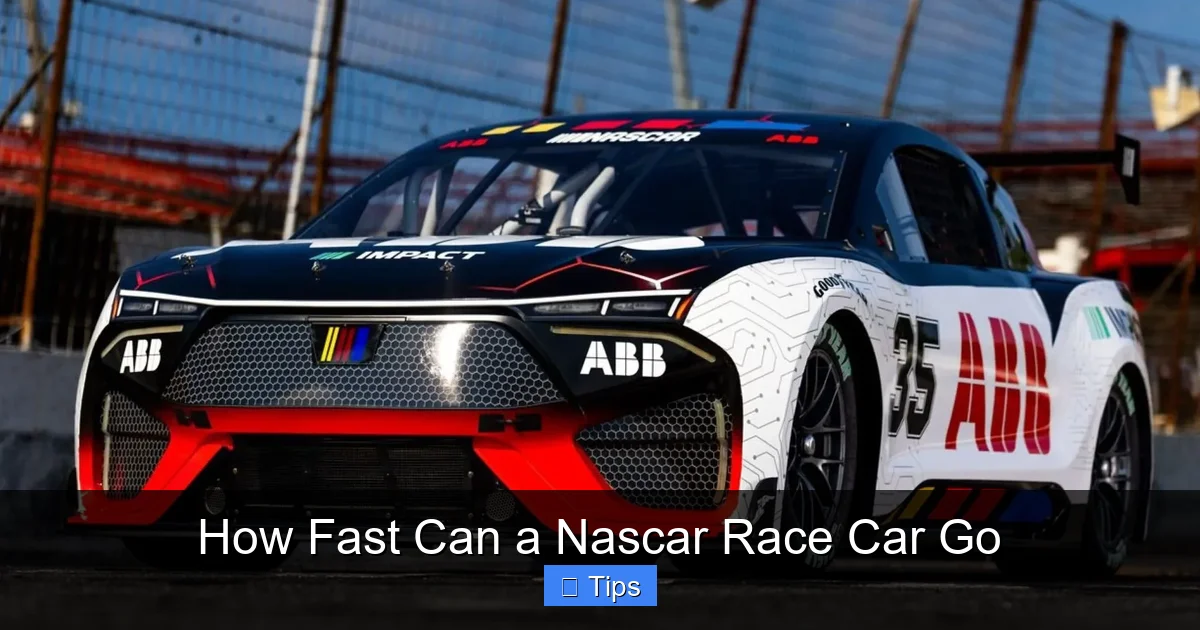
Visual guide about How Fast Can a Nascar Race Car Go
Image source: thecooldown.com
When people think of NASCAR speed, they usually picture Daytona International Speedway or Talladega Superspeedway—two of the fastest tracks on the circuit. These 2.5-mile and 2.66-mile tri-ovals are built for high-speed racing, and they’re where NASCAR cars come closest to their maximum potential.
In qualifying trim, with minimal fuel and optimal aerodynamics, NASCAR Cup cars have been clocked at speeds exceeding 210 mph. The official record for the fastest NASCAR qualifying lap belongs to Bill Elliott, who hit 212.809 mph at Talladega in 1987. That record still stands today, even though modern cars are more advanced, because of the safety restrictions now in place.
During actual races, speeds are a bit lower due to drafting, traffic, and the need to conserve fuel and tires. On average, cars run between 180 and 200 mph on these tracks. The pack racing that defines Daytona and Talladega means drivers are constantly drafting—slipping behind another car to reduce drag and gain speed. This technique allows cars to go faster than they could alone, but it also keeps speeds in check because no single car can break away easily.
One of the reasons these tracks are so fast is their long, sweeping turns and high banking—up to 31 degrees at Talladega. This banking helps cars maintain speed through the corners without losing momentum. Combined with the low-downforce setups used in recent years, drivers can carry more speed through the turns than ever before.
But even with all this speed, NASCAR has taken steps to keep things safe. Since 2019, the Cup Series has used a 550-horsepower package with a tapered spacer on superspeedways, down from the 750-horsepower engines used on intermediate tracks. This reduction in power helps prevent cars from reaching the extreme speeds seen in the past, while still allowing for exciting, close-quarters racing.
Speeds on Intermediate and Short Tracks
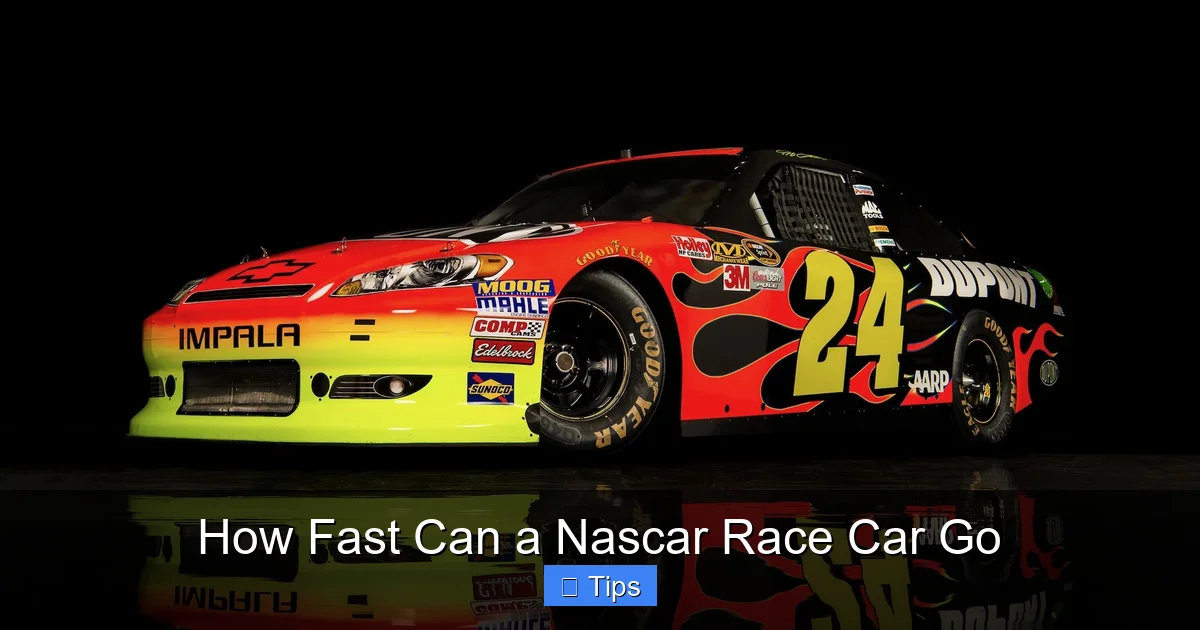
Visual guide about How Fast Can a Nascar Race Car Go
Image source: images.hgmsites.net
Not all NASCAR tracks are created equal—and neither are the speeds. While superspeedways get all the attention for high velocity, intermediate tracks (like Charlotte, Las Vegas, and Texas) and short tracks (like Bristol, Martinsville, and Richmond) offer a different kind of challenge—and different speed ranges.
On intermediate tracks, which are typically 1.5 to 2 miles long with moderate banking, NASCAR cars average between 160 and 180 mph during races. These tracks require a balance of speed and handling, as cars must navigate longer corners while maintaining momentum. The aerodynamic setup is crucial here, with teams using higher downforce configurations to improve grip without sacrificing too much straight-line speed.
Short tracks, on the other hand, are all about agility. At places like Bristol Motor Speedway (a 0.533-mile oval with 26–30 degrees of banking), top speeds rarely exceed 120 mph. But don’t let the lower numbers fool you—these races are some of the most intense and physical in the sport. Drivers brake hard into tight corners and accelerate quickly on short straights, making for constant action and frequent lead changes.
Road courses like Sonoma, Watkins Glen, and the Charlotte Roval add another layer of complexity. These tracks feature left and right turns, elevation changes, and varying surface conditions. Speeds here range from 100 to 140 mph, depending on the section of the track. The Charlotte Roval, for example, has a mix of high-speed straights and tight chicanes, requiring drivers to brake from over 150 mph down to 60 mph in just a few seconds.
The key takeaway? Speed isn’t just about how fast you can go in a straight line. On shorter and more technical tracks, handling, braking, and driver skill often matter more than raw horsepower. That’s why NASCAR teams spend so much time fine-tuning suspension, tire pressure, and aerodynamic balance for each unique venue.
The Role of Aerodynamics and Drafting
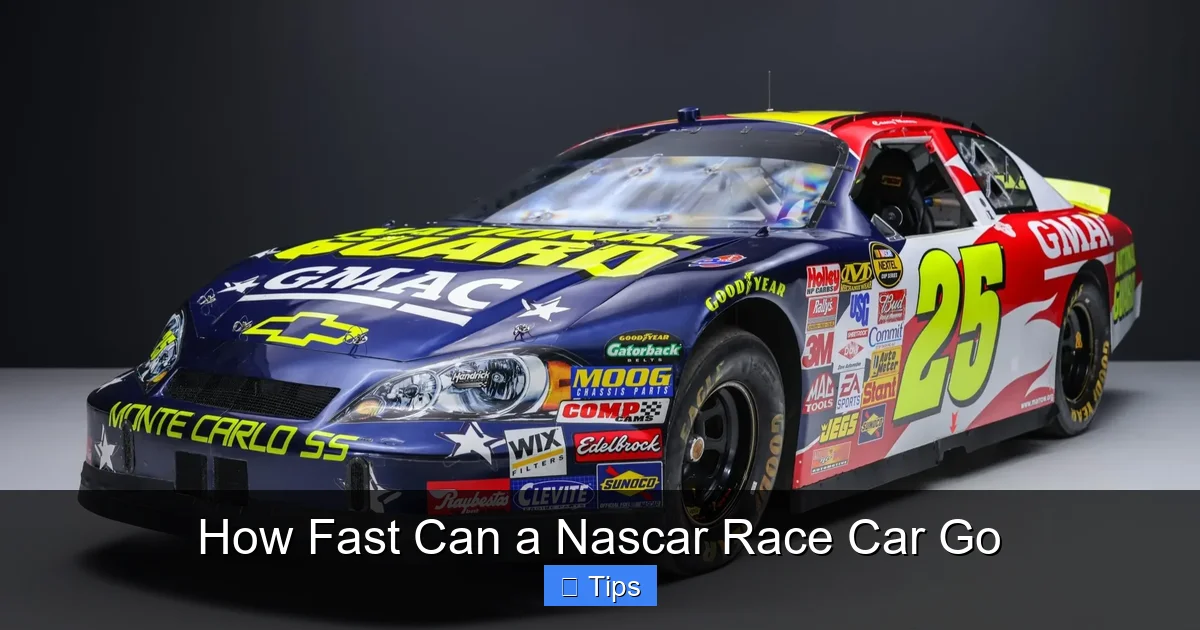
Visual guide about How Fast Can a Nascar Race Car Go
Image source: bringatrailer.com
If you’ve ever watched a NASCAR race and seen cars running bumper-to-bumper at 200 mph, you’ve witnessed the power of aerodynamics and drafting. These two forces are fundamental to how fast—and how safely—NASCAR cars can race.
Aerodynamics in NASCAR is all about managing two opposing forces: downforce and drag. Downforce pushes the car onto the track, improving grip and allowing higher cornering speeds. Drag, on the other hand, slows the car down by resisting its motion through the air. The challenge for engineers is to maximize downforce without creating too much drag, especially on high-speed ovals.
On superspeedways, teams use low-downforce setups to reduce drag and increase top speed. This makes the cars more slippery and harder to control, which is why pack racing is so common. With less downforce, cars rely more on drafting to stay stable and gain speed.
Drafting works like this: when one car follows closely behind another, it slips into the pocket of reduced air pressure created by the lead car. This “slingshot” effect reduces drag on the trailing car, allowing it to go faster with the same amount of engine power. If the trailing car pulls out to pass, it can use that extra speed to overtake—often leading to dramatic last-lap passes.
But drafting isn’t just for passing. It’s also a survival tactic. On tracks like Daytona and Talladega, cars running alone can lose control due to aerodynamic instability. By staying in the pack, drivers share the workload of cutting through the air, making the race safer and more competitive.
In recent years, NASCAR has experimented with aerodynamic packages to improve racing. The introduction of the Next Gen car in 2022 brought a new focus on underbody aerodynamics and standardized body shapes, reducing the advantage of individual team engineering. This has led to closer racing and more passing, even at high speeds.
Safety Regulations and Speed Limits
It’s easy to focus on how fast NASCAR cars can go, but it’s just as important to understand why they don’t go faster. Safety has always been a top priority in NASCAR, and over the years, the sport has implemented numerous rules to protect drivers while maintaining exciting competition.
The most significant speed-limiting measure came after a series of high-speed accidents in the late 1990s and early 2000s, including the tragic death of Dale Earnhardt in 2001. In response, NASCAR introduced restrictor plates at Daytona and Talladega. These metal plates sit between the carburetor and intake manifold, restricting airflow and reducing engine power by about 25%. The result? Lower top speeds and tighter pack racing.
In 2019, NASCAR replaced restrictor plates with tapered spacers, which serve a similar purpose but allow for more precise control over engine performance. The current 550-horsepower package used on superspeedways is a direct result of these safety-focused changes.
But it’s not just about engine power. NASCAR also regulates tire compounds, suspension setups, and even the shape of the car’s body to manage speed and improve handling. The Next Gen car, for example, features a symmetrical body design and independent rear suspension, which improve stability and reduce the risk of dangerous spins at high speeds.
Additionally, track modifications have played a role. Many ovals have been reconfigured with progressive banking and safer barriers to absorb impact energy. SAFER (Steel and Foam Energy Reduction) barriers, introduced in the mid-2000s, line the walls at most tracks and have significantly reduced the severity of crashes.
These safety measures mean that while NASCAR cars are incredibly fast, they’re also built to protect the people inside them. The balance between speed and safety is what allows the sport to thrive—delivering thrilling races without compromising driver well-being.
How Driver Skill Affects Real-World Speed
Even with identical cars and engines, no two drivers will achieve the same speeds on track. That’s because driving a NASCAR race car at 200 mph isn’t just about stepping on the gas—it’s a complex blend of instinct, strategy, and precision.
One of the biggest factors is drafting technique. A skilled driver knows exactly when to tuck in behind another car, when to pull out to pass, and how to use the air flow to their advantage. Mistiming a draft can cost a driver several miles per hour—or worse, lead to a crash.
Braking and cornering are equally important. On road courses and short tracks, drivers must brake from high speeds into tight turns, then accelerate out smoothly. The difference between a fast lap and a slow one often comes down to millimeters of brake pressure and degrees of steering input.
Fuel and tire management also play a role. A car running low on fuel is lighter and faster, but drivers must balance that advantage with the risk of running out. Similarly, fresh tires provide more grip, allowing higher cornering speeds, but they wear out quickly.
And let’s not forget mental endurance. NASCAR races can last over three hours, with drivers making split-second decisions at high speeds. Fatigue, heat, and G-forces take a toll, and only the most focused drivers can maintain peak performance from start to finish.
In short, while the car provides the power, the driver determines how fast it actually goes. That’s why the best NASCAR drivers aren’t just fast—they’re smart, adaptable, and incredibly disciplined.
Conclusion: The Balance of Speed and Safety
So, how fast can a NASCAR race car go? The answer depends on the track, the rules, and the conditions. On superspeedways, they can exceed 200 mph in qualifying and average 180–200 mph during races. On shorter tracks, speeds drop to 90–140 mph, but the action is no less intense.
What’s clear is that NASCAR has mastered the art of balancing speed with safety. Through engineering innovations, aerodynamic tuning, and strict regulations, the sport delivers high-octane racing without sacrificing driver protection. And while the cars are faster than ever, it’s the skill of the drivers and the strategy of the teams that truly determine who crosses the finish line first.
Whether you’re watching from the stands or your living room, one thing is certain: NASCAR race cars are some of the most impressive machines in motorsports—built not just to go fast, but to race hard, race smart, and race safely.
Frequently Asked Questions
How fast do NASCAR cars go on average during a race?
NASCAR Cup Series cars average between 160 and 200 mph during races, depending on the track. Superspeedways see the highest averages, while short tracks and road courses are significantly slower.
What is the fastest speed ever recorded by a NASCAR car?
The fastest official NASCAR qualifying speed is 212.809 mph, set by Bill Elliott at Talladega Superspeedway in 1987. This record still stands due to current safety restrictions.
Why don’t NASCAR cars go faster than 200 mph?
Safety regulations, including tapered spacers and aerodynamic rules, limit engine power and top speed. These measures prevent dangerous speeds while promoting competitive pack racing.
Do all NASCAR tracks have the same top speeds?
No. Superspeedways like Daytona and Talladega allow the highest speeds, while short tracks and road courses require slower, more technical driving due to tighter corners and shorter straights.
How does drafting help NASCAR cars go faster?
Drafting reduces aerodynamic drag by allowing a trailing car to ride in the low-pressure wake of the car ahead. This enables higher speeds with the same engine power, especially on ovals.
Are NASCAR cars faster than Formula 1 cars?
Not in a straight line. Formula 1 cars can reach higher top speeds (over 230 mph) and accelerate faster. However, NASCAR cars are built for durability and pack racing on ovals, not outright speed.

At CarLegit, we believe information should be clear, factual, and genuinely helpful. That’s why every guide, review, and update on our website is created with care, research, and a strong focus on user experience.