
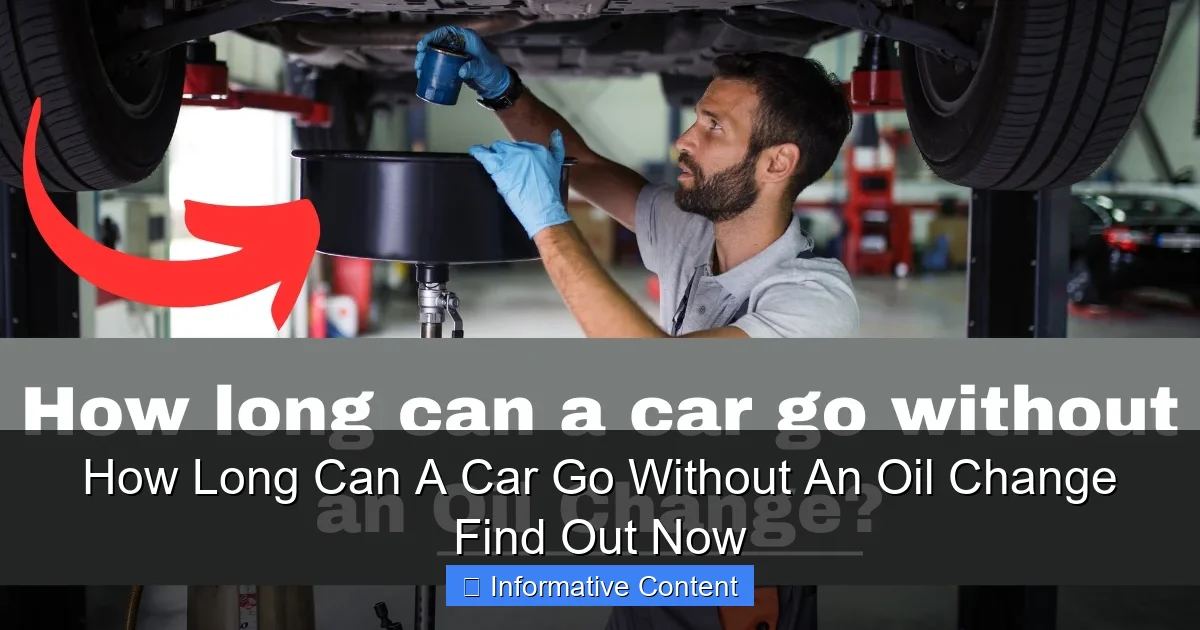
Driving beyond recommended oil change intervals risks costly engine repairs or total failure. Most modern vehicles can safely go 5,000 to 10,000 miles between changes, but this depends on your car and driving habits. Always consult your owner’s manual and never exceed its specified limits to ensure your engine’s longevity.
In This Article
- 1 How Long Can A Car Go Without An Oil Change? Find Out Now
- 1.1 Key Takeaways
- 1.2 📑 Table of Contents
- 1.3 The Lifeline of Your Engine: What Oil Actually Does
- 1.4 The 3,000-Mile Myth and Modern Reality
- 1.5 Factors That Determine Your Car’s Specific Needs
- 1.6 The Real-World Consequences of Skipping an Oil Change
- 1.7 How to Check Your Oil and Know When It’s Time
- 1.8 Oil Change Interval Data at a Glance
- 1.9 Practical Tips for Maintaining Your Engine’s Health
- 1.10 The Bottom Line: It’s About Long-Term Love
- 1.11 Frequently Asked Questions
- 1.11.1 How long can a car go without an oil change?
- 1.11.2 What factors affect how long a car can go without an oil change?
- 1.11.3 Can I rely on my car’s oil change indicator light?
- 1.11.4 What are the signs that my car needs an oil change?
- 1.11.5 Is it dangerous to delay an oil change?
- 1.11.6 How does synthetic oil extend how long a car can go without an oil change?
How Long Can A Car Go Without An Oil Change? Find Out Now
Let’s be honest. Life gets busy. Between work, family, and everything else, that little sticker on your windshield reminding you of your next oil change can start to feel like a nag. It’s easy to think, “The car seems fine. I’ll just push it another 500 miles.” Or maybe you’ve heard a friend boast about going 10,000 miles between changes and wondered if you’re wasting money.
I get it. I’ve been there too, staring at the odometer and the calendar, trying to justify skipping the shop just a little longer. But here’s the thing I’ve learned from mechanics, experts, and a couple of costly mistakes: your engine oil is the lifeblood of your car. Treating it as an afterthought is one of the fastest ways to turn your reliable ride into a very expensive paperweight.
So, how long can a car really go without an oil change? The short, frustrating answer is: it depends. But don’t worry. By the end of this guide, you’ll have a crystal-clear understanding of what affects that timeline, how to find your car’s sweet spot, and why sticking to it is the cheapest insurance policy you’ll ever buy for your vehicle.
Key Takeaways
- Never exceed the manual’s interval: Follow your car’s specific maintenance schedule.
- Extended neglect causes major damage: Skipping changes leads to costly engine repairs.
- Modern synthetic oils last longer: They can often extend change intervals.
- Watch for warning signs: Low level, dark oil, or engine noise means act now.
- Consult your owner’s manual: It provides the definitive answer for your vehicle.
📑 Table of Contents
- The Lifeline of Your Engine: What Oil Actually Does
- The 3,000-Mile Myth and Modern Reality
- Factors That Determine Your Car’s Specific Needs
- The Real-World Consequences of Skipping an Oil Change
- How to Check Your Oil and Know When It’s Time
- Oil Change Interval Data at a Glance
- Practical Tips for Maintaining Your Engine’s Health
- The Bottom Line: It’s About Long-Term Love
The Lifeline of Your Engine: What Oil Actually Does
Before we talk about intervals, let’s understand the hero of our story: the motor oil. It’s not just a slippery fluid. Think of it as a multi-tasking marvel working in the brutal environment inside your engine.
More Than Just Lubrication
Yes, its primary job is to lubricate. It creates a thin film between moving metal parts—like pistons and cylinders—preventing them from grinding together and welding themselves into a solid block of scrap. But that’s just the start.
- Cleans: Detergents in the oil suspend soot, dirt, and metal particles, carrying them to the oil filter.
- Cools: It absorbs heat from critical engine components that the coolant system doesn’t touch.
- Protects: Anti-wear additives form a protective layer on parts. Corrosion inhibitors fight acids that form from combustion.
- Seals: It helps seal the tiny gap between piston rings and cylinder walls, maintaining compression.
Why It Breaks Down
Over time and use, oil loses its superpowers. Heat breaks down its molecular structure (thermal degradation). Contaminants like fuel, coolant, and metal wear particles dilute and pollute it. The additives get used up. When this happens, it stops protecting and starts enabling damage. That’s why changing it isn’t optional maintenance; it’s a vital refresh of your engine’s defense system.
The 3,000-Mile Myth and Modern Reality
For decades, the universal rule was “3,000 miles or every 3 months.” This advice is etched into automotive folklore. But is it still true? For most modern cars, this is overly conservative and a relic of a different time.
Visual guide about How Long Can A Car Go Without An Oil Change
Image source: vehicleanswers.com
Where The Old Rule Came From
This interval made perfect sense for older cars with less advanced engineering, conventional oils, and carbureted engines that allowed more fuel dilution. Oil and engine technology simply weren’t as robust.
The New Normal for Oil Change Intervals
Today, it’s completely different. With advancements in:
- Engine Tolerances: Modern engines are built with incredible precision.
- Oil Formulations: Synthetic and synthetic-blend oils are far more resilient.
- Fuel Injection: More precise fuel delivery creates less contamination.
Most car manufacturers now recommend intervals between 5,000 to 10,000 miles, and sometimes up to 15,000 miles for some models using specific synthetic oils. Your first and most authoritative source is your owner’s manual. It knows your car best.
Factors That Determine Your Car’s Specific Needs
This is where the “it depends” answer comes into play. Two identical cars can have wildly different oil change needs based on how and where they live. Here are the key factors that shorten your oil’s lifespan.

Visual guide about How Long Can A Car Go Without An Oil Change
Image source: carproper.com
Your Driving Style: The “Severe Service” Schedule
Check your manual, and you’ll likely find two schedules: “Normal” and “Severe” or “Special Operating Conditions.” You might be surprised to find you qualify for “Severe.” This often includes:
- Frequent Short Trips (under 5-10 miles): The engine never fully warms up, allowing moisture and fuel to accumulate in the oil.
- Stop-and-Go Traffic & City Driving: Constant idling and acceleration create more heat and contaminants.
- Extreme Temperatures: Both blistering heat and freezing cold put extra stress on oil.
- Heavy Towing or Hauling: Creates sustained high engine loads and temperatures.
- Dusty or Sandy Conditions: Increases the risk of abrasive particles entering the engine.
If your driving fits these patterns, you should follow the more frequent “Severe Service” interval, which is often closer to that old 3,000-5,000 mile range.
The Type of Oil You Use
Not all oils are created equal. Conventional oil breaks down faster under high heat and stress. Full synthetic oil is chemically engineered for superior performance, offering:
- Better high-temperature stability.
- Improved flow in cold temperatures.
- Longer-lasting additive packages.
Using full synthetic is what allows many modern cars to have extended oil change intervals. A synthetic blend offers a middle-ground performance.
The Real-World Consequences of Skipping an Oil Change
Let’s talk about what happens if you push it too far. It’s not a sudden “engine explodes” moment. It’s a slow, expensive creep.

Visual guide about How Long Can A Car Go Without An Oil Change
Image source: forfordlovers.com
The Domino Effect of Degraded Oil
As oil breaks down, it first loses its viscosity (its thickness). It can become too thin to properly lubricate or too thick to flow quickly. Sludge—a tar-like substance—begins to form from oxidized oil and contaminants. This sludge:
- Clogs vital oil passages, starving parts of lubrication.
- Gums up engine components like piston rings and valves.
- Causes the engine to run hotter, accelerating the breakdown further.
From Wear to Catastrophic Failure
Increased friction leads to accelerated wear. You might not notice it at first, but over thousands of miles, this wear reduces engine efficiency and power. The final stage is often a seized engine—when components overheat and weld together—or a thrown rod, where a connecting rod breaks and exits the engine block. This doesn’t mean a repair. It means a replacement engine or a totaled car.
The cost? A typical oil change costs $50-$100. A new engine can cost $4,000-$8,000 or more. The math is painfully simple.
How to Check Your Oil and Know When It’s Time
Don’t just rely on mileage or a sticker! Become an active participant in your car’s health. It takes two minutes.
The Simple Dipstick Check (Your Best Friend)
1. Park on level ground and ensure the engine is off and cool.
2. Pull the dipstick, wipe it clean, reinsert it fully, then pull it out again.
3. Check the Level: Is the oil between the “MIN” and “MAX” marks?
4. Check the Condition: Rub it between your fingers. New oil is amber and translucent. Old oil is dark brown or black. If it feels gritty, it’s contaminated. If it smells like gasoline, fuel is diluting it.
Understanding Your Car’s Oil Life Monitor
Many modern cars have an Oil Life Monitoring System (OLMS). This isn’t just a fancy mileage counter. It’s a computer that tracks engine revolutions, temperatures, load, and other data to calculate the oil’s actual condition. When it hits 15% or 10%, it’s time to plan your change. When it hits 0%, don’t ignore it! Trust this system—it’s sophisticated and tailored to your actual driving.
Oil Change Interval Data at a Glance
This table summarizes general guidelines, but remember: your owner’s manual overrules everything here.
| Vehicle / Oil Type | Recommended Interval (Miles) | Key Considerations |
|---|---|---|
| Older Car (Pre-2000) with Conventional Oil | 3,000 – 5,000 | Stick to the shorter end, especially with frequent short trips. |
| Modern Car using Conventional Oil | 5,000 | Follow the “Severe Service” schedule if your driving is tough. |
| Modern Car using Synthetic Blend | 5,000 – 7,500 | A good balance for most average drivers. |
| Modern Car using Full Synthetic Oil | 7,500 – 10,000+ | Allows for the longest intervals. Always verify with your manual. |
| Car with an Active Oil Life Monitor | As indicated by system | Trust the monitor, but always check level/condition monthly. |
| Any Car under “Severe Service” Conditions | 3,000 – 5,000 | Reduce the manual’s “Normal” interval by 30-50%. |
Practical Tips for Maintaining Your Engine’s Health
Making your engine last for 200,000 miles or more is totally achievable. It just requires consistent, smart care.
Build a Simple Maintenance Habit
- Mark Your Calendar: Use a digital reminder or that old-school windshield sticker.
- Check Monthly: Make the dipstick check part of your routine when you fill gas.
- Use the Right Oil: Always use the viscosity (e.g., 5W-20) and specification (e.g., API SN Plus) listed in your manual.
- Change the Filter Every Time: A new oil filter is crucial. Never reuse the old one.
Listen to Your Car
Your car gives you signals. A lit check engine light, a new ticking or knocking sound from the engine, or excessive exhaust smoke can all be signs of oil-related issues. Don’t dismiss them. Address them immediately.
The Bottom Line: It’s About Long-Term Love
So, how long can a car go without an oil change? Technically, it might run for thousands of miles past its due date. But it will be silently dying a little each day. The goal isn’t to see how far you can stretch it; it’s to preserve the heart of your vehicle for as long as possible.
Think of it this way. That regular oil change is the simplest, most effective form of respect you can show for the machine that gets you to work, takes you on adventures, and brings you home safely. It’s a small investment of time and money that protects a massive investment—your car. Open your manual, understand your car’s needs, and commit to the schedule. Your engine (and your wallet) will thank you for hundreds of thousands of miles to come.
Frequently Asked Questions
How long can a car go without an oil change?
Most modern cars can go between 5,000 to 7,500 miles without an oil change, but this varies based on the vehicle and oil type. Always refer to your owner’s manual for the manufacturer’s specific recommendations to ensure optimal engine health.
What factors affect how long a car can go without an oil change?
Driving conditions such as frequent short trips, towing, or extreme temperatures can shorten oil life. The type of oil used, like synthetic versus conventional, also plays a significant role in determining the interval between changes.
Can I rely on my car’s oil change indicator light?
Yes, many modern vehicles have oil change indicators that monitor driving conditions and oil life. However, it’s still wise to check your oil level regularly and follow the manual’s guidelines to prevent any issues.
What are the signs that my car needs an oil change?
Common signs include dark or gritty oil on the dipstick, engine knocking noises, or the oil change warning light illuminating. If you notice any of these, it’s best to schedule an oil change promptly to avoid engine damage.
Is it dangerous to delay an oil change?
Delaying an oil change can lead to increased engine wear, reduced fuel efficiency, and potential engine failure. Over time, old oil loses its lubricating properties, which can cause costly repairs if neglected.
How does synthetic oil extend how long a car can go without an oil change?
Synthetic oil is designed to last longer and perform better under extreme conditions, often allowing intervals of 7,500 to 10,000 miles. It provides superior protection and stability compared to conventional oil, making it a popular choice for extended drain periods.

At CarLegit, we believe information should be clear, factual, and genuinely helpful. That’s why every guide, review, and update on our website is created with care, research, and a strong focus on user experience.