
The serpentine belt in your Toyota typically lasts between 60,000 and 100,000 miles, but driving conditions and maintenance habits can shorten or extend its life. Regular inspections and timely replacements help prevent breakdowns and costly engine damage.
In This Article
- 1 Key Takeaways
- 2 📑 Table of Contents
- 3 How Long Does a Toyota Serpentine Belt Last?
- 4 What Is a Serpentine Belt and Why Does It Matter?
- 5 Factors That Affect Serpentine Belt Lifespan
- 6 Signs Your Toyota Serpentine Belt Needs Replacement
- 7 How to Inspect and Maintain Your Serpentine Belt
- 8 DIY Replacement vs. Professional Service
- 9 Conclusion: Protect Your Toyota with Proactive Belt Care
- 10 Frequently Asked Questions
- 10.1 How often should I check my Toyota serpentine belt?
- 10.2 Can I drive with a cracked serpentine belt?
- 10.3 What happens if my serpentine belt breaks while driving?
- 10.4 Is it necessary to replace the tensioner when changing the belt?
- 10.5 Can I use an aftermarket serpentine belt in my Toyota?
- 10.6 Does the serpentine belt affect fuel economy?
Key Takeaways
- Average Lifespan: Most Toyota serpentine belts last 60,000 to 100,000 miles, depending on model, driving habits, and environmental factors.
- <>Regular Inspections: Check the belt every 15,000 miles or during routine oil changes for cracks, fraying, or glazing.
- Signs of Wear: Squealing noises, dashboard warning lights, or visible damage are key indicators that the belt needs attention.
- Replacement Timing: Replace the belt proactively before it fails to avoid stalling, overheating, or loss of power steering and AC.
- DIY vs. Professional Service: While some owners can replace the belt themselves, professional installation ensures proper tension and alignment.
- Use Genuine Parts: Toyota OEM belts are designed for optimal fit and durability compared to aftermarket alternatives.
- Climate Impact: Extreme heat or cold can accelerate belt wear, so adjust inspection frequency in harsh climates.
📑 Table of Contents
- How Long Does a Toyota Serpentine Belt Last?
- What Is a Serpentine Belt and Why Does It Matter?
- Factors That Affect Serpentine Belt Lifespan
- Signs Your Toyota Serpentine Belt Needs Replacement
- How to Inspect and Maintain Your Serpentine Belt
- DIY Replacement vs. Professional Service
- Conclusion: Protect Your Toyota with Proactive Belt Care
How Long Does a Toyota Serpentine Belt Last?
If you drive a Toyota, you’re likely familiar with the brand’s reputation for reliability, longevity, and low maintenance costs. But even the most dependable vehicles need attention over time—especially when it comes to components like the serpentine belt. This small but mighty rubber loop plays a huge role in keeping your engine running smoothly. So, how long does a Toyota serpentine belt last? The short answer: typically between 60,000 and 100,000 miles. But the real story is a bit more nuanced.
The serpentine belt—sometimes called the drive belt—is responsible for powering several critical engine accessories. It spins the alternator, water pump, power steering pump, and air conditioning compressor. Without it, your car’s electrical system, cooling system, and steering would all fail within minutes. That’s why understanding its lifespan and knowing when to replace it is essential for every Toyota owner.
While 60,000 to 100,000 miles is the general range, several factors can influence how long your serpentine belt actually lasts. These include your driving habits, climate, vehicle model, and how well you maintain your car. For example, frequent short trips in stop-and-go traffic can generate more heat and wear on the belt than highway driving. Similarly, extreme temperatures—whether scorching summers or freezing winters—can degrade rubber faster. Regular inspections and proactive maintenance are your best defenses against unexpected belt failure.
What Is a Serpentine Belt and Why Does It Matter?
Visual guide about How Long Does a Toyota Serpentine Belt Last
Image source: askmyauto.com
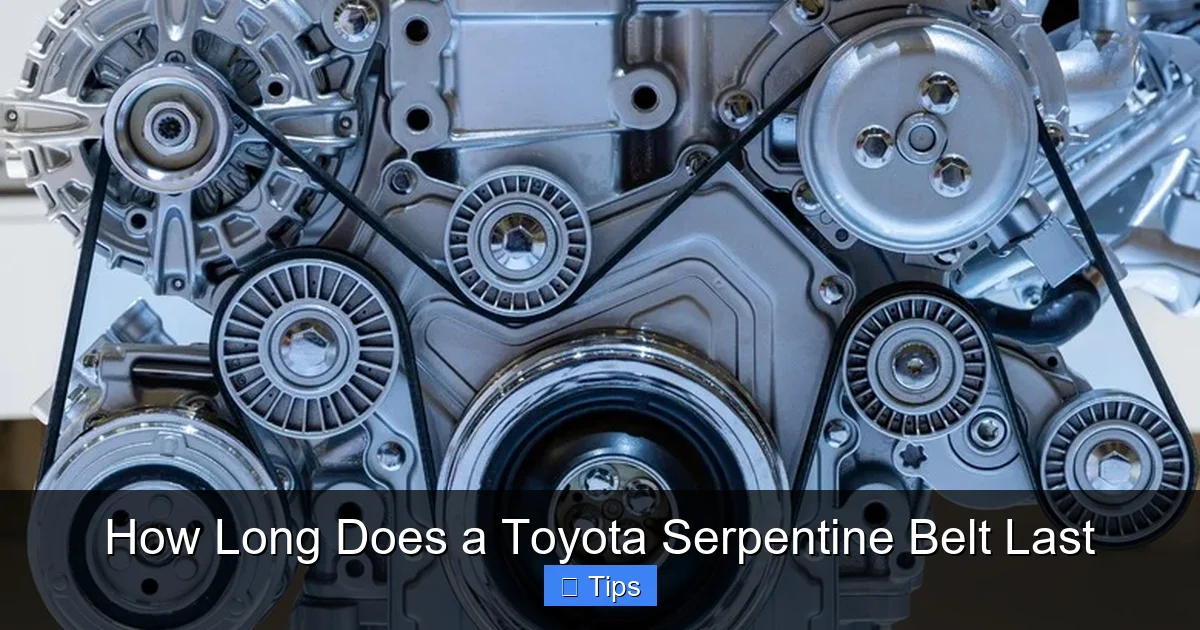
Before diving into lifespan, it helps to understand what the serpentine belt actually does. Unlike older vehicles that used multiple V-belts to drive different components, modern Toyotas use a single, continuous belt that winds through all the essential engine accessories—hence the name “serpentine.” This design is more efficient, reduces weight, and simplifies maintenance.
The belt is made of durable rubber reinforced with fiber cords for strength. It’s tensioned by an automatic tensioner pulley, which keeps it tight as it spins. As the crankshaft turns, the belt transfers rotational energy to the alternator (which charges the battery), the water pump (which circulates coolant), the power steering pump (which assists steering), and the AC compressor (which cools the cabin).
Because so many systems depend on this one belt, a failure can lead to serious problems. Imagine driving down the highway and suddenly losing power steering, electrical power, and engine cooling—all at once. That’s what can happen if the serpentine belt snaps. In extreme cases, overheating from a failed water pump can cause engine damage that costs thousands to repair.
How the Serpentine Belt Powers Your Toyota
Let’s break down the key components the serpentine belt drives:
- Alternator: Generates electricity to charge the battery and power electrical systems like lights, radio, and ignition.
- Water Pump: Circulates coolant through the engine and radiator to prevent overheating.
- Power Steering Pump: Provides hydraulic assistance so you can turn the wheel easily, especially at low speeds.
- Air Conditioning Compressor: Compresses refrigerant to cool the air inside your cabin.
If any of these systems stop working, your driving experience becomes uncomfortable or even dangerous. For example, losing power steering in heavy traffic can make steering difficult and increase the risk of an accident. A failed alternator means your battery will drain quickly, leaving you stranded. And a broken water pump can cause your engine to overheat within minutes—potentially leading to warped cylinder heads or a blown head gasket.
That’s why the serpentine belt isn’t just a minor part—it’s a lifeline for your Toyota’s performance and safety.
Factors That Affect Serpentine Belt Lifespan
Visual guide about How Long Does a Toyota Serpentine Belt Last
Image source: vehq.com
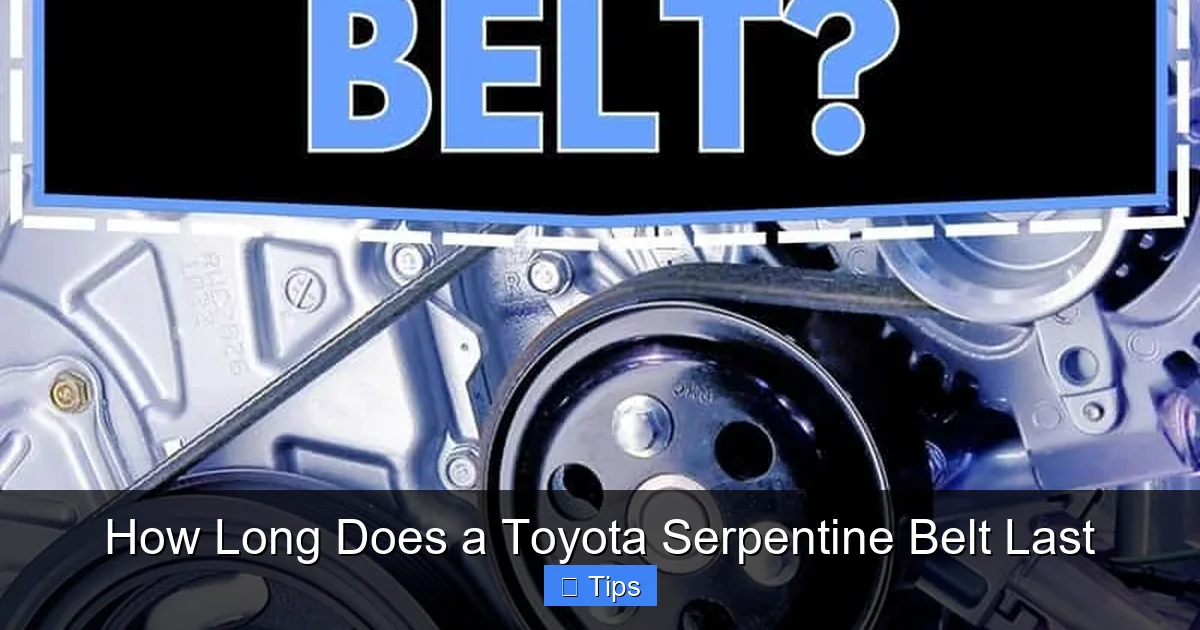
While the average lifespan of a Toyota serpentine belt is 60,000 to 100,000 miles, that number isn’t set in stone. Several real-world factors can shorten or extend how long your belt lasts. Understanding these can help you make smarter maintenance decisions and avoid unexpected breakdowns.
Driving Habits and Conditions
How you drive has a big impact on belt wear. Frequent short trips—like driving to the store and back—don’t allow the engine to reach optimal operating temperature. This can lead to condensation buildup inside the engine, which may contribute to premature belt degradation. Additionally, stop-and-go traffic increases the load on the belt, especially when the AC or power steering is in use.
On the other hand, highway driving tends to be gentler on the belt because the engine runs more efficiently and consistently. If you mostly drive long distances at steady speeds, your serpentine belt may last closer to the upper end of the lifespan range.
Climate and Weather
Extreme temperatures are one of the biggest enemies of rubber components. In hot climates, the engine bay can reach temperatures over 200°F, which can cause the belt to dry out, crack, and lose flexibility. In cold climates, rubber becomes stiff and brittle, making it more prone to snapping under tension.
For example, if you live in Arizona or Texas, where summer temperatures regularly exceed 100°F, you may need to inspect your belt more frequently—perhaps every 10,000 to 15,000 miles. Conversely, if you drive in Minnesota or Alaska, winter cold can make the belt more vulnerable to cracking.
Humidity and moisture also play a role. Areas with high rainfall or snow can expose the belt to water and road salt, which may accelerate wear over time.
Vehicle Age and Model
Different Toyota models have different belt designs and tensioning systems. Older models, such as the 1990s Toyota Camry or Corolla, may use simpler belt systems that are easier to maintain but less durable. Newer models, like the Toyota RAV4 Hybrid or Highlander, often have more complex setups with automatic tensioners and multiple pulleys.
Hybrid vehicles, in particular, may experience different wear patterns because the electric motor can reduce the load on the serpentine belt during certain driving conditions. However, the belt still powers critical systems when the engine is running, so it’s not immune to wear.
Additionally, higher-mileage vehicles may have worn pulleys or misaligned components that put extra stress on the belt. A misaligned pulley can cause the belt to wear unevenly or even come off entirely.
Maintenance and Inspection Frequency
One of the simplest ways to extend your serpentine belt’s life is through regular inspections. Many Toyota owners overlook the belt during routine maintenance, focusing instead on oil changes, tire rotations, and brake checks. But a quick visual inspection every 15,000 miles can catch problems early.
During an inspection, look for:
- Cracks or splits along the ribs of the belt
- Fraying or missing chunks of rubber
- Glazing (a shiny, smooth surface indicating slippage)
- Oil or coolant contamination
- Loose or wobbly pulleys
If you notice any of these signs, it’s time to replace the belt—even if it hasn’t reached the mileage limit.
Signs Your Toyota Serpentine Belt Needs Replacement
Visual guide about How Long Does a Toyota Serpentine Belt Last
Image source: lastingcar.com
Knowing when to replace your serpentine belt isn’t just about mileage—it’s also about recognizing the warning signs. Ignoring these symptoms can lead to sudden failure and costly repairs. Here are the most common indicators that your belt is nearing the end of its life.
Squealing or Chirping Noises
One of the earliest and most noticeable signs of a worn serpentine belt is a high-pitched squeal, especially when starting the engine or turning the steering wheel. This noise usually means the belt is slipping on one of the pulleys. Slippage can be caused by a loose tensioner, a glazed belt surface, or contamination from oil or coolant.
For example, if you hear a loud squeal every time you start your Toyota Camry on a cold morning, it’s likely the belt is slipping due to reduced tension or moisture. While a quick fix might involve tightening the belt or cleaning it, repeated squealing is a red flag that the belt is worn and needs replacement.
Visible Damage or Wear
A visual inspection can reveal a lot about your belt’s condition. Open the hood and look at the belt as it runs along the pulleys. Use a flashlight if needed. Check for:
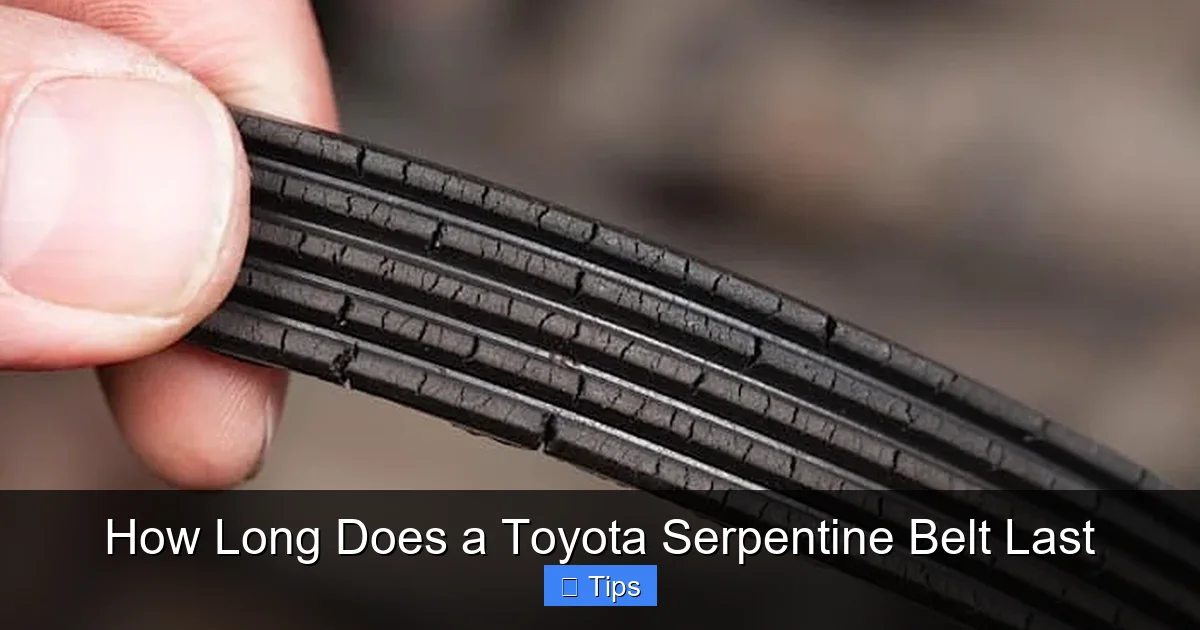
- Deep cracks running across the ribs
- Missing or frayed edges
- Shiny, polished areas (glazing)
- Oil or grease stains
Cracks are particularly concerning. Small surface cracks may not be an immediate problem, but deep or widespread cracking means the rubber is breaking down and could fail soon. Glazing occurs when the belt slips repeatedly, generating heat that melts the surface. This reduces grip and accelerates wear.
If you see any of these signs, don’t wait—replace the belt as soon as possible.
Dashboard Warning Lights
Modern Toyotas are equipped with sensors that monitor various systems. If the serpentine belt fails or slips significantly, it can affect the alternator’s output, triggering the battery or charging system warning light on the dashboard.
For instance, if your “ALT” or “BATT” light comes on while driving, it could mean the alternator isn’t generating enough power—possibly because the belt isn’t spinning it properly. This is a serious issue that requires immediate attention. Continuing to drive with a failing alternator can drain your battery and leave you stranded.
Loss of Power Steering or AC
If your power steering suddenly feels stiff or unresponsive, especially at low speeds, the serpentine belt may be slipping or broken. Similarly, if your air conditioning stops blowing cold air, the compressor may not be receiving power.
These symptoms often appear suddenly and can be alarming. For example, imagine pulling into a parking lot and finding it nearly impossible to turn the wheel—this could be a sign the belt has snapped or come off.
Overheating Engine
A failing serpentine belt can cause the water pump to stop working, leading to engine overheating. If your temperature gauge rises into the red zone or you see steam under the hood, pull over immediately. Continuing to drive can cause severe engine damage.
Overheating due to a broken belt is more common in older vehicles or those with high mileage. However, even newer Toyotas can experience this issue if the belt fails unexpectedly.
How to Inspect and Maintain Your Serpentine Belt
Preventive maintenance is the best way to maximize your serpentine belt’s lifespan. With a few simple steps, you can catch problems early and avoid costly repairs.
DIY Inspection Tips
You don’t need to be a mechanic to check your serpentine belt. Here’s how to do it yourself:
- Park on a flat surface and turn off the engine. Let the engine cool completely before opening the hood.
- Locate the serpentine belt. It’s usually on the front of the engine, running around multiple pulleys. Refer to your owner’s manual if you’re unsure.
- Visually inspect the belt. Look for cracks, fraying, glazing, or contamination. Run your fingers along the ribs—rough or uneven surfaces indicate wear.
- Check the tension. Press down on the longest span of the belt. It should deflect about ½ inch. If it’s too loose or too tight, the tensioner may be faulty.
- Listen for unusual noises. Start the engine and listen for squealing or grinding sounds.
If you’re not comfortable doing this yourself, ask your mechanic to include a belt inspection during your next oil change.
When to Replace the Belt
Toyota recommends replacing the serpentine belt every 60,000 to 100,000 miles, but you should also replace it sooner if you notice any warning signs. Some mechanics suggest replacing it every 90,000 miles as a preventive measure, especially if you drive in harsh conditions.
If your Toyota has over 100,000 miles and the belt has never been replaced, it’s a good idea to do so—even if it looks fine. Rubber degrades over time, and a sudden failure could leave you stranded.
Choosing the Right Replacement Belt
When it’s time to replace the belt, you have two main options: OEM (Original Equipment Manufacturer) or aftermarket.
OEM belts are made by Toyota or its suppliers and are designed specifically for your vehicle. They offer the best fit, durability, and performance. While they may cost more, they’re worth the investment for peace of mind.
Aftermarket belts are cheaper but vary widely in quality. Some are just as good as OEM, while others may wear out quickly or cause noise and vibration. If you choose an aftermarket belt, look for reputable brands like Gates, Dayco, or ACDelco.
Always replace the belt with the correct part number for your Toyota model and engine type. Using the wrong belt can cause slippage, noise, or damage to other components.
DIY Replacement vs. Professional Service
Replacing a serpentine belt is a job many Toyota owners can do themselves—but it’s not without risks.
DIY Replacement: Pros and Cons
Doing it yourself can save you $100 or more in labor costs. The process involves:
- Locating the belt routing diagram (usually on a sticker under the hood)
- Using a wrench or breaker bar to release tension on the automatic tensioner
- Slipping off the old belt and installing the new one
- Releasing the tensioner to secure the new belt
However, mistakes can happen. If the belt is installed incorrectly, it can come off while driving, causing immediate failure of multiple systems. Additionally, some Toyotas have tight engine compartments that make access difficult.
If you’re confident in your mechanical skills and have the right tools, DIY replacement is a viable option. But if you’re unsure, it’s safer to let a professional handle it.
Benefits of Professional Service
A certified Toyota technician has the experience, tools, and knowledge to replace your serpentine belt quickly and correctly. They’ll also inspect related components like the tensioner and pulleys, which can wear out over time.
Many service centers offer warranties on parts and labor, giving you added protection. Plus, they can perform a full multi-point inspection to catch other potential issues.
Conclusion: Protect Your Toyota with Proactive Belt Care
The serpentine belt may be small, but its role in your Toyota’s performance is enormous. Understanding how long a Toyota serpentine belt lasts—typically 60,000 to 100,000 miles—and knowing the factors that affect its lifespan can help you avoid unexpected breakdowns and costly repairs.
Regular inspections, attention to warning signs, and timely replacements are key to keeping your vehicle running smoothly. Whether you choose to replace the belt yourself or visit a professional, using high-quality parts and following manufacturer guidelines will ensure the best results.
By taking care of your serpentine belt, you’re not just maintaining a component—you’re protecting your Toyota’s reliability, safety, and longevity. So the next time you pop the hood, give that belt a quick look. Your car will thank you.
Frequently Asked Questions
How often should I check my Toyota serpentine belt?
Inspect your serpentine belt every 15,000 miles or during routine oil changes. More frequent checks are recommended in extreme climates or if you notice unusual noises.
Can I drive with a cracked serpentine belt?
It’s not safe to drive with a cracked belt. Cracks indicate advanced wear, and the belt could snap at any time, leading to loss of power steering, electrical failure, or engine overheating.
What happens if my serpentine belt breaks while driving?
If the belt breaks, your alternator, water pump, power steering, and AC will stop working. This can cause your battery to drain, engine to overheat, and steering to become difficult—potentially leading to a dangerous situation.
Is it necessary to replace the tensioner when changing the belt?
Not always, but if the tensioner is worn, noisy, or doesn’t hold tension properly, it should be replaced at the same time to prevent premature belt failure.
Can I use an aftermarket serpentine belt in my Toyota?
Yes, but choose a high-quality aftermarket belt from a reputable brand. OEM belts are recommended for the best fit and durability, especially in newer or hybrid models.
Does the serpentine belt affect fuel economy?
Indirectly, yes. A slipping or worn belt can reduce alternator efficiency, forcing the engine to work harder and potentially lowering fuel economy. A properly functioning belt ensures optimal performance.

At CarLegit, we believe information should be clear, factual, and genuinely helpful. That’s why every guide, review, and update on our website is created with care, research, and a strong focus on user experience.