
Charging a BMW battery typically takes 30 minutes to 12 hours, depending on the method and battery type. Factors like battery size, charger type, and state of charge all play a role. Whether you’re using a standard outlet, Level 2 charger, or fast DC charger, understanding your options helps keep your BMW running smoothly.
[FEATURED_IMAGE_PLACEHORD]
In This Article
- 1 Key Takeaways
- 2 📑 Table of Contents
- 3 How Long Does It Take to Charge a BMW Battery?
- 4 Understanding BMW Battery Types
- 5 Charging Methods for BMW Batteries
- 6 Factors That Affect Charging Time
- 7 How to Charge Your BMW Battery Faster
- 8 BMW Battery Maintenance Tips
- 9 Real-World Charging Examples
- 10 Conclusion
- 11 Frequently Asked Questions
Key Takeaways
- Charging time varies widely: From 30 minutes with a fast charger to over 12 hours on a standard wall outlet, the method you choose makes a big difference.
- Battery type matters: BMWs use different batteries—12V lead-acid for starting, and high-voltage lithium-ion for plug-in hybrids and EVs—each with unique charging needs.
- Level 2 chargers are ideal for home use: These provide a full charge in 2–6 hours and are the most practical for daily charging routines.
- Fast charging is convenient but not daily use: DC fast chargers can recharge an EV battery to 80% in 30–45 minutes, but frequent use may affect long-term battery health.
- Climate impacts charging speed: Cold weather slows down chemical reactions in the battery, increasing charging time and reducing efficiency.
- Regular maintenance extends battery life: Keeping terminals clean, avoiding deep discharges, and using the right charger helps your BMW battery last longer.
- Use BMW-approved chargers: For safety and optimal performance, always use chargers recommended by BMW or certified third-party models.
📑 Table of Contents
How Long Does It Take to Charge a BMW Battery?
If you own a BMW—whether it’s a sleek 3 Series, a powerful X5, or a cutting-edge i4 electric vehicle—you’ve probably wondered: how long does it take to charge a BMW battery? The answer isn’t one-size-fits-all. It depends on several factors, including the type of battery, the charging method, and even the weather outside.
BMW vehicles come with different kinds of batteries. Most traditional BMWs use a 12-volt lead-acid battery to start the engine and power accessories. But if you drive a plug-in hybrid like the BMW X5 xDrive45e or a fully electric model like the iX, you’re dealing with a high-voltage lithium-ion battery pack that powers the electric motor. Each type requires a different charging approach and time.
In this guide, we’ll break down everything you need to know about charging your BMW battery—from how long it takes to the best methods, tips for faster charging, and how to keep your battery in top shape. Whether you’re a new BMW owner or just curious about electric vehicle (EV) charging, this article will give you the practical insights you need.
Understanding BMW Battery Types
Visual guide about How Long Does It Take to Charge Bmw Battery
Image source: bikersrights.com
Before diving into charging times, it’s important to understand the types of batteries used in BMW vehicles. Not all BMWs are the same, and their batteries reflect that.
12V Lead-Acid Battery (Conventional Models)
Most gasoline-powered BMWs—like the 3 Series, 5 Series, and X3—use a standard 12-volt lead-acid battery. This battery is responsible for starting the engine, powering lights, infotainment systems, and other electronics when the car is off. It’s recharged by the alternator while driving.
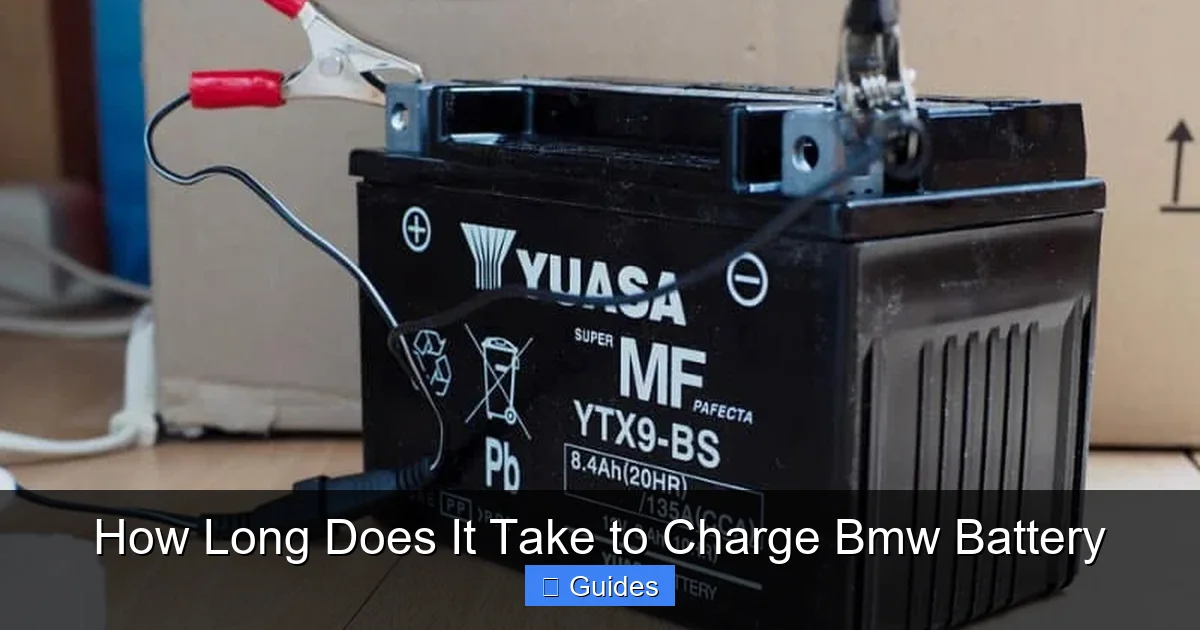
These batteries don’t require external charging under normal conditions. However, if the battery dies due to leaving lights on or extreme cold, you may need to jump-start the car or use a battery charger. Charging a dead 12V BMW battery with a quality trickle charger can take 4 to 12 hours, depending on the charger’s output and the battery’s condition.
High-Voltage Lithium-Ion Battery (Plug-In Hybrids & EVs)
BMW’s plug-in hybrid electric vehicles (PHEVs) and fully electric vehicles (EVs) use high-voltage lithium-ion battery packs. These are much larger and more complex than the 12V battery. For example, the BMW i4 has a 83.9 kWh battery, while the X5 xDrive45e PHEV has a 24 kWh battery.
These batteries power the electric motor and can be recharged using external power sources. Charging times vary significantly based on the charger type and battery capacity. A PHEV might take 2–4 hours to fully charge, while a full EV could take anywhere from 30 minutes (on a fast charger) to 12 hours (on a standard outlet).
Why Battery Type Affects Charging Time
The chemistry and capacity of the battery determine how quickly it can accept a charge. Lead-acid batteries are less efficient and slower to charge than lithium-ion. Also, lithium-ion batteries used in EVs are designed to handle high charging currents, especially with fast chargers, which drastically reduces charging time.
Charging Methods for BMW Batteries
Visual guide about How Long Does It Take to Charge Bmw Battery
Image source: obsessedlawn.com
There are several ways to charge a BMW battery, and each method comes with its own charging time and convenience level. Let’s explore the most common options.
Level 1 Charging (Standard 120V Outlet)
Level 1 charging uses a regular household outlet (120 volts). It’s the slowest method but requires no special equipment—just the charging cable that comes with your BMW.
For a plug-in hybrid like the BMW 330e, Level 1 charging adds about 2–3 miles of electric range per hour. A full charge can take 10–12 hours. For a full EV like the i4, it could take 30+ hours—impractical for daily use.
This method is best for occasional use, like when you’re away from home and only have access to a standard outlet. It’s not ideal for regular charging.
Level 2 Charging (240V Home or Public Charger)
Level 2 charging uses a 240-volt power source, like those used for electric dryers. It’s the most popular option for home charging and is available at many public charging stations.
A Level 2 charger typically delivers 6–19 kW of power. For a PHEV, this means a full charge in 2–4 hours. For a full EV like the i4, it takes about 6–8 hours to go from 0% to 100%.
Many BMW owners install a Level 2 charger at home. It’s faster, more efficient, and allows you to wake up to a fully charged car every morning. BMW offers its own Wallbox charger, which is compatible with all BMW plug-in models and EVs.
DC Fast Charging (Public Fast Chargers)
DC fast charging is the quickest way to recharge a BMW EV. These chargers deliver high-voltage direct current (DC) directly to the battery, bypassing the car’s onboard charger.
Fast chargers can add 60–100 miles of range in just 20 minutes. For example, the BMW i4 can charge from 10% to 80% in about 30 minutes using a 150 kW fast charger.
However, fast charging isn’t meant for daily use. Frequent use can stress the battery and reduce its lifespan over time. It’s best reserved for road trips or emergencies.
Regenerative Braking (Passive Charging)
While not a plug-in method, regenerative braking helps recharge the battery while driving. When you lift off the accelerator or brake, the electric motor acts as a generator, converting kinetic energy back into electricity.
This doesn’t fully charge the battery, but it helps extend range—especially in city driving with frequent stops. It’s a smart feature that BMW includes in all its electrified models.
Factors That Affect Charging Time
Visual guide about How Long Does It Take to Charge Bmw Battery
Image source: drivinglife.net
Even with the same charger, charging times can vary. Here are the key factors that influence how long it takes to charge a BMW battery.
Battery Capacity (Size)
Larger batteries take longer to charge. A BMW iX with a 111.5 kWh battery will take longer to charge than a smaller PHEV battery. Charging time is directly related to the amount of energy the battery can store.
State of Charge (SoC)
Charging slows down as the battery fills up. Most EVs charge fastest between 20% and 80%. Beyond 80%, the charger reduces power to protect the battery. This is why it’s faster to charge from 20% to 80% than from 80% to 100%.
Charger Power Output
The charger’s power (measured in kW) determines how fast energy flows into the battery. A 7 kW Level 2 charger will take longer than a 22 kW one. Fast chargers can deliver 50–350 kW, but your car must support that rate.
For example, the BMW i4 can accept up to 200 kW on a fast charger, but a smaller PHEV might only accept 3.7 kW.
Temperature and Climate
Cold weather slows down battery chemistry, reducing charging speed. In freezing temperatures, BMW’s battery management system may limit charging power to protect the battery. Preconditioning the battery (warming it up while plugged in) can help.
Hot weather can also affect charging. High temperatures may trigger thermal management systems to cool the battery, which can slow charging.
Battery Health and Age
Older batteries don’t hold a charge as well and may charge more slowly. Regular maintenance and avoiding deep discharges help preserve battery health.
Onboard Charger Limitations
Every BMW EV has an onboard charger that converts AC power from the grid to DC power for the battery. The size of this charger limits how fast the car can charge on AC sources (like Level 1 and 2).
For example, if your BMW has a 6.6 kW onboard charger, it can’t charge faster than that on a Level 2 station, even if the station offers 11 kW.
How to Charge Your BMW Battery Faster
Want to reduce charging time? Here are practical tips to speed up the process.
Use a Level 2 Charger at Home
Installing a 240V Level 2 charger is the best way to cut charging time. It’s faster than a standard outlet and more convenient than relying on public stations.
BMW’s Wallbox charger is a great option. It’s compact, weatherproof, and includes smart features like scheduling and energy monitoring.
Precondition the Battery
Before charging in cold weather, use the BMW app to precondition the battery. This warms it up while still plugged in, allowing faster charging once you arrive at the station.
Charge During Off-Peak Hours
Electricity rates are lower at night. Charging during off-peak hours not only saves money but may also improve charging speed if the grid is less congested.
Avoid Frequent Fast Charging
While fast charging is convenient, using it daily can degrade the battery faster. Reserve it for long trips and use Level 2 charging for daily needs.
Keep the Battery Between 20% and 80%
Charging slows down near full capacity. Keeping your battery between 20% and 80% not only speeds up charging but also extends battery life.
Use BMW’s Charging Network
BMW partners with charging networks like Electrify America and ChargePoint. These networks offer fast, reliable charging stations with real-time availability and payment options through the BMW app.
BMW Battery Maintenance Tips
A well-maintained battery charges faster and lasts longer. Here’s how to care for your BMW battery.
Keep Terminals Clean
Corrosion on battery terminals can reduce charging efficiency. Check the 12V battery terminals regularly and clean them with a baking soda and water solution if needed.
Avoid Deep Discharges
Letting the battery drop to 0% regularly can shorten its lifespan. Try to recharge before the battery gets too low.
Use the Right Charger
Always use a charger approved by BMW or certified by a reputable third party. Cheap, uncertified chargers can damage the battery or pose safety risks.
Store the Car Properly
If you’re not driving your BMW for a long time, keep it plugged in or use a trickle charger. This prevents the battery from draining and maintains charge levels.
Monitor Battery Health
Use the BMW ConnectedDrive app to check battery status, charging history, and health. Regular monitoring helps you spot issues early.
Schedule Regular Service
Include battery checks in your regular maintenance schedule. A technician can test the battery and charging system to ensure everything is working properly.
Real-World Charging Examples
Let’s look at some real-world scenarios to see how charging times play out.
BMW 330e Plug-In Hybrid
– Battery: 12 kWh
– Level 1 (120V): ~6–8 hours for full charge
– Level 2 (240V): ~2–3 hours
– Range: ~20–25 miles electric-only
This PHEV is perfect for daily commutes. A Level 2 charger at home makes it easy to recharge overnight.
BMW i4 eDrive40 (Full EV)
– Battery: 83.9 kWh
– Level 1: ~30+ hours (not practical)
– Level 2 (11 kW): ~8 hours
– DC Fast Charger (150 kW): ~30 minutes (10% to 80%)
The i4 is ideal for drivers who want a full EV experience. Fast charging makes long trips feasible.
BMW X5 xDrive45e
– Battery: 24 kWh
– Level 1: ~10–12 hours
– Level 2: ~3–4 hours
– Range: ~30 miles electric-only
This luxury SUV offers great electric range for city driving. A Level 2 charger is highly recommended.
Conclusion
So, how long does it take to charge a BMW battery? The answer depends on your BMW model, battery type, and charging method. For a 12V battery, expect 4–12 hours with a trickle charger. For a plug-in hybrid, 2–4 hours on Level 2. For a full EV, 30 minutes to 12 hours—depending on whether you’re using fast charging or a standard outlet.
The key is choosing the right charging method for your lifestyle. Level 2 charging at home offers the best balance of speed and convenience. Fast charging is great for road trips, but should be used sparingly. And don’t forget the importance of battery maintenance—keeping your battery healthy ensures faster charging and longer life.
Whether you’re driving a classic BMW or a cutting-edge electric model, understanding your charging options helps you get the most out of your vehicle. With the right setup, you can enjoy a fully charged BMW every morning—ready for whatever the day brings.
Frequently Asked Questions
How long does it take to charge a BMW i4 battery?
The BMW i4 can charge from 10% to 80% in about 30 minutes using a 150 kW DC fast charger. On a Level 2 home charger (11 kW), it takes around 8 hours for a full charge.
Can I charge my BMW with a regular wall outlet?
Yes, you can use a standard 120V outlet (Level 1 charging), but it’s very slow—adding only 2–3 miles of range per hour. It’s best for occasional use or emergencies.
Is fast charging bad for my BMW battery?
Occasional fast charging is safe, but frequent use can stress the battery and reduce its lifespan over time. It’s best to use Level 2 charging for daily needs.
How do I maintain my BMW battery?
Keep terminals clean, avoid deep discharges, use BMW-approved chargers, and monitor battery health through the BMW app. Regular maintenance helps extend battery life.
Can cold weather affect charging time?
Yes, cold weather slows down chemical reactions in the battery, increasing charging time. Preconditioning the battery while plugged in can help improve charging speed.
What’s the best charger for home use?
A Level 2 (240V) charger is ideal for home use. BMW’s Wallbox charger is a great option, offering fast, reliable charging with smart features like scheduling and energy monitoring.

At CarLegit, we believe information should be clear, factual, and genuinely helpful. That’s why every guide, review, and update on our website is created with care, research, and a strong focus on user experience.