
The Kia tire mobility kit is a temporary fix for flat tires, designed for emergency use only. While the sealant typically lasts 5–7 years and the compressor indefinitely if maintained, it’s not a permanent solution—always replace or repair your tire ASAP.
In This Article
- 1 Key Takeaways
- 2 📑 Table of Contents
- 3 Understanding the Kia Tire Mobility Kit
- 4 How Long Does the Sealant Last?
- 5 How Long Does the Compressor Last?
- 6 When Should You Replace the Entire Kit?
- 7 Tips for Maintaining Your Kia Tire Mobility Kit
- 8 Common Misconceptions About Tire Mobility Kits
- 9 Real-World Example: A Driver’s Experience
- 10 Conclusion
- 11 Frequently Asked Questions
- 11.1 Can I reuse the Kia tire mobility kit after it’s been used once?
- 11.2 What happens if I use expired sealant?
- 11.3 How do I find the expiration date on my Kia mobility kit?
- 11.4 Can I drive long distances after using the mobility kit?
- 11.5 Does the mobility kit work on all types of tire damage?
- 11.6 Where can I buy a replacement sealant canister for my Kia?
Key Takeaways
- Sealant Shelf Life: The tire sealant in a Kia mobility kit usually lasts 5 to 7 years from the manufacturing date, but check the expiration label to be sure.
- Compressor Durability: The electric air compressor can last indefinitely if stored properly and used occasionally, but battery power may degrade over time.
- Emergency Use Only: The kit is not a permanent fix—it’s meant to get you to a service center, not for long-term driving.
- Check Expiration Dates: Always inspect the sealant canister for an expiration date and replace it if expired, even if unused.
- Storage Matters: Keep the kit in a cool, dry place inside your vehicle to preserve both sealant and compressor performance.
- One-Time Use: Most sealants are single-use—once applied, the tire must be professionally inspected and the sealant replaced.
- Not for All Tires: The kit works best on small punctures (up to 1/4 inch) in the tread area—sidewall or large damage requires a full tire replacement.
📑 Table of Contents
Understanding the Kia Tire Mobility Kit
If you own a Kia, chances are your vehicle came equipped with a tire mobility kit—also known as a tire repair kit or sealant system. This compact, often overlooked tool is designed to help you get back on the road quickly after a minor tire puncture. But how long does a Kia tire mobility kit last? And more importantly, can you rely on it when you need it most?
The Kia tire mobility kit is a temporary solution for flat tires caused by small punctures, such as nails or screws in the tread area. It typically includes two main components: a canister of liquid sealant and an electric air compressor. When a tire goes flat, you connect the sealant canister to the tire valve, inject the sealant, and then use the compressor to reinflate the tire. The sealant coats the inside of the tire, sealing the hole and allowing you to drive to a repair shop.
Unlike traditional spare tires, which take up space and require physical effort to install, the mobility kit is lightweight, easy to use, and stored neatly in your trunk or under the floor mat. It’s a modern convenience that saves space and weight—especially in newer Kia models that no longer include a full-size spare.
But here’s the catch: this kit isn’t built to last forever. While the compressor may remain functional for years, the sealant has a limited shelf life. Understanding how long each component lasts, how to maintain the kit, and when to replace it is crucial for your safety and peace of mind.
How Long Does the Sealant Last?

Visual guide about How Long Does Kia Tire Mobility Kit Last
Image source: guide-images.cdn.ifixit.com
The most critical part of the Kia tire mobility kit—the sealant—has a finite lifespan. Most manufacturers, including Kia, state that the liquid sealant inside the canister remains effective for **5 to 7 years** from the date of manufacture. This timeframe is based on ideal storage conditions and assumes the sealant hasn’t been exposed to extreme temperatures or moisture.
But here’s what many drivers don’t realize: the expiration date isn’t always obvious. The sealant canister usually has a printed date or batch code that indicates when it was made. For example, you might see a label that reads “EXP: 03/28” or “MFG: 05/21.” If your kit was included when you bought your car new in 2020, and the sealant was manufactured in 2019, it could expire as early as 2024 or 2026.
Why does the sealant expire? Over time, the chemical composition of the sealant can break down. The liquid may thicken, separate, or lose its adhesive properties. If you try to use expired sealant, it might not flow properly through the valve or seal the puncture effectively. In the worst case, it could clog the valve or compressor, making the entire kit unusable.
To ensure your sealant is still good, follow these steps:
– Locate the canister in your kit (usually a small, pressurized bottle).
– Check the label for a manufacturing or expiration date.
– If no date is visible, contact your Kia dealer with the vehicle’s VIN—they can often look up the kit’s production date.
– Replace the sealant if it’s past its expiration date, even if it looks fine.
Some drivers make the mistake of assuming that because the sealant hasn’t been used, it’s still good. But like medicine or food, sealant degrades over time—even when sealed. Think of it this way: would you use expired sunscreen on a beach trip? Probably not. The same logic applies here. Your safety depends on reliable equipment.
How Long Does the Compressor Last?
Visual guide about How Long Does Kia Tire Mobility Kit Last
Image source: i.ytimg.com
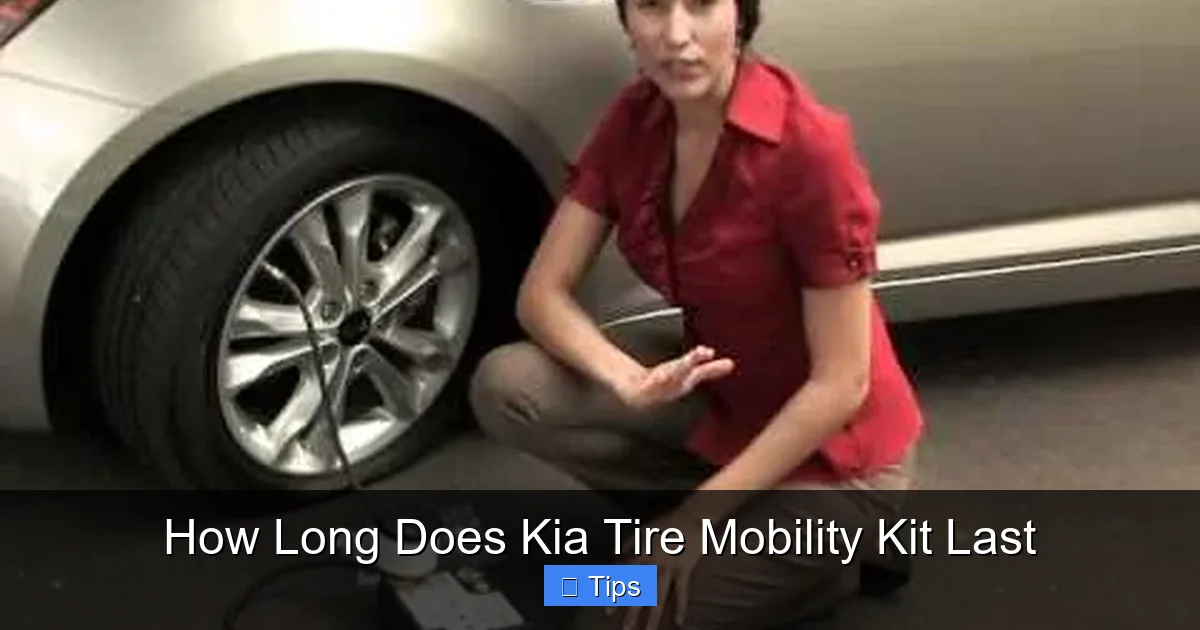
While the sealant has a clear expiration window, the electric air compressor in your Kia tire mobility kit can last much longer—potentially for the life of the vehicle—if properly maintained. Unlike the sealant, the compressor doesn’t contain perishable chemicals. It’s essentially a small electric pump powered by your car’s 12-volt outlet (cigarette lighter socket).
The compressor’s lifespan depends on several factors:
– **Build quality:** Kia uses durable components, but like any electronic device, it can wear out.
– **Usage frequency:** If you rarely use the kit, the compressor may last decades. Frequent use can lead to motor wear.
– **Storage conditions:** Exposure to extreme heat, cold, or moisture can damage internal components.
– **Power source stability:** Frequent power surges or using the compressor with a weak battery can strain the motor.
In ideal conditions, a well-maintained compressor can function reliably for 10 years or more. However, there’s a catch: the compressor relies on your car’s battery to operate. If your battery is old or weak, the compressor may not run long enough to fully inflate the tire. This is especially true in cold weather, when battery performance drops.
To test your compressor:
1. Turn on your car’s ignition (you don’t need to drive).
2. Plug in the compressor and turn it on.
3. Listen for a steady hum and check if air flows from the hose.
4. If it’s slow, noisy, or doesn’t start, it may be failing.
Even if the compressor works, it’s a good idea to test it once a year. This ensures it’s ready when you need it. Keep in mind that the compressor is not designed for continuous use. Most models can run for 10–15 minutes before needing a cooldown period. Overuse can cause overheating and permanent damage.
When Should You Replace the Entire Kit?
Visual guide about How Long Does Kia Tire Mobility Kit Last
Image source: i.redd.it
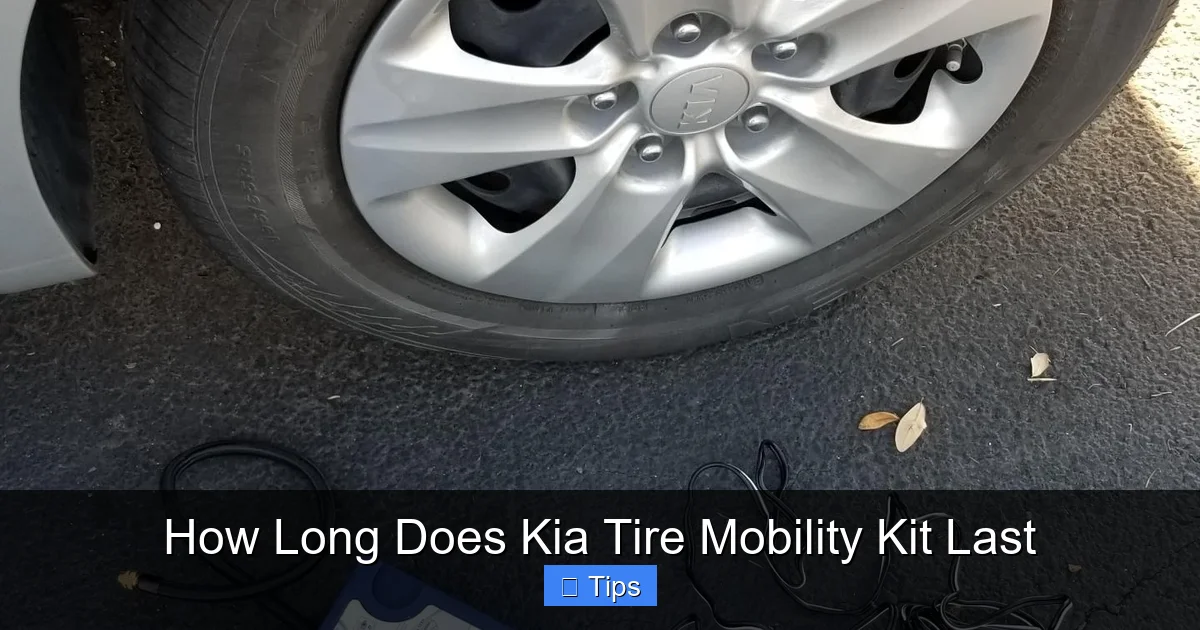
Knowing when to replace your Kia tire mobility kit isn’t just about expiration dates—it’s also about usage and condition. Here are the main scenarios when replacement is necessary:
After Use
The sealant in the kit is typically a one-time-use product. Once you’ve injected it into a tire, the canister is empty or contaminated. Even if some sealant remains, it may not be effective for future use. After using the kit, you should:
– Replace the sealant canister.
– Have the tire professionally inspected.
– Replace the tire if the damage is beyond repair.
Some newer kits come with refillable sealant bottles, but most Kia models use disposable canisters. Check your owner’s manual to confirm.
Expired Sealant
As mentioned earlier, expired sealant loses its effectiveness. If your sealant is past its expiration date, replace the entire canister. You can usually purchase a replacement kit or just the sealant bottle from a Kia dealership or authorized parts retailer. Prices typically range from $30 to $60, depending on the model.
Damaged or Missing Components
If the compressor is cracked, the hose is frayed, or the sealant canister is dented or leaking, the kit may not work when needed. Inspect the entire kit annually for signs of wear. Even small cracks in the compressor housing can allow moisture inside, leading to corrosion.
Vehicle Transfer or Sale
If you’re selling your Kia, include the mobility kit—but make sure it’s in good condition. A buyer may ask about the kit’s status, and an expired or damaged kit could raise concerns. Similarly, if you buy a used Kia, ask the previous owner about the kit’s history and check the sealant date.
Extreme Climate Exposure
If your car is parked outside in extreme heat (like Arizona summers) or cold (like Minnesota winters), the kit may degrade faster. High heat can pressurize the sealant canister, while freezing temperatures can cause the liquid to thicken. If your vehicle is frequently exposed to such conditions, consider replacing the sealant every 4–5 years, even if it hasn’t expired.
Tips for Maintaining Your Kia Tire Mobility Kit
Proper maintenance can extend the life of your mobility kit and ensure it works when you need it. Here are some practical tips:
Store It Properly
Keep the kit in a cool, dry place inside your vehicle. Avoid leaving it in direct sunlight or in the trunk during extreme weather. The glove compartment or under-seat storage are ideal spots. Make sure the kit is secure so it doesn’t rattle around while driving.
Check It Annually
Set a reminder on your calendar to inspect the kit once a year. Look for:
– Expiration date on the sealant.
– Cracks or damage to the compressor.
– Loose or corroded connections.
– Signs of leakage.
This quick 5-minute check could save you from being stranded.
Test the Compressor
Once a year, plug in the compressor and run it for 30 seconds to ensure it’s working. This also helps keep the motor lubricated and prevents seizing.
Know How to Use It
Familiarize yourself with the kit before you need it. Read the instructions in your owner’s manual. Practice connecting the sealant and compressor to a tire (you can do this at home with a spare wheel). Knowing the steps ahead of time reduces panic during a real emergency.
Keep It Accessible
Don’t bury the kit under luggage, groceries, or other items. In an emergency, you’ll need to access it quickly. Store it in an easy-to-reach location, and make sure all passengers know where it is.
Replace Proactively
If your sealant is within 1–2 years of expiring, consider replacing it early. The cost is minimal compared to the risk of a failed repair on a dark, rainy night.
Common Misconceptions About Tire Mobility Kits
Despite their popularity, many drivers have misconceptions about tire mobility kits. Let’s clear up some of the most common myths:
“It’s a Permanent Fix”
No—the mobility kit is strictly for emergencies. It’s designed to get you to a service center, not to drive hundreds of miles. Most manufacturers recommend driving no more than 50–100 miles after using the sealant, and at reduced speeds (usually under 50 mph).
“It Works on Any Tire Damage”
The kit is only effective for small punctures in the tread area—typically up to 1/4 inch in diameter. It won’t work on sidewall damage, blowouts, or large tears. If the tire is severely damaged, you’ll need a full replacement.
“I Can Reuse the Sealant”
Most sealants are single-use. Once injected, the canister should be discarded. Some advanced systems allow for refills, but standard Kia kits do not.
“It’s the Same as a Spare Tire”
While both serve the same purpose—getting you back on the road—a spare tire is a full replacement, while the mobility kit is a temporary patch. A spare tire allows for normal driving, while the sealant requires caution and prompt repair.
“It Doesn’t Expire”
This is perhaps the biggest myth. The sealant absolutely expires, and using expired sealant can be ineffective or even dangerous.
Real-World Example: A Driver’s Experience
Let’s look at a real-life scenario. Sarah, a Kia Sportage owner, was driving home from work when she felt a sudden thump and noticed her tire pressure warning light. She pulled over and found a nail in her front tire. Remembering her car had a mobility kit, she retrieved it from the trunk.
She checked the sealant canister and saw it was manufactured in 2018—five years ago. Worried it might be expired, she called her Kia dealer. They confirmed the sealant was likely still good but advised caution. Sarah used the kit, injected the sealant, and reinflated the tire. She drove slowly to a nearby tire shop, where the technician confirmed the seal held.
However, the technician also noted that the sealant had thickened slightly, making it harder to inject. “You got lucky,” he said. “Next time, it might not work.” Sarah replaced the sealant the next day.
This story highlights the importance of checking expiration dates and acting proactively. Even if the sealant works once, it may not work again.
Conclusion
So, how long does a Kia tire mobility kit last? The answer depends on the component. The sealant typically lasts 5 to 7 years, while the compressor can last much longer with proper care. However, the kit is not a permanent solution—it’s a temporary fix for minor tire punctures.
To ensure your mobility kit is ready when you need it:
– Check the sealant expiration date annually.
– Test the compressor once a year.
– Store the kit properly.
– Replace expired or used components promptly.
Remember, the mobility kit is there to help you in a pinch—not to replace regular tire maintenance. Always have your tire inspected and repaired by a professional after using the kit. And if your sealant is old or the compressor shows signs of wear, don’t wait—replace it.
Your safety on the road depends on reliable equipment. By understanding how long your Kia tire mobility kit lasts and how to maintain it, you can drive with confidence, knowing you’re prepared for the unexpected.
Frequently Asked Questions
Can I reuse the Kia tire mobility kit after it’s been used once?
No, most Kia mobility kits are designed for single use. Once the sealant is injected into the tire, the canister should be replaced. The compressor can be reused, but the sealant is typically not refillable in standard kits.
What happens if I use expired sealant?
Expired sealant may not flow properly or seal the puncture effectively. It can thicken, clog the valve, or fail to adhere to the tire’s interior, leaving you with a flat tire and a non-functional kit.
How do I find the expiration date on my Kia mobility kit?
Check the label on the sealant canister for a manufacturing or expiration date. If it’s not visible, contact your Kia dealer with your vehicle’s VIN—they can often look up the kit’s production date.
Can I drive long distances after using the mobility kit?
No, you should drive no more than 50–100 miles and at reduced speeds (under 50 mph). The sealant is a temporary fix, and the tire must be professionally inspected and repaired or replaced as soon as possible.
Does the mobility kit work on all types of tire damage?
No, it only works on small punctures (up to 1/4 inch) in the tread area. It will not repair sidewall damage, blowouts, or large tears. In such cases, a full tire replacement is required.
Where can I buy a replacement sealant canister for my Kia?
You can purchase replacement sealant canisters or complete mobility kits from Kia dealerships, authorized parts retailers, or online automotive stores. Prices typically range from $30 to $60.

At CarLegit, we believe information should be clear, factual, and genuinely helpful. That’s why every guide, review, and update on our website is created with care, research, and a strong focus on user experience.