
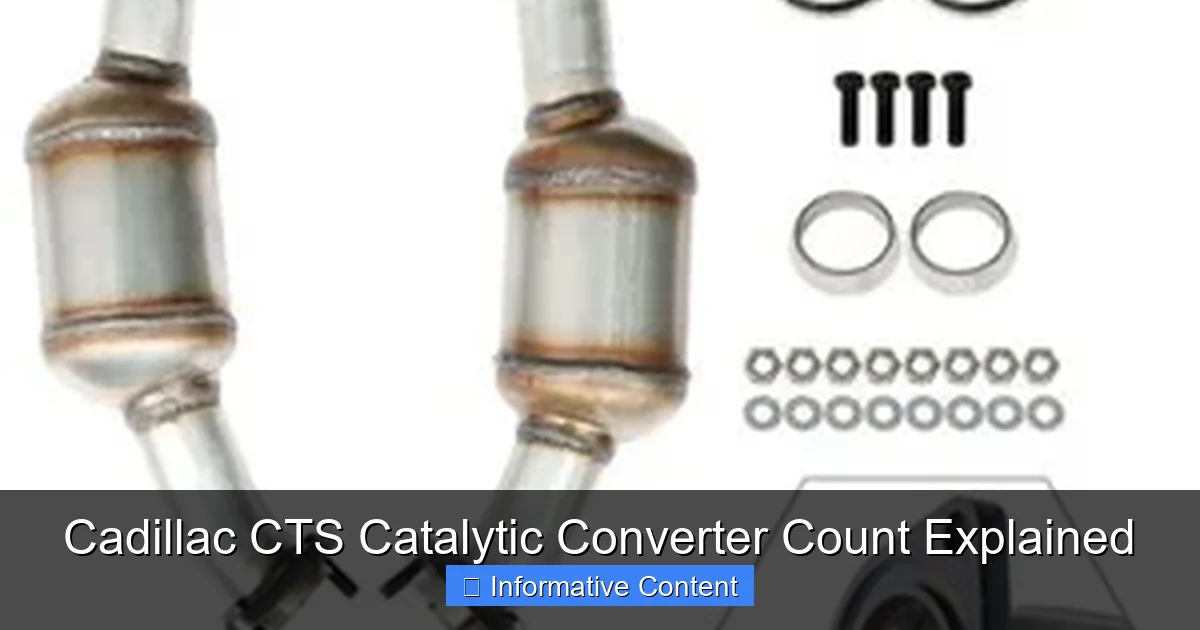
The Cadillac CTS typically has two catalytic converters, one for each bank of its V6 or V8 engine. Some four-cylinder models may only have one. Knowing the exact count for your specific model year and engine is crucial for accurate repairs and replacement costs.
So, you’re cruising down the highway in your Cadillac CTS, enjoying that signature blend of luxury and performance, when a thought pops into your head. Maybe you heard a friend’s car needed a pricey repair, or you saw a news story about thefts. You find yourself wondering: just how many catalytic converters does my car have? It’s a great question, and the answer isn’t as simple as you might think.
I remember the first time I had to look underneath my own car. It was for a different issue, but seeing the maze of pipes and components made me realize how much engineering goes into keeping our rides clean and powerful. The catalytic converter is a star player in that system, and for CTS owners, knowing your setup is key to understanding maintenance, costs, and even protecting your investment.
This guide is here to cut through the confusion. We’re going to explore the catalytic converter count for the Cadillac CTS across its different generations and engine options. By the end, you’ll know exactly what’s under your car, why it’s there, and what it means for you as an owner. Let’s get started.
In This Article
- 1 Key Takeaways
- 2 📑 Table of Contents
- 3 The Straight Answer: How Many Catalytic Converters Are on a Cadillac CTS?
- 4 Why the Number of Catalytic Converters Matters
- 5 Locating the Catalytic Converters on Your CTS
- 6 Cadillac CTS Catalytic Converter Data Table
- 7 Maintenance and Troubleshooting Signs
- 8 Replacement Costs and Considerations for the CTS
- 9 Final Thoughts on Your CTS’s Exhaust System
- 10 Frequently Asked Questions
- 10.1 How many catalytic converters does a Cadillac CTS have?
- 10.2 Does the Cadillac CTS V-Sport have more catalytic converters?
- 10.3 Where are the catalytic converters located on a CTS?
- 10.4 Why does the number of catalytic converters matter for my CTS?
- 10.5 How can I confirm my specific CTS’s catalytic converter count?
- 10.6 Do all Cadillac CTS model years have two catalytic converters?
Key Takeaways
- Varies by model year and engine: Count depends on your specific CTS generation.
- Most V6 models have four: Two primary and two secondary converters are standard.
- V-Sport and V-Series models differ: High-performance engines use a unique exhaust layout.
- Replacement costs are significant: The number directly impacts parts and labor expense.
- Confirm before buying parts: Always check your VIN or undercarriage for an exact count.
- Location affects theft risk: Converters are vulnerable, especially the easily accessed rear units.
📑 Table of Contents
- The Straight Answer: How Many Catalytic Converters Are on a Cadillac CTS?
- Why the Number of Catalytic Converters Matters
- Locating the Catalytic Converters on Your CTS
- Cadillac CTS Catalytic Converter Data Table
- Maintenance and Troubleshooting Signs
- Replacement Costs and Considerations for the CTS
- Final Thoughts on Your CTS’s Exhaust System
The Straight Answer: How Many Catalytic Converters Are on a Cadillac CTS?
Let’s not keep you in suspense. Most Cadillac CTS models have two catalytic converters. This is the standard configuration for the vast majority of its production run, especially for models with a V6 or V8 engine. However, as with many things in the automotive world, the devil is in the details—and in this case, the engine bay.
The “two converter” setup is common because modern exhaust systems are typically split into dual pipes shortly after the engine. Each bank of cylinders (the left side and the right side on a V-style engine) has its own exhaust manifold and often its own catalytic converter to efficiently clean the exhaust gases before they potentially merge into a single muffler and tailpipe.
But here’s the critical detail: the specific number can depend on your exact model year and, most importantly, your engine. To give you the full picture, we need to look at the CTS’s evolution.
Breaking It Down by Engine and Generation
The first-generation CTS (2003-2007) offered a 3.2L or 3.6L V6 and a 5.7L V8 in the CTS-V. Both the V6 and V8 models in this era primarily used a two-catalytic converter system.
The second generation (2008-2014) expanded the engine options. The common 3.0L and 3.6L V6 models, as well as the mighty 6.2L V8 in the CTS-V, all maintained the standard dual-cat layout. This generation solidified the two-converter design as the CTS norm.
The third generation (2014-2019) continued this trend with its 2.0L Turbo, 3.6L V6, and 6.2L V8 (CTS-V) engines. Each of these powertrains utilizes two catalytic converters.
Why the Number of Catalytic Converters Matters
You might be thinking, “It’s just a number, right?” But knowing you likely have two catalytic converters is more than trivia. It impacts real-world situations every CTS owner might face.

Visual guide about Cadillac CTS catalytic converters
Image source: i.ebayimg.com
First, consider repair and replacement costs. Catalytic converters are expensive due to the precious metals inside them—like platinum, palladium, and rhodium. If one fails, you’re looking at a significant bill. Knowing there are two means you understand the potential scale of such a repair. It’s not just one unit; it could be two.
Then there’s theft prevention. Unfortunately, catalytic converter theft is a widespread issue. Thieves target them for those valuable metals. A vehicle with two converters, like the CTS, can be a more attractive target than a car with only one. Understanding your car’s layout helps you assess risk and consider protective measures like a catalytic converter shield or etching your VIN number onto the units.
Finally, it affects performance and emissions. The exhaust system is tuned for a specific flow. Each converter creates a bit of backpressure. Having two smaller converters can sometimes be more efficient for performance and quicker catalyst “light-off” (reaching operating temperature) than one massive one, contributing to your CTS’s power and its ability to pass emissions tests.
A Note on the Exception: The 2.0L Turbo Engine
Here’s where we add a small asterisk. Some third-generation CTS models equipped with the 2.0L Turbo 4-cylinder engine (LTG) use an exhaust manifold that is integrated with the catalytic converter into a single unit, sometimes called a “manicat” or manifold catalyst. In this specific design, the primary catalytic converter is part of the manifold assembly at the engine’s head.
However, these vehicles almost always still have a second catalytic converter further down the exhaust line, called a “underbody” or “secondary” converter. So, even in this case, the total count is typically two—it’s just that one is in a different, integrated location. Always check your specific vehicle’s service manual for the definitive layout.
Locating the Catalytic Converters on Your CTS
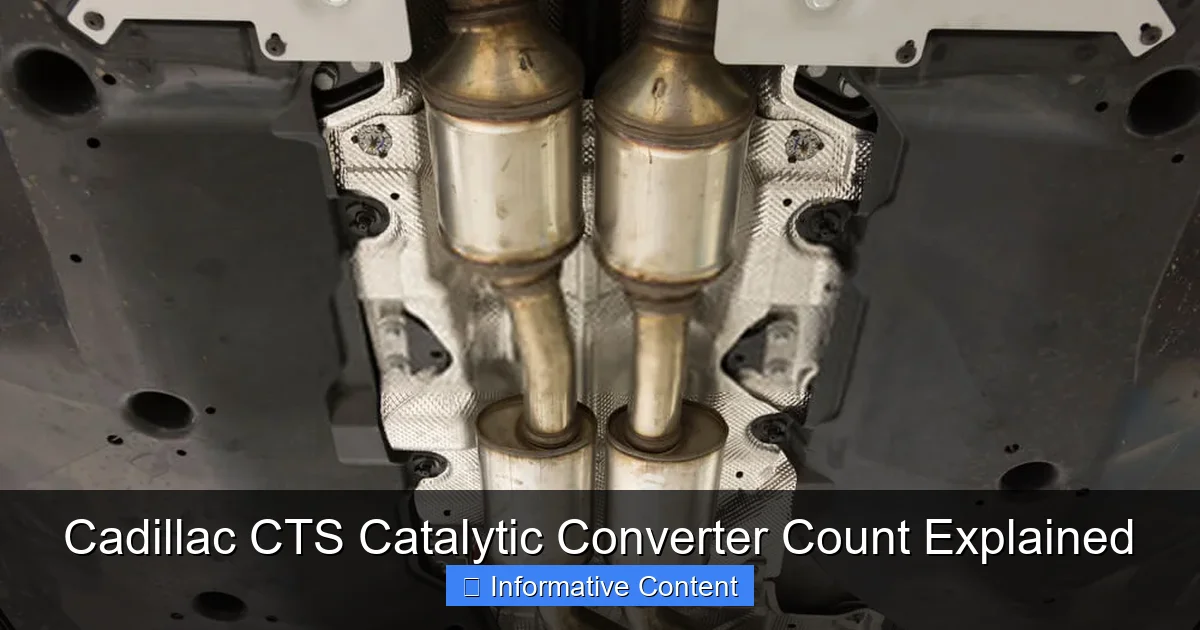
Knowing they’re there is one thing; knowing where they are is another. For most V6 and V8 CTS models, the two catalytic converters are located in the front section of the exhaust system, close to the engine.
Visual guide about Cadillac CTS catalytic converters
Image source: petrolgang.com
If you safely look under the car (with it securely lifted on jack stands, never just a jack), you’ll see the exhaust pipes coming from the engine. Shortly after the exhaust manifolds, you’ll find two bulbous, metal canisters—usually shielded with a thin metal heat shield. These are your catalytic converters. They will be before any major bends or the resonator/muffler assembly.
For the 2.0L Turbo models with the integrated manifold converter, the first one is harder to see as it’s attached directly to the engine head under the hood. The second one will be in the traditional underbody location.
Visual Identification Tips
What are you looking for? They are typically oval or cylindrical metal cans, larger in diameter than the exhaust pipe itself. They will have heat shields around them, often with a stamped or textured pattern. You will also see oxygen sensors plugged into the pipe before and after each converter. These sensors are the car’s way of monitoring the converter’s efficiency.
Cadillac CTS Catalytic Converter Data Table
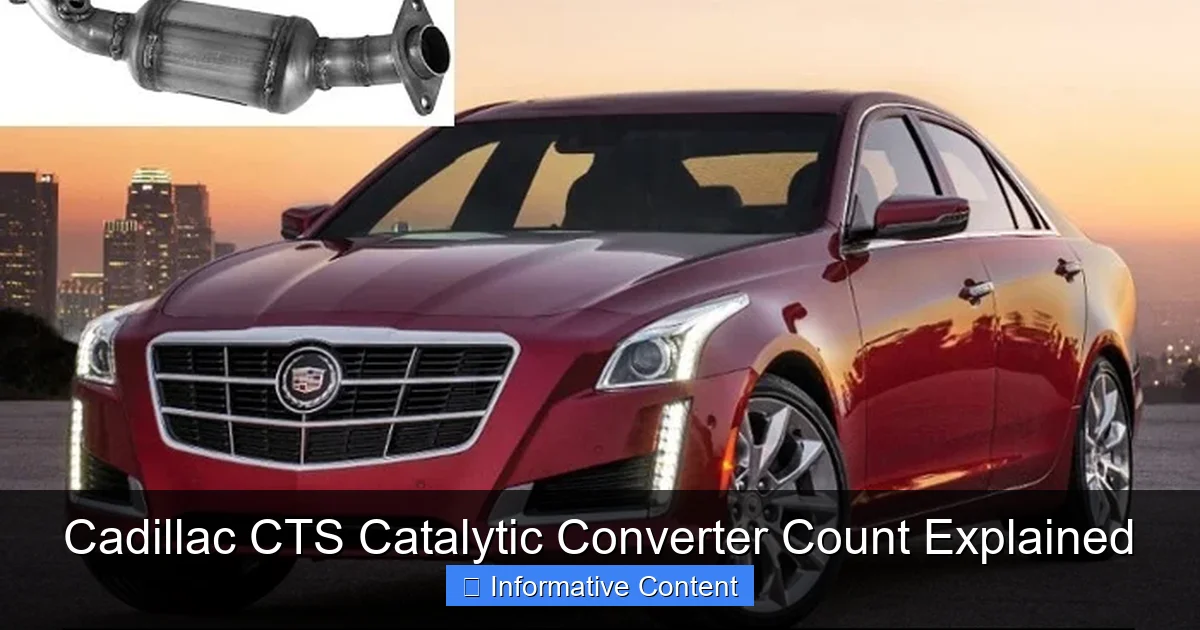
This table summarizes the typical catalytic converter configuration for the main Cadillac CTS generations and engine types. Remember, always confirm with your vehicle’s documentation or a trusted mechanic for your specific VIN.
Visual guide about Cadillac CTS catalytic converters
Image source: cararac.com
| CTS Generation | Model Years | Common Engines | Typical Number of Catalytic Converters | Notes |
|---|---|---|---|---|
| First Generation | 2003-2007 | 3.2L V6, 3.6L V6, 5.7L V8 (CTS-V) | 2 | Standard dual-exhaust setup for both V6 and V8. |
| Second Generation | 2008-2014 | 3.0L V6, 3.6L V6, 6.2L V8 (CTS-V) | 2 | Continues the proven two-converter design. |
| Third Generation | 2014-2019 | 2.0L Turbo I4, 3.6L V6, 6.2L V8 (CTS-V) | 2 | 2.0L Turbo uses one integrated manifold converter + one underbody converter. |
Maintenance and Troubleshooting Signs
Catalytic converters are designed to last the life of the vehicle, but they can fail. Problems usually arise from underlying issues that poison or clog them. Knowing you have two introduces a specific troubleshooting path: sometimes only one fails.
Common symptoms of a failing catalytic converter include:
- A rotten egg smell from the exhaust.
- Check Engine Light with codes like P0420 or P0430 (Catalyst System Efficiency Below Threshold). Interestingly, P0420 often refers to Bank 1, and P0430 to Bank 2—hinting at your two-converter system.
- Reduced engine performance, sluggish acceleration, or a feeling that the car is “struggling to breathe.”
- Excessive heat under the car or a glowing red converter (visible at night).
The best maintenance is prevention. Keep up with engine tune-ups, fix any misfires immediately, and avoid coolant or oil leaks into the combustion chamber. A healthy engine means healthy catalytic converters.
What to Do If You Suspect a Problem
Don’t ignore a Check Engine Light. Use an OBD2 scanner to read the code, or visit a parts store for a free scan. If a catalyst code appears, a mechanic can perform further tests, like checking the temperature differential across the converter or using a scope to inspect its interior. Because there are two, diagnosis will pinpoint which side is failing.
Replacement Costs and Considerations for the CTS
Replacing a catalytic converter on a Cadillac CTS is a substantial investment. The cost is high due to the parts, the precious metals, and the labor involved, which often requires working in tight spaces under the car.
For a single OEM (Original Equipment Manufacturer) catalytic converter, parts alone can range from $1,000 to $2,500 or more. Since most CTS models have two, a full replacement of both with OEM parts could easily surpass $3,000 to $5,000 including labor. Aftermarket converters are less expensive but must be certified for use in your state, especially if you live in an area with strict emissions testing like California.
Always get a detailed diagnosis. If only one converter has failed and the other is fine, you only need to replace the faulty one. However, if the failure was caused by an engine problem (like a chronic misfire), that problem must be fixed first, or you will ruin the new converter quickly.
Protecting Your Investment
Given their value, consider these tips:
- Park in well-lit, secure areas or a garage when possible.
- Engrave your VIN or license plate number onto the converter casing to deter thieves and help police identify it if recovered.
- Look into aftermarket catalytic converter protection shields or cages designed for your CTS model. They add a physical barrier against theft.
- Comprehensive insurance coverage can help if theft does occur—check your policy details.
Final Thoughts on Your CTS’s Exhaust System
Understanding that your Cadillac CTS most likely has two catalytic converters gives you a clearer picture of your vehicle’s sophisticated engineering. It’s a key piece of the puzzle that affects performance, emissions compliance, maintenance costs, and even security.
From the early 2000s models to the final third-generation cars, this dual-cat design has been a consistent feature, tailored slightly for different engines like the 2.0L Turbo. Whether you’re troubleshooting a check engine light, budgeting for future repairs, or taking steps to prevent theft, this knowledge puts you in the driver’s seat.
So next time you start up your CTS and hear that smooth purr or powerful roar, you’ll have a deeper appreciation for the hidden components working hard to make that performance clean and efficient. Here’s to many more miles of informed and enjoyable driving.
Frequently Asked Questions
How many catalytic converters does a Cadillac CTS have?
A Cadillac CTS typically has two catalytic converters. Most models feature one catalytic converter per exhaust bank, resulting in a standard dual setup. This applies to common V6 and V8 engine configurations found in the CTS lineup.
Does the Cadillac CTS V-Sport have more catalytic converters?
No, the Cadillac CTS V-Sport with its twin-turbo V6 also utilizes two catalytic converters. High-performance models generally maintain the same exhaust architecture, with one converter per exhaust manifold. The design focuses on meeting emissions standards while supporting increased engine output.
Where are the catalytic converters located on a CTS?
The catalytic converters on a Cadillac CTS are located near the engine’s exhaust manifolds. Often referred to as “pre-cats” or manifold converters, they are integrated into the exhaust downpipes. A secondary catalytic converter is sometimes found further down the exhaust system on certain model years.
Why does the number of catalytic converters matter for my CTS?
The number of catalytic converters matters primarily for repair costs and emissions compliance. Having two units means potential replacement can be more expensive than a car with a single converter. It also ensures the vehicle effectively reduces harmful exhaust emissions to meet legal standards.
How can I confirm my specific CTS’s catalytic converter count?
The best way to confirm is to check your vehicle’s exhaust system visually or consult the service manual. You can also use your VIN with a dealership or repair shop to get precise information for your model year and engine. The count can vary slightly with different emissions packages or model years.
Do all Cadillac CTS model years have two catalytic converters?
Most Cadillac CTS model years are equipped with two catalytic converters, but there can be exceptions. Some early or base models with inline engines may have a different configuration. Always verify for your specific production year and engine type to be certain.

At CarLegit, we believe information should be clear, factual, and genuinely helpful. That’s why every guide, review, and update on our website is created with care, research, and a strong focus on user experience.