
The Dodge Challenger typically has two fuel pumps—a primary lift pump and a high-pressure fuel pump—especially in high-performance models like the SRT or Hellcat variants. Understanding this dual-pump system is crucial for diagnosing issues, upgrading performance, and ensuring reliable engine operation.
If you’re a proud Dodge Challenger owner—or thinking about becoming one—you’ve probably wondered about the inner workings of this iconic American muscle car. One question that often pops up among enthusiasts and mechanics alike is: *How many fuel pumps does a Dodge Challenger have?* It’s not just a technical detail; it’s a key part of understanding how your Challenger delivers power, handles performance upgrades, and stays reliable on the road.
The answer isn’t always straightforward. Depending on the model year, engine type, and trim level, the Dodge Challenger can have either one or two fuel pumps. But here’s the good news: once you understand the system, you’ll be better equipped to maintain your car, troubleshoot issues, and even boost its performance. Whether you’re driving a base-model V6 or a fire-breathing Hellcat, fuel delivery is at the heart of what makes your Challenger roar.
In this guide, we’ll break down everything you need to know about the Dodge Challenger’s fuel pump setup. We’ll explore the differences between single and dual-pump systems, explain how each pump functions, and help you identify which configuration your car uses. You’ll also learn how to spot signs of fuel pump trouble, when to upgrade, and how proper maintenance can keep your Challenger running strong for years to come.
In This Article
- 1 Key Takeaways
- 2 📑 Table of Contents
- 3 Understanding the Dodge Challenger’s Fuel System
- 4 How Many Fuel Pumps Does Your Dodge Challenger Have?
- 5 How the Dual Fuel Pump System Works
- 6 Signs of Fuel Pump Problems in Your Challenger
- 7 Upgrading Your Challenger’s Fuel Pumps
- 8 Maintaining Your Fuel Pumps for Longevity
- 9 Conclusion
- 10 Frequently Asked Questions
- 10.1 How many fuel pumps does a Dodge Challenger Hellcat have?
- 10.2 Can a Dodge Challenger run with only one fuel pump working?
- 10.3 How do I know if my Challenger’s fuel pump is bad?
- 10.4 Do all Dodge Challengers have two fuel pumps?
- 10.5 Can I upgrade my Challenger’s fuel pumps?
- 10.6 How often should I replace my fuel pump?
Key Takeaways
- Most Dodge Challengers use a dual fuel pump system: a low-pressure lift pump and a high-pressure fuel pump, particularly in V8 and supercharged models.
- The lift pump moves fuel from the tank to the engine: it ensures consistent fuel supply under various driving conditions.
- The high-pressure pump delivers fuel to the injectors: it’s essential for direct injection systems in modern Challengers.
- Single-pump setups exist in older or base models: earlier V6 models may only have one electric fuel pump.
- Fuel pump failure can cause poor performance or stalling: knowing which pump is failing helps with accurate diagnosis.
- Upgrading fuel pumps supports performance mods: adding forced induction or increasing horsepower often requires enhanced fuel delivery.
- Regular maintenance extends pump life: using quality fuel and replacing filters prevents premature wear.
📑 Table of Contents
Understanding the Dodge Challenger’s Fuel System
To answer the question “How many fuel pumps does a Dodge Challenger have?” it helps to first understand the basics of its fuel delivery system. Modern internal combustion engines—especially high-performance ones like those in the Challenger—require precise fuel delivery to operate efficiently. Fuel must be delivered at the right pressure, volume, and timing to match engine demands, whether you’re cruising on the highway or launching from a stoplight.
The fuel system in a Dodge Challenger consists of several key components: the fuel tank, fuel lines, fuel filter, fuel pressure regulator, fuel injectors, and of course, the fuel pump(s). The pump(s) are the heart of this system, responsible for moving fuel from the tank to the engine. Without a properly functioning pump, your engine simply won’t run—or it will run poorly, leading to misfires, hesitation, or even stalling.
In older or base-model Challengers—particularly those with V6 engines from the early 2000s—you’ll often find a single electric fuel pump located inside the fuel tank. This pump draws fuel from the tank and sends it through the fuel lines to the engine’s fuel rail, where it’s distributed to the injectors. This setup works well for naturally aspirated engines with moderate power output.
However, as engine technology evolved and Dodge introduced more powerful variants—like the SRT, Scat Pack, and Hellcat models—the fuel system had to keep up. These high-output engines, especially those with superchargers or direct fuel injection, demand much higher fuel pressures and flow rates. That’s where the dual-pump system comes into play.
Single vs. Dual Fuel Pump Systems
So, what’s the difference between a single and dual fuel pump setup? Let’s break it down.
A single fuel pump system, as the name suggests, uses one electric pump mounted inside the fuel tank. This pump is responsible for both drawing fuel from the tank and delivering it to the engine. It’s a simpler, more cost-effective design, which is why it’s common in base-model Challengers with V6 engines or older V8s without forced induction.
In contrast, a dual fuel pump system uses two separate pumps working in tandem. The first is a low-pressure lift pump (also called a transfer pump), which moves fuel from the tank to a secondary high-pressure pump. The second pump then increases the fuel pressure to the levels required by modern direct injection systems—often exceeding 1,000 psi in high-performance applications.
This two-stage approach offers several advantages. First, it reduces the workload on any single pump, which can extend component life. Second, it allows for more precise control over fuel delivery, especially under high-load conditions like hard acceleration or track driving. Third, it provides redundancy—if one pump fails, the system may still function (albeit at reduced performance), giving you time to get repairs done.
Why Dodge Uses Dual Pumps in High-Performance Models
So why did Dodge move to a dual-pump system in its high-performance Challengers? The answer lies in the demands of modern engine technology.
Take the Dodge Challenger SRT Hellcat, for example. This beast packs a supercharged 6.2L HEMI V8 engine that produces over 700 horsepower. To feed that kind of power, the engine needs a massive amount of fuel—especially under boost. A single pump simply can’t keep up with the fuel flow and pressure requirements, particularly at high RPMs or during sustained high-load driving.
Direct fuel injection (DI) systems, which are standard on most modern Challengers, also require much higher fuel pressures than older port injection systems. DI sprays fuel directly into the combustion chamber, which improves efficiency and power—but only if the fuel is delivered at extremely high pressure. That’s where the high-pressure pump comes in.
By using a dual-pump system, Dodge ensures that fuel is always available when the engine needs it. The lift pump maintains a steady supply of fuel to the high-pressure pump, preventing cavitation (air bubbles in the fuel line) and ensuring consistent delivery. This is especially important during hard cornering, braking, or acceleration, when fuel can slosh around in the tank and temporarily starve the pump.
How Many Fuel Pumps Does Your Dodge Challenger Have?

Visual guide about How Many Fuel Pumps Does a Dodge Challenger Have
Image source: ic.carid.com
Now that you understand the basics, let’s get specific: how many fuel pumps does *your* Dodge Challenger have? The answer depends on several factors, including the model year, engine type, and trim level.
Identifying Your Challenger’s Fuel Pump Setup
Here’s a quick guide to help you determine your Challenger’s fuel pump configuration:
– **V6 Models (2008–2023):** Most base-model Challengers with the 3.6L Pentastar V6 engine use a single electric fuel pump located in the fuel tank. These models typically don’t require the high fuel pressures of a dual-pump system, so a single pump is sufficient.
– **V8 Models (5.7L, 6.4L HEMI):** Challengers with the 5.7L or 6.4L HEMI V8 engines—such as the R/T, Scat Pack, and SRT 392—usually feature a dual-pump system. These engines benefit from higher fuel flow, especially under load, and often use direct injection, which demands higher pressure.
– **Supercharged Models (Hellcat, Redeye, Super Stock):** All supercharged Challengers, including the SRT Hellcat, Hellcat Redeye, and Super Stock, use a dual-pump system. These models require even greater fuel delivery to support their massive horsepower output. In some cases, the high-pressure pump is mounted on the engine itself, while the lift pump remains in the tank.
– **Older Models (Pre-2008):** If you’re driving a first-generation Challenger (2008 is the first year of the current generation), you’ll likely have a single pump setup, especially if it’s a V6 or early V8 model.
To confirm your setup, you can check your owner’s manual, consult a service manual, or look up your VIN on a parts website. Many aftermarket suppliers also list fuel pump configurations by model and year, which can be helpful if you’re planning upgrades or repairs.
Visual and Diagnostic Clues
If you’re not sure what kind of fuel pump system your Challenger has, there are a few ways to find out without tearing anything apart.
First, listen to your car when you turn the key to the “on” position (before starting the engine). You should hear a brief humming sound from the fuel tank area—this is the fuel pump priming. In dual-pump systems, you might hear a slightly longer or more complex sound, as both pumps activate in sequence.
You can also use a diagnostic scan tool to check for fuel system codes or monitor fuel pressure. If your scanner shows two separate fuel pump circuits or relays, that’s a strong indication of a dual-pump setup.
Another clue is the fuel filter location. In single-pump systems, the filter is usually inline between the tank and the engine. In dual-pump systems, especially those with direct injection, the filter may be located after the lift pump but before the high-pressure pump, or even integrated into the high-pressure pump assembly.
How the Dual Fuel Pump System Works
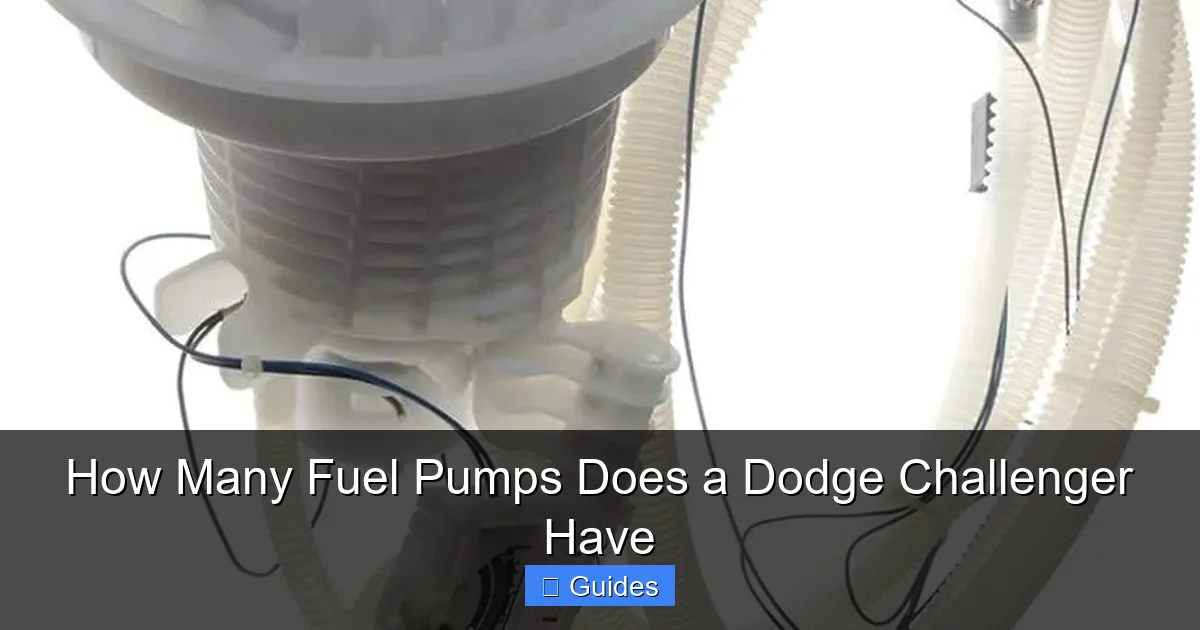
Visual guide about How Many Fuel Pumps Does a Dodge Challenger Have
Image source: m.media-amazon.com
Now that we’ve established that many Dodge Challengers use a dual-pump system, let’s take a closer look at how it actually works.
The Role of the Lift Pump
The first pump in the system is the lift pump (also called the transfer pump or low-pressure pump). This pump is typically located inside the fuel tank, just like a traditional single pump. Its job is to draw fuel from the tank and send it through the fuel lines to the high-pressure pump.
The lift pump operates at relatively low pressure—usually between 40 and 60 psi—which is sufficient to move fuel over long distances and through filters without causing excessive wear. It’s designed to run continuously whenever the ignition is on, ensuring that fuel is always available at the inlet of the high-pressure pump.
One of the key benefits of the lift pump is that it prevents the high-pressure pump from running dry. If the high-pressure pump had to draw fuel directly from the tank, it could cavitate or overheat, especially during hard driving when fuel sloshes away from the pickup. By using a lift pump, Dodge ensures a steady, pressurized supply of fuel to the high-pressure side of the system.
The High-Pressure Fuel Pump
The second pump is the high-pressure fuel pump (HPFP). This pump is responsible for increasing fuel pressure to the levels required by direct injection systems—often between 500 and 2,200 psi, depending on engine load and RPM.
In most Dodge Challengers with a dual-pump system, the HPFP is mechanically driven by the engine, usually via a camshaft-driven plunger. This means it only operates when the engine is running, and its output increases with engine speed. Some newer models may use an electrically driven HPFP for even greater control.
The HPFP takes the low-pressure fuel from the lift pump and compresses it before sending it to the fuel rail and injectors. Because it operates at such high pressures, it’s built with precision components and requires clean, high-quality fuel to function properly.
System Integration and Control
The two pumps don’t work in isolation—they’re carefully coordinated by the engine control unit (ECU). The ECU monitors engine load, RPM, throttle position, and other factors to determine how much fuel is needed. It then adjusts the operation of both pumps accordingly.
For example, during idle or light cruising, the lift pump may run at a lower speed, and the HPFP may only generate moderate pressure. But when you floor the accelerator, the ECU signals both pumps to ramp up, delivering maximum fuel flow and pressure to support the increased power demand.
This integration ensures optimal performance, efficiency, and reliability. It also allows the system to adapt to different driving conditions, from stop-and-go traffic to high-speed highway runs.
Signs of Fuel Pump Problems in Your Challenger
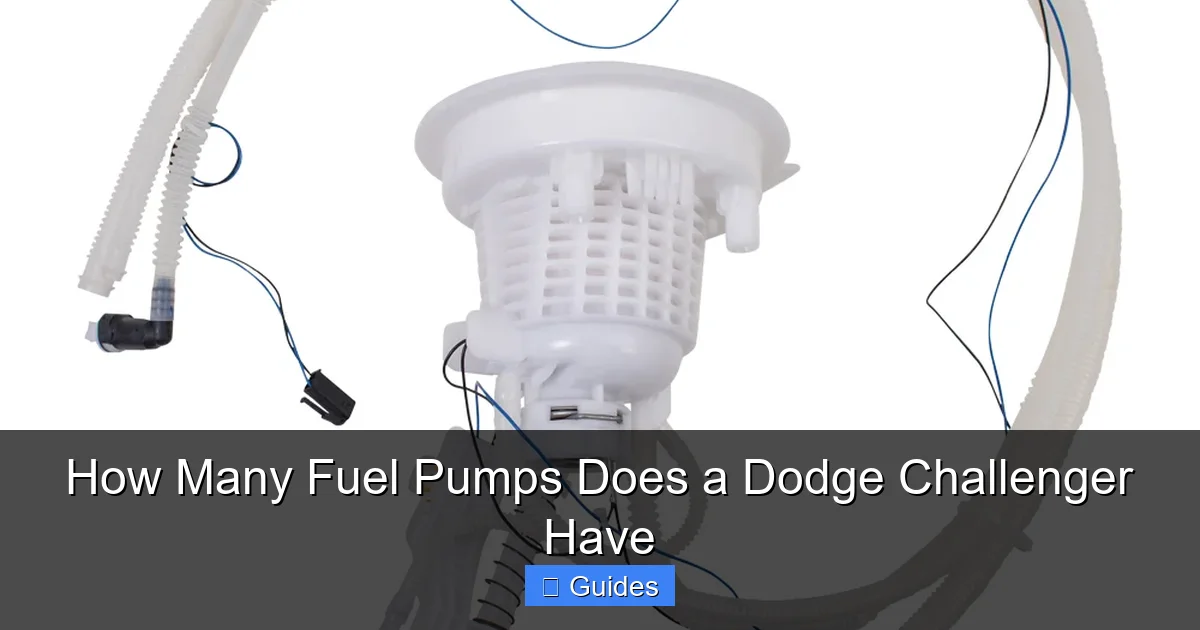
Visual guide about How Many Fuel Pumps Does a Dodge Challenger Have
Image source: res.cloudinary.com
Even the best fuel pump systems can develop issues over time. Knowing the warning signs can help you catch problems early and avoid costly repairs or breakdowns.
Common Symptoms of Fuel Pump Failure
Here are some telltale signs that one or both of your fuel pumps may be failing:
– **Engine hesitation or stumbling during acceleration:** If the engine bogs down or hesitates when you press the gas, it could mean the fuel pump isn’t delivering enough fuel.
– **Difficulty starting the engine:** A weak pump may not build enough pressure to start the engine, especially when it’s hot.
– **Loss of power at high speeds or under load:** If your Challenger struggles to maintain speed on the highway or during hard acceleration, fuel delivery could be the culprit.
– **Engine stalling or shutting off unexpectedly:** A failing pump may cause the engine to cut out, especially during cornering or braking.
– **Check Engine Light with fuel-related codes:** Codes like P0087 (low fuel pressure) or P0191 (fuel rail pressure sensor range/performance) often point to pump issues.
– **Unusual noises from the fuel tank:** A whining or grinding sound when the ignition is on could indicate a worn or failing lift pump.
Diagnosing Which Pump Is Failing
If you suspect a fuel pump problem, it’s important to determine which pump is at fault. In a dual-pump system, the symptoms can be similar, but the repair approach differs.
Start by checking fuel pressure with a gauge. If pressure is low at idle but improves with RPM, the issue may be with the lift pump. If pressure is consistently low or drops under load, the high-pressure pump could be failing.
You can also use a scan tool to monitor fuel pressure sensor data in real time. Sudden drops or erratic readings may indicate a failing HPFP.
In some cases, both pumps may need replacement—especially if the car has high mileage or has been driven aggressively. It’s often recommended to replace both pumps together to avoid future issues.
Upgrading Your Challenger’s Fuel Pumps
If you’re planning performance modifications—like adding a supercharger, turbo, or nitrous—you may need to upgrade your fuel pumps to support the increased fuel demands.
When to Upgrade
Stock fuel pumps are designed for factory power levels. If you’re pushing significantly more horsepower—say, over 600–700 wheel horsepower—your stock pumps may not be able to keep up. This can lead to lean conditions, engine knock, or even catastrophic engine failure.
Upgrading to high-flow lift pumps and high-pressure pumps ensures your engine gets the fuel it needs, even under extreme conditions. Many aftermarket companies offer drop-in replacement pumps that are compatible with your Challenger’s fuel system.
Popular Upgrade Options
Some popular fuel pump upgrades for the Dodge Challenger include:
– **Walbro 255 LPH or 450 LPH lift pumps:** These high-flow electric pumps replace the stock lift pump and provide increased fuel delivery.
– **DeatschWerks or Radium Engineering HPFP upgrades:** These offer higher flow rates and better durability for direct injection systems.
– **Dual-pump modules:** Some companies offer complete fuel pump modules that include both a high-flow lift pump and a high-pressure pump in one unit.
When upgrading, make sure to also consider supporting mods like larger fuel injectors, a high-capacity fuel rail, and a tuned ECU to take full advantage of the increased fuel flow.
Maintaining Your Fuel Pumps for Longevity
Even the best fuel pumps won’t last forever—but proper maintenance can go a long way in extending their life.
Tips for Fuel Pump Care
– **Use high-quality fuel:** Always fill up with top-tier gasoline, especially if your car has direct injection. Lower-quality fuel can contain contaminants that damage pump components.
– **Keep the fuel tank above 1/4 full:** Running on low fuel can cause the pump to overheat, as it relies on fuel for cooling.
– **Replace the fuel filter regularly:** A clogged filter forces the pump to work harder, reducing its lifespan. Most manufacturers recommend replacing it every 30,000 to 60,000 miles.
– **Avoid running the car on fumes:** Letting the tank get too low not only risks pump damage but can also introduce debris into the system.
– **Listen for unusual noises:** If you hear a whining or grinding sound from the fuel tank, have it checked immediately.
By following these simple tips, you can help ensure your fuel pumps—and your Challenger—stay in top condition for years to come.
Conclusion
So, how many fuel pumps does a Dodge Challenger have? The answer depends on your specific model, but most modern, high-performance Challengers—especially those with V8 or supercharged engines—use a dual fuel pump system. This setup includes a low-pressure lift pump and a high-pressure fuel pump, working together to deliver the fuel your engine needs for peak performance.
Understanding this system is more than just a technical curiosity—it’s essential for maintaining your car, diagnosing issues, and planning upgrades. Whether you’re troubleshooting a rough idle or prepping for a power boost, knowing how your fuel pumps work gives you a serious advantage.
From the growl of the HEMI to the roar of the Hellcat, the Dodge Challenger is a machine built for performance. And at the heart of that performance is a fuel delivery system designed to keep up with the demand. With the right knowledge and care, your Challenger will keep delivering that iconic muscle car experience—mile after mile.
Frequently Asked Questions
How many fuel pumps does a Dodge Challenger Hellcat have?
The Dodge Challenger Hellcat has two fuel pumps: a low-pressure lift pump in the fuel tank and a high-pressure fuel pump on the engine. This dual-pump system supports the supercharged engine’s high fuel demands.
Can a Dodge Challenger run with only one fuel pump working?
In a dual-pump system, the car may still run if one pump fails, but performance will be reduced. The lift pump failure can cause fuel starvation, while HPFP failure may lead to low pressure and engine damage.
How do I know if my Challenger’s fuel pump is bad?
Common signs include hard starting, engine hesitation, loss of power, stalling, and a whining noise from the fuel tank. A scan tool can also reveal low fuel pressure codes.
Do all Dodge Challengers have two fuel pumps?
No. Base V6 models and older V8s typically have one fuel pump. Dual-pump systems are found in most modern V8 and supercharged models like the Scat Pack and Hellcat.
Can I upgrade my Challenger’s fuel pumps?
Yes. High-flow lift pumps and high-pressure pumps are available from aftermarket brands. Upgrades are recommended for high-horsepower builds or forced induction.
How often should I replace my fuel pump?
Fuel pumps typically last 100,000 to 150,000 miles. Replace them sooner if you notice performance issues or if upgrading for higher power output.

At CarLegit, we believe information should be clear, factual, and genuinely helpful. That’s why every guide, review, and update on our website is created with care, research, and a strong focus on user experience.