
The average car holds between 12 and 16 gallons of gas, but tank sizes vary widely by vehicle type, make, and model. Understanding your car’s fuel capacity helps with trip planning, budgeting, and improving fuel efficiency.
In This Article
- 1 Key Takeaways
- 2 📑 Table of Contents
- 3 How Many Gallons of Gas Does a Car Hold?
- 4 Understanding Gas Tank Capacity: What Determines the Size?
- 5 Average Gas Tank Sizes by Vehicle Category
- 6 How to Find Your Car’s Exact Gas Tank Capacity
- 7 Why Gas Tank Size Matters: Practical Implications for Drivers
- 8 Tips to Maximize Fuel Efficiency and Range
- 9 The Future of Fuel: Hybrids, EVs, and Beyond
- 10 Conclusion
- 11 Frequently Asked Questions
- 11.1 What is the average gas tank size for a car?
- 11.2 Do larger gas tanks mean better fuel efficiency?
- 11.3 How can I find out how many gallons my car’s gas tank holds?
- 11.4 Why do trucks have such large gas tanks?
- 11.5 Do hybrid cars have smaller gas tanks?
- 11.6 Can I increase my car’s gas tank capacity?
Key Takeaways
- Average gas tank size: Most passenger cars hold between 12 and 16 gallons, while SUVs and trucks often range from 18 to 30+ gallons.
- Vehicle type matters: Compact cars typically have smaller tanks (10–14 gallons), while full-size trucks and SUVs can exceed 25 gallons.
- Fuel efficiency vs. tank size: A larger tank doesn’t always mean better range—fuel economy plays a bigger role in how far you can go.
- Check your owner’s manual: The most accurate way to find your car’s gas tank capacity is in the manufacturer’s documentation.
- Impact on driving habits: Knowing your tank size helps plan refueling stops, especially on long road trips or in remote areas.
- Environmental and cost considerations: Larger tanks mean more fuel carried, which can increase weight and reduce efficiency over time.
- Hybrid and electric vehicles: Hybrids combine gas tanks with electric batteries, while EVs don’t use gas at all—understanding these differences is key for modern drivers.
📑 Table of Contents
- How Many Gallons of Gas Does a Car Hold?
- Understanding Gas Tank Capacity: What Determines the Size?
- Average Gas Tank Sizes by Vehicle Category
- How to Find Your Car’s Exact Gas Tank Capacity
- Why Gas Tank Size Matters: Practical Implications for Drivers
- Tips to Maximize Fuel Efficiency and Range
- The Future of Fuel: Hybrids, EVs, and Beyond
- Conclusion
How Many Gallons of Gas Does a Car Hold?
When you pull up to the gas pump, have you ever wondered just how much fuel your car can actually hold? Whether you’re planning a cross-country road trip, trying to budget for monthly fuel costs, or simply curious about your vehicle’s specs, understanding how many gallons of gas a car holds is more important than you might think.
The answer isn’t one-size-fits-all. While the average passenger car holds between 12 and 16 gallons of gasoline, the actual capacity can vary significantly depending on the type of vehicle, its design, and its intended use. Compact cars, for example, are built for efficiency and often have smaller tanks to reduce weight and improve fuel economy. On the other hand, large SUVs and pickup trucks—designed for towing, hauling, and long-distance travel—typically come equipped with much larger fuel tanks to support their heavier frames and higher fuel consumption.
Knowing your car’s gas tank capacity isn’t just a fun fact—it’s a practical piece of information that can help you drive smarter, save money, and avoid getting stranded with an empty tank. In this guide, we’ll break down everything you need to know about gas tank sizes, from how they’re determined to how they impact your driving experience. We’ll also explore real-world examples, offer tips for maximizing fuel efficiency, and explain how modern vehicle trends—like hybrids and electric cars—are changing the way we think about fuel.
Understanding Gas Tank Capacity: What Determines the Size?
Visual guide about How Many Gallons of Gas Does a Car Hold
Image source: simplecarguides.com
Gas tank size isn’t arbitrary. Automakers design fuel tanks based on a combination of engineering, safety, efficiency, and consumer demand. Several key factors influence how many gallons of gas a car can hold.
Vehicle Type and Class
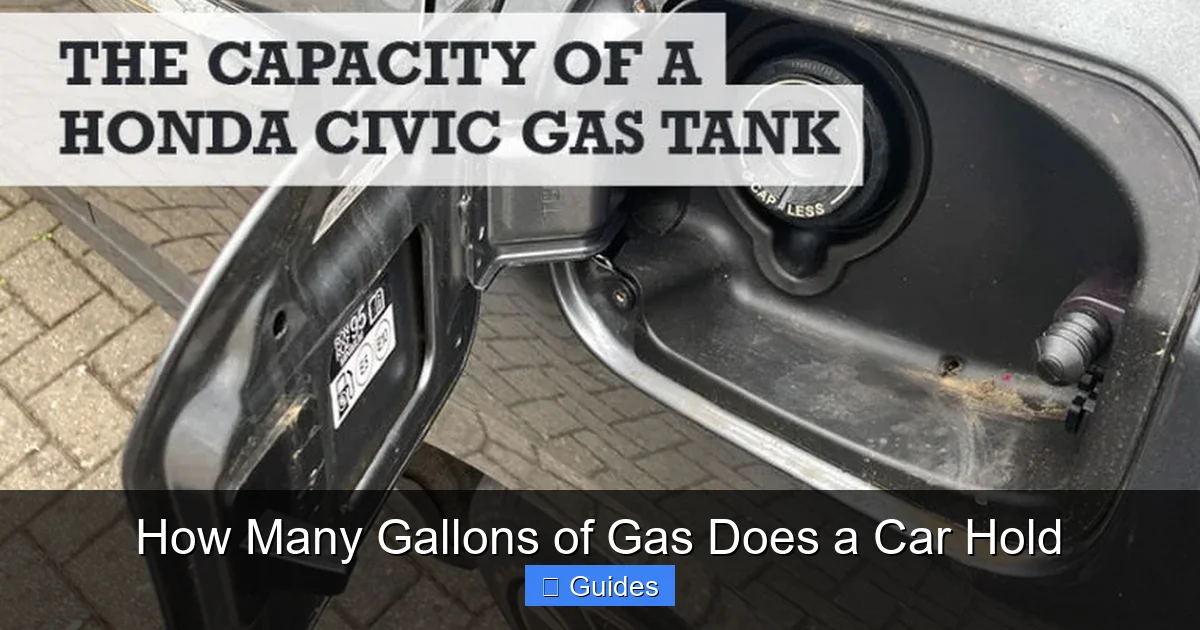
One of the biggest determinants of gas tank size is the type of vehicle. Compact cars, such as the Honda Civic or Toyota Corolla, are built for city driving and fuel efficiency. These models typically have gas tanks ranging from 10 to 14 gallons. Their smaller size reduces overall vehicle weight, which helps improve miles per gallon (MPG).
Mid-size sedans like the Toyota Camry or Honda Accord usually fall in the 14 to 16-gallon range. These vehicles balance passenger comfort, trunk space, and fuel economy, making them popular choices for families and commuters.
SUVs and crossovers, such as the Ford Explorer or Toyota RAV4, often have larger tanks—between 16 and 22 gallons—to support their heavier weight and lower fuel efficiency. Full-size SUVs like the Chevrolet Tahoe or Ford Expedition can hold 25 to 30 gallons or more, especially in models designed for long-haul travel or towing.
Pickup trucks are the champions of gas tank capacity. Light-duty trucks like the Ford F-150 or Ram 1500 often have dual fuel tanks or extended-range options, with capacities ranging from 23 to 36 gallons. Heavy-duty trucks can go even higher, sometimes exceeding 40 gallons when equipped with auxiliary tanks.
Fuel Efficiency and Driving Range
Automakers also consider the intended driving range when designing gas tanks. The goal is to give drivers enough fuel to travel a reasonable distance between fill-ups—typically 300 to 500 miles on a full tank for most passenger vehicles.
For example, a compact car with a 12-gallon tank and an average fuel economy of 30 MPG can travel about 360 miles before needing to refuel. A full-size SUV with a 25-gallon tank and 20 MPG might go 500 miles. In both cases, the tank size is calibrated to provide a balance between convenience and efficiency.
However, it’s important to note that a larger tank doesn’t always mean better range. If a vehicle is inefficient—say, a large truck that gets only 15 MPG—even a 30-gallon tank might only get you 450 miles. Conversely, a hybrid car with a 10-gallon tank and 50 MPG could travel 500 miles. This highlights why fuel economy is just as important as tank size when evaluating how far you can go.
Design and Safety Constraints
Gas tanks must fit within the vehicle’s frame, often under the rear seats or behind the rear axle. This limits how large they can be without compromising passenger space, cargo room, or safety.
Modern gas tanks are also designed with safety in mind. They’re made from durable materials like high-density polyethylene (HDPE) or steel, and are positioned to minimize the risk of rupture in a collision. Some vehicles even have baffles inside the tank to prevent fuel sloshing, which can affect vehicle handling.
Additionally, emissions regulations play a role. Larger tanks mean more evaporative emissions, so automakers must balance capacity with environmental standards. This is one reason why some high-efficiency vehicles have smaller tanks—they’re designed to be refueled more frequently, reducing the need for large, emissions-prone storage.
Average Gas Tank Sizes by Vehicle Category
Visual guide about How Many Gallons of Gas Does a Car Hold
Image source: autotoride.com
To give you a clearer picture, let’s look at typical gas tank capacities across different vehicle categories. These numbers are based on recent models and industry averages, but always check your specific vehicle for exact details.
Compact Cars (10–14 gallons)
Compact cars are the fuel-sippers of the automotive world. Models like the Honda Civic (12.4 gallons), Toyota Corolla (13.2 gallons), and Hyundai Elantra (14 gallons) are designed for maximum efficiency in city and highway driving. Their smaller tanks keep weight down and help achieve impressive MPG ratings—often 30 MPG or higher on the highway.
These vehicles are ideal for daily commuters who don’t need to drive long distances between fill-ups. With a 12-gallon tank and 35 MPG, you could easily go 400+ miles before stopping for gas.
Mid-Size Sedans (14–16 gallons)
Mid-size sedans offer a blend of comfort, space, and efficiency. The Toyota Camry (15.8 gallons), Honda Accord (14.8 gallons), and Nissan Altima (16 gallons) fall into this category. These cars are popular with families and professionals who want a reliable, roomy vehicle without sacrificing fuel economy.
With average fuel efficiency around 28–32 MPG, a mid-size sedan with a 15-gallon tank can travel approximately 420 to 480 miles on a full tank. That’s enough for a weekend getaway or a long commute without frequent stops.
SUVs and Crossovers (16–22 gallons)
SUVs and crossovers have grown in popularity due to their versatility and higher driving position. The Toyota RAV4 (14.5 gallons), Honda CR-V (14 gallons), and Ford Explorer (18.6 gallons) are common examples.
While compact crossovers lean toward smaller tanks, mid-size and full-size SUVs often have larger capacities. The Chevrolet Traverse, for instance, holds 19.4 gallons, while the Ford Expedition can have up to 28.3 gallons in certain trims.
These vehicles typically get 20–25 MPG, so a 20-gallon tank might give you 400 to 500 miles of range. That makes them great for road trips, especially when carrying passengers and gear.
Pickup Trucks (23–36+ gallons)
Pickup trucks are built for work and long-distance travel. The Ford F-150 offers multiple tank options, including a standard 23-gallon tank and an optional 36-gallon extended-range tank. The Ram 1500 has a 23- to 26-gallon capacity, while the Toyota Tundra holds up to 26 gallons.
Heavy-duty trucks like the Ford Super Duty or Chevrolet Silverado 2500HD can have tanks exceeding 30 gallons, especially when equipped with dual tanks. These vehicles are often used for towing, farming, or commercial purposes, where frequent refueling isn’t practical.
With fuel economy ranging from 15 to 22 MPG, a 30-gallon tank could give you 450 to 660 miles of range—perfect for long hauls or remote job sites.
Hybrids and Plug-In Hybrids (8–12 gallons)
Hybrid vehicles like the Toyota Prius (11.3 gallons) or Honda Insight (10.6 gallons) have smaller gas tanks because they rely partly on electric power. The gasoline engine supplements the electric motor, reducing overall fuel consumption.
Plug-in hybrids (PHEVs), such as the Toyota RAV4 Prime or Ford Escape PHEV, have even smaller tanks—often 8 to 10 gallons—since they can run on electricity for 30–50 miles before switching to gas.
Despite smaller tanks, hybrids often achieve excellent range thanks to high MPG ratings. The Prius, for example, gets up to 56 MPG, allowing it to travel over 600 miles on a single tank.
How to Find Your Car’s Exact Gas Tank Capacity
Visual guide about How Many Gallons of Gas Does a Car Hold
Image source: shunauto.com
If you’re curious about how many gallons your specific car holds, there are several reliable ways to find out.
Check the Owner’s Manual
The most accurate source is your vehicle’s owner’s manual. It will list the fuel tank capacity in gallons (or liters, depending on the region) under the “Specifications” or “Fuel System” section. This information is specific to your make, model, and trim level.
For example, a 2023 Honda Accord EX-L has a 14.8-gallon tank, while the Honda Accord Hybrid has a slightly smaller 12.8-gallon tank due to the battery placement.
Look on the Fuel Door or Gas Cap
Some vehicles have the fuel tank capacity printed on the inside of the fuel door or on the gas cap itself. This is less common but can be a quick reference if you’re at the pump.
Use Online Resources
Websites like Edmunds, Kelley Blue Book (KBB), and the manufacturer’s official site provide detailed specs for most vehicles. Simply search for your car’s year, make, and model, and look for “fuel tank capacity” in the specifications.
Ask the Dealer or Use a VIN Decoder
If you’re buying a used car or can’t find the info online, contact the dealership or use a VIN decoder tool. Your Vehicle Identification Number (VIN) contains all the details about your car’s original configuration, including fuel system specs.
Why Gas Tank Size Matters: Practical Implications for Drivers
Knowing how many gallons your car holds isn’t just about trivia—it has real-world benefits for your driving habits, budget, and safety.
Trip Planning and Refueling Strategy
If you’re planning a long road trip, understanding your tank capacity helps you map out refueling stops. For example, if your car holds 15 gallons and gets 25 MPG, you can go about 375 miles on a full tank. That means you’ll need to stop roughly every 300–350 miles, especially if you like to refuel before the tank is completely empty.
This is especially important in rural or remote areas where gas stations are sparse. A larger tank gives you more flexibility and peace of mind, reducing the risk of running out of fuel.
Fuel Budgeting and Cost Management
Gas prices fluctuate, and knowing your tank size helps you estimate how much each fill-up will cost. If gas is $3.50 per gallon and your car holds 16 gallons, a full tank will cost about $56. This helps with monthly budgeting, especially if you commute long distances.
You can also use this info to compare vehicles when shopping. A car with a smaller tank might seem cheaper to fill, but if it has poor fuel economy, you could end up spending more over time.
Environmental Impact
Larger gas tanks mean more fuel is carried, which increases vehicle weight and can reduce fuel efficiency. Every extra pound affects MPG, so there’s a trade-off between convenience and environmental impact.
Additionally, larger tanks can lead to more frequent fuel purchases, which increases the risk of spills and evaporative emissions. Choosing a vehicle with an appropriately sized tank for your driving needs can help reduce your carbon footprint.
Emergency Preparedness
In extreme weather or natural disasters, gas stations may be closed or crowded. Having a larger tank means you can go longer without refueling, which can be crucial in emergencies.
Some drivers even keep a small gas can in the trunk for backup, but this should be done safely and in compliance with local regulations.
Tips to Maximize Fuel Efficiency and Range
Regardless of your tank size, there are ways to get the most out of every gallon.
Maintain Proper Tire Pressure
Underinflated tires increase rolling resistance, which reduces fuel economy. Check your tire pressure monthly and keep it at the recommended level (found on the driver’s door jamb or in the manual).
Avoid Excessive Idling
Idling wastes fuel and gets 0 MPG. If you’re stopped for more than a minute (except in traffic), turn off the engine.
Drive Smoothly
Aggressive driving—rapid acceleration and hard braking—can lower fuel economy by up to 30%. Use cruise control on highways and anticipate stops to maintain a steady speed.
Reduce Weight and Drag
Remove unnecessary items from your trunk or roof rack. Extra weight and aerodynamic drag both reduce efficiency.
Use the Right Fuel
Always use the octane level recommended by the manufacturer. Higher octane doesn’t improve performance unless your engine is designed for it.
Regular Maintenance
Keep up with oil changes, air filter replacements, and spark plug checks. A well-maintained engine runs more efficiently.
The Future of Fuel: Hybrids, EVs, and Beyond
As the automotive industry evolves, the concept of “gas tank capacity” is changing.
Hybrid Vehicles
Hybrids combine a gasoline engine with an electric motor and battery. They use smaller gas tanks because the electric system reduces fuel consumption. The Toyota Prius, for example, has an 11.3-gallon tank but can travel over 600 miles thanks to 56 MPG efficiency.
Plug-In Hybrids (PHEVs)
PHEVs can run on electricity for 30–50 miles before switching to gas. The Ford Escape PHEV has an 8.7-gallon tank but can go 500+ miles with a full charge and full tank.
Electric Vehicles (EVs)
EVs like the Tesla Model 3 or Chevrolet Bolt don’t use gas at all. Instead, they rely on battery capacity measured in kilowatt-hours (kWh). A 75 kWh battery might provide 250–300 miles of range.
As charging infrastructure improves, the need for large gas tanks will continue to decline. However, for now, understanding gas tank size remains essential for millions of drivers.
Conclusion
So, how many gallons of gas does a car hold? The answer depends on your vehicle, but most passenger cars hold between 12 and 16 gallons, with trucks and SUVs going much higher. Knowing your car’s fuel capacity helps you plan trips, manage costs, and drive more efficiently.
Whether you drive a compact car, a family SUV, or a rugged pickup, understanding your gas tank size is a small but powerful step toward smarter, safer, and more economical driving. And as the world shifts toward hybrids and electric vehicles, this knowledge will continue to evolve—keeping you informed and in control, no matter what’s under the hood.
Frequently Asked Questions
What is the average gas tank size for a car?
The average gas tank size for a passenger car is between 12 and 16 gallons. Compact cars tend to be on the lower end, while larger sedans and crossovers often fall in the middle to upper range.
Do larger gas tanks mean better fuel efficiency?
Not necessarily. A larger tank allows you to carry more fuel, but fuel efficiency depends on the engine, weight, and driving habits. A small, efficient car with a 12-gallon tank can outperform a large, inefficient vehicle with a 25-gallon tank.
How can I find out how many gallons my car’s gas tank holds?
The best way is to check your owner’s manual, look on the fuel door or gas cap, or search online using your vehicle’s make, model, and year. You can also use a VIN decoder for precise details.
Why do trucks have such large gas tanks?
Trucks are designed for long-distance travel, towing, and hauling, which require more fuel. Larger tanks reduce the need for frequent refueling, especially in remote areas or job sites.
Do hybrid cars have smaller gas tanks?
Yes, most hybrids have smaller gas tanks because they rely partly on electric power. For example, the Toyota Prius has an 11.3-gallon tank but achieves over 50 MPG, giving it a long range.
Can I increase my car’s gas tank capacity?
In most cases, no—gas tanks are built into the vehicle’s frame. Some trucks offer optional larger tanks or auxiliary tanks, but modifying a standard car’s fuel system is unsafe and often illegal.

At CarLegit, we believe information should be clear, factual, and genuinely helpful. That’s why every guide, review, and update on our website is created with care, research, and a strong focus on user experience.