
The 2006 Toyota Solara is known for its reliability and can last well over 200,000 miles with consistent maintenance. Regular oil changes, timely repairs, and driving habits play a big role in how long it runs. Many owners report reaching 250,000+ miles, making it a solid long-term investment.
In This Article
- 1 Key Takeaways
- 2 📑 Table of Contents
- 3 How Many Miles Can a 2006 Toyota Solara Last?
- 4 Understanding the 2006 Toyota Solara’s Design and Engineering
- 5 Real-World Mileage Examples and Owner Experiences
- 6 Common Problems and How to Prevent Them
- 7 Maintenance Tips to Maximize Your Solara’s Lifespan
- 8 Is a High-Mileage 2006 Solara Worth Buying?
- 9 Conclusion
- 10 Frequently Asked Questions
- 10.1 How many miles is too many for a 2006 Toyota Solara?
- 10.2 Is the 2006 Solara 4-cylinder engine reliable?
- 10.3 When should I replace the timing belt on a 2006 Solara?
- 10.4 Can a 2006 Solara last 300,000 miles?
- 10.5 What’s the most common problem with the 2006 Solara?
- 10.6 Is the 2006 Solara a good used car buy?
Key Takeaways
- Typical Lifespan: A well-maintained 2006 Toyota Solara can easily reach 200,000 to 250,000 miles.
- Engine Durability: The 2.4L 4-cylinder and 3.3L V6 engines are built to last with proper care.
- Maintenance Matters: Regular oil changes, timing belt replacements, and fluid checks are crucial for longevity.
- Common Issues: Watch for oil consumption, suspension wear, and electrical glitches as the car ages.
- Driving Habits: Gentle acceleration and avoiding short trips help extend engine life.
- Real-World Examples: Many owners report hitting 250,000+ miles with minimal major repairs.
- Resale Value: High-mileage Solaras still hold value if well-documented and cared for.
📑 Table of Contents
- How Many Miles Can a 2006 Toyota Solara Last?
- Understanding the 2006 Toyota Solara’s Design and Engineering
- Real-World Mileage Examples and Owner Experiences
- Common Problems and How to Prevent Them
- Maintenance Tips to Maximize Your Solara’s Lifespan
- Is a High-Mileage 2006 Solara Worth Buying?
- Conclusion
How Many Miles Can a 2006 Toyota Solara Last?
If you’re considering buying a used 2006 Toyota Solara or already own one and want to know how long it might last, you’re in the right place. The 2006 Solara is a mid-size coupe or convertible that blends style, comfort, and Toyota’s legendary reliability. But just how many miles can it really go? The short answer: with proper care, this car can easily surpass 200,000 miles—and many owners have pushed it well beyond 250,000.
Toyota has long been praised for building vehicles that stand the test of time, and the Solara is no exception. While it may not be as flashy as some competitors, it’s built on the same platform as the highly reliable Camry, which gives it a solid foundation. The 2006 model year is particularly well-regarded because it avoids some of the earlier model quirks and benefits from Toyota’s refined engineering. Whether you’re commuting daily or taking weekend road trips, the Solara can be a dependable companion—if you treat it right.
But longevity isn’t just about the car’s design. It’s also about how you maintain it. A neglected Solara might start showing serious problems by 150,000 miles, while one that’s been pampered can keep running strong for decades. In this guide, we’ll break down everything you need to know about the lifespan of a 2006 Toyota Solara, from engine performance and common issues to maintenance tips and real-world examples. By the end, you’ll have a clear picture of what to expect—and how to get the most out of your Solara.
Understanding the 2006 Toyota Solara’s Design and Engineering
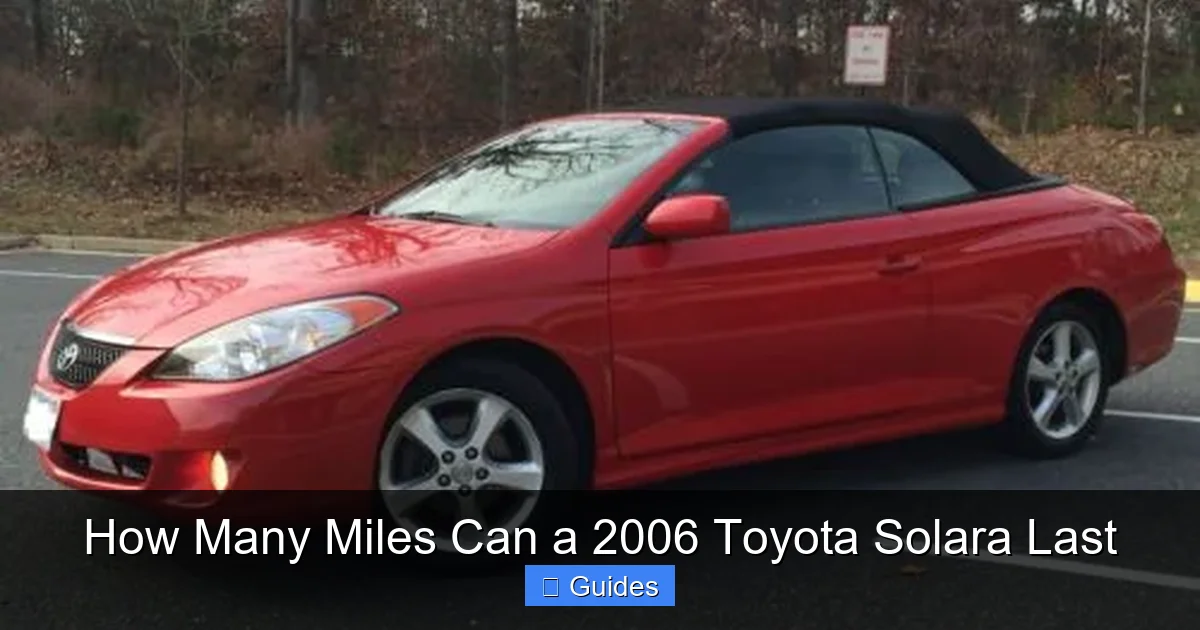
Visual guide about How Many Miles Can a 2006 Toyota Solara Last
Image source: 2040-cars.com
To understand how long a 2006 Toyota Solara can last, it helps to know what’s under the hood—and why it’s built to endure. The Solara was designed as a sportier alternative to the Camry, offering a more stylish coupe or convertible body while sharing many of the same mechanical components. This shared DNA is a big reason why the Solara is so reliable.
Engine Options and Durability
The 2006 Solara came with two engine choices: a 2.4-liter 4-cylinder (2AZ-FE) and a 3.3-liter V6 (3MZ-FE). Both are known for their durability, but they have different characteristics.
The 2.4L 4-cylinder engine produces around 157 horsepower and is praised for its fuel efficiency and smooth operation. It’s a workhorse engine that, when maintained, can easily hit 200,000 miles. However, this engine is known for a common issue: oil consumption. Some owners report burning a quart of oil every 1,000 to 2,000 miles, especially after 100,000 miles. This isn’t necessarily a sign of imminent failure, but it does require vigilance. Regular oil level checks and top-offs are essential.
The 3.3L V6, on the other hand, delivers a stronger 225 horsepower and offers a more spirited driving experience. It’s also very reliable, with many examples crossing the 250,000-mile mark. The V6 doesn’t suffer from the same oil consumption issues as the 4-cylinder, making it a favorite among long-term owners. Both engines use timing belts, which must be replaced every 90,000 to 100,000 miles—a critical maintenance item that, if ignored, can cause catastrophic engine damage.
Transmission and Drivetrain
The 2006 Solara comes with a 5-speed automatic transmission, which is generally robust and long-lasting. Toyota’s automatics from this era are known for their smooth shifts and durability, especially when serviced regularly. The transmission fluid should be changed every 30,000 to 60,000 miles, depending on driving conditions. Neglecting this can lead to slipping, harsh shifts, and eventual failure.
The Solara is front-wheel drive, which simplifies the drivetrain and reduces stress on components compared to all-wheel-drive systems. This contributes to lower wear and tear over time. The suspension system, while not performance-oriented, is well-tuned for comfort and longevity. However, as the car ages, components like struts, shocks, and bushings will wear out and need replacement—typically after 80,000 to 120,000 miles.
Build Quality and Materials
Toyota’s build quality in the mid-2000s was top-notch, and the Solara reflects that. The interior materials are durable, with hard plastics that resist cracking and upholstery that holds up well over time. The exterior paint and body panels are also resistant to rust, especially if the car is garaged or washed regularly. That said, convertibles may show more wear on the soft top and seals, so owners should inspect these areas annually.
Overall, the 2006 Solara’s design emphasizes reliability and ease of maintenance. It’s not a high-performance machine, but it’s built to last—especially if you follow the recommended service schedule.
Real-World Mileage Examples and Owner Experiences
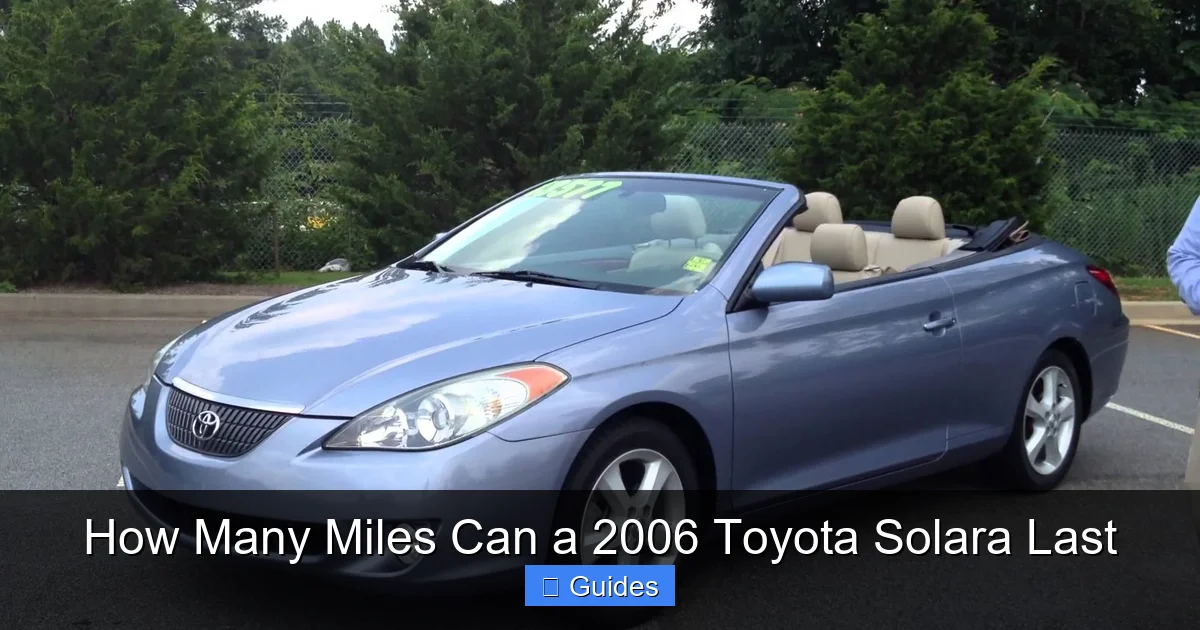
Visual guide about How Many Miles Can a 2006 Toyota Solara Last
Image source: hongliyangzhi.com
One of the best ways to gauge how long a 2006 Toyota Solara can last is to look at real-world examples from owners. Across forums like Toyota Nation, Reddit, and CarTalk, there are numerous stories of Solaras hitting impressive mileage milestones.
High-Mileage Success Stories
Take John from Ohio, for example. He bought his 2006 Solara V6 new and drove it for 17 years. By the time he sold it, it had 278,000 miles on the odometer. He followed the maintenance schedule religiously—oil changes every 5,000 miles, timing belt replaced at 90,000 and 180,000 miles, and regular inspections. The only major repair was a water pump replacement at 210,000 miles. “It still ran like a dream,” he said. “I only sold it because I wanted something newer.”
Another owner, Maria from Texas, has a 2006 Solara 4-cylinder with 241,000 miles. She uses it for daily commuting and weekend trips. She admits the car burns about a quart of oil every 1,500 miles, but she keeps it topped off and hasn’t had any engine issues. “I change the oil every 3,000 miles and use high-mileage oil,” she explains. “It’s not perfect, but it’s reliable.”
These stories aren’t rare. Many owners report similar experiences, with some even pushing past 300,000 miles. Of course, not every Solara will last this long—some may face early failures due to neglect or accidents—but the potential is clearly there.
Factors That Influence Longevity
So why do some Solaras last so long while others don’t? It usually comes down to three things: maintenance, driving habits, and environment.
Maintenance is the biggest factor. Cars that receive regular oil changes, fluid flushes, and timely repairs tend to last much longer. For example, replacing the timing belt on schedule prevents engine damage. Ignoring it can lead to bent valves and a ruined engine—even if the car only has 100,000 miles.
Driving habits also matter. Frequent short trips, aggressive acceleration, and towing heavy loads can wear out the engine and transmission faster. On the other hand, highway driving and gentle operation help components last longer.
Finally, the environment plays a role. Cars in dry, mild climates tend to last longer than those in areas with extreme heat, cold, or road salt. Rust can eat away at undercarriage components, especially in northern states with harsh winters.
Common Problems and How to Prevent Them
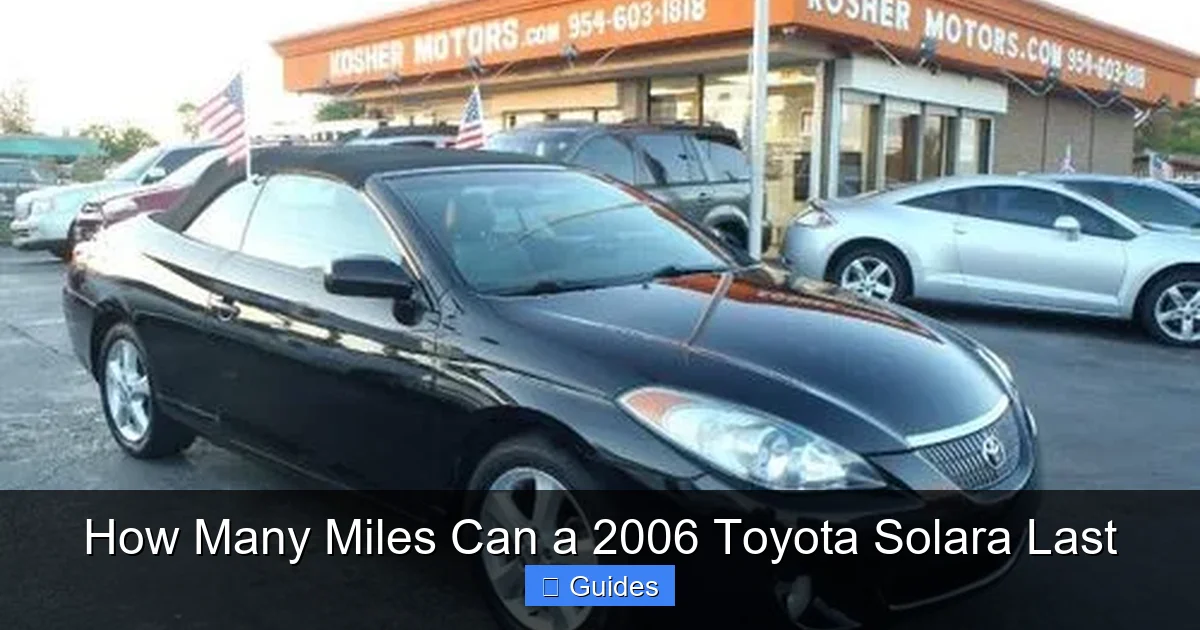
Visual guide about How Many Miles Can a 2006 Toyota Solara Last
Image source: 2040-cars.com
No car is perfect, and the 2006 Toyota Solara has a few known issues that can affect its lifespan if not addressed. The good news? Most of these problems are preventable with proper care.
Oil Consumption (4-Cylinder Models)
As mentioned earlier, the 2.4L 4-cylinder engine is prone to oil consumption. This isn’t necessarily a defect—it’s a design characteristic. Over time, piston rings and valve seals can wear, allowing oil to burn in the combustion chamber.
To manage this, check your oil level every two weeks once the car hits 100,000 miles. Keep a quart of high-mileage synthetic oil in the trunk for top-offs. If consumption exceeds a quart per 1,000 miles, have a mechanic perform a compression test to assess engine health.
Timing Belt Failure
Both the 4-cylinder and V6 engines use timing belts, not chains. These belts must be replaced every 90,000 to 100,000 miles. If the belt breaks, the pistons can collide with the valves, destroying the engine.
Don’t skip this service. Even if the car seems to be running fine, the belt can degrade internally. When replacing the timing belt, also replace the water pump, tensioner, and idler pulleys—this is a good opportunity to address multiple components at once.
Suspension and Steering Wear
As the Solara ages, suspension components like struts, shocks, and control arm bushings wear out. This leads to a rougher ride, poor handling, and uneven tire wear.
Listen for clunking noises over bumps or when turning. If the car feels loose or wanders on the highway, it’s time for an inspection. Replacing worn parts not only improves comfort but also reduces stress on other components.
Electrical and Sensor Issues
Some 2006 Solara owners report electrical gremlins, such as faulty oxygen sensors, malfunctioning dashboard lights, or issues with the convertible top mechanism (on convertibles).
These problems are often due to aging wiring or corroded connectors. Regular inspections and cleaning electrical connections can help. If a sensor fails, replace it promptly—driving with a bad O2 sensor can hurt fuel economy and emissions.
Transmission Slippage
While the transmission is generally reliable, low fluid levels or old fluid can cause slipping or harsh shifts. Always use the correct Toyota ATF WS fluid and change it every 60,000 miles if you do a lot of city driving.
If you notice delayed engagement or slipping, don’t ignore it. Have a professional inspect the transmission before minor issues become major repairs.
Maintenance Tips to Maximize Your Solara’s Lifespan
Want your 2006 Toyota Solara to last as long as possible? Follow these practical maintenance tips.
Stick to the Service Schedule
Toyota provides a detailed maintenance schedule in the owner’s manual. Follow it closely. Key services include:
– Oil and filter change: Every 5,000 miles (or 3,000 if using conventional oil)
– Tire rotation: Every 7,500 miles
– Brake inspection: Every 15,000 miles
– Coolant flush: Every 60,000 miles
– Transmission fluid change: Every 60,000 miles (or 30,000 in severe driving)
– Timing belt replacement: Every 90,000–100,000 miles
Use Quality Fluids and Parts
Don’t skimp on oil, coolant, or brake fluid. Use synthetic oil for better protection, especially in high-mileage engines. Always use OEM or high-quality aftermarket parts for critical components like timing belts and water pumps.
Drive Gently
Avoid rapid acceleration and hard braking. Let the engine warm up in cold weather before driving aggressively. These habits reduce wear on the engine, transmission, and brakes.
Store and Clean Properly
If you live in a snowy area, wash the undercarriage regularly to remove salt. Park in a garage when possible to protect the paint and interior from UV damage. For convertibles, keep the top clean and lubricated.
Keep Records
Maintain a log of all services and repairs. This helps you stay on top of maintenance and increases resale value. A well-documented car is more attractive to buyers, even with high mileage.
Is a High-Mileage 2006 Solara Worth Buying?
If you’re shopping for a used 2006 Toyota Solara with 150,000+ miles, you might be wondering if it’s a smart buy. The answer depends on condition, maintenance history, and your expectations.
What to Look For
When inspecting a high-mileage Solara, check the following:
– **Service records:** Look for regular oil changes, timing belt replacement, and transmission service.
– **Oil consumption:** Ask the owner about oil usage. A quart every 2,000 miles is acceptable; more than that is a red flag.
– **Rust:** Inspect the wheel wells, undercarriage, and door sills for corrosion.
– **Convertible top:** Check for tears, leaks, or motor issues.
– **Test drive:** Listen for unusual noises, feel for transmission slippage, and check steering response.
Negotiating the Price
High-mileage cars should be priced accordingly. Use resources like Kelley Blue Book or Edmunds to determine fair market value. If the car needs work, factor in repair costs. A well-maintained Solara with 200,000 miles might still be a good deal if priced right.
Long-Term Value
Even with high mileage, a Solara can be a reliable daily driver. Parts are affordable and widely available. Plus, Toyota’s reputation for longevity means you’re less likely to face surprise breakdowns.
Conclusion
The 2006 Toyota Solara is a durable, reliable car that can easily last 200,000 to 250,000 miles—and beyond—with proper care. Its strong engines, solid build quality, and Camry-based engineering make it a standout in the used car market. While it has a few known issues, most are manageable with regular maintenance and attention.
Whether you already own a Solara or are considering buying one, the key to longevity is consistency. Follow the maintenance schedule, address problems early, and drive with care. Real-world examples prove that these cars can go the distance, offering years of dependable service.
So, how many miles can a 2006 Toyota Solara last? The answer isn’t set in stone—it’s in your hands. With the right care, your Solara could still be cruising down the highway long after others have retired.
Frequently Asked Questions
How many miles is too many for a 2006 Toyota Solara?
There’s no hard rule, but 200,000 miles is considered high. If the car has been well-maintained, it can still be reliable. Look for service records and check for major repairs.
Is the 2006 Solara 4-cylinder engine reliable?
Yes, but it’s known for oil consumption after 100,000 miles. Regular oil checks and top-offs are essential. With proper care, it can still last 200,000+ miles.
When should I replace the timing belt on a 2006 Solara?
Replace the timing belt every 90,000 to 100,000 miles. Also replace the water pump and tensioner at the same time to avoid future issues.
Can a 2006 Solara last 300,000 miles?
Yes, it’s possible. Several owners have reported hitting 250,000–300,000 miles with regular maintenance and timely repairs.
What’s the most common problem with the 2006 Solara?
Oil consumption in the 4-cylinder engine is the most common issue. Suspension wear and electrical glitches also appear as the car ages.
Is the 2006 Solara a good used car buy?
Yes, especially if it’s well-maintained. It offers Toyota reliability, decent fuel economy, and a comfortable ride—great for daily driving or long trips.

At CarLegit, we believe information should be clear, factual, and genuinely helpful. That’s why every guide, review, and update on our website is created with care, research, and a strong focus on user experience.