
The number of O2 sensors in a Kia Optima varies by model year and engine type, but most models have either two or four sensors. These sensors monitor oxygen levels in the exhaust to help the engine run efficiently and reduce emissions. Understanding their role and location can save you time and money during diagnostics or repairs.
If you own a Kia Optima—or you’re thinking about buying one—you’ve probably wondered about the little devices tucked away in your exhaust system that help keep your car running smoothly. Among the most important are the oxygen (O2) sensors. These small but mighty components play a huge role in your car’s performance, fuel efficiency, and environmental impact. But here’s the question many Kia Optima owners ask: *How many O2 sensors does a Kia Optima actually have?*
The answer isn’t one-size-fits-all. It depends on several factors, including the model year, engine size, and whether your Optima has a 4-cylinder or V6 engine. In general, most Kia Optimas come equipped with either two or four O2 sensors. Older models (especially those from the early 2000s) may have just two, while newer models—particularly those from 2011 onward—typically feature four sensors as part of a more advanced emissions control system.
Understanding how many O2 sensors your Kia Optima has isn’t just a trivia fact. It’s essential knowledge if you’re troubleshooting a check engine light, planning maintenance, or considering a repair. A failing O2 sensor can lead to poor gas mileage, rough idling, increased emissions, and even damage to your catalytic converter over time. So, knowing what you’re dealing with—and where these sensors are located—can save you time, stress, and money down the road.
In this guide, we’ll break down everything you need to know about O2 sensors in the Kia Optima. From how many you have to where they’re located, how they work, and what to do when one goes bad, we’ve got you covered. Whether you’re a DIY enthusiast or just want to be a more informed car owner, this article will give you the clarity and confidence to handle O2 sensor issues like a pro.
In This Article
- 1 Key Takeaways
- 2 📑 Table of Contents
- 3 What Are O2 Sensors and Why Do They Matter?
- 4 How Many O2 Sensors Does a Kia Optima Have?
- 5 Where Are the O2 Sensors Located in a Kia Optima?
- 6 How O2 Sensors Work in the Kia Optima
- 7 Signs of a Failing O2 Sensor in Your Kia Optima
- 8 Replacing O2 Sensors in a Kia Optima
- 9 How to Maintain O2 Sensors and Prevent Failure
- 10 Conclusion
- 11 Frequently Asked Questions
- 11.1 How many O2 sensors does a 2015 Kia Optima have?
- 11.2 Can I drive my Kia Optima with a bad O2 sensor?
- 11.3 How much does it cost to replace an O2 sensor in a Kia Optima?
- 11.4 What happens if I ignore a bad O2 sensor?
- 11.5 How often should O2 sensors be replaced?
- 11.6 Can a bad O2 sensor cause a misfire?
Key Takeaways
- Most Kia Optimas have 2–4 O2 sensors: The exact number depends on the engine (4-cylinder vs. V6) and model year, with newer models typically having four.
- Upstream and downstream sensors serve different roles: Upstream sensors measure oxygen before the catalytic converter, while downstream sensors monitor emissions after treatment.
- O2 sensors affect fuel economy and performance: Faulty sensors can cause poor mileage, rough idling, and increased emissions.
- Sensor location matters for diagnostics: Knowing where each sensor is located helps mechanics quickly identify and replace failed units.
- Replacement costs vary: Labor and part prices depend on accessibility, with some sensors easier to reach than others.
- Regular maintenance extends sensor life: Keeping the engine tuned and using quality fuel helps prevent premature O2 sensor failure.
- Check engine light often signals O2 issues: A flashing or steady CEL may indicate a sensor problem, especially if accompanied by poor performance.
📑 Table of Contents
- What Are O2 Sensors and Why Do They Matter?
- How Many O2 Sensors Does a Kia Optima Have?
- Where Are the O2 Sensors Located in a Kia Optima?
- How O2 Sensors Work in the Kia Optima
- Signs of a Failing O2 Sensor in Your Kia Optima
- Replacing O2 Sensors in a Kia Optima
- How to Maintain O2 Sensors and Prevent Failure
- Conclusion
What Are O2 Sensors and Why Do They Matter?
Oxygen sensors, commonly called O2 sensors, are small electronic devices mounted in your vehicle’s exhaust system. Their job is to measure the amount of oxygen in the exhaust gases leaving the engine. This data is sent in real time to your car’s engine control unit (ECU), which uses it to adjust the air-fuel mixture for optimal combustion.
Think of the O2 sensor as your engine’s “breathalyzer.” It tells the computer whether the engine is burning fuel efficiently or if it’s running too rich (too much fuel) or too lean (too much air). A balanced air-fuel ratio is critical for performance, fuel economy, and minimizing harmful emissions. Without accurate O2 sensor readings, your engine might burn more gas, produce excess pollutants, or even trigger the dreaded check engine light.
In modern vehicles like the Kia Optima, O2 sensors are a key part of the onboard diagnostics (OBD-II) system. Introduced in the mid-1990s, OBD-II requires all cars to monitor emissions-related components—including O2 sensors—and report any malfunctions. That’s why a faulty O2 sensor often triggers a diagnostic trouble code (DTC), such as P0135 or P0141, which you’ll see when scanning your car’s computer.
But not all O2 sensors are created equal. There are two main types: upstream (pre-catalytic converter) and downstream (post-catalytic converter). Upstream sensors monitor the raw exhaust from the engine, helping the ECU fine-tune the fuel mixture. Downstream sensors check the effectiveness of the catalytic converter by comparing oxygen levels before and after the exhaust gases pass through it.
In the Kia Optima, you’ll typically find both types, especially in models with four sensors. This dual setup allows the car to meet strict emissions standards and ensures the catalytic converter is working properly. If a downstream sensor detects too much oxygen after the converter, it could mean the converter isn’t doing its job—leading to higher emissions and potential failure during an emissions test.
How Many O2 Sensors Does a Kia Optima Have?

Visual guide about How Many O2 Sensors Does a Kia Optima Have
Image source: trucksauthority.com
Now, let’s get to the heart of the matter: how many O2 sensors does a Kia Optima actually have? The answer depends on your specific model year and engine configuration.
Most Kia Optimas from the early 2000s (like the 2002–2006 models) with a 4-cylinder engine typically have **two O2 sensors**: one upstream and one downstream. These models were designed to meet basic emissions standards of the time, so a simpler setup was sufficient.
However, as emissions regulations became stricter and engine technology advanced, Kia began equipping newer Optima models with more sensors. Starting around 2007 and especially from 2011 onward, most Kia Optimas—especially those with the 2.4L 4-cylinder or 3.5L V6 engines—come with **four O2 sensors**.
Here’s a quick breakdown:
– **2002–2006 Kia Optima (4-cylinder):** 2 O2 sensors (1 upstream, 1 downstream)
– **2007–2010 Kia Optima (4-cylinder):** 2 or 4 sensors (varies by trim and region)
– **2011–2015 Kia Optima (2.4L or 3.5L):** 4 O2 sensors (2 upstream, 2 downstream)
– **2016–2020 Kia Optima (2.4L, 2.0T, or 3.3L):** 4 O2 sensors
The shift to four sensors reflects the need for better emissions control and more precise engine management. With two upstream sensors (one for each bank of cylinders in V6 models) and two downstream sensors (one after each catalytic converter), the ECU can monitor each side of the engine independently. This improves fuel efficiency, reduces emissions, and helps detect issues faster.
It’s also worth noting that some hybrid versions of the Kia Optima (like the 2017–2020 Optima Hybrid) may have slightly different configurations, but they still generally use four O2 sensors to maintain compliance with hybrid emissions standards.
So, if you’re unsure how many O2 sensors your Optima has, check your owner’s manual or look up your VIN on a trusted automotive database. You can also inspect the exhaust system yourself—though we’ll cover sensor locations in detail later.
Where Are the O2 Sensors Located in a Kia Optima?
Visual guide about How Many O2 Sensors Does a Kia Optima Have
Image source: lh6.googleusercontent.com
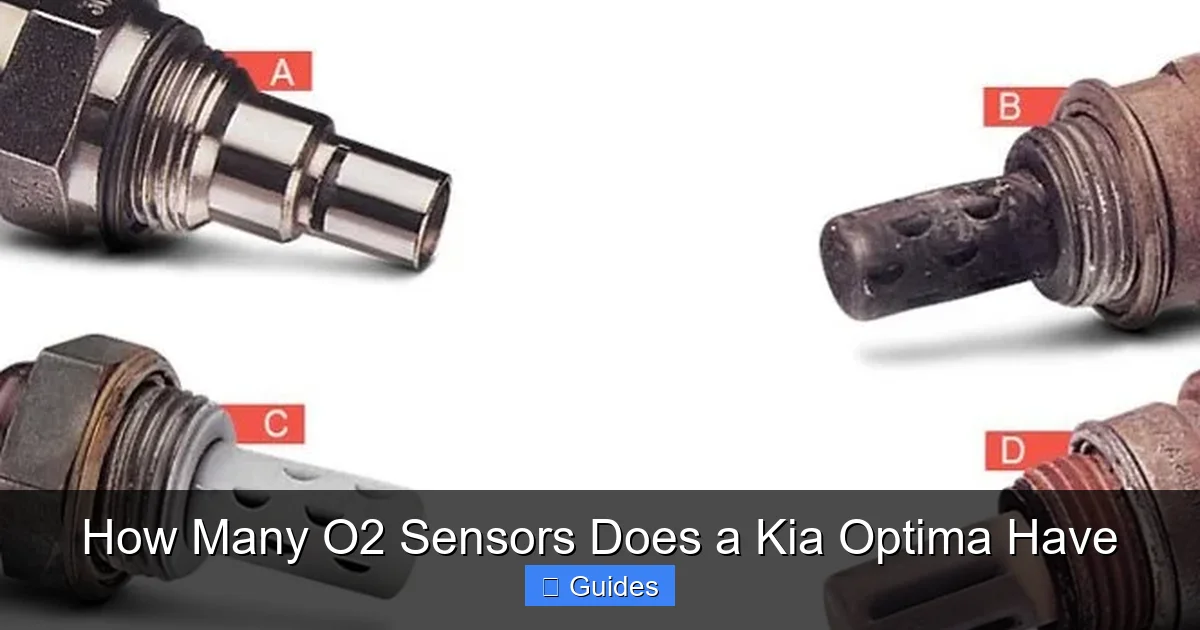
Knowing how many O2 sensors your Kia Optima has is one thing—but where they’re located is just as important, especially if you’re diagnosing a problem or planning a replacement.
In a typical 4-sensor setup (common in 2011–2020 models), here’s where you’ll find them:
Upstream O2 Sensors (Bank 1 and Bank 2)
These sensors are mounted on the exhaust manifolds or exhaust pipes, just before the catalytic converter. In a 4-cylinder engine, there’s usually one upstream sensor on the exhaust manifold. In a V6 engine, there are two—one for each cylinder bank (Bank 1 and Bank 2).
For example, in a 2015 Kia Optima with a 3.5L V6, you’ll find:
– One upstream sensor on the driver’s side exhaust manifold (Bank 1)
– One upstream sensor on the passenger side exhaust manifold (Bank 2)
These sensors are often harder to reach because they’re tucked up near the engine block. You may need to remove heat shields or use extensions and swivel sockets to access them.
Downstream O2 Sensors (After the Catalytic Converter)
These sensors are located on the exhaust pipes, after the catalytic converter(s). In a 4-cylinder Optima, there’s usually one downstream sensor. In a V6 model, there are two—one after each catalytic converter.
For instance, in a 2018 Kia Optima with a 2.4L engine:
– One downstream sensor is mounted on the exhaust pipe, just behind the main catalytic converter
In a V6 model, you’ll have two downstream sensors—one on each side of the exhaust system, after the respective catalytic converters.
These sensors are generally easier to access than the upstream ones, as they’re lower down and often visible from underneath the car. However, rust, corrosion, or tight spaces can still make removal challenging.
Tips for Locating O2 Sensors
– Use a flashlight and mirror to inspect the exhaust system from underneath.
– Look for small, threaded sensors with electrical connectors and wires.
– Refer to your service manual or online repair guides for your specific model year.
– If you’re unsure, consult a mechanic—they can quickly identify sensor locations using a scan tool.
Knowing where your O2 sensors are helps you understand why some replacements cost more than others. Upstream sensors often require more labor due to their hard-to-reach positions, while downstream sensors are usually quicker and cheaper to replace.
How O2 Sensors Work in the Kia Optima
Visual guide about How Many O2 Sensors Does a Kia Optima Have
Image source: lh3.googleusercontent.com
Now that you know how many O2 sensors your Kia Optima has and where they’re located, let’s dive into how they actually work.
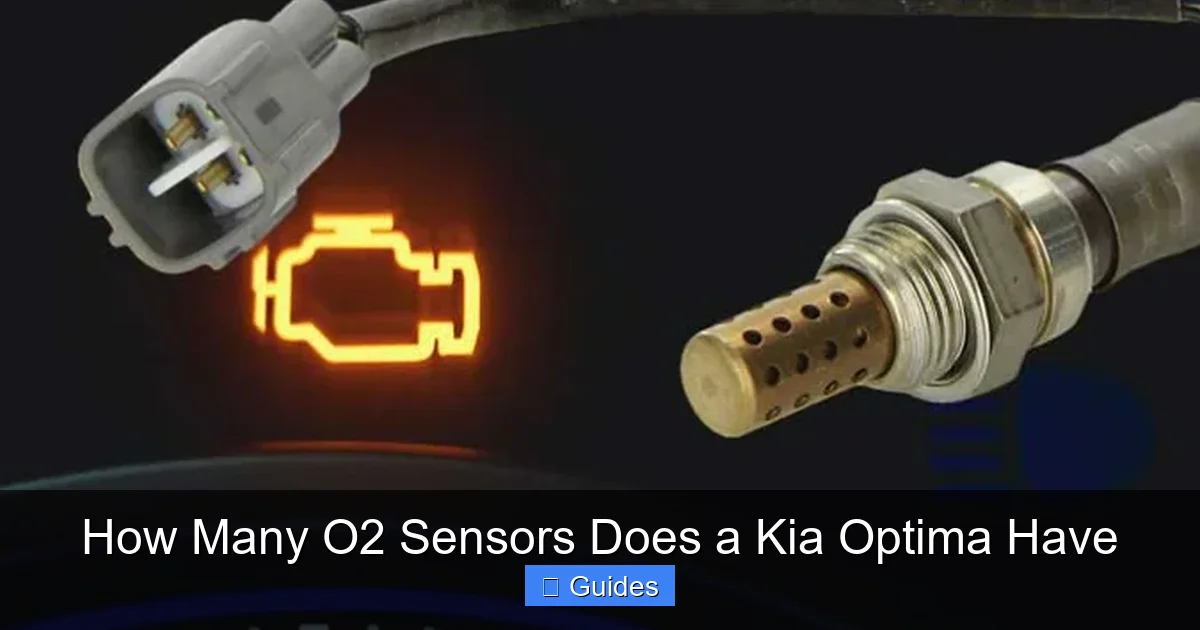
O2 sensors operate by generating a small voltage signal based on the oxygen content in the exhaust. They contain a zirconia ceramic element coated with platinum, which reacts to oxygen differences between the exhaust gas and the outside air. When the air-fuel mixture is rich (low oxygen), the sensor produces a high voltage (around 0.8–0.9 volts). When the mixture is lean (high oxygen), the voltage drops (around 0.1–0.3 volts).
This voltage signal is sent to the engine control unit (ECU), which uses it to adjust the fuel injectors in real time. The goal is to maintain a stoichiometric air-fuel ratio of about 14.7:1—ideal for complete combustion and minimal emissions.
In a 4-sensor setup, the upstream sensors do most of the heavy lifting. They provide feedback for fuel trim adjustments, helping the engine run efficiently under all conditions—idle, acceleration, cruising, etc. The downstream sensors, on the other hand, act as a quality control check. They monitor the catalytic converter’s performance by comparing oxygen levels before and after the exhaust gases pass through it.
If the downstream sensor detects oxygen levels similar to the upstream sensor, it means the catalytic converter isn’t effectively reducing emissions. This triggers a trouble code (like P0420) and may illuminate the check engine light.
Modern Kia Optimas also use heated O2 sensors, which have internal heating elements to reach operating temperature faster. This improves cold-start performance and reduces emissions during startup. Without the heater, the sensor might take too long to activate, leading to poor fuel control and increased pollution.
Signs of a Failing O2 Sensor in Your Kia Optima
O2 sensors don’t last forever. Over time, they can become contaminated by oil, coolant, or fuel additives, or simply wear out due to heat and exposure. When they fail, your Kia Optima will let you know—often in frustrating ways.
Here are the most common signs of a failing O2 sensor:
1. Check Engine Light Is On
This is the most obvious sign. A faulty O2 sensor will trigger a diagnostic trouble code (DTC) such as P0130 (O2 Sensor Circuit Malfunction) or P0155 (Heater Circuit Malfunction). Use an OBD2 scanner to read the code and identify which sensor is affected.
2. Poor Fuel Economy
A bad O2 sensor can cause the engine to run rich or lean, leading to increased fuel consumption. If you notice your gas mileage dropping suddenly, an O2 sensor could be the culprit.
3. Rough Idling or Engine Misfires
Incorrect air-fuel ratios can cause the engine to idle roughly, hesitate, or even misfire. You might feel vibrations or hear sputtering sounds, especially at low speeds.
4. Failed Emissions Test
Since O2 sensors monitor emissions, a failing sensor can cause your car to produce excess pollutants. If your Optima fails an emissions test, check the O2 sensors first.
5. Rotten Egg Smell
A sulfur-like odor from the exhaust can indicate a clogged catalytic converter—often caused by a faulty O2 sensor that allowed unburned fuel to enter the exhaust system.
6. Black Smoke from Exhaust
Black smoke means the engine is running rich (too much fuel). This can happen if the O2 sensor isn’t providing accurate feedback to the ECU.
If you notice any of these symptoms, don’t ignore them. While a single bad O2 sensor might not leave you stranded, it can lead to more serious issues—like catalytic converter damage—if left unchecked.
Replacing O2 Sensors in a Kia Optima
Replacing an O2 sensor in your Kia Optima is a job many DIYers can handle, but it depends on the sensor’s location and your comfort level with automotive repairs.
Tools You’ll Need
– O2 sensor socket (22mm)
– Ratchet and extensions
– Penetrating oil (like PB Blaster)
– Safety glasses and gloves
– Jack and jack stands (or a lift)
– OBD2 scanner (to clear codes after replacement)
Step-by-Step Replacement Guide
1. **Locate the faulty sensor** using your scan tool or service manual.
2. **Disconnect the battery** to prevent electrical shorts.
3. **Raise the vehicle** safely and secure it with jack stands.
4. **Spray penetrating oil** on the sensor threads and let it soak for 10–15 minutes.
5. **Unplug the electrical connector** from the sensor.
6. **Use the O2 sensor socket** to remove the old sensor. Turn counterclockwise.
7. **Install the new sensor** by hand first, then tighten with the socket (usually 30–40 ft-lbs).
8. **Reconnect the electrical connector** and lower the vehicle.
9. **Reconnect the battery** and start the engine.
10. **Clear the trouble codes** with your OBD2 scanner.
Tips for Success
– Always use a high-quality O2 sensor (OEM or reputable aftermarket brand like Bosch or Denso).
– Never overtighten—this can damage the threads or sensor.
– If the sensor is stuck, apply heat carefully with a propane torch (avoid open flames near fuel lines).
– Replace sensors in pairs if they’re close in age—this prevents future failures.
Labor costs at a shop can range from $100 to $300 per sensor, depending on accessibility. DIY replacement can save you $50–$150 per sensor, especially for downstream units.
How to Maintain O2 Sensors and Prevent Failure
While O2 sensors will eventually wear out, you can extend their life with proper maintenance:
– **Use high-quality fuel** to reduce carbon buildup and contamination.
– **Fix engine problems promptly**—oil leaks, coolant leaks, or misfires can damage sensors.
– **Replace spark plugs and air filters** on schedule to maintain proper combustion.
– **Avoid short trips**—frequent cold starts prevent sensors from reaching optimal temperature.
– **Inspect sensors during routine maintenance**—look for damage, corrosion, or loose wires.
Most O2 sensors last 60,000 to 100,000 miles, but driving conditions and maintenance habits play a big role.
Conclusion
So, how many O2 sensors does a Kia Optima have? The answer is usually two or four, depending on your model year and engine. Understanding this—and knowing where they’re located—helps you maintain your car, diagnose issues, and avoid costly repairs.
O2 sensors are small but essential components that keep your engine running cleanly and efficiently. Whether you’re dealing with a check engine light or just staying ahead of maintenance, knowing how these sensors work gives you peace of mind on the road.
With the right knowledge and tools, you can handle O2 sensor issues confidently—and keep your Kia Optima performing at its best for years to come.
Frequently Asked Questions
How many O2 sensors does a 2015 Kia Optima have?
A 2015 Kia Optima typically has four O2 sensors—two upstream (one for each cylinder bank) and two downstream (one after each catalytic converter). This applies to both the 2.4L 4-cylinder and 3.5L V6 engines.
Can I drive my Kia Optima with a bad O2 sensor?
Yes, but it’s not recommended. A faulty O2 sensor can reduce fuel economy, increase emissions, and eventually damage the catalytic converter. It’s best to replace it as soon as possible.
How much does it cost to replace an O2 sensor in a Kia Optima?
Replacement costs vary: parts range from $50 to $150 per sensor, and labor can add $100–$300 depending on accessibility. DIY replacement can save significant money.
What happens if I ignore a bad O2 sensor?
Ignoring a bad O2 sensor can lead to poor fuel economy, engine misfires, increased emissions, and catalytic converter failure—resulting in much higher repair costs.
How often should O2 sensors be replaced?
Most O2 sensors last 60,000 to 100,000 miles. Replacement isn’t typically part of routine maintenance, but sensors should be inspected if performance issues arise.
Can a bad O2 sensor cause a misfire?
Indirectly, yes. A faulty O2 sensor can cause the engine to run too rich or too lean, leading to incomplete combustion and misfires—especially under load or acceleration.

At CarLegit, we believe information should be clear, factual, and genuinely helpful. That’s why every guide, review, and update on our website is created with care, research, and a strong focus on user experience.