
Knowing how many quarts of oil your Toyota Camry requires is essential for proper engine care and longevity. The amount varies by model year and engine size, typically ranging from 4.2 to 6 quarts. Always check your owner’s manual and use the correct oil type for best performance.
In This Article
- 1 Key Takeaways
- 2 📑 Table of Contents
- 3 How Many Quarts of Oil Does a Toyota Camry Need?
- 4 Understanding Oil Capacity by Engine Type
- 5 How to Find the Exact Oil Capacity for Your Camry
- 6 The Importance of Changing the Oil Filter
- 7 Choosing the Right Oil for Your Toyota Camry
- 8 How to Check and Add Oil Safely
- 9 Oil Change Intervals for the Toyota Camry
- 10 Common Mistakes to Avoid
- 11 Conclusion
- 12 Frequently Asked Questions
- 12.1 How many quarts of oil does a 2020 Toyota Camry need?
- 12.2 Can I use 5W-30 oil in my Toyota Camry?
- 12.3 What happens if I put too much oil in my Camry?
- 12.4 Do I need to change the oil filter every time?
- 12.5 How often should I check my Camry’s oil level?
- 12.6 Can I mix synthetic and conventional oil in my Camry?
Key Takeaways
- Oil capacity varies by engine: Most Toyota Camry models use between 4.2 and 6 quarts, depending on whether they have a 4-cylinder or V6 engine.
- Check the owner’s manual: Always refer to your specific model year’s manual for the most accurate oil capacity and type recommendations.
- Include the oil filter change: When replacing the oil filter, add approximately 0.5 quarts extra to account for filter fill.
- Use the right oil grade: Toyota recommends 0W-20 synthetic oil for most modern Camry models, but older models may require 5W-30.
- Overfilling can damage the engine: Adding too much oil can cause foaming, reduced lubrication, and potential engine damage.
- Regular oil changes matter: Stick to the recommended maintenance schedule—typically every 5,000 to 10,000 miles depending on driving conditions.
- Use a dipstick to verify level: Always check the oil level with the dipstick after adding oil to ensure it’s within the safe range.
📑 Table of Contents
- How Many Quarts of Oil Does a Toyota Camry Need?
- Understanding Oil Capacity by Engine Type
- How to Find the Exact Oil Capacity for Your Camry
- The Importance of Changing the Oil Filter
- Choosing the Right Oil for Your Toyota Camry
- How to Check and Add Oil Safely
- Oil Change Intervals for the Toyota Camry
- Common Mistakes to Avoid
- Conclusion
How Many Quarts of Oil Does a Toyota Camry Need?
If you own a Toyota Camry—or are thinking about getting one—you’ve probably asked yourself: “How many quarts of oil does my Camry actually need?” It’s a simple question, but the answer isn’t always straightforward. The amount of oil your Camry requires depends on several factors, including the model year, engine type, and whether you’re changing the oil filter at the same time.
The Toyota Camry has been one of the most popular sedans in America for decades, known for its reliability, fuel efficiency, and smooth ride. But like any vehicle, it needs regular maintenance to keep running at its best. One of the most critical aspects of that maintenance is the oil change. Engine oil lubricates moving parts, reduces friction, prevents overheating, and helps keep the engine clean. Using the right amount of the right kind of oil ensures your Camry’s engine stays healthy for years to come.
In this guide, we’ll break down exactly how many quarts of oil your Toyota Camry needs, based on its engine and model year. We’ll also cover tips for checking oil levels, choosing the right oil, and avoiding common mistakes. Whether you’re a DIY enthusiast or just want to understand what your mechanic is doing, this guide will give you the confidence to care for your Camry the right way.
Understanding Oil Capacity by Engine Type
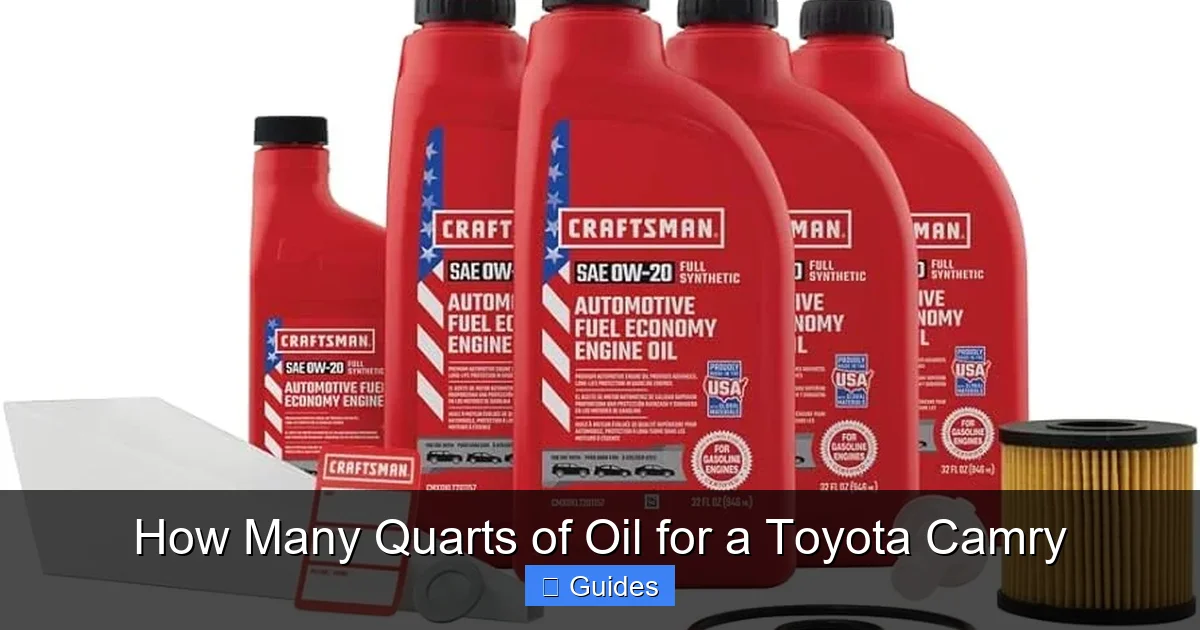
Visual guide about How Many Quarts of Oil for a Toyota Camry
Image source: thecarhow.com
The first thing to know is that not all Toyota Camry engines are created equal. Over the years, Toyota has equipped the Camry with different engine options, and each has its own oil capacity. The two most common engines in the Camry are the 4-cylinder (inline-4) and the V6.
Most modern Camry models—especially those from 2012 onward—come with a 2.5-liter 4-cylinder engine. This engine typically holds about 4.2 to 4.4 quarts of oil when the filter is changed. That includes the oil in the oil pan plus the amount needed to fill the new oil filter. If you’re doing a simple top-off (not a full change), you’ll usually only need a quart or less.
On the other hand, Camry models with the 3.5-liter V6 engine—often found in higher trims like the XLE V6 or SE V6—require more oil. These engines generally need around 5.5 to 6 quarts when the filter is replaced. That’s a significant difference, so it’s important not to assume all Camrys take the same amount.
Let’s look at a few real-world examples. A 2020 Toyota Camry LE with the 2.5L 4-cylinder engine takes 4.4 quarts of oil with a filter change. Meanwhile, a 2018 Camry XSE V6 with the 3.5L engine needs 6 quarts. If you’re unsure which engine your Camry has, you can usually find it on the engine cover or by checking your owner’s manual.
Why Engine Size Matters
Engine size directly affects oil capacity because larger engines have more internal components that need lubrication. The V6 has six cylinders compared to the four in the inline-4, meaning more pistons, valves, and moving parts. More parts = more oil needed to keep everything running smoothly.
Additionally, V6 engines often operate under higher stress, especially in performance-oriented driving. This means they generate more heat and require a larger volume of oil to maintain proper lubrication and cooling. That’s why the oil capacity is higher—it’s not just about size, but also about function.
Older vs. Newer Models
It’s also worth noting that older Camry models may have slightly different oil capacities. For example, a 2007 Camry with the 2.4L 4-cylinder engine holds about 4.2 quarts, while a 2005 Camry with the 3.0L V6 takes around 5.5 quarts. These numbers are close to modern models, but small variations exist due to design changes over time.
Always double-check your specific model year. Toyota occasionally updates engine designs, and even minor tweaks can affect oil capacity. Relying on general estimates can lead to overfilling or underfilling—both of which can harm your engine.
How to Find the Exact Oil Capacity for Your Camry

Visual guide about How Many Quarts of Oil for a Toyota Camry
Image source: thecarhow.com
Now that you know oil capacity varies, how do you find the exact number for your vehicle? The best and most reliable source is your owner’s manual. This small booklet that came with your Camry contains all the manufacturer-recommended specifications, including oil type, capacity, and change intervals.
If you don’t have the physical manual, don’t worry. Toyota provides digital versions online. Just visit the official Toyota website, enter your vehicle’s year, make, and model, and download the PDF. Look for the “Maintenance” or “Engine Oil” section. It will list the exact oil capacity in quarts, often broken down by whether the filter is being replaced.
Another option is to check the oil filler cap. On many Camry models, the cap has a label that lists the recommended oil type (like 0W-20) and sometimes the capacity. While it might not give the full number, it’s a quick way to confirm you’re using the right oil.
You can also consult your local Toyota dealership or a trusted mechanic. They have access to factory service databases and can quickly tell you the correct oil capacity for your specific VIN (Vehicle Identification Number). This is especially helpful if your Camry has been modified or if you’re unsure about the engine type.
Using Online Tools and Apps
There are also several online tools and mobile apps that can help. Websites like AutoZone, Advance Auto Parts, and even YouTube have oil capacity lookups based on your car’s year and engine. Just enter your details, and they’ll show you how many quarts you need, what oil to use, and even recommend oil filters.
Some apps, like the Toyota Owners app, let you input your vehicle info and receive personalized maintenance reminders, including oil change schedules and fluid specifications. These tools are convenient, but always cross-reference with your owner’s manual to be safe.
What If You Can’t Find the Manual?
If you’ve lost your manual and can’t access the digital version, you can still estimate the oil capacity. As a general rule:
– 4-cylinder Camrys: 4.2 to 4.4 quarts (with filter)
– V6 Camrys: 5.5 to 6 quarts (with filter)
But remember, this is just an estimate. When in doubt, start with the lower end of the range and add oil gradually, checking the dipstick frequently. It’s always better to add a little at a time than to overfill.
The Importance of Changing the Oil Filter

Visual guide about How Many Quarts of Oil for a Toyota Camry
Image source: thecarhow.com
One of the most common mistakes people make during an oil change is forgetting about the oil filter. When you replace the oil, you should almost always replace the filter too—unless you’re just topping off. The filter traps dirt, metal particles, and sludge that can damage your engine over time.
But here’s the key point: when you install a new oil filter, it holds oil too. Most spin-on oil filters for the Camry hold about 0.5 quarts of oil. That means if your engine takes 4.4 quarts without the filter, you’ll need to add about 4.9 quarts total when doing a full change with a new filter.
For example, if you pour in 4.4 quarts and then install a new filter, the engine won’t have enough oil. The filter will absorb some of that oil, lowering the total level. That’s why the recommended capacity includes the filter fill.
How to Properly Fill the Filter
Some mechanics recommend pre-filling the new oil filter before installing it. This means pouring a small amount of oil (about half a cup) into the filter before screwing it on. This helps reduce the time it takes for oil pressure to build when you start the engine.
While this step isn’t always necessary, it’s a good practice—especially if you’re doing the oil change yourself. It prevents dry starts, which can cause wear on engine components.
After installing the filter, add the recommended amount of oil. Then start the engine and let it run for 10–15 seconds. Turn it off, wait a minute, and check the dipstick. You may need to add a little more oil to reach the full mark.
Reusing the Old Filter (Not Recommended)
Some people try to save money by reusing the old oil filter. This is not a good idea. Oil filters are designed for single use. Over time, the filter media degrades and can’t trap contaminants effectively. Reusing it increases the risk of engine damage.
Plus, the old filter may already be full of sludge and debris. Putting it back on defeats the purpose of changing the oil. Always use a new, high-quality filter that’s compatible with your Camry.
Choosing the Right Oil for Your Toyota Camry
Knowing how many quarts of oil your Camry needs is only half the battle. The other half is using the right type of oil. Toyota has specific recommendations based on engine design, climate, and driving conditions.
For most modern Camry models (2012 and newer), Toyota recommends using 0W-20 full synthetic oil. This oil is thin enough to flow easily in cold weather (the “0W” part) but thick enough to protect the engine at high temperatures (the “20” part). Synthetic oil also lasts longer and provides better protection than conventional oil.
Older Camry models, especially those from the 2000s, may require 5W-30 oil. This is a slightly thicker oil that works well in older engines with looser tolerances. Always check your owner’s manual to confirm.
Why Synthetic Oil?
Synthetic oil is engineered for superior performance. It resists breakdown better than conventional oil, meaning it lasts longer and maintains its protective properties. It also flows more smoothly, which improves fuel efficiency and reduces engine wear.
Toyota even designs some of its engines with synthetic oil in mind. Using conventional oil in a modern Camry can lead to sludge buildup, reduced performance, and even engine damage over time.
High-Mileage Oil for Older Camrys
If your Camry has over 75,000 miles, you might consider using high-mileage oil. These oils contain additives that help condition seals and reduce oil consumption. They’re especially useful for older engines that may start to burn or leak oil.
High-mileage 0W-20 or 5W-30 synthetic blends are widely available and can extend the life of your engine. Just make sure the oil meets Toyota’s specifications (look for API SN or SP certification).
Can You Mix Oil Types?
In a pinch, you can mix synthetic and conventional oil, but it’s not ideal. The performance benefits of synthetic oil are reduced when mixed. If you must top off and only have conventional oil, it’s okay—just plan to do a full change with the correct oil as soon as possible.
Never mix different viscosities (like 0W-20 and 10W-30) unless directed by a professional. This can lead to poor lubrication and engine damage.
How to Check and Add Oil Safely
Even if you know how many quarts your Camry needs, it’s important to verify the oil level after adding it. Overfilling can be just as harmful as underfilling.
To check the oil:
1. Park your Camry on level ground and turn off the engine. Wait 5–10 minutes to let the oil settle.
2. Open the hood and locate the dipstick (usually yellow or orange with a loop handle).
3. Pull out the dipstick, wipe it clean with a rag, reinsert it fully, and pull it out again.
4. Look at the oil level. It should be between the “L” (Low) and “F” (Full) marks. Ideally, it should be closer to “F.”
If the level is low, add oil gradually—about half a quart at a time. Wait a few minutes, then recheck. Never add more than the recommended capacity.
Signs of Overfilling
Overfilling can cause the crankshaft to whip the oil into a froth, reducing its lubricating ability. This can lead to increased wear, overheating, and even engine failure.
Signs of overfilling include:
– Oil smell in the cabin
– Blue or white smoke from the exhaust
– Poor engine performance
– Oil leaks
If you suspect overfilling, consult a mechanic immediately. They may need to drain the excess oil.
When to Check Oil Regularly
Even with regular oil changes, it’s wise to check your oil level once a month. This helps you catch leaks, burning oil, or other issues early. It’s especially important if you drive in harsh conditions—like extreme heat, stop-and-go traffic, or towing.
Oil Change Intervals for the Toyota Camry
Toyota recommends changing the oil in your Camry every 10,000 miles or 12 months, whichever comes first—under normal driving conditions. However, if you frequently drive in severe conditions (short trips, extreme temperatures, dusty roads), you should change it every 5,000 miles.
Modern synthetic oil and advanced engine designs allow for longer intervals, but don’t skip them. Regular oil changes are one of the best ways to protect your engine and maintain resale value.
Using the Maintenance Reminder System
Many Camry models come with a maintenance reminder light on the dashboard. This system monitors driving conditions and alerts you when it’s time for an oil change. Don’t ignore it—it’s there to help you.
You can also reset the reminder after an oil change using the trip meter or steering wheel controls (instructions are in the owner’s manual).
DIY vs. Professional Oil Changes
Changing your own oil can save money and give you peace of mind. But if you’re not comfortable doing it, a professional service is a great option. Many dealerships and quick-lube shops offer Toyota-specific oil changes with the correct oil and filter.
Just make sure they use the right oil type and don’t overfill. Ask to see the oil level on the dipstick after the change.
Common Mistakes to Avoid
Even experienced drivers make mistakes when it comes to oil changes. Here are a few to watch out for:
– Using the wrong oil type or viscosity
– Not replacing the oil filter
– Overfilling the engine
– Ignoring the dipstick
– Skipping oil changes
– Mixing different oil brands or types
Avoiding these mistakes will keep your Camry running smoothly for years.
Conclusion
Knowing how many quarts of oil your Toyota Camry needs is a small but important part of vehicle ownership. Most 4-cylinder models take 4.2 to 4.4 quarts, while V6 models need 5.5 to 6 quarts—always including the oil filter. Use the right oil (usually 0W-20 synthetic), check the dipstick regularly, and follow the recommended change intervals.
By taking care of your engine oil, you’re investing in your Camry’s longevity, performance, and reliability. Whether you do it yourself or go to a shop, make sure it’s done right. Your Camry—and your wallet—will thank you.
Frequently Asked Questions
How many quarts of oil does a 2020 Toyota Camry need?
A 2020 Toyota Camry with the 2.5L 4-cylinder engine requires 4.4 quarts of oil when the filter is replaced. If you have the 3.5L V6 engine, it needs 6 quarts. Always confirm with your owner’s manual.
Can I use 5W-30 oil in my Toyota Camry?
Most modern Camrys (2012 and newer) require 0W-20 synthetic oil. Older models may use 5W-30, but check your manual first. Using the wrong viscosity can affect performance and fuel economy.
What happens if I put too much oil in my Camry?
Overfilling can cause oil foaming, reduced lubrication, and engine damage. Signs include smoke from the exhaust, poor performance, and oil leaks. Have a mechanic drain the excess if needed.
Do I need to change the oil filter every time?
Yes, you should replace the oil filter with every oil change. The filter traps contaminants and degrades over time. Reusing it reduces engine protection and can lead to sludge buildup.
How often should I check my Camry’s oil level?
Check the oil level once a month or before long trips. Use the dipstick when the engine is cool and the car is on level ground. This helps catch leaks or burning oil early.
Can I mix synthetic and conventional oil in my Camry?
You can mix them in an emergency, but it’s not recommended. Synthetic oil offers better protection, and mixing reduces its benefits. Use the correct oil type for your next full change.

At CarLegit, we believe information should be clear, factual, and genuinely helpful. That’s why every guide, review, and update on our website is created with care, research, and a strong focus on user experience.