
Knowing how many quarts of oil for Nissan Rogue is essential for engine health and performance. Most models require between 4.8 and 5.5 quarts, depending on the engine and year. Using the right amount ensures proper lubrication, prevents damage, and extends your vehicle’s lifespan.
In This Article
- 1 Key Takeaways
- 2 📑 Table of Contents
- 3 How Many Quarts of Oil for Nissan Rogue? A Complete Guide
- 4 Why Oil Capacity Matters for Your Nissan Rogue
- 5 Nissan Rogue Oil Capacity by Model Year and Engine
- 6 Recommended Oil Types for the Nissan Rogue
- 7 How Often Should You Change the Oil in a Nissan Rogue?
- 8 Step-by-Step Guide to Checking and Changing Oil
- 9 Common Mistakes to Avoid During an Oil Change
- 10 Conclusion: Keep Your Nissan Rogue Running Smoothly
- 11 Frequently Asked Questions
- 11.1 How many quarts of oil does a 2020 Nissan Rogue take?
- 11.2 Can I use 5W-30 instead of 0W-20 in my Nissan Rogue?
- 11.3 What happens if I put too much oil in my Nissan Rogue?
- 11.4 How often should I check my oil level?
- 11.5 Can I mix synthetic and conventional oil in my Rogue?
- 11.6 Where can I find the oil capacity for my specific Nissan Rogue?
Key Takeaways
- Understanding How Many Quarts Of Oil For Nissan Rogue: Provides essential knowledge
📑 Table of Contents
- How Many Quarts of Oil for Nissan Rogue? A Complete Guide
- Why Oil Capacity Matters for Your Nissan Rogue
- Nissan Rogue Oil Capacity by Model Year and Engine
- Recommended Oil Types for the Nissan Rogue
- How Often Should You Change the Oil in a Nissan Rogue?
- Step-by-Step Guide to Checking and Changing Oil
- Common Mistakes to Avoid During an Oil Change
- Conclusion: Keep Your Nissan Rogue Running Smoothly
How Many Quarts of Oil for Nissan Rogue? A Complete Guide
Keeping your Nissan Rogue in top shape starts with one simple but crucial task: changing the engine oil. But before you grab a jug and start pouring, you need to know the right amount. So, how many quarts of oil for Nissan Rogue does your SUV actually need?
The answer isn’t one-size-fits-all. It depends on your vehicle’s model year, engine type, and even whether you’re including the oil filter in your calculation. Most Nissan Rogue models from 2014 to 2024 require between 4.8 and 5.5 quarts of oil when you include the oil filter. That might sound like a small range, but using too little or too much can lead to serious engine problems down the road.
In this guide, we’ll walk you through everything you need to know about oil capacity, oil types, change intervals, and best practices for maintaining your Nissan Rogue’s engine. Whether you’re a DIY enthusiast or just want to understand what your mechanic is doing, this article will give you the confidence to keep your Rogue running smoothly for years to come.
Why Oil Capacity Matters for Your Nissan Rogue

Visual guide about How Many Quarts of Oil for Nissan Rogue
Image source: vehiclefreak.com
Engine oil is the lifeblood of your vehicle. It lubricates moving parts, reduces friction, cools the engine, and helps prevent sludge and corrosion. But if you don’t use the right amount, even the best oil won’t do its job properly.
Too little oil means parts aren’t fully lubricated, leading to increased wear, overheating, and potentially catastrophic engine failure. On the other hand, overfilling your engine with too much oil can be just as dangerous. Excess oil creates foam when the crankshaft spins, which reduces lubrication efficiency and increases pressure inside the engine. This can damage seals, gaskets, and even cause oil to leak into the combustion chamber—leading to smoke, poor performance, and expensive repairs.
That’s why knowing exactly how many quarts of oil for Nissan Rogue your specific model needs is so important. It’s not just about following a number—it’s about protecting your investment and ensuring your SUV delivers reliable performance mile after mile.
The Role of Oil in Engine Performance
Think of engine oil like the oil in a bicycle chain. Without it, the chain would grind, squeak, and wear out quickly. The same principle applies to your car’s engine. Inside, hundreds of metal parts move at high speeds, generating heat and friction. Oil creates a thin protective layer between these parts, allowing them to glide smoothly.
In the Nissan Rogue, the engine relies on a precise oil level to maintain this balance. The oil pump circulates oil through narrow passages, and if the level is too low, the pump might suck in air instead of oil—leading to dry starts and internal damage. Conversely, too much oil can cause the crankshaft to whip the oil into a froth, reducing its ability to lubricate effectively.
Consequences of Incorrect Oil Levels
Let’s say you’re changing the oil and accidentally pour in 6 quarts instead of 5.2. At first, your car might seem fine. But over time, the excess oil can cause:
– Increased engine pressure
– Oil leaks from seals and gaskets
– Reduced fuel efficiency
– Catalytic converter damage from burning excess oil
– Poor acceleration and rough idling
Similarly, if you only add 4 quarts when your engine needs 5, you risk:
– Overheating due to poor heat dissipation
– Premature wear on pistons, bearings, and camshafts
– Increased risk of engine seizure in extreme cases
These issues don’t happen overnight, but they can sneak up on you. That’s why precision matters when it comes to oil changes.
Nissan Rogue Oil Capacity by Model Year and Engine
Visual guide about How Many Quarts of Oil for Nissan Rogue
Image source: vehiclefreak.com
Not all Nissan Rogue models are created equal when it comes to oil capacity. The amount of oil your SUV needs depends on the engine under the hood. Let’s break it down by model year and engine type.
2014–2016 Nissan Rogue (1st Generation)
The first-generation Nissan Rogue (2014–2016) came equipped with a 2.5L 4-cylinder QR25DE engine. This engine has an oil capacity of **4.8 quarts** when you include the oil filter. If you’re doing a DIY oil change, you’ll want to drain the old oil, replace the filter, and then add approximately 4.8 quarts of fresh oil.
It’s worth noting that some owners mistakenly add 5 quarts, thinking it’s safer to have a little extra. But as we’ve discussed, overfilling can cause problems. Stick to the recommended 4.8 quarts for these models.
2017–2020 Nissan Rogue (2nd Generation)
The second-generation Rogue (2017–2020) also uses the 2.5L QR25DE engine, so the oil capacity remains the same: **4.8 quarts** with the filter. However, some 2017–2020 models offer an optional 1.5L turbocharged 3-cylinder engine (the HR15DET), which is less common but found in certain trims like the Rogue Sport.
For the 1.5L turbo engine, the oil capacity is slightly higher—around **5.1 quarts** with the filter. This is because turbocharged engines generate more heat and require more oil for cooling and lubrication.
2021–2024 Nissan Rogue (3rd Generation)
The latest generation of the Nissan Rogue (2021–2024) features a redesigned 1.5L turbocharged 3-cylinder engine (the KR15DDT). This engine is more powerful and efficient than its predecessor, but it also has a different oil capacity.
For the 2021–2024 Rogue with the 1.5L turbo engine, the oil capacity is **5.5 quarts** when the filter is included. This increase is due to the engine’s higher performance demands and advanced cooling requirements.
Quick Reference: Oil Capacity by Engine
To make it easy, here’s a quick breakdown:
– **2.5L 4-cylinder (QR25DE):** 4.8 quarts (with filter)
– **1.5L 3-cylinder turbo (HR15DET):** 5.1 quarts (with filter)
– **1.5L 3-cylinder turbo (KR15DDT):** 5.5 quarts (with filter)
Always double-check your owner’s manual or the oil cap label for confirmation. The oil cap on your engine often lists the recommended oil type and capacity, which can be a handy reference.
Recommended Oil Types for the Nissan Rogue

Visual guide about How Many Quarts of Oil for Nissan Rogue
Image source: vehiclefreak.com
Now that you know how many quarts of oil for Nissan Rogue your model needs, let’s talk about what kind of oil to use. Nissan has specific recommendations based on engine design, climate, and driving conditions.
Synthetic vs. Conventional Oil
Most modern Nissan Rogue models are designed to use **full synthetic oil**. Synthetic oil offers several advantages over conventional oil:
– Better performance in extreme temperatures
– Improved engine protection under high stress
– Longer oil life, allowing for extended change intervals
– Enhanced fuel efficiency
Nissan recommends synthetic oil for all Rogue models from 2014 onward. While you *can* use conventional oil in older models, it’s not ideal and may require more frequent changes.
Recommended Oil Viscosity
Viscosity refers to how thick or thin the oil is. It’s usually expressed as a number followed by a “W” (for winter) and another number, like 0W-20 or 5W-30.
For most Nissan Rogue models, the recommended oil viscosity is:
– **0W-20:** For 2014–2020 models with the 2.5L engine
– **0W-20 or 5W-30:** For 2021–2024 models with the 1.5L turbo engine
0W-20 is ideal for cold starts and fuel efficiency, while 5W-30 offers slightly better protection in high-temperature conditions. If you live in a hot climate or frequently tow heavy loads, 5W-30 may be a better choice for newer models.
Always check your owner’s manual for the exact recommendation. Using the wrong viscosity can affect engine performance and void your warranty.
Oil Additives and Detergents
Modern engine oils contain additives that help clean the engine, prevent sludge, and protect against wear. Nissan recommends using oils that meet **ILSAC GF-6** or **API SP** standards. These certifications ensure the oil meets current performance and environmental requirements.
Avoid cheap, no-name oils that don’t list these certifications. They may save you a few dollars upfront but can cost you more in the long run due to poor engine protection.
How Often Should You Change the Oil in a Nissan Rogue?
Knowing how many quarts of oil for Nissan Rogue is only half the battle. You also need to know when to change it.
Nissan’s Recommended Oil Change Interval
Nissan recommends changing the oil and filter every **5,000 to 7,500 miles** under normal driving conditions. However, this can vary based on your driving habits and environment.
If you frequently drive in severe conditions—such as stop-and-go traffic, extreme temperatures, short trips, or dusty roads—Nissan advises changing the oil every **3,000 to 5,000 miles**.
You can also use the **Oil Life Monitor** system in your Rogue (available on most models) to track when an oil change is needed. This system analyzes driving patterns and engine conditions to estimate oil life, giving you a personalized reminder.
Signs It’s Time for an Oil Change
Even with a monitor, it’s good to know the warning signs:
– **Dark, dirty oil:** Fresh oil is amber and translucent. If it’s black and gritty, it’s time for a change.
– **Low oil level:** Check the dipstick monthly. If the level is below the “min” mark, top it off and consider an early change.
– **Engine noise:** Knocking or ticking sounds can indicate poor lubrication.
– **Oil smell or smoke:** Burning oil smell inside the cabin or blue smoke from the exhaust suggests oil is leaking into the combustion chamber.
– **Check Engine or Oil Change Light:** Don’t ignore dashboard warnings.
DIY vs. Professional Oil Change
Many Rogue owners choose to change their own oil to save money. It’s a straightforward process if you have the right tools: an oil filter wrench, drain pan, funnel, and jack stands or ramps.
However, if you’re not comfortable working under the car, a professional oil change is a safe and convenient option. Most dealerships and quick-lube shops use the correct oil type and capacity, and they’ll dispose of your old oil responsibly.
Just make sure they use the right amount—some shops overfill as a “precaution,” which can cause problems. Always ask how many quarts they’re adding.
Step-by-Step Guide to Checking and Changing Oil
If you’re ready to tackle an oil change yourself, here’s a simple guide to help you get it right.
What You’ll Need
– Correct oil type and quantity (check your manual)
– New oil filter (Nissan OEM or equivalent)
– Oil drain pan
– Socket wrench or oil filter wrench
– Funnel
– Jack and jack stands or ramps (optional)
– Gloves and safety glasses
Step 1: Warm Up the Engine
Run the engine for 2–3 minutes to warm the oil. Warm oil flows more easily, helping it drain completely.
Step 2: Drain the Old Oil
Turn off the engine and let it cool slightly. Place the drain pan under the oil drain plug (usually on the bottom of the oil pan). Use a wrench to loosen the plug and let the oil drain completely—this can take 5–10 minutes.
Step 3: Replace the Oil Filter
While the oil drains, remove the old oil filter using a filter wrench. Before installing the new filter, lightly coat the rubber gasket with fresh oil. Screw the new filter on by hand until it’s snug—don’t overtighten.
Step 4: Add New Oil
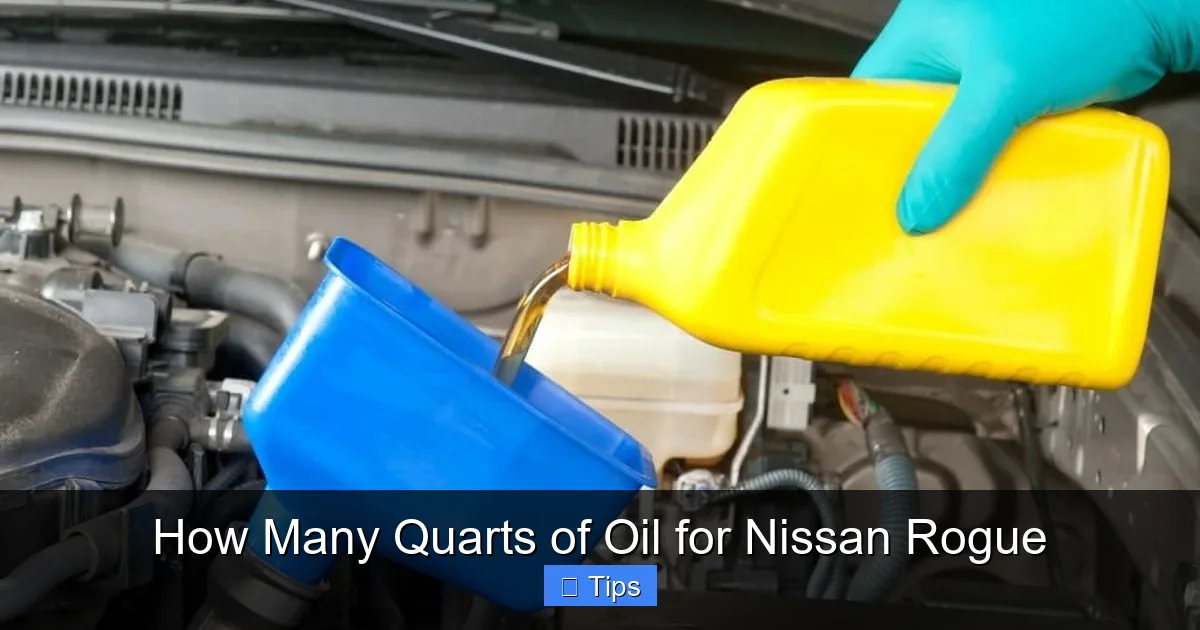
Replace the drain plug and tighten it securely. Use a funnel to pour in the correct amount of oil. For most Rogues, this is 4.8 to 5.5 quarts, depending on the engine.
Step 5: Check the Oil Level
Start the engine and let it run for a minute. Turn it off, wait 2–3 minutes, then check the dipstick. The oil level should be between the “min” and “max” marks. Add more oil if needed—but don’t overfill.
Step 6: Dispose of Old Oil Responsibly
Take your used oil and filter to a recycling center or auto parts store. Most accept used oil for free.
Common Mistakes to Avoid During an Oil Change
Even experienced DIYers can make mistakes. Here are some common pitfalls to watch out for:
Overfilling the Engine
This is the most common error. Adding too much oil can cause foaming, leaks, and engine damage. Always measure carefully and double-check the dipstick.
Using the Wrong Oil Filter
Not all filters are created equal. A cheap or incompatible filter may not seal properly or could restrict oil flow. Use a high-quality filter designed for your Rogue.
Skipping the Filter Change
Some people skip replacing the filter to save time or money. But the filter traps contaminants, and a clogged filter reduces oil flow. Always change the filter with every oil change.
Not Tightening the Drain Plug
If the drain plug is too loose, oil will leak. If it’s too tight, you can strip the threads. Tighten it to the manufacturer’s torque specification (usually around 22–25 ft-lbs).
Ignoring the Dipstick
Always check the oil level after adding new oil. It’s easy to misjudge how much you’ve poured, especially if you’re using a large container.
Conclusion: Keep Your Nissan Rogue Running Smoothly
Knowing how many quarts of oil for Nissan Rogue your SUV needs is a small but vital part of vehicle maintenance. Whether you drive a 2014 model with a 2.5L engine or a 2024 with a turbocharged 1.5L, using the correct oil type and quantity ensures your engine stays protected, efficient, and reliable.
Remember: most Rogues need between 4.8 and 5.5 quarts of oil, including the filter. Always consult your owner’s manual, use synthetic oil with the right viscosity, and change it every 5,000 to 7,500 miles. And if you’re doing it yourself, take your time, double-check your measurements, and never skip the filter.
By following these guidelines, you’ll not only extend the life of your engine but also enjoy better performance, fuel economy, and peace of mind on every drive. Your Nissan Rogue is built to last—give it the care it deserves.
Frequently Asked Questions
How many quarts of oil does a 2020 Nissan Rogue take?
A 2020 Nissan Rogue with the 2.5L engine requires 4.8 quarts of oil when the filter is included. If your model has the optional 1.5L turbo engine, it needs 5.1 quarts.
Can I use 5W-30 instead of 0W-20 in my Nissan Rogue?
For older models (2014–2020), 0W-20 is recommended. However, in hot climates or under heavy loads, 5W-30 may be acceptable. For 2021–2024 models, 5W-30 is often approved as an alternative.
What happens if I put too much oil in my Nissan Rogue?
Overfilling can cause oil foaming, increased pressure, leaks, and damage to seals and the catalytic converter. Always check the dipstick and avoid exceeding the “max” mark.
How often should I check my oil level?
Check the oil level at least once a month using the dipstick. This helps you catch leaks, burning oil, or low levels before they cause engine damage.
Can I mix synthetic and conventional oil in my Rogue?
While it won’t immediately harm your engine, it’s not recommended. For best performance, use the full synthetic oil specified by Nissan.
Where can I find the oil capacity for my specific Nissan Rogue?
The oil capacity is listed in your owner’s manual and often printed on the oil filler cap. You can also check Nissan’s official website or contact a dealership with your VIN.

At CarLegit, we believe information should be clear, factual, and genuinely helpful. That’s why every guide, review, and update on our website is created with care, research, and a strong focus on user experience.