
Knowing how many quarts of oil your Honda Civic requires is essential for engine health and performance. This guide breaks down oil capacities by year, engine type, and trim to help you maintain your vehicle correctly and avoid costly mistakes.
In This Article
- 1 Key Takeaways
- 2 📑 Table of Contents
- 3 How Many Quarts of Oil in a Honda Civic? A Complete Guide
- 4 Why Oil Capacity Matters for Your Honda Civic
- 5 Honda Civic Oil Capacity by Model Year and Engine
- 6 How to Check and Change the Oil in Your Honda Civic
- 7 Common Mistakes to Avoid When Changing Oil
- 8 When to Change Your Honda Civic’s Oil
- 9 Conclusion: Keep Your Civic Running Smoothly
- 10 Frequently Asked Questions
- 10.1 How many quarts of oil does a 2020 Honda Civic need?
- 10.2 Can I use 5W-30 oil in my Honda Civic?
- 10.3 What happens if I put too much oil in my Honda Civic?
- 10.4 Do I need to change the oil filter every time?
- 10.5 How often should I check my oil level?
- 10.6 Can I mix synthetic and conventional oil in my Civic?
Key Takeaways
- Oil capacity varies by model year and engine: Most Honda Civics hold between 3.7 and 4.4 quarts, depending on the engine and generation.
- Always check your owner’s manual: The most accurate source for your specific Civic’s oil requirements.
- Use the correct oil type: Honda recommends synthetic or conventional 0W-20 or 5W-20 oil for most modern Civics.
- Include the oil filter in your calculation: Changing the filter adds about 0.2–0.3 quarts to the total oil needed.
- Overfilling can damage your engine: Too much oil increases pressure and can lead to leaks or engine failure.
- Check oil level regularly: Even if you’re not due for a change, monitor levels monthly to catch leaks or consumption early.
- Follow the maintenance minder system: Newer Civics use an intelligent system to alert you when oil changes are needed.
📑 Table of Contents
- How Many Quarts of Oil in a Honda Civic? A Complete Guide
- Why Oil Capacity Matters for Your Honda Civic
- Honda Civic Oil Capacity by Model Year and Engine
- How to Check and Change the Oil in Your Honda Civic
- Common Mistakes to Avoid When Changing Oil
- When to Change Your Honda Civic’s Oil
- Conclusion: Keep Your Civic Running Smoothly
How Many Quarts of Oil in a Honda Civic? A Complete Guide
If you own a Honda Civic, you already know it’s one of the most reliable, fuel-efficient, and long-lasting cars on the road. But like any vehicle, it needs regular maintenance to keep running smoothly—and one of the most important tasks is changing the engine oil. Yet, many Civic owners get confused about something that seems simple: how many quarts of oil does a Honda Civic actually need?
It’s not a one-size-fits-all answer. The oil capacity of your Honda Civic depends on several factors, including the model year, engine type, and whether you’re including the oil filter in your calculation. Getting it wrong—either by underfilling or overfilling—can lead to poor engine performance, increased wear, or even serious damage.
In this guide, we’ll walk you through everything you need to know about Honda Civic oil capacity. From older models to the latest 2024 Civics, we’ll break down the numbers, explain why they matter, and give you practical tips to keep your engine in top shape. Whether you’re a DIY mechanic or just want to understand your car better, this article has you covered.
Why Oil Capacity Matters for Your Honda Civic
Visual guide about How Many Quarts of Oil in a Honda Civic
Image source: i.ytimg.com
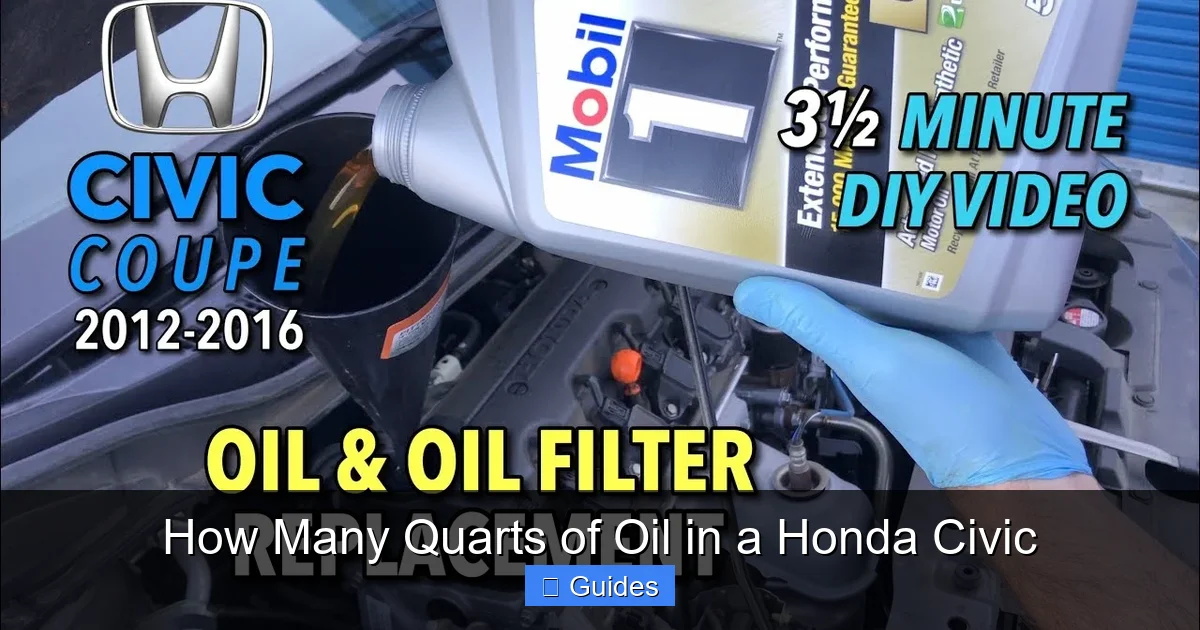
Engine oil is the lifeblood of your Honda Civic. It lubricates moving parts, reduces friction, prevents overheating, and helps keep the engine clean by trapping dirt and debris. But for oil to do its job effectively, there needs to be the right amount—not too little, not too much.
When you don’t have enough oil, critical engine components can overheat and wear out prematurely. This can lead to knocking sounds, reduced performance, and in extreme cases, engine seizure. On the flip side, overfilling your engine with oil can be just as dangerous. Excess oil increases internal pressure, which can force oil into places it shouldn’t be—like the combustion chamber or crankcase ventilation system. This can cause oil foaming, reduced lubrication, and even damage to seals and gaskets.
That’s why knowing the correct oil capacity for your specific Honda Civic is so important. It ensures your engine runs efficiently, lasts longer, and avoids costly repairs down the road.
The Role of the Oil Filter
One common mistake people make is forgetting to account for the oil filter when calculating how much oil to add. When you change your oil, the old filter is removed and replaced with a new one. The new filter holds oil too—typically about 0.2 to 0.3 quarts. So if your engine holds 4.0 quarts without the filter, you’ll actually need around 4.2 to 4.3 quarts when doing a full oil and filter change.
Always check your owner’s manual or the filter manufacturer’s specs to confirm how much oil your filter holds. This small detail can make a big difference in getting the fill level just right.
Oil Type and Viscosity Matter Too
While we’re focused on quantity, it’s worth mentioning that using the right type of oil is equally important. Honda recommends using high-quality motor oil that meets their specifications. For most modern Civics (2012 and newer), that means 0W-20 or 5W-20 synthetic oil. Older models may use 5W-20 or 10W-30 conventional oil, depending on the year and climate.
Using the wrong viscosity can affect engine performance, fuel economy, and even trigger warning lights. Always double-check your owner’s manual or the oil cap for the recommended grade.
Honda Civic Oil Capacity by Model Year and Engine

Visual guide about How Many Quarts of Oil in a Honda Civic
Image source: images-na.ssl-images-amazon.com
Now let’s get into the specifics. Below is a detailed breakdown of oil capacities for various Honda Civic models, organized by generation and engine type. Keep in mind that these numbers include the oil filter unless otherwise noted.
1996–2000 Honda Civic (6th Generation)
The sixth-generation Civic came with a few different engines, but the most common were the 1.6L D16Y7 and D16Y8 inline-4 engines. Both have an oil capacity of approximately 3.7 quarts (3.5 liters) when including the oil filter.
– 1.6L D16Y7 (non-VTEC): 3.7 quarts
– 1.6L D16Y8 (VTEC): 3.7 quarts
These models typically use 5W-30 or 10W-30 conventional oil, depending on climate. Always check your owner’s manual for the exact recommendation.
2001–2005 Honda Civic (7th Generation)
The seventh-generation Civic introduced the 1.7L D17A1 and D17A2 engines. These engines have a slightly larger oil capacity:
– 1.7L D17A1/D17A2: 4.2 quarts (4.0 liters) with filter
This generation also saw the introduction of the Civic Hybrid, which uses a 1.3L engine. The hybrid model has a smaller oil capacity:
– 1.3L LDA1 (Hybrid): 3.7 quarts with filter
Oil recommendations for this era are typically 5W-20 or 5W-30, depending on the engine and climate.
2006–2011 Honda Civic (8th Generation)
The eighth-generation Civic brought a redesign and new engines. The most common were the 1.8L R18A1 and the 2.0L K20Z2 (found in the Si trim).
– 1.8L R18A1: 4.4 quarts (4.2 liters) with filter
– 2.0L K20Z2 (Si): 4.4 quarts with filter
– 1.3L LDA1 (Hybrid): 3.7 quarts with filter
Honda began recommending 5W-20 synthetic blend or full synthetic oil during this period, especially for the 1.8L engine.
2012–2015 Honda Civic (9th Generation)
The ninth-generation Civic continued with the 1.8L R18Z1 engine and introduced the 2.4L K24Z7 in the Si model.
– 1.8L R18Z1: 4.4 quarts with filter
– 2.4L K24Z7 (Si): 4.4 quarts with filter
– 1.5L L15B7 (Hybrid): 3.7 quarts with filter
Honda officially recommended 0W-20 full synthetic oil for these models, especially in colder climates. This shift to lower-viscosity oil helped improve fuel efficiency.
2016–2021 Honda Civic (10th Generation)
The 10th-generation Civic was a major redesign, introducing turbocharged engines and improved efficiency. The base model used a 2.0L naturally aspirated engine, while higher trims featured a 1.5L turbocharged engine.
– 2.0L L4 (naturally aspirated): 4.4 quarts with filter
– 1.5L L15B7 (turbocharged): 3.7 quarts with filter
– 1.5L L15B7 (Hybrid): 3.7 quarts with filter
All engines in this generation use 0W-20 full synthetic oil. The turbocharged engine, in particular, benefits from synthetic oil due to higher operating temperatures.
2022–2024 Honda Civic (11th Generation)
The latest Civic models continue with the 2.0L and 1.5L turbo engines, with minor refinements.
– 2.0L L4: 4.4 quarts with filter
– 1.5L L15B7 (turbo): 3.7 quarts with filter
Honda still recommends 0W-20 full synthetic oil for all 11th-generation Civics. The oil capacity remains consistent with the previous generation.
How to Check and Change the Oil in Your Honda Civic
Visual guide about How Many Quarts of Oil in a Honda Civic
Image source: easycivic.com
Now that you know how many quarts your Civic needs, let’s walk through the process of checking and changing the oil yourself. It’s a simple task that can save you money and give you peace of mind.
Step 1: Gather Your Supplies
Before you start, make sure you have everything you need:
– The correct amount and type of oil (check your manual)
– A new oil filter (Honda OEM or high-quality aftermarket)
– An oil filter wrench (if the filter is tight)
– A socket wrench and the correct socket for the drain plug
– A drain pan to catch the old oil
– Funnel
– Gloves and safety glasses
– Jack and jack stands or ramps (if needed)
– Rags or paper towels
Step 2: Warm Up the Engine
Start your car and let it run for a few minutes. Warm oil flows more easily, so it will drain faster and more completely. But don’t let the engine get too hot—just warm to the touch.
Step 3: Lift the Car (If Needed)
If your Civic sits low to the ground, you may need to use ramps or a jack and jack stands to access the oil pan. Always use wheel chocks and work on a level surface for safety.
Step 4: Drain the Old Oil
Place the drain pan under the oil pan. Use your socket wrench to loosen the drain plug. Be careful—hot oil can spray out. Let the oil drain completely, then replace and tighten the drain plug. Don’t overtighten, as this can strip the threads.
Step 5: Replace the Oil Filter
Locate the oil filter (usually on the side of the engine). Use an oil filter wrench if it’s tight. Before installing the new filter, lightly coat the rubber gasket with fresh oil. Screw the new filter on by hand until it seats, then give it an extra quarter-turn. Don’t overtighten.
Step 6: Add New Oil
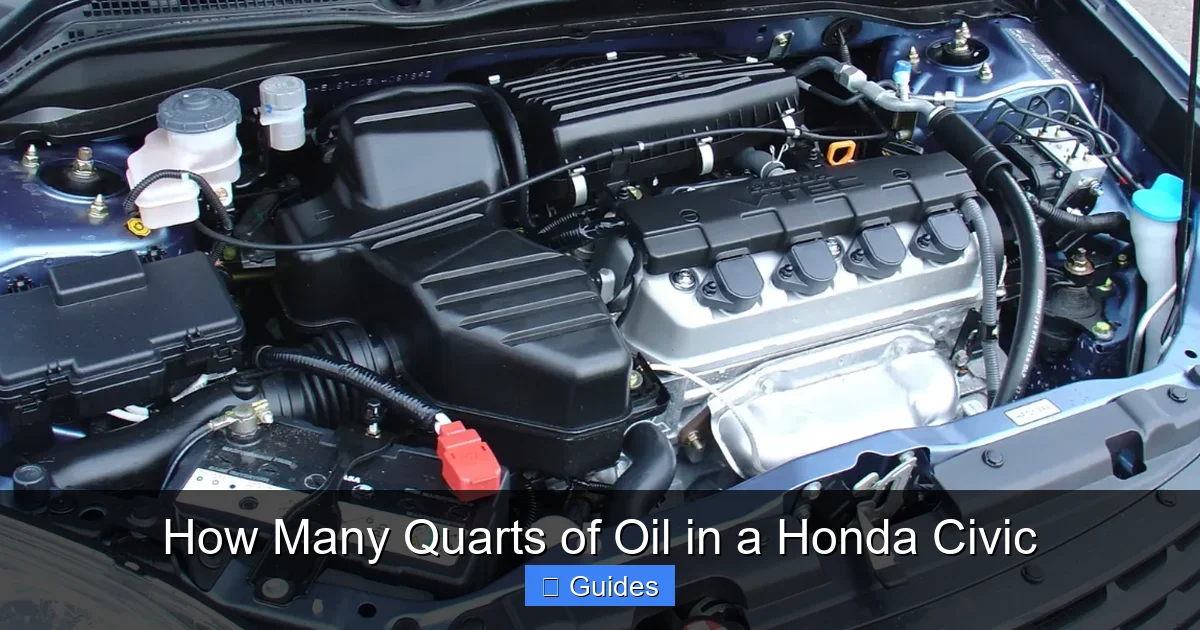
Remove the oil filler cap on top of the engine. Insert a funnel and slowly pour in the correct amount of oil. For most Civics, this is between 3.7 and 4.4 quarts. Wait a minute for the oil to settle, then check the dipstick.
Step 7: Check the Oil Level
Start the engine and let it run for 30 seconds to circulate the oil. Turn it off and wait a few minutes. Pull out the dipstick, wipe it clean, reinsert it, and check the level. It should be between the two marks. Add more oil if needed, but don’t overfill.
Step 8: Dispose of Old Oil Properly
Never pour used oil down the drain or on the ground. Most auto parts stores and service centers accept used oil for recycling. Store it in a sealed container and drop it off when convenient.
Common Mistakes to Avoid When Changing Oil
Even experienced DIYers can make mistakes. Here are some common pitfalls to watch out for:
Overfilling the Engine
Adding too much oil is one of the most common errors. It might seem like “more is better,” but excess oil can cause foaming, reduced lubrication, and damage to seals. Always double-check the dipstick after adding oil.
Using the Wrong Oil Type
Using 10W-30 in a Civic that requires 0W-20 can hurt fuel economy and engine performance. Always use the oil grade specified in your owner’s manual.
Forgetting to Replace the Oil Filter
Reusing an old filter or skipping the replacement can lead to poor oil flow and contamination. Always change the filter with every oil change.
Not Tightening the Drain Plug or Filter Properly
A loose drain plug can leak oil; a loose filter can blow off under pressure. But overtightening can also cause damage. Use the right torque and hand-tighten the filter.
Ignoring the Maintenance Minder
Newer Civics have a Maintenance Minder system that calculates when your oil needs changing based on driving conditions. Don’t ignore it—it’s more accurate than a fixed schedule.
When to Change Your Honda Civic’s Oil
Honda recommends following the Maintenance Minder system in vehicles from 2006 and newer. This system monitors engine conditions and alerts you when an oil change is needed, usually between 7,500 and 10,000 miles.
For older models or if you don’t have the Maintenance Minder, follow these general guidelines:
– Conventional oil: Every 3,000 to 5,000 miles
– Synthetic blend: Every 5,000 to 7,500 miles
– Full synthetic: Every 7,500 to 10,000 miles
However, driving conditions matter. If you frequently drive in stop-and-go traffic, extreme temperatures, or dusty environments, you may need to change the oil more often.
Signs You Need an Oil Change
Even with a Maintenance Minder, watch for these warning signs:
– Dark, dirty oil on the dipstick
– Engine noise or knocking
– Oil smell inside the car
– Check Engine or Oil Change light on
– Reduced fuel economy
If you notice any of these, check your oil level and condition right away.
Conclusion: Keep Your Civic Running Smoothly
Knowing how many quarts of oil your Honda Civic needs is a small but crucial part of car ownership. Whether you drive a classic 1998 Civic or a brand-new 2024 model, using the right amount of the correct oil will keep your engine healthy, efficient, and reliable for years to come.
From 3.7 quarts in a hybrid to 4.4 quarts in a turbocharged Si, the numbers vary—but the principle stays the same: proper maintenance prevents problems. Always consult your owner’s manual, use high-quality oil and filters, and check your levels regularly.
By following the guidelines in this guide, you’ll not only extend the life of your engine but also save money on repairs and enjoy a smoother, more confident drive. Your Honda Civic deserves the best care—and now you know exactly how to give it.
Frequently Asked Questions
How many quarts of oil does a 2020 Honda Civic need?
A 2020 Honda Civic with the 1.5L turbocharged engine requires 3.7 quarts of oil with the filter. The 2.0L naturally aspirated engine needs 4.4 quarts. Always use 0W-20 full synthetic oil.
Can I use 5W-30 oil in my Honda Civic?
It depends on the model year. Older Civics (pre-2012) may accept 5W-30, but newer models require 0W-20 or 5W-20. Using the wrong viscosity can affect performance and fuel economy.
What happens if I put too much oil in my Honda Civic?
Overfilling can cause oil foaming, increased pressure, and damage to seals and gaskets. It may also lead to oil burning, smoke from the exhaust, and reduced engine performance.
Do I need to change the oil filter every time?
Yes. The oil filter traps contaminants and should be replaced with every oil change to maintain proper oil flow and engine protection.
How often should I check my oil level?
Check your oil level at least once a month, or before long trips. Even if you’re not due for a change, this helps catch leaks or excessive oil consumption early.
Can I mix synthetic and conventional oil in my Civic?
While it won’t damage your engine, it’s best to avoid mixing. Stick to the oil type recommended in your owner’s manual for optimal performance and longevity.

At CarLegit, we believe information should be clear, factual, and genuinely helpful. That’s why every guide, review, and update on our website is created with care, research, and a strong focus on user experience.