
Car salesmen can earn anywhere from $30,000 to over $100,000 annually, with top performers in high-volume dealerships often exceeding six figures through commissions and bonuses. Earnings depend heavily on experience, location, brand, and sales performance, making it a high-reward career for those with strong negotiation skills and customer rapport.
In This Article
- 1 Key Takeaways
- 2 📑 Table of Contents
- 3 How Much Can I Make as a Car Salesman
- 4 Understanding the Car Salesman Pay Structure
- 5 Average Earnings: What the Numbers Say
- 6 Factors That Influence Your Earnings
- 7 Real-World Examples: From Struggle to Success
- 8 Tips to Maximize Your Earnings
- 9 Is Car Sales Right for You?
- 10 Frequently Asked Questions
- 10.1 How much can I make as a car salesman?
- 10.2 Do car salesmen get paid hourly or on commission?
- 10.3 Can you make a good living as a car salesman?
- 10.4 What factors affect how much a car salesman earns?
- 10.5 Is it hard to earn a high income as a car salesman?
- 10.6 Do car salesmen get benefits or just commission?
Key Takeaways
- Earnings vary widely: Top performers earn six figures, while beginners may start near minimum wage.
- Commission drives income: Most pay is performance-based, so sales volume directly impacts your paycheck.
- Location matters: Urban dealerships often offer higher sales potential than rural ones.
- Brand affects pay: Luxury car brands typically yield higher commissions per sale.
- Experience boosts earnings: Seasoned salespeople close more deals and negotiate better terms.
- Bonuses add up: Many dealers offer incentives for hitting monthly or quarterly targets.
📑 Table of Contents
How Much Can I Make as a Car Salesman
So, you’re thinking about becoming a car salesman—or maybe you’re already in the game and wondering if there’s more money to be made. You’ve probably heard the wild stories: “My cousin made six figures selling cars!” or “I know a guy who sold one luxury SUV and paid off his student loans.” But how much of that is real, and how much is just dealership folklore?
The truth? Car sales can be incredibly rewarding—financially and personally—but it’s not a guaranteed path to riches. Your income depends on a mix of factors: the type of dealership you work at, the brands you sell, your location, your experience, and yes, a little bit of hustle. Some months you might bring in $3,000. Other months? You could easily hit $10,000 or more. The key is understanding how the pay structure works, what top performers do differently, and how to set yourself up for long-term success.
In this guide, we’ll break down everything you need to know about how much you can make as a car salesman. We’ll look at average salaries, commission structures, real-world examples, and insider tips to help you maximize your earnings. Whether you’re just starting out or looking to level up, this post will give you a clear, honest picture of what’s possible in the world of automotive sales.
Understanding the Car Salesman Pay Structure
Before you can figure out how much you can make as a car salesman, you need to understand how you’ll actually get paid. Unlike traditional jobs with a fixed salary, most car sales roles are commission-based—meaning your income is directly tied to how many cars you sell and how much profit the dealership makes on each sale.
Visual guide about How Much Can I Make as a Car Salesman
Image source: res.cloudinary.com
Commission vs. Hourly + Commission Models
There are two main pay structures in car sales: pure commission and hourly plus commission. Let’s break them down.
In a pure commission model, you earn a percentage of the profit the dealership makes on each vehicle you sell. For example, if a car sells for $30,000 and the dealership’s gross profit is $3,000, you might earn 20% of that—$600. This model rewards high performers but can be risky in slow months. If you don’t sell anything, you don’t get paid.
The hourly plus commission model gives you a small base wage—say, $10–$15 per hour—plus a smaller commission on each sale. This provides more stability, especially for new salespeople still building their client base. It’s common at larger dealerships or those with high foot traffic.
Most successful car salespeople prefer pure commission because it offers unlimited earning potential. But if you’re just starting out, an hourly + commission role can help you learn the ropes without starving.
How Commissions Are Calculated
Commissions aren’t always straightforward. Dealerships use different formulas, but here’s a typical breakdown:
- Gross Profit Commission: You earn a percentage of the dealership’s profit on the vehicle (not the sale price). This is the most common method.
- Volume Bonuses: Sell a certain number of cars per month, and you unlock bonus tiers. For example, sell 10 cars and earn an extra $500; sell 15 and get $1,000.
- Brand-Specific Incentives: Some manufacturers offer special bonuses for selling certain models or hitting regional targets.
- F&I (Finance & Insurance) Commissions: If you help customers secure financing or add protection packages (like extended warranties), you may earn additional kickbacks.
Let’s say you sell a $35,000 SUV. The dealership’s gross profit is $4,000. Your commission rate is 25%. That’s $1,000 right there. If the manufacturer is running a promotion and offers a $300 bonus for selling that model, you pocket another $300. And if the customer adds a $1,200 extended warranty through the F&I department, you might earn 10% of that—$120. In this scenario, one sale could net you $1,420.
Now imagine doing that 10 times in a month. That’s $14,200—before taxes. Not bad for 40 hours of work.
Average Earnings: What the Numbers Say
So, what’s the real average income for a car salesman? The answer isn’t one-size-fits-all, but national data and industry reports give us a solid starting point.
Visual guide about How Much Can I Make as a Car Salesman
Image source: res.cloudinary.com
National Averages and Industry Data
According to the U.S. Bureau of Labor Statistics (BLS), the median annual wage for automotive salespeople was around $45,000 as of 2023. But that’s the median—meaning half earn more, half earn less. The top 10% of earners made over $85,000, while entry-level salespeople often start closer to $25,000–$30,000.
Keep in mind, these figures include part-time workers, those at smaller lots, and people in rural areas. In high-cost cities or at luxury dealerships, earnings can be significantly higher.
Regional Differences in Pay
Where you work makes a big difference. Car salespeople in states like California, New York, and Texas often earn more due to higher vehicle prices and stronger demand. For example, a salesperson in Los Angeles selling luxury SUVs might average $70,000–$90,000, while someone in a small town in Kansas might top out at $40,000.
Here’s a quick look at how location impacts earnings:
| State | Average Annual Income | Top Earners (Top 10%) |
|---|---|---|
| California | $68,000 | $110,000+ |
| Texas | $58,000 | $95,000+ |
| Florida | $52,000 | $80,000+ |
| Ohio | $44,000 | $65,000+ |
| Wyoming | $38,000 | $55,000+ |
These numbers reflect base pay, commissions, and bonuses. They also assume full-time work and consistent sales performance.
New vs. Experienced Salespeople
Experience plays a huge role. A brand-new salesperson might struggle to sell 5–8 cars their first month, earning $2,000–$4,000. But after a year of building relationships, mastering the process, and learning the inventory, that same person could easily sell 15–20 cars and earn $8,000–$12,000.
Top performers—those who’ve been in the game 3–5 years—often sell 25+ cars per month. At an average commission of $800 per sale, that’s $20,000. Add in volume bonuses, F&I kickbacks, and manufacturer incentives, and it’s not uncommon to see six-figure incomes.
One sales manager I spoke with in Atlanta told me, “I’ve had guys walk in with no experience and, within two years, they’re making $120,000. It’s not luck—it’s consistency, follow-up, and treating every customer like they’re your only one.”
Factors That Influence Your Earnings
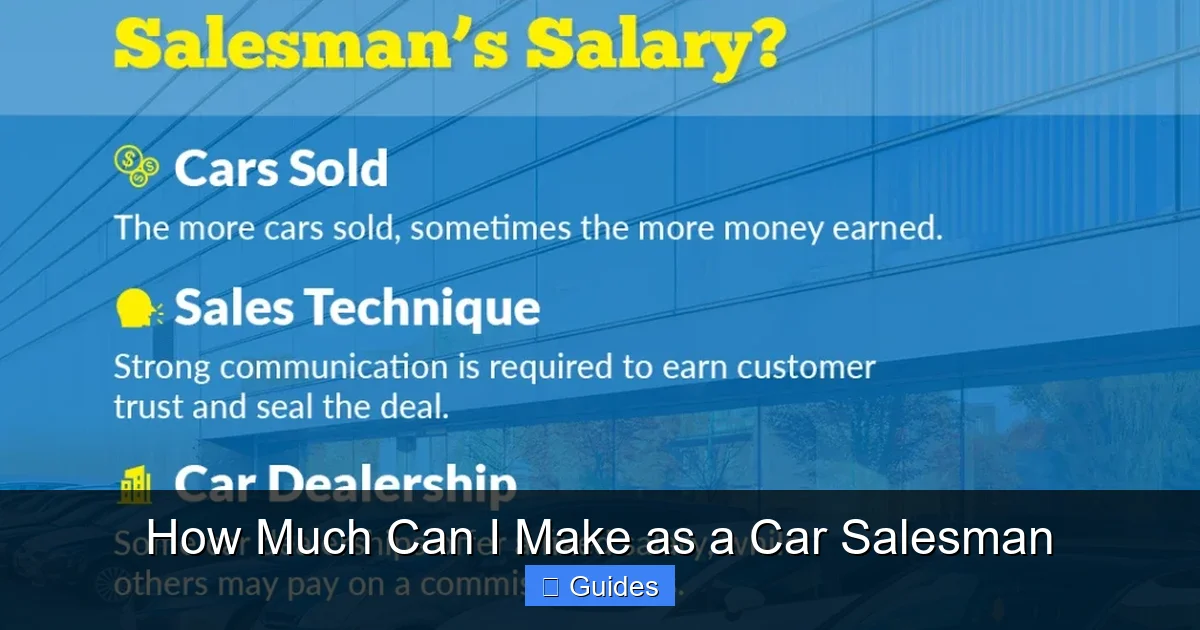
Your income as a car salesman isn’t just about how many cars you sell. Several factors can boost—or limit—your earning potential.

Visual guide about How Much Can I Make as a Car Salesman
Image source: tffn.net
Type of Dealership and Brand
Not all dealerships are created equal. Selling at a luxury brand like BMW, Mercedes, or Lexus typically means higher commissions per vehicle, even if you sell fewer units. A $70,000 luxury sedan might have a $5,000 gross profit, and at 25% commission, that’s $1,250 per sale.
In contrast, selling economy cars at a high-volume dealership like Toyota or Honda might mean lower per-sale commissions, but you can sell more units. A $25,000 Corolla might only yield $2,000 in profit, so your $500 commission is smaller—but if you sell 20 of them, that’s still $10,000.
Franchise dealerships (authorized by manufacturers) often have better training, marketing support, and inventory, which can help you sell more. Independent lots might offer higher commission splits but less foot traffic and fewer resources.
Market Demand and Seasonality
The time of year affects sales. Spring and summer are peak seasons—people want new cars for road trips and vacations. End-of-year model clearance events also drive traffic. Winter, especially in colder regions, can slow things down.
Economic conditions matter too. In a strong economy, people buy more cars. During recessions, sales dip. But even in tough times, people still need transportation—so consistent performers can still do well.
Your Skills and Work Ethic
At the end of the day, your income comes down to you. Top earners share common traits:
- Strong communication skills: They listen more than they talk and build trust quickly.
- Relentless follow-up: They call, text, and email prospects—even when it’s uncomfortable.
- Product knowledge: They know the features, specs, and benefits of every car on the lot.
- Time management: They prioritize high-potential leads and avoid wasting time.
- Resilience: They don’t get discouraged by rejections or slow weeks.
One top seller in Phoenix told me, “I treat every ‘no’ as a step closer to a ‘yes.’ I follow up with every customer—even if they walked in just to look. You never know who’s ready to buy.”
And it’s not just about selling. The best salespeople build long-term relationships. They stay in touch with past customers, send birthday cards, and refer them to service departments. Happy customers come back—and they refer friends.
Real-World Examples: From Struggle to Success
Let’s look at a few real-life scenarios to see how earnings can vary—and how ordinary people can achieve extraordinary results.
Example 1: The Newcomer
Meet Jake, 24, who started at a mid-sized Honda dealership in Denver. His first month, he sold 6 cars. With an average commission of $400 and a $12/hour base wage (160 hours), he earned about $3,040. Not bad for a start.
By month six, Jake had built a client base and improved his closing rate. He sold 12 cars, earning $5,200. He also started helping with F&I, adding $800 in kickbacks. Total: $6,000.
After a year, Jake was selling 18 cars per month. With volume bonuses and better negotiation skills, he averaged $9,500 per month—over $114,000 annually.
Example 2: The Luxury Specialist
Sarah, 32, worked at a BMW dealership in Miami. She focused on high-end clients and learned the ins and outs of leasing, certified pre-owned programs, and customization options.
In her first year, she sold 8 cars per month at an average commission of $1,100. That’s $8,800 per month. She also earned $1,200 monthly from F&I and manufacturer bonuses. Total: $10,000/month, or $120,000/year.
By year three, Sarah was the top seller at her store, averaging 12 sales per month. She earned $15,000+ monthly and even landed a regional sales award with a $5,000 bonus.
Example 3: The Part-Timer Who Made It Big
Marcus, a college student, started selling cars part-time at a used car lot in Austin. He worked weekends and evenings, selling 3–4 cars per month. He earned $1,500–$2,000 monthly—enough to cover tuition and rent.
After graduating, he stayed on full-time. Within 18 months, he was selling 15 cars per month at a franchised Chevy store. His income jumped to $8,000/month. He later moved to a luxury brand and now earns over $100,000 annually.
These stories show that success in car sales isn’t about where you start—it’s about how you grow.
Tips to Maximize Your Earnings
Want to make more as a car salesman? Here are practical, proven strategies to boost your income.
Master the Art of Follow-Up
Most sales are made after the 5th or 6th contact. Yet, 44% of salespeople give up after one follow-up. Don’t be that person.
Use a CRM (Customer Relationship Management) tool to track leads. Send personalized emails, make calls, and even send handwritten notes. One salesperson I know sends a $5 coffee gift card to every prospect who visits the lot. It costs him $50 a week—but it brings in 2–3 extra sales per month.
Upsell and Cross-Sell Smartly
Don’t push add-ons aggressively—that turns customers off. Instead, educate them. “This extended warranty covers your transmission for 5 years. Given how much you drive, that could save you $3,000 in repairs.”
Offer financing options, maintenance packages, and accessories. Even small add-ons like floor mats or paint protection can add $200–$500 to your commission.
Build a Personal Brand
Top earners don’t just work at dealerships—they become local car experts. Start a YouTube channel reviewing cars. Post on social media about market trends. Write a blog about “Best SUVs for Families in 2024.”
When people search for car advice online, they’ll find you. And when they’re ready to buy, they’ll come to you first.
Network Beyond the Lot
Join local business groups, attend community events, and partner with real estate agents or mechanics. Every relationship is a potential referral.
One salesperson in Nashville partnered with a wedding planner. For every couple who bought a car after their wedding, the planner got a $100 gift card—and the salesperson got a steady stream of referrals.
Stay Updated and Keep Learning
The car industry changes fast. Electric vehicles, autonomous features, and online sales platforms are reshaping the game. Take manufacturer training courses. Attend sales seminars. Read industry blogs.
The more you know, the more confident you’ll be—and the more customers will trust you.
Is Car Sales Right for You?
So, how much can you make as a car salesman? The answer is: it depends. But the potential is real. With the right mindset, skills, and effort, you can earn $50,000, $80,000, or even $100,000+ per year.
But it’s not for everyone. Car sales requires resilience, patience, and a willingness to face rejection. Some days will be slow. Some customers will be difficult. But the rewards—financial freedom, career growth, and the satisfaction of helping people find their perfect ride—are worth it.
If you’re passionate about cars, enjoy talking to people, and thrive in a performance-driven environment, this could be the career for you. Start small, learn fast, and never stop improving. Your future self—and your bank account—will thank you.
Frequently Asked Questions
How much can I make as a car salesman?
The average salary for a car salesman in the U.S. ranges from $30,000 to $60,000 per year, but top performers can earn over $100,000 with commissions and bonuses. Earnings depend heavily on experience, location, dealership type, and sales volume.
Do car salesmen get paid hourly or on commission?
Most car salesmen are paid on a commission basis, meaning their income is tied directly to the number and type of vehicles they sell. Some dealerships may offer a small base salary plus commission, but pure commission structures are common.
Can you make a good living as a car salesman?
Yes, top-performing car salesmen can make a very good living, especially at high-volume or luxury dealerships where commissions are higher. Success depends on persistence, customer service skills, and the ability to close deals consistently.
What factors affect how much a car salesman earns?
Key factors include the dealership’s brand and location, the salesman’s experience, monthly sales targets, and whether they sell new or used vehicles. Bonuses for meeting quotas or selling add-ons like warranties also boost income.
Is it hard to earn a high income as a car salesman?
It can be challenging due to the competitive nature of the job and reliance on customer traffic and market conditions. However, skilled and motivated salespeople who build strong client relationships often achieve high earnings over time.
Do car salesmen get benefits or just commission?
Many dealerships offer benefits such as health insurance, retirement plans, and paid time off, especially for full-time employees. These perks, combined with commission potential, can make the role financially rewarding for consistent performers.

At CarLegit, we believe information should be clear, factual, and genuinely helpful. That’s why every guide, review, and update on our website is created with care, research, and a strong focus on user experience.