
Scrapping a car can earn you anywhere from $100 to over $1,000, depending on weight, metal prices, and vehicle condition. Knowing what affects value and where to sell helps you get the best deal when recycling your old vehicle.
So, you’ve got an old car sitting in your driveway—maybe it won’t start, maybe it’s been in an accident, or maybe it’s just time to let go. You’re thinking about scrapping it, but you’re not sure how much cash you’ll actually walk away with. That’s a totally fair question. After all, no one wants to haul a dead vehicle to a scrap yard only to be handed a handful of change.
The truth is, how much you can get for scrapping a car depends on several factors. It’s not just about whether the car runs or not. Things like the current price of scrap metal, the weight of your vehicle, its make and model, and even where you live all play a role. But don’t worry—this guide will walk you through everything you need to know to get the best possible payout when you decide to scrap your car. Whether you’re dealing with a clunker from the ‘90s or a newer model that’s seen better days, we’ll help you understand the process and maximize your return.
In This Article
- 1 Key Takeaways
- 2 📑 Table of Contents
- 3 What Determines the Value of a Scrapped Car?
- 4 Average Scrap Car Prices in 2024
- 5 Factors That Can Increase or Decrease Your Payout
- 6 Where to Scrap Your Car and How to Choose the Right Buyer
- 7 Preparing Your Car for Scrapping
- 8 Alternatives to Scrapping: Can You Get More Money?
- 9 Final Tips to Maximize Your Scrap Car Payout
- 10 Frequently Asked Questions
Key Takeaways
- Scrap value depends on weight and current metal prices: Heavier cars with more steel and aluminum yield higher payouts, especially when scrap metal markets are strong.
- Location matters: Scrap yards in urban areas or regions with high demand for metal often offer better prices than rural scrap facilities.
- Vehicle condition impacts payout: Even if your car doesn’t run, intact parts like catalytic converters, batteries, and tires can increase its value.
- Remove personal items and fluids before scrapping: Most scrap yards require you to drain oil, coolant, and gasoline, and remove all personal belongings.
- Get multiple quotes: Prices vary widely between scrap yards, so calling at least three places ensures you get a fair offer.
- Consider selling parts separately: Functional components like engines, transmissions, or electronics can be sold for more than the whole car’s scrap value.
- Check for title and paperwork requirements: Most states require a valid title or proof of ownership to legally scrap a vehicle.
📑 Table of Contents
- What Determines the Value of a Scrapped Car?
- Average Scrap Car Prices in 2024
- Factors That Can Increase or Decrease Your Payout
- Where to Scrap Your Car and How to Choose the Right Buyer
- Preparing Your Car for Scrapping
- Alternatives to Scrapping: Can You Get More Money?
- Final Tips to Maximize Your Scrap Car Payout
What Determines the Value of a Scrapped Car?
When it comes to scrapping a car, the price you’re offered isn’t random. Scrap yards base their quotes on a few key factors, and understanding them can help you set realistic expectations—and maybe even boost your payout.
The biggest factor is the weight of your vehicle. Cars are mostly made of steel, with some aluminum, copper, and other metals mixed in. Scrap yards pay by the pound, so heavier cars are worth more. For example, a full-size pickup truck might weigh over 5,000 pounds, while a compact car could be under 2,500 pounds. That difference translates directly into dollars.
But weight alone isn’t the whole story. The current market price for scrap metal plays a huge role. Steel prices fluctuate based on global demand, manufacturing needs, and even geopolitical events. When steel is in high demand—like during a construction boom—scrap prices go up. When the market slows, so do payouts. In 2023, for instance, scrap steel prices ranged from $150 to $250 per ton, depending on the region. That means a 3,000-pound car (1.5 tons) might fetch between $225 and $375—just for the metal.
Another factor is the condition of the car. Even if it doesn’t run, a car with intact parts can be worth more. Catalytic converters, for example, contain precious metals like platinum, palladium, and rhodium. These can be worth $50 to $300 or more, depending on the model and market prices. Batteries, alternators, and even tires can add value if they’re in decent shape.
Finally, your location matters. Scrap yards in cities or industrial areas often pay more because they have better access to processing facilities and higher demand for recycled metal. Rural scrap yards might offer less due to transportation costs and lower volume.
How Metal Prices Affect Scrap Value
Let’s dive a little deeper into metal prices, because they’re the engine behind scrap car values. Steel is the most common metal in cars, making up about 60% of the average vehicle. Aluminum is also increasingly used, especially in newer models, for parts like engine blocks and body panels. Copper shows up in wiring, and precious metals are found in catalytic converters.
When global steel prices rise—say, due to increased demand from China or infrastructure projects in the U.S.—scrap yards can afford to pay more per ton. Conversely, if factories slow down or recycling supply increases, prices drop. For example, in early 2022, steel prices spiked due to post-pandemic construction booms, pushing scrap car values higher. By late 2023, prices had stabilized, but regional differences remained.
You can track current scrap metal prices online through sites like ScrapMonster or iScrap App. These tools let you check local rates for steel, aluminum, and catalytic converters. While you won’t get the exact market rate (scrap yards need to cover processing costs), knowing the trends helps you time your sale.
The Role of Vehicle Weight and Size
Not all cars are created equal when it comes to scrap value—literally. A midsize sedan like a Toyota Camry might weigh around 3,300 pounds, while a Ford F-150 could tip the scales at 4,500 pounds or more. That extra 1,200 pounds of steel and aluminum can mean an extra $100–$200 in your pocket.
Even within the same class, weight varies. Older cars tend to be heavier because they used more steel. Newer models are built lighter for fuel efficiency, using more aluminum and high-strength composites. While that’s great for gas mileage, it can mean slightly lower scrap value—unless the aluminum content is high, which some yards pay a premium for.
So, if you’re driving a heavy-duty truck or an older SUV, you’re likely to get more per pound than someone with a lightweight hybrid. But don’t count out smaller cars entirely—every pound counts, and added parts can still boost the total.
Average Scrap Car Prices in 2024
Visual guide about How Much Can You Get for Scrapping a Car
Image source: greenwayautorecycling.com
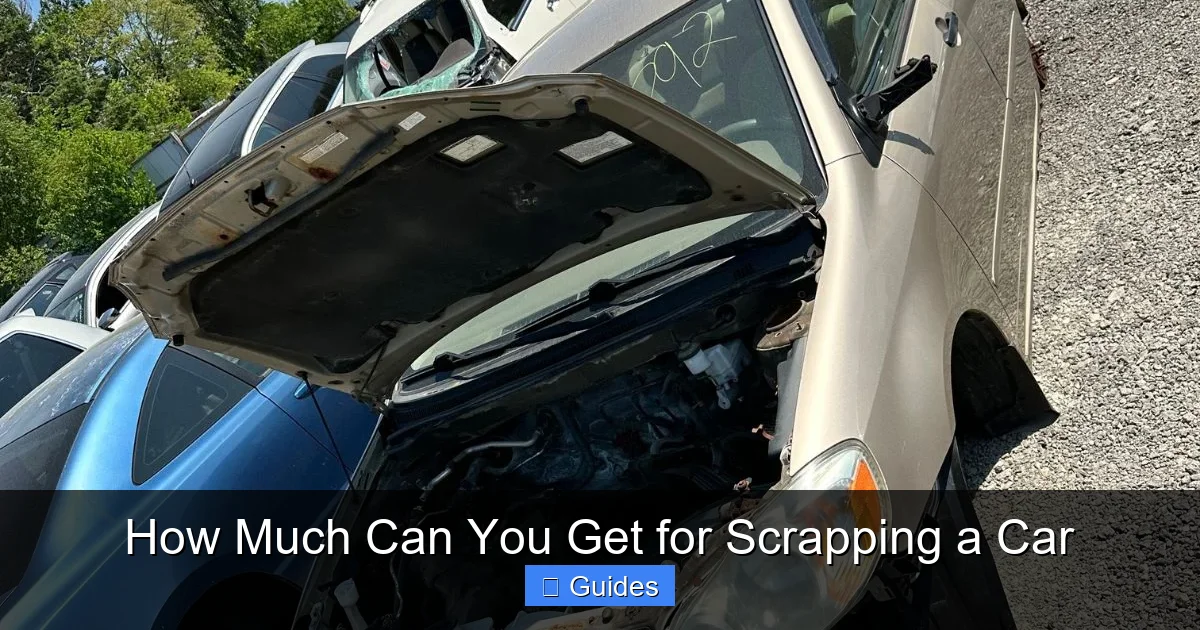
So, how much can you actually expect to get for scrapping a car in 2024? The short answer: it varies. But based on current market trends and data from scrap yards across the U.S., here’s a realistic range.
On the low end, you might get $100–$200 for a very small, lightweight car—like a compact hatchback—especially if metal prices are down or the vehicle is heavily damaged. On the high end, a heavy truck or SUV in decent condition could fetch $800–$1,200 or more, particularly if it has valuable parts like a catalytic converter or a good battery.
Most average cars—think Honda Accords, Ford Fusions, or Toyota RAV4s—fall in the $300–$600 range when scrapped. That’s based on a weight of 3,000–3,500 pounds and current steel prices around $200 per ton. Add in a catalytic converter worth $150 and a battery worth $20, and you’re looking at a total closer to $500.
Keep in mind, these are estimates. Some scrap yards offer flat rates, while others calculate based on weight and part value. Always ask for a detailed breakdown so you know what you’re being paid for.
Regional Price Differences
Where you live can make a big difference in how much you get for scrapping a car. Scrap yards in states with strong manufacturing or recycling industries—like Michigan, Ohio, or Texas—often pay more due to higher demand for recycled metal. Coastal cities like Los Angeles or New York may also offer better rates because of transportation efficiency and volume.
In contrast, rural areas or regions with fewer scrap facilities might pay less. A scrap yard in rural Montana might offer $250 for a 3,000-pound car, while one in Detroit could pay $400 for the same vehicle. That’s a $150 difference just based on location.
It’s also worth noting that some states have environmental fees or recycling incentives that can affect pricing. For example, California has strict recycling laws and may offer small bonuses for properly disposing of hazardous materials. Always check local regulations.
How to Estimate Your Car’s Scrap Value
Want to ballpark your car’s value before calling scrap yards? Here’s a simple method:
1. Find your car’s curb weight. You can look this up on the manufacturer’s website or sites like Edmunds or Kelley Blue Book.
2. Divide the weight by 2,000 to get tons (since there are 2,000 pounds in a ton).
3. Multiply by the current scrap steel price per ton (check online for your area).
4. Add estimated value for valuable parts (catalytic converter, battery, tires, etc.).
For example:
– Car weight: 3,200 lbs = 1.6 tons
– Scrap steel price: $200/ton → 1.6 × $200 = $320
– Catalytic converter: $120
– Battery: $25
– Tires (if good): $30
– Total estimated value: $495
This gives you a solid starting point. Then, call a few scrap yards to compare quotes.
Factors That Can Increase or Decrease Your Payout
Visual guide about How Much Can You Get for Scrapping a Car
Image source: greenwayautorecycling.com
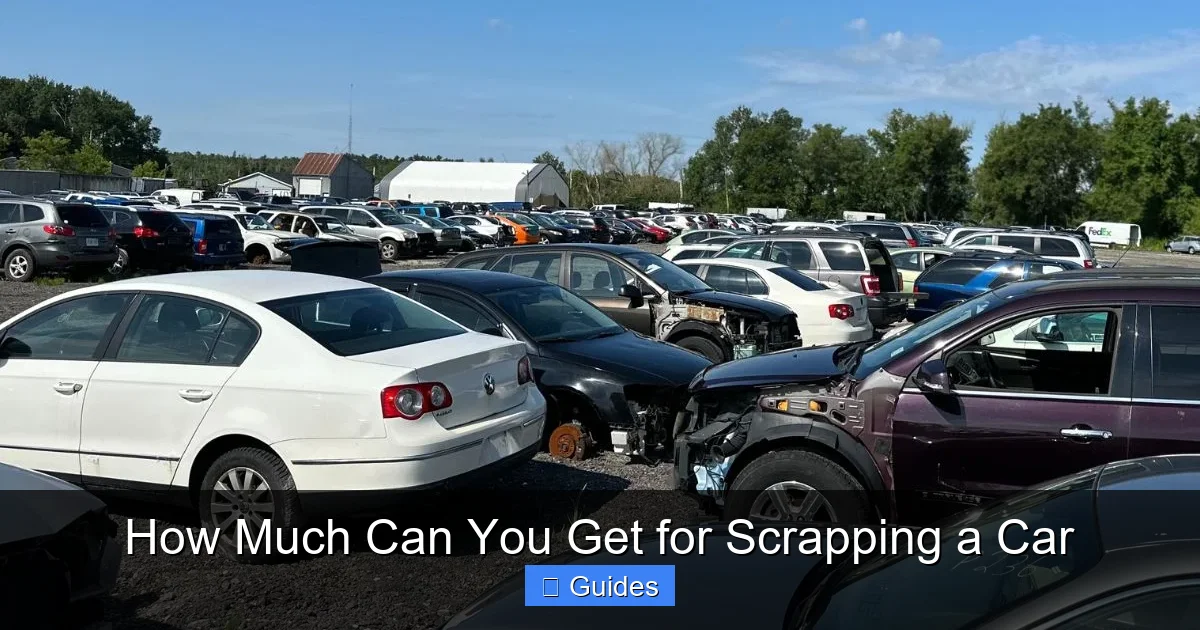
Not all scrapped cars are treated equally. While weight and metal prices set the baseline, several other factors can push your payout up or down. Knowing these can help you prepare your car and negotiate a better deal.
Parts That Add Value
Even if your car is beyond repair, certain parts can significantly increase its scrap value. The most valuable is the catalytic converter. These devices reduce emissions and contain precious metals. Depending on the make and model, a converter can be worth $50 to $300 or more. Luxury or diesel vehicles often have higher-value converters.
Other valuable components include:
– **Battery:** A standard lead-acid car battery weighs about 40 pounds and can be recycled for $10–$25.
– **Tires:** Good-condition tires can be resold or retreaded. Some scrap yards pay $5–$15 per tire.
– **Alternator and starter motor:** These contain copper and aluminum and may be worth $20–$50 each if functional.
– **Wheels:** Alloy wheels (made of aluminum) are more valuable than steel rims and can fetch $20–$100 per wheel.
If your car has any of these in working order, mention it when getting quotes. Some yards will pay extra, or you might consider selling them separately online for even more profit.
Damage and Missing Parts
On the flip side, extensive damage or missing parts can reduce your payout. A car that’s been in a serious accident might have crushed frames or missing engines, which lowers its weight and usability. Flood-damaged vehicles are often worth less because of corrosion and electrical issues.
If key parts like the engine, transmission, or catalytic converter are missing, scrap yards may deduct value—or refuse the car altogether. Some yards only accept complete vehicles.
That said, even a heavily damaged car has value. As long as it has weight and metal, it can be recycled. Just be transparent about the condition when getting quotes.
Fluid and Hazardous Material Removal
Before scrapping, you’ll need to remove all fluids—gasoline, oil, coolant, brake fluid, and refrigerant. Most scrap yards won’t accept a car with fluids still inside due to environmental regulations. You can do this yourself with basic tools and safety gear, or pay a mechanic around $50–$100 to drain it.
Also, remove the battery and any mercury switches (found in older cars). These are considered hazardous waste and must be disposed of properly. Failing to do so can result in fines or rejected offers.
Where to Scrap Your Car and How to Choose the Right Buyer
Visual guide about How Much Can You Get for Scrapping a Car
Image source: greenwayautorecycling.com
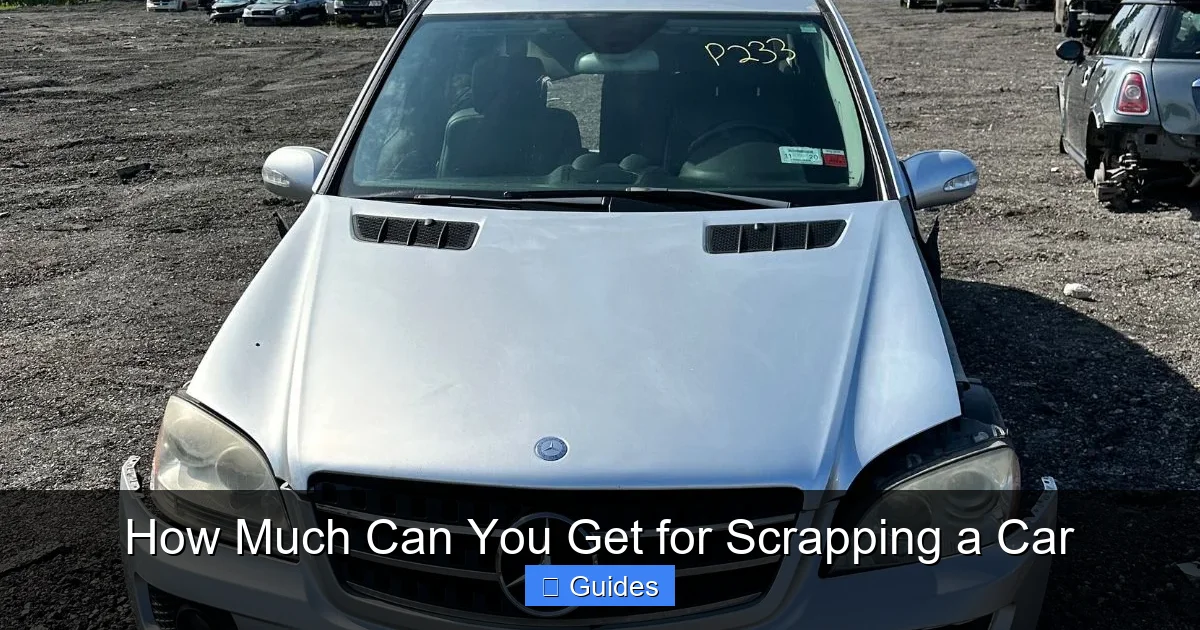
Once you know your car’s approximate value, the next step is finding a reputable scrap yard. Not all buyers are created equal, and choosing the right one can mean the difference between a fair deal and a frustrating experience.
Types of Scrap Buyers
There are several options for scrapping your car:
– **Local scrap yards:** These are the most common. They pay cash (or check) on the spot and often offer free towing. Look for yards with good reviews and transparent pricing.
– **Online car buyers:** Companies like CarMax, Carvana, or CashForCars.com will buy non-running vehicles, sometimes offering more than scrap value if parts are valuable.
– **Junk car removal services:** These companies specialize in towing away old cars, often for free, and pay you based on weight and condition. Some are affiliated with scrap yards.
– **Charity car donations:** If you’d rather donate, organizations like Goodwill or the Salvation Army accept old cars and give you a tax deduction. The car is usually scrapped, and proceeds go to charity.
Each option has pros and cons. Local scrap yards give you the most control and often the best cash offers. Online buyers may pay more but could take longer. Donation is great for tax benefits but won’t put cash in your pocket.
How to Compare Quotes
Always get at least three quotes before making a decision. Call or visit local scrap yards and ask:
– What’s your rate per pound for steel?
– Do you pay extra for catalytic converters or batteries?
– Is towing included?
– Do you require a title?
Write down the offers and compare them side by side. Don’t just go with the highest number—consider convenience, reputation, and whether they handle paperwork.
For example:
– Yard A: $400, includes towing, requires title
– Yard B: $450, no towing, accepts bill of sale
– Yard C: $380, includes towing, pays extra for converter
If you have to pay $50 for towing, Yard B might actually be the best deal.
Red Flags to Watch For
Unfortunately, not all scrap yards are honest. Watch out for:
– **Lowball offers:** If a quote seems too good (or bad) to be true, it might be.
– **Pressure tactics:** Reputable yards won’t rush you.
– **No paperwork:** Always get a receipt and signed title transfer.
– **Cash-only with no record:** This could be a sign of illegal activity.
Stick with licensed, insured scrap yards with clear policies.
Preparing Your Car for Scrapping
A little preparation can go a long way in maximizing your payout and ensuring a smooth process. Here’s what you need to do before handing over your keys.
Remove Personal Belongings
This might seem obvious, but it’s easy to forget. Check the glove box, trunk, under seats, and door pockets. Remove registration, insurance cards, sunglasses, phone chargers—anything that’s not permanently attached.
Also, take off license plates. In most states, you must return them to the DMV or keep them for your next vehicle.
Drain All Fluids
As mentioned earlier, fluids must be removed. Here’s how:
– **Gasoline:** Siphon out any remaining fuel. Store it safely in an approved container.
– **Oil:** Drain the engine oil into a pan. Most auto parts stores accept used oil for recycling.
– **Coolant:** Drain the radiator and block. Coolant is toxic—don’t pour it on the ground.
– **Brake fluid and power steering fluid:** Drain carefully.
– **AC refrigerant:** This must be removed by a certified technician. Don’t attempt it yourself.
Take used fluids to a recycling center or auto shop that accepts them.
Remove the Battery and Tires (Optional)
You can leave the battery and tires on if the scrap yard accepts them, but removing them lets you sell or recycle them separately. Car batteries are highly recyclable and can be turned in at most auto stores for a small refund (often $5–$10). Tires can be retreaded or recycled into rubber mulch.
Gather Required Paperwork
Most states require a valid title to scrap a car. If you’ve lost it, contact your DMV to get a duplicate. Some yards may accept a bill of sale or notarized affidavit, but a title is best.
You’ll also need a government-issued ID. The scrap yard will sign the title over to them and provide a receipt. Keep a copy for your records.
Alternatives to Scrapping: Can You Get More Money?
Before you scrap your car, consider whether you might get more money by selling it another way. Scrapping is quick and easy, but it’s not always the most profitable option.
Sell It for Parts
If your car has valuable working parts, selling them individually can earn you significantly more than scrapping the whole vehicle. For example:
– A used engine might sell for $500–$1,500.
– A transmission could go for $300–$800.
– Airbags, seats, or electronics can fetch $50–$200 each.
You can sell parts on platforms like eBay, Craigslist, or Facebook Marketplace. It takes more time and effort, but the payoff can be worth it—especially for newer or luxury vehicles.
Donate for a Tax Deduction
If you don’t need cash, donating your car to charity can give you a tax break. The deduction is based on the car’s fair market value or the amount the charity sells it for. For a car worth $2,000, that could mean a $2,000 deduction on your taxes—potentially saving you hundreds.
Just make sure the charity is IRS-approved and provides a receipt.
Trade It In or Sell Privately
If your car still runs—even barely—you might get more by trading it in at a dealership or selling it privately. A non-running car might sell for $500–$1,500 privately, depending on condition. Dealerships may offer less, but it’s convenient.
Only consider scrapping if the car is truly beyond repair or not worth the effort to sell.
Final Tips to Maximize Your Scrap Car Payout
To wrap things up, here are a few final tips to help you get the most money when scrapping your car:
– **Time your sale:** Scrap metal prices fluctuate. If possible, wait for a period when steel prices are high.
– **Clean the car:** A clean, organized car makes a better impression and may lead to a higher offer.
– **Be honest about condition:** Don’t exaggerate. Scrap yards will inspect the car and adjust the offer if needed.
– **Negotiate:** If you have multiple quotes, use them to negotiate a better deal.
– **Use free towing:** Many yards offer this—take advantage to save money.
– **Keep records:** Save all paperwork for tax and legal purposes.
Scrapping a car doesn’t have to be a hassle. With a little knowledge and preparation, you can turn that old clunker into cash—and maybe even walk away with a few hundred dollars in your pocket.
Frequently Asked Questions
How much can you get for scrapping a car that doesn’t run?
You can still get $100–$600 or more for a non-running car, depending on its weight and metal content. Even if it doesn’t start, the steel, aluminum, and valuable parts like the catalytic converter still have value.
Do I need a title to scrap a car?
In most states, yes—you need a valid title or proof of ownership. Some scrap yards may accept a bill of sale or notarized affidavit, but a title is the safest option to avoid legal issues.
Can I scrap a car without wheels?
It depends on the scrap yard. Some accept cars without wheels, but they may pay less due to reduced weight. Others require the vehicle to be mobile or charge a fee for loading.
How long does it take to scrap a car?
The process usually takes 15–30 minutes once you arrive at the scrap yard. If towing is included, add 1–2 hours for pickup and transport.
What happens to my car after it’s scrapped?
The car is crushed, shredded, and separated into metals like steel, aluminum, and copper. These materials are melted down and reused in new products, reducing the need for mining and saving energy.
Can I scrap a car with a lien on it?
Generally, no. The lienholder (like a bank) must release the title before the car can be scrapped. Contact your lender to resolve the lien first.

At CarLegit, we believe information should be clear, factual, and genuinely helpful. That’s why every guide, review, and update on our website is created with care, research, and a strong focus on user experience.