
In 1920, a Bentley cost around £1,050—roughly equivalent to £45,000–£50,000 today. These hand-built luxury cars were symbols of wealth, performance, and British engineering excellence during the post-WWI era.
In This Article
- 1 Key Takeaways
- 2 📑 Table of Contents
- 3 Introduction: The Birth of a Legend
- 4 The 1920 Bentley 3 Litre: Engineering Excellence
- 5 Cost in 1920: Breaking Down the Price
- 6 Inflation and Modern Value: What Would It Cost Today?
- 7 The Bentley Experience: Owning a 1920 Model
- 8 Bentley’s Legacy: From 1920 to Today
- 9 Conclusion: More Than Just a Price Tag
- 10 Frequently Asked Questions
Key Takeaways
- Understanding How Much Did A Bentley Cost In 1920: Provides essential knowledge
📑 Table of Contents
Introduction: The Birth of a Legend
Imagine the year is 1920. The world is fresh from the trauma of World War I, and society is shifting rapidly. Jazz is filling the air, flappers are dancing, and a new sense of freedom is sweeping across Europe and America. Amid this cultural renaissance, a new kind of automobile is capturing the imagination of the wealthy and adventurous: the Bentley.
Founded in 1919 by Walter Owen Bentley—affectionately known as “W.O.”—the Bentley Motors company was born with a simple yet bold vision: to build “a fast car, a good car, the best in its class.” Just a year after its founding, the first production model, the Bentley 3 Litre, rolled off the line in Cricklewood, North London. It wasn’t just a car—it was a statement. A declaration that British engineering could rival the best in the world, especially the dominant French and German marques of the time.
But owning one of these mechanical marvels came at a steep price. In 1920, a new Bentley cost around £1,050. To put that into perspective, the average annual wage in Britain at the time was about £150. That means a single Bentley cost roughly seven years’ worth of an average worker’s salary. Only the upper class, industrialists, military officers, and aristocrats could even dream of such a purchase. This wasn’t just transportation—it was a symbol of status, power, and taste.
The 1920 Bentley 3 Litre: Engineering Excellence
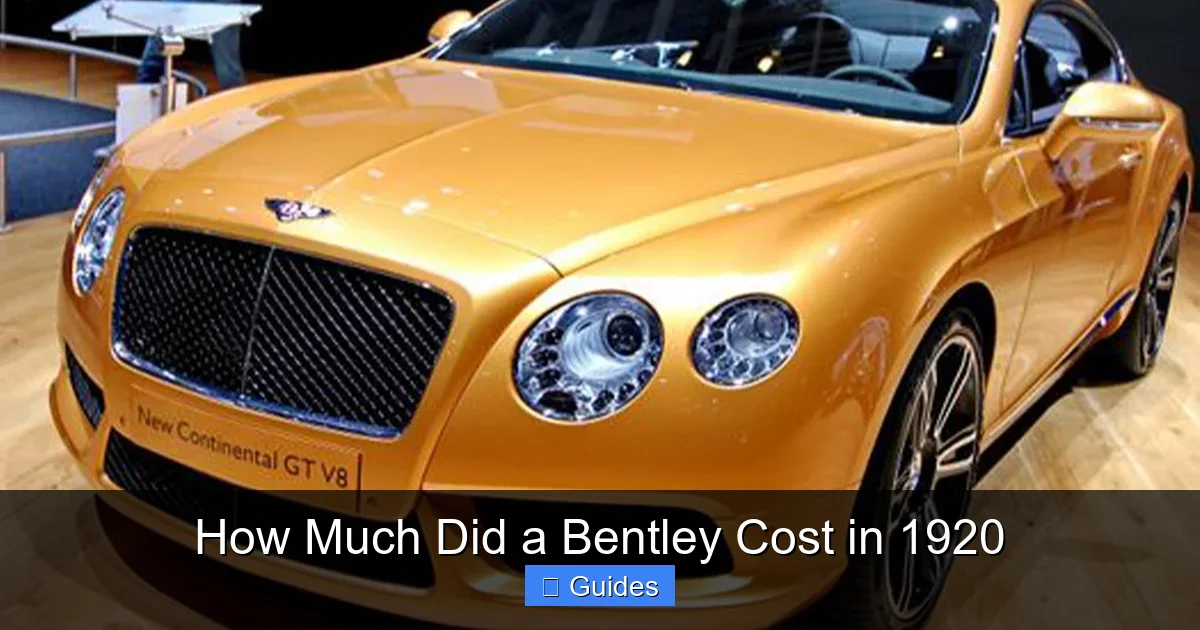
Visual guide about How Much Did a Bentley Cost in 1920
Image source: costhack.com
The Bentley 3 Litre was the company’s first production model and the foundation of its legendary reputation. Introduced in 1919 and available for purchase in 1920, it was designed to be both fast and durable—a rare combination in early 20th-century automobiles.
Engine and Performance
At the heart of the 3 Litre was a 3.0-liter, four-cylinder, side-valve engine that produced around 60 horsepower. While that might sound modest by today’s standards, it was impressive for the time. The engine featured an overhead camshaft and a high compression ratio, which allowed it to reach a top speed of about 75 mph (120 km/h)—blistering fast for 1920. Most cars of the era struggled to break 50 mph, making the Bentley a true performance machine.
What set the 3 Litre apart wasn’t just speed, but reliability. W.O. Bentley believed that a car should be able to endure long-distance driving at high speeds without breaking down. This philosophy was tested and proven in motorsport, particularly at the 24 Hours of Le Mans, where Bentleys would later dominate.
Design and Craftsmanship
Unlike mass-produced cars of the era, every Bentley was hand-built. Skilled craftsmen at the Cricklewood factory assembled each vehicle with meticulous attention to detail. The chassis was made from high-quality steel, and the suspension used semi-elliptic leaf springs for a smooth ride. The braking system, while rudimentary by modern standards, was advanced for its time, with drum brakes on all four wheels.
Buyers could choose from a range of body styles, though most were custom-built by independent coachbuilders like Vanden Plas, Hooper, and Gurney Nutting. This meant no two Bentleys were exactly alike. A buyer could specify everything from the color and upholstery to the type of wood used in the dashboard. This level of personalization added to the car’s exclusivity and cost.
Target Market and Ownership
The Bentley 3 Litre was never intended for the average driver. It was built for the wealthy, the adventurous, and the performance-minded. Early owners included British aristocrats, military officers, and industrialists. Some even used their Bentleys for racing or long-distance touring across Europe.
Owning a Bentley in 1920 wasn’t just about getting from point A to point B—it was about making a statement. It signaled success, taste, and a love for engineering excellence. The car’s rugged build and high-speed capability also made it popular among those who enjoyed motoring as a sport, not just a convenience.
Cost in 1920: Breaking Down the Price
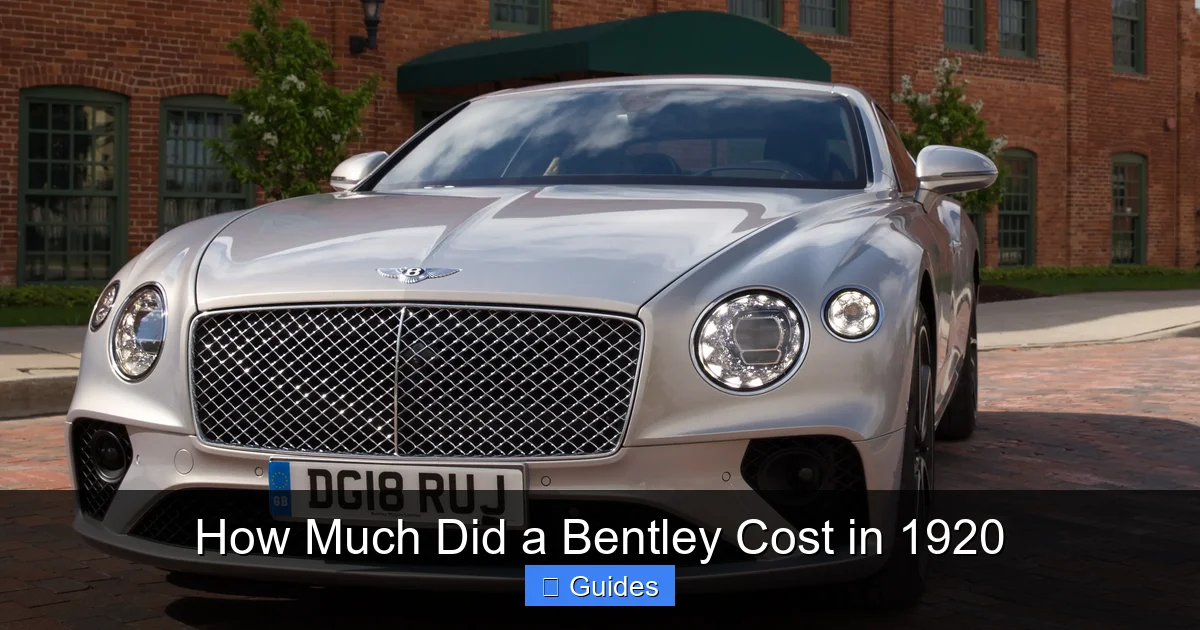
Visual guide about How Much Did a Bentley Cost in 1920
Image source: techcrunch.com
So, how much did a Bentley cost in 1920? The answer is £1,050 for a standard 3 Litre chassis. But that’s just the starting point. The final price could easily double once a custom body was added.
Base Price vs. Final Cost
The £1,050 figure covered the rolling chassis—engine, transmission, suspension, and basic frame. However, the car wasn’t complete without a body, which was typically supplied by a third-party coachbuilder. These bodies could cost anywhere from £500 to £1,500, depending on materials, design, and craftsmanship.
For example, a simple open-top tourer might cost around £1,500 total, while a luxurious saloon with hand-stitched leather and polished wood trim could push the price to £2,500 or more. That’s equivalent to over £100,000 in today’s money—putting it in the same league as a high-end modern luxury car like a Rolls-Royce or Mercedes-Maybach.
Comparing to Other Cars of the Era
To understand how expensive a Bentley was, let’s compare it to other vehicles available in 1920:
– A Ford Model T, the most popular car in the world at the time, cost about £120 in the UK (or $950 in the US). It was mass-produced, utilitarian, and accessible to the middle class.
– A Rolls-Royce Silver Ghost, Bentley’s main competitor, cost around £1,800—significantly more than a Bentley, but also more refined and luxurious.
– A modest family car from a British manufacturer like Austin or Morris might cost £300–£500.
So, a Bentley was roughly 8–9 times more expensive than a Model T and about 60% the price of a Rolls-Royce. This placed it firmly in the upper echelon of automotive luxury, but with a stronger focus on performance and durability.
What Did £1,050 Represent in 1920?
To truly grasp the cost, let’s look at what £1,050 could buy in 1920:
– The average house in Britain cost around £500–£700. So, a Bentley cost more than a typical home.
– A skilled worker earned about £2–£3 per week. It would take over 7 years of saving every penny to afford a Bentley.
– A first-class ticket on the RMS Titanic (in 1912) cost about £870. So, a Bentley was more expensive than a transatlantic voyage on the most luxurious ship of its time.
This context shows just how exclusive Bentley ownership was. It wasn’t just a car—it was a major financial investment, reserved for the truly wealthy.
Inflation and Modern Value: What Would It Cost Today?

Visual guide about How Much Did a Bentley Cost in 1920
Image source: costhack.com
Now, let’s tackle the million-dollar question: What would a 1920 Bentley cost in today’s money?
Inflation Adjustment
Using the UK’s official inflation calculator, £1,050 in 1920 is equivalent to approximately £45,000–£50,000 in 2024. That’s based on the Retail Price Index (RPI), which measures changes in the cost of goods and services over time.
However, inflation adjustments only tell part of the story. They reflect changes in the general price level, but not the relative value of luxury goods, craftsmanship, or rarity.
True Modern Equivalent
A more accurate comparison might be to look at modern luxury performance cars. For example:
– A new Bentley Continental GT starts at around £160,000.
– A Rolls-Royce Ghost begins at over £300,000.
– A high-end sports car like a Porsche 911 Turbo S costs about £150,000.
So, while the inflation-adjusted price is around £50,000, the true modern equivalent—considering brand prestige, performance, and exclusivity—is likely closer to £150,000–£200,000.
But here’s the twist: original 1920 Bentleys are now priceless. They are not just cars—they are museum pieces, historical artifacts, and symbols of a bygone era of motoring. At auction, a well-preserved 3 Litre can sell for £1 million or more, depending on provenance, condition, and racing history.
Why the Huge Increase in Value?
Several factors contribute to the sky-high value of vintage Bentleys:
– **Rarity:** Only about 1,622 Bentley 3 Litres were built between 1921 and 1929. Many were lost to time, war, or neglect.
– **Historical Significance:** These cars represent the birth of a legendary brand and the golden age of British motoring.
– **Motorsport Legacy:** Bentleys won Le Mans five times between 1924 and 1930, earning the nickname “The Silent Sports Car.”
– **Craftsmanship:** Hand-built quality and bespoke design make each car unique.
– **Collector Demand:** Enthusiasts and museums prize original models for their authenticity and heritage.
In short, while a new Bentley in 1920 cost the equivalent of a modest home, today it could cost as much as a mansion.
The Bentley Experience: Owning a 1920 Model
Owning a Bentley in 1920 wasn’t just about the price tag—it was about the experience. Let’s step into the shoes of a new owner and explore what it was like to drive and maintain one of these iconic machines.
Buying Process
Purchasing a Bentley was a highly personalized affair. Buyers would visit the Cricklewood factory or a select dealer, discuss their needs with W.O. Bentley himself (who was deeply involved in early sales), and then choose a coachbuilder for the body. The process could take months, as each car was built to order.
There was no “showroom floor” model. You didn’t just walk in and drive away. You commissioned a masterpiece.
Driving Experience
Driving a 1920 Bentley was an adventure. The car had no power steering, no power brakes, and no automatic transmission. You had to be strong and skilled to handle it. The clutch was heavy, the gearshift was non-synchromesh (meaning you had to double-declutch), and the ride was firm—even by 1920s standards.
But once you got it up to speed, the Bentley came alive. The engine had a distinctive growl, and the car felt solid and planted on the road. It could cruise comfortably at 60 mph, which was highway speed at the time. Long-distance motoring was not only possible—it was encouraged.
Many owners used their Bentleys for touring across Europe, often participating in rallies or endurance events. The car’s reliability made it a favorite among those who valued both speed and stamina.
Maintenance and Upkeep
Owning a Bentley wasn’t cheap, and that included upkeep. Regular maintenance was essential. The engine required frequent oil changes, valve adjustments, and tuning. Tires were prone to punctures (they were thin and made of natural rubber), and spare parts were not always easy to find.
Owners often had a trusted mechanic or worked directly with the factory for servicing. Some even kept detailed logs of mileage, fuel consumption, and repairs—early versions of the modern service history.
Insurance was another expense. While not as regulated as today, high-value cars like Bentleys were insured through specialized brokers, often at significant cost.
Social Status and Lifestyle
Beyond the mechanics, owning a Bentley was a lifestyle choice. It opened doors—literally and socially. Bentley owners were often invited to exclusive motoring clubs, country estates, and high-society events. The car was a conversation starter, a symbol of success, and a badge of honor.
In the 1920s, motoring was still a novelty for many. Seeing a Bentley roar down a country lane turned heads. It wasn’t just transportation—it was theater.
Bentley’s Legacy: From 1920 to Today
The Bentley 3 Litre laid the foundation for one of the most enduring legacies in automotive history. Though the company faced financial difficulties in the 1930s and was eventually acquired by Rolls-Royce, the spirit of W.O. Bentley lives on.
Motorsport Success
The 3 Litre’s durability and speed made it a natural for racing. In 1924, a Bentley 3 Litre driven by John Duff and Frank Clement won the 24 Hours of Le Mans—the first of many victories. These wins cemented Bentley’s reputation as a maker of “the best in its class.”
The nickname “Bentley Boys” was born—a group of wealthy, daring drivers who raced Bentleys for sport and glory. Names like Woolf Barnato, Henry “Tim” Birkin, and Glen Kidston became legends.
Evolution of the Brand
Over the decades, Bentley evolved from a performance-focused manufacturer to a luxury brand synonymous with opulence and refinement. Models like the R-Type Continental, the T-Series, and the modern Continental GT have carried the torch.
Yet, the core values remain: handcrafted quality, British heritage, and a commitment to excellence. Today’s Bentleys are packed with technology, but they still offer bespoke interiors, whisper-quiet cabins, and breathtaking performance.
Collector and Enthusiast Community
Original 1920 Bentleys are now treasured by collectors and museums worldwide. Events like the Goodwood Festival of Speed and the Pebble Beach Concours d’Elegance often feature these classics, where they’re admired not just for their beauty, but for their historical significance.
Restoration projects can take years and cost hundreds of thousands of pounds, but for enthusiasts, it’s a labor of love. Each restored Bentley is a tribute to the vision of W.O. Bentley and the golden age of motoring.
Conclusion: More Than Just a Price Tag
So, how much did a Bentley cost in 1920? The answer is £1,050—but that number only scratches the surface. It was more than a price; it was a statement of ambition, engineering, and exclusivity.
In the context of 1920, a Bentley was a luxury beyond reach for most. It represented the pinnacle of British craftsmanship and performance. Today, while inflation puts the cost at around £50,000, the true value is immeasurable. These cars are now priceless artifacts of automotive history, symbols of a time when driving was an adventure and every mile was earned.
Whether you’re a car enthusiast, a history buff, or simply curious about the past, the story of the 1920 Bentley reminds us that some things—like passion, innovation, and legacy—are truly priceless.
Frequently Asked Questions
How much did a Bentley cost in 1920?
In 1920, a standard Bentley 3 Litre chassis cost around £1,050. With a custom body, the total price could exceed £2,000—equivalent to over £80,000 today.
What could you buy for £1,050 in 1920?
For £1,050, you could buy a house, a year’s worth of university tuition, or over 8 Ford Model T cars. It was a fortune, reserved for the wealthy.
How fast could a 1920 Bentley go?
The Bentley 3 Litre could reach a top speed of about 75 mph, making it one of the fastest production cars of its era.
Are original 1920 Bentleys still around?
Yes, about 1,600 were built, and many survive today. They are highly prized by collectors and can sell for over £1 million at auction.
Who could afford a Bentley in 1920?
Only the upper class, aristocrats, industrialists, and military officers could afford a Bentley. It cost more than seven years of an average worker’s salary.
What made the 1920 Bentley special?
It combined speed, durability, and handcrafted luxury. It was built for performance and endurance, setting the standard for British sports cars.

At CarLegit, we believe information should be clear, factual, and genuinely helpful. That’s why every guide, review, and update on our website is created with care, research, and a strong focus on user experience.