
Car wrapping is a cost-effective way to change your vehicle’s look without a paint job. Prices range from $1,500 to $5,000+, depending on size, material, and design complexity. With proper care, wraps last 5–7 years and protect your original paint.
In This Article
- 1 Key Takeaways
- 2 📑 Table of Contents
- 3 How Much Does It Cost for a Car Wrap? A Complete Guide
- 4 What Is a Car Wrap?
- 5 Factors That Affect Car Wrap Pricing
- 6 Average Car Wrap Prices by Vehicle Type
- 7 DIY vs. Professional Installation: Is It Worth It?
- 8 How to Save Money on a Car Wrap
- 9 Conclusion: Is a Car Wrap Worth the Cost?
- 10 Frequently Asked Questions
Key Takeaways
- Car wrap costs vary widely: Expect to pay between $1,500 and $5,000+ depending on your vehicle size, wrap type, and customization level.
- Vehicle size matters: Compact cars cost less to wrap than SUVs, trucks, or vans due to surface area and labor time.
- Material quality impacts price: Premium vinyl like 3M or Avery Dennison lasts longer and looks better but costs more than budget films.
- Design complexity adds cost: Custom graphics, color changes, or intricate patterns increase labor and material expenses.
- Labor is a major factor: Professional installation ensures durability and a flawless finish—DIY kits may seem cheaper but often lead to costly mistakes.
- Location affects pricing: Urban areas with higher living costs typically charge more for car wrapping services.
- Maintenance is minimal but important: Regular washing and avoiding harsh chemicals help extend the life of your wrap and protect your investment.
📑 Table of Contents
How Much Does It Cost for a Car Wrap? A Complete Guide
So, you’re thinking about giving your car a fresh new look—without the permanent commitment of a paint job. Enter the car wrap: a sleek, customizable, and reversible way to transform your vehicle’s appearance. Whether you want a bold matte black finish, a vibrant color change, or a full custom graphic design, car wrapping has become a popular choice for car enthusiasts, business owners, and everyday drivers alike.
But before you dive in, the big question remains: how much does it cost for a car wrap? The answer isn’t one-size-fits-all. Pricing depends on several key factors, including your vehicle’s size, the type of vinyl used, the complexity of the design, and who’s doing the installation. While a basic wrap on a compact car might start around $1,500, a full custom wrap on a large SUV with premium materials can easily exceed $5,000.
In this guide, we’ll break down everything you need to know about car wrap pricing. We’ll explore the different types of wraps, what influences cost, how to choose the right installer, and tips to get the best value for your money. By the end, you’ll have a clear picture of what to expect—and how to make your car wrap project a success.
What Is a Car Wrap?
Visual guide about How Much Does It Cost for a Car Wrap
Image source: autogos.com
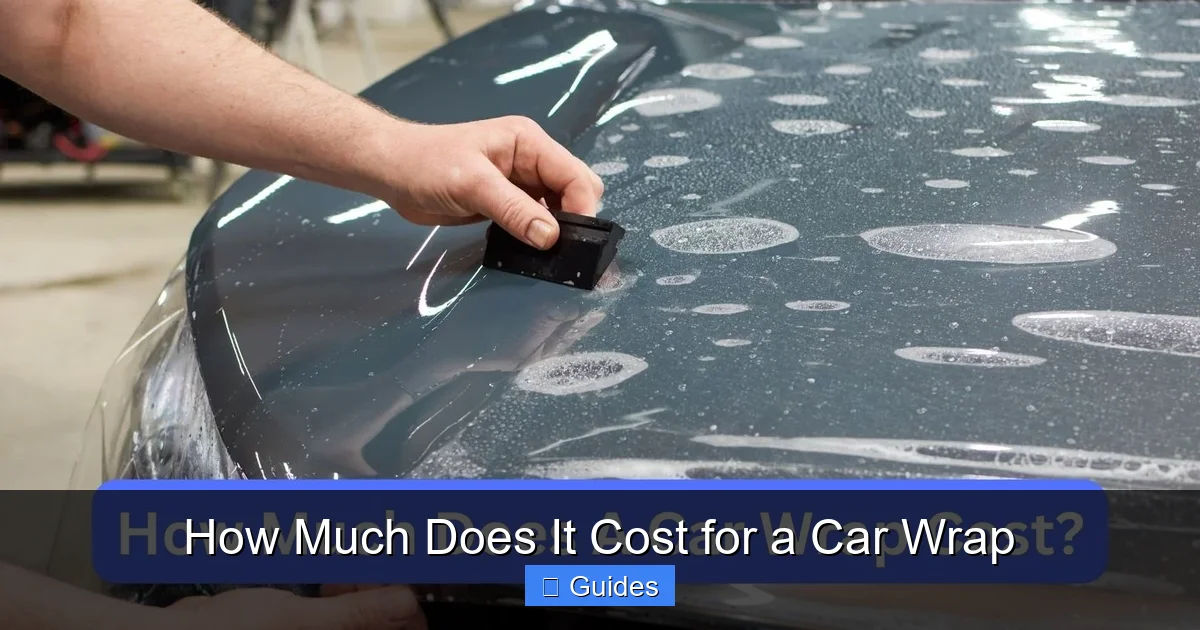
Before we get into pricing, let’s clarify what a car wrap actually is. A car wrap is a large piece of adhesive vinyl film that’s applied to the exterior surfaces of a vehicle. It completely covers the original paint, giving the car a new color, texture, or design. Unlike paint, wraps are non-permanent—meaning you can remove them (usually after 5–7 years) without damaging the factory finish underneath.
Car wraps are made from high-quality, flexible vinyl that’s designed to conform to curves, edges, and complex contours. Modern wraps are durable, weather-resistant, and available in a wide range of finishes—from glossy and matte to chrome, carbon fiber, and even textured options like brushed metal.
One of the biggest advantages of a car wrap is versatility. Want to go from silver to electric blue? No problem. Need to advertise your business with a full-color logo and contact info? A wrap can do that too. And if you ever decide to sell your car, removing the wrap reveals the original paint in pristine condition—potentially boosting resale value.
Types of Car Wraps
Not all car wraps are created equal. The type of wrap you choose will significantly impact both the look and the cost. Here are the most common options:
Full Wrap: This covers the entire vehicle—roof, hood, doors, fenders, and even mirrors. It’s the most dramatic transformation and typically the most expensive, but it offers complete coverage and a seamless finish.
Partial Wrap: Also known as a “half wrap,” this covers only certain areas, like the hood, roof, or side panels. It’s a budget-friendly option that still makes a visual impact. For example, a black roof wrap on a white car creates a sleek “floating roof” effect.
Color Change Wrap: This is the most popular type for personal vehicles. It changes the car’s color while maintaining a factory-like finish. Popular choices include matte black, gloss red, or satin gray.
Custom Graphic Wrap: Ideal for businesses or creative individuals, this type includes logos, patterns, images, or artwork. Think racing stripes, flames, or full-body murals. These require more design work and precision, increasing the price.
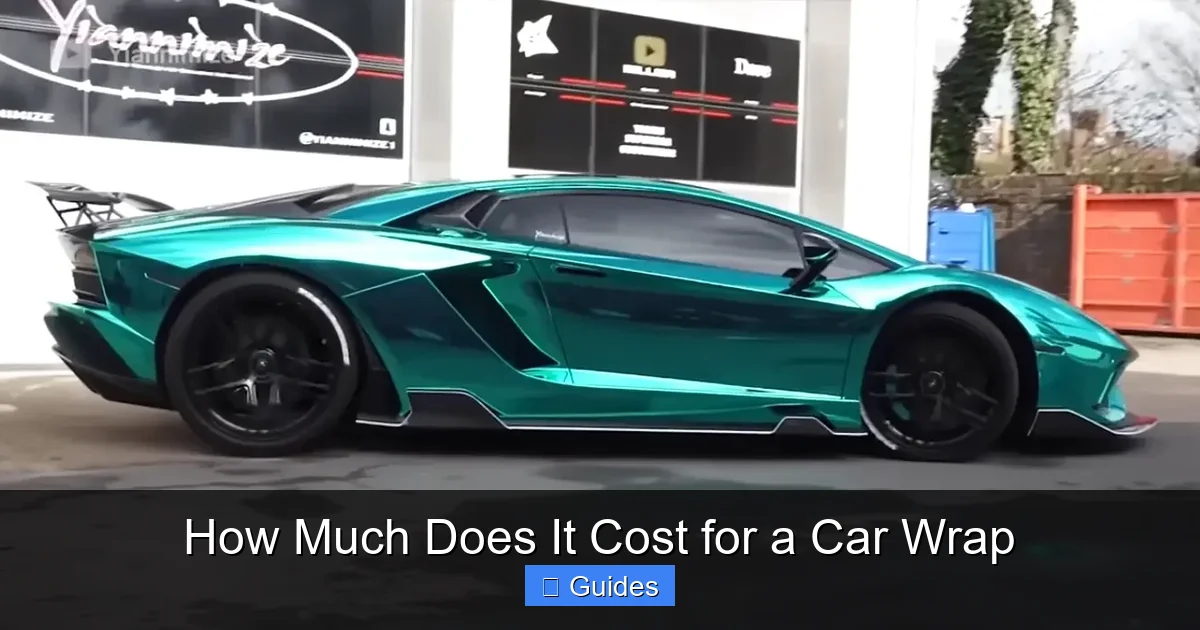
Chrome or Specialty Wraps: These use reflective or textured films for a high-impact look. Chrome wraps, for instance, give your car a mirror-like finish but are more prone to scratching and require extra care.
Each type serves a different purpose and comes with its own price tag. A full color change wrap on a sedan will cost less than a custom graphic wrap on an SUV, even if both use the same vinyl quality.
Factors That Affect Car Wrap Pricing
Visual guide about How Much Does It Cost for a Car Wrap
Image source: carsonelove.com
Now that you know the types of wraps available, let’s dig into what actually determines the cost. Several variables come into play, and understanding them will help you budget wisely and avoid surprises.
Vehicle Size and Shape
This is the single biggest factor in pricing. The larger the vehicle, the more vinyl is needed—and the more time it takes to install. A compact car like a Honda Civic has less surface area than a full-size truck like a Ford F-150. As a result, wrapping a Civic might cost $2,000, while wrapping an F-150 could run $4,000 or more.
But it’s not just about size—shape matters too. Vehicles with complex curves, deep contours, or hard-to-reach areas (like grilles, door handles, or wheel wells) require more skill and time to wrap properly. A sports car with sleek, flowing lines might be easier to wrap than a boxy SUV with sharp edges and multiple panels.
Type and Quality of Vinyl
Not all vinyl is created equal. The brand, thickness, and finish of the film directly affect both durability and cost. Here’s a quick breakdown:
Budget Vinyl ($10–$20 per square foot): These are generic or off-brand films that may look good initially but tend to fade, crack, or peel over time. They’re often used in DIY kits but aren’t recommended for professional installations.
Mid-Range Vinyl ($20–$35 per square foot): Brands like Vivid or KPMF offer decent quality at a reasonable price. They’re suitable for partial wraps or short-term use but may not last as long as premium options.
Premium Vinyl ($35–$60+ per square foot): Top-tier brands like 3M, Avery Dennison, and Arlon are the gold standard. They’re thicker, more flexible, and resistant to UV rays, scratches, and fading. Premium vinyl can last 5–7 years with proper care and often comes with manufacturer warranties.
For example, a full wrap using 3M 1080 Series film will cost more upfront but offers superior longevity and a flawless finish. If you’re planning to keep the wrap for several years, investing in premium vinyl is usually worth it.
Design Complexity
The more intricate the design, the higher the cost. A simple solid color wrap is straightforward: apply the film, trim the edges, and finish. But if you want custom graphics, gradients, or multi-color patterns, the process becomes much more involved.
Design complexity affects both material waste and labor time. For instance, a wrap with cut-out sections for door handles or emblems requires precise plotting and hand-trimming. A full-color logo with fine details needs careful alignment and may require multiple layers.
Custom designs also often involve a digital mockup or proof before installation. Some shops charge a small design fee (typically $50–$200), which may be waived if you proceed with the wrap.
Labor and Installation Expertise
You might be tempted to save money with a DIY kit, but professional installation is almost always the better choice. Wrapping a car is a highly skilled job that requires experience, the right tools, and a clean, climate-controlled environment.
Professional installers use heat guns, squeegees, and precision knives to ensure the vinyl adheres smoothly without bubbles, wrinkles, or misalignment. They also know how to handle tricky areas like mirrors, bumpers, and trim pieces.
Labor costs typically range from $500 to $1,500, depending on the shop’s reputation and location. A reputable installer with years of experience will charge more—but you’re paying for quality, durability, and peace of mind.
Geographic Location
Where you live plays a role in pricing. Shops in major cities like Los Angeles, New York, or Miami often charge more due to higher overhead and demand. In contrast, smaller towns or rural areas may offer lower rates.
For example, a full wrap in San Francisco might cost $4,500, while the same job in Omaha could be $3,200. That said, don’t automatically choose the cheapest option—quality matters more than location.
Additional Services
Some shops offer add-ons that can increase the total cost but enhance the final result. These include:
Paint Correction: If your car has swirl marks, scratches, or oxidation, the installer may recommend polishing the paint before applying the wrap. This ensures a smooth, flawless surface and can cost $200–$500.
Trim Removal: For a seamless look, some installers remove door handles, mirrors, or emblems before wrapping. This adds time and labor but improves the finish.
Warranty: Many professional shops offer a 3–5 year warranty on their work, covering peeling, fading, or bubbling. This adds value and protects your investment.
Average Car Wrap Prices by Vehicle Type
Visual guide about How Much Does It Cost for a Car Wrap
Image source: vinylwrapro.com
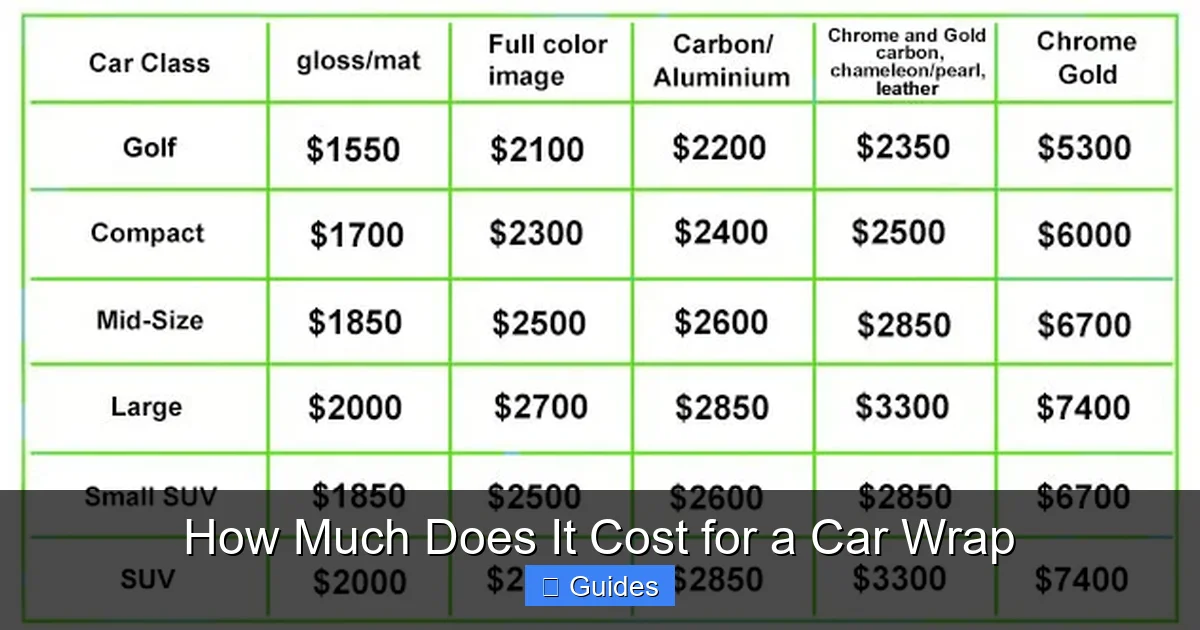
To give you a clearer idea of what to expect, here’s a breakdown of average costs based on vehicle size and wrap type. Keep in mind that these are estimates—actual prices may vary.
Compact Cars (e.g., Honda Civic, Toyota Corolla)
- Partial Wrap: $800–$1,500
- Full Color Change Wrap: $1,500–$2,500
- Custom Graphic Wrap: $2,000–$3,500
These vehicles have less surface area and simpler shapes, making them the most affordable to wrap. A full color change in premium vinyl typically falls in the $2,000 range.
Sedans and Coupes (e.g., BMW 3 Series, Ford Mustang)
- Partial Wrap: $1,000–$1,800
- Full Color Change Wrap: $2,000–$3,500
- Custom Graphic Wrap: $2,500–$4,500
Slightly larger than compact cars, sedans and coupes require more material and time. Sports cars with complex curves may push prices toward the higher end.
SUVs and Crossovers (e.g., Toyota RAV4, Jeep Grand Cherokee)
- Partial Wrap: $1,200–$2,200
- Full Color Change Wrap: $2,500–$4,000
- Custom Graphic Wrap: $3,000–$5,000+
SUVs have more surface area and often include roof racks, spoilers, and larger mirrors—adding to the complexity and cost.
Trucks and Vans (e.g., Ford F-150, Mercedes Sprinter)
- Partial Wrap: $1,500–$2,500
- Full Color Change Wrap: $3,500–$5,500
- Custom Graphic Wrap: $4,000–$7,000+
These are the most expensive to wrap due to their size and boxy shapes. Full wraps on trucks often exceed $5,000, especially with premium materials and custom designs.
DIY vs. Professional Installation: Is It Worth It?
You might be wondering: can I save money by wrapping my car myself? The short answer is yes—but it’s risky.
DIY car wrap kits are available online for as little as $200–$500. They include vinyl, application tools, and instructions. On the surface, it seems like a great way to cut costs. But here’s the reality: wrapping a car is far more difficult than it looks.
The Challenges of DIY Wrapping
Skill and Experience: Professional installers spend years mastering their craft. They know how to stretch vinyl without tearing, how to avoid air bubbles, and how to handle complex curves. Most DIYers lack this expertise.
Environment Matters: Dust, humidity, and temperature can ruin a wrap. Even a single speck of dust under the film can create a visible bump. Professionals work in clean rooms with climate control.
Tools and Equipment: Proper wrapping requires heat guns, precision knives, and high-quality squeegees. Cheap tools can damage the vinyl or leave scratches.
Time Commitment: A full wrap can take 2–5 days for a beginner. Professionals do it in 1–2 days.
When DIY Might Make Sense
DIY wrapping can work for small projects—like wrapping a side mirror, spoiler, or hood decal. These require less material and are easier to manage. But for a full vehicle wrap, the risks usually outweigh the savings.
A poorly installed wrap can peel, bubble, or fade quickly—costing you more in repairs or rewrapping. Plus, if you plan to sell the car, a botched DIY job can hurt resale value.
The Case for Professionals
Hiring a professional ensures a high-quality, long-lasting result. You get access to premium materials, expert craftsmanship, and often a warranty. Most importantly, you save time and stress.
When choosing an installer, look for:
- Certifications (e.g., 3M Preferred Installer)
- Positive reviews and portfolio photos
- Clear pricing and warranty terms
- A clean, professional workspace
Don’t be afraid to ask for references or visit the shop in person. A reputable installer will be happy to show you their work.
How to Save Money on a Car Wrap
While car wrapping isn’t cheap, there are smart ways to reduce costs without sacrificing quality.
Choose a Simpler Design
Opt for a solid color or basic finish instead of intricate graphics. A matte black wrap will cost less than a custom flame design with multiple colors.
Go Partial Instead of Full
If you want a dramatic look but have a tight budget, consider a partial wrap. A roof and hood wrap can transform your car’s appearance for a fraction of the cost.
Shop Around
Get quotes from at least 3–5 reputable shops. Compare not just price, but also materials, warranties, and customer reviews. The cheapest option isn’t always the best.
Time It Right
Some shops offer seasonal discounts or promotions. Winter months (when demand is lower) might be a good time to negotiate a better rate.
Maintain Your Wrap
Proper care extends the life of your wrap, protecting your investment. Wash your car regularly with mild soap, avoid automatic car washes with brushes, and park in the shade when possible.
Conclusion: Is a Car Wrap Worth the Cost?
So, how much does it cost for a car wrap? As we’ve seen, the answer depends on your vehicle, your vision, and your budget. But one thing is clear: a professionally installed car wrap is a worthwhile investment.
It gives you the freedom to change your car’s look anytime, protects the original paint, and can even increase resale value. Whether you’re going for a sleek color change or a bold custom design, a wrap offers flexibility and style that paint simply can’t match.
While prices range from $1,500 to $5,000+, the value goes beyond aesthetics. You’re paying for durability, craftsmanship, and peace of mind. And with proper care, your wrap can look stunning for years to come.
If you’re ready to transform your ride, start by researching local installers, gathering quotes, and choosing the right vinyl for your needs. With the right approach, your car wrap project can be a smooth, rewarding experience—and a head-turning result.
Frequently Asked Questions
How long does a car wrap last?
A high-quality car wrap can last 5 to 7 years with proper care. Premium vinyl from brands like 3M or Avery Dennison offers the best longevity and resistance to fading, cracking, and peeling.
Can I wash my car after a wrap?
Yes, but wait at least 2–3 weeks for the adhesive to fully cure. Use hand washing with mild soap and avoid high-pressure sprays or automatic brush washes, which can damage the edges.
Will a car wrap damage my paint?
No—when installed and removed properly, a car wrap protects your original paint. In fact, it can prevent scratches, UV damage, and minor abrasions.
Can I remove a car wrap myself?
It’s possible, but not recommended. Improper removal can leave adhesive residue or damage the paint. It’s best to have a professional remove it using heat and specialized tools.
Are car wraps legal?
Yes, in most places. However, some states have restrictions on certain colors (like red or blue, which may resemble emergency vehicles) or reflective finishes. Check local laws before choosing a design.
Can I wrap a car with existing damage?
It’s not ideal. Deep scratches, rust, or peeling paint can show through the wrap or cause adhesion issues. Most installers recommend paint correction or repairs before wrapping.

At CarLegit, we believe information should be clear, factual, and genuinely helpful. That’s why every guide, review, and update on our website is created with care, research, and a strong focus on user experience.