
Featured image for How Much Does It Cost To Fix Bmw Chassis Stabilization
Image source: thepricer.org
Repairing BMW chassis stabilization typically costs between $1,500 and $3,000, but can exceed $5,000 for severe issues like hydraulic system failures. Costs vary based on the faulty component—sensors, control modules, or sway bar actuators—and dealership versus independent shop labor rates. For the best value, prioritize a thorough diagnostic scan to avoid unnecessary part replacements.
In This Article
- 1 Key Takeaways
- 2 📑 Table of Contents
- 3 BMW Chassis Stabilization Repair Costs Explained
- 4 What Exactly is BMW Chassis Stabilization?
- 5 Why Does the Chassis Stabilization Light Come On?
- 6 The Critical First Step: Professional Diagnosis
- 7 Breaking Down BMW Chassis Stabilization Repair Costs
- 8 BMW Chassis Stabilization Repair Cost Scenarios at a Glance
- 9 Smart Tips to Manage Your Repair Bill
- 10 Conclusion: Knowledge is Power (and Savings)
- 11 Frequently Asked Questions
- 11.1 What is BMW chassis stabilization?
- 11.2 How much does it cost to repair BMW chassis stabilization?
- 11.3 What are the signs of a failing BMW chassis stabilization system?
- 11.4 Is it safe to drive with a chassis stabilization warning light on?
- 11.5 What causes BMW chassis stabilization failure?
- 11.6 Can I fix BMW chassis stabilization myself?
Key Takeaways
- Costs vary widely: Expect to pay $200 to $2000+.
- Diagnose first: Use professional scanning to identify exact faults.
- Labor is costly: Shop rates significantly impact total repair bills.
- Model affects price: Repairs cost more on newer or high-end models.
- Explore part options: Aftermarket or used parts can save money.
- Maintain proactively: Regular system checks prevent major failures.
📑 Table of Contents
- BMW Chassis Stabilization Repair Costs Explained
- What Exactly is BMW Chassis Stabilization?
- Why Does the Chassis Stabilization Light Come On?
- The Critical First Step: Professional Diagnosis
- Breaking Down BMW Chassis Stabilization Repair Costs
- BMW Chassis Stabilization Repair Cost Scenarios at a Glance
- Smart Tips to Manage Your Repair Bill
- Conclusion: Knowledge is Power (and Savings)
BMW Chassis Stabilization Repair Costs Explained
You’re cruising down your favorite winding road, the BMW’s steering feeling like an extension of your own arms. Then, it happens. A sudden, stern yellow light on your dashboard—a car skidding over a triangle, often with “DSC” or “CHASSIS STABILIZATION” next to it. Your heart sinks. That light is the gateway to a world of automotive worry, and your first thought is almost always, “How much is this going to cost me?”
If that sounds familiar, you’re not alone. The chassis stabilization system is a masterpiece of modern engineering, a silent guardian that keeps you safe. But when it falters, the path to fixing it can feel shrouded in mystery and fear of a staggering bill. We’re here to clear the fog. In this guide, we’ll walk through exactly what this system does, why it fails, and most importantly, demystify the real-world costs of BMW chassis stabilization repair. No scare tactics, just straight talk from one car enthusiast to another.
Think of this as your roadmap. We’ll break down the price from a simple sensor swap to a major component replacement, give you tips on diagnosis, and share how you might save money without compromising on quality. Let’s turn that warning light from a source of anxiety into a solvable puzzle.
What Exactly is BMW Chassis Stabilization?
Before we talk about costs, let’s understand what we’re fixing. It’s not one single part; it’s a brilliant network of computers and components working in harmony. You might know it by different names: DSC (Dynamic Stability Control), DTC (Dynamic Traction Control), or simply the stability control system. It’s your car’s electronic co-pilot for grip.
Visual guide about How Much Does It Cost To Fix Bmw Chassis Stabilization
Image source: autogos.com
The System’s Mission: Invisible Safety
Imagine taking a sharp turn too fast. In an older car, you might feel the rear end start to slide (oversteer) or the front tires plow forward (understeer). The chassis stabilization system’s job is to prevent that. Using a network of sensors, it constantly monitors your steering angle, wheel speed, lateral acceleration, and yaw rate (the car’s rotation). If it detects the car is *about* to lose control—often before you even feel it—it springs into action.
Key Components That Make It Work
This system relies on several key players. Knowing them helps understand repair bills:
- Wheel Speed Sensors: At each wheel, these measure how fast each tire is spinning. A major difference in speed between wheels signals a skid.
- Steering Angle Sensor: Located in the steering column, it tells the computer where you *intend* to go.
- Yaw Rate and Lateral Acceleration Sensors: Often housed together in a single unit, usually under a seat or in the center console. These are the system’s inner ear, sensing the car’s rotation and side-to-side movement.
- DSC Hydraulic Unit: The heart of the system. This module contains the pump, valves, and the main computer. It receives data from the sensors and commands the brakes.
- Brake Force & Engine Management: The system works by applying braking force to individual wheels and, if needed, reducing engine power to bring the car back in line.
Why Does the Chassis Stabilization Light Come On?
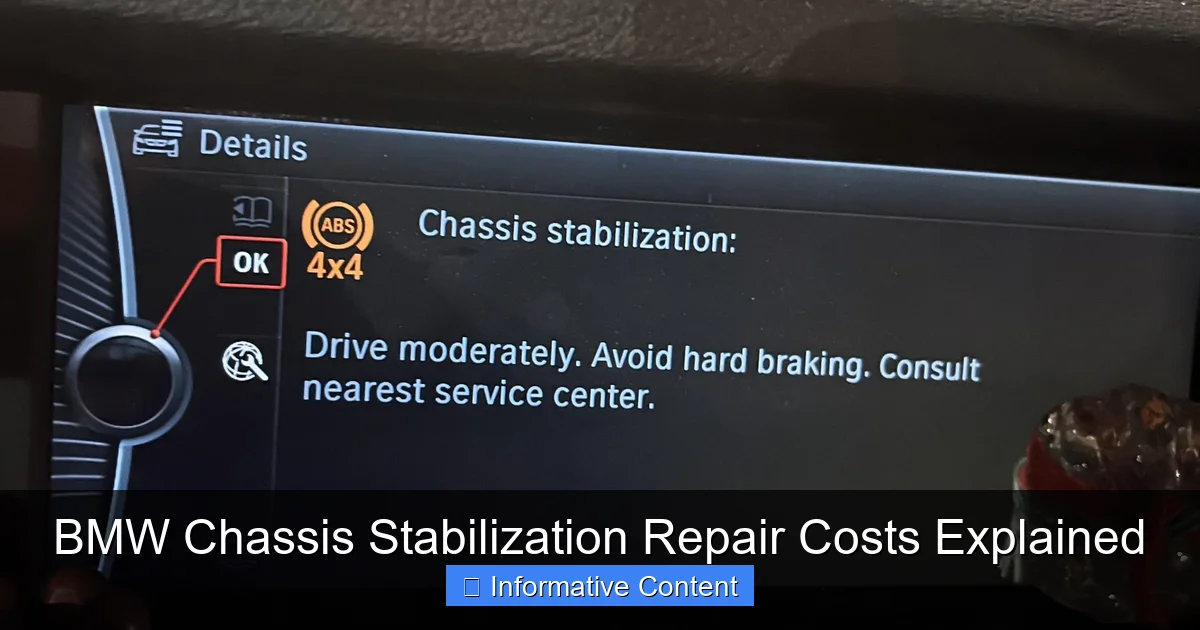
The dreaded illumination can mean many things, from a minor hiccup to a serious fault. The cost to fix your BMW chassis stabilization issue depends entirely on the root cause.
Visual guide about How Much Does It Cost To Fix Bmw Chassis Stabilization
Image source: i.redd.it
Common Culprits: From Simple to Severe
Here are the most frequent offenders, roughly from least to most expensive:
- A Faulty Wheel Speed Sensor: This is the single most common cause. Road debris, corrosion, or just age can damage these sensors. You’ll often see the ABS light on as well.
- Steering Angle Sensor Issues: These can fail or just need a recalibration, especially after a wheel alignment or battery disconnection.
- Problems with the Yaw/Lateral Sensor Cluster: These sensitive units can be damaged by impacts or moisture. A faulty one sends bad data, confusing the entire system.
- Failing DSC Hydraulic Unit or Pump: This is the big-ticket item. Internal valve failures, pump motor issues, or computer faults within the unit itself require major repair or replacement.
- Wiring or Module Communication Faults: Corroded wires, damaged connectors, or issues with other modules (like the ABS module) can disrupt the conversation between components.
- Brake System Issues: Worn brake pads, low fluid, or a faulty brake pressure sensor can trigger the light, as the stability system relies on a healthy brake system.
Don’t Ignore the Warning Signs
Sometimes the light isn’t the only symptom. You might notice the system intervening at odd times, a pulsating brake pedal when braking normally, or a loss of power steering assist in some models. Any of these paired with the light means a visit to a mechanic is overdue.
The Critical First Step: Professional Diagnosis
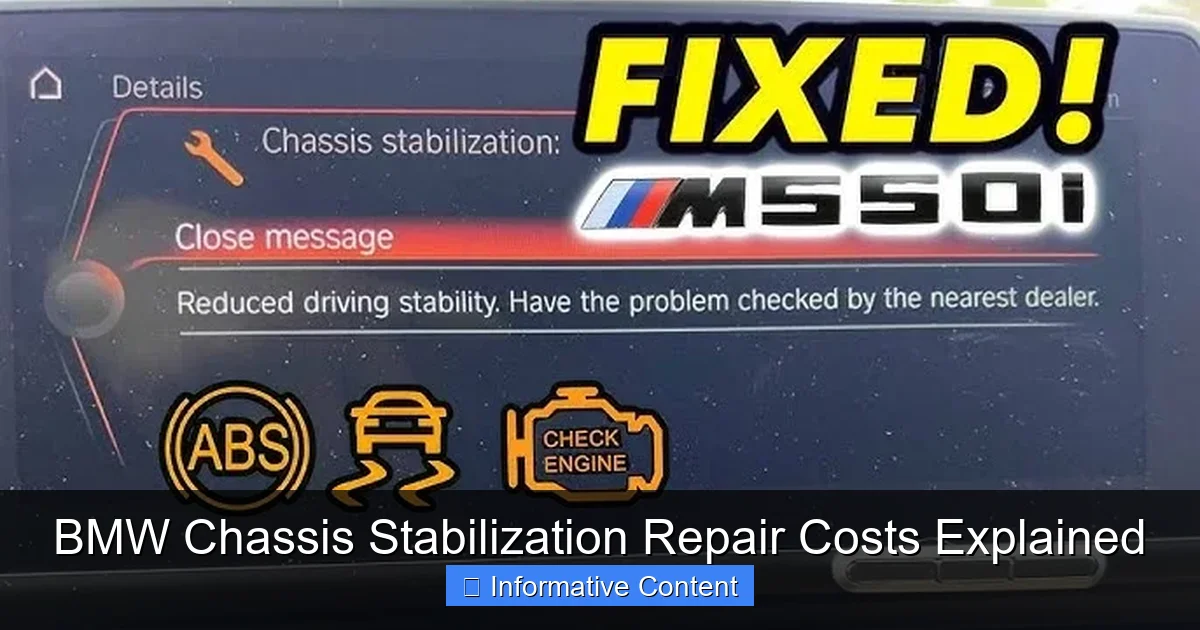
This is the most important piece of advice we can give: Do not skip proper diagnosis. Throwing parts at a complex system like this is a surefire way to waste money. The cost to diagnose a BMW chassis stabilization problem is an investment, not an expense.
Visual guide about How Much Does It Cost To Fix Bmw Chassis Stabilization
Image source: thecarhow.com
What a Good Mechanic Will Do
A specialist will use a professional-grade BMW scanner (like ISTA, Autologic, or a high-end aftermarket tool) to read the specific fault codes stored in the DSC module. The code is the starting point. For example:
- A code for “left front wheel speed sensor, plausibility” points directly to that sensor.
- A code for “DSC hydraulic pump activation” suggests an internal pump failure.
After pulling codes, a technician will perform live data tests, checking the real-time readings from each sensor while driving or on a lift. This confirms if a sensor is dead or just giving bad information.
The Price of Knowledge
Expect to pay between $120 and $250 for a professional diagnosis at an independent BMW specialist. A dealership will typically charge more. This fee usually includes code reading, basic data analysis, and a test drive. It’s the map that shows you exactly where you need to go, saving you from expensive detours.
Breaking Down BMW Chassis Stabilization Repair Costs
Now for the numbers. Costs vary wildly based on the faulty component, your model, and labor rates in your area. We’ll use common repair scenarios for a mainstream model like a BMW 3 Series (E90/F30) or 5 Series (E60/F10) as a baseline. Luxury models like the 7 Series or X5 may have higher parts costs.
Scenario 1: The Wheel Speed Sensor Replacement
This is your best-case scenario, and thankfully, a common one.
- Parts: A single, quality aftermarket or OEM sensor costs $50 – $150.
- Labor: This is typically a 0.5 to 1-hour job per sensor. Labor rates range from $100/hr (independent) to $180+/hr (dealership).
- Total Estimated Cost: $150 – $350 for one sensor. If multiple fail, the cost scales up.
Scenario 2: Steering Angle Sensor Replacement/Calibration
This can be a mid-range repair.
- Parts: A new sensor can cost $200 – $400.
- Labor: Replacement can take 1-2 hours, and the critical step is a calibration process that requires a scanner. Total labor might be 1.5-2.5 hours.
- Total Estimated Cost: $400 – $900.
Scenario 3: Yaw Rate/Lateral Acceleration Sensor Replacement
These sensitive units are pricey but usually straightforward to replace.
- Parts: The sensor cluster itself is costly, ranging from $300 to $700+ for a new OEM part.
- Labor: Location varies, but access is often under a seat or console. Labor is typically 1-1.5 hours.
- Total Estimated Cost: $500 – $1,200.
Scenario 4: DSC Hydraulic Unit Repair or Replacement
This is the major repair. You have two main paths:
- Option A: Repair/Refurbish: Specialists can often rebuild your existing unit. This involves replacing seals, valves, and the pump motor. A rebuilt/exchange unit typically costs $800 – $1,500 for the part alone. Labor to remove, bench-bleed, and reinstall is significant—often 3-5 hours. Total job: $1,500 – $2,500.
- Option B: Brand New OEM Unit: A new DSC module from BMW can be astronomically expensive, sometimes $2,500 – $3,500+ for the part. With labor, the total can easily exceed $4,000.
BMW Chassis Stabilization Repair Cost Scenarios at a Glance
This table illustrates common repair scenarios to give you a clear picture of potential investment ranges. Prices are estimates for common models (e.g., 3 Series) and can vary based on model year, location, and shop rates.
| Repair Scenario | Typical Parts Cost Range | Typical Labor Cost Range | Estimated Total Cost Range | Notes |
|---|---|---|---|---|
| Single Wheel Speed Sensor | $50 – $150 | $75 – $200 | $150 – $350 | Most common fix; often DIY-able for the handy. |
| Steering Angle Sensor | $200 – $400 | $150 – $450 | $400 – $900 | Requires professional calibration with a scanner. |
| Yaw Rate/Lateral Sensor | $300 – $700 | $100 – $300 | $500 – $1,200 | Part is sensitive; programming may be needed. |
| DSC Unit (Repair/Rebuilt) | $800 – $1,500 | $300 – $750 | $1,500 – $2,500 | Most cost-effective path for a failed hydraulic unit. |
| DSC Unit (New OEM from Dealer) | $2,500 – $3,500+ | $300 – $750 | $3,000 – $4,500+ | Highest-cost option; usually a last resort. |
| System Diagnosis Only | N/A | $120 – $250 | $120 – $250 | Essential first step; cost often credited toward repair. |
Smart Tips to Manage Your Repair Bill
Facing a potential four-figure repair is tough, but there are ways to navigate it wisely and potentially save money on your BMW chassis stabilization fix.
Choose the Right Repair Shop
The dealership is not your only option. A reputable independent shop that specializes in European cars, especially BMWs, is often your best bet. They have the right tools and knowledge but usually charge lower labor rates than the dealer. Ask for recommendations in local BMW enthusiast groups online.
Consider Quality Aftermarket or Rebuilt Parts
For components like wheel sensors, steering angle sensors, and even rebuilt DSC units, high-quality aftermarket brands (like Bosch, ATE, or Febi Bilstein) offer reliable performance at a lower cost than genuine BMW parts. A rebuilt DSC unit from a reputable supplier can save you thousands over a new one.
Ask About Your Old Parts
If you opt for a rebuilt DSC unit exchange, you’ll send your old core back. For other replacements, ask for your old part back. A good mechanic will have no problem with this. It provides transparency about what was actually replaced.
Don’t Delay the Repair
While the car is often drivable with the light on (but with the stability system disabled), you’re without a crucial safety feature. Furthermore, ignoring a failing DSC pump, for example, can lead to a complete failure that leaves you with no brake assist—a dangerous and more expensive situation. Addressing the BMW chassis stabilization warning promptly is a safety and financial priority.
Conclusion: Knowledge is Power (and Savings)
Seeing the chassis stabilization light on your BMW’s dash is never welcome news, but it doesn’t have to be a financial catastrophe. As we’ve explored, the cost to fix BMW chassis stabilization runs a wide gamut, from a few hundred dollars for a simple sensor to several thousand for a major hydraulic unit replacement. The key is a methodical approach: start with a professional diagnosis to identify the true culprit, then explore your repair options with a trusted specialist.
Remember, this system is there to protect you and your passengers. Investing in its repair is an investment in safety. By understanding the components, the common failure points, and the realistic price ranges, you can walk into the repair shop with confidence, ask the right questions, and make an informed decision that gets your Ultimate Driving Machine back to being both safe and thrilling to drive. Now, you’re equipped not just with a cost estimate, but with the knowledge to tackle the problem head-on.
Frequently Asked Questions
What is BMW chassis stabilization?
BMW chassis stabilization, often called Dynamic Stability Control (DSC), is a safety system that helps maintain vehicle control during cornering or on slippery surfaces. It uses sensors to detect skidding and automatically applies brakes to individual wheels to stabilize the car.
How much does it cost to repair BMW chassis stabilization?
The cost to repair BMW chassis stabilization typically ranges from $500 to $2,000, depending on the specific issue and your vehicle model. Factors like labor rates, parts needed (e.g., sensors or control modules), and whether you use a dealership or independent shop can significantly influence the final price.
What are the signs of a failing BMW chassis stabilization system?
Common signs include the DSC warning light illuminating on the dashboard, reduced stability during turns, or unusual braking behavior. You might also experience traction control issues or the system activating unnecessarily under normal driving conditions.
Is it safe to drive with a chassis stabilization warning light on?
Driving with a chassis stabilization warning light on is not recommended as it indicates a malfunction in a key safety system. While the car may still operate, you could have reduced stability control, increasing the risk of accidents, especially in wet or slippery conditions.
What causes BMW chassis stabilization failure?
Common causes include faulty wheel speed sensors, issues with the steering angle sensor, or problems with the DSC control module. Other culprits can be damaged wiring, low brake fluid, or worn brake components that interfere with the system’s operation.
Can I fix BMW chassis stabilization myself?
DIY fixes are possible for minor issues like replacing wheel speed sensors, but complex problems often require specialized diagnostic tools and expertise. Attempting repairs without proper knowledge can lead to further damage, so it’s usually best to consult a professional mechanic for accurate diagnosis and repair.

At CarLegit, we believe information should be clear, factual, and genuinely helpful. That’s why every guide, review, and update on our website is created with care, research, and a strong focus on user experience.