

Tinting your car windows can cost anywhere from $100 to $600 or more, depending on the type of film, your vehicle size, and installation quality. This guide breaks down all the factors that affect pricing so you can make an informed decision without overspending.
Thinking about tinting your car windows? You’re not alone. Window tinting is one of the most popular aftermarket upgrades for vehicles, and for good reason. It adds privacy, reduces glare, keeps your interior cooler, and protects against harmful UV rays. But before you book an appointment, you probably want to know: *How much does it cost to tint car windows?*
The short answer? It depends. A lot. From the type of film you choose to the size of your vehicle and where you live, several factors influence the final price tag. While a basic tint job might set you back just $100, a high-end ceramic tint on a full-size SUV could easily exceed $600. And that’s before considering potential legal restrictions or add-on features.
In this guide, we’ll walk you through everything you need to know about car window tinting costs—so you can budget wisely, avoid common pitfalls, and get the best value for your money. Whether you’re looking for a sleek, dark look or maximum heat rejection, understanding the pricing landscape will help you make a smart, informed decision.
In This Article
- 1 Key Takeaways
- 2 📑 Table of Contents
- 3 What Affects the Cost of Car Window Tinting?
- 4 Average Pricing by Film Type and Vehicle
- 5 Legal Considerations and Hidden Costs
- 6 Tips to Save Money Without Sacrificing Quality
- 7 Long-Term Value: Why Investing Matters
- 8 Conclusion: Make an Informed Choice
- 9 Frequently Asked Questions
Key Takeaways
- Basic tint jobs start around $100–$200 for small cars using dyed film. This budget-friendly option offers privacy and heat reduction but may fade over time.
- Ceramic and carbon films offer superior performance and cost $300–$600+. These high-end options block more heat, UV rays, and last longer without bubbling or peeling.
- Vehicle size and number of windows significantly impact total cost. SUVs and trucks with larger windows will cost more than compact sedans.
- Professional installation ensures durability and avoids legal issues. DIY kits may seem cheaper but often lead to bubbles, peeling, and non-compliance with local laws.
- Local regulations affect both cost and film choice. Some states limit how dark you can go, requiring lighter films that may cost more due to specialized materials.
- Warranties and add-ons like UV protection or anti-glare coatings increase price. These extras enhance comfort and protection but come at a premium.
- Always get multiple quotes from certified installers. Prices vary widely by region and shop reputation—shopping around saves money and ensures quality.
📑 Table of Contents
What Affects the Cost of Car Window Tinting?
So, what exactly determines how much you’ll pay to tint your car windows? Let’s break it down into the main cost drivers.
First and foremost is the **type of window film**. Not all tints are created equal. Basic dyed films are the cheapest but offer limited performance. On the other end of the spectrum, ceramic films use advanced nanotechnology to block infrared heat without interfering with electronic signals—like your phone or GPS. Naturally, this tech comes at a higher price.
Next, consider your **vehicle type**. A compact car like a Honda Civic has fewer and smaller windows than a full-size truck or SUV. More surface area means more material and labor, which increases the total cost. Rear windshields are especially tricky because they’re curved and often require custom-cut film.
Then there’s **installation quality**. Professional shops charge more than DIY kits, but they also provide precision, clean edges, and warranties. A poorly installed tint can bubble, peel, or even crack your windows—costing you more in the long run.
Finally, **local regulations** play a role. Some states limit how dark your side or rear windows can be (measured in VLT—Visible Light Transmission). If your desired shade isn’t legal, you may need a lighter, more expensive film to stay compliant.
Film Type: The Biggest Price Differentiator
The kind of tint film you choose has the biggest impact on cost. Here’s a quick rundown of the most common types:
– **Dyed Film ($50–$150):** The most affordable option. It uses a layer of dye between adhesive and protective layers to absorb heat and reduce glare. However, it doesn’t block infrared rays well and can fade or bubble over time. Best for budget-conscious drivers who want basic privacy.
– **Metallic Film ($150–$300):** Contains tiny metal particles that reflect heat away from the car. More durable than dyed film and offers better heat rejection, but can interfere with radio, GPS, and cell signals. Not ideal for modern vehicles packed with electronics.
– **Carbon Film ($200–$400):** Made with carbon particles that give a matte-black finish and excellent heat resistance. Doesn’t interfere with signals and resists fading. A solid mid-range choice for those wanting style and performance.
– **Ceramic Film ($300–$600+):** The gold standard. Uses non-conductive ceramic nanoparticles to block up to 99% of UV rays and 80% of infrared heat. No signal interference, superior clarity, and long-lasting durability. Worth the investment if you live in a hot climate or prioritize interior protection.
Vehicle Size and Window Count
Your car’s make and model directly affect pricing. Most shops charge per window or by vehicle class:
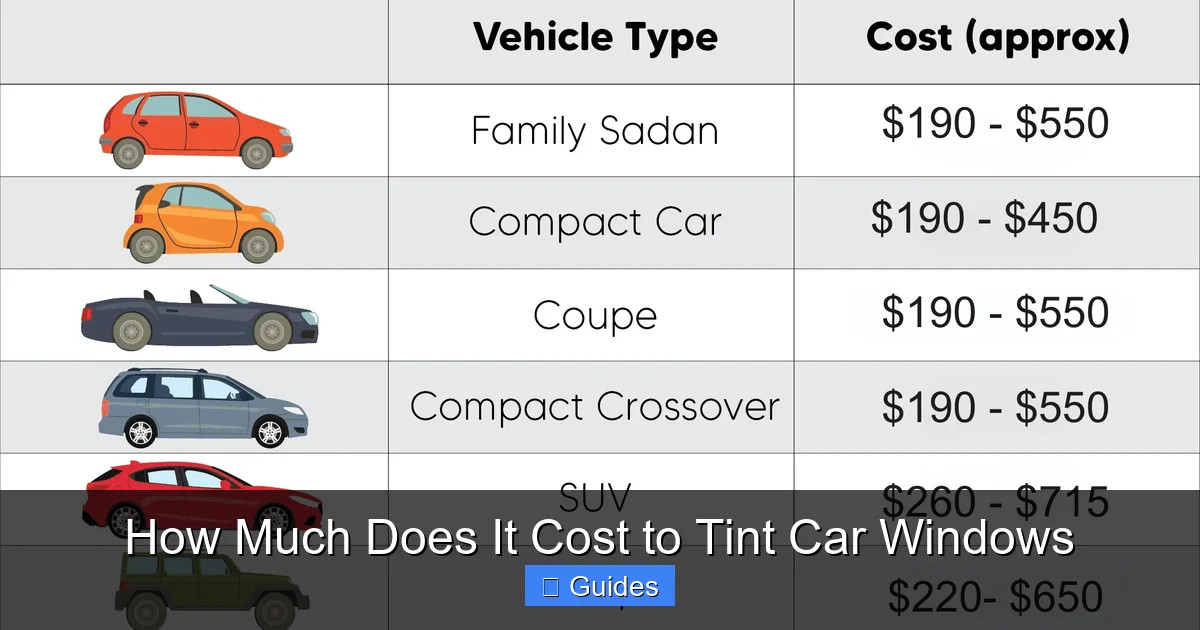
– **Compact Cars (e.g., Toyota Corolla, Honda Fit):** Typically 4–5 windows. Expect to pay $100–$250 for basic tint.
– **Midsize Sedans (e.g., Honda Accord, Toyota Camry):** Slightly larger windows. Budget $150–$350.
– **SUVs & Crossovers (e.g., Honda CR-V, Ford Explorer):** More glass, including large rear windshields. Prices range from $200–$500.
– **Trucks & Vans:** Often have extended cabs or dual rear windows. Can cost $250–$600+ depending on configuration.
Some shops offer package deals—like “full car tint” at a flat rate—which can save you money compared to tinting windows individually.
Professional vs. DIY: Is It Worth the Cost?
You might be tempted to buy a $30 DIY tint kit online and do it yourself. After all, how hard can it be? The truth is, professional installation is almost always worth the extra cost.
DIY kits often result in:
– Bubbles and creases that won’t go away
– Uneven edges or peeling corners
– Improper adhesion leading to early failure
– Potential damage to defrosters or window mechanisms
Professionals use precision tools, clean rooms, and years of experience to ensure a flawless finish. Plus, reputable shops offer warranties (often 5–10 years) that cover peeling, bubbling, or discoloration. If something goes wrong, you’re covered—no arguing with Amazon customer service at 2 a.m.
Average Pricing by Film Type and Vehicle
Visual guide about How Much Does It Cost to Tint Car Windows
Image source: thedailyautomotive.com
Now that you understand the variables, let’s look at realistic price ranges based on real-world scenarios.
For a **basic dyed film** on a compact car:
– Front side windows: $25–$40 each
– Rear side windows: $30–$50 each
– Rear windshield: $50–$80
– **Total: $130–$210**
For a **ceramic film** on a midsize SUV:
– All side windows: $60–$90 each
– Rear windshield: $120–$180
– **Total: $420–$630**
Keep in mind, these are averages. Prices can be lower in rural areas or higher in major cities like Los Angeles or New York, where labor and overhead costs are steeper.
Regional Price Variations
Where you live matters. In states with hot climates—like Arizona, Texas, or Florida—tinting is in high demand, which can drive up prices. Conversely, colder regions may have fewer specialists, leading to limited options and higher costs due to scarcity.
For example:
– **Phoenix, AZ:** $250–$500 for a full ceramic tint on a sedan
– **Portland, OR:** $200–$450 for the same service
– **Rural Midwest:** $150–$350, but fewer certified installers
Always check local reviews and ask about certifications (like those from the International Window Film Association) to ensure quality.
Legal Considerations and Hidden Costs
Visual guide about How Much Does It Cost to Tint Car Windows
Image source: lirp.cdn-website.com
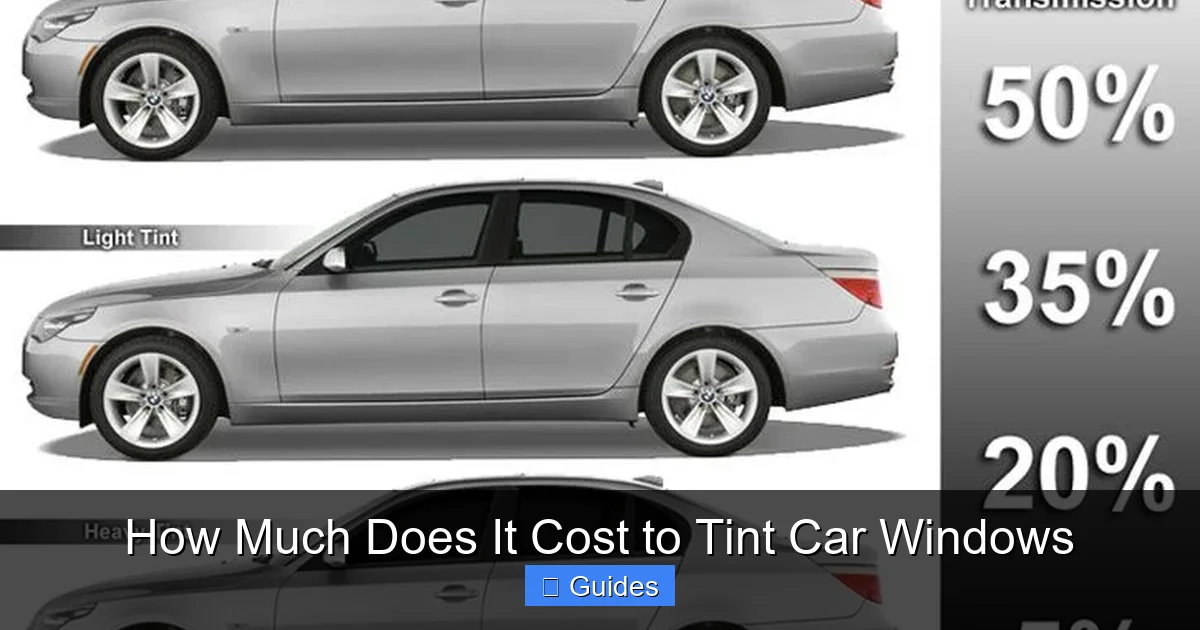
Before you commit to that super-dark tint, check your state’s laws. Every U.S. state has regulations on how much light must pass through your windows—known as VLT (Visible Light Transmission). For example:
– California: Front side windows must allow more than 70% of light in (70% VLT)
– Texas: Front side windows must be at least 25% VLT
– New York: Front side windows must be 70% VLT; rear windows can be darker if the car has side mirrors
Violating these rules can result in fines, failed inspections, or even being pulled over repeatedly. Some shops won’t install illegal tint—even if you ask—because they don’t want liability issues.
Additional Fees to Watch For
Beyond the base price, watch out for hidden fees:
– **Old tint removal:** If you’re replacing existing tint, some shops charge $50–$150 to strip it off safely.
– **Trim or molding removal:** Complex vehicles may require disassembling door panels, adding $30–$80.
– **Warranty upgrades:** Extended or lifetime warranties can add $50–$150.
– **Rush service:** Need it done tomorrow? Expect a 10–20% upcharge.
Always ask for a detailed quote upfront so there are no surprises.
Tips to Save Money Without Sacrificing Quality
Visual guide about How Much Does It Cost to Tint Car Windows
Image source: i.pinimg.com
Tinting doesn’t have to break the bank. With a little strategy, you can get great results at a fair price.
**1. Shop around.** Get quotes from at least 3 local shops. Compare not just price, but reviews, warranties, and film brands used.
**2. Choose the right film for your needs.** You don’t need ceramic film if you live in a cool climate and only drive occasionally. Carbon or high-quality dyed film may suffice.
**3. Tint during off-peak seasons.** Winter is often slower for tint shops, so you may negotiate a better deal.
**4. Bundle services.** Some shops offer discounts if you combine tinting with paint protection, ceramic coating, or windshield repair.
**5. Avoid “too good to be true” deals.** A $75 full-car tint likely uses low-grade film and rushed labor. You’ll regret it when it starts peeling in six months.
Red Flags to Avoid
Not all tint shops are created equal. Watch out for:
– No physical address or website
– Pressure to sign contracts immediately
– Vague answers about film brands or warranties
– No mention of local tint laws
A reputable installer will explain your options, show samples, and provide a written estimate.
Long-Term Value: Why Investing Matters
While the upfront cost might seem steep, quality window tinting pays off over time. Consider the benefits:
– **Interior protection:** UV rays fade upholstery, crack dashboards, and damage electronics. Tinting blocks up to 99% of UV rays, preserving your car’s resale value.
– **Fuel savings:** By reducing cabin heat, you rely less on AC, which improves gas mileage—especially in summer.
– **Health benefits:** Less UV exposure lowers skin cancer risk and prevents sunburn on long drives.
– **Privacy and security:** Darker windows deter thieves from seeing valuables inside.
A $400 ceramic tint job could save you hundreds in AC repairs, interior restoration, and fuel over five years. Think of it as an investment, not an expense.
Conclusion: Make an Informed Choice
So, how much does it cost to tint car windows? The answer isn’t one-size-fits-all—but now you have the tools to find the right price for your situation. Whether you’re driving a hatchback in Seattle or an SUV in Miami, understanding film types, vehicle factors, and local laws helps you avoid overspending or ending up with a subpar job.
Remember: cheaper isn’t always better. Spending a bit more on professional installation and high-quality film ensures longevity, performance, and peace of mind. And always prioritize legality—no amount of savings is worth a ticket or safety risk.
Take your time, do your research, and choose a certified installer you trust. Your car—and your comfort—will thank you.
Frequently Asked Questions
How much does it cost to tint car windows on average?
The average cost to tint car windows ranges from $150 to $400 for most sedans. Prices vary based on film type, vehicle size, and location, with ceramic tints on larger vehicles costing up to $600 or more.
Can I tint my own car windows to save money?
While DIY kits cost as little as $30, professional installation is strongly recommended. DIY jobs often result in bubbles, peeling, or legal non-compliance, which can cost more to fix later.
Is darker tint always more expensive?
Not necessarily. Film darkness (VLT) doesn’t always correlate with price—high-performance ceramic films can be lighter in shade but far more expensive due to advanced materials and heat-blocking capabilities.
Does window tinting void my car warranty?
No, window tinting does not void your vehicle’s manufacturer warranty. However, improper installation that damages windows or defrosters may not be covered, so always use a certified professional.
How long does a professional tint job last?
Quality tint jobs with proper care can last 5–10 years or more. Ceramic and carbon films typically outlast dyed films, which may fade or bubble within 2–3 years.
Are there any ongoing maintenance costs after tinting?
Minimal. Avoid ammonia-based cleaners and abrasive tools for the first 30 days. After that, regular glass cleaning is sufficient. Most issues arise from poor installation, not maintenance.

At CarLegit, we believe information should be clear, factual, and genuinely helpful. That’s why every guide, review, and update on our website is created with care, research, and a strong focus on user experience.