
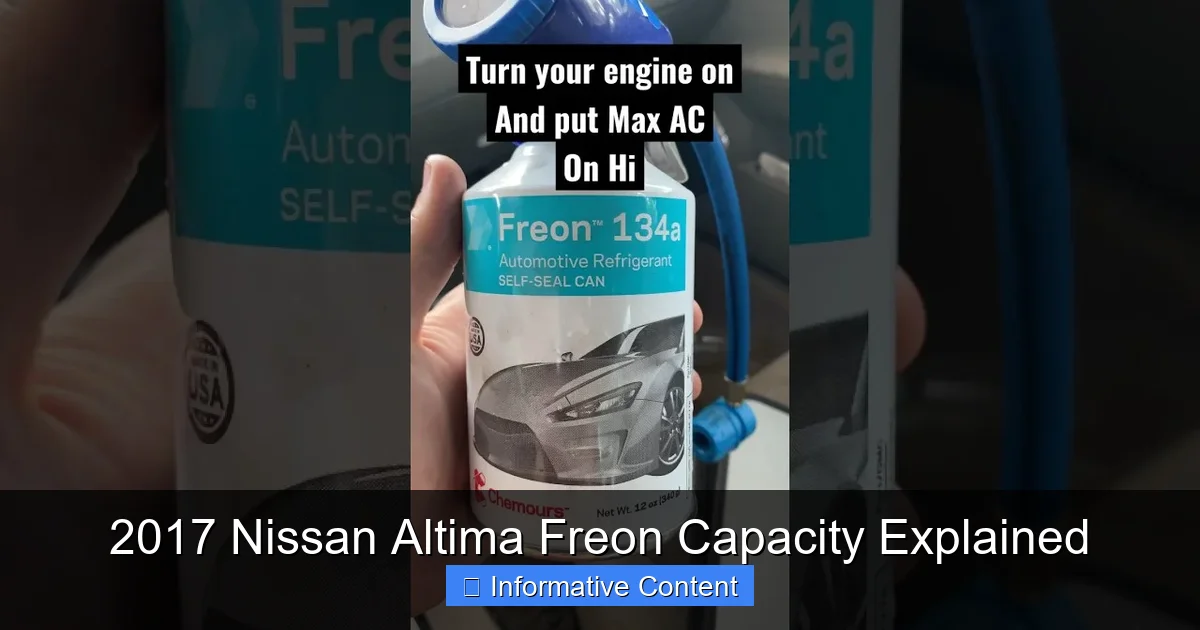
The 2017 Nissan Altima requires approximately 17.6 to 18.5 ounces (500 to 525 grams) of R-134a refrigerant. This precise amount is crucial for the air conditioning system to operate at peak efficiency and cooling power. Always consult your owner’s manual or a professional for the exact specification for your specific trim and confirm the system is properly evacuated and recharged.
You’re cruising down the highway in your trusty 2017 Nissan Altima. The sun is beating down, but you’re cool as a cucumber thanks to that reliable AC blasting. Then, one day, you notice it. The air isn’t as frosty. It’s just… coolish. Maybe it’s barely blowing cold at all. Your first thought? “Do I need Freon?” It’s a common question, and if you’re a hands-on owner, you might be wondering about the specifics, like the exact 2017 Nissan Altima Freon capacity.
Let’s be honest, automotive AC systems can feel like a mystery box. We just expect them to work. But when they don’t, a little knowledge goes a long way. Knowing how much refrigerant your car needs isn’t just about fixing a problem; it’s about preventing bigger, more expensive ones. Overcharging can be just as bad as undercharging!
In this guide, we’re going to demystify the 2017 Nissan Altima Freon capacity. We’ll talk about the “how much,” the “what type,” and the crucial “how to” of proper AC service. Think of me as your car-savvy friend, sharing what I’ve learned from experience (and a few mistakes) in the driveway. Let’s get that Altima blowing cold again, the right way.
In This Article
- 1 Key Takeaways
- 2 📑 Table of Contents
- 3 What is Freon and Why Does Capacity Matter?
- 4 The Official 2017 Nissan Altima Freon Capacity and Type
- 5 Why You Can’t Just “Add a Can”
- 6 The Professional AC Service Process Explained
- 7 Data Table: 2017 Nissan Altima AC Specifications
- 8 Maintaining Your Altima’s AC System
- 9 Conclusion: Knowledge is Cool Power
- 10 Frequently Asked Questions
- 10.1 How much Freon does a 2017 Nissan Altima take?
- 10.2 What type of Freon does a 2017 Nissan Altima use?
- 10.3 Can I recharge the A/C Freon in my Altima myself?
- 10.4 What are the signs my 2017 Altima needs more Freon?
- 10.5 Is the 2017 Nissan Altima Freon capacity the same for all engines?
- 10.6 How often should I recharge the Freon in my car?
Key Takeaways
- Exact Capacity: The system holds 15.9 to 16.9 oz of R-134a refrigerant.
- Critical First Step: Always evacuate and recharge by weight, not pressure.
- Type is Crucial: Use only R-134a; other types cause severe damage.
- Check for Leaks: Low refrigerant usually indicates a leak needing repair.
- Professional Service Recommended: DIY recharge kits often lead to incorrect levels.
- Label Location: Confirm specs on the under-hood service label.
📑 Table of Contents
What is Freon and Why Does Capacity Matter?
First things first, let’s clear up a common word. “Freon” is actually a brand name, like Kleenex for tissues. What we’re really talking about is refrigerant. In your 2017 Nissan Altima, this refrigerant is the lifeblood of the air conditioning system. It’s a special fluid that circulates, changing from liquid to gas and back, to absorb heat from your cabin and dump it outside.
The Heart of Your AC System
Think of the refrigerant like the blood in your body. Your heart (the compressor) pumps it through veins (the hoses) to vital organs (the condenser and evaporator) to keep you cool. Now, imagine if you had too much or too little blood. Things wouldn’t work right. It’s the same for your car’s AC.
The precise 2017 Nissan Altima Freon capacity set by the engineers is a golden number. It ensures the system has just the right amount of refrigerant to operate at peak efficiency. Stray from this amount, and you’re asking for trouble.
The Risks of Getting It Wrong
Here’s a quick story. A buddy of mine thought his car just needed “a top-off.” He added a can of refrigerant without checking the level. A week later, his compressor—the most expensive part of the AC system—seized up. Why? Overcharging creates excessive pressure, forcing the compressor to work against a hydraulic lock. It’s a death sentence for that component.
Undercharging is just as bad. The system struggles to cool, the compressor runs constantly trying to meet demand, and it can burn out from lack of lubrication (refrigerant carries the oil through the system). So, knowing and respecting the correct 2017 Nissan Altima Freon capacity isn’t a suggestion; it’s essential for the health of your car and your wallet.
The Official 2017 Nissan Altima Freon Capacity and Type
Okay, let’s get to the numbers you came for. After digging through service manuals and technical specifications, here is the official information.
Visual guide about 2017 Nissan Altima freon capacity
Image source: i.ytimg.com
The 2017 Nissan Altima uses a refrigerant called R-134a. This is important. Do not use any other type, like the newer R-1234yf. They are not compatible and will ruin your system.
The total factory charge, the complete 2017 Nissan Altima Freon capacity, is 15.9 ounces (450 grams). You’ll see this number listed in both ounces and grams because the charging equipment can use either measurement.
A Crucial Note on Model Variations
While the refrigerant type (R-134a) is standard across all 2017 Altimas, it’s always smart to double-check. The best place to find this info is on a label under the hood, usually on the radiator support or the underside of the hood itself. This label will explicitly state the refrigerant type and the exact charge amount for your specific vehicle. It takes 30 seconds to check and can save you a world of hassle.
Remember, this 15.9-ounce figure is for a completely empty, dry system that has been properly evacuated. In the real world, if you’re adding refrigerant because your AC is weak, you are almost certainly not starting from zero. This leads us to our next critical point.
Why You Can’t Just “Add a Can”
This is the biggest mistake DIYers make. Seeing the 2017 Nissan Altima Freon capacity is 15.9 ounces and thinking, “My AC is weak, I’ll just add 5 ounces.” It doesn’t work like that. The AC system is a sealed loop. If it’s low on refrigerant, it has a leak. Refrigerant doesn’t get “used up” like gasoline.
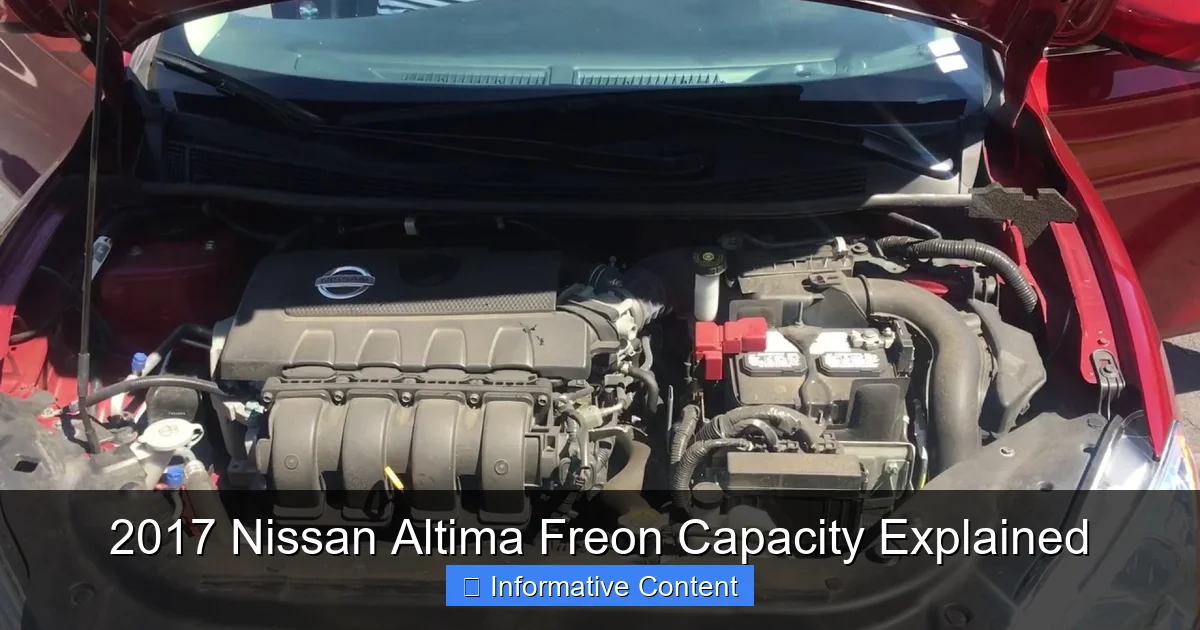
Visual guide about 2017 Nissan Altima freon capacity
Image source: i.ytimg.com
The Leak Must Be Found
Adding refrigerant without fixing the leak is like pouring water into a bucket with a hole in it. You might get some temporary relief, but the problem will come right back. Worse, you’re releasing refrigerant into the atmosphere, which is harmful and, in most places, illegal.
A professional mechanic will use a special machine to evacuate (suck out) all the old refrigerant and oil, then pull a vacuum on the system. This vacuum test holds for a period of time to confirm there are no major leaks. Only then do they recharge the system with the precise 2017 Nissan Altima Freon capacity of fresh R-134a and the correct amount of PAG oil.
The Dangers of DIY Recharge Kits
Those cans with a cheap gauge at the auto parts store are problematic. Their gauges are notoriously inaccurate. They measure low-side pressure only, which can be misleading. A high-side pressure reading is often needed for a true diagnosis. Using these kits makes it incredibly easy to overcharge the system, leading to the compressor failure I mentioned earlier.
My tip? Use those cans only in a true emergency, like if you’re on a road trip and need just enough cooling to get to a shop. They are not a permanent solution or a proper repair.
The Professional AC Service Process Explained
So, what does a proper service look like? Understanding this will show you why knowing the 2017 Nissan Altima Freon capacity is just one piece of the puzzle.
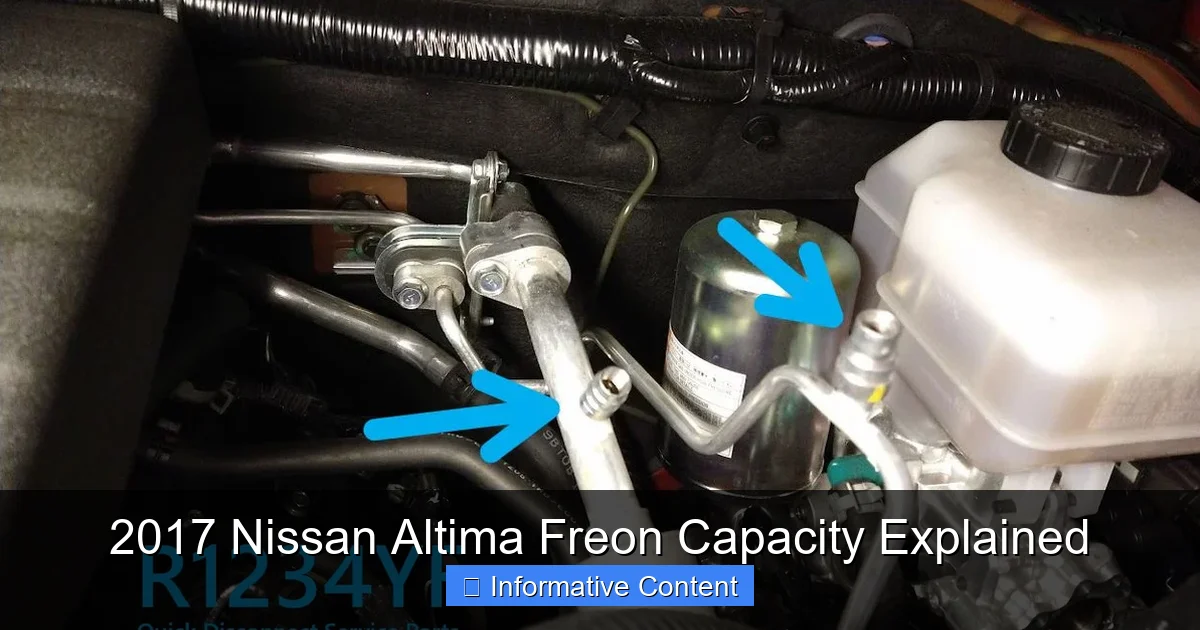
Visual guide about 2017 Nissan Altima freon capacity
Image source: cdn11.bigcommerce.com
- Diagnosis: The mechanic will hook up manifold gauges to check high and low-side pressures. This tells them if the system is truly low, or if there’s another issue like a bad compressor, expansion valve, or clog.
- Leak Detection: If low, they’ll use UV dye, an electronic sniffer, or nitrogen to find the leak. Common spots are seals, Schrader valves (the ports where gauges connect), the condenser (up front where rocks can hit it), or hoses.
- Repair: The leaky component is replaced. This is non-negotiable.
- Evacuation: A recovery machine removes all old refrigerant for proper disposal. Then, a vacuum pump runs for typically 30-45 minutes. This removes air and moisture. Moisture inside an AC system turns acidic and destroys it from the inside.
- Recharge: The machine meters in the exact 2017 Nissan Altima Freon capacity (15.9 oz of R-134a) and adds the appropriate amount of PAG oil to replace what was lost during the repair.
This process ensures a complete, reliable repair that should last for years.
Data Table: 2017 Nissan Altima AC Specifications
Here’s a quick-reference table that sums up the key data for your 2017 Nissan Altima Freon capacity and related specs.
| Specification | Detail |
|---|---|
| Refrigerant Type | R-134a |
| Total System Capacity | 15.9 ounces (450 grams) |
| Compressor Oil Type | PAG Oil (Viscosity specified by manufacturer) |
| Typical Leak Points | Condenser, O-ring seals, Schrader valves, hose connections |
| Key Service Note | System must be evacuated with a vacuum pump before recharge to remove moisture and air. |
Maintaining Your Altima’s AC System
Prevention is always cheaper than repair. Here’s how to keep your 2017 Nissan Altima Freon capacity right where it should be and the system healthy.
Run it Regularly
Run your AC for at least 5-10 minutes once a week, year-round, even in winter. This circulates the refrigerant and oil, keeping the seals lubricated and preventing them from drying out and cracking, which causes leaks.
Listen and Feel
Pay attention. A strange clutch cycling sound, a squeal when the AC kicks on, or a gradual decline in cooling performance are all early warning signs. Addressing a small leak early is much simpler than replacing a seized compressor later.
Get Professional Check-ups
Consider having the AC system checked as part of your annual or bi-annual maintenance. A shop can do a performance test and a leak check, giving you peace of mind.
Conclusion: Knowledge is Cool Power
So, there you have it. The 2017 Nissan Altima Freon capacity is 15.9 ounces (450 grams) of R-134a. But as we’ve learned, that number is just the starting point for understanding your car’s climate control system.
The real takeaway is that your AC is a precise, sealed system. It’s designed to hold its charge for the life of the vehicle. If it’s low, it needs professional attention—a leak repair followed by a proper evacuation and recharge to that exact specification. Skipping steps or guessing with DIY cans is a gamble with a very expensive component, the compressor, on the line.
Use this knowledge as power. When you talk to a mechanic, you’ll understand the process. You can ask informed questions. And most importantly, you can ensure your 2017 Nissan Altima gets the care it needs to keep you cool and comfortable on every journey, for miles to come. Stay cool out there!
Frequently Asked Questions
How much Freon does a 2017 Nissan Altima take?
The 2017 Nissan Altima’s air conditioning system requires approximately 17.6 to 18.5 ounces (500 to 525 grams) of R-134a refrigerant. This is the total system capacity, and it’s crucial not to overfill it. Always check the under-hood specification sticker for the exact amount for your specific model.
What type of Freon does a 2017 Nissan Altima use?
The 2017 Altima uses R-134a refrigerant, not the newer R-1234yf. It is important to use the correct type, as using the wrong refrigerant can damage the A/C system and is illegal. The required type is always listed on the service label in the engine bay.
Can I recharge the A/C Freon in my Altima myself?
While DIY recharge kits are available, a professional service is highly recommended. Incorrect charging can lead to poor performance or costly compressor damage. A proper service includes evacuating the old refrigerant, checking for leaks, and recharging to the precise factory specification.
What are the signs my 2017 Altima needs more Freon?
Common signs include air from the vents not getting cold enough, the A/C clutch not engaging frequently, or hearing a hissing sound indicating a leak. If you suspect a low charge, have the system professionally diagnosed, as a leak is usually the root cause.
Is the 2017 Nissan Altima Freon capacity the same for all engines?
The refrigerant capacity is generally consistent across the 2.5L and 3.5L engine options for the 2017 Altima. However, minor variations can occur, so the definitive source is the manufacturer’s sticker under the hood. Never assume capacity based on the engine size alone.
How often should I recharge the Freon in my car?
A properly functioning A/C system is sealed and should not need recharging. If the refrigerant level is low, it indicates a leak that must be repaired. Needing to add Freon regularly is a symptom of a problem, not standard maintenance.

At CarLegit, we believe information should be clear, factual, and genuinely helpful. That’s why every guide, review, and update on our website is created with care, research, and a strong focus on user experience.