
The value of a 1997 Ford F150 depends on condition, mileage, trim, and market demand. Prices typically range from $3,000 to $12,000, with well-maintained or rare models fetching more. Understanding key factors helps buyers and sellers make smart decisions.
If you’re wondering, “How much is a 1997 Ford F150 worth?” you’re not alone. This classic American pickup has stood the test of time, earning a loyal following among truck enthusiasts, collectors, and everyday drivers alike. Introduced as part of Ford’s ninth-generation F-Series, the 1997 model year marked a significant redesign—both inside and out. With its bold new look, improved ride quality, and stronger engine options, the 1997 F150 quickly became one of the most popular trucks of its era. Today, it’s not just a relic of the ’90s—it’s a sought-after vehicle with real market value.
But here’s the thing: the price tag on a 1997 Ford F150 isn’t set in stone. Unlike new cars with manufacturer-suggested retail prices, used trucks—especially ones nearly three decades old—vary widely in cost. A rust-free, low-mileage example in excellent condition might fetch over $10,000, while a high-mileage workhorse with mechanical issues could sell for under $3,000. So, how do you figure out what your F150 is really worth? The answer lies in understanding the key factors that influence its market value: condition, mileage, trim level, engine type, and regional demand.
In this guide, we’ll walk you through everything you need to know to accurately assess the worth of a 1997 Ford F150. Whether you’re looking to buy, sell, or just curious about your truck’s value, we’ve got you covered. We’ll break down pricing trends, explain what buyers are looking for, and share practical tips to help you get the best deal. By the end, you’ll have a clear picture of what your F150 is worth—and how to maximize its value if you decide to sell.
In This Article
- 1 Key Takeaways
- 2 📑 Table of Contents
- 3 Understanding the 1997 Ford F150: A Brief Overview
- 4 Factors That Determine the Value of a 1997 Ford F150
- 5 Current Market Prices for the 1997 Ford F150
- 6 How to Accurately Value Your 1997 Ford F150
- 7 Tips for Selling or Buying a 1997 Ford F150
- 8 Why the 1997 Ford F150 Still Holds Value
- 9 Conclusion: Knowing Your 1997 Ford F150’s Worth
- 10 Frequently Asked Questions
Key Takeaways
- Condition is king: A well-maintained 1997 Ford F150 with low mileage and no major repairs will command a higher price than one needing work.
- Trim level matters: Higher trims like the Lariat or XLT add value due to upgraded features, better interiors, and stronger resale appeal.
- Mileage impacts price: Trucks under 100,000 miles are more desirable; those over 200,000 may sell for significantly less unless exceptionally cared for.
- Engine type influences value: The 5.4L V8 and 4.6L V8 engines are more sought after than the 4.2L V6, especially for towing and performance.
- Market trends fluctuate: Classic truck demand has risen in recent years, boosting values for clean, original examples.
- Modifications can hurt or help: tasteful upgrades may increase appeal, but excessive or poor-quality mods can lower value.
- Documentation adds credibility: Service records, original manuals, and clean title history increase buyer confidence and final sale price.
📑 Table of Contents
- Understanding the 1997 Ford F150: A Brief Overview
- Factors That Determine the Value of a 1997 Ford F150
- Current Market Prices for the 1997 Ford F150
- How to Accurately Value Your 1997 Ford F150
- Tips for Selling or Buying a 1997 Ford F150
- Why the 1997 Ford F150 Still Holds Value
- Conclusion: Knowing Your 1997 Ford F150’s Worth
Understanding the 1997 Ford F150: A Brief Overview
The 1997 Ford F150 wasn’t just another truck—it was a game-changer. This model year marked the debut of the ninth-generation F-Series, which brought a complete redesign after nearly a decade of the previous body style. Ford introduced a more aerodynamic shape, a wider stance, and a host of improvements that made the F150 more comfortable, capable, and appealing to a broader audience.
One of the biggest upgrades was the new platform, which offered better ride quality and handling. The frame was stronger and more rigid, while the suspension was tuned for a smoother drive—whether you were hauling cargo or cruising down the highway. Inside, the cabin received a major refresh. The dashboard was more modern, with easier-to-read gauges and better ergonomics. Higher trim levels featured upgraded materials, power accessories, and even optional airbags—a big deal at the time.
Engine options were another highlight. The 1997 F150 came with three main powertrains: the 4.2L Essex V6, the 4.6L Triton V8, and the 5.4L Triton V8. The V6 was adequate for light-duty tasks, but most buyers gravitated toward the V8s for their superior towing capacity and performance. The 5.4L, in particular, became a favorite among those who needed serious hauling power.
Trim levels also played a big role in the truck’s appeal. The base XL was a no-frills work truck, while the XLT offered more comfort and convenience features. The top-tier Lariat added luxury touches like leather seats, premium audio, and power everything. There were also special editions, like the Lightning performance model (though that was based on the F150, it’s a different beast altogether).
All of these features combined to make the 1997 Ford F150 a standout in its class. It was reliable, versatile, and stylish—qualities that have helped it remain relevant decades later. Today, it’s not uncommon to see these trucks still on the road, often lovingly maintained by owners who appreciate their durability and classic design.
Factors That Determine the Value of a 1997 Ford F150
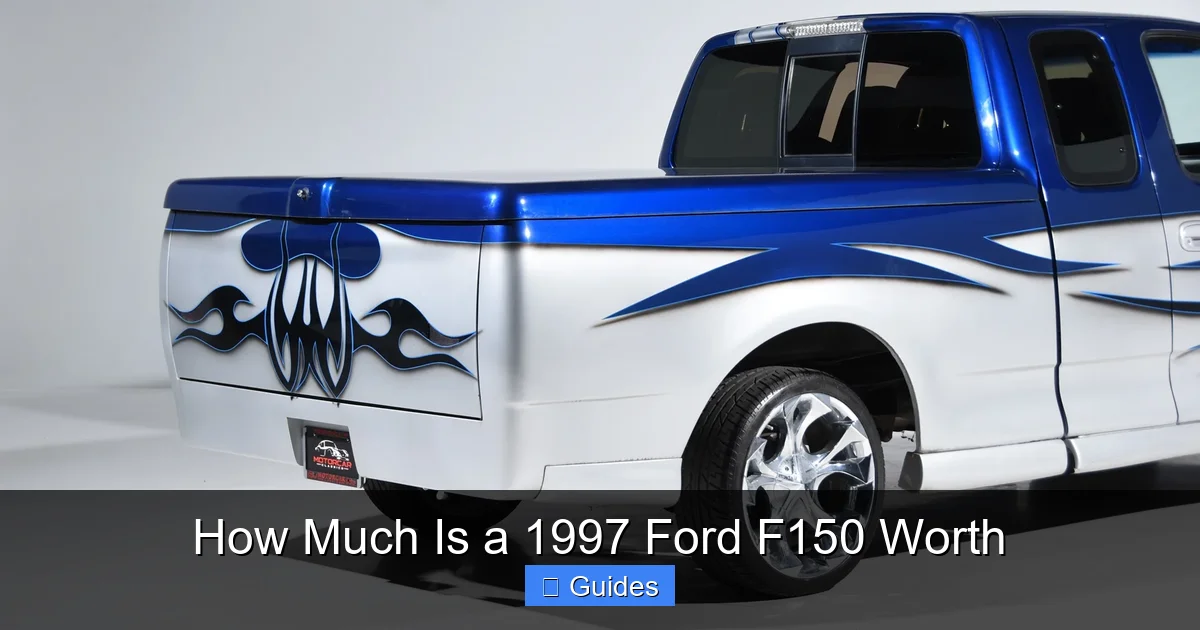
Visual guide about How Much Is a 1997 Ford F150 Worth
Image source: motorcarclassics.com
So, what makes one 1997 Ford F150 worth $12,000 while another sells for $3,500? The answer lies in a combination of factors that buyers and appraisers consider when evaluating these trucks. Let’s break them down one by one.
1. Overall Condition
This is the single most important factor. A truck that’s been garage-kept, regularly serviced, and free of major damage will always be worth more than one that’s been neglected. Buyers look for signs of rust (especially on the frame, wheel wells, and rocker panels), paint condition, interior wear, and mechanical soundness. A clean, well-cared-for F150 with minimal cosmetic flaws can command a premium.
2. Mileage
Mileage directly impacts value. The average driver puts about 12,000 to 15,000 miles per year, so a 1997 F150 with under 100,000 miles is considered low-mileage and highly desirable. Trucks with 100,000 to 150,000 miles are average, while anything over 200,000 miles will see a significant drop in price—unless it’s been exceptionally maintained or has documented service history.
3. Trim Level and Options
Higher trims like the XLT and Lariat include more features—power windows, locks, mirrors, upgraded audio, cruise control, and better upholstery. These add real value. A base XL with manual everything will sell for less than a loaded Lariat with all the bells and whistles. Optional features like a towing package, 4×4 drivetrain, or sunroof also boost value.
4. Engine and Drivetrain
The engine type matters. The 5.4L V8 is the most desirable due to its power and towing capability. The 4.6L V8 is also popular, while the 4.2L V6 is less sought after. Four-wheel drive (4×4) models typically sell for more than two-wheel drive (4×2) versions, especially in regions with harsh winters or off-road use.
5. Market Demand and Location
Supply and demand play a big role. In rural areas or regions with a strong truck culture, prices may be higher. In urban areas with less demand for full-size pickups, prices could be lower. Seasonality also matters—spring and summer are peak times for truck sales.
6. Modifications and Upgrades
This one’s tricky. Tasteful, high-quality modifications like a lift kit, new wheels, or a performance exhaust can increase appeal—especially to enthusiasts. But excessive or poorly done mods (like a cheap body kit or mismatched paint) can hurt value. Original, unmodified trucks often hold their value better, especially among collectors.
7. Documentation and History
A truck with a clean title, full service records, and a documented history of maintenance is worth more. Buyers feel more confident knowing the vehicle hasn’t been abused or neglected. A Carfax or AutoCheck report can also help verify accident history and ownership.
Current Market Prices for the 1997 Ford F150
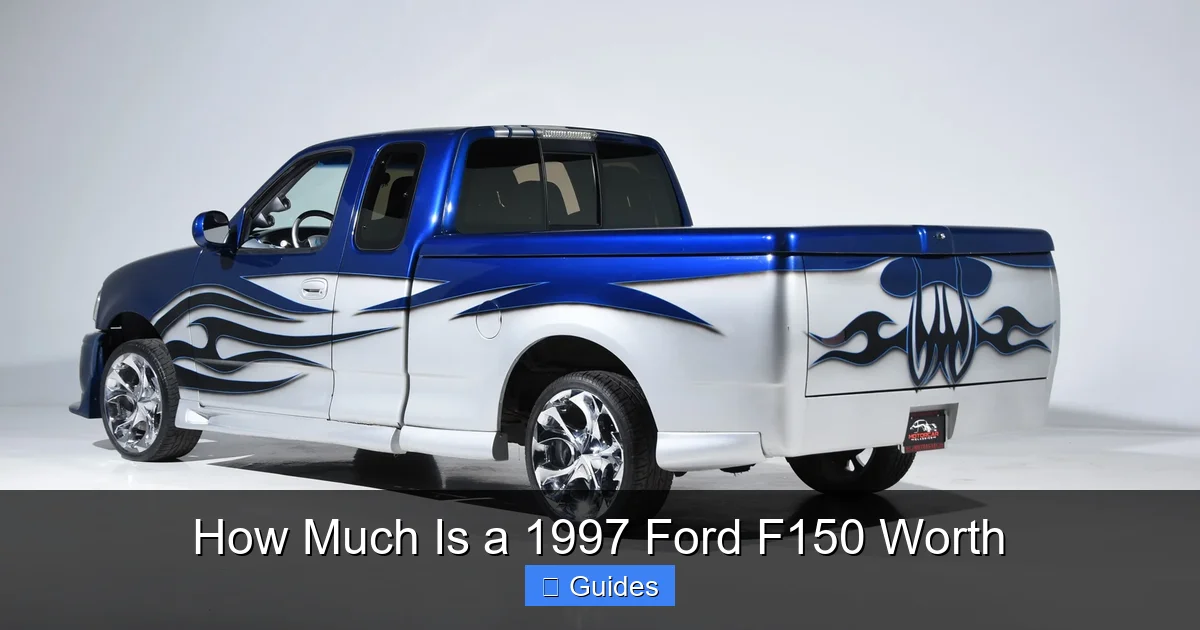
Visual guide about How Much Is a 1997 Ford F150 Worth
Image source: motorcarclassics.com
So, what’s a 1997 Ford F150 actually selling for in 2024? Based on recent listings from sources like Kelley Blue Book (KBB), Edmunds, Autotrader, and private sales, here’s a realistic breakdown of current market values.
Price Ranges by Condition
- Project/Parts Truck (Poor Condition): $1,500 – $3,500
These are trucks with significant rust, mechanical issues, or high mileage (200,000+). They’re often sold for parts or restoration projects. - Fair to Good Condition: $4,000 – $7,000
These trucks run and drive but may need minor repairs, have moderate wear, or higher mileage (150,000–200,000 miles). They’re common on the used market. - Very Good to Excellent Condition: $7,500 – $10,000
Low-mileage examples (under 120,000 miles), well-maintained, with minimal rust and clean interiors. These are the sweet spot for most buyers. - Mint or Collector Condition: $10,000 – $15,000+
Exceptional trucks with under 80,000 miles, original paint, full documentation, and showroom-level condition. Rare trims or special editions can push prices even higher.
Real-World Examples
Let’s look at a few actual listings to give you a sense of what’s out there:
– A 1997 F150 XLT 4×4 with 98,000 miles, 5.4L V8, and clean history sold for $9,200 on Autotrader.
– A base model XL with 180,000 miles, minor rust, and a rebuilt transmission listed for $4,800.
– A fully restored Lariat with 65,000 miles, original owner, and full service records fetched $12,500 at a local auction.
These examples show how much condition and history can impact value. A truck that’s been loved and maintained can easily outperform its peers—even with similar mileage.
Regional Variations
Prices can vary by location. In the Midwest or South, where trucks are more common and rust is less of an issue, you might see higher demand and prices. In coastal areas with salt-heavy winters, rust can be a major problem, driving prices down for affected vehicles. Always check local listings to get a sense of your area’s market.
How to Accurately Value Your 1997 Ford F150
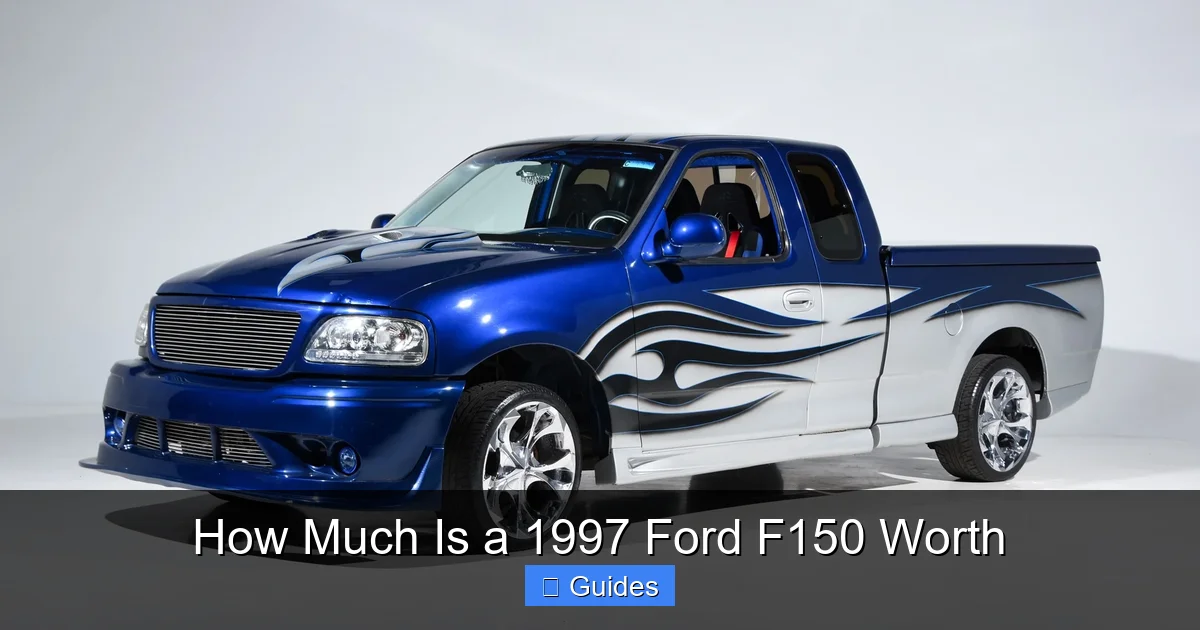
Visual guide about How Much Is a 1997 Ford F150 Worth
Image source: motorcarclassics.com
If you’re planning to sell or buy a 1997 Ford F150, knowing how to value it correctly is crucial. Here’s a step-by-step guide to help you get an accurate estimate.
Step 1: Assess the Truck’s Condition
Start with a thorough inspection. Check for rust, dents, paint fading, and interior wear. Test all electrical components, lights, and gauges. Take it for a drive to listen for unusual noises or handling issues. Be honest about any problems—buyers will find them anyway.
Step 2: Gather Documentation
Collect all service records, repair receipts, and ownership history. If you have the original window sticker, owner’s manual, or warranty book, include those too. This builds trust and can increase value.
Step 3: Use Online Valuation Tools
Websites like Kelley Blue Book (KBB), Edmunds, and NADA Guides allow you to input your truck’s details—year, make, model, trim, mileage, condition, and options—to get an estimated value. Keep in mind these are guidelines, not final prices.
Step 4: Check Comparable Listings
Search Autotrader, Cars.com, Facebook Marketplace, and Craigslist for similar 1997 F150s in your area. Look at trucks with similar mileage, trim, and condition. This gives you a real-world benchmark.
Step 5: Consider Getting a Professional Appraisal
For high-value or rare examples, a professional appraisal from a certified mechanic or classic car appraiser can provide an accurate, unbiased estimate. This is especially useful if you’re selling privately or insuring the vehicle.
Step 6: Adjust for Market Trends
Classic trucks are currently in demand, so prices may be higher than historical averages. However, economic factors like fuel prices and interest rates can also influence buyer behavior. Stay informed about current trends.
Tips for Selling or Buying a 1997 Ford F150
Whether you’re selling your trusty old F150 or hunting for a classic gem, these tips will help you navigate the process smoothly.
For Sellers: Maximize Your Truck’s Value
– Clean it thoroughly: A detailed wash, wax, and interior cleaning can make a huge difference. Consider professional detailing.
– Address minor repairs: Fix small issues like burnt-out bulbs, worn wipers, or cracked trim. These show you care.
– Take high-quality photos: Use good lighting and shoot from multiple angles. Include close-ups of the engine, interior, and any flaws.
– Write a compelling ad: Highlight key features, low mileage, recent maintenance, and unique aspects. Be honest about condition.
– Price it right: Don’t overprice. A fair price attracts serious buyers and leads to a quicker sale.
For Buyers: Avoid Common Pitfalls
– Inspect for rust: Check the frame, cab corners, and bed mounts. Surface rust can be treated, but structural rust is a red flag.
– Test drive thoroughly: Listen for transmission slippage, engine knocks, or suspension clunks. Pay attention to how it shifts and handles.
– Get a pre-purchase inspection (PPI): Have a trusted mechanic inspect the truck before buying. It’s a small cost that can save you thousands.
– Verify the VIN: Make sure the vehicle identification number matches the title and registration. Check for signs of tampering.
– Negotiate wisely: Use comparable listings and any issues found during inspection as leverage. Don’t be afraid to walk away.
Why the 1997 Ford F150 Still Holds Value
In a world of ever-changing automotive trends, the 1997 Ford F150 has managed to retain its relevance—and its value. But why? What makes this nearly 30-year-old truck still desirable in 2024?
First, it’s built like a tank. Ford designed the ninth-gen F-Series to be durable, and many of these trucks are still running strong today. The robust frame, reliable engines, and simple mechanical systems make them easy to maintain and repair. Unlike modern trucks packed with complex electronics, the 1997 F150 is straightforward—ideal for DIYers and those who prefer mechanical simplicity.
Second, it’s a piece of Americana. The ’90s were a golden era for full-size pickups, and the 1997 F150 represents that time perfectly. Its bold grille, squared-off lines, and no-nonsense attitude evoke nostalgia for a simpler time. Collectors and enthusiasts appreciate that authenticity.
Third, it’s versatile. Whether you need a daily driver, a weekend project, or a classic show truck, the 1997 F150 can fill the role. It’s capable of light towing, off-roading (especially 4×4 models), and everyday commuting. And with a wide range of aftermarket parts available, it’s easy to customize.
Finally, it’s affordable—compared to newer trucks. While a new F150 can cost $50,000 or more, a well-maintained 1997 model offers similar utility at a fraction of the price. For budget-conscious buyers, it’s a smart choice.
Conclusion: Knowing Your 1997 Ford F150’s Worth
So, how much is a 1997 Ford F150 worth? The short answer: it depends. But with the right information, you can make an informed decision whether you’re buying, selling, or just curious.
From condition and mileage to trim level and market trends, many factors influence value. A clean, low-mileage example with a V8 engine and 4×4 can easily be worth $10,000 or more. A high-mileage work truck with rust and mechanical issues might only fetch $3,000. The key is understanding what buyers are looking for—and being honest about your truck’s condition.
If you’re selling, take the time to clean it up, fix minor issues, and price it fairly. If you’re buying, do your homework, inspect thoroughly, and don’t rush into a deal. And if you’re just holding onto your F150 as a classic, know that it’s not just a truck—it’s a piece of automotive history with real value.
The 1997 Ford F150 may be old, but it’s far from obsolete. With proper care, it can continue to serve for years to come—and maybe even appreciate in value as a sought-after classic. So whether you’re cruising down the highway or parked at a car show, take pride in your F150. It’s earned it.
Frequently Asked Questions
What is the average price of a 1997 Ford F150 in 2024?
The average price ranges from $4,000 to $9,000, depending on condition, mileage, and trim. Well-maintained, low-mileage examples can exceed $10,000.
Is a 1997 Ford F150 a good buy?
Yes, if it’s in good condition. These trucks are reliable, durable, and affordable compared to newer models. Just be sure to inspect for rust and mechanical issues.
Which engine is best in the 1997 F150?
The 5.4L Triton V8 is the most desirable due to its power and towing capacity. The 4.6L V8 is also a strong performer, while the 4.2L V6 is less popular.
Do 1997 Ford F150s have rust problems?
Yes, especially in areas with harsh winters and road salt. Common rust spots include the frame, wheel wells, and rocker panels. Regular inspection and undercoating can help prevent it.
Can a 1997 Ford F150 be used for towing?
Absolutely. With the 5.4L V8 and optional towing package, it can tow up to 8,000 pounds. Just ensure the cooling system and brakes are in good condition.
Are parts still available for the 1997 Ford F150?
Yes, parts are widely available through Ford dealers, auto parts stores, and online retailers. The truck’s popularity ensures strong aftermarket support.

At CarLegit, we believe information should be clear, factual, and genuinely helpful. That’s why every guide, review, and update on our website is created with care, research, and a strong focus on user experience.