
The value of a 1998 Jeep Wrangler ranges from $4,000 to $12,000+, depending on condition, mileage, and modifications. Well-maintained, low-mileage models with original parts command the highest prices, while project vehicles sell for much less.
If you’re wondering, “How much is a 1998 Jeep Wrangler worth?” you’re not alone. This iconic off-roader has been turning heads—and conquering trails—for over two decades, and its value continues to surprise both buyers and sellers. Whether you’re looking to buy, sell, or just curious about your Jeep’s worth, understanding the factors that influence pricing is key. The 1998 model year sits at a sweet spot in Jeep history: it’s part of the beloved TJ generation, which introduced the coil-spring suspension that improved ride quality without sacrificing off-road prowess. It’s also old enough to feel classic, yet modern enough to be daily-drivable with the right care.
Unlike many vehicles from the late ’90s that have faded into obscurity, the 1998 Jeep Wrangler remains in demand. Its simple mechanical design, removable doors, fold-down windshield, and go-anywhere capability make it a favorite among off-roaders, collectors, and weekend adventurers alike. But not all Wranglers are created equal. A pristine, low-mileage example with factory specs and full service records will command a much higher price than a rusty, high-mileage project Jeep—even if they’re both from the same year. So, how do you determine where your 1998 Wrangler falls on the value spectrum? Let’s break it down.
In This Article
- 1 Key Takeaways
- 2 📑 Table of Contents
- 3 Understanding the 1998 Jeep Wrangler’s Market Position
- 4 Factors That Affect the Value of a 1998 Jeep Wrangler
- 5 How to Determine the Market Value of a 1998 Jeep Wrangler
- 6 Selling Your 1998 Jeep Wrangler: Tips to Maximize Value
- 7 Buying a 1998 Jeep Wrangler: What to Look For
- 8 Conclusion: The 1998 Jeep Wrangler Is Still a Solid Investment
- 9 Frequently Asked Questions
Key Takeaways
- Condition is king: A rust-free, mechanically sound 1998 Wrangler with low mileage can fetch $10,000–$12,000 or more, especially if it’s a sought-after trim like the Sahara or TJ model.
- Mileage matters, but not as much as you think: While lower mileage helps, Jeeps are built to last. A well-cared-for high-mileage Wrangler can still hold strong value if it’s been properly maintained.
- Modifications can help or hurt: Off-road upgrades like lift kits and tires may increase appeal to enthusiasts, but excessive or poor-quality mods can reduce resale value.
- Originality adds premium: Unmolested, factory-original examples—especially with matching numbers and documentation—are increasingly rare and valuable to collectors.
- Market demand is strong: The 1998 Jeep Wrangler remains popular due to its rugged design, simplicity, and off-road capability, keeping prices stable even decades later.
- Location impacts price: Wranglers in dry, rust-free climates (like the Southwest) often sell for more than those in snowy, salted regions where undercarriage corrosion is common.
- Private sales vs. dealers: Selling privately typically yields 10–20% more than trading in or selling to a dealership, but requires more effort and marketing.
📑 Table of Contents
- Understanding the 1998 Jeep Wrangler’s Market Position
- Factors That Affect the Value of a 1998 Jeep Wrangler
- How to Determine the Market Value of a 1998 Jeep Wrangler
- Selling Your 1998 Jeep Wrangler: Tips to Maximize Value
- Buying a 1998 Jeep Wrangler: What to Look For
- Conclusion: The 1998 Jeep Wrangler Is Still a Solid Investment
Understanding the 1998 Jeep Wrangler’s Market Position
The 1998 Jeep Wrangler is part of the second generation of the Wrangler lineup, known as the TJ series. Introduced in 1997, the TJ replaced the leaf-spring YJ model with a more comfortable coil-spring suspension, while retaining the classic round headlights and rugged body-on-frame construction. This made the TJ—especially the 1998 model—a hit with both off-road purists and daily drivers who wanted a capable yet civilized SUV.
One reason the 1998 Wrangler holds its value so well is its simplicity. Unlike modern vehicles packed with electronics and complex systems, the ’98 Wrangler relies on mechanical components that are easier to repair and maintain. This durability translates into longevity, and many of these Jeeps are still on the road today—some with well over 200,000 miles. Enthusiasts appreciate this reliability, and it contributes to steady demand in the used market.
Another factor is nostalgia. For many, the 1998 Wrangler represents a golden era of SUVs—before crossovers took over and vehicles became more about comfort than capability. It’s a vehicle that evokes adventure, freedom, and a connection to the outdoors. This emotional appeal helps sustain its market value, even as newer models roll out with advanced tech and improved fuel economy.
Trim Levels and Their Impact on Value
The 1998 Jeep Wrangler was offered in three main trim levels: the base Sport, the mid-level Sahara, and the limited-edition 5.0L V8-powered Rubicon (though the Rubicon wasn’t officially introduced until 2003, some 1998 models were retrofitted or mislabeled). The Sahara trim is particularly desirable due to its upgraded interior, body-color fender flares, and additional comfort features like air conditioning and premium audio.
A 1998 Wrangler Sahara in excellent condition can easily sell for $10,000–$12,000, especially if it’s a 4×4 with the 4.0L inline-six engine—the most popular and reliable powerplant of the era. The Sport model, while more basic, still holds value well if it’s been well maintained. However, it typically sells for $1,000–$2,000 less than a comparable Sahara.
It’s also worth noting that convertibles (soft-top models) are more common and generally less expensive than hardtop versions, though hardtops offer better insulation and security, which some buyers prefer. If you’re selling, specifying the trim, engine, and top type clearly can help attract the right buyers and justify your asking price.
Engine and Drivetrain Considerations
The 1998 Jeep Wrangler came with two engine options: the 2.5L inline-four and the 4.0L inline-six. The 4.0L engine is by far the more desirable, producing 180 horsepower and 220 lb-ft of torque—ample power for both highway cruising and off-road crawling. It’s also known for its durability and longevity, with many examples reaching 300,000 miles with proper maintenance.
The 2.5L four-cylinder, while more fuel-efficient, is less powerful and generally less sought after. Wranglers with this engine typically sell for $1,000–$2,000 less than their 4.0L counterparts, all else being equal. That said, if the four-cylinder model is in exceptional condition with low mileage, it can still fetch a respectable price—especially in regions where fuel economy is a priority.
All 1998 Wranglers came with four-wheel drive as standard, which is a major selling point. The part-time 4×4 system with a manual transfer case is simple, robust, and easy to maintain—another reason these Jeeps remain popular. Automatic transmissions were available but less common; manual transmissions are often preferred by off-road enthusiasts for better control.
Factors That Affect the Value of a 1998 Jeep Wrangler

Visual guide about How Much Is a 1998 Jeep Wrangler Worth
Image source: momentcar.com
When determining how much a 1998 Jeep Wrangler is worth, several key factors come into play. These include condition, mileage, maintenance history, modifications, and geographic location. Let’s explore each in detail.
Vehicle Condition: The Biggest Determinant
Condition is the single most important factor in pricing a 1998 Wrangler. A vehicle that’s been garage-kept, regularly serviced, and free of rust will always command a premium. Rust is the enemy of any older Jeep, especially in the wheel wells, floor pans, frame, and rocker panels. Even minor surface rust can scare off buyers, while structural rust can render a Jeep unsafe and nearly unsellable.
A well-maintained Wrangler with minimal cosmetic flaws, a clean interior, and a strong-running engine can easily sell for $10,000 or more. On the other hand, a Jeep with visible rust, engine issues, or a worn interior might struggle to fetch $5,000—even if it’s mechanically sound.
When evaluating condition, consider both the exterior and undercarriage. Lift the Jeep and inspect the frame for cracks, holes, or heavy corrosion. Check the suspension components, steering linkage, and drivetrain for wear. A pre-purchase inspection by a trusted mechanic can reveal hidden issues and help you price the vehicle accurately.
Mileage: Less Critical Than You Might Think
While lower mileage is generally better, it’s not the end-all-be-all for a 1998 Wrangler. These vehicles are built to last, and many have surpassed 200,000 miles with proper care. A 1998 Wrangler with 150,000 miles that’s been well maintained can be a better buy than one with 80,000 miles that’s been neglected.
That said, exceptionally low mileage—under 50,000 miles—can significantly boost value, especially if the Jeep has been stored properly and not subjected to harsh conditions. These “time capsule” examples are rare and highly sought after by collectors. One such Wrangler, a 1998 Sahara with 38,000 original miles and full documentation, sold at auction for over $15,000 in 2023.
Conversely, high-mileage Jeeps (over 200,000 miles) can still be valuable if they’ve been rebuilt or refurbished. A Wrangler with a rebuilt engine, new suspension, and fresh paint can justify a higher price, especially if the work was done professionally and documented.
Maintenance and Service History
A complete service history can add thousands to a Wrangler’s value. Buyers want to know that the vehicle has been cared for, and records of oil changes, transmission service, brake work, and major repairs provide peace of mind. If you’re selling, gather all receipts, manuals, and maintenance logs to present to potential buyers.
Original purchase documents, window stickers, and factory build sheets are even more valuable, especially for unmodified, low-mileage examples. These items prove authenticity and can help justify a premium price.
Modifications: A Double-Edged Sword
Modifications are common on Wranglers, but they can either increase or decrease value depending on the type and quality. Off-road upgrades like a 2–3 inch lift kit, all-terrain tires, skid plates, and a winch are generally well-received by enthusiasts and can enhance the Jeep’s appeal—especially if they’re professionally installed and functional.
However, excessive or poorly executed mods—such as oversized tires that rub, a lifted suspension with no alignment, or a loud exhaust with no muffler—can turn off buyers. Custom paint jobs, aftermarket stereos, and non-functional accessories may also reduce value unless they’re high-quality and tasteful.
If you’re selling a modified Wrangler, be transparent about the changes and provide documentation of the work done. Some buyers specifically seek out modified Jeeps, so targeting the right audience (e.g., off-road forums, Jeep clubs) can help you get top dollar.
Geographic Location and Climate
Where a 1998 Wrangler has lived plays a big role in its condition and value. Jeeps from dry, warm climates like Arizona, California, or Texas often have minimal rust and are in better overall shape. These vehicles typically sell for 10–20% more than similar models from snowy, salty regions like the Northeast or Midwest.
If you’re buying, consider expanding your search to include Jeeps from southern states—even if it means traveling to inspect and transport the vehicle. The savings on rust repair and long-term maintenance can more than justify the extra effort.
How to Determine the Market Value of a 1998 Jeep Wrangler
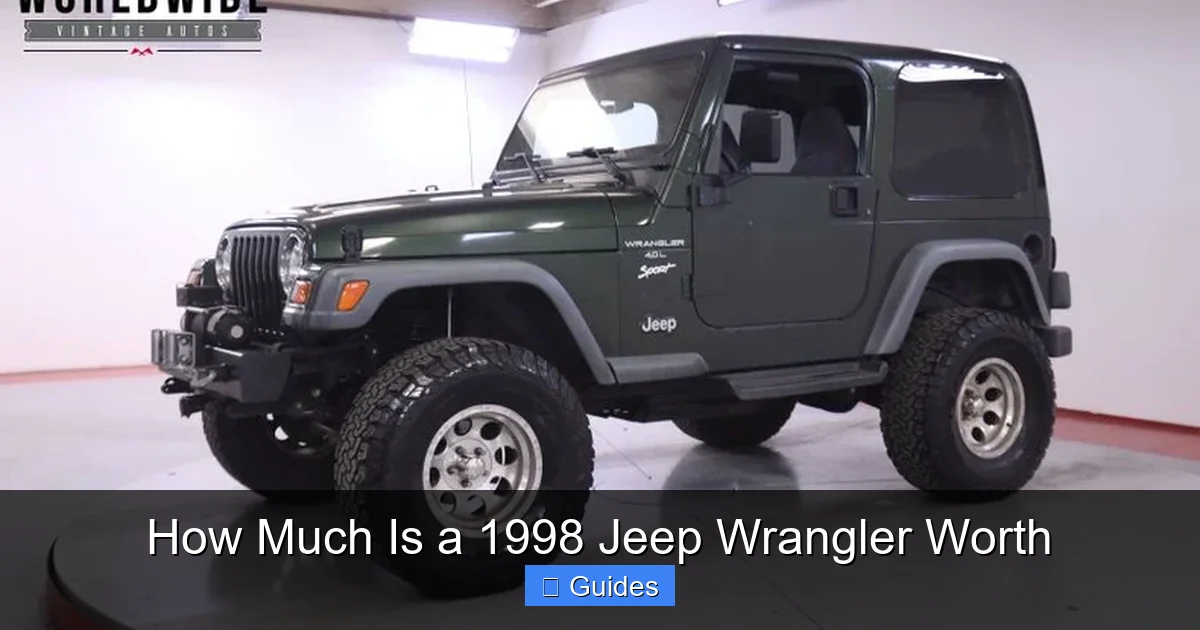
Visual guide about How Much Is a 1998 Jeep Wrangler Worth
Image source: cdn.dealeraccelerate.com
Now that you understand the factors that influence value, how do you actually determine what your 1998 Wrangler is worth? Here are some practical steps to get an accurate estimate.
Use Online Valuation Tools
Start with reputable online pricing guides like Kelley Blue Book (KBB), Edmunds, and NADA Guides. Enter your vehicle’s details—trim, mileage, condition, options, and location—to get a baseline value. Keep in mind that these tools provide estimates based on national averages and may not account for local market conditions or unique features.
For example, a 1998 Wrangler Sahara with 100,000 miles in “Good” condition might be valued at $8,500 on KBB, while the same vehicle in “Excellent” condition could be listed at $11,000. Always select the condition that best matches your Jeep’s actual state.
Check Recent Sales Data
One of the best ways to gauge value is to look at what similar Wranglers have recently sold for. Websites like Autotrader, Cars.com, and eBay Motors allow you to filter by year, model, trim, and location. Look for completed listings (not just asking prices) to see what buyers are actually paying.
You can also check auction sites like Bring a Trailer or Copart, where classic and collector vehicles are sold. These platforms often feature well-documented, high-condition Wranglers and can give you a sense of the premium market.
Consult Local Listings and Jeep Communities
Local classifieds (Craigslist, Facebook Marketplace) and Jeep-specific forums (JeepForum.com, WranglerForum.com) are great resources for understanding regional pricing. You’ll often find Wranglers listed at higher prices in areas with strong off-road communities or limited inventory.
Engaging with local Jeep clubs or attending off-road events can also provide insider knowledge. Members often know which models are in demand and what buyers are willing to pay.
Get a Professional Appraisal
For high-value or unique Wranglers—such as a low-mileage, unmodified example or one with rare options—consider getting a professional appraisal. A certified appraiser can provide a detailed report that justifies your asking price and may be required for insurance or estate purposes.
Selling Your 1998 Jeep Wrangler: Tips to Maximize Value
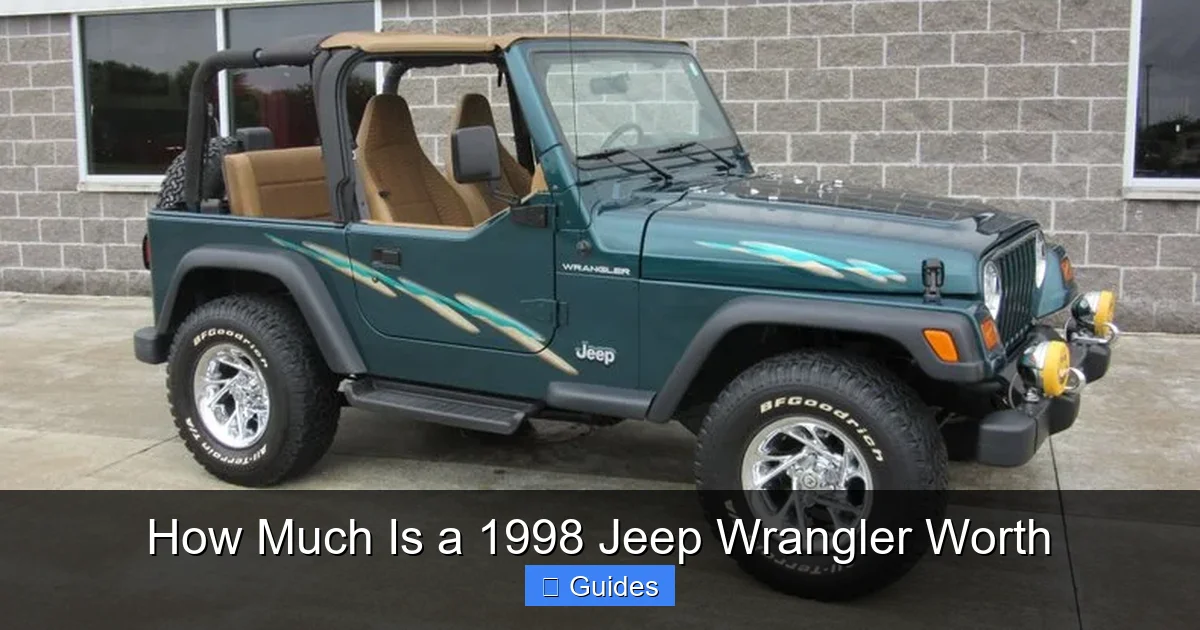
Visual guide about How Much Is a 1998 Jeep Wrangler Worth
Image source: cdn.dealeraccelerate.com
If you’re planning to sell your 1998 Wrangler, a little preparation can go a long way in boosting its value and attracting serious buyers.
Clean and Detail the Vehicle
First impressions matter. Give your Wrangler a thorough wash, wax, and interior cleaning. Remove any personal items, vacuum the carpets, and clean the upholstery. If the soft top is worn or stained, consider replacing it or having it professionally cleaned.
Don’t forget the undercarriage—a clean frame and suspension components signal that the Jeep has been well cared for. A quick degrease and rinse can make a big difference.
Address Minor Repairs
Fixing small issues like burnt-out bulbs, worn wiper blades, or a loose door handle can increase perceived value. These are inexpensive fixes that show you’ve maintained the vehicle.
If there are mechanical concerns—such as a check engine light or transmission slip—consider having them diagnosed and repaired before listing. Even if you disclose the issue, a repaired vehicle is more attractive than one with unknown problems.
Take High-Quality Photos
Photography is crucial when selling online. Take clear, well-lit photos from multiple angles, including the exterior, interior, engine bay, undercarriage, and any modifications. Show the Jeep in a clean, open area—avoid cluttered driveways or dark garages.
Include close-ups of any flaws or damage to build trust with buyers. Transparency leads to quicker sales and fewer disputes.
Write a Detailed Listing
Your listing should include:
– Year, make, model, and trim
– Mileage and engine type
– Condition (exterior, interior, mechanical)
– Service history and recent repairs
– Modifications and upgrades
– Reason for selling
– High-resolution photos
Be honest about any issues, but highlight the positives. For example: “1998 Jeep Wrangler Sahara, 4.0L inline-six, 98,000 miles, garage-kept, no rust, recent transmission service, new tires, clean title.”
Price Competitively
Set your price based on market research, not emotion. Price it slightly above comparable listings to allow for negotiation, but don’t overprice—it can deter buyers and lead to a stale listing.
If your Wrangler has unique features (e.g., original paint, low mileage, rare options), mention them prominently and justify the premium.
Choose the Right Sales Platform
For maximum exposure, list your Wrangler on multiple platforms:
– Autotrader and Cars.com (great for serious buyers)
– Facebook Marketplace and Craigslist (local reach, quick sales)
– Jeep forums and enthusiast groups (targeted audience)
– eBay Motors (national reach, auction or fixed price)
Be prepared to respond to inquiries promptly and schedule test drives safely.
Buying a 1998 Jeep Wrangler: What to Look For
If you’re in the market for a 1998 Wrangler, knowing what to look for can save you from costly mistakes.
Inspect for Rust and Frame Damage
Rust is the number one concern. Check the frame, floor pans, wheel wells, and rocker panels. Look for bubbling paint, soft spots, or holes. A magnet can help detect body filler used to hide rust.
Frame damage—whether from off-roading or accidents—can be dangerous and expensive to repair. Avoid Jeeps with bent or cracked frames.
Test Drive and Listen
Take the Jeep for a test drive on both pavement and rough terrain. Listen for unusual noises from the engine, transmission, or suspension. Pay attention to how it shifts, steers, and brakes.
Check the 4×4 system by engaging low range and testing it on a loose surface. Make sure the transfer case shifts smoothly.
Verify Maintenance and Ownership History
Ask for service records and verify the vehicle’s history using a VIN check (e.g., Carfax or AutoCheck). Look for signs of flooding, accidents, or title issues.
A single-owner, well-documented Wrangler is often a safer bet than one with multiple owners and no records.
Have It Inspected by a Mechanic
Before finalizing the purchase, have a trusted mechanic inspect the vehicle. They can identify hidden issues and estimate potential repair costs.
This small investment can save you thousands in the long run.
Conclusion: The 1998 Jeep Wrangler Is Still a Solid Investment
So, how much is a 1998 Jeep Wrangler worth? The answer depends on a variety of factors, but one thing is clear: this classic off-roader continues to hold its value remarkably well. Whether you’re buying, selling, or simply appreciating its rugged charm, the 1998 Wrangler represents a unique blend of simplicity, capability, and nostalgia that few vehicles can match.
With prices ranging from $4,000 for a project Jeep to $12,000+ for a pristine, low-mileage example, there’s a Wrangler for nearly every budget and use case. By understanding the key factors that influence value—condition, mileage, maintenance, modifications, and location—you can make informed decisions and get the most out of your investment.
Whether you’re hitting the trails or cruising down Main Street, the 1998 Jeep Wrangler remains a symbol of freedom and adventure. And as long as there are open roads and open skies, its value—both monetary and sentimental—will endure.
Frequently Asked Questions
What is the average price of a 1998 Jeep Wrangler?
The average price of a 1998 Jeep Wrangler ranges from $6,000 to $10,000, depending on condition, mileage, and trim. Well-maintained Sahara models with the 4.0L engine often fall on the higher end of this range.
Is a 1998 Jeep Wrangler reliable?
Yes, the 1998 Jeep Wrangler is known for its reliability, especially when equipped with the 4.0L inline-six engine. With proper maintenance, these vehicles can easily exceed 200,000 miles.
Do 1998 Wranglers have rust problems?
Rust can be an issue, particularly in regions with snow and road salt. Common problem areas include the frame, floor pans, and wheel wells. Regular inspections and undercoating can help prevent corrosion.
Can I daily drive a 1998 Jeep Wrangler?
Absolutely. While not as refined as modern SUVs, the 1998 Wrangler is comfortable enough for daily use, especially with the Sahara trim and automatic transmission. Just be prepared for higher fuel consumption and a stiffer ride.
Are parts for a 1998 Jeep Wrangler still available?
Yes, parts are widely available due to the Wrangler’s popularity. OEM, aftermarket, and used parts can be found through Jeep dealers, online retailers, and salvage yards.
Is it worth restoring a 1998 Jeep Wrangler?
Restoring a 1998 Wrangler can be worthwhile if the frame and core components are solid. However, restoration costs can add up quickly, so it’s important to budget carefully and prioritize essential repairs.

At CarLegit, we believe information should be clear, factual, and genuinely helpful. That’s why every guide, review, and update on our website is created with care, research, and a strong focus on user experience.