
Wondering how much a 2000 Nissan Maxima is worth? The value depends on mileage, condition, location, and maintenance history. In 2024, expect prices from $1,500 to $4,500, with well-kept models fetching more.
If you’re thinking about buying or selling a 2000 Nissan Maxima, you’re probably asking one big question: *How much is a 2000 Nissan Maxima worth?* It’s a fair question—this sedan has been on the road for over two decades, and its value today depends on a mix of factors that go beyond just its age. Whether you’re a longtime owner looking to upgrade or a first-time buyer searching for an affordable, reliable car, understanding the current market value is essential.
The 2000 Nissan Maxima was part of the fourth generation (1995–1999) and early fifth generation (2000–2003) lineup, known for its smooth 3.0L V6 engine, comfortable ride, and upscale interior for its class. It wasn’t just another family sedan—it offered a sporty edge with responsive handling and a quiet cabin, making it a favorite among commuters and driving enthusiasts alike. Today, it’s considered a classic example of early-2000s Japanese engineering: durable, practical, and surprisingly fun to drive.
But nostalgia doesn’t pay the bills. When it comes to pricing, real-world data and condition matter more than memories. So, let’s break down exactly what determines how much a 2000 Nissan Maxima is worth in 2024—and how you can get the best deal whether you’re buying or selling.
In This Article
- 1 Key Takeaways
- 2 📑 Table of Contents
- 3 Understanding the 2000 Nissan Maxima’s Market Position
- 4 Factors That Determine the Value of a 2000 Nissan Maxima
- 5 How to Research and Compare Prices
- 6 Selling Your 2000 Nissan Maxima: Tips to Maximize Value
- 7 Buying a 2000 Nissan Maxima: What to Watch For
- 8 Conclusion: Is a 2000 Nissan Maxima Worth It?
- 9 Frequently Asked Questions
Key Takeaways
- Mileage matters most: Lower-mileage models (under 100,000 miles) command higher prices, often $3,000–$4,500.
- Condition is key: A clean interior, no rust, and full service records can boost value by 20–30%.
- Automatic vs. manual: Manual transmissions are rarer and may appeal to enthusiasts, slightly increasing resale value.
- Geographic pricing differences: Cars in dry, rust-free climates (like Arizona) often sell for more than those in snowy regions.
- Market demand is steady: The 2000 Maxima remains popular for its reliability and V6 power, keeping values stable.
- Private sale vs. trade-in: Selling privately typically yields $500–$1,000 more than trading in at a dealership.
- Modifications hurt value: Aftermarket parts or non-stock upgrades usually reduce buyer interest and resale price.
📑 Table of Contents
Understanding the 2000 Nissan Maxima’s Market Position
The 2000 Nissan Maxima sits in a unique spot in the used car market. It’s not a luxury car, but it’s not a budget compact either. Back in its day, it competed with the Toyota Camry V6, Honda Accord V6, and even entry-level luxury sedans like the Lexus ES. Today, it’s often seen as a “sweet spot” for buyers who want more power and refinement than a typical economy car but don’t want to pay luxury prices.
One reason the 2000 Maxima holds its value relatively well is its reputation for reliability. The 3.0L VQ30DE engine is known for lasting 200,000+ miles with proper maintenance. It’s not perfect—timing belt replacements are critical every 90,000–105,000 miles—but overall, it’s a solid powerplant. Combine that with a well-built interior and a smooth 4-speed automatic (or optional 5-speed manual), and you’ve got a car that still feels competent on modern roads.
Another factor is scarcity. While millions of Maximas were sold in the 1990s and early 2000s, many have been retired due to age, accidents, or neglect. Clean, low-mileage examples are becoming harder to find, which helps support prices. Enthusiasts and practical buyers alike appreciate the Maxima’s blend of comfort, performance, and affordability, keeping demand steady even two decades later.
Factors That Determine the Value of a 2000 Nissan Maxima
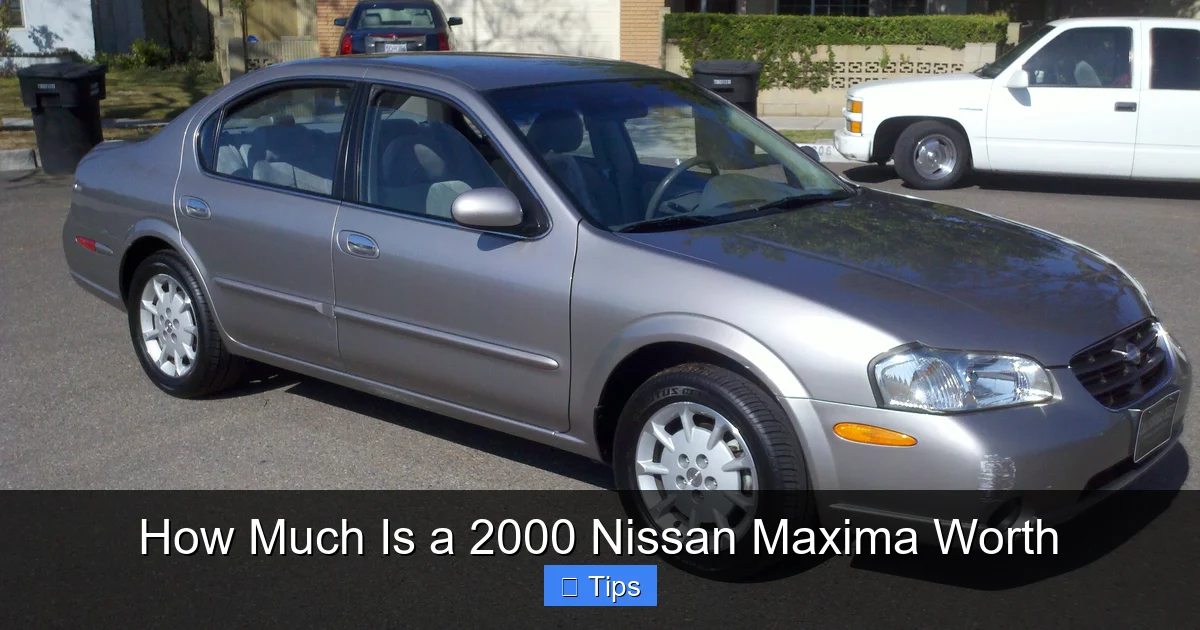
Visual guide about How Much Is a 2000 Nissan Maxima Worth
Image source: momentcar.com
So, how much is a 2000 Nissan Maxima worth? The short answer: it depends. But several key factors influence pricing more than others. Let’s dive into the most important ones.
Mileage: The Biggest Price Driver
Mileage is the single most important factor in determining value. A 2000 Maxima with 80,000 miles will almost always be worth more than one with 180,000 miles—even if both are in similar cosmetic condition.
As a general rule:
– **Under 100,000 miles:** $3,000–$4,500
– **100,000–150,000 miles:** $2,000–$3,200
– **Over 150,000 miles:** $1,200–$2,200
For example, a 2000 Maxima with 75,000 miles, clean title, and full service history recently sold for $4,200 in California. Meanwhile, a similar model with 165,000 miles and minor interior wear went for $1,800 in Ohio. The difference? Nearly 90,000 miles—and about $2,400 in value.
Low mileage suggests less wear on the engine, transmission, suspension, and interior. Buyers are willing to pay a premium for that peace of mind.
Vehicle Condition: Inside and Out
A car’s physical and mechanical condition plays a huge role in pricing. A Maxima that’s been garaged, detailed regularly, and driven gently will look and feel newer than one that’s been parked outside and used for long commutes.
Key condition factors include:
– **Exterior:** Paint quality, dents, scratches, rust (especially around wheel wells and undercarriage)
– **Interior:** Upholstery wear, cracked dashboard, functioning electronics (power windows, locks, radio)
– **Mechanical:** Engine smoothness, transmission shifts, brake responsiveness, suspension noise
A well-maintained Maxima with minor wear might sell for 20–30% more than a comparable high-mileage or neglected model. For instance, a Maxima with 120,000 miles but a pristine interior, new tires, and recent brake service could fetch $2,800, while a similar-mileage car with stained seats and a check engine light might only get $1,900.
Service and Maintenance History
Buyers love documentation. A 2000 Maxima with complete service records—especially timing belt replacements, oil changes, and major repairs—is far more valuable than one with no history.
Why? Because it proves the car was cared for. The timing belt is critical—if it fails, it can destroy the engine. A Maxima that’s had its belt replaced at the recommended interval (around 100,000 miles) is a much safer bet.
Other important maintenance items include:
– Transmission fluid changes
– Coolant flushes
– Brake pad and rotor replacements
– Suspension component inspections
If you’re selling, include receipts, repair invoices, and a recent inspection report. This builds trust and can justify a higher asking price.
Transmission Type: Automatic vs. Manual
The 2000 Maxima came with two transmission options: a 4-speed automatic (most common) and a 5-speed manual (rare and desirable).
Manual transmissions are harder to find—only about 10–15% of 2000 Maximas were sold with a stick shift. Because of this, they often command a slight premium, especially among driving enthusiasts.
A manual Maxima in good condition might sell for $300–$600 more than an automatic with similar mileage and condition. For example, a 2000 Maxima SE with a manual transmission and 95,000 miles recently sold for $3,900, while an automatic SE with 92,000 miles went for $3,400.
However, this premium only applies if the clutch and gearbox are in good shape. A worn clutch or grinding gears can negate the advantage.
Geographic Location and Climate
Where a car is located can significantly impact its value. Cars in dry, warm climates (like Arizona, Nevada, or Southern California) tend to have less rust and corrosion than those in snowy, salty regions (like the Northeast or Midwest).
Salt used on winter roads accelerates rust, especially on the undercarriage, frame, and wheel wells. A Maxima from Minnesota with surface rust might lose $500–$800 in value compared to the same model from Arizona.
Additionally, local demand varies. In urban areas with good public transit, used sedans may sell for less. In rural or suburban areas where cars are essential, prices can be higher.
Always check local listings on sites like Craigslist, Facebook Marketplace, or Autotrader to compare prices in your area.
Title Status and Accident History
A clean title is essential for maximum value. Cars with salvage, rebuilt, or flood-damaged titles are worth significantly less—often 30–50% less than a clean-title equivalent.
Even minor accidents can affect value if they weren’t properly repaired. Buyers are wary of frame damage, airbag deployment, or repainted panels that might hide deeper issues.
Always run a vehicle history report (like Carfax or AutoCheck) before buying. If you’re selling, disclose any accidents honestly—it builds trust and avoids legal issues later.
How to Research and Compare Prices
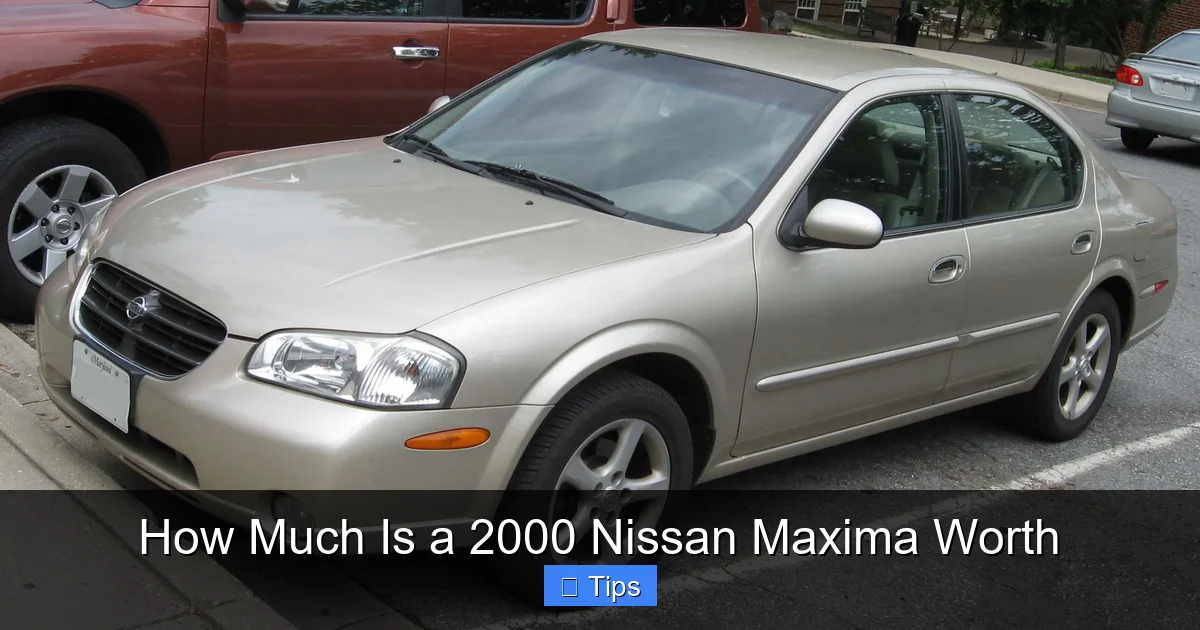
Visual guide about How Much Is a 2000 Nissan Maxima Worth
Image source: momentcar.com
Now that you know what affects value, how do you find out how much a 2000 Nissan Maxima is worth in your market? Here’s a step-by-step guide.
Use Online Valuation Tools
Start with trusted pricing websites:
– **Kelley Blue Book (KBB):** Enter the year, model, trim, mileage, condition, and location. KBB gives a range for private party, trade-in, and dealer retail values.
– **Edmunds:** Similar to KBB, but often more detailed in condition adjustments.
– **NADA Guides:** Popular with dealers; tends to be slightly higher than KBB.
For example, a 2000 Maxima SE with 110,000 miles in “Good” condition might show:
– KBB Private Party: $2,600
– Edmunds: $2,750
– NADA Clean Retail: $3,100
These tools give you a solid baseline, but remember—they’re estimates. Real-world prices can vary.
Check Local Listings
Next, search local classifieds:
– **Craigslist:** Great for private sellers; prices are often negotiable.
– **Facebook Marketplace:** Growing in popularity; easy to message sellers.
– **Autotrader and Cars.com:** Include dealer listings, which are usually higher but offer warranties.
Look at 5–10 similar listings. Note the asking price, mileage, condition, and extras (like new tires or a sunroof). This gives you a realistic picture of what buyers are paying in your area.
For instance, if three Maximas with 100,000–120,000 miles are listed at $2,800, $3,000, and $3,200, you know the market rate is around $3,000.
Compare Trims and Options
The 2000 Maxima came in several trims:
– **Base (GX):** Basic features, cloth seats, steel wheels
– **SE:** Sport-tuned suspension, alloy wheels, rear spoiler, optional sunroof
– **GLE:** Luxury trim with leather, power seats, premium audio
Higher trims generally cost more. A GLE with leather and a sunroof might sell for $300–$500 more than a base GX with similar mileage.
Also, check for options like:
– Sunroof
– Premium sound system
– Alloy wheels
– Automatic climate control
These can add value, especially if they’re factory-installed.
Selling Your 2000 Nissan Maxima: Tips to Maximize Value
Visual guide about How Much Is a 2000 Nissan Maxima Worth
Image source: assets.oldcarsdata.com
If you’re selling, you want the best price possible. Here’s how to get it.
Clean and Detail the Car
First impressions matter. A clean car looks well-cared-for and can increase perceived value.
– Wash and wax the exterior
– Vacuum and shampoo the interior
– Clean the dashboard, vents, and cup holders
– Replace burnt-out bulbs
– Fix minor scratches or dents if affordable
A $100 detail job can easily add $300–$500 to your sale price.
Fix Minor Issues
Address small problems before listing:
– Replace worn wiper blades
– Fix a sticky door lock
– Recharge the A/C if it’s weak
– Top off fluids
These show buyers the car is in good working order. Avoid major repairs unless necessary—don’t sink $1,500 into a transmission if the car is only worth $3,000.
Take High-Quality Photos
Use good lighting and shoot from multiple angles:
– Front, rear, and side views
– Interior (seats, dashboard, trunk)
– Engine bay
– Tires and wheels
Avoid shadows, clutter, and bad weather. Photos are the first thing buyers see—make them count.
Write a Honest, Detailed Description
Include:
– Mileage
– Trim level
– Transmission type
– Service history
– Recent repairs
– Known issues
Example:
“2000 Nissan Maxima SE, 98,000 miles, 5-speed manual, clean title, no accidents. Timing belt replaced at 95,000 miles, new tires and brakes in 2023. Leather seats in great shape, sunroof, premium Bose sound. Drives smooth, no warning lights. Asking $3,800 OBO.”
Honesty builds trust and reduces back-and-forth questions.
Price It Right
Don’t overprice. If similar cars are listed at $3,000, asking $3,800 will scare buyers away. Price competitively—maybe $200–$300 above the lowest comparable listing to allow for negotiation.
Use the research you did earlier to set a fair price. Overpricing leads to longer selling times and eventual price drops.
Choose the Right Selling Platform
– **Private sale (Craigslist, Facebook):** Higher profit, more effort
– **Trade-in at dealer:** Lower price, but convenient
– **Consignment:** Dealer sells for you, takes a cut
Private sales typically net $500–$1,000 more than trade-ins. But they require time, photos, and communication with buyers.
Buying a 2000 Nissan Maxima: What to Watch For
If you’re buying, don’t just focus on price—look at value. A cheap Maxima with hidden problems can cost more in repairs.
Get a Pre-Purchase Inspection (PPI)
Always have a trusted mechanic inspect the car before buying. A PPI costs $100–$150 but can save you thousands.
The mechanic will check:
– Engine and transmission
– Suspension and steering
– Brakes and tires
– Frame and undercarriage for rust
– Electrical systems
If the seller refuses a PPI, walk away.
Test Drive Thoroughly
Drive on highways, city streets, and rough roads. Listen for:
– Engine knocking or hesitation
– Transmission slipping or harsh shifts
– Suspension clunks or rattles
– Brake squealing or pulling
A smooth, quiet ride is a good sign.
Check for Common Issues
The 2000 Maxima has a few known problems:
– **Timing belt failure:** Can cause engine damage. Confirm it’s been replaced.
– **Oil consumption:** Some VQ30 engines burn oil. Check dipstick and ask about usage.
– **Transmission issues:** Early automatics may have shift problems. Test all gears.
– **Rust:** Especially in snowy climates. Inspect wheel wells and undercarriage.
Addressing these early prevents costly repairs.
Negotiate Based on Condition
Use any flaws as leverage. If the car needs new tires or has a cracked windshield, ask for a lower price or repairs.
Example: “I see the tires are worn and the A/C isn’t cold. Would you take $2,500 instead of $3,000?”
Most sellers expect negotiation—don’t be afraid to ask.
Conclusion: Is a 2000 Nissan Maxima Worth It?
So, how much is a 2000 Nissan Maxima worth? In 2024, the answer ranges from about $1,500 for a high-mileage, neglected example to $4,500 for a low-mileage, well-maintained gem. The average price falls between $2,500 and $3,500, depending on condition, location, and options.
But value isn’t just about dollars and cents. The 2000 Maxima offers something rare in today’s used car market: a reliable, comfortable, and surprisingly enjoyable sedan at an affordable price. It’s not flashy, but it’s built to last—and for many buyers, that’s exactly what they want.
Whether you’re selling to upgrade or buying as a daily driver, do your homework. Research prices, inspect the car thoroughly, and don’t rush the decision. A little effort now can save you money and headaches later.
And remember: a well-cared-for 2000 Maxima isn’t just a car—it’s a testament to smart engineering and smart ownership. Treat it right, and it’ll keep earning its keep for years to come.
Frequently Asked Questions
What is the average price of a 2000 Nissan Maxima in 2024?
The average price ranges from $2,500 to $3,500, depending on mileage, condition, and location. Low-mileage, well-maintained models can reach $4,500.
Is a 2000 Nissan Maxima reliable?
Yes, the 2000 Maxima is known for its reliability, especially with proper maintenance. The V6 engine can last over 200,000 miles if the timing belt is replaced on schedule.
Should I buy a 2000 Maxima with high mileage?
It depends on condition and maintenance history. A high-mileage Maxima with full service records and no major issues can still be a good buy, but expect higher repair costs over time.
What hurts the value of a 2000 Nissan Maxima?
High mileage, poor maintenance, rust, accident history, and aftermarket modifications can significantly reduce value. A clean title and service records help maintain price.
Is the manual transmission worth more?
Yes, manual 2000 Maximas are rarer and often sell for $300–$600 more than automatics, especially if in good mechanical condition.
Where can I find the best deals on a 2000 Maxima?
Check local listings on Craigslist, Facebook Marketplace, and Autotrader. Private sellers usually offer better prices than dealerships.

At CarLegit, we believe information should be clear, factual, and genuinely helpful. That’s why every guide, review, and update on our website is created with care, research, and a strong focus on user experience.