
The value of a 2003 Ford F150 depends heavily on its condition, mileage, trim level, and location. On average, prices range from $3,000 to $8,000, with well-maintained models fetching more. Knowing what affects pricing helps you buy or sell with confidence.
Thinking about buying or selling a 2003 Ford F150? You’re not alone. This model year remains one of the most popular in the F-Series lineup, thanks to its rugged design, reliable performance, and timeless appeal. Whether you’re a weekend warrior hauling gear, a contractor needing a dependable workhorse, or just someone who loves the classic American truck look, the 2003 F150 has a lot to offer. But before you sign on the dotted line or list your truck online, it’s crucial to understand how much a 2003 Ford F150 is actually worth.
The truth is, there’s no single answer. The value of a 2003 Ford F150 can vary dramatically based on a handful of key factors. Two trucks that look identical on the outside might have vastly different price tags once you dig into their history, condition, and specs. That’s why doing your homework is essential—whether you’re the buyer trying to avoid overpaying or the seller aiming to get top dollar. In this guide, we’ll walk you through everything you need to know to accurately assess the value of a 2003 Ford F150, from engine types and trim levels to regional pricing trends and hidden red flags.
In This Article
- 1 Key Takeaways
- 2 📑 Table of Contents
- 3 Understanding the 2003 Ford F150: A Quick Overview
- 4 Factors That Influence the Value of a 2003 Ford F150
- 5 How to Determine the Fair Market Value
- 6 Selling Your 2003 Ford F150: Tips to Maximize Value
- 7 Buying a 2003 Ford F150: What to Watch For
- 8 Conclusion: Is a 2003 Ford F150 Worth It?
- 9 Frequently Asked Questions
Key Takeaways
- Condition is king: A clean, rust-free 2003 F150 in good mechanical shape will always be worth more than one with visible damage or engine issues.
- Mileage matters: Trucks under 100,000 miles command higher prices, while those over 150,000 may drop significantly in value unless well-documented.
- Trim and engine options impact price: Higher trims like the Lariat or FX4, and V8 engines, typically increase resale value compared to base XL models with V6 engines.
- Market demand fluctuates: In rural areas or regions with harsh winters, pickup trucks like the F150 often hold their value better due to higher demand.
- Service history adds value: A complete maintenance record can boost a truck’s worth by $500–$1,500, especially for older vehicles.
- Private sales usually yield more: Selling directly to a buyer often brings 10–20% more than trading in at a dealership.
- Modifications can hurt or help: Useful upgrades (like towing packages) may increase value, but excessive aftermarket changes can scare off buyers.
📑 Table of Contents
Understanding the 2003 Ford F150: A Quick Overview
The 2003 Ford F150 was part of the tenth generation of the F-Series, which ran from 1997 to 2003. This generation is often praised for its balanced mix of comfort, capability, and durability. It came in a variety of configurations, including regular cab, supercab, and supercrew body styles, with bed lengths ranging from 6.5 to 8 feet. Buyers could choose from several trim levels—XL, XLT, Lariat, and the off-road-ready FX4—each offering different levels of comfort, technology, and performance.
One of the standout features of the 2003 model year was the introduction of the 5.4L Triton V8 engine as a more widely available option. This engine, while powerful, also brought some known issues that later became infamous among truck enthusiasts—like spark plug ejection and timing chain problems. But despite these quirks, the 2003 F150 remains a favorite for its solid frame, smooth ride, and versatility. It’s not uncommon to see these trucks still on the road today, a testament to their build quality when properly maintained.
Engine Options and Their Impact on Value
The engine under the hood plays a major role in determining how much a 2003 Ford F150 is worth. This model year offered three main engine choices:
– **4.2L Essex V6**: The base engine, producing around 202 horsepower. It’s fuel-efficient and reliable but lacks the towing power of the V8s. Trucks with this engine typically sell for less, especially if they’re base XL models.
– **4.6L Triton V8**: A popular mid-range option with 220–231 horsepower. It offers a good balance of power and efficiency and is often found in XLT trims. These models tend to hold their value well.
– **5.4L Triton V8**: The top-tier engine, delivering 260 horsepower and strong towing capacity (up to 8,000 lbs when properly equipped). This engine is highly desirable, especially in Lariat and FX4 trims, and can significantly boost a truck’s resale value.
While the 5.4L V8 is powerful, it’s also the one with the most reported mechanical issues. Problems like broken spark plugs, failing fuel injectors, and timing chain wear can be costly to fix. So, a 2003 F150 with a 5.4L engine might have a higher sticker price, but you’ll want to budget for potential repairs—or make sure the seller has already addressed them.
Trim Levels and Features That Affect Pricing
Trim level is another major factor in pricing. Here’s a quick breakdown of the 2003 F150 trims and how they influence value:
– **XL**: The workhorse trim. Basic interior, minimal features, often used for commercial purposes. These trucks are the least expensive but can still be solid buys if well-maintained.
– **XLT**: The most popular trim. Adds nicer upholstery, power windows/locks, cruise control, and better audio. XLT models typically sell for 15–25% more than XLs.
– **Lariat**: The luxury option. Leather seats, premium sound, dual-zone climate control, and chrome accents. Lariats can command prices at the high end of the range, especially with low mileage.
– **FX4**: Built for off-roading. Includes skid plates, upgraded suspension, all-terrain tires, and a locking rear differential. FX4 models are sought after by enthusiasts and often sell for a premium.
Features like 4WD, towing packages, and sunroofs also add value. A 2003 F150 with 4WD will generally be worth $1,000–$2,000 more than a 2WD version, especially in snowy or rural areas. Similarly, a truck with a factory towing package (including a heavy-duty radiator and trailer hitch) is more attractive to buyers who plan to haul trailers or boats.
Factors That Influence the Value of a 2003 Ford F150

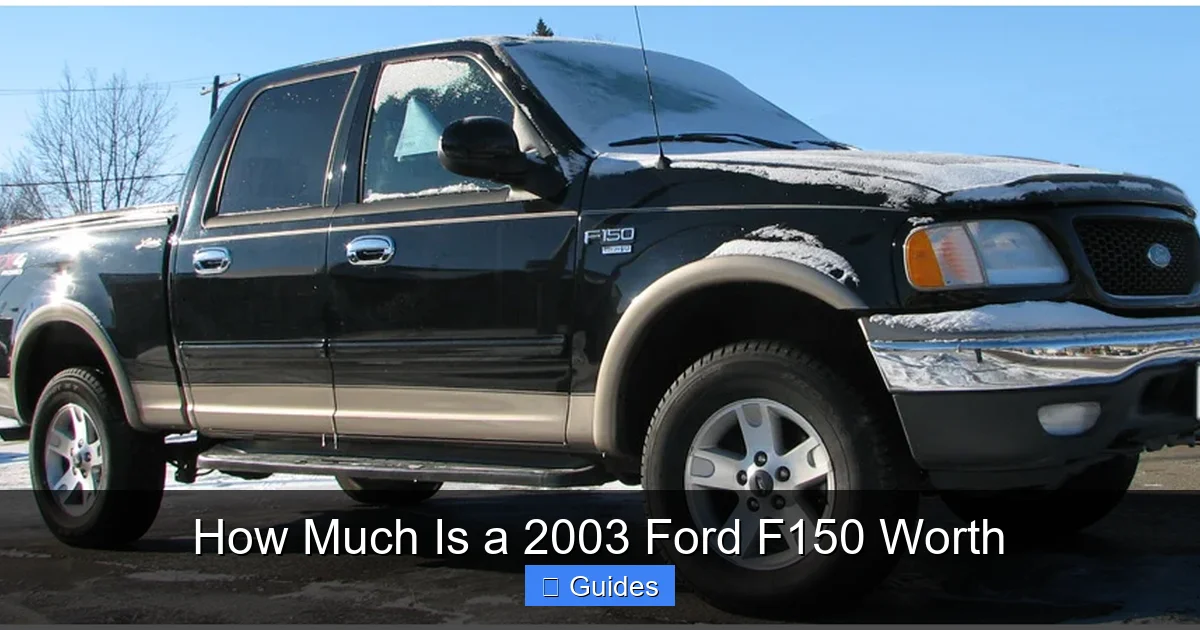
Visual guide about How Much Is a 2003 Ford F150 Worth
Image source: momentcar.com
Now that you know the basics, let’s dive into the real-world factors that determine how much a 2003 Ford F150 is worth. These aren’t just theoretical—they’re the things buyers and sellers actually care about when negotiating a price.
Mileage: The Biggest Price Driver
Mileage is one of the most straightforward indicators of a truck’s value. As a general rule, lower mileage equals higher value. For a 2003 F150, here’s a rough guide:
– **Under 100,000 miles**: These trucks are considered low-mileage for their age and can sell for $6,000–$8,000 or more, depending on condition and trim.
– **100,000–150,000 miles**: The sweet spot for many buyers. Expect prices in the $4,500–$6,500 range.
– **Over 150,000 miles**: Value drops significantly. Trucks in this range often sell for $3,000–$4,500, unless they have exceptional maintenance records or rare features.
But don’t let high mileage scare you off completely. A well-documented 180,000-mile F150 with regular oil changes, timing chain service, and no major accidents can still be a great buy—especially if it’s priced right. On the flip side, a low-mileage truck that’s been sitting for years or driven infrequently might have hidden issues like dry-rotted tires or fuel system problems.
Vehicle Condition: Looks and Mechanical Health
Condition covers both appearance and mechanical soundness. A truck that looks good but runs poorly is a money pit. Conversely, a clean-running truck with some cosmetic flaws can be a smart purchase.
Start with the exterior. Look for rust, especially around the wheel wells, rocker panels, and under the doors. The 2003 F150 is known for rust issues in snowy climates where road salt is used. A little surface rust can be treated, but structural rust is a dealbreaker.
Inside, check for worn seats, cracked dashboards, and malfunctioning electronics. A clean interior with working AC, radio, and power features adds value. Smoking stains, pet damage, or strong odors can knock $500–$1,000 off the price.
Mechanically, listen for unusual noises, check for leaks, and test drive the truck. Pay attention to transmission shifts—rough or delayed shifting could signal trouble. Also, have a trusted mechanic do a pre-purchase inspection. It might cost $100–$150, but it could save you thousands in repairs.
Accident History and Title Status
Always check the vehicle history report using services like Carfax or AutoCheck. A clean title with no accidents is ideal. Even minor fender benders can affect value if they involved frame damage or airbag deployment.
Salvage or rebuilt titles drastically reduce value—often by 30–50%. These trucks may have been severely damaged and repaired, which raises concerns about long-term reliability. Unless you’re buying for parts or restoration, it’s usually best to avoid them.
Geographic Location and Market Demand
Where you live (or where the truck is located) can impact price. In rural areas, construction zones, or regions with harsh winters, pickup trucks are in higher demand. A 2003 F150 in Montana or North Dakota might sell for more than the same truck in a city like Los Angeles, where sedans and SUVs dominate.
Seasonality also plays a role. Truck sales tend to peak in spring and fall, when people are preparing for hunting season or winter driving. Selling during these times can help you get a better price.
Service and Maintenance Records
A truck with a detailed maintenance history is worth more. Records show that the owner cared for the vehicle and can give buyers peace of mind. Look for receipts for oil changes, brake jobs, transmission service, and major repairs.
If the timing chain or spark plugs were replaced on a 5.4L V8, that’s a big plus—those are expensive fixes that many owners skip. A recent transmission rebuild or new tires also add value.
How to Determine the Fair Market Value
Visual guide about How Much Is a 2003 Ford F150 Worth
Image source: momentcar.com
So, how do you actually figure out how much a 2003 Ford F150 is worth? Here’s a step-by-step approach:
Use Online Valuation Tools
Start with trusted resources like Kelley Blue Book (KBB), Edmunds, or NADA Guides. Enter the truck’s VIN, mileage, trim, condition, and location to get a price range. These tools use real sales data to estimate value, but remember—they’re just a starting point.
For example, a 2003 F150 XLT SuperCab with 120,000 miles, 4WD, and a 5.4L V8 in good condition might show a private party value of $5,800 on KBB. But if it’s in a high-demand area or has rare features, the actual selling price could be higher.
Check Local Listings
Search Facebook Marketplace, Craigslist, Autotrader, and local dealerships for similar trucks. Compare prices for models with similar mileage, trim, and condition. This gives you a real-world sense of what buyers are willing to pay.
Tip: Look at how long listings have been active. A truck that’s been listed for months might be overpriced. One that sells quickly could indicate strong demand.
Adjust for Unique Factors
No two trucks are exactly alike. If the F150 you’re looking at has extra features—like a lift kit, custom wheels, or a high-end sound system—adjust the price accordingly. But be cautious: not all mods increase value. Some buyers prefer stock vehicles.
Also, consider the truck’s usage. A former fleet or rental vehicle might have more wear than a one-owner personal truck, even with similar mileage.
Selling Your 2003 Ford F150: Tips to Maximize Value

Visual guide about How Much Is a 2003 Ford F150 Worth
Image source: 2040-cars.com
If you’re selling, here’s how to get the best price:
Clean and Detail the Truck
First impressions matter. Wash the exterior, vacuum the interior, and remove personal items. A $100 professional detail can make the truck look years newer and justify a higher asking price.
Fix Minor Issues
Replace burnt-out bulbs, fix cracked windshields, and repair small dents. These are low-cost fixes that show you care about the vehicle.
Be Honest About Condition
Disclose any known problems upfront. Buyers appreciate transparency, and it builds trust. Hiding issues can lead to failed inspections or returns.
Choose the Right Sales Platform
Private sales on Facebook Marketplace or Craigslist usually yield the highest prices. Dealership trade-ins are faster but pay less. Consider consignment at a local lot if you don’t have time to sell yourself.
Price It Right
Set a competitive price based on your research. Overpricing leads to long listing times. Underpricing leaves money on the table. Aim for the middle of the market range.
Buying a 2003 Ford F150: What to Watch For
If you’re in the market to buy, here are some red flags to avoid:
Common Mechanical Issues
– **Spark plug problems**: The 5.4L V8 is notorious for plugs ejecting from the cylinder head. Ask if they’ve been replaced with upgraded versions.
– **Timing chain wear**: Listen for rattling at startup. A worn chain can cause engine damage.
– **Transmission issues**: The 4R70W and 4R100 transmissions can fail if not serviced regularly. Check for slipping or harsh shifts.
– **Rust**: Inspect the frame, cab mounts, and bed supports. Surface rust is manageable; structural rust is not.
Test Drive Checklist
– Does the engine start smoothly?
– Are there any warning lights on the dash?
– Does the transmission shift smoothly?
– Do all electrical components work?
– Is there any unusual noise from the suspension or exhaust?
Get a Pre-Purchase Inspection
Never skip this step. A mechanic can spot hidden issues and give you leverage in negotiations. If the seller refuses, walk away.
Conclusion: Is a 2003 Ford F150 Worth It?
So, how much is a 2003 Ford F150 worth? The answer isn’t fixed—it depends on a mix of factors like condition, mileage, trim, and market demand. On average, you can expect to pay between $3,000 and $8,000 for a decent example. Well-maintained, low-mileage models with desirable features can even push past $9,000 in strong markets.
But value isn’t just about price. The 2003 F150 offers something rare in today’s truck market: simplicity, durability, and classic style. It’s a truck that doesn’t need all the latest tech to get the job done. Whether you’re using it for work, play, or daily driving, it can still be a reliable companion—if you choose wisely.
The key is to do your research, inspect thoroughly, and buy (or sell) with confidence. With the right knowledge, a 2003 Ford F150 can be a smart investment that serves you well for years to come.
Frequently Asked Questions
What is the average price of a 2003 Ford F150?
The average price of a 2003 Ford F150 ranges from $3,000 to $8,000, depending on condition, mileage, and trim. Well-maintained, low-mileage models with V8 engines and 4WD can sell for more.
Is a 2003 Ford F150 reliable?
Yes, the 2003 F150 is generally reliable when properly maintained. However, the 5.4L V8 engine has known issues like spark plug ejection and timing chain wear, so regular service is crucial.
How many miles can a 2003 Ford F150 last?
With proper care, a 2003 F150 can last 200,000 miles or more. Many owners report driving these trucks well beyond that mark, especially with routine maintenance and timely repairs.
What should I look for when buying a 2003 Ford F150?
Check for rust, especially on the frame and wheel wells. Inspect the engine for leaks or unusual noises, test the transmission, and review maintenance records. Always get a pre-purchase inspection.
Is it worth buying a high-mileage 2003 F150?
It can be, if the truck has a solid service history and no major mechanical issues. High-mileage trucks are often priced lower, making them good value if you’re on a budget.
Can I tow with a 2003 Ford F150?
Yes, especially models with the 5.4L V8 and towing package. Towing capacity ranges from 5,000 to 8,000 pounds, depending on configuration. Always check the door jamb sticker for exact ratings.

At CarLegit, we believe information should be clear, factual, and genuinely helpful. That’s why every guide, review, and update on our website is created with care, research, and a strong focus on user experience.