
The 2006 Toyota Matrix is a reliable compact hatchback with strong resale value due to Toyota’s reputation for durability. Its worth today ranges from $2,500 to $6,000 depending on condition, mileage, trim, and location. With proper maintenance, this practical car remains a smart used vehicle choice.
If you’re considering buying or selling a 2006 Toyota Matrix, you’re likely wondering: *How much is a 2006 Toyota Matrix worth?* This compact hatchback, known for its practicality, reliability, and Toyota’s legendary build quality, still holds value well over a decade after its release. Whether you’re a first-time car buyer, a budget-conscious commuter, or someone looking to upgrade from an older vehicle, the Matrix offers a compelling mix of efficiency, space, and dependability.
The 2006 model year was part of the first generation of the Toyota Matrix, which debuted in 2003 and shared its platform with the Pontiac Vibe. Built in Cambridge, Ontario, the Matrix was designed to blend the best of a sedan and a small SUV—offering hatchback versatility with car-like handling. It came in several trims, including the base, XR, and high-performance XRS, and was available in front-wheel drive (FWD) or all-wheel drive (AWD). Over the years, it earned a reputation for being a no-nonsense, low-maintenance vehicle that could handle everything from daily commutes to weekend road trips.
So, what determines the value of a 2006 Toyota Matrix today? The answer isn’t a single number—it’s a range influenced by multiple factors like mileage, condition, trim level, transmission type, service history, and even where you live. In this guide, we’ll break down everything you need to know to accurately assess how much a 2006 Toyota Matrix is worth, whether you’re buying, selling, or just curious. We’ll explore pricing trends, what to look for in a used model, and tips to maximize value—all in plain, easy-to-understand language.
In This Article
- 1 Key Takeaways
- 2 📑 Table of Contents
- 3 Understanding the 2006 Toyota Matrix Market Value
- 4 Factors That Affect the 2006 Toyota Matrix’s Worth
- 5 2006 Toyota Matrix Trim Comparison and Pricing
- 6 Tips for Buying or Selling a 2006 Toyota Matrix
- 7 Common Issues and Maintenance Costs
- 8 Conclusion
- 9 Frequently Asked Questions
Key Takeaways
- Market Value Range: Most 2006 Toyota Matrix models sell between $2,500 and $6,000, with lower-mileage examples reaching the higher end.
- Mileage Matters: Vehicles under 100,000 miles command premium prices, while those over 150,000 miles drop significantly in value.
- Trim Level Impact: The XR and XRS trims, especially with AWD or manual transmission, are more valuable than base models.
- Condition Is Key: Clean titles, full service records, and minimal rust or body damage increase resale value by up to 30%.
- Geographic Influence: Prices vary by region—urban areas and mild climates often see higher demand and better pricing.
- Maintenance History: A well-documented maintenance log can boost buyer confidence and justify a higher asking price.
- Market Trends: Rising demand for fuel-efficient, compact cars has helped stabilize the Matrix’s value in recent years.
📑 Table of Contents
Understanding the 2006 Toyota Matrix Market Value
The current market value of a 2006 Toyota Matrix typically falls between $2,500 and $6,000. This wide range reflects the significant differences in condition, mileage, and features among available vehicles. For example, a well-maintained XR model with under 90,000 miles and a clean title might sell for $5,500 to $6,000, especially in regions with high demand for reliable used cars. On the other hand, a base model with over 180,000 miles, minor body damage, and no service records could be listed as low as $2,000—or even less in a private sale.
Several pricing tools and platforms can help you get a more accurate estimate. Websites like Kelley Blue Book (KBB), Edmunds, and NADA Guides allow you to input specific details about the vehicle—such as VIN, mileage, trim, and condition—to generate a fair market value. For instance, a quick check on KBB for a 2006 Matrix XR with 110,000 miles in “Good” condition might show a private party value of around $4,200 and a trade-in value of $3,400. These numbers aren’t set in stone, but they provide a solid starting point for negotiations.
It’s also important to consider regional differences. In cities like Seattle, Denver, or Portland—where outdoor lifestyles and fuel efficiency are highly valued—the Matrix may command higher prices due to its AWD capability and cargo space. In contrast, in rural areas or regions with harsh winters and salted roads, rust and corrosion can reduce value, especially if the undercarriage shows significant wear. Additionally, markets with high used car demand, such as college towns or areas with limited public transportation, often see stronger pricing for practical vehicles like the Matrix.
Another factor influencing value is the vehicle’s history. A Matrix with a clean Carfax report, no accidents, and consistent oil changes will naturally be worth more than one with a salvage title or gaps in maintenance. Buyers are increasingly cautious about hidden issues, so transparency can go a long way in justifying a higher price. Even small details—like having original floor mats, a working rear wiper, or a functioning A/C system—can tip the scales in your favor.
Factors That Affect the 2006 Toyota Matrix’s Worth
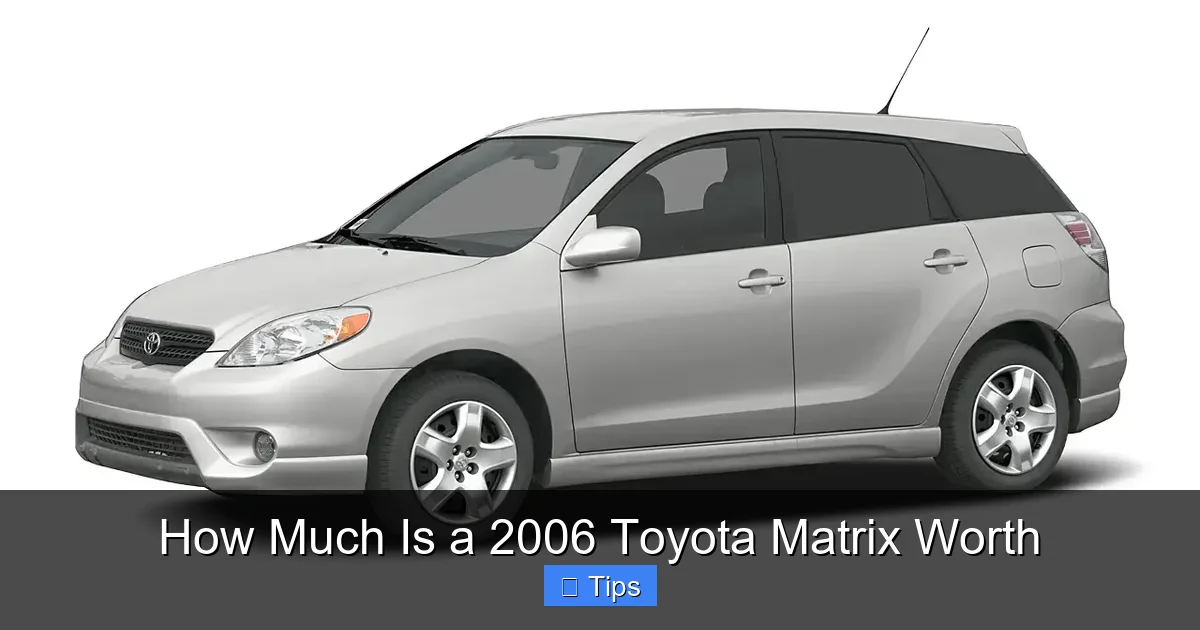
Visual guide about How Much Is a 2006 Toyota Matrix Worth
Image source: platform.cstatic-images.com
When evaluating how much a 2006 Toyota Matrix is worth, it’s essential to understand the key factors that influence its price. These aren’t just technical specs—they’re real-world elements that buyers and sellers weigh heavily during transactions.
Mileage: The Biggest Price Driver
Mileage is arguably the most significant factor in determining a used car’s value, and the Matrix is no exception. As a general rule, lower mileage means higher value. A 2006 Matrix with under 100,000 miles is considered low-mileage for its age and can command a premium. These vehicles often appeal to buyers looking for a “nearly new” experience without the new car price tag.
For example, a 2006 Matrix XR with 85,000 miles, regular maintenance, and a clean interior might sell for $5,800 in a private sale. In contrast, the same model with 160,000 miles—even if it runs well—might only fetch $3,200. The difference isn’t just about wear and tear; it’s about perceived longevity. Buyers want to know they’re getting several more years of reliable service, and lower mileage offers that peace of mind.
That said, high mileage doesn’t automatically mean a car is a bad deal. Some Matrix models have been driven extensively but maintained meticulously. If you can provide records showing timely oil changes, transmission service, and brake inspections, you can still justify a higher price—even with 150,000+ miles. However, without documentation, buyers may assume the worst, leading to lower offers.
Trim Level and Features
Not all 2006 Toyota Matrix models are created equal. The trim level plays a major role in value, with higher trims offering more features and performance. The base model comes with standard features like air conditioning, power steering, and a basic audio system. It’s functional but lacks the extras that make driving more enjoyable.
The XR trim steps up the game with upgrades like alloy wheels, fog lights, a rear spoiler, and sometimes a sunroof. It also often includes a more powerful engine—especially if it’s the optional 2.4L inline-4, which produces 164 horsepower compared to the base 1.8L’s 130 hp. These enhancements make the XR more desirable and typically increase its value by $800 to $1,500 over the base model.
Then there’s the XRS trim—the performance-oriented version with a 2.4L engine, sport-tuned suspension, and a manual transmission (in most cases). The XRS is the rarest and most collectible of the three, especially with AWD. A well-preserved 2006 Matrix XRS with under 100,000 miles can easily sell for $6,000 or more, particularly among enthusiasts who appreciate its driving dynamics and Toyota’s reputation for reliability.
Transmission type also affects value. Manual transmissions are less common in this model year and often appeal to driving enthusiasts, which can increase demand and price. Automatic transmissions are more common and practical for daily driving, but they may not command the same premium.
Condition: Inside, Outside, and Under the Hood
The overall condition of the vehicle is a make-or-break factor. A Matrix that looks and feels well-cared-for will always be worth more than one that shows signs of neglect. This includes both cosmetic and mechanical aspects.
Exterior condition matters. Paint fade, dents, scratches, and rust—especially around wheel wells, rocker panels, and the undercarriage—can significantly reduce value. In regions with snow and road salt, rust is a major concern. A vehicle with surface rust might still be driveable, but structural rust can be a dealbreaker. Buyers will often deduct $500 to $1,000 from their offer if rust is present.
Interior condition is equally important. Stains, tears, or strong odors (like smoke or mildew) can turn buyers away. A clean, odor-free cabin with intact upholstery, working electronics, and minimal wear signals that the previous owner took pride in the vehicle. Replacing worn floor mats or cleaning the upholstery can cost $100 but might increase the sale price by $300 or more.
Mechanical condition is where the real value lies. A Matrix that starts smoothly, shifts without hesitation, and has no warning lights is worth far more than one with a check engine light or transmission issues. Common problems in high-mileage Matrix models include worn suspension components, failing oxygen sensors, and timing belt wear (if not replaced on schedule). A pre-purchase inspection by a trusted mechanic can uncover hidden issues and help you price the car fairly—or avoid a money pit.
Service and Maintenance History
A documented maintenance history can boost a 2006 Toyota Matrix’s value by up to 20–30%. Buyers want reassurance that the car hasn’t been neglected, and service records provide that confidence. Items like oil change logs, brake replacements, tire rotations, and major repairs (e.g., timing belt, water pump) show that the vehicle has been cared for.
For example, if you can show that the timing belt and water pump were replaced at 90,000 miles (a recommended interval for this engine), you’re signaling that the car is in good mechanical health. This kind of proactive maintenance can justify a higher asking price, especially for buyers who plan to keep the car for several more years.
Conversely, a lack of records raises red flags. Even if the car runs well, buyers may assume it hasn’t been maintained properly. In such cases, offering a recent inspection report or agreeing to a pre-purchase inspection can help bridge the trust gap.
Geographic Location and Market Demand
Where you live can impact how much a 2006 Toyota Matrix is worth. In urban areas with high traffic and limited parking, compact, fuel-efficient cars like the Matrix are in demand. Cities like San Francisco, Boston, and Chicago often see stronger pricing for practical hatchbacks due to their versatility and ease of use.
Climate also plays a role. In mild climates like Southern California or the Pacific Northwest, vehicles tend to have less rust and corrosion, preserving their value. In contrast, in the Rust Belt or areas with heavy snowfall, salt damage can reduce a car’s lifespan and resale value.
Additionally, local market trends matter. If used car prices are rising in your area due to supply shortages or increased demand, you may be able to ask for more. Conversely, in a saturated market with many similar vehicles for sale, you may need to price competitively to attract buyers.
2006 Toyota Matrix Trim Comparison and Pricing
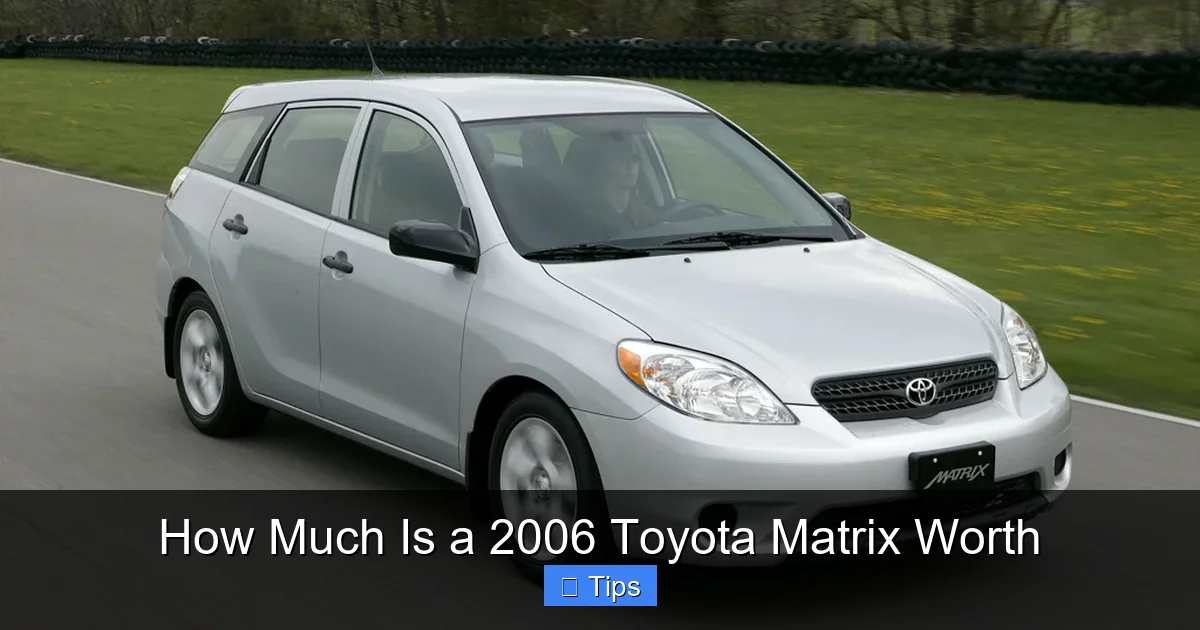
Visual guide about How Much Is a 2006 Toyota Matrix Worth
Image source: annuelauto.ca
To better understand how much a 2006 Toyota Matrix is worth, it helps to compare the different trims and their typical market values. Each trim offers a different balance of features, performance, and price, which directly affects resale value.
Base Model (1.8L FWD)
The base model comes equipped with a 1.8L 4-cylinder engine producing 130 horsepower, paired with either a 5-speed manual or 4-speed automatic transmission. Standard features include air conditioning, power steering, AM/FM stereo, and cloth upholstery. It’s a no-frills option designed for affordability and efficiency.
In today’s market, a base model in average condition with 120,000–150,000 miles typically sells for $2,500 to $3,800. These vehicles appeal to budget buyers, students, or those needing a reliable second car. However, because they lack the upgrades of higher trims, they depreciate faster and are less sought after by enthusiasts.
XR Trim (1.8L or 2.4L, FWD or AWD)
The XR trim adds several desirable features, including alloy wheels, fog lights, a rear spoiler, and sometimes a sunroof. It’s available with either the 1.8L or the more powerful 2.4L engine, and buyers can choose between FWD and AWD. The AWD option is particularly valuable in snowy or rainy climates, as it improves traction and safety.
A 2006 Matrix XR with the 2.4L engine, AWD, and under 100,000 miles can sell for $5,000 to $6,000, especially if it’s in excellent condition. Even with higher mileage (130,000–160,000), a well-maintained XR with AWD might still fetch $4,000 or more. The combination of power, capability, and Toyota reliability makes this trim a standout in the used market.
XRS Trim (2.4L, Manual, Sport-Tuned)
The XRS is the performance version of the Matrix, featuring the 2.4L engine, sport suspension, larger brakes, and a close-ratio 6-speed manual transmission. It’s the most driver-focused model and appeals to those who enjoy a more engaging driving experience. Unfortunately, it was produced in limited numbers, making it rarer and more collectible.
A 2006 Matrix XRS in good condition with under 100,000 miles can command $6,000 or more, particularly if it’s been well cared for and has a clean title. Enthusiasts and Toyota fans often seek out these models, and their scarcity helps maintain value. Even with higher mileage, an XRS with a strong maintenance history can still sell for $4,500 to $5,500.
Tips for Buying or Selling a 2006 Toyota Matrix
Whether you’re in the market to buy or sell a 2006 Toyota Matrix, knowing how to navigate the process can save you time, money, and stress. Here are some practical tips to help you get the best deal.
For Buyers: What to Look For
Start by setting a budget and deciding which trim and features matter most to you. If you live in a snowy area, AWD might be worth the extra cost. If you enjoy driving, the XRS or a manual XR could be more fun.
Always get a vehicle history report using the VIN. Services like Carfax or AutoCheck can reveal accidents, title issues, or odometer discrepancies. Look for a clean title and consistent mileage records.
Schedule a pre-purchase inspection with a trusted mechanic, especially if you’re buying privately. They can check for common issues like suspension wear, exhaust leaks, or transmission problems. This inspection might cost $100–$150, but it could save you thousands in repairs.
Test drive the car in various conditions—city streets, highways, and hills. Pay attention to how it accelerates, brakes, and handles. Listen for unusual noises, and check that all electronics (A/C, lights, wipers) work properly.
For Sellers: How to Maximize Value
First, clean the car thoroughly—inside and out. A professional detailing job can cost $100–$200 but can increase perceived value and attract more buyers. Fix minor issues like burnt-out bulbs, cracked windshield wipers, or loose trim pieces.
Gather all service records and organize them in a folder. If you don’t have them, consider getting a recent inspection and including the report with the sale. This builds trust and shows you’re serious about transparency.
Price the car fairly based on comparable listings in your area. Check sites like Craigslist, Facebook Marketplace, and Autotrader to see what similar Matrix models are selling for. Avoid overpricing—buyers will move on to the next listing.
When listing the car, use high-quality photos from multiple angles, including the interior, engine bay, and undercarriage. Write a detailed description highlighting key features, recent maintenance, and any upgrades. Be honest about flaws—buyers appreciate honesty and are more likely to make a serious offer.
Common Issues and Maintenance Costs
Like any vehicle, the 2006 Toyota Matrix has some known issues that can affect its value and reliability. Being aware of these can help you make an informed decision.
Timing Belt and Water Pump
The 2.4L engine uses a timing belt, which must be replaced every 90,000–100,000 miles. If the belt fails, it can cause catastrophic engine damage. Replacing the belt and water pump typically costs $600–$900. If the service hasn’t been done, factor this into your offer or negotiation.
Suspension and Steering Components
Over time, struts, control arms, and tie rod ends can wear out, especially in areas with rough roads. Symptoms include noise over bumps, poor handling, or uneven tire wear. Repairs can range from $300 to $800 depending on what needs replacement.
Oxygen Sensors and Emissions
The Matrix is known for occasional oxygen sensor failures, which can trigger the check engine light and reduce fuel efficiency. Replacing a sensor costs $150–$300. Regular maintenance and using quality fuel can help prevent issues.
Rust and Corrosion
As mentioned earlier, rust is a concern, especially in cold climates. Inspect the undercarriage, wheel wells, and door sills. Surface rust can be treated, but structural rust may require professional repair or reduce the car’s value significantly.
Conclusion
So, how much is a 2006 Toyota Matrix worth? The answer depends on a combination of factors—mileage, trim, condition, maintenance history, and location—but most models today sell between $2,500 and $6,000. With its reputation for reliability, practical design, and Toyota’s strong brand trust, the Matrix remains a solid choice in the used car market.
Whether you’re buying or selling, doing your homework is key. Use pricing tools, inspect the vehicle thoroughly, and be honest about its condition. A well-maintained Matrix can still provide years of dependable service, making it a smart investment for the right buyer. And for sellers, presenting a clean, documented vehicle can help you get top dollar in a competitive market.
In the end, the 2006 Toyota Matrix isn’t just a car—it’s a testament to Toyota’s commitment to building vehicles that last. With proper care, it can continue to deliver value, efficiency, and practicality for many miles to come.
Frequently Asked Questions
What is the average price of a 2006 Toyota Matrix?
The average price of a 2006 Toyota Matrix ranges from $2,500 to $6,000, depending on condition, mileage, and trim. Lower-mileage, well-maintained models with desirable features like AWD or the XRS trim tend to be on the higher end of this range.
Is a 2006 Toyota Matrix reliable?
Yes, the 2006 Toyota Matrix is known for its reliability, thanks to Toyota’s strong engineering and durable components. With regular maintenance, many owners report driving their Matrix well beyond 200,000 miles without major issues.
What trim of the 2006 Matrix is most valuable?
The XRS trim is the most valuable due to its performance features, manual transmission, and limited availability. The XR trim with AWD and the 2.4L engine also holds strong value, especially in regions with harsh weather.
How many miles can a 2006 Toyota Matrix last?
A properly maintained 2006 Toyota Matrix can easily last 200,000 miles or more. Key to longevity is timely maintenance, especially replacing the timing belt and water pump around 90,000–100,000 miles.
Should I buy a 2006 Toyota Matrix with high mileage?
It depends on the vehicle’s condition and maintenance history. A high-mileage Matrix with full service records and no major issues can still be a good buy. Always get a pre-purchase inspection to avoid hidden problems.
Does the 2006 Matrix have AWD?
Yes, the 2006 Toyota Matrix was available with all-wheel drive (AWD), but only on the XR trim with the 2.4L engine. AWD models are more desirable in snowy or rainy climates and typically command higher prices.

At CarLegit, we believe information should be clear, factual, and genuinely helpful. That’s why every guide, review, and update on our website is created with care, research, and a strong focus on user experience.