
Leasing a Jeep Grand Cherokee typically costs between $350 and $650 per month, depending on trim, location, and incentives. With low down payments and warranty coverage, it’s a smart way to drive a premium SUV without the long-term commitment.
[FEATURED_IMAGE_PLACEOLDER]
If you’re dreaming of driving a rugged yet refined SUV that blends off-road capability with luxury comfort, the Jeep Grand Cherokee might be calling your name. But before you picture yourself cruising down the highway or tackling mountain trails, you’re probably wondering: How much is a Jeep Grand Cherokee lease? The answer isn’t one-size-fits-all—it depends on a mix of factors like trim level, location, credit score, and current promotions. But don’t worry. We’re here to break it all down so you can walk into a dealership (or browse online) with confidence and clarity.
Leasing a Jeep Grand Cherokee is a popular choice for drivers who want to enjoy the latest tech, safety features, and styling without committing to ownership. Unlike buying, leasing lets you drive a new vehicle every few years with lower monthly payments and often little to no down payment. Plus, you’re usually covered under warranty for the entire lease term, meaning fewer surprise repair bills. Whether you’re eyeing the base Laredo or the high-performance Trackhawk, understanding lease pricing helps you make a smart, budget-friendly decision.
In this guide, we’ll walk you through everything you need to know about leasing a Jeep Grand Cherokee—from average monthly costs and down payment options to tips for negotiating the best deal. We’ll also cover common lease terms, mileage limits, and what happens when your lease ends. By the end, you’ll have a clear picture of what to expect and how to get the most value from your lease.
In This Article
- 1 Key Takeaways
- 2 📑 Table of Contents
- 3 Understanding Jeep Grand Cherokee Lease Pricing
- 4 Typical Lease Terms and What They Mean
- 5 Down Payment Options and Their Impact
- 6 How Credit Score Affects Your Lease Rate
- 7 Current Incentives and How to Find the Best Deals
- 8 End-of-Lease Options: What Happens When Your Lease Ends?
- 9 Tips for Negotiating the Best Jeep Grand Cherokee Lease Deal
- 10 Conclusion
- 11 Frequently Asked Questions
- 11.1 How much is a Jeep Grand Cherokee lease per month?
- 11.2 Can I lease a Jeep Grand Cherokee with $0 down?
- 11.3 What credit score do I need to lease a Jeep Grand Cherokee?
- 11.4 How many miles can I drive on a Jeep Grand Cherokee lease?
- 11.5 Can I buy my leased Jeep Grand Cherokee at the end of the lease?
- 11.6 Are there any hidden fees in a Jeep Grand Cherokee lease?
Key Takeaways
- Monthly lease payments range from $350 to $650: The cost varies based on trim level, down payment, credit score, and dealer incentives.
- Down payments can be as low as $0: Many dealers offer $0-down lease deals, especially during promotional periods.
- Lease terms are usually 24 to 36 months: Shorter leases have higher monthly payments but lower total cost; longer leases spread out expenses.
- Mileage limits affect pricing: Standard leases include 10,000 to 15,000 miles per year; exceeding this incurs extra fees.
- Credit score impacts your rate: Buyers with excellent credit (720+) get the best lease terms and lowest money factors.
- Incentives and rebates can lower costs: Look for manufacturer offers like cashback, loyalty bonuses, or conquest deals.
- End-of-lease options include buying or returning: You can purchase the vehicle, lease a new one, or walk away (with potential fees).
📑 Table of Contents
- Understanding Jeep Grand Cherokee Lease Pricing
- Typical Lease Terms and What They Mean
- Down Payment Options and Their Impact
- How Credit Score Affects Your Lease Rate
- Current Incentives and How to Find the Best Deals
- End-of-Lease Options: What Happens When Your Lease Ends?
- Tips for Negotiating the Best Jeep Grand Cherokee Lease Deal
- Conclusion
Understanding Jeep Grand Cherokee Lease Pricing
When it comes to leasing a Jeep Grand Cherokee, the first thing you’ll notice is that prices can vary widely. On average, monthly lease payments range from $350 to $650, but that’s just the starting point. To understand where your number falls, you need to look at several key factors.
The most obvious influence is the trim level. The Grand Cherokee comes in multiple versions—Laredo, Limited, Overland, Summit, and the high-octane Trackhawk. The Laredo, as the base model, typically leases for the lowest monthly payment, often starting around $350 to $400 per month with a modest down payment. In contrast, the Summit or Trackhawk, packed with luxury features and powerful engines, can push your payment closer to $600 or even $650.
Another major factor is your down payment, also known as the “cap cost reduction.” A larger down payment lowers your monthly cost because you’re financing less. For example, putting $3,000 down might drop your payment by $80–$100 per month compared to a $0-down lease. However, many buyers prefer low or no down payment options for better cash flow, especially if they’re leasing multiple vehicles or managing tight budgets.
Your credit score also plays a big role. Lease payments are based on a “money factor,” which is similar to an interest rate. Buyers with excellent credit (720 or higher) qualify for the lowest money factors, often translating to hundreds of dollars in savings over the life of the lease. Those with fair or poor credit may face higher rates, increasing monthly costs.
Location matters too. Lease prices can differ by state due to taxes, registration fees, and local demand. For instance, a Grand Cherokee lease in California might cost slightly more than one in Texas due to higher taxes and fees. Additionally, dealerships in urban areas may offer more competitive pricing to attract customers, while rural dealers might have fewer incentives.
Finally, timing is everything. Jeep often runs lease promotions during the end of the model year (typically late summer to early fall) to clear out inventory. These deals can include reduced money factors, cash incentives, or waived acquisition fees—all of which lower your monthly payment. Keep an eye on Jeep’s official website and local dealer ads for limited-time offers.
Typical Lease Terms and What They Mean
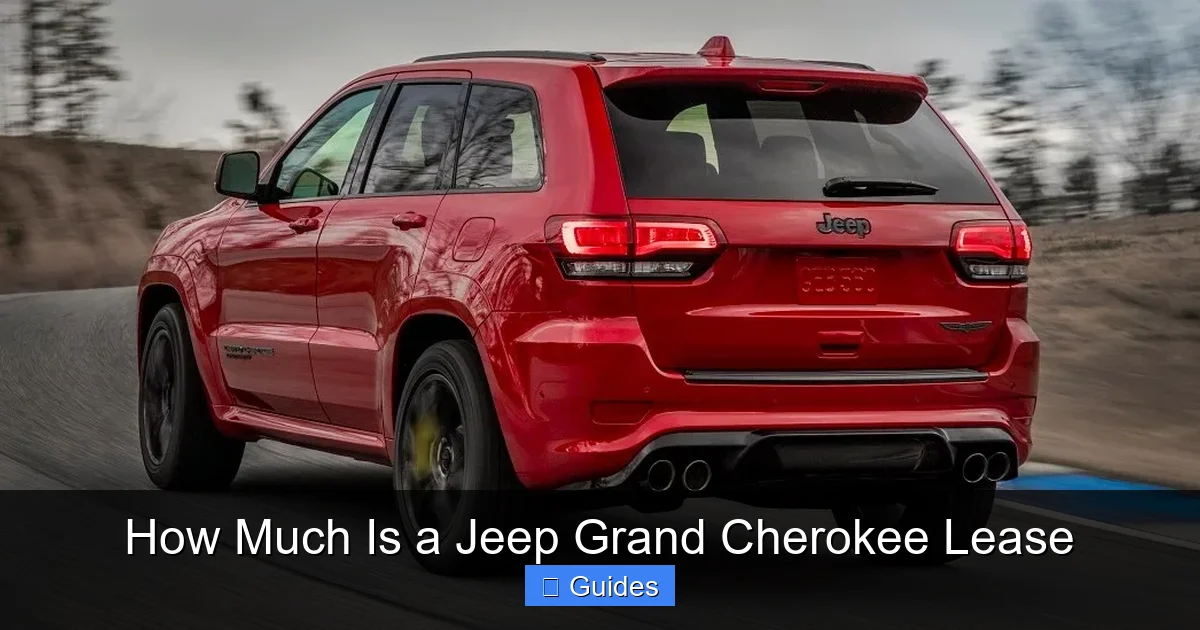
Visual guide about How Much Is a Jeep Grand Cherokee Lease
Image source: cdn.dlron.us
Leasing a Jeep Grand Cherokee isn’t just about the monthly payment—it’s also about the terms of the agreement. Most leases run for 24 to 36 months, with 36 months being the most common. But what do these numbers really mean for you?
A 24-month lease has higher monthly payments because you’re paying off the vehicle’s depreciation over a shorter period. However, the total amount you pay over the life of the lease is usually lower. This option is ideal if you like driving a new car every couple of years and don’t want to be tied down long-term. On the flip side, a 36-month lease spreads the cost over more months, resulting in lower payments—often $50 to $100 less per month than a 24-month term. This is great for budget-conscious drivers who want affordability without sacrificing the latest features.
Another critical term is the mileage limit. Most Jeep Grand Cherokee leases include an annual mileage allowance of 10,000 to 15,000 miles. If you exceed this limit, you’ll be charged an excess mileage fee—typically $0.15 to $0.25 per mile. For example, driving 18,000 miles in a year on a 12,000-mile lease would cost you an extra $900 ($0.15 x 6,000 miles). If you know you’ll drive more than the average, consider negotiating a higher mileage limit upfront, even if it slightly increases your monthly payment. It’s almost always cheaper than paying excess fees later.
Wear and tear is another factor. Leases come with guidelines on what’s considered “normal” wear—like minor scratches or tire wear—and what’s excessive, such as large dents or upholstery damage. At the end of your lease, the dealership will inspect the vehicle and may charge you for repairs beyond normal use. To avoid surprises, take photos of the car when you pick it up and keep records of any maintenance.
Finally, there’s the acquisition fee—a one-time charge (usually $500 to $800) that covers the cost of setting up the lease. Some dealers roll this into the monthly payment, while others require it upfront. Ask about this fee during negotiations, as some promotions may waive it entirely.
Down Payment Options and Their Impact
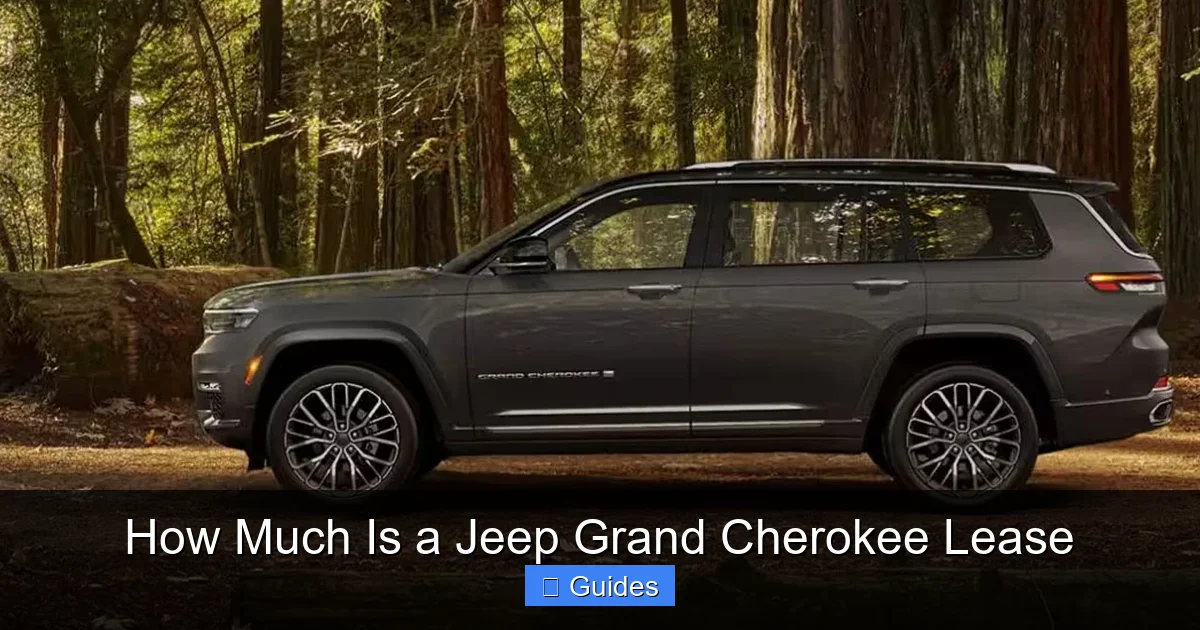
Visual guide about How Much Is a Jeep Grand Cherokee Lease
Image source: pictures.dealer.com
One of the biggest decisions when leasing a Jeep Grand Cherokee is how much to put down. The down payment—also called the capitalized cost reduction—directly affects your monthly payment. But is it better to put money down or keep it in your pocket?
Let’s look at an example. Suppose you’re leasing a Grand Cherokee Limited with a negotiated price of $48,000. The residual value (what the car is worth at the end of the lease) is 60%, or $28,800. That means you’re financing $19,200 in depreciation over 36 months. Without a down payment, your monthly payment might be around $520.
Now, if you put $3,000 down, you’re only financing $16,200. That could drop your payment to around $430—a savings of $90 per month. Over three years, that’s $3,240 in savings. Sounds great, right? But there’s a catch: if the car is totaled or stolen early in the lease, you may not get that $3,000 back unless you have gap insurance.
On the other hand, many buyers prefer $0-down leases for flexibility. These are especially common during promotional periods. For instance, Jeep might offer a “$0 due at signing” deal that includes the first month’s payment, acquisition fee, and registration—all rolled into the lease. This is ideal if you’re tight on cash or want to preserve savings for emergencies.
Another option is a “sign-and-drive” lease, where you pay nothing upfront and even the first month’s payment is deferred. These deals are rare but can be found during special events or loyalty programs. Just remember: lower down payments mean higher monthly costs and more interest over time.
Ultimately, the right down payment depends on your financial situation. If you can afford it and want to minimize monthly expenses, putting money down makes sense. But if cash flow is a concern, a low or $0-down lease lets you drive away today without a big hit to your wallet.
How Credit Score Affects Your Lease Rate
Your credit score doesn’t just affect car loans—it plays a major role in lease pricing too. When you lease a Jeep Grand Cherokee, the dealership uses your credit to determine the “money factor,” which is essentially the lease’s interest rate. A higher credit score means a lower money factor, which translates to lower monthly payments.
For example, a buyer with an excellent credit score (720 or above) might qualify for a money factor of 0.00125. On a $20,000 depreciation amount over 36 months, that’s about $250 in finance charges per month. But someone with a fair score (650–699) might get a money factor of 0.00250—double the rate—adding $500 in monthly finance charges. That’s a $250 difference every month, or $9,000 over three years.
To put it in perspective, here’s a quick breakdown:
– Excellent credit (720+): Money factor ~0.00100–0.00150
– Good credit (680–719): Money factor ~0.00150–0.00200
– Fair credit (650–679): Money factor ~0.00200–0.00250
– Poor credit (below 650): Money factor 0.00250+ or lease denial
The good news? You can improve your chances of getting a great rate by checking your credit report before applying. Look for errors—like incorrect late payments or accounts that aren’t yours—and dispute them. Even a small increase in your score can make a big difference.
Some buyers also consider a co-signer with strong credit to secure better terms. Just remember: the co-signer is equally responsible for the lease, so this should only be done with someone you trust completely.
Current Incentives and How to Find the Best Deals
One of the best ways to lower your Jeep Grand Cherokee lease cost is by taking advantage of manufacturer incentives. Jeep frequently offers special lease deals to attract customers, especially during seasonal promotions or when new models arrive.
As of 2024, common incentives include:
– Cash rebates: Up to $2,000 off the negotiated price for eligible lessees.
– Loyalty bonuses: Extra $500–$1,000 for current Jeep owners or lessees.
– Conquest offers: Discounts for drivers switching from a competing brand (e.g., Ford, Toyota).
– Reduced money factors: Special lease rates as low as 0.00099 (equivalent to ~2.4% APR).
– Waived fees: Some deals include no acquisition fee or first payment waived.
These incentives can significantly reduce your monthly payment. For example, a $2,000 rebate on a $500 monthly lease could drop it to $450 or lower. Plus, stacking multiple offers (like loyalty + conquest) can save you even more.
To find the best deals, start by visiting Jeep’s official website and checking the “Offers & Incentives” section. Filter by your location and the Grand Cherokee model you want. You can also sign up for email alerts to get notified about new promotions.
Next, contact local dealerships and ask about current lease specials. Don’t be afraid to negotiate—dealers often have flexibility to match or beat competitor offers. Bring printouts of online deals to use as leverage.
Finally, consider timing your lease. The best deals usually appear in August and September, when dealers are clearing out current-year models to make room for new ones. You might also find good offers around holidays like Memorial Day or Black Friday.
End-of-Lease Options: What Happens When Your Lease Ends?
After 24 to 36 months, your Jeep Grand Cherokee lease will come to an end. But that doesn’t mean your journey is over. You have several options, each with its own pros and cons.
The most common choice is to return the vehicle. As long as you’ve stayed within the mileage limit and the car is in good condition (normal wear and tear only), you can simply drop it off at the dealership and walk away. You may need to pay a disposition fee (around $300–$500), but that’s usually it.
Another option is to lease a new Jeep Grand Cherokee. Many drivers love the model so much they choose to lease again. Dealers often offer loyalty incentives for returning customers, making it easier to upgrade to a newer trim or model year.
You can also buy the vehicle at its residual value. For example, if your Grand Cherokee’s residual is $28,800, you can purchase it for that amount—often below market value if the car has held its worth well. This is a great way to keep a car you’ve grown attached to without the hassle of selling it later.
Finally, some buyers choose to trade in the leased vehicle for a different model, either at the same dealership or elsewhere. This can help you avoid excess mileage or wear fees if you’ve gone over.
No matter what you choose, start planning a few months before your lease ends. Schedule an inspection, review your contract, and compare your options to make the best decision for your lifestyle and budget.
Tips for Negotiating the Best Jeep Grand Cherokee Lease Deal
Getting a great lease deal isn’t just about luck—it’s about strategy. With the right approach, you can save hundreds or even thousands of dollars over the life of your lease.
First, know the invoice price. This is what the dealer paid for the vehicle, and it’s usually $1,000–$2,000 below the MSRP. Use websites like Edmunds or Kelley Blue Book to find the invoice price for your desired trim and options. Aim to negotiate a cap cost (the amount you’re leasing) close to or below invoice.
Second, focus on the cap cost and money factor, not just the monthly payment. Some dealers will inflate the cap cost and lower the money factor to make the payment look good—but you’ll end up paying more overall. Always ask for a breakdown of the numbers.
Third, negotiate the residual value. While this is set by the manufacturer, some dealers can adjust it slightly based on market conditions. A higher residual means lower depreciation and lower payments.
Fourth, ask about all fees upfront. In addition to the acquisition fee, there may be disposition fees, documentation fees, or early termination charges. Get everything in writing.
Finally, shop around. Get quotes from at least three dealerships and use them to negotiate. Let each dealer know you’re comparing offers—they’ll be more likely to give you their best deal to win your business.
Conclusion
Leasing a Jeep Grand Cherokee offers a smart, flexible way to enjoy one of America’s most iconic SUVs without the long-term commitment of ownership. With monthly payments typically ranging from $350 to $650, a variety of trim options, and frequent incentives, there’s a lease deal out there for almost every budget.
By understanding key factors like down payment, credit score, lease terms, and available promotions, you can make an informed decision and get the best possible value. Whether you’re drawn to the rugged capability of the Laredo or the luxury of the Summit, leasing lets you drive a new Grand Cherokee every few years with minimal hassle.
Remember to shop around, negotiate the details, and time your lease during promotional periods for maximum savings. And when your lease ends, you’ll have the freedom to return, buy, or upgrade—on your terms.
So, how much is a Jeep Grand Cherokee lease? Now you know: it’s not just a number—it’s a smart move.
Frequently Asked Questions
How much is a Jeep Grand Cherokee lease per month?
Monthly lease payments for a Jeep Grand Cherokee typically range from $350 to $650, depending on the trim, down payment, credit score, and current incentives. Base models like the Laredo are on the lower end, while high-performance trims like the Trackhawk cost more.
Can I lease a Jeep Grand Cherokee with $0 down?
Yes, many dealerships offer $0-down lease deals, especially during promotional periods. These “sign-and-drive” leases often include the first month’s payment and fees rolled in, making it easy to drive away without a large upfront cost.
What credit score do I need to lease a Jeep Grand Cherokee?
A credit score of 720 or higher will help you qualify for the best lease rates and lowest money factors. Buyers with scores between 650 and 719 may still lease but could face higher monthly payments due to increased finance charges.
How many miles can I drive on a Jeep Grand Cherokee lease?
Most leases include an annual mileage limit of 10,000 to 15,000 miles. Exceeding this limit results in excess mileage fees, typically $0.15 to $0.25 per mile. You can negotiate a higher limit upfront if you expect to drive more.
Can I buy my leased Jeep Grand Cherokee at the end of the lease?
Yes, you have the option to purchase the vehicle at its residual value, which is set at the beginning of the lease. This price is often below market value, making it a great deal if you love the car and want to keep it.
Common fees include the acquisition fee ($500–$800), disposition fee ($300–$500), and potential excess mileage or wear-and-tear charges. Always ask for a full breakdown of all costs before signing the lease agreement.

At CarLegit, we believe information should be clear, factual, and genuinely helpful. That’s why every guide, review, and update on our website is created with care, research, and a strong focus on user experience.