
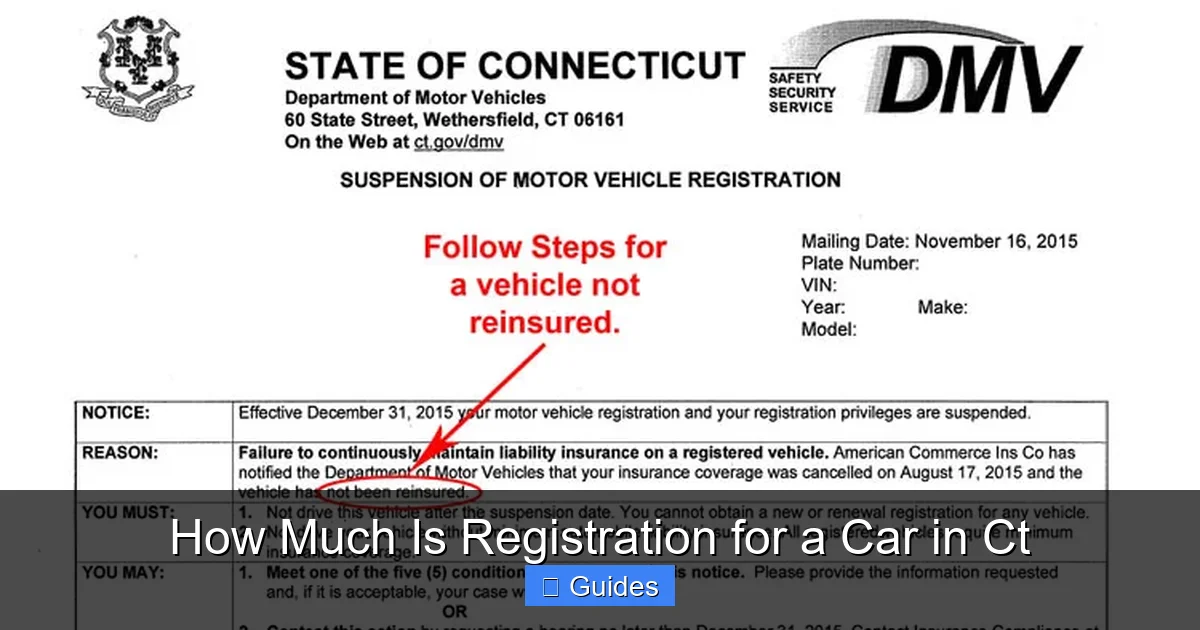
Registering a car in Connecticut involves several fees based on vehicle type, weight, and age. Costs typically range from $80 to $300+, with additional charges for late registration or specialty plates. Understanding the process helps you budget and avoid surprises.
In This Article
- 1 Key Takeaways
- 2 📑 Table of Contents
- 3 How Much Is Registration for a Car in Connecticut?
- 4 Base Registration Fees in Connecticut
- 5 New Residents: What You Need to Know
- 6 Renewing Your Connecticut Car Registration
- 7 Specialty Plates and Additional Costs
- 8 Tips to Save Money and Avoid Mistakes
- 9 Conclusion
- 10 Frequently Asked Questions
- 10.1 How much does it cost to register a car in Connecticut?
- 10.2 Do I need an emissions test to register my car in CT?
- 10.3 Can I register my car online in Connecticut?
- 10.4 What happens if I don’t register my car on time in CT?
- 10.5 Are there discounts for electric vehicles in Connecticut?
- 10.6 How long do I have to register my car after moving to Connecticut?
Key Takeaways
- Base registration fees in CT start at $80 for passenger vehicles and increase based on weight and vehicle type.
- New residents have 60 days to register their vehicle after moving to Connecticut, or face penalties.
- Electric and hybrid vehicles pay reduced fees as part of Connecticut’s green vehicle incentives.
- Late registration incurs a $25 penalty after 30 days, plus possible fines or license suspension.
- Specialty and vanity plates cost extra, ranging from $30 to $100+ depending on design and availability.
- Registration must be renewed annually and requires a valid emissions test for most vehicles.
- Online renewal is available for most drivers, saving time and avoiding DMV wait times.
📑 Table of Contents
How Much Is Registration for a Car in Connecticut?
If you’re a new or current Connecticut resident, one of the first things you’ll need to do after buying a car is register it with the state. Whether you’re moving from out of state or purchasing your first vehicle, understanding how much it costs to register a car in CT is essential for budgeting and staying compliant with the law. The good news? The process is straightforward once you know what to expect.
Car registration in Connecticut isn’t just about paying a fee—it’s about ensuring your vehicle is legal, safe, and properly documented on the road. From the initial registration to annual renewals, there are several costs and steps involved. These fees vary depending on your vehicle type, weight, age, and even whether it’s electric or gas-powered. Plus, if you’re late or missing documents, you could face additional charges.
In this guide, we’ll walk you through everything you need to know about car registration costs in Connecticut. We’ll break down the base fees, explain how vehicle weight and type affect pricing, and cover extra costs like emissions testing, late penalties, and specialty plates. Whether you’re registering a sedan, SUV, truck, or electric car, this guide will help you understand exactly how much you’ll pay—and how to avoid unnecessary expenses.
Base Registration Fees in Connecticut
Visual guide about How Much Is Registration for a Car in Ct
Image source: darienite.com
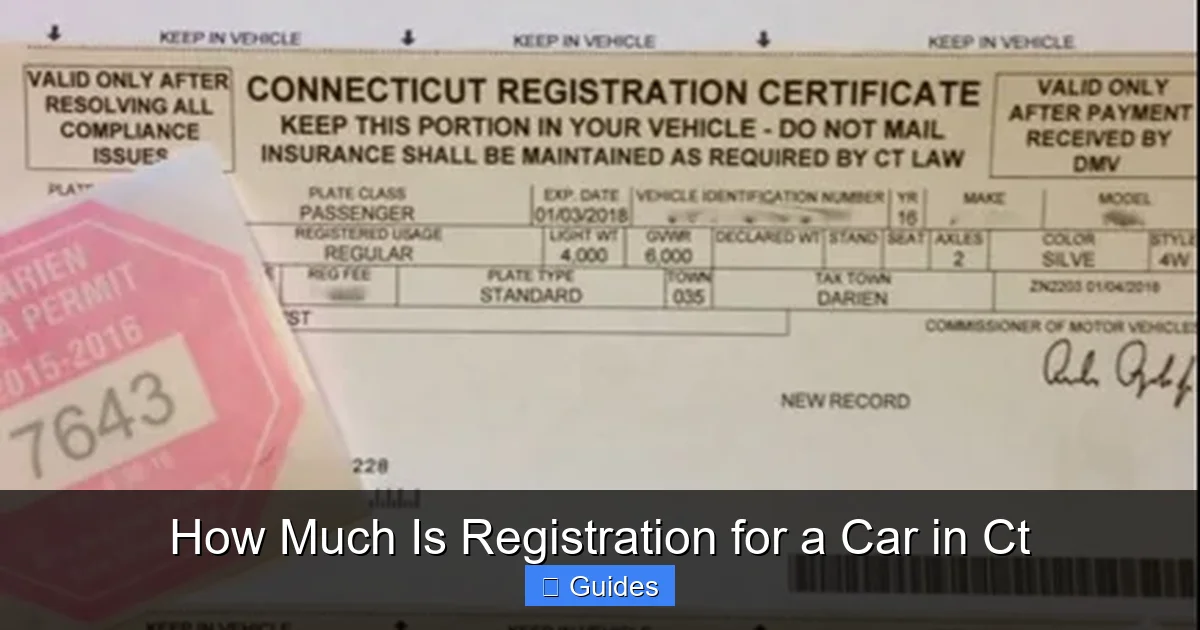
The foundation of your car registration cost in Connecticut starts with the base fee. This is the standard charge set by the Connecticut Department of Motor Vehicles (DMV) for registering a passenger vehicle. As of 2024, the base registration fee for most standard passenger cars is $80. This applies to vehicles under 6,000 pounds and is valid for one year.
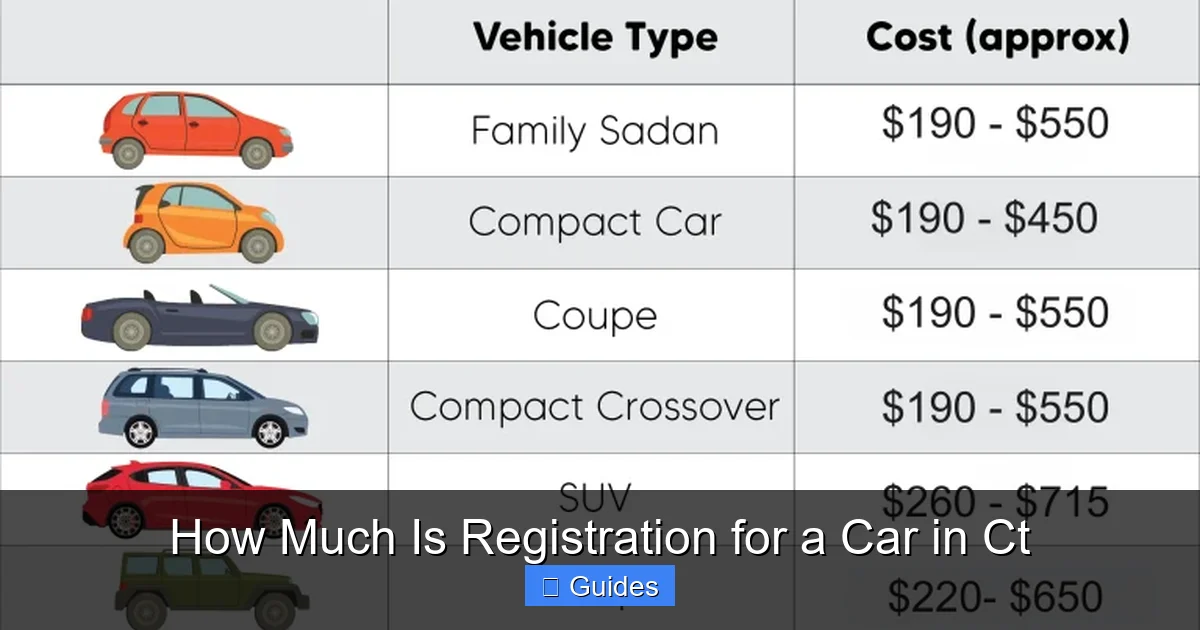
But here’s the catch: not all vehicles pay the same base rate. The fee increases based on the vehicle’s gross weight. For example, if your car weighs between 6,000 and 8,000 pounds—common for many SUVs and larger sedans—the registration fee jumps to $105. Vehicles over 8,000 pounds, such as heavy-duty trucks or large vans, are charged $130.
Let’s look at a few real-world examples. If you drive a Honda Civic, which typically weighs around 2,800 pounds, you’ll pay the base $80 fee. But if you own a Ford F-150 that weighs about 5,000 pounds, you’re still in the $80 bracket. However, a larger SUV like a Chevrolet Tahoe, which can weigh over 6,000 pounds, would cost $105 to register.
It’s also important to note that these fees apply to both new and used vehicles. Whether you bought your car brand new from a dealership or picked up a used model from a private seller, the registration cost is based on weight, not purchase price. This makes Connecticut’s system predictable and fair—no surprise fees based on how much you paid for the car.
Additional Fees Based on Vehicle Type
Beyond the base fee, Connecticut charges extra for certain types of vehicles. Motorcycles, for instance, have a much lower registration cost—just $35 for a standard bike. This makes sense, given their smaller size and lower impact on roads and infrastructure.
On the other end of the spectrum, commercial vehicles and trucks used for business purposes may face higher fees. For example, a delivery van or work truck registered for commercial use could pay up to $200 or more, depending on weight and usage. These vehicles are subject to additional regulations and inspections, which contribute to the higher cost.
Another category with unique pricing is recreational vehicles (RVs). Depending on their size and classification, RVs may be registered as motorhomes or trailers. Motorhomes under 10,000 pounds typically pay around $130, while larger models can cost significantly more. Trailers, on the other hand, are generally cheaper—often under $50—but still require registration if they’re over a certain weight.
Electric and Hybrid Vehicle Discounts
Connecticut encourages environmentally friendly driving by offering reduced registration fees for electric and hybrid vehicles. If you own a fully electric car like a Tesla Model 3 or a Nissan Leaf, you’ll pay only $32 for registration—less than half the standard rate. Plug-in hybrids, such as the Toyota Prius Prime or Chevrolet Volt, are eligible for a slightly higher fee of $52.
These discounts are part of Connecticut’s broader effort to reduce emissions and promote clean transportation. By lowering the financial barrier to owning green vehicles, the state hopes to accelerate the transition away from fossil fuels. It’s a win-win: you save money, and the environment benefits.
To qualify, your vehicle must be certified as electric or plug-in hybrid by the manufacturer. You’ll need to provide documentation during registration, such as the vehicle’s title or a manufacturer’s statement. The discount applies to both new and used green vehicles, so even if you buy a pre-owned electric car, you can still take advantage of the lower fee.
New Residents: What You Need to Know
Visual guide about How Much Is Registration for a Car in Ct
Image source: carcareassist.com
If you’ve recently moved to Connecticut from another state, you’re required to register your vehicle within 60 days of establishing residency. This is a common deadline across many states, but it’s easy to overlook when you’re busy settling into a new home.
Failing to register on time can result in penalties. After 30 days past the deadline, you’ll be charged a $25 late fee. If you go beyond 60 days without registering, you could face additional fines, and in extreme cases, your driver’s license may be suspended. It’s not worth the risk—getting registered early saves you money and stress.
When you register as a new resident, you’ll need to bring several documents to the DMV. These include your out-of-state title (or proof of ownership), a completed Application for Registration and Title (Form H-13B), proof of insurance, and a valid emissions test if required. You’ll also need to pay the registration fee, which will be based on your vehicle’s weight and type, just like any other CT resident.
One thing to note: if your vehicle is financed, the lienholder may need to be listed on the title. In that case, you might need to work with your lender to transfer the title to Connecticut. This can add a few extra steps, so it’s best to start the process early.
Required Documents for New Residents
To make the registration process smooth, gather these documents before visiting the DMV:
– Out-of-state vehicle title (signed over to you, if applicable)
– Completed Form H-13B (available online or at the DMV)
– Proof of Connecticut auto insurance (minimum coverage required)
– Valid emissions test certificate (if your vehicle is more than 4 years old)
– Valid photo ID (driver’s license or state ID)
– Proof of residency (utility bill, lease agreement, or bank statement)
Having everything ready will help you avoid multiple trips to the DMV. Many people forget the emissions test requirement, especially if their previous state didn’t have one. In Connecticut, most vehicles over four years old must pass an emissions inspection every two years. You can schedule this test at any state-approved inspection station.
Transferring Your Out-of-State Registration
Connecticut does not allow you to simply transfer your out-of-state registration. Instead, you must apply for a new Connecticut title and registration. This means surrendering your old plates and receiving new ones from the DMV. The process typically takes 15 to 30 minutes if you have all your documents.
One perk: if your vehicle is less than 10 years old and meets certain safety standards, you may be eligible for a waiver on the VIN verification. Otherwise, a DMV employee will inspect your vehicle to confirm the VIN matches the title and registration.
After registration, you’ll receive new Connecticut license plates and a registration certificate. Keep the certificate in your glove compartment—it’s required by law and may be requested during traffic stops.
Renewing Your Connecticut Car Registration
Visual guide about How Much Is Registration for a Car in Ct
Image source: plateshack.com
Car registration in Connecticut must be renewed every year. The renewal period is based on the month your vehicle was originally registered. For example, if you registered your car in March, your renewal is due every March.
Renewal notices are mailed to your address on file about 60 days before expiration. These notices include a renewal code and instructions for online, mail, or in-person renewal. It’s important to keep your address updated with the DMV to avoid missing your notice.
The cost to renew is the same as the initial registration fee, based on your vehicle’s weight and type. So if you paid $80 the first year, you’ll pay $80 again—unless your vehicle’s classification has changed (which is rare).
Online Renewal: Fast and Convenient
One of the easiest ways to renew your registration is online through the Connecticut DMV website. As long as you have your renewal notice, license plate number, and a valid credit or debit card, you can complete the process in minutes.
Online renewal is available for most vehicles, but there are exceptions. You cannot renew online if:
– Your vehicle requires an emissions test and it’s overdue
– You have a suspended registration
– You need to update your address or vehicle information
– You’re renewing a commercial or specialty vehicle
If any of these apply, you’ll need to visit a DMV office or use the mail-in option.
Emissions Testing Requirements
Most vehicles in Connecticut must pass an emissions test every two years to renew registration. This applies to cars and light-duty trucks that are more than four years old. The test checks for harmful pollutants like carbon monoxide, hydrocarbons, and nitrogen oxides.
You’ll receive a reminder when your emissions test is due, usually around the same time as your registration renewal. You can schedule the test at any state-approved inspection station. The cost is typically around $20 to $30, depending on the station.
If your vehicle fails the test, you’ll need to make repairs and retest. Some repairs may be covered under warranty or Connecticut’s emissions repair program, which offers financial assistance for low-income drivers.
Late Renewal Penalties
If you miss your renewal deadline, you’ll be charged a $25 late fee after 30 days. After 90 days, the penalty increases, and your registration may be suspended. Driving with an expired registration is illegal and can result in a ticket or even impoundment of your vehicle.
To avoid penalties, set a calendar reminder or sign up for email alerts from the DMV. Many drivers find it helpful to renew a few weeks early, especially if they know they’ll be busy during the renewal month.
Specialty Plates and Additional Costs
Beyond standard registration, many Connecticut drivers choose to personalize their vehicles with specialty or vanity license plates. These plates let you show off your personality, support a cause, or honor your alma mater.
The cost for specialty plates varies widely. Standard vanity plates (with custom text) cost an additional $70 for the first year and $35 for each renewal. That’s on top of your regular registration fee.
There are also themed plates for organizations, military veterans, environmental causes, and more. For example, a “Support the Troops” plate costs an extra $50 per year, with proceeds going to veteran support programs. A “Preserve the Sound” plate, which supports Long Island Sound conservation, costs $60 annually.
Popular Specialty Plate Options
Some of the most popular specialty plates in Connecticut include:
– **Veteran plates**: Available to honorably discharged veterans; $20 extra per year
– **College alumni plates**: Support your university with plates from schools like UConn, Yale, or Wesleyan; $35–$50 per year
– **Environmental plates**: Promote clean energy and conservation; $35–$60 per year
– **Animal welfare plates**: Support local shelters and rescue organizations; $40 per year
To order a specialty plate, you can apply online or at a DMV office. Some designs require proof of eligibility, such as military discharge papers or alumni membership.
Vanity Plates: Rules and Restrictions
When choosing custom text for a vanity plate, keep in mind that Connecticut has rules to prevent offensive or misleading combinations. The DMV reserves the right to reject any plate that:
– Contains profanity, hate speech, or sexual content
– Mimics official government plates
– Is too similar to another active plate
– Uses symbols or characters not allowed (only letters, numbers, and certain punctuation)
You can check availability online before applying. If your first choice is taken, try variations or abbreviations. Popular combinations like “JOHN1” or “CT4EVA” may already be in use.
Tips to Save Money and Avoid Mistakes
Registering and renewing your car in Connecticut doesn’t have to be expensive or stressful. With a little planning, you can save money and avoid common pitfalls.
First, always check your vehicle’s weight before registering. You can find this information on the door jamb sticker or in the owner’s manual. Knowing your weight helps you estimate the fee and avoid surprises.
Second, take advantage of discounts for electric and hybrid vehicles. If you’re in the market for a new car, consider a green model to save on registration and fuel costs.
Third, renew early. Not only does this help you avoid late fees, but it also gives you time to resolve any issues, like a failed emissions test.
Finally, keep your documents organized. Store your registration, insurance card, and emissions certificate in your glove compartment. This makes it easy to prove compliance during traffic stops or renewals.
Common Mistakes to Avoid
– **Forgetting the emissions test**: This is the number one reason for renewal delays. Schedule your test early.
– **Using an expired insurance card**: Your insurance must be current and meet Connecticut’s minimum requirements.
– **Not updating your address**: If the DMV sends your renewal notice to the wrong address, you might miss your deadline.
– **Assuming all vehicles pay the same fee**: Always check your vehicle’s weight and type to calculate the correct cost.
By staying informed and prepared, you can make car registration in Connecticut a smooth and affordable process.
Conclusion
So, how much is registration for a car in CT? The answer depends on your vehicle’s weight, type, and whether it’s electric or gas-powered. Most passenger cars cost between $80 and $130 to register, with additional fees for late renewals, emissions tests, and specialty plates. New residents have 60 days to register, and annual renewals are required to stay legal on the road.
The good news is that Connecticut offers online services, green vehicle discounts, and clear guidelines to make the process easier. By understanding the fees and requirements ahead of time, you can budget properly and avoid penalties.
Whether you’re driving a compact car or a heavy-duty truck, registering your vehicle in Connecticut is a necessary step to stay compliant and safe. With this guide, you now have all the information you need to navigate the process with confidence.
Frequently Asked Questions
How much does it cost to register a car in Connecticut?
The base registration fee for a standard passenger car in Connecticut is $80. Fees increase based on vehicle weight, with heavier vehicles paying up to $130. Electric cars enjoy a reduced fee of $32.
Do I need an emissions test to register my car in CT?
Yes, most vehicles over four years old must pass an emissions test every two years to register or renew. Newer vehicles are exempt until they reach the four-year mark.
Can I register my car online in Connecticut?
You can renew your registration online if you have a valid renewal notice and no outstanding issues. Initial registration for new residents must be done in person or by mail.
What happens if I don’t register my car on time in CT?
Late registration incurs a $25 penalty after 30 days. After 90 days, your registration may be suspended, and you could face fines or license penalties.
Are there discounts for electric vehicles in Connecticut?
Yes, fully electric vehicles pay only $32 for registration, and plug-in hybrids pay $52. These discounts are part of Connecticut’s effort to promote clean transportation.
How long do I have to register my car after moving to Connecticut?
New residents must register their vehicle within 60 days of establishing residency. Failure to do so may result in late fees or penalties.

At CarLegit, we believe information should be clear, factual, and genuinely helpful. That’s why every guide, review, and update on our website is created with care, research, and a strong focus on user experience.