
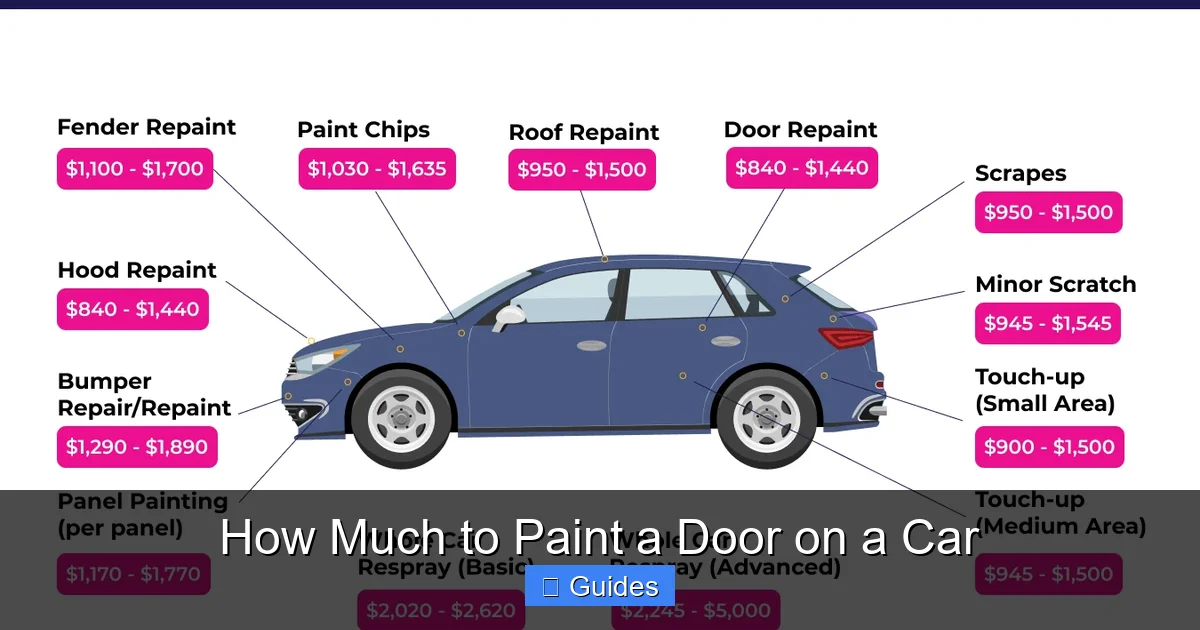
Painting a car door might seem simple, but costs vary widely based on damage, paint type, and labor. Whether you’re fixing a scratch or doing a full repaint, understanding the process helps you budget wisely and avoid surprises.
This is a comprehensive guide about How Much To Paint A Door On A Car.
In This Article
- 1 Key Takeaways
- 2 How Much to Paint a Door on a Car: A Complete Guide
- 3 Factors That Affect the Cost to Paint a Car Door
- 4 Average Cost Breakdown: What to Expect
- 5 DIY vs. Professional: Which Is Right for You?
- 6 Tips to Save Money on Car Door Painting
- 7 How to Choose the Right Body Shop
- 8 Conclusion
- 9 FAQs
- 10 Frequently Asked Questions
Key Takeaways
- Cost Range: Expect to pay between $150 and $800 to paint a single car door, depending on the extent of work needed.
- Paint Quality Matters: OEM-matched paint and premium finishes cost more but offer better durability and color accuracy.
- Labor Is a Major Factor: Professional labor typically accounts for 60–70% of the total cost, especially for blending and finishing.
- DIY Can Save Money: A basic DIY paint job might cost $50–$150 in materials, but results vary and may require touch-ups.
- Prep Work Is Crucial: Sanding, priming, and masking take time and skill—rushing this step leads to poor results.
- Location Affects Pricing: Urban areas and high-end shops charge more than rural or independent garages.
- Insurance May Help: If the damage is from an accident, your auto insurance might cover part or all of the cost.
[FEATURED_IMAGE_PLACEHOLDER]
How Much to Paint a Door on a Car: A Complete Guide
So, you’ve noticed a scratch, dent, or faded paint on your car door and you’re wondering, “How much to paint a door on a car?” It’s a common question—and a smart one. Whether it’s a minor scuff from a shopping cart or a deeper issue from a fender bender, repainting a car door can restore your vehicle’s look and protect it from rust and corrosion. But the cost isn’t always straightforward. Unlike a simple oil change, painting involves multiple steps, materials, and skill levels that all affect the final price.
You might be tempted to grab a spray can from the hardware store and tackle it yourself. And while DIY is possible, it’s not always the best choice—especially if you want a professional, long-lasting finish. On the other hand, taking your car to a body shop ensures quality, but it can also mean a hefty bill. The truth is, the cost to paint a car door depends on several factors: the size of the area, the type of paint, the extent of prep work, labor rates, and even where you live. In this guide, we’ll break down everything you need to know so you can make an informed decision and get the best value for your money.
Factors That Affect the Cost to Paint a Car Door
Before you get a quote, it’s important to understand what drives the price. Painting a car door isn’t just about slapping on a new coat of paint. It’s a multi-step process that requires precision, the right materials, and skilled labor. Here are the key factors that influence how much to paint a door on a car.
Extent of Damage
The first and most obvious factor is the condition of the door. A small scratch or chip might only need spot repair, which is much cheaper than a full repaint. Spot repairs typically cost between $150 and $300. However, if the door has deep scratches, rust, dents, or peeling paint, more work is needed. In these cases, the entire door may need to be sanded, repaired, primed, and painted—pushing the cost up to $500 or more.
For example, if your door has a large dent from a parking lot mishap, the body shop will first need to pull out the dent (a process called paintless dent repair, or PDR), then sand and smooth the surface before painting. Each of these steps adds time and cost. Similarly, if rust has started to form, it must be treated and sealed to prevent it from spreading—another step that increases the price.
Type of Paint Used
Not all paint is created equal. The type of paint used can significantly impact the final cost. Most professional shops use automotive-grade urethane paint, which is durable, UV-resistant, and available in a wide range of colors. This paint is typically mixed to match your car’s original color code, ensuring a seamless finish.
There are three main levels of paint quality:
- Economy Paint: Basic, lower-cost paint that may fade faster and not match perfectly. Often used in budget repairs.
- Mid-Grade Paint: Better color match and durability. Common in most standard body shops.
- Premium/OEM Paint: High-end paint that matches factory standards exactly. Used by dealerships and high-end shops. This is the most expensive option but offers the best longevity and appearance.
Using premium paint can add $100–$200 to the total cost, but it’s often worth it if you plan to keep the car for several years or want to maintain its resale value.
Labor Costs and Shop Type
Labor is one of the biggest expenses when painting a car door. Professional painters charge by the hour, and rates vary widely. On average, labor costs range from $50 to $120 per hour, depending on the shop’s location and reputation.
There are three main types of shops you can choose from:
- Independent Body Shops: Often the most affordable option. They may charge $300–$500 for a full door repaint.
- Dealership Service Centers: Use OEM parts and paint, but charge premium prices. Expect to pay $500–$800 or more.
- High-End or Specialty Shops: Offer top-tier finishes and custom work. Prices can exceed $800, especially for luxury or classic cars.
Keep in mind that a full repaint takes 4–8 hours of labor, including prep, painting, and drying. That’s why labor makes up such a large portion of the bill.
Geographic Location
Where you live plays a big role in pricing. Shops in major cities like Los Angeles, New York, or Chicago charge more due to higher overhead costs, rent, and demand. In contrast, rural areas or smaller towns may offer lower rates.
For example, a door repaint might cost $400 in a small Midwestern town but $700 in downtown San Francisco. Always get quotes from at least two or three local shops to compare prices and services.
Additional Services
Sometimes, painting a door isn’t the only thing that needs attention. If the door has window trim, handles, or mirrors, they may need to be removed before painting—adding to the labor time. Some shops charge extra for this, while others include it in the base price.
Other add-ons might include:
- Clear coat application (usually included but worth confirming)
- Wet sanding and polishing for a mirror finish
- Paint protection film or ceramic coating
These extras can add $50–$200 to the total cost but can significantly improve the final look and durability of the paint job.
Average Cost Breakdown: What to Expect
Now that you know the factors involved, let’s look at realistic cost estimates. The price to paint a car door can range from as little as $150 to over $800. Here’s a detailed breakdown based on different scenarios.
Minor Scratch or Chip Repair
If you’re dealing with a small scratch or paint chip, a spot repair is usually sufficient. This involves cleaning the area, applying primer, paint, and clear coat, then blending it with the surrounding paint. Most shops charge between $150 and $300 for this service.
For example, if you accidentally nicked your door with a bike lock, a spot repair can make the damage nearly invisible. This is the most budget-friendly option and often completed in 2–4 hours.
Full Door Repaint (No Major Damage)
If the door is in decent shape but the paint is faded, oxidized, or uneven, a full repaint may be needed. This includes sanding the entire door, applying primer, base coat, and clear coat. Expect to pay $400–$600 at a reputable shop.
This type of job usually takes a full day, including drying time. It’s ideal for older cars or vehicles exposed to harsh weather conditions.
Full Door Repaint with Repairs
When the door has dents, rust, or deep scratches, the cost goes up. In addition to painting, the shop must perform bodywork. This can include dent pulling, filler application, and rust treatment. Prices typically range from $500 to $800.
For instance, if your door was damaged in a minor collision, the shop might spend 2–3 hours on repairs before even starting the paint process. This added labor increases the total cost.
DIY Paint Job
If you’re handy and willing to put in the time, a DIY paint job can save you hundreds of dollars. A basic DIY kit—including sandpaper, primer, paint, and clear coat—costs $50–$150. However, you’ll also need tools like a spray gun, compressor, and masking tape, which can add another $100–$200 if you don’t already own them.
Keep in mind that DIY results vary. Without proper training, you might end up with orange peel texture, uneven color, or overspray. But for a weekend project or a budget-friendly fix, it’s a viable option.
DIY vs. Professional: Which Is Right for You?
One of the biggest decisions you’ll face is whether to paint the door yourself or hire a professional. Both options have pros and cons, and the right choice depends on your budget, skill level, and expectations.
Pros of DIY Painting
- Cost Savings: You can save $300–$600 by doing it yourself.
- Flexibility: Work at your own pace and on your own schedule.
- Learning Experience: Gain hands-on skills and confidence in car maintenance.
Cons of DIY Painting
- Skill Required: Achieving a smooth, professional finish takes practice.
- Time-Consuming: Prep work alone can take several hours.
- Risk of Mistakes: Poor blending, drips, or dust in the paint can ruin the job.
- No Warranty: Unlike professional shops, DIY jobs don’t come with guarantees.
Pros of Professional Painting
- High-Quality Finish: Experts use advanced techniques and equipment for a flawless result.
- Color Matching: Shops have spectrophotometers to match your car’s exact color.
- Warranty: Most shops offer a 1–3 year warranty on paint jobs.
- Time-Saving: Done in a day or two, depending on shop workload.
Cons of Professional Painting
- Higher Cost: You’re paying for expertise and overhead.
- Less Control: You rely on the shop’s timeline and process.
- Potential for Delays: Busy shops may take longer than expected.
If you’re on a tight budget and don’t mind a learning curve, DIY might be worth a try. But if you want a showroom-quality finish and peace of mind, go with a professional.
Tips to Save Money on Car Door Painting
Even if you choose a professional, there are ways to reduce the cost without sacrificing quality. Here are some practical tips to help you save money when painting your car door.
Get Multiple Quotes
Don’t settle for the first estimate you receive. Visit at least three different shops and ask for detailed quotes. Compare not just the price, but what’s included—labor, materials, warranty, and turnaround time.
Ask About Paint Options
Some shops offer tiered pricing based on paint quality. If you’re not concerned about perfect color match or long-term durability, a mid-grade paint might be sufficient and cheaper than premium.
Bundle Repairs
If other parts of your car need attention—like another door, bumper, or fender—ask if the shop offers a discount for multiple repairs. Many do, since it saves them time on setup and materials.
Do Some Prep Work Yourself
You can reduce labor costs by doing some prep work at home. For example, remove the door handle, mirror, or trim yourself (if you’re comfortable doing so). Just be careful not to damage anything.
Choose Off-Peak Times
Body shops are often busiest in spring and summer. Scheduling your repair in fall or winter might get you a faster turnaround and even a discount.
Check Your Insurance
If the damage was caused by an accident, your auto insurance might cover the cost—especially if you have comprehensive or collision coverage. Even if you have a deductible, it could still be cheaper than paying out of pocket.
How to Choose the Right Body Shop
Not all body shops are created equal. Choosing the right one ensures you get quality work and fair pricing. Here’s how to find a trustworthy shop.
Check Reviews and Ratings
Look for shops with high ratings on Google, Yelp, or the Better Business Bureau. Read recent reviews to see what customers say about their experience, especially regarding paint jobs.
Ask for Before-and-After Photos
A reputable shop should be able to show you examples of their work. Look for smooth finishes, accurate color matching, and clean edges.
Verify Certifications
Shops certified by organizations like ASE (Automotive Service Excellence) or I-CAR follow industry standards and are more likely to deliver quality results.
Get a Written Estimate
Always ask for a detailed, written estimate that breaks down labor, materials, and any additional fees. This protects you from unexpected charges.
Ask About Warranty
A good shop will stand behind their work. Ask about the warranty on the paint job—most offer 1–3 years against peeling, fading, or blistering.
Conclusion
So, how much to paint a door on a car? The answer isn’t one-size-fits-all. Costs range from $150 for a simple scratch repair to $800 or more for a full repaint with bodywork. The final price depends on the damage, paint type, labor, location, and whether you go DIY or hire a pro.
While it’s tempting to go for the cheapest option, remember that paint quality and craftsmanship matter. A poorly done job can lead to peeling, fading, or rust—costing you more in the long run. Whether you choose to do it yourself or trust a professional, take the time to research, compare quotes, and ask questions. With the right approach, you can restore your car door to its former glory without breaking the bank.
FAQs
How much does it cost to paint one car door?
The cost to paint a car door typically ranges from $150 to $800. Minor repairs cost less, while full repaints with bodywork are on the higher end.
Can I paint my car door myself?
Yes, you can paint your car door yourself with a DIY kit. However, achieving a professional finish requires skill, proper tools, and patience.
How long does it take to paint a car door?
A professional paint job usually takes 1–2 days, including prep, painting, and drying. DIY jobs may take longer, especially for first-timers.
Will insurance cover the cost to paint a car door?
If the damage was caused by an accident, your auto insurance may cover the cost, depending on your coverage and deductible.
What’s the difference between spot repair and full repaint?
A spot repair fixes a small area and blends it with the surrounding paint. A full repaint covers the entire door and is needed for widespread damage or fading.
How do I find a reliable body shop?
Look for shops with good reviews, certifications, before-and-after photos, and written estimates. Always ask about warranty coverage.
Frequently Asked Questions
What is How Much To Paint A Door On A Car?
How Much To Paint A Door On A Car is an important topic with many practical applications.

At CarLegit, we believe information should be clear, factual, and genuinely helpful. That’s why every guide, review, and update on our website is created with care, research, and a strong focus on user experience.