
The Nissan Frontier is a capable midsize pickup with a towing capacity ranging from 3,500 to 6,720 pounds, depending on the model year, engine, cab size, and drivetrain. Whether you’re hauling a small trailer, boat, or camper, understanding your Frontier’s specific limits ensures safe and efficient towing.
If you’re the proud owner of a Nissan Frontier—or considering buying one—you’ve probably asked yourself: *How much weight can a Nissan Frontier pull?* It’s a great question, and the answer isn’t one-size-fits-all. The Frontier is a rugged, dependable midsize truck that’s earned its reputation for reliability and off-road capability. But when it comes to towing, several factors come into play: the year of your truck, the engine under the hood, the cab style, whether it’s 2WD or 4WD, and whether you’ve got the right towing gear installed.
Whether you’re planning to tow a small utility trailer for yard work, a pop-up camper for weekend getaways, or a larger travel trailer for cross-country adventures, knowing your Frontier’s towing limits is essential. Overloading your truck can lead to dangerous driving conditions, mechanical failures, and even voided warranties. On the flip side, understanding your truck’s full potential means you can make the most of its capabilities without playing it too safe.
In this guide, we’ll break down everything you need to know about how much weight a Nissan Frontier can pull. We’ll cover towing capacities across different model years, explain how engine and drivetrain choices affect performance, and offer practical tips for safe and efficient towing. By the end, you’ll have a clear picture of what your Frontier can handle—and how to do it right.
In This Article
- 1 Key Takeaways
- 2 📑 Table of Contents
- 3 Understanding Towing Capacity: What It Really Means
- 4 Nissan Frontier Towing Capacity by Model Year
- 5 Engine and Drivetrain: How They Affect Towing
- 6 Cab and Bed Configurations: Does Size Matter?
- 7 Essential Towing Equipment for Your Nissan Frontier
- 8 Practical Tips for Safe and Efficient Towing
- 9 Real-World Towing Examples
- 10 Conclusion: Maximizing Your Frontier’s Towing Potential
- 11 Frequently Asked Questions
- 11.1 What is the maximum towing capacity of a Nissan Frontier?
- 11.2 Can a 4-cylinder Nissan Frontier tow a camper?
- 11.3 Do I need a special hitch to tow with my Nissan Frontier?
- 11.4 Can I tow in 4WD with a Nissan Frontier?
- 11.5 How do I know if my Frontier has the towing package?
- 11.6 What happens if I exceed my Frontier’s towing capacity?
Key Takeaways
- Understanding How Much Weight Can A Nissan Frontier Pull: Provides essential knowledge
📑 Table of Contents
- Understanding Towing Capacity: What It Really Means
- Nissan Frontier Towing Capacity by Model Year
- Engine and Drivetrain: How They Affect Towing
- Cab and Bed Configurations: Does Size Matter?
- Essential Towing Equipment for Your Nissan Frontier
- Practical Tips for Safe and Efficient Towing
- Real-World Towing Examples
- Conclusion: Maximizing Your Frontier’s Towing Potential
Understanding Towing Capacity: What It Really Means
Before diving into numbers, it’s important to understand what “towing capacity” actually means. Simply put, it’s the maximum weight your truck can safely pull behind it, including the trailer, cargo, passengers, and any additional gear. This number is determined by Nissan during vehicle testing and is based on a combination of factors like engine power, transmission strength, frame design, cooling systems, and braking capacity.
It’s not just about raw power—it’s about balance. A truck might have a strong engine, but if the suspension, brakes, or cooling system can’t handle the stress of towing heavy loads, the towing capacity will be lower. That’s why manufacturers publish specific towing ratings for each configuration.
Also, keep in mind that towing capacity is different from payload capacity. Payload refers to how much weight you can carry *inside* the truck—passengers, tools, gear in the bed, etc. Both numbers matter when planning a tow. For example, if your Frontier has a 6,500-pound towing capacity but only a 1,200-pound payload, and you’ve already got three passengers and 500 pounds of gear in the truck, your available payload drops—and that can affect how you load your trailer.
Another key term is Gross Combined Weight Rating (GCWR). This is the maximum allowable weight of the fully loaded truck *plus* the fully loaded trailer. Exceeding GCWR is dangerous and can damage your drivetrain or lead to loss of control. Always check your owner’s manual for these ratings.
Nissan Frontier Towing Capacity by Model Year
Visual guide about How Much Weight Can a Nissan Frontier Pull
Image source: rvandplaya.com
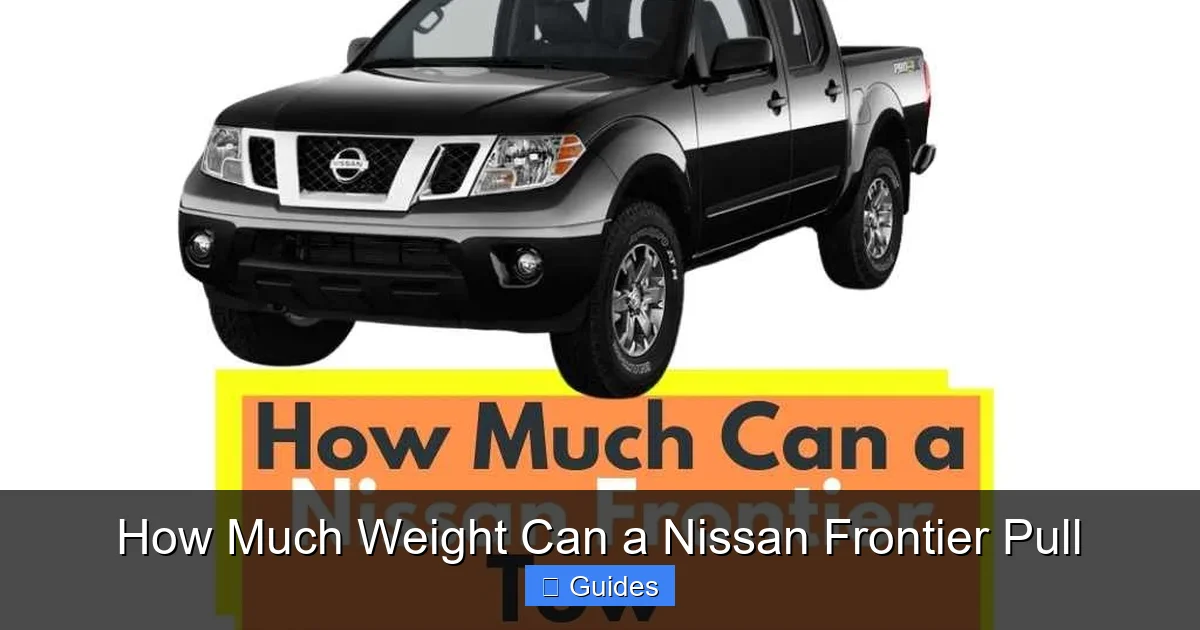
The towing capacity of the Nissan Frontier has evolved over the years, especially with the major redesign in 2022. Let’s break it down by generation so you can find the right number for your specific truck.
First Generation (2005–2009)
The first-generation Frontier, introduced in 2005, offered solid towing for its class. With a 2.5L 4-cylinder engine, towing capacity was modest—around 3,500 pounds. However, models equipped with the 4.0L V6 engine could pull up to 6,500 pounds when properly equipped. This required the optional towing package, which included a Class III hitch, transmission cooler, and upgraded cooling system.
These trucks were available in King Cab (extended cab) and Crew Cab (four-door) configurations. The 4WD models typically had slightly lower towing ratings than their 2WD counterparts due to added weight and drivetrain complexity.
Second Generation (2010–2021)
The second-generation Frontier carried forward much of the same design and powertrain options. The 2.5L 4-cylinder remained the base engine, still limited to about 3,500 pounds. The 4.0L V6 continued to be the towing workhorse, with a maximum capacity of 6,500 pounds when equipped with the towing package.
One notable update during this period was the introduction of the Pro-4X trim, which added off-road enhancements like skid plates and all-terrain tires. While great for rugged terrain, the Pro-4X’s added weight and specialized components sometimes slightly reduced towing capacity compared to base models—though still within the 6,500-pound range for V6 models.
It’s worth noting that during these years, Nissan didn’t make major mechanical changes, so towing specs remained consistent. However, always verify your specific model’s rating using the VIN or owner’s manual, as factory options could affect the final number.
Third Generation (2022–Present)
The 2022 redesign marked a significant upgrade for the Frontier. Nissan introduced a new 3.8L V6 engine producing 310 horsepower and 281 lb-ft of torque—more power than the previous 4.0L. This, combined with a stronger frame and improved cooling, boosted towing capacity.
For 2022 and newer models, the maximum towing capacity is **6,720 pounds** when equipped with the optional towing package. This applies to both King Cab and Crew Cab models, though 4WD versions may have a slightly lower rating due to added weight. The 2WD models generally achieve the highest towing numbers.
The new Frontier also comes standard with a 9-speed automatic transmission, which provides better gear spacing for towing and improved fuel efficiency. The available tow/haul mode helps manage engine braking and shift points when pulling heavy loads.
Engine and Drivetrain: How They Affect Towing
Visual guide about How Much Weight Can a Nissan Frontier Pull
Image source: i.pinimg.com
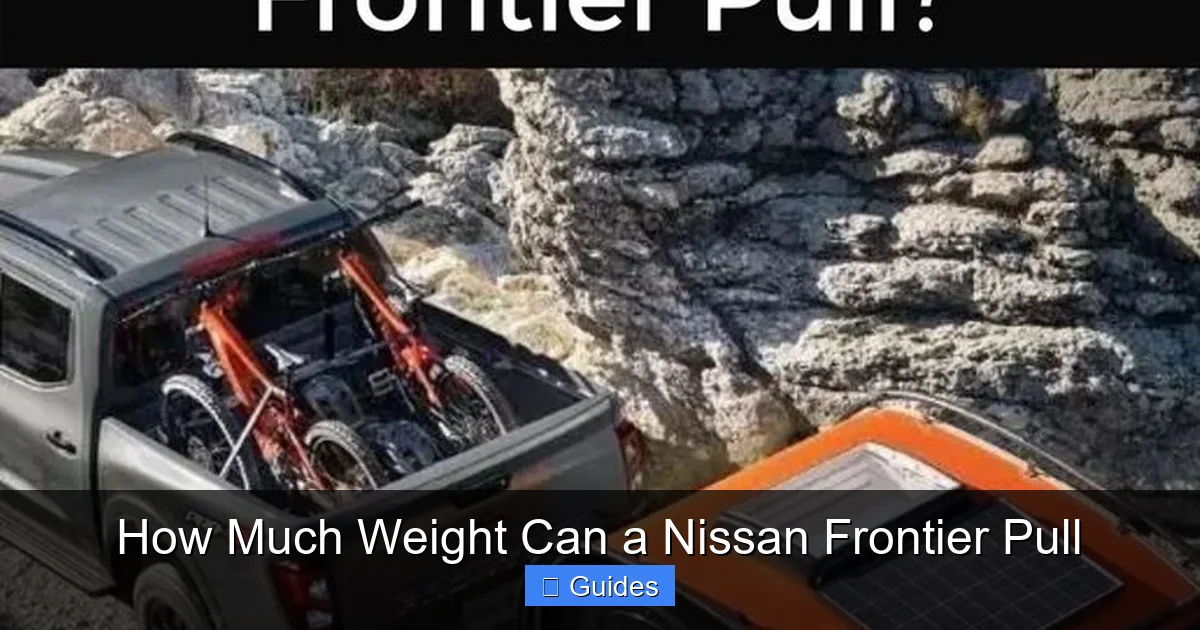
Your Frontier’s engine and drivetrain are the biggest factors in determining how much it can pull. Let’s look at how each component plays a role.
V6 vs. 4-Cylinder: The Power Difference
The 4-cylinder engine (2.5L) found in base models is great for daily driving and light hauling, but it’s not built for serious towing. With around 152 horsepower and 171 lb-ft of torque, it maxes out at about 3,500 pounds. That’s enough for a small utility trailer, a motorcycle, or a lightweight pop-up camper—but not much more.
In contrast, the 3.8L V6 (or 4.0L in older models) is the towing champion. With over 300 horsepower and nearly 300 lb-ft of torque, it provides the low-end grunt needed to get heavy trailers moving and maintain speed on inclines. If you plan to tow regularly or pull anything over 4,000 pounds, the V6 is a must.
2WD vs. 4WD: Traction vs. Towing
Two-wheel drive (2WD) models typically have higher towing capacities than four-wheel drive (4WD) versions. Why? Because 4WD adds weight—extra components like a transfer case, front differential, and driveshaft. That extra mass reduces the amount of weight the truck can pull.
For example, a 2023 Frontier 2WD Crew Cab with the V6 and towing package can pull 6,720 pounds. The same truck in 4WD might be rated for 6,500 pounds. The difference isn’t huge, but it’s important if you’re near the limit.
That said, 4WD offers better traction in off-road or slippery conditions, which can be helpful when launching a trailer from a muddy campsite or steep driveway. So, it’s a trade-off: maximum towing power vs. off-road capability.
Transmission and Cooling Systems
The transmission plays a crucial role in towing. The Frontier’s 9-speed automatic (2022+) is designed to handle heavy loads, with lower gears for better control and a tow/haul mode that adjusts shift patterns to reduce strain.
Equally important is the cooling system. Towing puts extra heat on the engine and transmission. That’s why the towing package includes an upgraded radiator, transmission cooler, and sometimes an oil cooler. Without these, you risk overheating—especially in hot weather or when climbing hills.
Always check that your Frontier has the proper cooling equipment before towing near its max capacity.
Cab and Bed Configurations: Does Size Matter?
Visual guide about How Much Weight Can a Nissan Frontier Pull
Image source: lorenzonissanftlauderdale.com
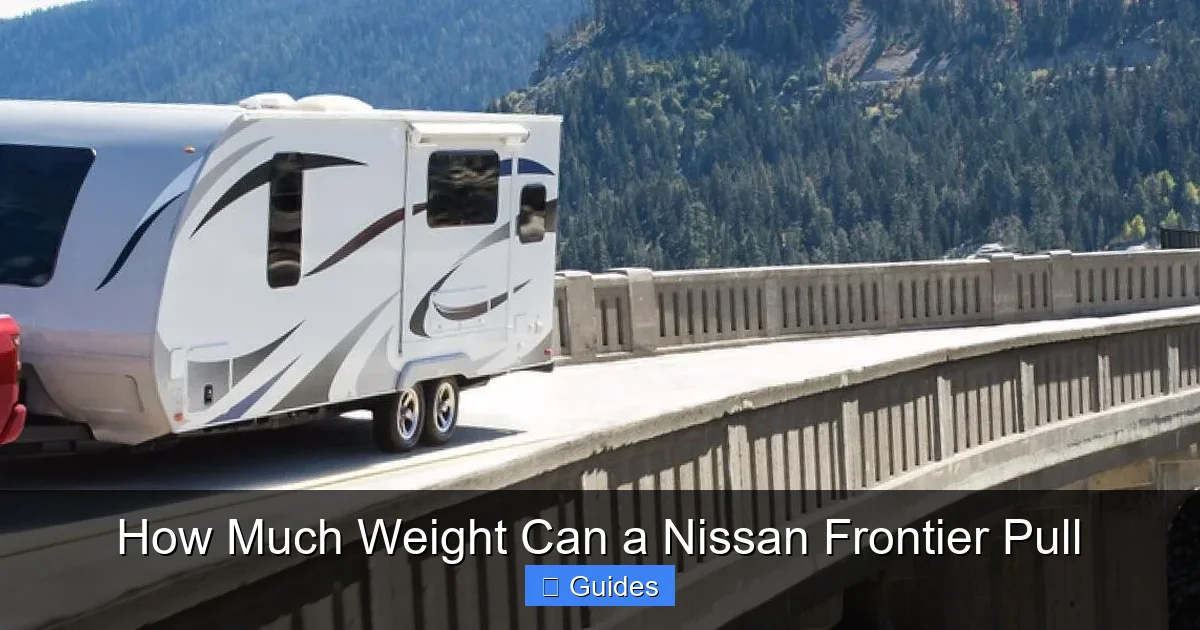
The size and layout of your Frontier—specifically the cab and bed—can influence towing capacity, though the effect is usually minor.
King Cab vs. Crew Cab
The King Cab (extended cab) has two small rear doors and a smaller rear seat, while the Crew Cab has four full doors and a larger rear seat. In most cases, both configurations have similar towing capacities when equipped with the same engine and drivetrain.
However, the Crew Cab is slightly heavier due to the larger body and additional structural reinforcements. This can result in a small reduction in towing capacity—usually less than 200 pounds. For most drivers, this won’t make a practical difference.
Bed Length: Short vs. Long
The Frontier offers a 5-foot or 6-foot bed. The longer bed adds a bit of weight, but the impact on towing is negligible. More important is how you load the truck. A longer bed can help distribute weight better if you’re carrying heavy items in the bed, which can improve stability when towing.
Payload Considerations
While towing capacity gets most of the attention, payload is equally important. Payload is the total weight your truck can carry, including passengers, cargo, and the tongue weight of the trailer.
For example, a 2023 Frontier Crew Cab might have a payload of around 1,200–1,400 pounds. If you’ve got three passengers (450 lbs), gear in the bed (200 lbs), and a trailer with 800 pounds of tongue weight, you’re already at 1,450 pounds—over the limit.
Always calculate your total payload before towing. Overloading the truck can damage suspension, brakes, and tires—even if the trailer itself is within towing capacity.
Essential Towing Equipment for Your Nissan Frontier
Having the right gear is just as important as knowing your truck’s limits. Here’s what you need to tow safely and efficiently.
Factory Towing Package
The best way to maximize your Frontier’s towing ability is to equip it with the factory towing package. This typically includes:
– Class III or IV hitch receiver
– Transmission cooler
– Upgraded radiator
– Heavy-duty battery and alternator
– Trailer wiring harness
– Tow/haul mode (on newer models)
This package is often required to achieve the maximum towing capacity. Check your window sticker or owner’s manual to confirm if your truck has it.
Weight Distribution Hitch
If you’re towing a trailer over 5,000 pounds, a weight distribution hitch is highly recommended. It helps distribute the tongue weight more evenly across all four tires, improving stability and reducing sway.
Without it, the rear of your truck can sag, causing poor handling and increased wear on the rear suspension.
Trailer Brake Controller
For trailers with electric brakes (common on campers and larger utility trailers), you’ll need a brake controller. The Frontier can be equipped with a factory-integrated controller that syncs with the truck’s braking system.
This allows you to adjust brake force and activate trailer brakes independently, which is crucial for safe stopping—especially on downhill grades.
Sway Control Devices
Crosswinds, passing trucks, or uneven loads can cause trailer sway. Sway control devices—either built into the hitch or added as accessories—help keep the trailer tracking straight.
They’re especially useful for taller trailers like campers or enclosed cargo boxes.
Proper Tires and Air Pressure
Towing puts extra stress on tires. Make sure your Frontier is equipped with tires rated for the load you’re carrying. Check the sidewall for the load index and speed rating.
Also, inflate tires to the recommended pressure—often higher than normal when towing. Underinflated tires can overheat and fail, especially on long trips.
Practical Tips for Safe and Efficient Towing
Knowing your towing capacity is one thing—using it safely is another. Here are some real-world tips to help you tow like a pro.
Know Your Limits
Just because your Frontier can pull 6,720 pounds doesn’t mean you should. For most drivers, towing at or near max capacity should be the exception, not the rule. Heavy loads increase stopping distance, reduce maneuverability, and put more stress on the truck.
A good rule of thumb: stay at or below 80% of your max towing capacity for everyday use. Save the full capacity for occasional, well-planned trips.
Distribute Weight Properly
How you load your trailer matters. Aim for 10–15% of the trailer’s total weight on the tongue. Too little, and the trailer can sway; too much, and it can overload the rear axle.
Place heavier items low and centered over the axles. Avoid stacking heavy cargo at the back of the trailer.
Check Before You Go
Before every tow, do a quick inspection:
– Hitch and coupler: Are they secure and locked?
– Lights: Do all trailer lights work?
– Tires: Are they inflated and free of damage?
– Brakes: Are they functioning (if equipped)?
– Fluid levels: Engine oil, transmission fluid, coolant?
A few minutes of prep can prevent a breakdown or accident.
Drive Smoothly
Towing changes how your truck handles. Accelerate and brake gradually. Allow extra space for lane changes and turns. Use lower gears on hills to avoid overheating the transmission.
If your Frontier has a tow/haul mode, use it. It helps manage engine braking and keeps the transmission in the right gear.
Plan Your Route
Avoid steep, winding roads if possible—especially with a heavy load. Check for low bridges, narrow roads, or weight-restricted areas. Use GPS apps that support RV or truck routing.
Also, consider fuel stops. Towing reduces fuel economy significantly—often by 30–40%. Plan accordingly.
Maintain Your Truck
Towing is hard on your Frontier. After long trips, check for leaks, worn belts, or overheating signs. Change transmission fluid more frequently if you tow regularly.
Regular maintenance ensures your truck stays reliable and safe.
Real-World Towing Examples
Let’s put some numbers into context with real-world examples of what a Nissan Frontier can pull.
Small Utility Trailer (1,500–3,000 lbs)
Perfect for yard work, moving furniture, or hauling ATVs. Even a 4-cylinder Frontier can handle this with ease. Just make sure the trailer is properly balanced and secured.
Pop-Up Camper (2,500–4,000 lbs)
A great match for a V6 Frontier. These lightweight campers are ideal for weekend trips. With the towing package, you’ll have no trouble pulling one—even up mountain passes.
Travel Trailer (5,000–6,500 lbs)
This is where the Frontier shines. A well-equipped V6 model can pull a mid-size travel trailer with ease. Just ensure you have a weight distribution hitch and brake controller.
Boat Trailer (4,000–6,000 lbs)
Many mid-size fishing boats and pontoons fall within the Frontier’s range. Be mindful of the boat’s weight plus fuel, gear, and trailer. Saltwater use? Rinse the undercarriage after each trip to prevent corrosion.
Enclosed Cargo Trailer (4,000–6,700 lbs)
Great for moving or hauling gear. These trailers are aerodynamic but heavy. Stay within payload limits and use sway control.
Conclusion: Maximizing Your Frontier’s Towing Potential
The Nissan Frontier is a versatile and capable truck that can handle a wide range of towing tasks—from light-duty hauling to serious trailer towing. Depending on the model year, engine, and configuration, it can pull anywhere from 3,500 to 6,720 pounds. The key is understanding your specific truck’s limits and equipping it properly.
If you’re driving a newer Frontier with the 3.8L V6 and towing package, you’re in great shape for pulling campers, boats, or cargo trailers. Older models with the 4.0L V6 are still strong performers, though slightly less powerful. And while the 4-cylinder is fine for light loads, it’s not ideal for regular towing.
Remember, towing isn’t just about how much you can pull—it’s about doing it safely. Use the right equipment, maintain your truck, and always respect the limits of your vehicle. With the right preparation, your Nissan Frontier can be a reliable partner for all your towing adventures.
Whether you’re heading to the lake, the mountains, or just the hardware store, knowing how much weight your Frontier can pull gives you the confidence to hit the road—safely and smartly.
Frequently Asked Questions
What is the maximum towing capacity of a Nissan Frontier?
The maximum towing capacity of a Nissan Frontier is 6,720 pounds for 2022 and newer models equipped with the 3.8L V6 engine and towing package. Older models with the 4.0L V6 can tow up to 6,500 pounds.
Can a 4-cylinder Nissan Frontier tow a camper?
A 4-cylinder Frontier can tow small pop-up campers or lightweight trailers up to 3,500 pounds. For larger campers, a V6 model is recommended for better power and stability.
Do I need a special hitch to tow with my Nissan Frontier?
Yes, a Class III or IV hitch receiver is required for towing near max capacity. The factory towing package includes this, but aftermarket hitches can also work if properly rated.
Can I tow in 4WD with a Nissan Frontier?
Yes, but 4WD models typically have slightly lower towing capacities than 2WD due to added weight. Always check your owner’s manual for exact ratings.
How do I know if my Frontier has the towing package?
Check your window sticker, owner’s manual, or look for features like a transmission cooler, heavy-duty battery, and trailer wiring harness. You can also contact a Nissan dealer with your VIN.
What happens if I exceed my Frontier’s towing capacity?
Exceeding towing capacity can cause brake failure, transmission damage, loss of control, and void your warranty. It’s also illegal in many areas and increases accident risk.

At CarLegit, we believe information should be clear, factual, and genuinely helpful. That’s why every guide, review, and update on our website is created with care, research, and a strong focus on user experience.