
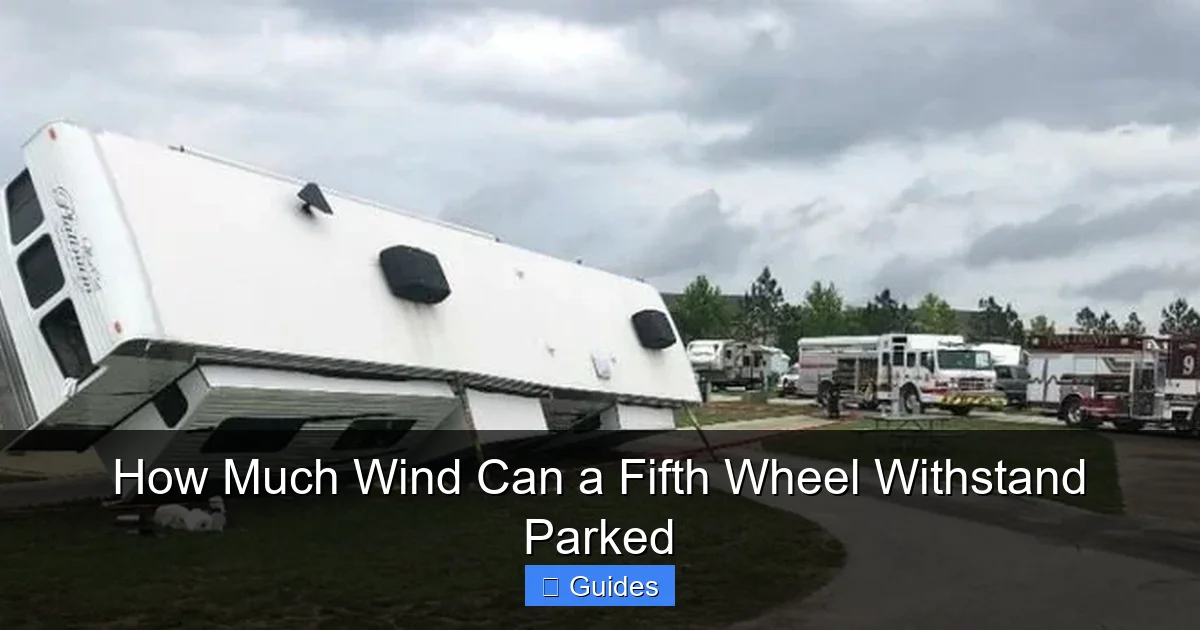
Fifth wheels are sturdy, but high winds can still pose serious risks when parked. Understanding wind tolerance, proper setup, and safety precautions is essential to prevent damage or tipping. This guide breaks down everything you need to know to keep your fifth wheel safe in windy conditions.
In This Article
- 1 Key Takeaways
- 2 📑 Table of Contents
- 3 How Much Wind Can a Fifth Wheel Withstand Parked?
- 4 Understanding Wind Forces on a Parked Fifth Wheel
- 5 Factors That Affect Wind Resistance
- 6 How to Secure Your Fifth Wheel in High Winds
- 7 Signs Your Fifth Wheel Is Under Wind Stress
- 8 What to Do During High Winds
- 9 Long-Term Parking Tips for Windy Areas
- 10 Conclusion
- 11 Frequently Asked Questions
- 11.1 Can a fifth wheel tip over in high winds?
- 11.2 Should I leave my fifth wheel slides out during windy weather?
- 11.3 Do I need special equipment to secure my fifth wheel in wind?
- 11.4 How often should I check my fifth wheel in windy conditions?
- 11.5 Can I park my fifth wheel in a hurricane or tornado?
- 11.6 Are fifth wheels safer in wind than travel trailers?
Key Takeaways
- Most fifth wheels can withstand winds up to 50 mph when properly secured. Beyond this, risks of damage or instability increase significantly.
- Proper leveling and stabilization are critical. Use hydraulic jacks and stabilizer bars to reduce movement and stress on the frame.
- Wind direction matters more than speed. Side winds are far more dangerous than headwinds or tailwinds due to the large surface area exposed.
- Use high-quality wheel chocks and heavy-duty tie-downs. These prevent shifting and help anchor the unit during gusts.
- Monitor weather forecasts daily when parked long-term. Early warnings give you time to reinforce or relocate if needed.
- Consider investing in an anemometer. A portable wind meter lets you track real-time conditions at your site.
- Never ignore red flags like creaking, swaying, or loose exterior parts. These are signs your fifth wheel is under stress and needs immediate attention.
📑 Table of Contents
- How Much Wind Can a Fifth Wheel Withstand Parked?
- Understanding Wind Forces on a Parked Fifth Wheel
- Factors That Affect Wind Resistance
- How to Secure Your Fifth Wheel in High Winds
- Signs Your Fifth Wheel Is Under Wind Stress
- What to Do During High Winds
- Long-Term Parking Tips for Windy Areas
- Conclusion
How Much Wind Can a Fifth Wheel Withstand Parked?
So, you’ve found the perfect spot to park your fifth wheel—maybe it’s a quiet lakeside campground, a mountain overlook, or a long-term RV park. Everything looks great… until the wind picks up. Suddenly, you’re wondering: *How much wind is too much?* Can your fifth wheel really handle a strong gust, or are you one storm away from disaster?
It’s a smart question—and one every fifth wheel owner should ask. While these RVs are built tough, they’re not indestructible. When parked, a fifth wheel becomes a large, boxy structure exposed to the elements. Without proper preparation, even moderate winds can cause damage—or worse, lead to tipping or structural failure.
In this guide, we’ll walk you through everything you need to know about how much wind a fifth wheel can withstand when parked. We’ll cover the science behind wind forces, real-world limits, safety tips, and practical steps you can take to protect your investment. Whether you’re a weekend warrior or a full-time RVer, this information could save you thousands in repairs—or even prevent a dangerous situation.
Let’s dive in.
Understanding Wind Forces on a Parked Fifth Wheel
Visual guide about How Much Wind Can a Fifth Wheel Withstand Parked
Image source: rvlife.com
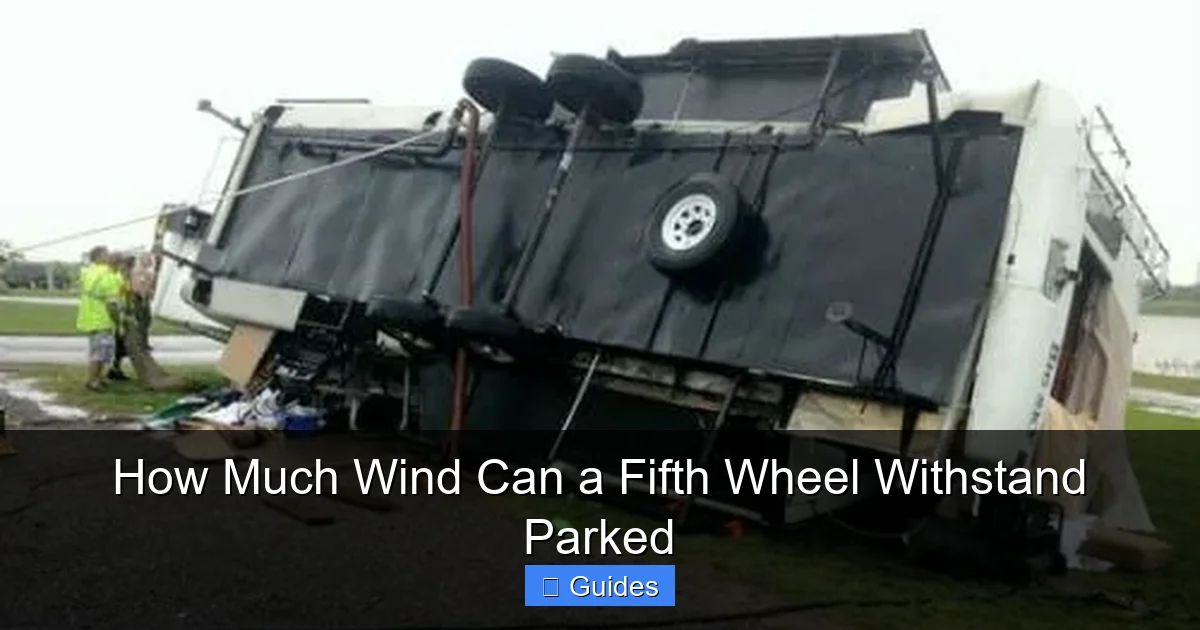
Before we talk numbers, it’s important to understand *why* wind is such a big deal for parked fifth wheels. These RVs are heavy—often weighing 10,000 to 20,000 pounds—but that doesn’t mean they’re immune to wind. In fact, their size and shape make them especially vulnerable.
Surface Area and Wind Pressure
Imagine your fifth wheel as a giant sail. The larger the side wall exposed to wind, the more force it exerts. Most fifth wheels have a broad, flat side profile—sometimes over 30 feet long and 8 feet tall. That’s a lot of surface area for wind to push against.
Wind pressure increases exponentially with speed. At 30 mph, the force is manageable. But at 50 mph, it’s nearly four times stronger. At 70 mph, it’s over nine times stronger than at 30 mph. This is why even a small increase in wind speed can dramatically raise the risk.
Wind Direction Matters
Not all wind is created equal. A headwind (blowing directly at the front) or tailwind (from behind) is less dangerous because the fifth wheel is aerodynamically shaped to handle forward motion. But a side wind—hitting the broad side of the RV—is the real threat.
Side winds create the most pressure and can cause the unit to sway, rock, or even tip if not properly anchored. This is especially true if the fifth wheel is parked on a slope or uneven ground.
Real-World Wind Limits
So, what’s the magic number? Most manufacturers and RV safety experts agree: **a properly secured fifth wheel can typically withstand sustained winds up to 50 mph**. Gusts up to 60–65 mph may be manageable with extra precautions, but anything beyond that is risky.
For context:
– 30–40 mph: Noticeable rocking, but generally safe with standard setup.
– 40–50 mph: Increased movement; use stabilizers and chocks.
– 50–60 mph: High risk; consider reinforcing or relocating.
– 60+ mph: Dangerous; evacuate or seek shelter if possible.
These numbers aren’t set in stone. Factors like terrain, anchoring, and the age of your RV can all influence how well it handles wind.
Factors That Affect Wind Resistance
Visual guide about How Much Wind Can a Fifth Wheel Withstand Parked
Image source: gocarlife.com
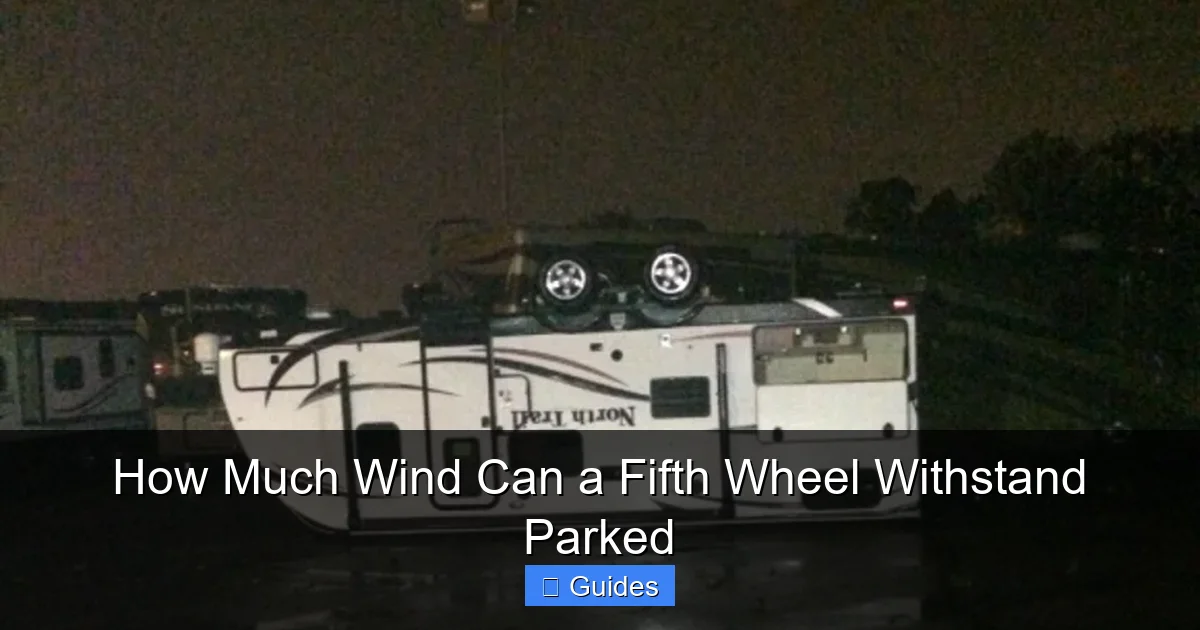
Not all fifth wheels are equally prepared for wind. Several key factors determine how well your RV will hold up when the weather turns.
Age and Build Quality
Newer fifth wheels often have better construction, including reinforced frames, stronger roofs, and improved aerodynamics. Older models—especially those built before the 2000s—may have weaker sidewalls or less secure attachments.
If you own an older fifth wheel, it’s wise to be extra cautious in high winds. Consider upgrading key components like roof seals, window frames, and stabilizer systems.
Weight and Center of Gravity
Heavier fifth wheels are generally more stable. The added mass helps resist tipping. However, if your RV is lightly loaded or has a high center of gravity (due to heavy items stored on upper shelves or in the rear), it becomes more susceptible to wind.
Keep heavy items low and centered. Avoid overloading the rear storage compartments, which can shift the balance and make the unit more top-heavy.
Terrain and Surroundings
Where you park makes a huge difference. A fifth wheel parked in an open field with no windbreaks is far more exposed than one nestled between trees or near a building.
Look for natural wind barriers like hills, dense trees, or other RVs. Avoid parking in wide-open areas, especially on ridgelines or near large bodies of water, where wind speeds can be amplified.
Tire Pressure and Ground Conditions
Properly inflated tires help maintain stability. Underinflated tires can flex and increase movement. Also, soft or muddy ground reduces traction and makes it harder for wheel chocks and jacks to hold firm.
Always check tire pressure before parking long-term. Use leveling blocks on soft ground to distribute weight and prevent sinking.
How to Secure Your Fifth Wheel in High Winds
Visual guide about How Much Wind Can a Fifth Wheel Withstand Parked
Image source: lihpao.com
Preparation is everything. The better you secure your fifth wheel, the more wind it can safely withstand. Here’s a step-by-step guide to maximizing stability.
Level and Stabilize First
Start by leveling your fifth wheel using hydraulic jacks or leveling blocks. An unlevel RV is more likely to shift or tip in strong winds. Once level, deploy the stabilizer jacks—even if you’re only parked for a short time.
Stabilizer jacks reduce side-to-side and front-to-back movement. Use them on all four corners, and tighten them until they’re snug. Don’t over-tighten, as this can damage the frame.
Use Heavy-Duty Wheel Chocks
Wheel chocks are your first line of defense against rolling. Use high-quality, rubber or composite chocks on both sides of the tires. For extra security, consider using two chocks per tire—one in front and one behind.
If you’re in a high-wind area, add a secondary layer of security with tire locks or chains.
Anchor with Tie-Downs and Straps
For long-term parking or storm-prone areas, use heavy-duty tie-downs. These anchor your fifth wheel to the ground using earth anchors, concrete blocks, or specialized RV anchors.
Attach straps to the frame—not the bumper or hitch—and angle them outward at 45 degrees for maximum hold. Use ratchet straps with a minimum 1,500-pound capacity. Check them regularly, as wind can loosen straps over time.
Deploy Slide-Out Covers and Awnings
Retract all slide-outs and lower awnings before high winds arrive. Extended slides increase surface area and stress on the structure. Awnings can act like sails, catching wind and pulling the entire unit.
If you have a manual awning, secure it with extra straps. For power awnings, use the manual override to retract it if power fails.
Reinforce Windows and Roof Vents
High winds can shatter windows or tear off roof vents. Use storm shutters or plywood panels for large windows. For roof vents, install vent covers or use duct tape in a crisscross pattern as a temporary fix.
Avoid opening windows on the windward side—this can create pressure differences that stress the frame.
Use an Anemometer to Monitor Conditions
A portable anemometer (wind speed meter) is a small investment that pays big dividends. Place it near your fifth wheel to track real-time wind speeds. Many models connect to your phone via Bluetooth, so you can monitor conditions even when you’re away.
Set alerts for 40 mph and above. When the alarm sounds, it’s time to check your setup or consider relocating.
Signs Your Fifth Wheel Is Under Wind Stress
Even with precautions, wind can still take a toll. Learn to recognize the warning signs so you can act quickly.
Excessive Swaying or Rocking
A little movement is normal, but if your fifth wheel is swaying noticeably—especially side-to-side—it’s under stress. This could mean the stabilizers aren’t tight enough or the ground is too soft.
Creaking or Popping Sounds
Listen for unusual noises from the frame, roof, or walls. Creaking can indicate flexing or stress on the structure. Popping sounds may mean panels are loosening or seals are failing.
Loose or Damaged Exterior Parts
Check for loose trim, cracked vents, or misaligned doors after windy weather. These are signs that the wind has already caused damage. Address them immediately to prevent further issues.
Doors or Windows Not Closing Properly
If doors or windows suddenly won’t latch, the frame may have shifted. This is a serious red flag—especially if it happens during or after high winds.
Water Leaks or Drafts
Wind-driven rain can force water under seals or through cracks. If you notice new leaks or drafts, inspect the roof, windows, and seams for damage.
What to Do During High Winds
If a storm is approaching or winds are already picking up, don’t panic—but do act quickly.
Stay Calm and Assess the Situation
First, check your anemometer or local weather app. Determine if winds are sustained or just gusts. Gusts are less dangerous than sustained high winds.
Reinforce Your Setup
Tighten stabilizer jacks, check chocks, and secure any loose items outside. Bring in chairs, grills, and other gear that could become projectiles.
Relocate If Necessary
If winds exceed 60 mph or you’re in a high-risk area (like a floodplain or wildfire zone), consider moving to a safer location. Even a short drive to a sheltered area can make a big difference.
Evacuate If Advised
In extreme cases—like hurricanes or tornadoes—evacuation may be the safest option. Don’t wait until it’s too late. Have a plan and practice it before storm season.
Long-Term Parking Tips for Windy Areas
If you’re parking your fifth wheel for weeks or months—especially in windy regions like the plains, coastlines, or mountain passes—extra preparation is key.
Choose Your Site Wisely
Look for sites with natural windbreaks. Avoid open fields, hilltops, and areas near large bodies of water. Check campground reviews for wind conditions.
Invest in Heavy-Duty Anchoring Systems
For long-term stays, use permanent or semi-permanent anchors. Screw-in earth anchors or concrete footings provide the strongest hold.
Regular Maintenance Checks
Inspect your fifth wheel weekly for signs of wear, loose parts, or water damage. Tighten bolts, reseal seams, and replace worn stabilizers as needed.
Use Wind Barriers
Consider installing temporary windbreaks like tarps, fencing, or portable panels. These can reduce wind speed by up to 50% and significantly lower stress on your RV.
Conclusion
So, how much wind can a fifth wheel withstand when parked? The short answer: **up to 50 mph with proper setup, but risks rise sharply beyond that**. Wind is a powerful force—and even the sturdiest fifth wheel can be vulnerable without the right precautions.
The key is preparation. Level your RV, use stabilizers and chocks, anchor it securely, and monitor conditions. Pay attention to wind direction, terrain, and the condition of your unit. And never ignore warning signs like swaying, creaking, or loose parts.
By following the tips in this guide, you’ll not only protect your fifth wheel from damage—you’ll also gain peace of mind, knowing you’re ready for whatever the weather brings. After all, the best adventures are the ones where you stay safe, dry, and secure.
Stay smart, stay prepared, and enjoy the ride.
Frequently Asked Questions
Can a fifth wheel tip over in high winds?
Yes, a fifth wheel can tip over in extreme winds—especially if it’s not properly anchored or parked on a slope. While rare, it’s more likely with side winds, high centers of gravity, or poor setup. Proper stabilization and anchoring greatly reduce this risk.
Should I leave my fifth wheel slides out during windy weather?
No, always retract slide-outs before high winds. Extended slides increase surface area and stress on the frame, making the RV more vulnerable to damage or tipping.
Do I need special equipment to secure my fifth wheel in wind?
Yes, for high-wind areas, consider heavy-duty wheel chocks, ratchet tie-downs, earth anchors, and an anemometer. These tools provide extra stability and help you monitor conditions in real time.
How often should I check my fifth wheel in windy conditions?
Check your setup at least once a day during high winds. Look for loose parts, shifting, or damage. If winds exceed 50 mph, inspect every few hours or consider relocating.
Can I park my fifth wheel in a hurricane or tornado?
No, it’s not safe to stay in a fifth wheel during a hurricane or tornado. These storms bring winds over 75 mph and flying debris. Always evacuate to a sturdy shelter when severe weather is predicted.
Are fifth wheels safer in wind than travel trailers?
Generally, yes. Fifth wheels are heavier, have a lower center of gravity, and are attached to a truck for added stability. However, they still require proper setup and anchoring to withstand high winds.

At CarLegit, we believe information should be clear, factual, and genuinely helpful. That’s why every guide, review, and update on our website is created with care, research, and a strong focus on user experience.