
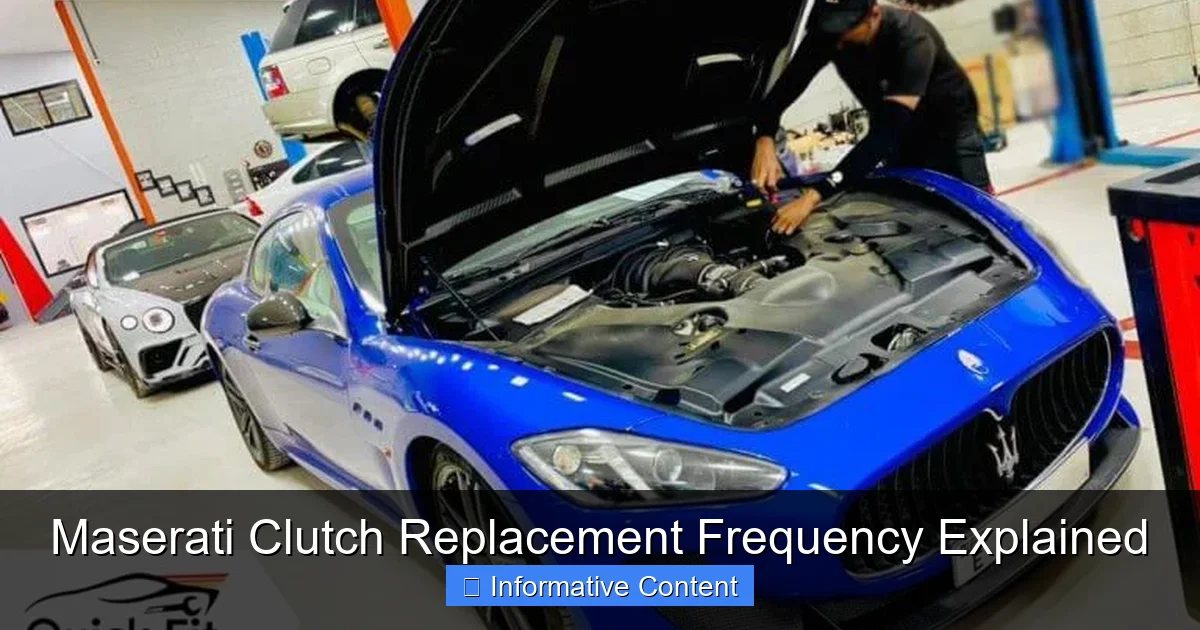
There is no fixed mileage interval for replacing the clutch on a Maserati. Its lifespan, typically between 30,000 and 60,000 miles, is almost entirely dictated by your individual driving habits and conditions. To maximize its longevity, avoid aggressive launches and excessive clutch slippage in traffic.
So, you’re driving your Maserati. That glorious Italian V8 rumbles behind you, the leather smells divine, and every journey feels like an event. Then, one day, you notice it. The clutch pedal feels a bit… different. Maybe it’s higher, maybe it’s shuddering, or perhaps you’re smelling something faintly acrid after a spirited drive. A cold knot of worry forms in your stomach. Is it time? How much is this going to cost? And most importantly, how often should you replace the clutch on a Maserati anyway?
If you’ve found yourself asking these questions, you’re not alone. The clutch is one of those mysterious components for many owners. We know it’s important, we know it wears out, but the timeline feels vague. Unlike an oil change every 10,000 miles, there’s no neat sticker on your windshield for clutch service. Its lifespan is a story written by your driving style, your environment, and the specific model you own.
This guide is here to demystify that story. We’re going to walk through everything that affects Maserati clutch replacement frequency, from the brutal stop-and-go of city commuting to the joyous open-road blasts. My goal isn’t to scare you with big repair bills, but to empower you with knowledge. By understanding the signs and the factors at play, you can maximize the life of your clutch and plan for its eventual replacement without panic. Let’s get into it.
In This Article
- 1 Key Takeaways
- 2 📑 Table of Contents
- 3 What is a Clutch and Why Does it Wear Out?
- 4 The Biggest Factors Affecting Maserati Clutch Lifespan
- 5 So, How Many Miles Can You Expect?
- 6 Unmistakable Signs Your Maserati Clutch Needs Attention
- 7 The Data: Clutch Lifespan Estimates by Driving Profile
- 8 Practical Tips to Extend Your Clutch’s Life
- 9 What to Expect During the Replacement Process
- 10 Conclusion: Knowledge is Power (and Savings)
- 11 Frequently Asked Questions
- 11.1 How often does a Maserati clutch need to be replaced?
- 11.2 What are the signs my Maserati needs a new clutch?
- 11.3 Is Maserati clutch replacement frequency different for automatic models?
- 11.4 Does driving style really affect how often I replace the clutch?
- 11.5 How much does a Maserati clutch replacement cost?
- 11.6 Can I extend the time between Maserati clutch replacements?
Key Takeaways
- Replace based on driving style, not mileage: Aggressive driving drastically shortens clutch lifespan.
- Expect 30,000 to 60,000 miles typically: This is a common range for high-performance vehicles.
- Listen for warning signs like slipping: RPMs climbing without acceleration means immediate service.
- Use an OEM or high-performance clutch kit: Quality parts are critical for performance and longevity.
- Budget for a significant labor cost: The complex drivetrain makes this a major service job.
- Prevent wear with proper driving habits: Avoid riding the clutch and aggressive launches.
📑 Table of Contents
- What is a Clutch and Why Does it Wear Out?
- The Biggest Factors Affecting Maserati Clutch Lifespan
- So, How Many Miles Can You Expect?
- Unmistakable Signs Your Maserati Clutch Needs Attention
- The Data: Clutch Lifespan Estimates by Driving Profile
- Practical Tips to Extend Your Clutch’s Life
- What to Expect During the Replacement Process
- Conclusion: Knowledge is Power (and Savings)
What is a Clutch and Why Does it Wear Out?
Before we talk about how often to replace the clutch on a Maserati, let’s quickly cover the “what” and “why.” Think of the clutch as the middleman between your engine’s raw power and your wheels. When you press the pedal, you’re disconnecting the engine from the transmission so you can change gears. When you release it, you’re carefully re-engaging them via a friction disc squeezed between a flywheel and a pressure plate.
The Simple Physics of Friction
Every time you smoothly engage the clutch from a stop, that friction material wears down a tiny, almost imperceptible amount. It’s a consumable item, just like brake pads. The key difference is that with good technique, you can make a clutch last for tens of thousands of miles. With poor habits, you can cook one in a shockingly short time. It’s all about managing heat and slip.
It’s Not Just the Disc
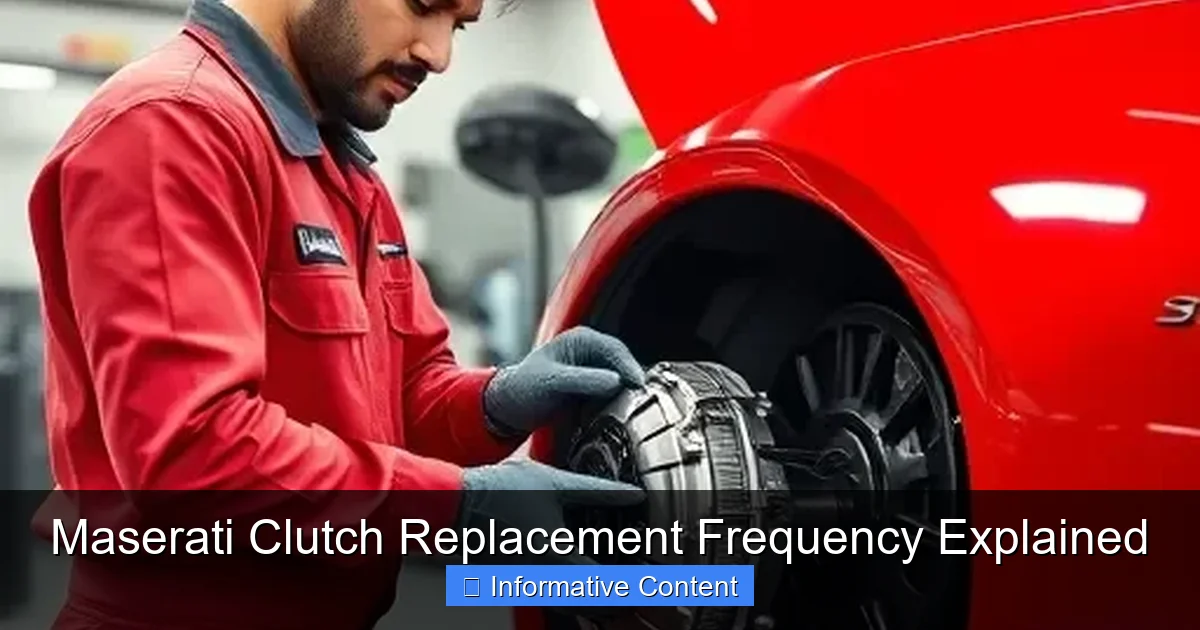
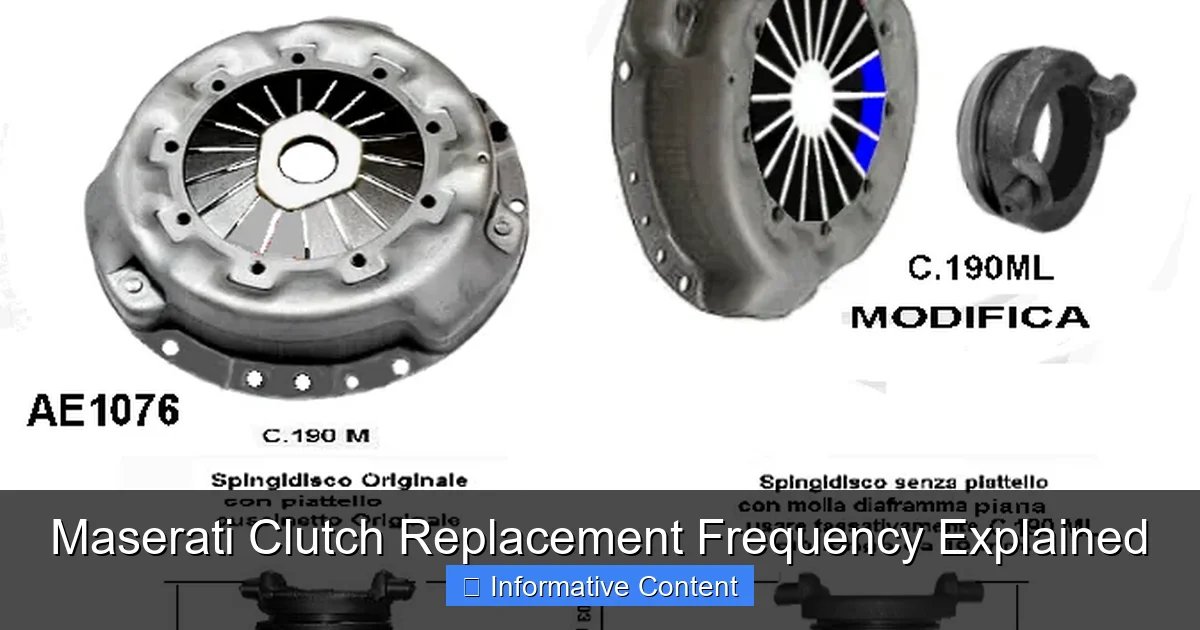
A Maserati clutch replacement often involves more than just a disc. The kit typically includes the pressure plate, which provides the clamping force, and a release bearing (or throw-out bearing), which is the part your clutch fork pushes against. These components endure immense mechanical stress and heat, and they wear out alongside the disc itself.
The Biggest Factors Affecting Maserati Clutch Lifespan
There is no single answer to Maserati clutch replacement frequency. It’s a sliding scale influenced by several key factors. Understanding these is the first step to becoming a clutch-preserving pro.
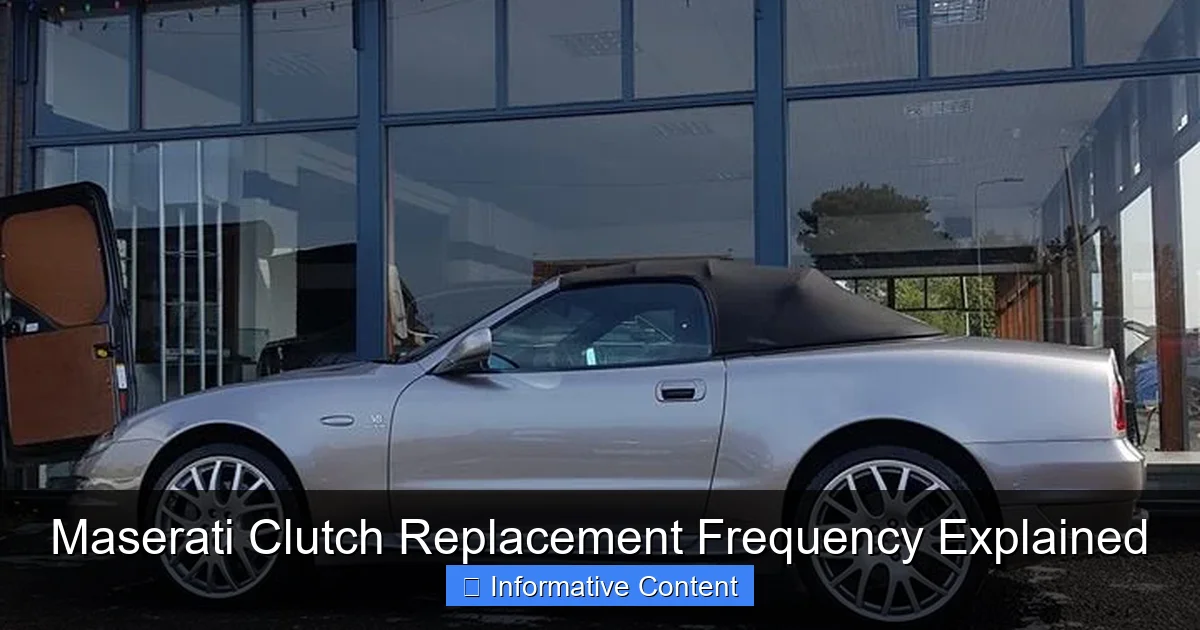
Visual guide about Maserati clutch replacement interval
Image source: eastcoastsportscars.com
1. Driving Style: The #1 Contributor
This is the most significant variable by far.
- The City Commuter: Constant stop-and-go traffic, holding the car on a hill with the clutch (instead of the brake), and frequent short trips are the ultimate clutch killers. This creates immense heat and wear.
- The Enthusiast: Aggressive launches, high-RPM shifts, and “riding the clutch” (keeping your foot slightly on the pedal) will dramatically shorten lifespan. Even spirited driving, if done smoothly, is far less harmful than city crawling.
- The Highway Cruiser: Long, steady drives with minimal gear changes are the dream scenario for clutch longevity. The clutch is fully engaged for 99% of the journey, experiencing virtually no wear.
2. Model and Powertrain Specifics
Not all Maseratis are equal here.
- High-Torque Models (Quattroporte GTS, Levante Trofeo): More torque means the clutch works harder to manage the engine’s power. It’s under more stress during engagement.
- Dual-Clutch Transmissions (MC20, GranTurismo): These automated gearboxes have clutches too, but they are bathed in fluid and controlled by computers. Their wear characteristics and replacement frequency are different and often involve specialized service.
- Older vs. Newer Models: Clutch materials and design have improved over time. A clutch in a modern Maserati is generally more robust than one from 15 years ago, all else being equal.
3. Terrain and Environment
Do you live in San Francisco with its legendary hills, or the flat plains of the Midwest? Constant hill starts add significant wear. Also, if your car is frequently used for towing (even if it’s a Levante), you are asking much more of the clutch during acceleration.
So, How Many Miles Can You Expect?
Let’s put some numbers to it, with the massive caveat that your mileage will literally vary. Think of these as ranges under a spectrum of conditions.
Visual guide about Maserati clutch replacement interval
Image source: autoworkshop.bh
For a manual transmission Maserati (like a GranTurismo or older Coupe/Spyder):
- Lower End (15,000 – 30,000 miles): This is typical for a car used primarily in heavy urban traffic, or one that has been driven very aggressively. It’s not uncommon.
- Average Expectation (30,000 – 60,000 miles): For a mix of sensible daily driving with some enthusiastic weekends, this is a common range. Many owners report needing a clutch replacement in this window.
- Higher End (60,000 – 100,000+ miles): Achievable with predominantly highway use, expert-level smooth driving, and a bit of luck. It’s a point of pride for owners who hit these numbers.
For models with a Dual-Clutch Transmission (DCT):
- Lifespans are generally longer, often exceeding 80,000-100,000 miles under normal use, as the system manages engagement precisely. However, service is complex and costly if needed.
Unmistakable Signs Your Maserati Clutch Needs Attention
Don’t wait for a catastrophic failure. Heed these warnings. They usually appear gradually.
Visual guide about Maserati clutch replacement interval
Image source: autoepoca.it
The Pedal Tells a Story
- High Engagement Point: The “bite point” where the clutch engages creeps closer to the top of the pedal’s travel. This is the most common early sign of disc wear.
- Spongy or Soft Pedal: Could indicate a hydraulic issue (low fluid, air in the line).
- Stiff or Grating Pedal: Often points to a failing release bearing or pressure plate issue.
Performance and Feel Issues
- Slipping Under Load: This is critical. You accelerate, the engine RPMs jump, but the car doesn’t speed up proportionally. You might smell burning friction material. This means the clutch can no longer grip. Stop driving it immediately.
- Shuddering or Chattering: When engaging the clutch from a stop, the whole car shudders violently. This can be a worn disc, oil contamination, or a problem with the flywheel.
- Difficulty Shifting/Grinding Gears: If gears grind even with the clutch fully depressed, it may not be fully disengaging, pointing to a hydraulic problem or worn components.
The Data: Clutch Lifespan Estimates by Driving Profile
This table illustrates how dramatically driving style impacts the Maserati clutch replacement frequency. These are estimates for a typical manual-transmission V8 model.
| Driving Profile | Primary Use Case | Estimated Clutch Lifespan | Key Wear Factors |
|---|---|---|---|
| Urban Warrior | Daily city commuting, heavy traffic, frequent short trips | 15,000 – 30,000 miles | Constant partial engagement, heat buildup, hill holds |
| Mixed Use Driver | Combination of city errands, highway commuting, weekend pleasure drives | 30,000 – 50,000 miles | Moderate stop-and-go, variable load |
| Enthusiast Driver | Spirited backroad driving, high-RPM shifts, occasional track use | 20,000 – 40,000 miles | Aggressive engagements, high torque load, heat |
| Highway Cruiser | Long-distance travel, minimal traffic, gentle operation | 60,000 – 100,000+ miles | Minimal clutch actuation, low heat cycles |
Practical Tips to Extend Your Clutch’s Life
Good news! You have direct control over your Maserati clutch replacement timeline. Here’s how to be kind to it.
Master the “One Smooth Motion”
When moving from a stop, think of the pedal release and gas application as one fluid, coordinated motion. Avoid “dumping” the clutch or letting it slip excessively. Find the bite point and move through it decisively but smoothly.
Adopt Traffic-Friendly Habits
- Don’t “Ride” the Clutch: Your foot should be completely off the pedal when not actively shifting. Resting it on the pedal, even lightly, can cause premature wear.
- Use the Brake on Hills: Never hold the car on an incline using the clutch. Use the brake or the handbrake method.
- Give Space in Traffic: Instead of inching forward constantly, leave a gap and let the car roll in idle or use the brake. This minimizes clutch work.
Mind the Modifications
Significant engine tuning that increases torque will put additional strain on the stock clutch. If you’re adding power, a clutch upgrade might be a necessary and wise part of the plan.
What to Expect During the Replacement Process
When the signs are clear, it’s time to act. Here’s a realistic overview.
It’s a Major Labor Job
Replacing the clutch requires removing the transmission. This is a 8-12+ hour job for a skilled technician on a Maserati, which is the main driver of cost. It’s not a quick afternoon swap.
Parts and “While You’re In There”
- Always Replace the Kit: Never just replace the disc. A quality kit includes the disc, pressure plate, and release bearing. Skimping here is false economy.
- Flywheel Inspection/Replacement: The dual-mass flywheel on most Maseratis is expensive. It must be inspected for heat spots, cracks, or wear. Often, it is recommended or required to be replaced with the clutch, adding significantly to the parts cost.
- Other Seals and Fluids: This is the perfect time to replace the rear main engine seal, transmission input shaft seal, and refresh all transmission fluids.
Cost Realities
Be prepared. At a dealership, a complete Maserati clutch replacement with a new flywheel can easily range from $6,000 to $10,000+ depending on the model. Independent specialists with OEM or high-quality aftermarket parts can offer substantial savings, often 30-50% less. Always get a detailed quote that breaks down parts (kit, flywheel, fluids, seals) and labor.
Conclusion: Knowledge is Power (and Savings)
The question of how often to replace the clutch on a Maserati doesn’t have a simple answer, but now you know the right questions to ask. It’s a dance between your driving habits, your environment, and your specific car. By listening to your car’s signals—that rising bite point, the slightest shudder—you can catch issues early. By adopting smooth, deliberate driving habits, you can push that replacement interval toward the higher, more satisfying end of the spectrum.
View the clutch not as a frighteningly expensive inevitability, but as a consumable part whose life you can directly influence. A well-driven clutch is a long-lived clutch. And when the time does come, you’ll be armed with the knowledge to approach the repair intelligently, whether you choose the dealership or a trusted independent specialist. Now, go enjoy that magnificent machine. Just be smooth with that left foot.
Frequently Asked Questions
How often does a Maserati clutch need to be replaced?
There’s no fixed mileage interval, as clutch lifespan depends heavily on driving habits and conditions. Typically, a Maserati clutch can last between 30,000 to 60,000 miles. Aggressive driving, frequent city traffic, and improper technique can significantly shorten this range.
What are the signs my Maserati needs a new clutch?
Key symptoms include a slipping clutch (engine RPMs rise without proportional acceleration), a high or spongy clutch pedal, burning smells, difficulty shifting gears, and unusual vibrations. If you notice any of these, it’s wise to have your clutch system inspected promptly to avoid further damage.
Is Maserati clutch replacement frequency different for automatic models?
Yes, models with an automatic transmission (like the ZF 8-speed) do not have a traditional clutch plate that wears out. Instead, they use a torque converter, so you won’t need a standard clutch replacement. However, some older or performance models with a single-clutch automated manual transmission do have clutches that require eventual replacement.
Does driving style really affect how often I replace the clutch?
Absolutely. Driving style is the single biggest factor in clutch wear. Aggressive launches, “riding” the clutch pedal, frequent high-RPM shifts, and sustained stop-and-go traffic put immense stress on the clutch components. Gentle, smooth engagement and proper shifting technique can greatly extend its life.
How much does a Maserati clutch replacement cost?
Replacement is a significant labor-intensive job, often costing between $3,000 to $6,000 or more, depending on the model and labor rates. The high cost is due to the need to drop the transmission and the expense of genuine or high-performance clutch components required for these powerful engines.
Can I extend the time between Maserati clutch replacements?
Yes, by adopting careful driving habits. Avoid resting your foot on the clutch pedal, minimize slip during hill starts, and shift smoothly. Also, ensure any related issues like a failing clutch master or slave cylinder are fixed immediately, as they can cause premature wear.

At CarLegit, we believe information should be clear, factual, and genuinely helpful. That’s why every guide, review, and update on our website is created with care, research, and a strong focus on user experience.