
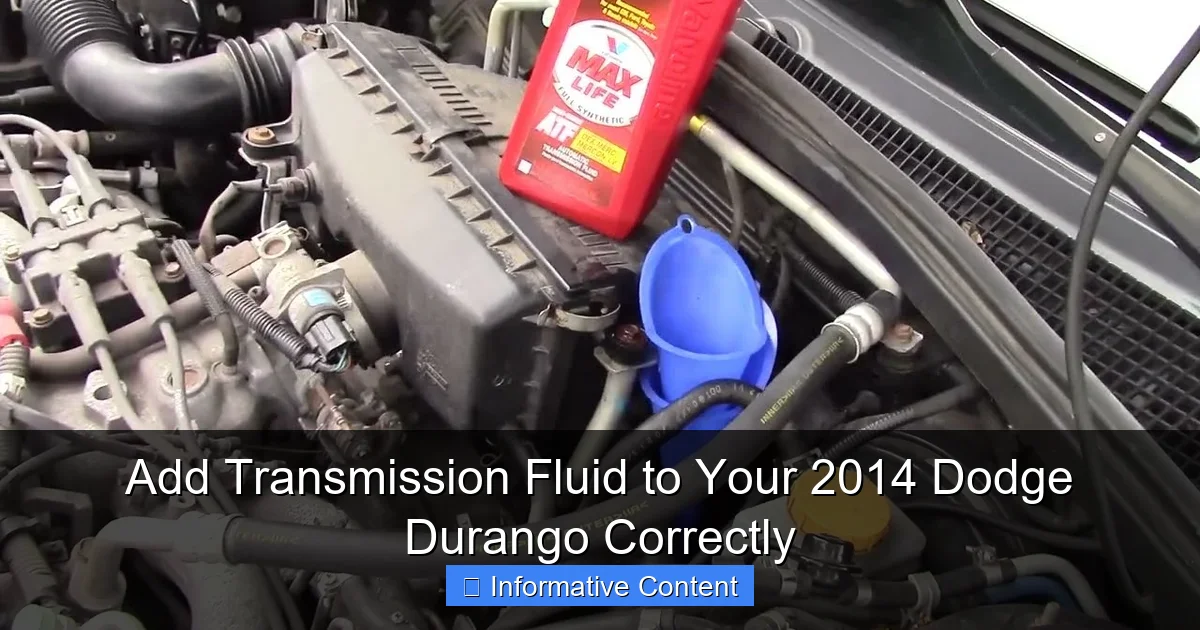
Featured image for how-to-add-transmission-fluid-to-a-2014-dodge-durango
Image source: i.ytimg.com
To add transmission fluid to your 2014 Dodge Durango correctly, you must check the fluid level with the engine running and the vehicle on level ground to get an accurate reading. Use only Mopar ATF+4 transmission fluid and add it slowly through the dipstick tube until it reaches the proper mark on the dipstick.
In This Article
- 1 Add Transmission Fluid to Your 2014 Dodge Durango Correctly
- 1.1 Key Takeaways
- 1.2 📑 Table of Contents
- 1.3 Understanding Your 2014 Dodge Durango’s Transmission
- 1.4 Tools and Materials You’ll Need
- 1.5 Step-by-Step Guide to Checking Transmission Fluid Level
- 1.6 How to Add Transmission Fluid Correctly
- 1.7 Common Mistakes to Avoid
- 1.8 Data Table: Transmission Fluid Specifications for 2014 Dodge Durango
- 1.9 When to Seek Professional Help
- 1.10 Conclusion
- 1.11 Frequently Asked Questions
- 1.11.1 What type of transmission fluid does a 2014 Dodge Durango require?
- 1.11.2 How do I check the transmission fluid level in my 2014 Dodge Durango?
- 1.11.3 Where is the transmission fluid dipstick on a 2014 Dodge Durango?
- 1.11.4 Can I add transmission fluid to my 2014 Dodge Durango myself?
- 1.11.5 What are the steps to add transmission fluid to a 2014 Dodge Durango correctly?
- 1.11.6 How often should I change the transmission fluid in my 2014 Dodge Durango?
Add Transmission Fluid to Your 2014 Dodge Durango Correctly
Hey there, fellow Durango owner! Remember that time you were on a road trip, and your SUV started shifting a bit rough? Maybe it felt like it was hesitating or making weird noises. I’ve been there too. For my 2014 Dodge Durango, a simple thing like checking and adding transmission fluid made all the difference. It’s one of those basic maintenance tasks that can save you from costly repairs down the line.
In this guide, I’ll walk you through how to add transmission fluid to your 2014 Dodge Durango correctly. We’ll keep it simple and straightforward, just like I’m showing you in my driveway. No fancy jargon, just practical steps and tips from my own experience. Whether you’re a DIY newbie or have some grease under your nails, this is for you. Let’s get started and keep your Durango running smooth for years to come.
Key Takeaways
- Check fluid with the engine hot and running. This ensures an accurate reading.
- Use only Mopar ATF+4 transmission fluid. The correct type is critical for performance.
- Add fluid through the capped fill port, not the dipstick tube.
- Avoid overfilling at all costs. It can cause significant transmission damage.
- Use a long-neck funnel for access. The fill port is awkwardly located.
- Recheck the fluid level after adding. Add small amounts incrementally to reach the mark.
📑 Table of Contents
- Understanding Your 2014 Dodge Durango’s Transmission
- Tools and Materials You’ll Need
- Step-by-Step Guide to Checking Transmission Fluid Level
- How to Add Transmission Fluid Correctly
- Common Mistakes to Avoid
- Data Table: Transmission Fluid Specifications for 2014 Dodge Durango
- When to Seek Professional Help
- Conclusion
Understanding Your 2014 Dodge Durango’s Transmission
Before we dive into the nuts and bolts, let’s talk about why transmission fluid is so important. Think of it as the lifeblood of your Durango’s transmission system. It lubricates, cools, and helps transfer power in your vehicle. For the 2014 Dodge Durango, this is especially crucial because it often comes with a robust transmission designed for power and towing.
The Role of Transmission Fluid
Transmission fluid does more than just lubricate. It keeps the gears moving smoothly, prevents overheating, and ensures clean shifts. Over time, fluid can break down or get low, leading to problems like slipping gears or poor performance. Knowing how to add transmission fluid to your 2014 Dodge Durango can prevent these issues.
Types of Transmission Fluid for Your Durango
Not all fluids are created equal. Your 2014 Dodge Durango typically uses a specific type, like ATF+4 or similar. Always check your owner’s manual to be sure. Using the wrong fluid can cause damage. I learned this the hard way when I once grabbed the wrong bottle—thankfully, I caught it in time!
Tools and Materials You’ll Need
Gathering the right tools makes the job easier. Here’s what you’ll need to add transmission fluid to your 2014 Dodge Durango correctly. Don’t worry; it’s nothing too fancy.
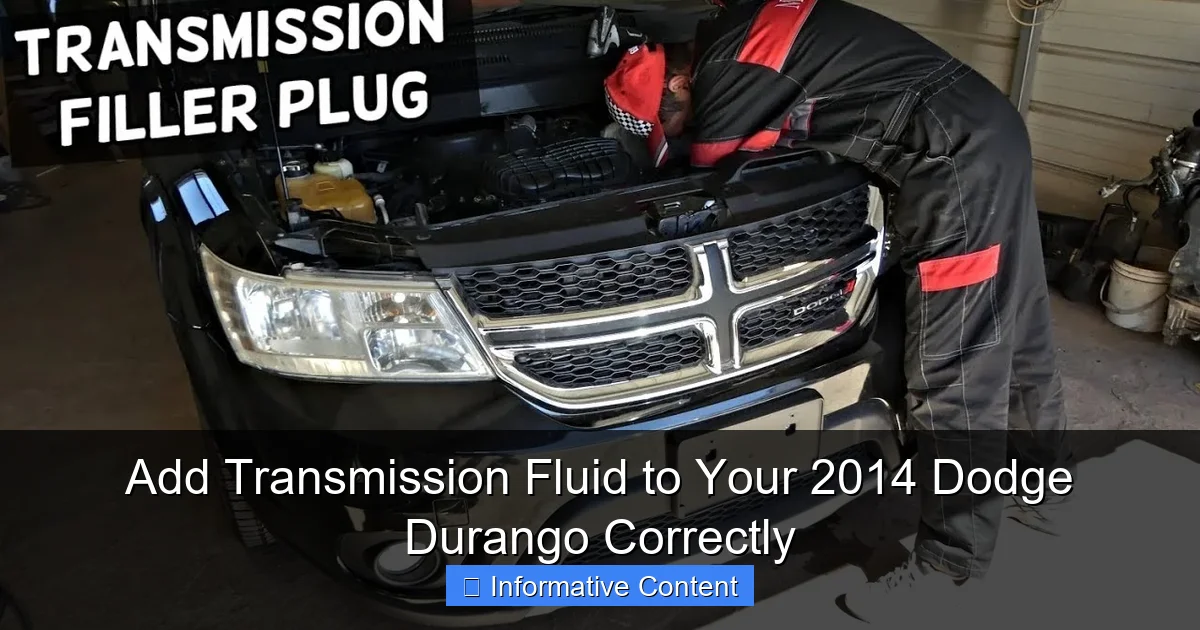
Visual guide about how-to-add-transmission-fluid-to-a-2014-dodge-durango
Image source: i.ytimg.com
Essential Tools List
- Transmission fluid: As per your manual, usually ATF+4 for the 2014 Dodge Durango.
- Funnel: A long-neck funnel to reach the dipstick tube easily.
- Clean rags or paper towels: For wiping the dipstick and cleaning up spills.
- Gloves: To keep your hands clean and protect from hot surfaces.
- Safety glasses: Safety first! Fluid can splash.
- Floor jack and jack stands: If you need to access the transmission from underneath, but often not needed for just adding fluid.
Optional but Helpful Items
A flashlight can be handy for better visibility. Also, have a drain pan ready just in case, though we’re focusing on adding fluid, not changing it. I always keep these in my garage—it saves time and hassle.
Step-by-Step Guide to Checking Transmission Fluid Level
Before you add transmission fluid, you need to check if it’s low. This step is critical. Adding too much fluid can be as bad as having too little. Let’s go through how to check the level properly.
Visual guide about how-to-add-transmission-fluid-to-a-2014-dodge-durango
Image source: i.ytimg.com
Preparing Your Vehicle
Park your Durango on a level surface. Start the engine and let it idle for a few minutes to warm up the transmission. The fluid expands when hot, so checking it at operating temperature gives an accurate reading. Shift through all gears briefly, then return to park. Engage the parking brake for safety.
Locating and Reading the Dipstick
Open the hood and find the transmission dipstick. It’s usually near the back of the engine bay, labeled with a red or yellow handle. Pull it out, wipe it clean with a rag, reinsert it fully, then pull it out again to check the level. The fluid should be between the “hot” marks on the dipstick. If it’s below, you’ll need to add transmission fluid to your 2014 Dodge Durango.
How to Add Transmission Fluid Correctly
Now for the main event: adding the fluid. This is where patience pays off. Follow these steps to add transmission fluid to your 2014 Dodge Durango correctly and avoid common pitfalls.
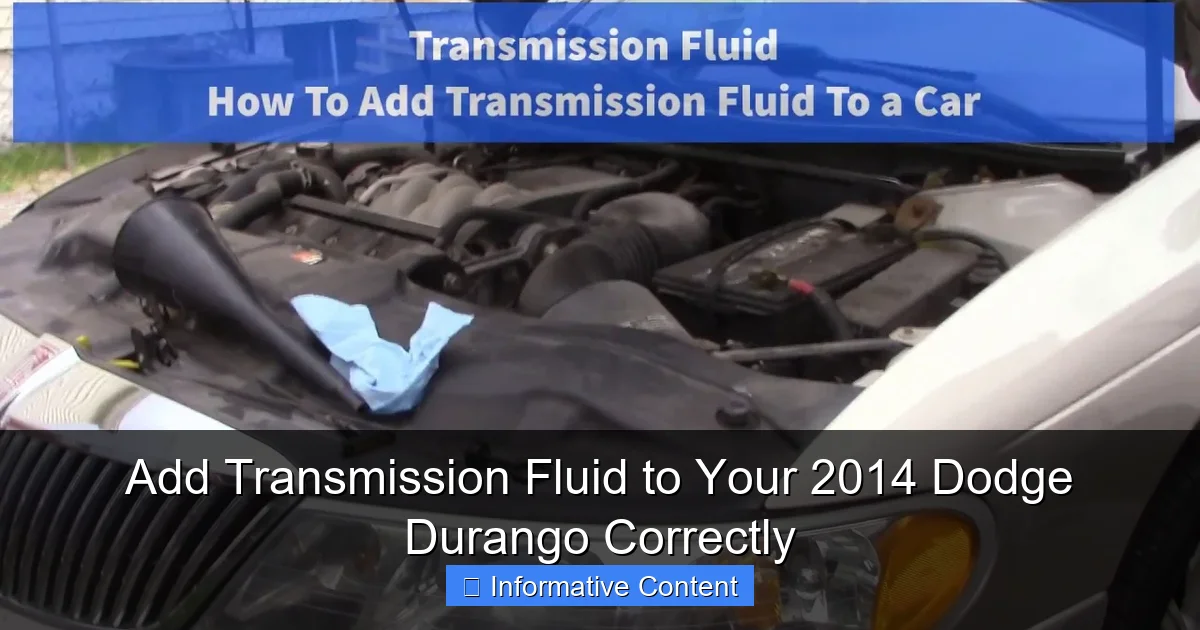
Visual guide about how-to-add-transmission-fluid-to-a-2014-dodge-durango
Image source: i.ytimg.com
Adding Fluid Step by Step
- Step 1: With the engine still running and in park, insert the funnel into the dipstick tube.
- Step 2: Slowly pour a small amount of fluid—about half a quart at a time. Use the correct type, as mentioned earlier.
- Step 3: Wait a minute for the fluid to settle, then recheck the level with the dipstick.
- Step 4: Repeat until the fluid level is between the “hot” marks on the dipstick. Don’t overfill!
- Step 5: Once done, remove the funnel, wipe any spills, and securely reinsert the dipstick.
Tips for a Smooth Process
Pour slowly to avoid air bubbles. If you spill, clean it up immediately—transmission fluid can be slippery and damage paint. I like to have a friend help by watching the dipstick while I pour. It makes adding transmission fluid to your 2014 Dodge Durango much easier.
Common Mistakes to Avoid
Even with the best intentions, it’s easy to slip up. Here are some mistakes I’ve seen or made myself, so you can steer clear when you add transmission fluid to your 2014 Dodge Durango.
Overfilling or Underfilling
Overfilling can cause foaminess and overheating, while underfilling leads to poor lubrication. Always check the level multiple times during the process. Remember, it’s better to add little by little.
Using the Wrong Fluid
As said earlier, using incorrect fluid can damage the transmission. Double-check the specification in your manual. If in doubt, consult a professional or stick with ATF+4 for your 2014 Dodge Durango.
Ignoring Safety Precautions
Never add fluid with the engine off, as it won’t give an accurate reading. Also, avoid hot surfaces—the engine and transmission can be scorching after running. Wear those gloves and glasses!
Data Table: Transmission Fluid Specifications for 2014 Dodge Durango
Here’s a quick reference table to summarize key details. This can help you ensure you’re using the right stuff when you add transmission fluid to your 2014 Dodge Durango.
| Specification | Details |
|---|---|
| Fluid Type | ATF+4 (Automatic Transmission Fluid) |
| Capacity (Approx.) | Varies by engine; check manual (e.g., 5-6 quarts for fluid change) |
| Check Condition | Engine running, transmission at operating temperature |
| Dipstick Location | Near rear of engine bay, often with red/yellow handle |
| Color When New | Red or pink; dark brown/black indicates need for change |
Use this table as a guide, but always refer to your owner’s manual for model-specific info.
When to Seek Professional Help
While adding transmission fluid is a DIY-friendly task, there are times when it’s best to call in the pros. Knowing these signs can save you from bigger headaches.
Signs of Serious Transmission Issues
If you notice leaks, burning smells, or persistent rough shifting even after adding fluid, there might be a deeper problem. For example, if the fluid level drops quickly, you could have a leak that needs repair. I once ignored a small leak, and it turned into a costly fix—lesson learned!
Benefits of Professional Service
Mechanics have tools and expertise to diagnose issues beyond fluid levels. If you’re uncomfortable or short on time, having a pro add transmission fluid to your 2014 Dodge Durango ensures it’s done right. It’s okay to ask for help; we all do sometimes.
Conclusion
And there you have it—a complete guide on how to add transmission fluid to your 2014 Dodge Durango correctly. By now, you should feel confident tackling this simple yet vital maintenance task. Remember, regular checks and using the right fluid can extend the life of your transmission and keep your Durango running smoothly.
I hope this guide was helpful, just like a chat with a friend. Share your experiences in the comments below—I’d love to hear how it went for you. Happy driving, and take care of that Durango!
Frequently Asked Questions
What type of transmission fluid does a 2014 Dodge Durango require?
The 2014 Dodge Durango typically requires ATF+4 automatic transmission fluid. Always verify this in your owner’s manual, as using the correct fluid is crucial for transmission health and performance.
How do I check the transmission fluid level in my 2014 Dodge Durango?
With the engine running and warmed up, park on a level surface and locate the transmission dipstick. Pull it out, wipe it clean, reinsert it fully, and then check the level against the marked indicators.
Where is the transmission fluid dipstick on a 2014 Dodge Durango?
The transmission fluid dipstick is usually at the rear of the engine bay, often with a brightly colored handle. Consult your owner’s manual for the exact location, as placement can vary with different engine options.
Can I add transmission fluid to my 2014 Dodge Durango myself?
Yes, you can add transmission fluid yourself with basic tools. Just ensure you have the correct ATF+4 fluid and a funnel to pour it safely into the dipstick tube without spills.
What are the steps to add transmission fluid to a 2014 Dodge Durango correctly?
After verifying a low fluid level, use a funnel to slowly add ATF+4 fluid through the dipstick tube. Add small amounts, rechecking the level with the dipstick each time to prevent overfilling.
How often should I change the transmission fluid in my 2014 Dodge Durango?
Dodge generally recommends a transmission fluid change every 30,000 to 60,000 miles, but refer to your owner’s manual for specific intervals based on your driving conditions and model specifics.

At CarLegit, we believe information should be clear, factual, and genuinely helpful. That’s why every guide, review, and update on our website is created with care, research, and a strong focus on user experience.