
Buying a car with no money is possible—even if you have zero savings. With the right approach, you can drive away in a reliable vehicle using low or no-down-payment financing, trade-ins, and strategic planning.
In This Article
- 1 Key Takeaways
- 2 📑 Table of Contents
- 3 Can You Really Buy a Car with No Money?
- 4 Understand Your Credit Situation
- 5 Explore Financing Options with No Down Payment
- 6 Leverage Trade-Ins and Private Sales
- 7 Budget for the True Cost of Ownership
- 8 Avoid Common Pitfalls
- 9 Final Tips for Success
- 10 Conclusion
- 11 Frequently Asked Questions
- 11.1 Can I really buy a car with no money down?
- 11.2 What credit score do I need to buy a car with no down payment?
- 11.3 Is it smart to buy a car with no money down?
- 11.4 Can I use my trade-in as a down payment?
- 11.5 What happens if I can’t make payments on a $0 down car?
- 11.6 Are there hidden costs when buying a car with no money down?
Key Takeaways
- Zero down doesn’t mean zero cost: You’ll still pay interest and fees, so understand the total price over time.
- Credit score matters: A better score increases your chances of approval and lowers interest rates, even with no money down.
- Trade-ins can cover your down payment: Use your current vehicle’s value to reduce or eliminate upfront costs.
- Look for special financing programs: Some dealers and lenders offer “$0 down” deals, especially on new or certified pre-owned cars.
- Budget for ongoing expenses: Insurance, fuel, maintenance, and registration add up—plan for them before buying.
- Avoid high-interest loans: Subprime lenders may approve you, but the long-term cost can be steep—shop around.
- Consider a co-signer: A trusted person with good credit can help you qualify and secure better terms.
📑 Table of Contents
Can You Really Buy a Car with No Money?
Let’s be real—most of us don’t have thousands of dollars sitting in a savings account just waiting to buy a car. Whether you’re a student, starting a new job, or dealing with tight finances, the idea of buying a car with no money might sound like a fantasy. But here’s the truth: it’s not only possible—it’s done every day by smart buyers who know how to work the system.
You don’t need a fat wallet to get behind the wheel. What you do need is a plan, a little research, and an understanding of how car financing really works. Many people assume that buying a car requires a big down payment, but that’s not always the case. With the right strategy, you can drive off the lot with little to no money out of pocket. The key is knowing where to look, what to ask for, and how to avoid costly mistakes.
This guide will walk you through every step of the process—from checking your credit to finalizing the deal—so you can buy a car with no money and still come out ahead. We’ll cover financing options, trade-in tricks, dealer incentives, and even how to handle monthly payments without breaking the bank. By the end, you’ll have a clear roadmap to getting the car you need, even if your bank account says zero.
Understand Your Credit Situation
Before you even think about stepping onto a car lot, you need to know where you stand with your credit. Your credit score plays a huge role in whether you can buy a car with no money down—and how much it will cost you in the long run.
Why Credit Score Matters
Your credit score tells lenders how risky it is to loan you money. If you have a high score (typically 670 or above), you’re more likely to qualify for low-interest loans and special financing deals—even with no down payment. But if your score is low (below 580), you might still get approved, but at a much higher interest rate. That means you’ll pay more over time, even if you don’t put any money down today.
Visual guide about How to Buy a Car with No Money
Image source: media.rojaklah.com
For example, let’s say you’re buying a $20,000 car with no down payment. With a credit score of 720, you might get a 5% interest rate. Over a 60-month loan, that’s about $377 per month and $2,620 in total interest. But with a score of 550, that rate could jump to 15%. Now you’re paying $476 per month and over $8,500 in interest. That’s a huge difference—and it shows why improving your credit, even a little, can save you thousands.
Check Your Credit Report
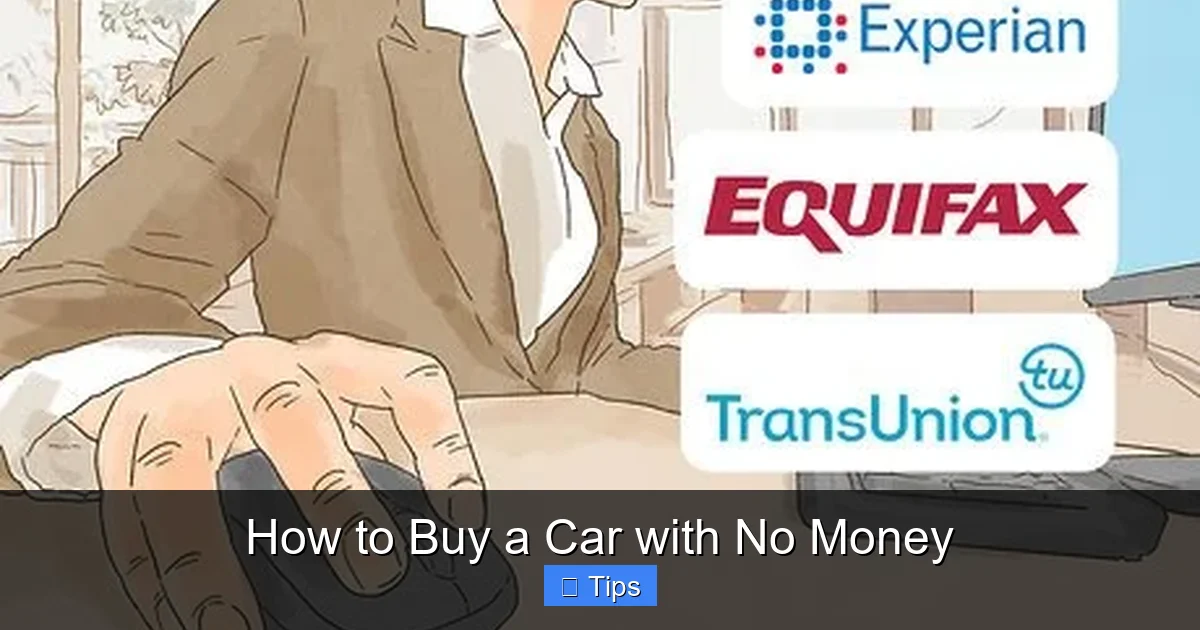
Start by pulling your free credit report from AnnualCreditReport.com. You’re entitled to one free report from each of the three major bureaus (Equifax, Experian, and TransUnion) every year. Look for errors—like accounts you didn’t open or payments marked late when they weren’t. If you find mistakes, dispute them. Fixing even one error could boost your score enough to qualify for better loan terms.
Don’t panic if your score isn’t perfect. Many lenders work with people who have fair or even poor credit. But knowing your score helps you set realistic expectations. If it’s low, you might want to wait a few months to improve it before applying for a loan. Pay down small debts, avoid new credit applications, and make all payments on time. Even a 30- to 50-point increase can make a big difference.
Consider a Co-Signer
If your credit is too low to qualify—or the rates are too high—ask a trusted family member or friend to co-sign the loan. A co-signer agrees to take responsibility if you can’t make payments. Because they’re on the hook, lenders see less risk and may offer better terms. Just remember: this is a big ask. If you miss payments, it hurts both your credit and theirs. Only choose someone who trusts you—and who you’re confident you can repay.
Explore Financing Options with No Down Payment
Now that you know your credit status, it’s time to look at how to actually finance a car with no money down. There are several ways to do this, and not all of them require perfect credit.
Dealer Financing with $0 Down
Many car dealerships offer special financing promotions, especially on new cars. These often include “$0 down” or “no money down” deals to attract buyers. For example, a dealer might advertise “Drive away today with $0 due at signing” on a new sedan. Sounds great, right? But read the fine print. These deals usually require good credit, and the monthly payments might be higher because you’re financing the full price plus fees and taxes.
Visual guide about How to Buy a Car with No Money
Image source: wikihow.com
Still, if you qualify, these promotions can be a great way to get a new car without upfront cash. Just make sure the total cost—including interest—is within your budget. Don’t let the “no money down” headline distract you from the long-term price.
Credit Union Loans
Credit unions are often more flexible than big banks when it comes to lending. Many offer low-interest auto loans, even to members with less-than-perfect credit. Some even have programs specifically for first-time buyers or people with no down payment. Because credit unions are member-owned, they’re more likely to work with you to find a solution.
To join a credit union, you usually need to meet certain criteria—like living in a specific area, working for a certain employer, or belonging to a group. Once you’re a member, you can apply for a pre-approved loan before you shop. This gives you bargaining power at the dealership and helps you avoid high-pressure financing offers.
Manufacturer Incentives
Car manufacturers often run special financing programs through their captive lenders (like Ford Credit or Toyota Financial Services). These can include 0% APR for qualified buyers, cashback offers, or deferred first payments. Some even allow $0 down on certified pre-owned vehicles.
For example, Hyundai might offer 0% financing for 60 months on a new Elantra with no down payment required. That means you pay exactly the sticker price—no interest—over five years. But again, these deals usually require excellent credit. If you don’t qualify, the dealer might still offer a low down payment option, like $500 or $1,000, which is easier to manage than $3,000 or $5,000.
Subprime Lenders (Use with Caution)
If your credit is poor and you can’t get approved elsewhere, subprime lenders might be an option. These companies specialize in high-risk borrowers and often approve loans with no down payment. But the trade-off is high interest rates—sometimes 20% or more—and strict terms.
For instance, a $15,000 loan at 20% interest over 72 months could cost you over $12,000 in interest alone. That’s why it’s crucial to shop around and compare offers. Only use subprime lenders as a last resort, and try to pay off the loan as quickly as possible to reduce interest costs.
Leverage Trade-Ins and Private Sales
One of the easiest ways to buy a car with no money is to use the value of a car you already own. Even if it’s old or has high mileage, it could be worth enough to cover your down payment—or even the entire cost of a cheaper vehicle.
Get a Realistic Trade-In Value
Before you go to the dealer, research your car’s value using tools like Kelley Blue Book (KBB), Edmunds, or NADA Guides. Enter your vehicle’s make, model, year, mileage, and condition to get an estimate. Keep in mind that dealers will offer less than private sale value—usually 10% to 20% less—because they need to resell it for a profit.

Visual guide about How to Buy a Car with No Money
Image source: urbanmatter.com
For example, if your car is worth $8,000 privately, the dealer might offer $6,500. But that’s still $6,500 you don’t have to pay out of pocket. If you’re buying a $14,000 used car, that trade-in could cover nearly half the cost—leaving you with a much smaller loan and lower monthly payments.
Sell Your Car Privately
If you want to maximize your cash, consider selling your current car privately instead of trading it in. You’ll usually get more money this way—sometimes $1,000 to $2,000 more. Use that cash as a down payment, even if it’s not the full amount. For example, selling your car for $7,000 and putting $5,000 down reduces your loan to $9,000 instead of $14,000. That means lower payments and less interest over time.
Selling privately takes more effort—you’ll need to clean the car, take photos, write a listing, and meet with buyers—but the payoff is worth it. Just be safe: meet in public places, bring a friend, and avoid accepting personal checks.
Use the Equity Wisely
If your car is worth more than what you owe on it, you have positive equity. That extra value can be rolled into your new loan or used as a down payment. But if you owe more than the car is worth (negative equity), the dealer might roll that debt into the new loan. This increases your loan amount and monthly payment—so avoid it if possible.
For example, if you owe $10,000 on a car worth $7,000, you have $3,000 in negative equity. Rolling that into a $15,000 new car loan means you’re now financing $18,000. That’s why it’s better to pay off the old loan first or sell the car privately to cover the gap.
Budget for the True Cost of Ownership
Buying a car with no money down is just the beginning. Once you drive off the lot, you’ll face ongoing costs that can add up fast. If you’re not prepared, those expenses can derail your budget and make your “no money” purchase feel like a financial trap.
Monthly Loan Payments
Even with $0 down, you’ll have monthly payments. The amount depends on the loan term, interest rate, and car price. A longer loan (like 72 or 84 months) lowers your monthly payment but increases total interest. For example, a $20,000 loan at 6% over 60 months is $387/month. Over 72 months, it’s $329/month—but you’ll pay $1,300 more in interest.
Choose a term you can afford, but don’t stretch it too long. Aim to pay off the loan in 60 months or less to save on interest and avoid being “upside down” (owing more than the car is worth).
Insurance Costs
Car insurance is mandatory and can be expensive, especially for new or financed cars. Lenders require full coverage (comprehensive and collision), which costs more than basic liability. Rates vary by age, location, driving record, and vehicle type. A young driver in a city might pay $200/month, while an older driver in a rural area might pay $80.
Get quotes from multiple insurers before you buy. Some companies offer discounts for good students, safe drivers, or bundling with home insurance. Also, consider raising your deductible to lower premiums—but make sure you can afford to pay it if you file a claim.
Fuel, Maintenance, and Repairs
Gas, oil changes, tires, and unexpected repairs all cost money. A used car might need new brakes or a transmission repair soon after purchase. Set aside $50 to $100 per month for maintenance. If you buy a reliable model (like a Toyota Corolla or Honda Civic), you’ll likely spend less than on a luxury or high-mileage vehicle.
Use apps like Fuelly to track your fuel economy and budget for gas. And always get a pre-purchase inspection before buying a used car—even if it’s from a dealer. A $100 inspection could save you $1,000 in repairs.
Registration and Taxes
When you buy a car, you’ll pay sales tax, registration fees, and possibly a title fee. These vary by state but can add $500 to $1,500 to your total cost. Some dealers roll these into the loan, so you don’t pay upfront—but that increases your loan amount and interest.
Check your state’s DMV website for exact fees. In some states, you can reduce sales tax by trading in a vehicle or buying from a private seller.
Avoid Common Pitfalls
It’s easy to get excited when you find a car you love—and even easier to make costly mistakes. Here’s how to stay smart and avoid traps when buying with no money down.
Don’t Focus Only on Monthly Payments
Dealers often emphasize low monthly payments to make a car seem affordable. But a low payment might mean a longer loan term, higher interest, or a more expensive vehicle. Always ask for the total cost of the loan, including interest, and compare it to the car’s value.
For example, a $300/month payment over 84 months is $25,200—even if the car is only worth $18,000. You’re paying $7,200 extra in interest. Instead, aim for a payment that fits your budget but keeps the loan term reasonable.
Read the Fine Print
Always read the contract before signing. Look for hidden fees, prepayment penalties, or clauses that let the dealer change the terms. If something isn’t clear, ask for clarification. Don’t let pressure tactics rush you into a decision.
Also, make sure the VIN on the contract matches the car you’re buying. And verify that the interest rate, loan term, and monthly payment are exactly what you agreed to.
Don’t Overextend Yourself
Just because you can get approved for a $30,000 car doesn’t mean you should buy it. Stick to a budget that leaves room for insurance, gas, and emergencies. A good rule of thumb is that your total car expenses (loan, insurance, fuel, maintenance) should not exceed 15% to 20% of your take-home pay.
If you earn $3,000 per month after taxes, that’s $450 to $600 max for all car costs. If your loan payment is $350, you only have $100 to $250 left for everything else—which might not be enough.
Final Tips for Success
Buying a car with no money down is achievable, but it takes preparation and discipline. Here are a few final tips to help you succeed:
– Get pre-approved: Apply for a loan before you shop. This gives you a clear budget and strengthens your negotiating position.
– Shop at the end of the month: Dealers often have sales quotas and may be more willing to offer deals to meet targets.
– Consider a certified pre-owned (CPO) car: These are used cars that have been inspected, refurbished, and come with a warranty—often with better financing than regular used cars.
– Negotiate the price, not just the payment: Focus on getting the best deal on the car itself, then let the financing fall into place.
– Keep driving your old car until the deal is done: Don’t feel pressured to trade in your current vehicle until you’re sure about the new one.
Conclusion
Buying a car with no money down isn’t a scam—it’s a realistic option for millions of people. With smart planning, the right financing, and a clear understanding of the costs, you can get the transportation you need without draining your savings. Remember, the goal isn’t just to drive away today—it’s to own a car that fits your budget and serves you well for years to come.
Start by checking your credit, exploring financing options, and using your trade-in wisely. Budget for all the costs, not just the loan payment. And always read the fine print. By following these steps, you’ll be behind the wheel of a reliable car—without spending a dime upfront.
Frequently Asked Questions
Can I really buy a car with no money down?
Yes, it’s possible to buy a car with no money down using special financing offers, trade-ins, or low-down-payment loans. However, you’ll still pay interest and fees over time, so understand the total cost.
What credit score do I need to buy a car with no down payment?
It varies by lender, but many $0 down offers require a credit score of 670 or higher. If your score is lower, you may still qualify with a co-signer or through a subprime lender, but at a higher interest rate.
Is it smart to buy a car with no money down?
It can be, if you have a stable income and can afford the monthly payments. But avoid long loan terms and high interest rates, which can cost you thousands over time.
Can I use my trade-in as a down payment?
Yes, most dealers allow you to apply your trade-in value toward the down payment or purchase price, reducing or eliminating the amount you need to pay out of pocket.
What happens if I can’t make payments on a $0 down car?
Missing payments can damage your credit, lead to repossession, and result in fees. Always budget carefully and consider a co-signer only if you’re confident in your ability to repay.
Yes, including sales tax, registration, insurance, and interest. Some dealers may also charge documentation or processing fees, so always review the full breakdown before signing.

At CarLegit, we believe information should be clear, factual, and genuinely helpful. That’s why every guide, review, and update on our website is created with care, research, and a strong focus on user experience.