
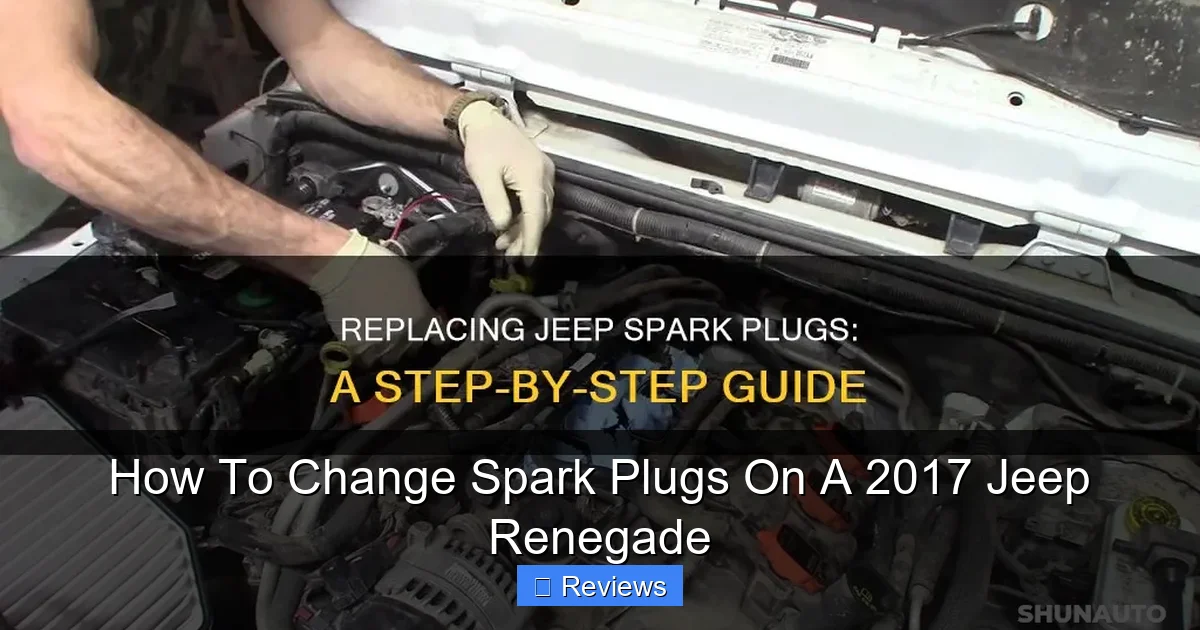
Featured image for how to change spark plugs on a 2017 jeep renegade
Image source: shunauto.com
Tackling spark plug replacement on your 2017 Jeep Renegade is a rewarding DIY maintenance task that can significantly save you money and restore peak engine performance. This essential guide walks you through every step, from gathering the correct tools and spark plugs to the precise removal and installation process. Empower yourself to maintain your Renegade’s efficiency and power with confidence.
In This Article
- 1 How To Change Spark Plugs On A 2017 Jeep Renegade
- 1.1 Key Takeaways
- 1.2 Why Changing Your Spark Plugs is Crucial for Your 2017 Jeep Renegade’s Health
- 1.3 Gathering Your Arsenal: Essential Tools and Parts for the Job
- 1.4 Prepping Your 2017 Jeep Renegade for Spark Plug Replacement
- 1.5 The Step-by-Step Guide to Removing Old Spark Plugs
- 1.6 Installing New Spark Plugs and Reassembling Your 2017 Jeep Renegade
- 1.7 Troubleshooting and Post-Installation Tips for Your 2017 Jeep Renegade
- 1.8 Conclusion
- 1.9 Frequently Asked Questions
- 1.9.1 When should I change the spark plugs on my 2017 Jeep Renegade?
- 1.9.2 What specific tools and parts do I need to change the spark plugs on a 2017 Jeep Renegade?
- 1.9.3 How difficult is it to change the spark plugs on a 2017 Jeep Renegade for a DIYer?
- 1.9.4 What kind of spark plugs are recommended for a 2017 Jeep Renegade?
- 1.9.5 What are the common signs that the spark plugs on my 2017 Jeep Renegade need changing?
- 1.9.6 Are there any crucial tips or precautions I should take when changing spark plugs on a 2017 Jeep Renegade?
How To Change Spark Plugs On A 2017 Jeep Renegade
The distinctive silhouette of your 2017 Jeep Renegade isn’t just about its adventurous looks; it’s a testament to its capability, whether navigating city streets or tackling light trails. Like any vehicle, to keep your Renegade running at its peak, regular maintenance is absolutely essential. Among the most fundamental yet often overlooked tasks is changing the spark plugs. While it might sound like a job best left to professional mechanics, understanding how to change spark plugs on a 2017 Jeep Renegade is a surprisingly accessible DIY project that can save you money and give you a deeper appreciation for your vehicle’s mechanics.
Many Renegade owners might feel a pang of intimidation at the thought of diving under the hood, but with the right guidance, tools, and a bit of patience, you can successfully perform this critical maintenance. This comprehensive guide will walk you through every step, from identifying the right spark plugs for your 2017 Jeep Renegade – considering both the 1.4L MultiAir Turbo and the 2.4L Tigershark engines – to the proper torque specifications and crucial safety precautions. By the end of this read, you’ll not only be equipped with the knowledge to change spark plugs but also gain confidence in tackling other routine maintenance tasks on your beloved Jeep.
Performing this maintenance yourself isn’t just about cost savings; it’s about gaining a deeper understanding of your vehicle. A well-maintained ignition system, centered around healthy spark plugs, directly translates to improved fuel efficiency, smoother engine operation, and a more responsive drive from your 2017 Jeep Renegade. So, roll up your sleeves, prepare to get a little greasy, and let’s dive into the rewarding process of replacing the spark plugs on your Renegade, ensuring it continues to deliver that reliable Jeep performance for years to come.
Key Takeaways
- Safety First: Always disconnect the battery before starting work.
- Cool Engine: Ensure the engine is completely cool before beginning.
- Essential Tools: Gather a torque wrench and spark plug socket.
- Gap Plugs: Verify and adjust new spark plug gaps accurately.
- One By One: Replace spark plugs individually to prevent errors.
- Torque Correctly: Apply manufacturer-specified torque to avoid damage.
- Test Drive: Confirm proper installation with a post-repair test drive.
Why Changing Your Spark Plugs is Crucial for Your 2017 Jeep Renegade’s Health
Spark plugs are small, yet mighty, components vital to your 2017 Jeep Renegade’s engine. They are responsible for igniting the air-fuel mixture in the combustion chamber, creating the mini-explosions that power your vehicle forward. Over time, these critical components wear out, leading to a cascade of performance issues. Understanding the symptoms of failing spark plugs and the benefits of timely replacement is the first step in maintaining the health and longevity of your Jeep Renegade.
Recognizing the Warning Signs
Your 2017 Jeep Renegade is designed to run smoothly and efficiently. When its spark plugs begin to degrade, the engine will often send clear signals that something is amiss. Learning to interpret these signs can save you from more significant problems down the road.
- Misfires and Rough Idling: One of the most common indicators of worn spark plugs is an engine misfire. You might feel a slight jerk or hesitation, especially when accelerating. At idle, the engine might feel rough, as if it’s struggling to maintain a consistent RPM. This occurs when a spark plug fails to ignite the air-fuel mixture in one or more cylinders.
- Reduced Fuel Efficiency: As spark plugs wear out, they become less efficient at igniting the fuel. This means the engine has to work harder to produce the same power, resulting in your 2017 Jeep Renegade consuming more fuel than usual. If you notice yourself filling up the tank more frequently, worn spark plugs could be a primary culprit.
- Slow Acceleration and Power Loss: A failing spark plug directly impacts your engine’s ability to produce power. You might experience sluggish acceleration, especially when merging onto a highway or attempting to pass another vehicle. Your Renegade might feel less responsive and generally underpowered.
- Difficulty Starting: If your Jeep Renegade cranks for an unusually long time before starting, or struggles to turn over, it could be due to weak or fouled spark plugs. They might not be able to generate a strong enough spark to reliably ignite the fuel mixture, especially in cold weather.
- Check Engine Light: In more severe cases of misfires, your 2017 Jeep Renegade’s onboard diagnostic (OBD-II) system may detect the issue and illuminate the “Check Engine” light on your dashboard. A diagnostic scan tool can then retrieve specific error codes (e.g., P0301, P0302, etc., indicating a misfire in a particular cylinder), confirming a spark plug or ignition system problem.
The Benefits of Regular Spark Plug Maintenance
Proactively changing the spark plugs on your 2017 Jeep Renegade offers a multitude of benefits that extend beyond simply fixing a problem. It’s an investment in your vehicle’s performance and longevity.
- Optimized Engine Performance: New spark plugs provide a strong, consistent spark, ensuring complete combustion of the air-fuel mixture. This translates to smoother engine operation, quicker throttle response, and restored horsepower for your Jeep Renegade.
- Improved Fuel Economy: By facilitating efficient combustion, fresh spark plugs help your engine extract maximum energy from every drop of fuel. This can lead to noticeable improvements in your 2017 Jeep Renegade’s miles per gallon, saving you money at the pump.
- Reduced Emissions: Efficient combustion also means fewer harmful pollutants are released into the atmosphere. Changing your spark plugs helps your Renegade meet emission standards and contributes to a cleaner environment.
- Extended Engine Life: When spark plugs are worn, the ignition coils work harder to compensate, leading to premature wear on these more expensive components. Regular spark plug replacement reduces stress on the entire ignition system, helping to prevent costly repairs down the line and extending the overall life of your 2017 Jeep Renegade’s engine.
- Reliable Starting: With new spark plugs, your engine will start more reliably, even in adverse weather conditions. You won’t have to worry about frustrating extended cranking times or potential no-starts.
In essence, changing your spark plugs isn’t just a repair; it’s a preventative measure that ensures your 2017 Jeep Renegade continues to run as intended, offering the dependable and enjoyable driving experience you expect from a Jeep.
Gathering Your Arsenal: Essential Tools and Parts for the Job
Before you even think about lifting the hood of your 2017 Jeep Renegade, thorough preparation is key. Having all the necessary tools and parts at hand will make the spark plug replacement process smoother, safer, and more efficient. Skimping on tools or using the wrong type of spark plug can lead to frustration or even damage.

Visual guide about how to change spark plugs on a 2017 jeep renegade
Image source: vehiclers.com
Recommended Spark Plug Types for the 2017 Jeep Renegade
The 2017 Jeep Renegade came with two primary engine options, and the spark plugs differ significantly between them. It is absolutely critical to choose the correct type for your specific engine. Refer to your owner’s manual or the sticker under your hood for confirmation if you’re unsure.
- 1.4L MultiAir Turbo Engine: This engine typically requires a specific type of spark plug, often Iridium-tipped, designed for turbocharged applications. These plugs are built to withstand higher temperatures and pressures while providing a consistent, powerful spark. Common recommendations include NGK, Denso, or Mopar OEM Iridium plugs.
- 2.4L Tigershark Engine: The naturally aspirated 2.4L engine also utilizes specific spark plugs, often Copper or Platinum, which are well-suited for its operating characteristics. Again, sticking with OEM-recommended brands like NGK, Denso, or Mopar is advisable for optimal performance and longevity.
Pro Tip: When purchasing new spark plugs for your 2017 Jeep Renegade, always buy a complete set (four for the 1.4L, four for the 2.4L) and consider replacing them all at once, even if only one is showing signs of wear. This ensures consistent performance across all cylinders. It’s also a good practice to replace ignition coils if they are original and have high mileage (over 100,000 miles), especially on the 1.4L turbo, as they can wear out.
Key Tools You’ll Need
Having the right tools is half the battle when changing spark plugs on your 2017 Jeep Renegade. Don’t try to substitute tools, as this can lead to stripped bolts or damaged components.
- Ratchet Wrench: A standard 3/8-inch drive ratchet is typically sufficient. A flex-head ratchet can be helpful for tight angles.
- Extensions: You’ll likely need various length extensions (e.g., 3-inch, 6-inch, 10-inch) to reach the spark plugs, especially the ones deeper in the engine bay of your 2017 Jeep Renegade.
- Spark Plug Socket: This is a specialized socket designed to grip the spark plug (often with a rubber insert) and prevent damage during removal and installation. You’ll need a 5/8-inch spark plug socket for most modern engines, including the 2017 Jeep Renegade. Ensure it has the rubber insert to hold the plug.
- Torque Wrench: Absolutely essential for tightening the new spark plugs to the manufacturer’s specifications. Over-tightening can strip threads or crack the spark plug, while under-tightening can cause blow-by or allow the plug to loosen. A 3/8-inch drive torque wrench is ideal.
- Spark Plug Gapper Tool: While many modern spark plugs come pre-gapped, it’s always good practice to check the gap before installation, especially for your 2017 Jeep Renegade. A wire-type gapper is preferred as it’s less likely to damage fine-wire electrodes than a disc-style gapper.
- Socket Set: For removing various bolts, especially those securing the ignition coils or engine covers. You’ll likely need 8mm, 10mm, and possibly 13mm sockets.
- Screwdrivers: Flathead and Phillips head screwdrivers for removing clamps, covers, or disconnecting wiring harnesses.
- Dielectric Grease: Applied to the inside of the spark plug boots (where the coil connects) to prevent corrosion, improve electrical connection, and make future removal easier.
- Anti-Seize Compound: Applied to the threads of the new spark plugs (specifically for aluminum cylinder heads, which your 2017 Jeep Renegade likely has) to prevent them from seizing in the head over time. Use sparingly.
- Gloves: Protect your hands from grease, sharp edges, and heat.
- Shop Rags/Paper Towels: For cleaning up spills or wiping hands.
- Compressed Air (Optional but Recommended): For blowing out debris from around the spark plug wells before removal, preventing contaminants from falling into the combustion chamber.
- Flashlight or Headlamp: To illuminate tight or dark areas of your 2017 Jeep Renegade’s engine bay.
Essential Safety Precautions
Safety should always be your top priority when working on any vehicle, including your 2017 Jeep Renegade.
- Engine Off and Cool: Always ensure the engine is completely off and has had ample time to cool down before you begin. Working on a hot engine can cause severe burns and damage to components.
- Disconnect Battery: For any electrical work, it’s a good practice to disconnect the negative terminal of your vehicle’s battery. This prevents accidental short circuits and protects the vehicle’s electrical system.
- Eye Protection: Always wear safety glasses or goggles to protect your eyes from debris, fluids, or accidental splashes.
- Ventilation: Work in a well-ventilated area, especially if you’re using any cleaning sprays or if the engine is even slightly warm, to avoid inhaling fumes.
- Stable Work Area: Ensure your 2017 Jeep Renegade is on a flat, stable surface. If lifting the vehicle for any other reason, use jack stands.
- Follow Instructions: Read through this entire guide before starting and follow each step carefully.
With your tools organized and safety measures in place, you’re now ready to begin the hands-on process of changing spark plugs on your 2017 Jeep Renegade.
Prepping Your 2017 Jeep Renegade for Spark Plug Replacement
Proper preparation is crucial for a smooth and successful spark plug replacement on your 2017 Jeep Renegade. This phase involves setting up your workspace, getting the engine ready, and taking preliminary safety steps before you start disconnecting components. Rushing this stage can lead to unnecessary complications.

Visual guide about how to change spark plugs on a 2017 jeep renegade
Image source: autolite.com
Engine Bay Overview and Component Identification
Pop the hood of your 2017 Jeep Renegade and take a moment to familiarize yourself with the engine bay. The location of the spark plugs and ignition coils will vary slightly depending on whether you have the 1.4L MultiAir Turbo or the 2.4L Tigershark engine.
- 1.4L MultiAir Turbo Engine: On this engine, the ignition coils and spark plugs are typically located on top of the engine, often under an aesthetic engine cover. There will be four ignition coils, one for each cylinder, arranged in a row. You’ll likely need to remove some vacuum lines, wiring harnesses, or the engine cover itself to gain clear access. Pay close attention to how these components are routed and connected so you can reassemble them correctly.
- 2.4L Tigershark Engine: Similar to the 1.4L, the 2.4L engine also features top-mounted ignition coils and spark plugs. You will find four individual ignition coils, one over each spark plug, typically arranged in a straight line or a slight curve across the top of the cylinder head. Again, an engine cover may need to be removed.
General Tips for Both Engines:
- Clear the Area: Identify any hoses, wires, or plastic covers that might obstruct your access to the ignition coils. Gently unclip or unbolt them and move them aside. Take pictures with your phone before disconnecting anything; this will serve as a valuable reference during reassembly.
- Clean the Spark Plug Wells: Before removing anything, it’s highly recommended to use compressed air to blow away any dirt, dust, or debris that may have accumulated around the ignition coils and spark plug wells. This prevents these contaminants from falling into the combustion chamber once the spark plugs are removed, which could cause significant engine damage.
Disconnecting the Battery: A Vital Safety Step
This step is non-negotiable for safety, especially when dealing with the electrical components of your 2017 Jeep Renegade’s ignition system.
- Locate the Battery: On the 2017 Jeep Renegade, the battery is typically located in the engine bay, on the passenger side.
- Identify Terminals: Locate the negative (-) terminal, which is usually marked with a minus sign and has a black cable connected to it. The positive (+) terminal will have a plus sign and a red cable.
- Disconnect Negative Terminal First: Using an appropriate wrench (usually 10mm or 13mm), loosen the nut on the negative battery terminal clamp. Once loosened, twist and pull the cable free from the terminal. Tuck the cable away from the battery post to prevent accidental contact.
- Why Disconnect?: Disconnecting the negative terminal prevents any accidental electrical shorts that could damage your Renegade’s sensitive electronics or cause a spark. It also ensures that the ignition system is completely de-energized, making it safe to handle the coils and wiring.
With the battery disconnected and your work area clear, you’re now ready to proceed with accessing and removing the old spark plugs from your 2017 Jeep Renegade. Remember to take your time and double-check each step to ensure a smooth process.
The Step-by-Step Guide to Removing Old Spark Plugs
With your 2017 Jeep Renegade prepped and your tools ready, it’s time to dive into the core task: removing the old, worn-out spark plugs. This process requires a delicate touch and attention to detail to avoid damaging components.

Visual guide about how to change spark plugs on a 2017 jeep renegade
Image source: i.ytimg.com
Accessing the Ignition Coils
The spark plugs on your 2017 Jeep Renegade are hidden beneath the ignition coils. Your first task is to gain clear access to these components.
- Remove Engine Cover (if applicable): Many 2017 Jeep Renegade models feature a plastic engine cover that simply pulls off or is secured by a few bolts. Locate any retaining bolts or clips (often 10mm) and remove them, then carefully lift the cover away. Remember to observe how it sits so you can replace it correctly.
- Relocate Obstructions: Depending on your engine (1.4L MultiAir Turbo or 2.4L Tigershark), you might have air intake tubes, vacuum lines, or wiring harnesses that sit directly over the ignition coils. Gently disconnect any necessary clips or hoses and move them out of the way. Again, take pictures to aid in reassembly. For example, the 1.4L engine often has more components that need to be moved to access the rear cylinders.
Disconnecting and Removing Ignition Coils
Each spark plug has an individual ignition coil sitting directly on top of it. These coils are connected to the main wiring harness and secured to the engine.
- Disconnect Electrical Connectors: On each ignition coil, you’ll find an electrical connector. These typically have a small tab or clip that you need to press or slide to release them. Carefully press the tab and gently pull the connector straight off the coil. Avoid yanking on the wires. It’s advisable to do this one coil at a time or label them to ensure they go back in their correct positions, though generally, they are interchangeable.
- Unbolt the Coils: Each ignition coil is usually held down by a single bolt (often an 8mm or 10mm bolt). Use your socket wrench and appropriate extension to loosen and remove these bolts. Keep the bolts organized, as they are small and easily lost.
- Remove the Ignition Coils: Once the bolt is removed and the electrical connector is detached, the ignition coil can be pulled straight up and out of its well. Some coils might be a bit snug due to the rubber boot sealing them to the spark plug. Gently twist and pull upwards. If a coil feels particularly stuck, a slight prying motion with a plastic trim tool (never metal on metal) might help, but be very careful not to damage the coil or the surrounding components of your 2017 Jeep Renegade. Place the removed coils in a clean, safe spot, away from dirt and grease.
Loosening and Extracting the Old Spark Plugs
Now that the coils are out, the spark plugs are exposed. This is where your specialized spark plug socket comes in.
- Blow Out Debris (Again): Even if you did this initially, it’s a good idea to give the spark plug wells another blast of compressed air, especially if any dirt was dislodged during coil removal. This ensures no foreign particles fall into the combustion chamber when the plug is out.
- Insert Spark Plug Socket: Attach your 5/8-inch spark plug socket to an appropriate extension and then to your ratchet. Carefully lower the socket into the spark plug well, ensuring it seats squarely onto the spark plug. You should feel it slide firmly into place over the hex head of the plug.
- Loosen the Spark Plug: With the socket firmly seated, slowly and steadily turn the ratchet counter-clockwise to loosen the spark plug. The first turn might require a bit of force, but it should then loosen more easily. If it feels excessively tight or you hear a creaking sound, stop and try to tighten it slightly before attempting to loosen again. This can sometimes help break any corrosion. Never force it; stripped threads in the cylinder head are an expensive problem.
- Extract the Old Spark Plug: Once the spark plug is loose, continue turning it counter-clockwise by hand (or with the ratchet if it’s still tight) until it’s completely unscrewed. The rubber insert in your spark plug socket will grip the plug, allowing you to lift it straight out of the well.
- Repeat for All Plugs: Move from one cylinder to the next, following the same procedure to remove all the spark plugs from your 2017 Jeep Renegade. It’s good practice to work on one plug at a time (remove old, inspect, install new) to avoid mixing up components or leaving an open cylinder.
Inspecting the Old Spark Plugs (Diagnostic Insights)
Don’t just discard the old spark plugs. Their condition can tell you a lot about your 2017 Jeep Renegade’s engine health.
- Normal Wear: A healthy plug will have a light tan or grayish-brown color on the ceramic insulator around the electrode, with minimal electrode wear. This indicates good combustion.
- Oil Fouling: A black, oily residue suggests oil is entering the combustion chamber, possibly due to worn piston rings, valve guides, or PCV system issues.
- Carbon Fouling: Dry, sooty black deposits indicate an overly rich air-fuel mixture, possibly due to a clogged air filter, faulty oxygen sensor, or fuel injector issues.
- Overheating: A white or blistered insulator, or eroded electrodes, suggests the engine is running too hot, possibly due to incorrect heat range plugs, timing issues, or cooling system problems.
- Ash Deposits: Fluffy white deposits often point to burning oil or fuel additives.
By taking the time to inspect each spark plug, you gain valuable insights into how your 2017 Jeep Renegade’s engine is performing, allowing you to address any underlying issues if necessary.
Installing New Spark Plugs and Reassembling Your 2017 Jeep Renegade
With the old spark plugs out and inspected, it’s time for the gratifying part: installing the new ones. This stage is critical for ensuring optimal engine performance and avoiding common installation errors. Precision and adherence to specifications are paramount for your 2017 Jeep Renegade’s health.
Gapping New Spark Plugs (If Required)
Many modern spark plugs, especially Iridium or Platinum types, come pre-gapped from the factory. However, it’s always good practice to double-check the gap before installation, as transit can sometimes alter it.
- Consult Specifications: Refer to your 2017 Jeep Renegade’s owner’s manual or a reliable service manual for the exact spark plug gap specification for your specific engine (1.4L MultiAir Turbo or 2.4L Tigershark).
- Use a Wire Gapper: Gently slide the correct wire gauge from your gapping tool between the center and ground electrodes. It should slide with a slight drag.
- Adjusting the Gap: If adjustment is needed, *very carefully* bend the ground electrode only. Never bend the center electrode or pry against it, especially with fine-wire plugs, as this can damage the delicate tip. If the gap is too small, use the notch on the gapper tool to gently pry open the ground electrode. If it’s too wide, carefully tap the ground electrode on a clean, hard surface to close it slightly.
- Pre-Gapped Plugs: For many modern Iridium or Platinum plugs for your 2017 Jeep Renegade, the manufacturer explicitly states “Do Not Gap.” In these cases, it’s best to trust the factory setting unless the plug has been visibly damaged.
Applying Anti-Seize and Torque Specifications
These two steps are critical for proper installation and future serviceability of your 2017 Jeep Renegade’s spark plugs.
- Anti-Seize Compound: Apply a *very small* amount of anti-seize lubricant to the threads of each new spark plug. You only need a thin coating on the first few threads. This prevents the plugs from seizing in the aluminum cylinder head over time, making future removal much easier. Be careful not to get any anti-seize on the electrode or the ceramic insulator, as this can interfere with the spark. Note: Some spark plug manufacturers advise against anti-seize on certain plug types, especially those with special coatings. Always check the plug manufacturer’s instructions.
-
Torque Specifications: This is arguably the most important part of installing spark plugs on your 2017 Jeep Renegade. Over-tightening can strip the threads in the cylinder head (a very costly repair!) or crack the spark plug’s insulator, leading to misfires. Under-tightening can cause the plug to loosen, overheat, or lead to compression loss.
Spark Plug Torque Specifications for 2017 Jeep Renegade:
Engine Type Spark Plug Type Gap Specification (Approx.) Torque Specification (ft-lbs) Torque Specification (N·m) 1.4L MultiAir Turbo Iridium 0.028 in (0.7 mm) 15-18 ft-lbs 20-24 N·m 2.4L Tigershark Copper/Platinum 0.043 in (1.1 mm) 15-20 ft-lbs 20-27 N·m *Always verify exact specifications with your 2017 Jeep Renegade’s owner’s manual or a factory service manual, as slight variations can occur. If using anti-seize, reduce torque values by approximately 10-20% as anti-seize acts as a lubricant and affects torque readings. Consult anti-seize manufacturer guidelines.
Carefully Threading In the New Spark Plugs
This is a critical step where cross-threading can easily occur.
- Hand-Start the Plug: Insert a new, gapped, and anti-seized spark plug into your spark plug socket. Carefully lower the socket (with the plug) into the spark plug well. Using only your hand on the extension (not the ratchet), *slowly* turn the plug clockwise. You should feel it thread in smoothly and easily. If there is any resistance, stop immediately, back it out, and try again. This prevents cross-threading the soft aluminum threads of your 2017 Jeep Renegade’s cylinder head.
- Finger-Tighten: Continue hand-threading until the plug is finger-tight and you feel the gasket on the plug make contact with the cylinder head.
- Torque to Specification: Attach your torque wrench to the extension and spark plug socket. Set the torque wrench to the appropriate specification for your 2017 Jeep Renegade’s engine (as per the table above, adjusted for anti-seize if used). Slowly and steadily tighten the spark plug until the torque wrench clicks, indicating the correct tightness has been achieved. Do not over-tighten!
- Repeat for All Plugs: Follow this precise procedure for each spark plug on your 2017 Jeep Renegade.
Reinstalling Ignition Coils and Connections
Once all new spark plugs are installed and torqued, you can begin reassembling the ignition system.
- Apply Dielectric Grease: Put a small dab of dielectric grease inside the rubber boot of each ignition coil. This helps seal out moisture, prevents corrosion, and makes future removal easier.
- Reinstall Coils: Carefully lower each ignition coil back into its respective spark plug well. Ensure it seats firmly over the spark plug. Push down until you feel it click or seat properly.
- Bolt Down Coils: Reinstall the retaining bolts for each ignition coil. Tighten them snugly, but do not overtighten, as these bolts secure the coil to plastic components or thin metal brackets.
- Reconnect Electrical Connectors: Reattach the electrical connectors to each ignition coil. Listen for a distinct click to ensure they are securely fastened. Give each connector a gentle tug to confirm it’s locked in place.
- Replace Obstructions: Route any relocated hoses, wires, or vacuum lines back to their original positions and secure them with their clips or clamps. Refer to your photos if necessary.
- Reinstall Engine Cover: If your 2017 Jeep Renegade has an engine cover, carefully place it back on and secure any bolts or clips.
Final Checks and Battery Reconnection
Before starting the engine, perform a thorough visual inspection.
- Double-Check Everything: Ensure all electrical connectors are secure, all bolts are tightened, and no tools or debris are left in the engine bay of your 2017 Jeep Renegade. Verify all hoses and lines are correctly connected.
- Reconnect Battery: Reconnect the positive (+) battery cable first, then the negative (-) battery cable. Tighten the terminal clamps securely.
You’ve successfully installed new spark plugs on your 2017 Jeep Renegade! The next step is to start it up and listen for the sweet sound of a healthy engine.
Troubleshooting and Post-Installation Tips for Your 2017 Jeep Renegade
You’ve done the hard work of changing the spark plugs on your 2017 Jeep Renegade, and now it’s time for the moment of truth. The initial start-up and a short test drive will confirm your success and reveal any lingering issues. Even for a seemingly straightforward task, occasional hiccups can occur. Knowing how to troubleshoot and what to expect post-installation is crucial for the optimal long-term health of your Renegade’s engine.
Initial Start-Up and Listening for Anomalies
After reconnecting the battery, hop into the driver’s seat of your 2017 Jeep Renegade.
- First Start: Turn the ignition key. Don’t be alarmed if the engine cranks for a slightly longer time than usual on the very first start; this is normal as the engine control unit (ECU) re-learns certain parameters after the battery has been disconnected.
-
Listen Carefully: Once the engine starts, pay close attention to its sound. It should ideally purr smoothly. Listen for:
- Rough Idling or Misfires: If the engine runs rough, shakes excessively, or you hear distinct “thumps” or hesitations, it could indicate a misfire. This often points to an incorrectly installed spark plug, a loose or faulty ignition coil connection, or a damaged coil.
- Unusual Noises: Any new clicking, whistling, or hissing sounds could suggest a loose component, a vacuum leak, or a forgotten tool.
- Check Engine Light: If the Check Engine Light illuminates, it’s essential to retrieve the diagnostic trouble codes (DTCs) using an OBD-II scanner. A common code after spark plug replacement is P030x (x being the cylinder number), indicating a misfire.
- Let it Idle: Allow your 2017 Jeep Renegade to idle for a few minutes. The ECU will begin to adapt to the new plugs and potentially reset some learned values. The idle should smooth out over this period.
Common Post-Installation Issues and Their Solutions
Even seasoned DIYers can run into minor issues. Here are some common problems after changing spark plugs on a 2017 Jeep Renegade and how to address them:
-
Engine Misfire (P030X codes):
- Cause: Most likely a poorly connected ignition coil, a damaged spark plug, incorrect spark plug gap, or a faulty new ignition coil (rare but possible).
- Solution: Re-check all ignition coil electrical connectors to ensure they are fully seated and clicked. Physically remove and re-install the ignition coil for the cylinder reporting the misfire. If the problem persists, swap the coil from the misfiring cylinder with a known good coil from another cylinder. If the misfire follows the coil, the coil is bad. If it stays in the same cylinder, the spark plug itself might be faulty or improperly gapped/torqued.
-
Rough Idle / Stalling:
- Cause: Similar to misfires, but can also be caused by a disconnected vacuum hose or sensor.
- Solution: Visually inspect all vacuum lines and wiring harnesses that you moved or disconnected to ensure they are properly reconnected. Look for any loose hoses or sensors near the air intake or throttle body.
-
Check Engine Light On (No immediate symptoms):
- Cause: Sometimes the ECU might register a temporary anomaly during the battery reconnection or initial start-up.
- Solution: Drive your 2017 Jeep Renegade for a short period (10-15 minutes). If the issue was minor, the light might clear itself. If not, use an OBD-II scanner to read the codes. Address any specific codes that appear.
-
Engine Noise / Rattling:
- Cause: A tool left in the engine bay, loose engine cover, or improperly routed wires/hoses vibrating against other components.
- Solution: Perform another thorough visual inspection of the engine bay. Ensure all covers are secure and all components are properly fastened.
Maintaining Your Renegade’s Ignition System Going Forward
Now that you’ve successfully changed the spark plugs on your 2017 Jeep Renegade, here are some tips to keep your ignition system in top shape:
- Follow Manufacturer’s Schedule: Adhere to the recommended spark plug replacement interval outlined in your 2017 Jeep Renegade’s owner’s manual. For most modern Iridium or Platinum plugs, this can be anywhere from 60,000 to 100,000 miles, but verify for your specific engine.
- Regular Air Filter Replacement: A clean air filter ensures proper air-fuel mixture, reducing stress on spark plugs and promoting efficient combustion.
- Monitor Engine Performance: Pay attention to any changes in your 2017 Jeep Renegade’s performance, fuel economy, or engine sounds. Early detection of issues can prevent larger problems.
- Consider Ignition Coils: While not always necessary with every spark plug change, if your Renegade has high mileage (over 100,000 miles) and you’re changing the original coils, it’s often a good preventative measure to replace them along with the spark plugs, especially on the 1.4L turbo engine. This ensures consistent spark delivery to the new plugs.
- Use Quality Fuel: High-quality fuel helps keep your combustion chambers cleaner, prolonging the life of your spark plugs.
By taking these steps, you’ll not only ensure your recent spark plug replacement yields maximum benefits but also contribute to the overall reliability and performance of your 2017 Jeep Renegade for many more miles of adventure.
Conclusion
Congratulations! You’ve navigated the comprehensive process of understanding, preparing for, and executing a spark plug replacement on your 2017 Jeep Renegade. This detailed guide has covered everything from recognizing the tell-tale signs of worn spark plugs to the specific tools required, engine bay navigation, and the precise steps for both removing old and installing new plugs. You’ve also gained valuable insights into interpreting the condition of your old spark plugs and learned essential post-installation troubleshooting tips to ensure your Renegade runs flawlessly.
Tackling maintenance tasks like changing spark plugs on your 2017 Jeep Renegade is more than just a money-saving endeavor; it’s an empowering experience that deepens your connection with your vehicle. It instills confidence, provides a better understanding of how your Renegade operates, and ensures you’re directly contributing to its longevity and peak performance. A properly maintained ignition system, fueled by fresh spark plugs, translates directly into optimal fuel efficiency, smooth acceleration, and the reliable engine response you expect from a Jeep.
Remember, patience and attention to detail are your best allies in any DIY automotive project. By following the steps outlined in this guide and paying close attention to critical details like torque specifications and spark plug gaps, you’ve not only performed a vital service for your 2017 Jeep Renegade but also added a valuable skill to your repertoire. So, go ahead and enjoy the revitalized performance of your Jeep, knowing you’ve personally ensured it’s ready for many more miles of adventures, whether on the open road or a challenging trail. Well done!
Frequently Asked Questions
When should I change the spark plugs on my 2017 Jeep Renegade?
The recommended interval for changing spark plugs on a 2017 Jeep Renegade typically varies between 30,000 to 100,000 miles, depending on your specific engine (e.g., 1.4L MultiAir, 2.4L Tigershark) and the type of spark plugs installed. Always consult your vehicle’s owner’s manual for the most accurate maintenance schedule specific to your model year and engine.
What specific tools and parts do I need to change the spark plugs on a 2017 Jeep Renegade?
You’ll generally need a spark plug socket (often 5/8″ or 13/16″), a ratchet with various extensions, a torque wrench, and a gap gauge if your new plugs aren’t pre-gapped. Essential parts include the correct OEM-specified spark plugs for your 2017 Jeep Renegade, along with dielectric grease for the coil boots and optionally anti-seize for the plug threads.
How difficult is it to change the spark plugs on a 2017 Jeep Renegade for a DIYer?
Changing the spark plugs on a 2017 Jeep Renegade is considered a moderately easy DIY task for individuals with basic mechanical experience and the right tools. The main challenges might involve accessing all the plugs, especially those on the firewall side, and ensuring proper torque to avoid damage.
What kind of spark plugs are recommended for a 2017 Jeep Renegade?
For your 2017 Jeep Renegade, it’s highly recommended to use OEM (Original Equipment Manufacturer) specified spark plugs, such as those from NGK or Champion, matching the exact part number for your engine variant. Using the correct plugs ensures optimal performance, fuel efficiency, and longevity for your engine.
What are the common signs that the spark plugs on my 2017 Jeep Renegade need changing?
Common indicators that your 2017 Jeep Renegade’s spark plugs need attention include a rough idle, engine misfires (which might trigger a check engine light), reduced fuel economy, and slower acceleration. You might also notice difficulty starting the engine or a general decrease in engine performance.
Are there any crucial tips or precautions I should take when changing spark plugs on a 2017 Jeep Renegade?
Always ensure the engine is completely cool before starting, and disconnect the negative terminal of your battery for safety. When installing new spark plugs, hand-thread them first to prevent cross-threading, and then use a torque wrench to tighten them to the manufacturer’s specified value.

At CarLegit, we believe information should be clear, factual, and genuinely helpful. That’s why every guide, review, and update on our website is created with care, research, and a strong focus on user experience.