
Checking the transmission fluid in your 2012 Nissan Altima is essential for maintaining smooth shifting and preventing costly repairs. This guide walks you through the correct procedure, tools needed, and signs of low or dirty fluid—so you can keep your Altima running like new.
In This Article
- 1 Key Takeaways
- 2 📑 Table of Contents
- 3 Why Checking Transmission Fluid Matters in Your 2012 Nissan Altima
- 4 Understanding Your 2012 Nissan Altima’s Transmission System
- 5 Tools and Preparation: What You’ll Need
- 6 Step-by-Step Guide: How to Check Transmission Fluid in a 2012 Nissan Altima
- 7 Common Mistakes to Avoid When Checking Transmission Fluid
- 8 When to Change Transmission Fluid in Your 2012 Nissan Altima
- 9 Tips for Maintaining a Healthy Transmission
- 10 Conclusion: Stay Proactive, Stay Safe
- 11 Frequently Asked Questions
- 11.1 Can I check transmission fluid with the engine cold?
- 11.2 What kind of transmission fluid does a 2012 Nissan Altima use?
- 11.3 How often should I check my transmission fluid?
- 11.4 What does burnt transmission fluid smell like?
- 11.5 Can I drive my Altima if the transmission fluid is low?
- 11.6 Is it normal for transmission fluid to be dark?
Key Takeaways
- Check fluid when the engine is warm: Always check transmission fluid after driving for at least 10–15 minutes to ensure accurate readings.
- <>Use the dipstick correctly: The 2012 Altima has a traditional dipstick—pull it out, wipe it clean, reinsert fully, then check the level and condition.
- Look for proper color and smell: Healthy fluid is bright red and smells slightly sweet; dark, burnt, or cloudy fluid indicates a problem.
- Never overfill: Adding too much fluid can cause foaming, overheating, and transmission damage.
- Top off only if necessary: If low, add small amounts of Nissan-approved Matic-S or Matic-D fluid using a funnel.
- Schedule regular maintenance: Check fluid every 30,000 miles or annually to catch issues early.
- When in doubt, consult a mechanic: If you notice slipping, delayed shifts, or unusual noises, seek professional help immediately.
📑 Table of Contents
- Why Checking Transmission Fluid Matters in Your 2012 Nissan Altima
- Understanding Your 2012 Nissan Altima’s Transmission System
- Tools and Preparation: What You’ll Need
- Step-by-Step Guide: How to Check Transmission Fluid in a 2012 Nissan Altima
- Common Mistakes to Avoid When Checking Transmission Fluid
- When to Change Transmission Fluid in Your 2012 Nissan Altima
- Tips for Maintaining a Healthy Transmission
- Conclusion: Stay Proactive, Stay Safe
Why Checking Transmission Fluid Matters in Your 2012 Nissan Altima
Your 2012 Nissan Altima is a reliable, fuel-efficient sedan that’s built to last—but only if you take care of it. One of the most overlooked yet critical maintenance tasks is checking the transmission fluid. Think of transmission fluid as the lifeblood of your car’s transmission system. It lubricates moving parts, cools the transmission, and helps transfer power from the engine to the wheels. Without clean, properly leveled fluid, your Altima could suffer from rough shifting, overheating, or even complete transmission failure.
Many drivers assume that because their car runs fine, everything under the hood is in good shape. But transmission problems often develop silently. By the time you notice symptoms like slipping gears or delayed acceleration, significant damage may have already occurred. That’s why regular checks are so important. The good news? Checking the transmission fluid in a 2012 Nissan Altima is straightforward—even if you’re not a mechanic. With just a few simple tools and about 10 minutes of your time, you can stay ahead of potential issues and keep your Altima running smoothly for years to come.
Understanding Your 2012 Nissan Altima’s Transmission System
Visual guide about How to Check Transmission Fluid 2012 Nissan Altima
Image source: d2n97g4vasjwsk.cloudfront.net
Before diving into the how-to, it helps to understand what you’re working with. The 2012 Nissan Altima comes equipped with either a continuously variable transmission (CVT) or a traditional 6-speed automatic, depending on the trim and engine size. Most models, especially those with the 2.5L 4-cylinder engine, use a CVT—a type of automatic transmission that offers smoother acceleration and better fuel economy. However, unlike older automatics, CVTs are more sensitive to fluid quality and level.
Despite the differences in design, both transmission types in the 2012 Altima use a dipstick for checking fluid levels—a feature that makes DIY maintenance possible. This is important because some newer vehicles have sealed transmissions with no dipstick, requiring specialized tools and dealer visits. Fortunately, Nissan kept the dipstick in the 2012 model, giving owners a convenient way to monitor fluid health at home.
The transmission fluid used in the 2012 Altima is specifically formulated for Nissan’s Matic-S or Matic-D specifications. Using the wrong type—such as generic ATF—can lead to poor performance, increased wear, and voided warranties. Always check your owner’s manual or the dipstick label to confirm the correct fluid type before topping off. Remember: when it comes to transmission fluid, precision matters.
Tools and Preparation: What You’ll Need
Visual guide about How to Check Transmission Fluid 2012 Nissan Altima
Image source: carobjective.com
You don’t need a full garage or professional tools to check your transmission fluid. In fact, most of what you need is probably already in your car or toolbox. Here’s a quick checklist to get you started:
- Clean rag or paper towels: You’ll use this to wipe the dipstick clean before taking a reading.
- Funnel (optional but helpful): If you need to add fluid, a small funnel prevents spills and mess.
- Nissan-approved transmission fluid: Only use Matic-S or Matic-D fluid as specified in your owner’s manual. Never substitute with generic brands.
- Gloves (recommended): Transmission fluid can be slippery and may irritate skin, so gloves keep your hands clean and protected.
- Flashlight (optional): If you’re working in low light, a flashlight helps you see the dipstick markings clearly.
Before you begin, make sure your car is parked on a level surface. This ensures an accurate fluid reading—just like checking engine oil. If your car is on a slope, the fluid may pool to one side, giving you a false low or high reading. Also, engage the parking brake for safety.
Next, warm up the engine. Transmission fluid expands when hot, so checking it when cold can give misleading results. Drive your Altima for at least 10–15 minutes to bring the transmission up to operating temperature. Once warmed, turn off the engine and let it sit for about 30 seconds to allow the fluid to settle in the pan. This step is crucial—checking fluid immediately after shutting off the engine can result in an inaccurate reading.
Step-by-Step Guide: How to Check Transmission Fluid in a 2012 Nissan Altima
Visual guide about How to Check Transmission Fluid 2012 Nissan Altima
Image source: i2.wp.com
Now that you’re prepared, let’s walk through the actual process. Follow these steps carefully to ensure you get an accurate reading and avoid common mistakes.
Step 1: Locate the Transmission Dipstick
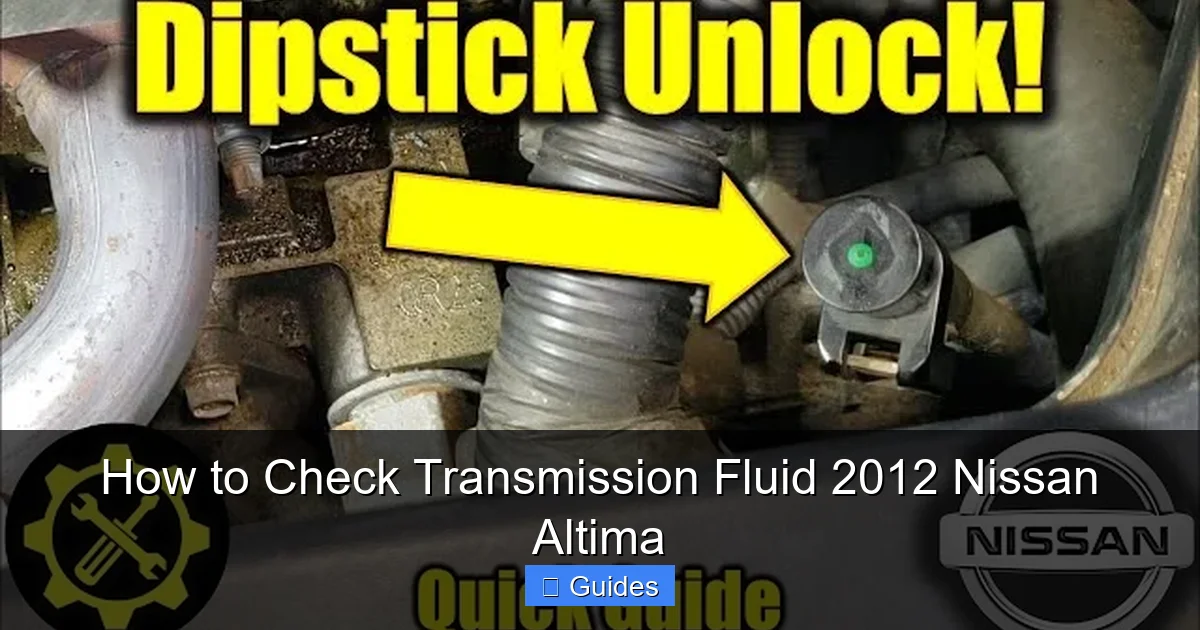
Open the hood of your 2012 Altima and secure it with the prop rod. Look toward the back of the engine bay, near the firewall (the wall between the engine and the cabin). You’ll see a dipstick with a bright yellow or orange handle—this is the transmission dipstick. It’s usually labeled “ATF” (Automatic Transmission Fluid) and may have a small diagram showing a gear or transmission.
If you’re having trouble finding it, consult your owner’s manual. Some models may have the dipstick tucked slightly behind other components, but it should still be accessible without removing anything.
Step 2: Pull and Wipe the Dipstick
With the engine off and the car on level ground, pull the dipstick straight out. Use your clean rag or paper towel to wipe it thoroughly from top to bottom. This removes any old fluid and ensures you get a fresh reading on the next step.
Step 3: Reinsert and Remove Again
Push the dipstick all the way back into its tube until it clicks or seats fully. Wait a second, then pull it out again. This time, look at the fluid on the end of the dipstick. You’ll see two sets of markings: “COLD” and “HOT.” Since you’ve warmed up the engine, focus on the “HOT” section.
The fluid level should be between the two lines marked “HOT”—usually labeled “FULL” and “ADD” or “LOW.” If the fluid reaches the “FULL” line, your level is perfect. If it’s below the “ADD” line, you’ll need to top it off.
Step 4: Inspect the Fluid’s Condition
While checking the level, also examine the color and smell of the fluid. Healthy transmission fluid is bright red or pinkish and has a slightly sweet, oily smell. If the fluid is dark brown, black, or has a burnt odor, it’s time for a change. Cloudy or milky fluid could indicate coolant contamination—a serious issue that requires immediate attention.
Also, check for particles or metal shavings on the dipstick. These are signs of internal wear and should be addressed by a professional mechanic.
Step 5: Add Fluid (If Needed)
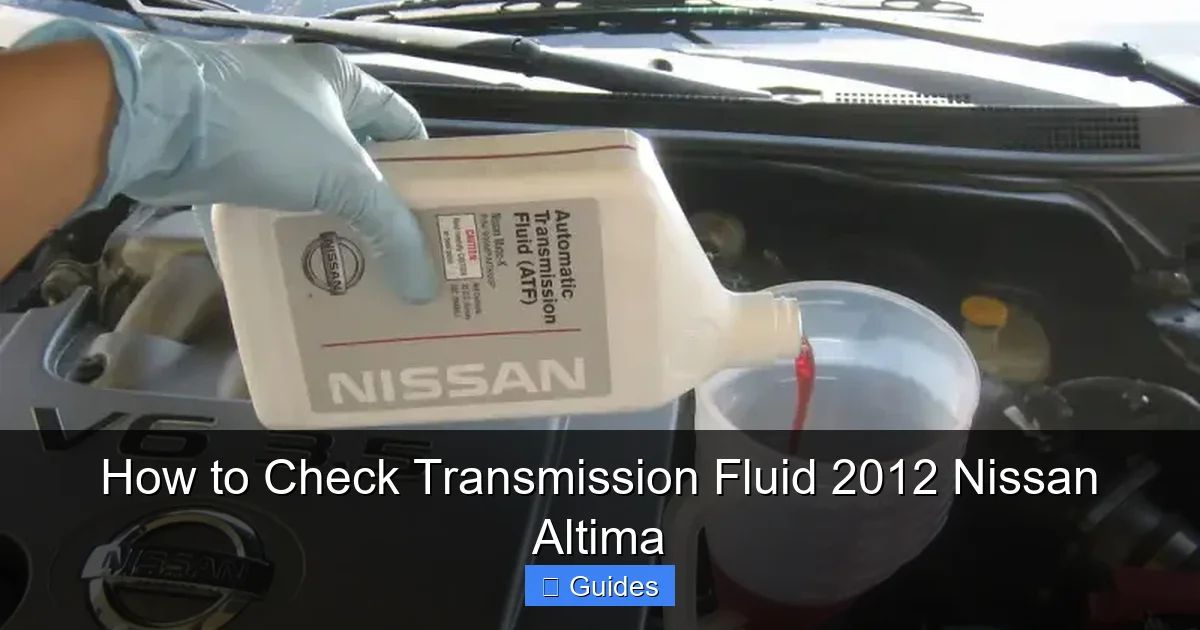
If the fluid level is low, you’ll need to add more. Use only Nissan-approved Matic-S or Matic-D fluid. Pour it slowly into the dipstick tube using a funnel. Add a little at a time—about a quarter to half a quart—then recheck the level. Never pour in a full quart at once, as overfilling can be just as harmful as underfilling.
After adding fluid, start the engine and let it idle for a minute. Shift through all the gears (P-R-N-D) to circulate the new fluid, then recheck the level. Repeat the process until the fluid reaches the “FULL” line on the “HOT” side.
Common Mistakes to Avoid When Checking Transmission Fluid
Even simple tasks can go wrong if you’re not careful. Here are some common pitfalls to watch out for when checking your 2012 Altima’s transmission fluid:
- Checking when cold: As mentioned earlier, always check fluid when the engine is warm. Cold fluid contracts, giving a falsely high reading.
- Not wiping the dipstick: Failing to clean the dipstick before reinserting it can lead to inaccurate readings. Always wipe it first.
- Overfilling: Adding too much fluid causes foaming, which reduces lubrication and can damage seals. Add slowly and check frequently.
- Using the wrong fluid: Generic or incorrect ATF can harm your transmission. Stick to Nissan Matic-S or Matic-D.
- Ignoring the smell and color: Level isn’t the only thing that matters. Dark or burnt fluid signals a problem that needs fixing.
- Skipping regular checks: Don’t wait for symptoms to appear. Check your fluid every 30,000 miles or once a year.
Another mistake is assuming that “full” means “good.” Even if the level is correct, old or degraded fluid can still cause issues. If your fluid looks dirty or smells burnt, consider a full transmission fluid change—even if the level is fine.
When to Change Transmission Fluid in Your 2012 Nissan Altima
Checking fluid is one thing; knowing when to change it is another. Nissan recommends changing the transmission fluid in the 2012 Altima every 60,000 to 100,000 miles, depending on driving conditions. However, if you frequently drive in heavy traffic, tow loads, or live in a hot climate, you may need to change it more often—perhaps every 30,000 to 50,000 miles.
Signs that your transmission fluid needs changing include:
- Dark or burnt-smelling fluid
- Rough or delayed shifting
- Transmission slipping or jerking
- Unusual noises (whining, grinding)
- Check Engine or Transmission Warning Light
A fluid change involves draining the old fluid and replacing it with fresh, clean fluid. While some owners attempt this at home, it’s often recommended to have it done by a professional—especially for CVTs, which require precise filling procedures. Many mechanics also replace the transmission filter during a fluid change, which helps extend the life of your transmission.
Tips for Maintaining a Healthy Transmission
Beyond checking and changing fluid, there are other ways to keep your 2012 Altima’s transmission in top shape:
- Avoid aggressive driving: Hard acceleration and sudden braking put extra stress on the transmission.
- Use the parking brake: When parked on a hill, use the parking brake to reduce strain on the transmission’s parking pawl.
- Don’t shift while moving: Never shift from Drive to Reverse (or vice versa) while the car is still moving. Come to a complete stop first.
- Service other fluids: Coolant, engine oil, and power steering fluid all affect overall performance and can indirectly impact the transmission.
- Listen for changes: If your Altima starts making new noises or shifting differently, don’t ignore it. Early detection saves money.
Regular maintenance is the best way to avoid expensive repairs. A well-cared-for transmission can last well over 200,000 miles—but only if you stay on top of fluid checks and changes.
Conclusion: Stay Proactive, Stay Safe
Checking the transmission fluid in your 2012 Nissan Altima is a simple yet powerful way to protect your investment. It takes just minutes, requires minimal tools, and can prevent thousands of dollars in repairs down the road. By following the steps in this guide—warming up the engine, using the dipstick correctly, and inspecting fluid condition—you’ll keep your Altima shifting smoothly and running reliably.
Remember, your car’s transmission is one of its most complex and expensive components. A little attention now can save you from major headaches later. Make fluid checks a regular part of your maintenance routine, and don’t hesitate to consult a professional if something seems off. With proper care, your 2012 Nissan Altima will continue to deliver the comfort, efficiency, and dependability you’ve come to expect.
Frequently Asked Questions
Can I check transmission fluid with the engine cold?
No, you should always check transmission fluid when the engine is warm. Cold fluid contracts and can give a falsely high reading, leading to incorrect conclusions about the fluid level.
What kind of transmission fluid does a 2012 Nissan Altima use?
The 2012 Nissan Altima requires Nissan Matic-S or Matic-D transmission fluid. Using any other type can damage the transmission and void your warranty.
How often should I check my transmission fluid?
Check your transmission fluid every 30,000 miles or once a year, whichever comes first. If you drive in severe conditions (stop-and-go traffic, towing, extreme heat), check it more frequently.
What does burnt transmission fluid smell like?
Burnt transmission fluid has a sharp, acrid odor similar to burning oil or rubber. If you notice this smell, it’s a sign the fluid is degraded and needs to be changed.
Can I drive my Altima if the transmission fluid is low?
Driving with low transmission fluid can cause overheating and damage. If the level is below the “ADD” line, top it off immediately and monitor for leaks or other issues.
Is it normal for transmission fluid to be dark?
No, healthy transmission fluid should be bright red or pink. Dark brown or black fluid indicates age, contamination, or overheating and should be replaced as soon as possible.

At CarLegit, we believe information should be clear, factual, and genuinely helpful. That’s why every guide, review, and update on our website is created with care, research, and a strong focus on user experience.