
Checking the transmission fluid on your Nissan Altima is a simple but essential maintenance task that helps prevent costly repairs and ensures smooth shifting. This guide walks you through the process safely, whether you drive a newer CVT or an older automatic model.
In This Article
- 1 Key Takeaways
- 2 📑 Table of Contents
- 3 Why Checking Transmission Fluid Matters on a Nissan Altima
- 4 Understanding Your Nissan Altima’s Transmission Type
- 5 Tools and Materials You’ll Need
- 6 Step-by-Step Guide: How to Check Transmission Fluid on a Nissan Altima
- 7 What Healthy vs. Unhealthy Transmission Fluid Looks Like
- 8 When to Change Transmission Fluid on a Nissan Altima
- 9 Common Mistakes to Avoid
- 10 Conclusion
- 11 Frequently Asked Questions
- 11.1 Can I check the transmission fluid on a 2010 Nissan Altima myself?
- 11.2 What happens if I drive with low transmission fluid?
- 11.3 How often should I check the transmission fluid?
- 11.4 Can I use any transmission fluid in my Nissan Altima?
- 11.5 Why doesn’t my Nissan Altima have a transmission dipstick?
- 11.6 Is it safe to add transmission fluid myself?
Key Takeaways
- Know your model year: Older Nissan Altimas (pre-2008) often have dipsticks, while newer models (especially 2009+) use sealed transmissions without dipsticks.
- Check fluid when warm: For accurate readings, the engine should be running and the transmission fluid at operating temperature.
- Use the right fluid: Always use Nissan Matic-S, Matic-D, or CVT-specific fluid as recommended in your owner’s manual.
- Look for color and smell: Healthy fluid is bright red and odorless; dark, burnt-smelling fluid signals trouble.
- Never overfill: Overfilling can cause foaming, overheating, and transmission damage.
- Inspect for leaks: While checking fluid, look under the car for signs of leaks around the transmission pan or seals.
- When in doubt, consult a pro: If your Altima lacks a dipstick or you’re unsure, visit a certified technician.
📑 Table of Contents
- Why Checking Transmission Fluid Matters on a Nissan Altima
- Understanding Your Nissan Altima’s Transmission Type
- Tools and Materials You’ll Need
- Step-by-Step Guide: How to Check Transmission Fluid on a Nissan Altima
- What Healthy vs. Unhealthy Transmission Fluid Looks Like
- When to Change Transmission Fluid on a Nissan Altima
- Common Mistakes to Avoid
- Conclusion
Why Checking Transmission Fluid Matters on a Nissan Altima
Your Nissan Altima’s transmission is one of the most critical components under the hood. It’s responsible for transferring power from the engine to the wheels, allowing your car to shift gears smoothly and efficiently. Without proper lubrication and hydraulic pressure—both provided by transmission fluid—your transmission can overheat, wear out prematurely, or even fail entirely. That’s why checking the transmission fluid regularly is not just a good idea; it’s a necessity.
Many drivers overlook transmission maintenance, assuming it’s something only mechanics need to worry about. But just like engine oil, transmission fluid degrades over time. It collects contaminants, loses its lubricating properties, and can even develop a burnt smell if it overheats. Catching these issues early can save you thousands in repair costs. For example, a simple fluid change might cost $100–$200, but a full transmission rebuild can run $3,000 or more. Regular checks help you spot problems before they become catastrophic.
Moreover, the type of transmission in your Altima affects how—and even if—you can check the fluid. Older models (typically 2007 and earlier) often come with a traditional dipstick, making DIY checks straightforward. But starting around 2008, Nissan began equipping many Altimas with continuously variable transmissions (CVTs), which are often “sealed” and don’t have a dipstick. This shift has confused many owners, leading them to believe they can’t check the fluid at all. The truth? You still can—but the process is different and may require special tools or a visit to the shop.
Understanding Your Nissan Altima’s Transmission Type
Visual guide about How to Check Transmission Fluid on Nissan Altima
Image source: nissankaengine.com
Before you pop the hood, it’s crucial to know what kind of transmission your Altima has. This determines whether you can check the fluid yourself and how you should do it.
Traditional Automatic Transmissions (Pre-2008 Models)
If you drive a Nissan Altima from 2007 or earlier, there’s a good chance it has a conventional automatic transmission with a dipstick. These models typically use a 4-speed or 5-speed automatic gearbox. The dipstick is usually located near the back of the engine bay, often marked with a yellow or red handle labeled “ATF” (Automatic Transmission Fluid). This design makes checking the fluid level and condition relatively easy for the average driver.
For example, a 2005 Nissan Altima 2.5S with a 4-speed automatic has a clearly visible dipstick. You can check the fluid in under five minutes with basic tools. The process is similar to checking engine oil: pull the dipstick, wipe it clean, reinsert it fully, then pull it out again to read the level.
Continuously Variable Transmissions (CVT) – 2008 and Newer
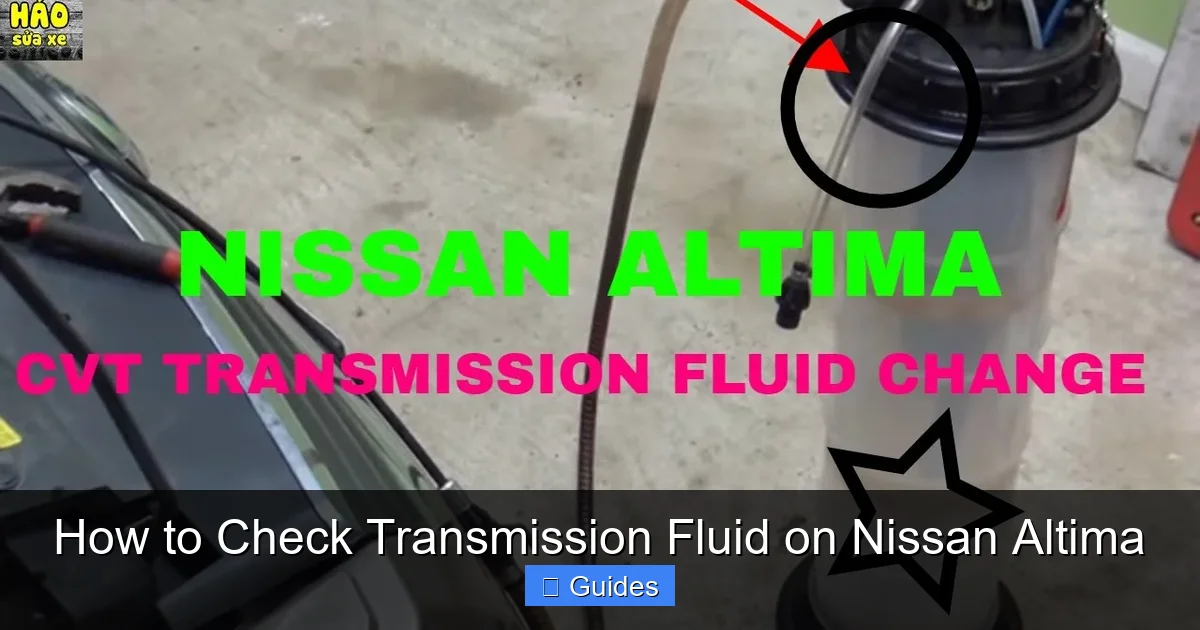
Starting in 2008, Nissan began phasing in CVTs across the Altima lineup. A CVT doesn’t have fixed gears like a traditional automatic. Instead, it uses a belt and pulley system to provide an infinite range of gear ratios, improving fuel efficiency and smoothness. However, this advanced technology comes with a trade-off: many CVT-equipped Altimas don’t have a dipstick.
Instead, these vehicles use a sealed transmission system. The fluid level is checked through a fill plug or inspection port on the side of the transmission case. This requires the engine to be running, the car to be level, and sometimes a scan tool to monitor fluid temperature. Because of this complexity, many owners assume they can’t check the fluid themselves—but with the right approach, you can still perform a basic inspection.
For instance, a 2015 Nissan Altima 2.5 SV with a CVT doesn’t have a dipstick. But you can still access the transmission fluid through the fill plug, usually located on the passenger side of the transmission. You’ll need a socket wrench, a fluid pump, and a way to monitor the fluid temperature (often via an OBD2 scanner). While this is more involved, it’s doable for mechanically inclined drivers.
Hybrid Models and Special Cases
Nissan also offered hybrid versions of the Altima from 2013 to 2014. These models use a different transmission system that combines an electric motor with a traditional automatic. Checking the fluid on a hybrid Altima is even more complex and typically requires specialized equipment. If you own a hybrid, it’s best to consult your owner’s manual or a certified technician.
Tools and Materials You’ll Need
Visual guide about How to Check Transmission Fluid on Nissan Altima
Image source: storage.googleapis.com
Before you begin, gather the right tools and supplies. Having everything ready will make the process smoother and safer.
Basic Tools for Dipstick Models
If your Altima has a dipstick, you’ll need:
– Clean rags or paper towels
– A funnel (optional, for adding fluid)
– Nissan-approved transmission fluid (check your owner’s manual for the correct type)
– Gloves (to keep your hands clean)
You don’t need any special tools—just your hands and a few minutes of time.
Tools for CVT and Sealed Transmission Models
For newer Altimas without a dipstick, you’ll need:
– A socket wrench set (usually 10mm or 12mm for the fill plug)
– A transmission fluid pump (available at auto parts stores)
– Nissan Matic-S or CVT-specific fluid (never use generic fluid)
– An OBD2 scanner with live data capability (to check transmission fluid temperature)
– A jack and jack stands or ramps (to safely lift the car)
– Safety glasses and gloves
Some owners also use a transmission fluid temperature gauge app that connects to the OBD2 port, which can simplify the process.
Safety Precautions
Always work on a level surface and engage the parking brake. If you’re lifting the car, use jack stands—never rely solely on a jack. Hot transmission fluid can cause burns, so let the engine cool slightly if it’s been running. And never add fluid unless you’re sure it’s low—overfilling can be just as damaging as underfilling.
Step-by-Step Guide: How to Check Transmission Fluid on a Nissan Altima
Visual guide about How to Check Transmission Fluid on Nissan Altima
Image source: d2n97g4vasjwsk.cloudfront.net
Now that you know your transmission type and have the right tools, let’s walk through the process.
For Models with a Dipstick (Pre-2008)
1. **Park on a level surface** and engage the parking brake. Let the engine run for 5–10 minutes to warm up the transmission fluid. Cold fluid gives inaccurate readings.
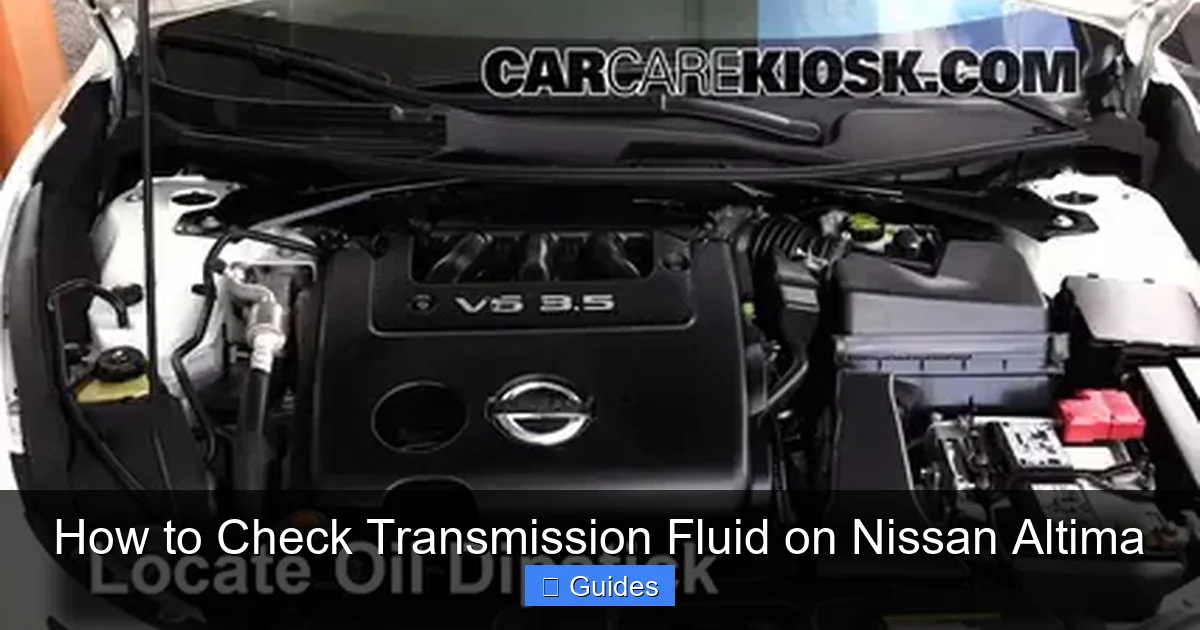
2. **Locate the transmission dipstick.** It’s usually near the back of the engine bay, close to the firewall. It may be labeled “ATF” and have a yellow or red handle.
3. **Pull out the dipstick**, wipe it clean with a rag, then reinsert it fully. Pull it out again to check the fluid level.
4. **Read the markings.** Most dipsticks have “Full” and “Add” marks. The fluid should be between these lines. If it’s below “Add,” you need to top it off.
5. **Check the fluid condition.** Healthy transmission fluid is bright red and translucent. If it’s dark brown, black, or has a burnt smell, it’s time for a fluid change.
6. **Add fluid if needed.** Use a funnel to slowly add the correct Nissan-approved fluid through the dipstick tube. Add a little at a time, then recheck the level. Never overfill.
7. **Reinsert the dipstick** and close the hood.
For CVT and Sealed Transmission Models (2008 and Newer)
1. **Warm up the engine.** Drive the car for 10–15 minutes to bring the transmission fluid to operating temperature (usually 104°F–122°F or 40°C–50°C).
2. **Lift the car safely.** Use a jack and jack stands or drive onto ramps. Make sure the vehicle is level.
3. **Locate the fill plug.** On most CVT Altimas, it’s on the passenger side of the transmission, near the axle. It’s a bolt with a square head or hex socket.
4. **Check fluid temperature.** Use an OBD2 scanner to monitor the transmission fluid temperature. The ideal range for checking is typically 30°C–50°C (86°F–122°F).
5. **Remove the fill plug.** Use a socket wrench to carefully loosen the bolt. Fluid should drip out slowly if the level is correct. If nothing comes out, the fluid is low.
6. **Add fluid if needed.** Insert the fluid pump tube into the fill hole and slowly add the correct CVT fluid. Stop when fluid begins to drip steadily from the hole.
7. **Reinstall the fill plug.** Tighten it to the manufacturer’s torque specification (usually around 25–30 ft-lbs). Lower the car and test drive to ensure smooth operation.
Tips for Accuracy
– Always check the fluid with the engine running and the transmission in Park (for automatics) or Neutral (for some CVTs).
– If the fluid is low, inspect for leaks around the transmission pan, seals, and cooler lines.
– Keep a record of your checks and fluid changes to track maintenance history.
What Healthy vs. Unhealthy Transmission Fluid Looks Like
The condition of your transmission fluid tells you a lot about the health of your Altima’s transmission.
Healthy Fluid
– **Color:** Bright red or pinkish-red
– **Clarity:** Clear and translucent, like fruit juice
– **Smell:** Mild, slightly sweet, or odorless
– **Texture:** Smooth, not gritty or slimy
This indicates the fluid is doing its job—lubricating, cooling, and transferring power efficiently.
Unhealthy Fluid
– **Color:** Dark brown, black, or cloudy
– **Smell:** Burnt, acrid, or foul odor
– **Texture:** Gritty, slimy, or containing metal particles
Dark or burnt-smelling fluid suggests overheating, contamination, or internal wear. Metal particles mean components like clutches or bearings may be breaking down. If you notice any of these signs, don’t delay—schedule a transmission service immediately.
Common Causes of Fluid Degradation
– **Overheating:** Towing, stop-and-go traffic, or low fluid levels can cause the transmission to overheat.
– **Infrequent changes:** Most manufacturers recommend changing CVT fluid every 60,000–100,000 miles, but some experts suggest every 30,000–50,000 miles for severe driving conditions.
– **Contamination:** Water or debris entering the system can ruin the fluid.
– **Leaks:** Worn seals or gaskets allow fluid to escape, lowering the level and increasing wear.
When to Change Transmission Fluid on a Nissan Altima
Checking the fluid is one thing—knowing when to change it is another.
Manufacturer Recommendations
Nissan typically recommends changing the transmission fluid every 60,000 to 100,000 miles for most Altimas. However, this can vary based on driving conditions. For example:
– **Severe driving:** Frequent short trips, towing, or driving in extreme heat or cold may require changes every 30,000–50,000 miles.
– **Normal driving:** Highway commuting and moderate use may allow longer intervals.
Always consult your owner’s manual for the exact schedule for your model year.
Signs It’s Time for a Change
– Slipping gears or delayed shifting
– Rough or jerky shifts
– Transmission overheating (warning light on dashboard)
– Fluid is dark or smells burnt
– You’ve exceeded the recommended mileage interval
DIY vs. Professional Service
For dipstick models, a fluid change is manageable for DIYers with basic mechanical skills. You’ll need to drain the pan, replace the filter (if applicable), and refill with fresh fluid.
For CVT models, a professional service is often recommended. CVTs require precise fluid levels and temperature monitoring during filling. Many shops use specialized equipment to perform a “flush” that replaces nearly all the old fluid.
Common Mistakes to Avoid
Even experienced drivers can make errors when checking or changing transmission fluid.
Using the Wrong Fluid
Never substitute generic or incorrect transmission fluid. Nissan Altimas require specific formulations like Matic-S, Matic-D, or NS-2/NS-3 for CVTs. Using the wrong type can cause slipping, overheating, or transmission failure.
Overfilling the Transmission
Adding too much fluid creates pressure buildup, leading to foaming. Foamy fluid doesn’t lubricate properly and can damage internal components. Always add fluid slowly and recheck the level.
Checking Cold Fluid
Fluid expands when hot. Checking it when cold gives a false low reading, leading you to overfill. Always warm up the engine first.
Ignoring Leaks
A low fluid level often indicates a leak. If you’re constantly topping off the fluid, inspect the transmission pan, seals, and cooler lines. A small leak can become a major problem.
Conclusion
Checking the transmission fluid on your Nissan Altima is a simple yet powerful way to protect your investment and ensure long-term reliability. Whether you drive an older model with a dipstick or a newer CVT without one, understanding your transmission type and following the correct procedure can prevent costly repairs and keep your Altima running smoothly.
Regular checks help you spot issues early, maintain optimal performance, and extend the life of your transmission. Remember to use the right fluid, check when warm, and never ignore signs of trouble like dark or burnt-smelling fluid. When in doubt, consult your owner’s manual or a certified technician.
By taking a few minutes every few months to inspect your transmission fluid, you’re not just maintaining your car—you’re driving with confidence.
Frequently Asked Questions
Can I check the transmission fluid on a 2010 Nissan Altima myself?
Yes, but it’s more involved than older models. The 2010 Altima uses a CVT without a dipstick. You’ll need to lift the car, locate the fill plug, and check the fluid with the engine running and transmission at the correct temperature.
What happens if I drive with low transmission fluid?
Low fluid can cause overheating, slipping gears, and increased wear. Over time, this can lead to transmission failure, requiring expensive repairs or replacement.
How often should I check the transmission fluid?
Check it every 3,000 to 5,000 miles or during regular oil changes. If you notice shifting issues or leaks, check it immediately.
Can I use any transmission fluid in my Nissan Altima?
No. Always use Nissan-approved fluid like Matic-S, Matic-D, or CVT-specific NS-2/NS-3. Using the wrong type can damage the transmission.
Why doesn’t my Nissan Altima have a transmission dipstick?
Starting in 2008, many Altimas switched to sealed CVTs for better efficiency. These systems don’t have dipsticks and require special procedures to check the fluid.
Is it safe to add transmission fluid myself?
Yes, if you follow the correct procedure and use the right fluid. For CVT models, be extra careful with temperature and level checks. When unsure, visit a professional.

At CarLegit, we believe information should be clear, factual, and genuinely helpful. That’s why every guide, review, and update on our website is created with care, research, and a strong focus on user experience.