
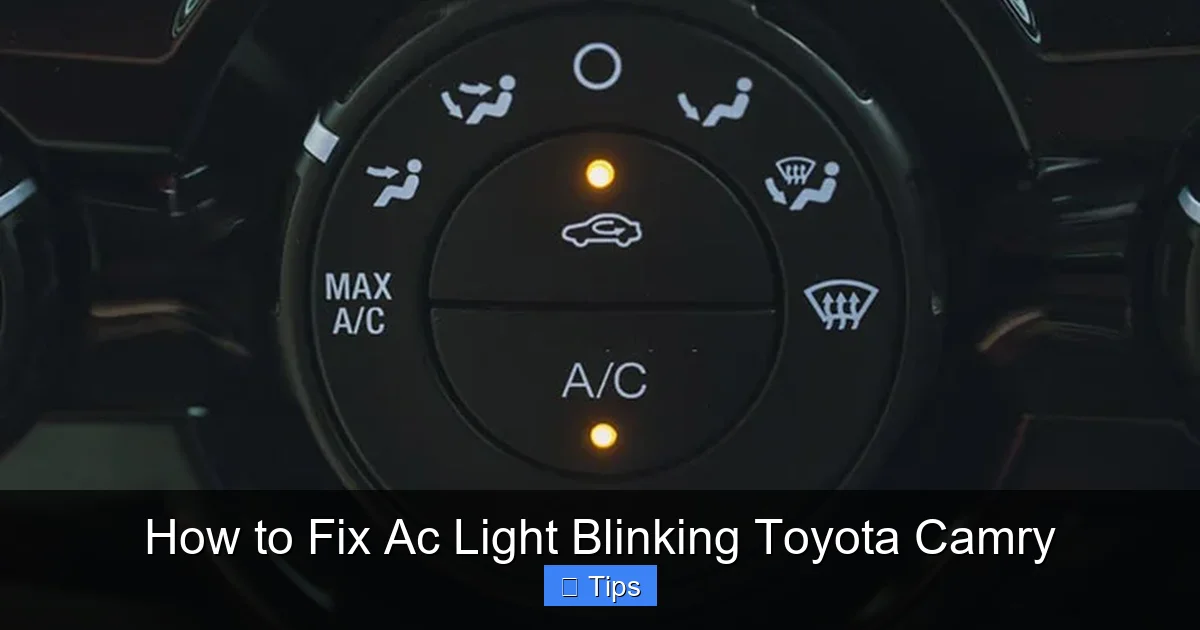
If your Toyota Camry’s AC light is blinking, it’s a warning sign that something’s wrong with the air conditioning system. This issue often stems from low refrigerant, electrical faults, or sensor problems, but many causes are fixable at home or with minimal professional help.
In This Article
Key Takeaways
- Low refrigerant levels are the most common cause of a blinking AC light and can often be resolved with a recharge.
- Electrical issues like blown fuses, faulty relays, or damaged wiring can trigger the blinking light and should be inspected early.
- A clogged cabin air filter restricts airflow and may cause the system to overheat, leading to a blinking indicator.
- Faulty AC pressure sensors send incorrect signals to the ECU, causing the light to blink even when the system is fine.
- The compressor clutch may be failing, preventing the AC from engaging and triggering warning lights.
- Regular maintenance helps prevent AC issues and keeps your Camry’s climate control running smoothly.
- Always consult your owner’s manual or a certified technician if the problem persists after basic troubleshooting.
📑 Table of Contents
Why Is the AC Light Blinking in Your Toyota Camry?
You’re driving down the highway on a hot summer day, and suddenly, the AC light on your Toyota Camry starts blinking. It’s not just annoying—it’s a sign that something isn’t right with your air conditioning system. While it might seem like a minor glitch, a blinking AC light is actually your car’s way of saying, “Hey, I need attention!” Ignoring it could lead to bigger problems down the road, like a complete AC failure or damage to other components.
The good news? In many cases, the issue is fixable without a costly trip to the dealership. The blinking light is part of your Camry’s onboard diagnostic system, designed to alert you to potential malfunctions. It could be triggered by anything from low refrigerant to a faulty sensor. Understanding what causes this warning and how to respond can save you time, money, and discomfort—especially during those sweltering months when you rely on your AC the most.
Common Causes of a Blinking AC Light
Before diving into fixes, it’s important to know what might be causing the blinking AC light in your Toyota Camry. While the exact cause can vary depending on your model year and driving conditions, several common culprits are frequently responsible. Identifying the root issue early can prevent further damage and help you choose the right solution.

Visual guide about How to Fix Ac Light Blinking Toyota Camry
Image source: bryansgarage.com
Low Refrigerant Levels
One of the most frequent reasons for a blinking AC light is low refrigerant. Refrigerant is the lifeblood of your air conditioning system—it absorbs heat from the cabin and releases it outside. Over time, refrigerant can leak due to worn seals, damaged hoses, or loose connections. When levels drop too low, the system can’t cool effectively, and the AC light may start blinking as a warning.
For example, if you notice that your AC is blowing warm air or only cooling slightly, low refrigerant could be the issue. A professional can perform a leak test and recharge the system, but some DIYers use refrigerant recharge kits. However, be cautious—adding refrigerant without fixing the leak will only provide a temporary fix.
Electrical Problems
Your Camry’s AC system relies on a network of electrical components, including fuses, relays, and wiring. If any of these fail, the system may not receive the power it needs to operate, triggering the blinking light. A blown fuse is one of the simplest issues to fix—just locate the fuse box (usually under the dashboard or hood), check the AC-related fuses, and replace any that are burnt out.
Relays, which act as switches for high-current components like the compressor, can also fail. If the relay clicks but the compressor doesn’t engage, it may need replacement. Damaged or corroded wiring can also disrupt signals between sensors and the engine control unit (ECU), leading to false warnings. Inspecting these components with a multimeter can help pinpoint the problem.
Faulty AC Pressure Sensor
The AC pressure sensor monitors the pressure of the refrigerant in the system. If it detects abnormally high or low pressure, it sends a signal to the ECU, which may trigger the blinking AC light. This sensor is crucial for protecting the compressor from damage due to over-pressurization or undercharging.
A malfunctioning sensor might give false readings, even if the refrigerant level is normal. For instance, if the sensor is dirty or has corroded contacts, it may misread pressure levels. Replacing the sensor is usually straightforward and inexpensive, but it’s best to confirm the diagnosis with a scan tool before swapping parts.
Clogged or Dirty Cabin Air Filter
While it might not seem directly related, a clogged cabin air filter can indirectly cause the AC light to blink. When the filter is dirty, airflow through the evaporator core is restricted. This can cause the evaporator to freeze up, reducing cooling efficiency and increasing strain on the system. In some cases, the ECU detects abnormal performance and triggers the warning light.
Replacing the cabin air filter is one of the easiest maintenance tasks you can do. Most Camry models have the filter behind the glove compartment, and it typically takes less than 15 minutes to swap it out. Doing this every 12,000 to 15,000 miles can prevent airflow issues and keep your AC running smoothly.
Compressor Clutch Issues
The compressor is the heart of your AC system, and its clutch engages and disengages the compressor pulley to control cooling. If the clutch is worn, damaged, or not receiving power, the compressor won’t turn on, and the AC won’t cool. This often results in a blinking light as the system tries—and fails—to activate.
You might hear a clicking sound near the compressor when the AC is turned on, which could indicate a failing clutch. In some cases, the clutch can be replaced separately from the compressor, saving you money. However, if the compressor itself is damaged, a full replacement may be necessary.
Step-by-Step Troubleshooting Guide
Now that you know the common causes, let’s walk through a practical troubleshooting process. This step-by-step guide will help you diagnose and potentially fix the blinking AC light in your Toyota Camry. Always start with the simplest solutions before moving to more complex repairs.
Visual guide about How to Fix Ac Light Blinking Toyota Camry
Image source: bryansgarage.com
Step 1: Check the Cabin Air Filter
Begin by inspecting the cabin air filter. Open the glove compartment and remove any contents. Look for a small latch or tab on the side or bottom—press it to release the glove box. Behind it, you’ll find the air filter housing. Remove the cover and pull out the filter.
If the filter is dirty, clogged with leaves, or covered in dust, replace it with a new one. A clean filter ensures proper airflow and reduces strain on the AC system. After replacing it, turn on the AC and see if the blinking stops. This simple fix resolves the issue in many cases.
Step 2: Inspect Fuses and Relays
Next, check the fuses and relays related to the AC system. Locate the fuse box—usually under the dashboard on the driver’s side or in the engine bay. Refer to your owner’s manual for the exact location and fuse layout.
Look for fuses labeled “AC,” “COMP,” or “HVAC.” Use a fuse puller or needle-nose pliers to remove each one and inspect it. If the metal strip inside is broken or burnt, replace it with a fuse of the same amperage. Also, check the AC relay—swap it with a similar relay (like the horn relay) to see if the problem persists. If the light stops blinking after replacing a fuse or relay, you’ve found the culprit.
Step 3: Test the AC Pressure Sensor
If fuses and relays are fine, the next step is to test the AC pressure sensor. This sensor is typically located on the high-pressure line near the firewall. You’ll need a multimeter to check its resistance or voltage output.
Disconnect the sensor’s electrical connector and measure the resistance across its terminals. Compare the reading to the specifications in your service manual. If the resistance is out of range or the sensor shows no continuity, it’s likely faulty. Replacing it is usually a quick job—just unscrew the old sensor and install the new one, making sure to tighten it to the correct torque.
Step 4: Check Refrigerant Levels
Low refrigerant is a common cause, but you’ll need a refrigerant pressure gauge to check levels accurately. These gauges connect to the low-pressure service port, usually located on the larger aluminum line near the firewall.
With the engine running and the AC on max, attach the gauge and read the pressure. Compare it to the recommended range for your Camry’s model year (typically 25–45 psi on the low side). If the pressure is too low, there’s likely a leak. You can use a UV dye kit to locate the leak or take the car to a professional for a thorough inspection and recharge.
Step 5: Listen for Compressor Engagement
Turn on the AC and listen near the engine compartment. You should hear a distinct “click” as the compressor clutch engages. If you don’t hear it, the clutch may not be receiving power or could be worn out.
Use a multimeter to check for voltage at the compressor clutch connector. If there’s power but the clutch doesn’t engage, the clutch itself may need replacement. If there’s no power, the issue could be a faulty relay, blown fuse, or wiring problem further up the line.
When to Call a Professional
While many AC issues can be resolved at home, some problems require specialized tools and expertise. If you’ve gone through the troubleshooting steps and the AC light is still blinking, it’s time to consult a certified technician.

Visual guide about How to Fix Ac Light Blinking Toyota Camry
Image source: autoowa.com
Complex Electrical Diagnostics
Modern Toyota Camrys use advanced electronic control systems. If the issue involves the ECU, wiring harness, or multiple sensors, a professional scan tool may be needed to read fault codes and pinpoint the problem. These tools can access data that generic OBD2 scanners can’t, providing a clearer picture of what’s wrong.
Refrigerant Leak Detection
Finding and repairing refrigerant leaks often requires specialized equipment like electronic leak detectors or nitrogen pressure testing. DIY recharge kits can mask the problem temporarily, but without fixing the leak, refrigerant will continue to escape, leading to repeated issues and potential environmental harm.
Compressor Replacement
If the compressor is seized or damaged, replacing it is a complex job that involves evacuating the system, removing old components, and recharging with the correct amount of refrigerant and oil. This should only be done by a qualified technician to avoid damaging the new compressor or violating environmental regulations.
Preventive Maintenance Tips
The best way to avoid a blinking AC light is to keep your Toyota Camry’s air conditioning system in good condition through regular maintenance. A little prevention goes a long way in ensuring reliable cooling and avoiding costly repairs.
Replace the Cabin Air Filter Regularly
As mentioned earlier, a clean cabin air filter improves airflow and reduces strain on the AC system. Make it a habit to replace the filter every 12,000 to 15,000 miles, or more often if you drive in dusty or polluted areas.
Run the AC Year-Round
Even in winter, run your AC for a few minutes each week. This keeps the compressor seals lubricated and prevents them from drying out and cracking. It also helps maintain refrigerant circulation and system pressure.
Inspect Hoses and Connections
Periodically check the AC hoses and connections for signs of wear, cracks, or leaks. Look for oily residue around fittings—this can indicate a refrigerant leak. Tighten loose connections and replace damaged hoses promptly.
Schedule Annual AC Inspections
Have a technician inspect your AC system once a year, especially before summer. They can check refrigerant levels, test pressure sensors, and ensure all components are functioning properly. Early detection of issues can prevent major breakdowns.
Conclusion
A blinking AC light in your Toyota Camry is more than just an annoyance—it’s a warning that your air conditioning system needs attention. While the cause can range from a simple clogged filter to a failing compressor, many issues are fixable with basic tools and a little know-how. By following the troubleshooting steps outlined above, you can often resolve the problem yourself and get back to enjoying cool, comfortable drives.
However, don’t hesitate to seek professional help if the issue persists or involves complex repairs. Regular maintenance is key to preventing AC problems and extending the life of your system. With proper care, your Camry’s air conditioning will keep you cool for years to come.
Frequently Asked Questions
Why is my Toyota Camry AC light blinking?
The AC light may blink due to low refrigerant, electrical faults, a clogged cabin air filter, or a faulty pressure sensor. It’s a warning from your car’s diagnostic system that something needs attention.
Can I drive with the AC light blinking?
Yes, you can drive, but it’s not recommended to use the AC until the issue is fixed. Continuing to run a malfunctioning system may cause further damage or complete failure.
How much does it cost to fix a blinking AC light?
Costs vary: replacing a cabin filter is $10–$20, a fuse or relay $5–$15, while refrigerant recharge or compressor repair can cost $100–$800 depending on the issue.
Can I recharge the AC myself?
Yes, with a DIY recharge kit, but only if there’s no leak. Adding refrigerant without fixing a leak is a temporary fix and may harm the environment.
How often should I replace the cabin air filter?
Replace it every 12,000 to 15,000 miles, or more often if you drive in dusty or polluted conditions. A clean filter ensures proper airflow and AC performance.
Will a blinking AC light affect my car’s performance?
Not directly, but a failing AC system can strain the engine and reduce fuel efficiency. It’s best to address the issue promptly to avoid complications.

At CarLegit, we believe information should be clear, factual, and genuinely helpful. That’s why every guide, review, and update on our website is created with care, research, and a strong focus on user experience.