
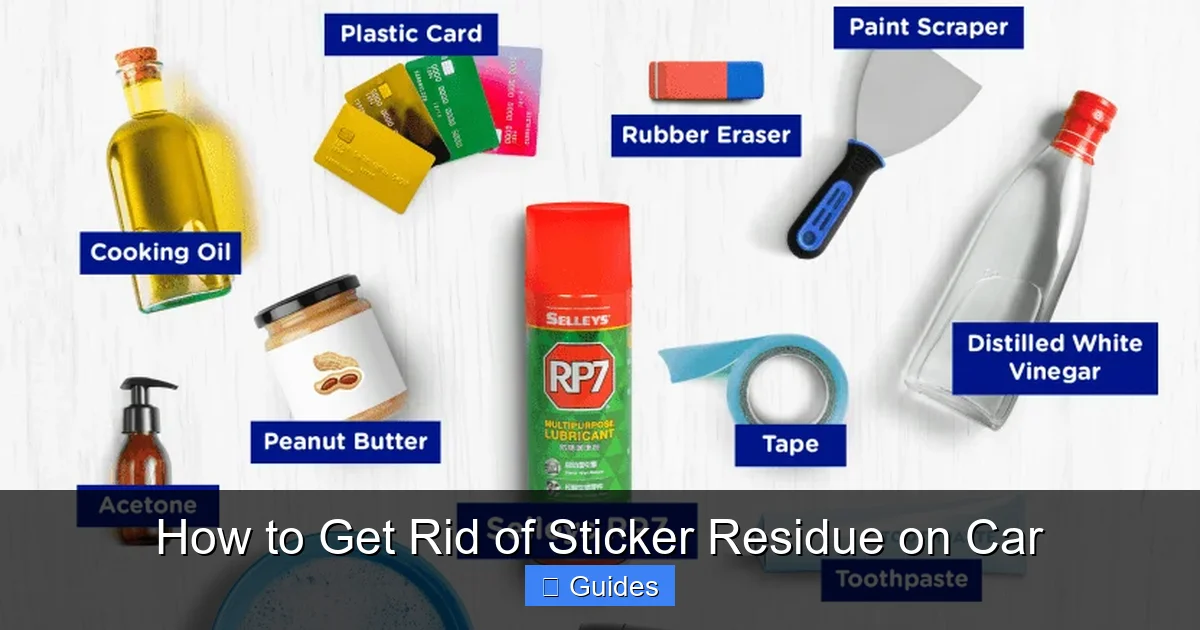
Sticker residue on your car can be stubborn and unsightly, but removing it doesn’t have to damage your paint. With the right tools and techniques—like rubbing alcohol, vinegar, or commercial removers—you can clean your car’s surface quickly and safely.
In This Article
- 1 Key Takeaways
- 2 How to Get Rid of Sticker Residue on Car
- 3 Why Sticker Residue Sticks Around
- 4 Tools and Materials You’ll Need
- 5 Step-by-Step Methods to Remove Sticker Residue
- 6 Tips to Avoid Damaging Your Car’s Paint
- 7 Aftercare: Restoring and Protecting Your Car’s Finish
- 8 When to Call a Professional
- 9 Conclusion
- 10 Key Takeaways
- 11 Frequently Asked Questions
- 11.1 Can I use nail polish remover to remove sticker residue?
- 11.2 Will Goo Gone damage my car’s paint?
- 11.3 How long should I let oil sit on the residue?
- 11.4 Can I use a razor blade to scrape off residue?
- 11.5 Why is there a stain after removing the sticker?
- 11.6 Is it safe to use a heat gun on car paint?
Key Takeaways
- Use heat to loosen residue: A hairdryer or heat gun softens adhesive, making it easier to peel off without scratching the paint.
- Household items work well: Rubbing alcohol, white vinegar, and cooking oils (like olive or coconut oil) can dissolve sticky residue effectively.
- Commercial removers save time: Products like Goo Gone or WD-40 are formulated for automotive use and remove tough adhesives fast.
- Always test first: Apply any cleaning solution to a small, hidden area to ensure it won’t damage the paint or finish.
- Use soft tools: Microfiber cloths, plastic scrapers, or credit cards help lift residue without scratching the surface.
- Wash and wax after removal: Clean the area thoroughly and apply wax to restore shine and protect the paint.
- Avoid harsh chemicals: Bleach, acetone, or steel wool can strip paint and cause permanent damage—stick to gentle options.
[FEATURED_IMAGE_PLACEHOLDER]
How to Get Rid of Sticker Residue on Car
We’ve all been there. You proudly display a bumper sticker, parking permit, or decal on your car—only to realize months or years later that it’s faded, peeling, or just plain outdated. When you finally peel it off, you’re left with a sticky, discolored patch that stands out like a sore thumb. That stubborn sticker residue can be frustrating, especially when you want your car to look clean and well-maintained.
The good news? Removing sticker residue from your car doesn’t have to be a nightmare. With the right approach, you can eliminate that gunk without damaging your vehicle’s paint or finish. Whether you’re dealing with a small decal near the windshield or a large bumper sticker, there are safe, effective methods you can use at home. From simple household ingredients to specialized automotive products, you have plenty of options.
In this guide, we’ll walk you through step-by-step methods to get rid of sticker residue on your car. We’ll cover everything from using heat to loosen the adhesive, to choosing the best cleaning solutions, and even how to protect your car’s finish afterward. By the end, you’ll know exactly how to restore your car’s surface to its original shine—no professional detailer required.
Why Sticker Residue Sticks Around
Before we dive into removal techniques, it’s helpful to understand why sticker residue is so persistent. Most stickers and decals use pressure-sensitive adhesives, which are designed to bond strongly to surfaces like glass, metal, and painted finishes. Over time, exposure to sunlight, heat, rain, and dirt can cause the adhesive to harden and oxidize, making it even more difficult to remove.
Another factor is the type of surface. Car paint, especially if it’s older or has been exposed to the elements, can become more porous. This allows the adhesive to seep into tiny imperfections, creating a stronger bond. Additionally, if a sticker has been on your car for years, the adhesive may have chemically reacted with the paint, leading to discoloration or staining beneath the residue.
It’s also worth noting that improper removal attempts—like using sharp metal scrapers or harsh solvents—can make the problem worse. Scratching the paint or stripping the clear coat not only damages the appearance but can also lead to rust or corrosion over time. That’s why it’s crucial to use gentle, tested methods that prioritize the integrity of your car’s finish.
Understanding these factors helps you choose the right removal strategy. For example, older, hardened residue may require more heat and patience, while newer stickers might come off with just a little rubbing alcohol. Knowing your car’s paint condition and the type of adhesive you’re dealing with will guide your approach and help you avoid costly mistakes.
Tools and Materials You’ll Need
Before you start removing sticker residue, gather the right tools and materials. Having everything ready will make the process faster, safer, and more effective. The good news is that most of these items are probably already in your home.
Essential Tools
- Hairdryer or heat gun: Used to soften the adhesive. A hairdryer is gentler and safer for most car surfaces.
- Plastic scraper or old credit card: Helps lift residue without scratching paint. Avoid metal scrapers unless absolutely necessary.
- Microfiber cloths: Soft, non-abrasive cloths are ideal for wiping away residue and cleaning the surface.
- Spray bottle: Useful for applying cleaning solutions evenly.
- Gloves: Protect your hands from chemicals and sticky residue.
Cleaning Solutions
- Rubbing alcohol (isopropyl alcohol): A common household item that dissolves adhesives quickly.
- White vinegar: Natural and effective, especially when mixed with water.
- Cooking oils (olive, coconut, or vegetable oil): Break down sticky residue and are gentle on paint.
- WD-40: A popular lubricant that also works as an adhesive remover.
- Goo Gone or similar commercial removers: Specifically designed for sticky residues and safe for automotive use.
- Dish soap and warm water: For final cleaning and rinsing.
Optional but Helpful
- Plastic wrap: Helps trap moisture when using oil-based solutions.
- Soft-bristle toothbrush: Great for scrubbing small or detailed areas.
- Car wax or sealant: To restore shine and protect the paint after cleaning.
Having these items on hand ensures you’re prepared for any situation. Whether you’re dealing with a tiny sticker near the door handle or a large bumper decal, the right tools make all the difference.
Step-by-Step Methods to Remove Sticker Residue
Now that you understand the problem and have your tools ready, let’s go through proven methods to remove sticker residue from your car. Each method is safe, effective, and uses readily available materials. Choose the one that best fits your situation.
Method 1: Heat and Peel
Heat is one of the most effective ways to loosen adhesive. By warming the sticker, you soften the glue, making it easier to remove without leaving residue behind.
Start by parking your car in a warm, sunny spot or using a hairdryer on the medium heat setting. Hold the dryer about 6 inches away from the sticker and move it back and forth for 1–2 minutes. You’ll notice the edges begin to curl.
Once the sticker is warm, use your fingernail or a plastic scraper to gently lift one corner. Slowly peel the sticker off at a low angle. If it starts to tear or leave residue, apply more heat and continue peeling.
After removing the sticker, you may still have some sticky residue left. Don’t worry—this is normal. Use one of the cleaning solutions below to tackle what’s left.
Method 2: Rubbing Alcohol
Rubbing alcohol is a powerful solvent that breaks down adhesive quickly. It’s safe for most car surfaces, including paint and glass, as long as you use it correctly.
Pour a small amount of isopropyl alcohol (70% or higher) onto a microfiber cloth. Gently rub the residue in circular motions. You’ll see the sticky substance begin to dissolve. For tougher spots, let the alcohol sit for 30–60 seconds before wiping.
Avoid soaking the area or using excessive alcohol, as it can dry out rubber seals or trim. Once the residue is gone, wipe the area with a clean, damp cloth to remove any alcohol residue, then dry with a fresh microfiber towel.
Method 3: White Vinegar Solution
White vinegar is a natural, non-toxic cleaner that works well on adhesive residue. It’s especially useful if you prefer eco-friendly solutions.
Mix equal parts white vinegar and warm water in a spray bottle. Spray the solution directly onto the residue and let it sit for 2–3 minutes. The acidity helps break down the adhesive.
Use a soft cloth or sponge to gently scrub the area. For stubborn spots, repeat the process or let the vinegar sit longer. Rinse with water and dry thoroughly.
Method 4: Cooking Oil (Olive, Coconut, or Vegetable)
Oils are excellent at dissolving sticky residues because they penetrate and weaken the adhesive bond. They’re also gentle on paint, making them a great choice for delicate surfaces.
Apply a small amount of oil directly to the residue using a cloth or your fingers. Let it sit for 5–10 minutes to allow the oil to soak in.
Use a soft cloth or plastic scraper to gently rub away the residue. You may need to repeat the process for thick or old adhesive.
Once the residue is gone, wash the area with warm, soapy water to remove the oil. Dry with a clean towel. For extra protection, apply a small amount of car wax to restore shine.
Method 5: WD-40
WD-40 is a versatile product known for loosening rust and lubricating parts, but it’s also great for removing sticker residue.
Spray a small amount of WD-40 directly onto the sticky area. Let it sit for 1–2 minutes to penetrate the adhesive.
Use a cloth or plastic scraper to wipe away the residue. For best results, follow up with soap and water to remove any oily film.
WD-40 is safe for most car surfaces, but avoid using it on plastic trim that may become discolored over time.
Method 6: Commercial Adhesive Removers (Goo Gone)
For the toughest residues, commercial products like Goo Gone are highly effective. These are specifically formulated to dissolve adhesives without harming automotive finishes.
Apply a small amount of the remover to a cloth and gently rub the residue. Let it sit for 1–2 minutes, then wipe away.
Always follow the manufacturer’s instructions and test on a small area first. After removal, clean the area with soap and water to remove any chemical residue.
Tips to Avoid Damaging Your Car’s Paint
While removing sticker residue, it’s easy to accidentally damage your car’s paint—especially if you’re impatient or use the wrong tools. Here are some essential tips to keep your finish looking flawless.
Test First
Before applying any cleaning solution, test it on a small, inconspicuous area—like behind the fuel door or under the bumper. Wait a few minutes to ensure there’s no discoloration, peeling, or damage.
Use Gentle Pressure
Avoid scrubbing too hard, especially with abrasive tools. Let the cleaning solution do the work. If the residue isn’t coming off, apply more solution and wait longer—don’t force it.
Avoid Metal Scrapers
Metal scrapers can scratch paint and leave permanent marks. Stick to plastic tools like credit cards, razor blades (used carefully), or silicone scrapers.
Work in the Shade
Direct sunlight can cause cleaning solutions to dry too quickly, reducing their effectiveness. Work in a shaded area or during cooler parts of the day.
Don’t Use Harsh Chemicals
Avoid acetone, nail polish remover, bleach, or ammonia-based cleaners. These can strip wax, damage clear coats, and fade paint.
Rinse and Dry Thoroughly
After removing residue, always rinse the area with clean water and dry it with a microfiber cloth. This prevents water spots and removes any leftover chemicals.
Aftercare: Restoring and Protecting Your Car’s Finish
Once the sticker residue is gone, your job isn’t quite finished. The area may look dull or slightly discolored compared to the rest of the paint. Here’s how to restore and protect it.
Wash the Area
Use a car-safe soap and a soft wash mitt to clean the entire panel. This removes any remaining residue, oils, or cleaning agents. Rinse thoroughly.
Apply Car Wax
Waxing the area restores shine and provides a protective layer. Use a small amount of car wax and buff it in with a clean microfiber cloth. This helps blend the cleaned area with the rest of the paint.
Consider Paint Correction (If Needed)
If the residue has caused staining or light etching, you may need a mild polishing compound. Use a dual-action polisher or apply by hand with a soft pad. This removes surface imperfections and restores clarity.
Regular Maintenance
To keep your car looking great, wash it regularly and apply wax every 3–6 months. This protects the paint and makes future sticker removal easier.
When to Call a Professional
While most sticker residue can be removed at home, some situations call for professional help. If the residue has caused paint discoloration, bubbling, or peeling, a detailer can assess the damage and perform paint correction.
Additionally, if you’re unsure about the type of paint or finish on your car (especially on vintage or custom vehicles), it’s safer to consult an expert. Professionals have access to specialized tools and products that minimize risk.
Conclusion
Removing sticker residue from your car doesn’t have to be a stressful or damaging process. With the right tools, techniques, and a little patience, you can restore your vehicle’s surface to its original condition. Whether you use heat, household items like vinegar or oil, or commercial products like Goo Gone, the key is to work gently and test first.
Remember to protect your car’s paint by avoiding harsh chemicals and abrasive tools. After removal, take the time to wash, wax, and maintain the area to keep it looking its best.
By following the steps in this guide, you’ll not only get rid of stubborn sticker residue but also keep your car looking clean, shiny, and well-cared-for. So the next time you peel off an old decal, you’ll know exactly what to do—no residue, no damage, just a smooth, polished finish.
This is a comprehensive guide about How To Get Rid Of Sticker Residue On Car.
Key Takeaways
- Understanding How To Get Rid Of Sticker Residue On Car: Provides essential knowledge
Frequently Asked Questions
Can I use nail polish remover to remove sticker residue?
No, nail polish remover contains acetone, which can damage car paint and clear coats. It’s too harsh and may cause discoloration or peeling. Stick to safer alternatives like rubbing alcohol or vinegar.
Will Goo Gone damage my car’s paint?
Goo Gone is generally safe for automotive use when applied correctly. Always test it on a small area first and rinse thoroughly after use. Avoid prolonged contact with plastic trim, as it may cause clouding.
How long should I let oil sit on the residue?
Let cooking oil sit for 5–10 minutes to allow it to penetrate the adhesive. For older or thicker residue, you may need to reapply and wait longer. Always wash the area with soap and water afterward.
Can I use a razor blade to scrape off residue?
Yes, but only on glass surfaces like windows. Never use a razor blade on painted areas, as it can scratch the finish. Use a plastic scraper or credit card instead.
Why is there a stain after removing the sticker?
Staining can occur if the adhesive reacted with the paint over time, especially under prolonged sun exposure. This may require light polishing or professional paint correction to fix.
Is it safe to use a heat gun on car paint?
A heat gun can be used, but it’s riskier than a hairdryer. Keep it moving and use low to medium heat to avoid burning or warping the paint. A hairdryer is safer for most DIY users.

At CarLegit, we believe information should be clear, factual, and genuinely helpful. That’s why every guide, review, and update on our website is created with care, research, and a strong focus on user experience.